Our Score
Saucony Peregrine 16 Review | Worth It In 2026?
Our Verdict
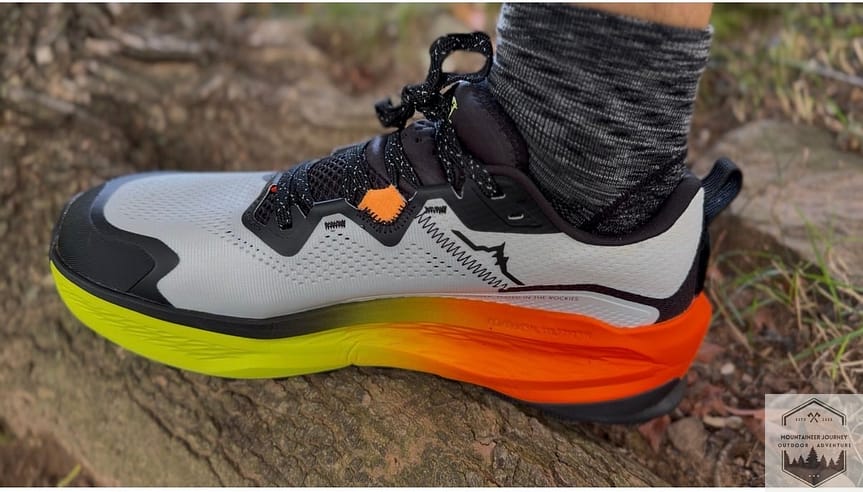
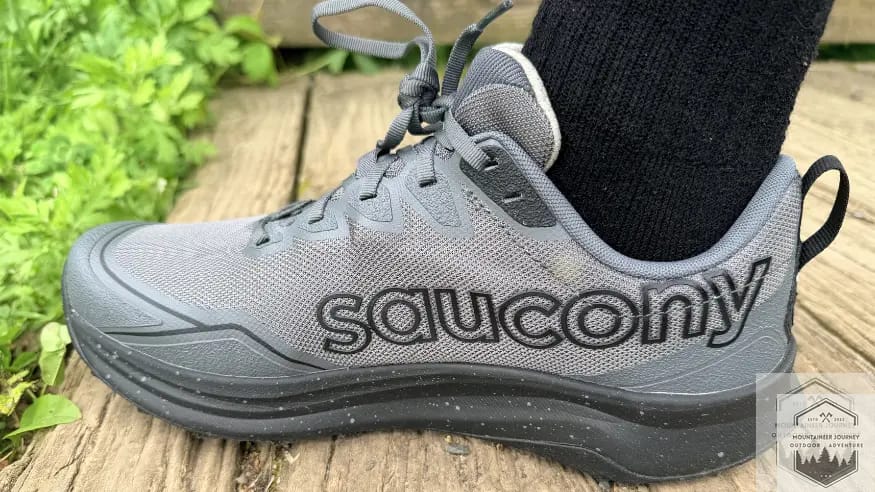
The Saucony Peregrine 16 is a great trail running shoe for those who prefer a minimal stack height and strong ground connection. This shoe capitalizes on its nimbleness for technical trail runners moving fast and swiftly through the trails. Impact absorption is subpar; therefore, we do not recommend this shoe for those who want an extremely plush ride. The Vibram lugs bite very well on the varied terrain we tested it through.
Editor’s Note: We updated this review on 10/2/26 with new insights as well as changes in the stability support and value scores, we also added our youtube review to this article as well.
See Our YouTube Review
Compare Similar Products
Saucony Peregrine 16 Pros & Cons
Pros
- Upgraded Vibram Megagrip with excellent traction
- Lightweight <10 oz
- Great ground feedback
Cons
- Ankle stability subpar
- Midfoot lockdown is inadequate
Should you buy the Saucony Peregrine 16?
Buy if
- You want superior Vibram Megagrip traction on technical terrain
- You prefer a low 4mm drop with responsive ground feel
- You want a trail shoe that works well on rocky terrain, loose dirt, wet roots, hard-packed trails, and moderate mud
DON’T Buy if
- You prefer maximum stack cushioning over ground feel
- You want the most affordable trail runner option
- You primarily run on roads and paved surfaces
- You have very wide feet and need a high-volume toe box with extra room
Comfort & Fit
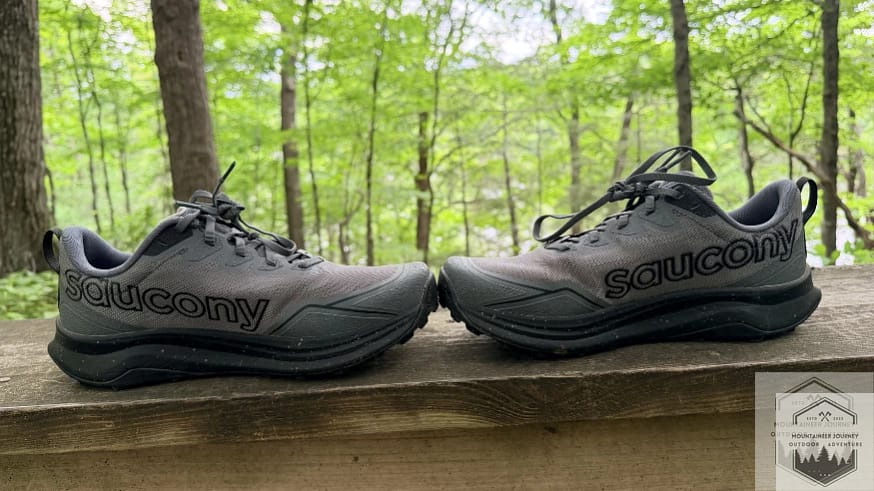
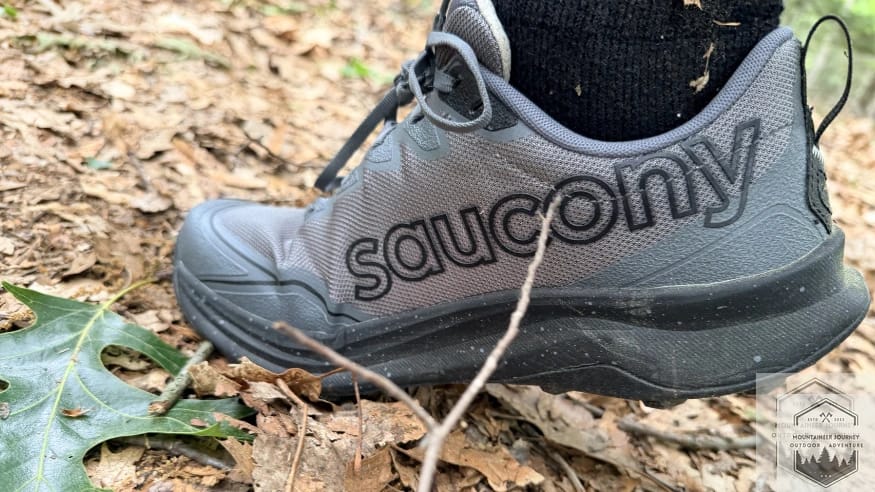
When I first put on the Peregrine 16, the fit felt immediately familiar but more forgiving than the Peregrine 15. The footbed is decently comfortable with minimal pushback. Immediately, you feel the ground contact beneath you, which is good for training your stride.
Personally, I’m more on the wide-fit side; however, the toe box has plenty of room for wide-footed individuals. It gives a nice natural toe splay, which adds stability. The shoe fits true to size in my testing. I would not size up unless you are between sizes or regularly wear thicker socks.
The wide fit feels very voluminous. So, if you’re between widths, I would stick to the regular width, since it’s harder to get excellent lockdown in the wide fit if you’re between widths. Mid-foot lockdown is one of this shoe’s limitations. I felt slippage in my foot even with a heel-lockdown lacing technique. There seems to be too much room throughout the shoe, and the mesh material does not fully secure my foot.
The PWRRUN midsole has been increased by 4 millimeters, giving the Peregrine 16 a total stack height of 32mm in the heel and 28mm in the forefoot. The lower drop provides a greater connection to the ground. As a forefoot striker, I found I could adjust my stride as needed, particularly on singletrack trails filled with roots and rocks.
The updated PWRRUN foam is softer than in previous models. On hard surfaces and packed dirt, I noticed better shock absorption compared to the Peregrine 15. However, the impact absorption is not top-notch given the minimal stack height.
The softer tongue foam is a pleasant surprise, given the minimal rest of the sock liner. However, I didn’t have any hot spots or troublesome areas within the shoe itself.
Technical control and balanced comfort are the name of the game with the Saucony Peregrine 16.
Comfort & Fit Score: 7.5/10 (20%)
Traction
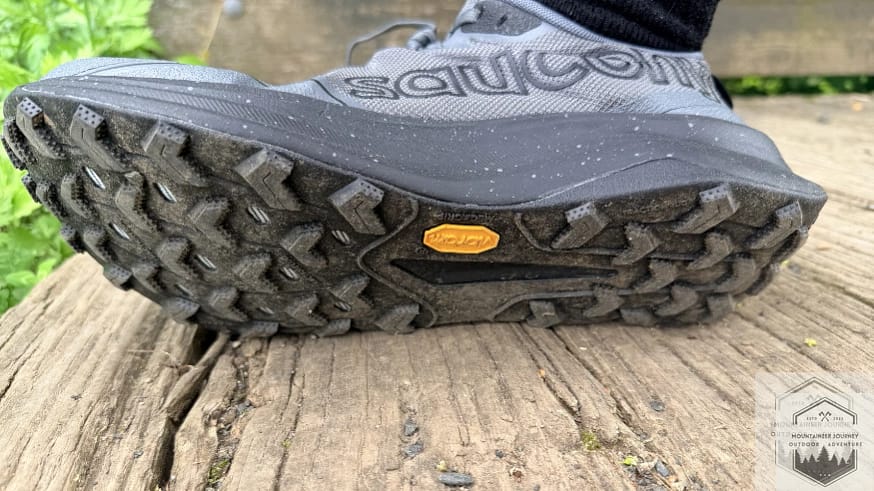
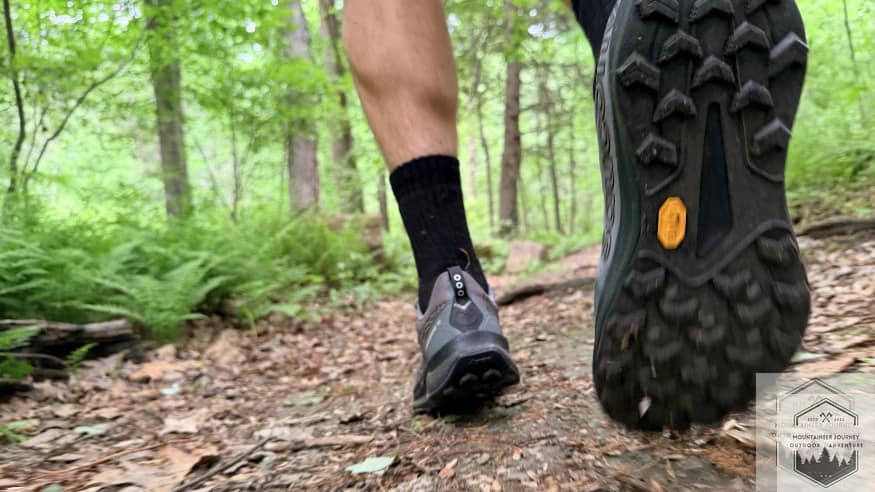
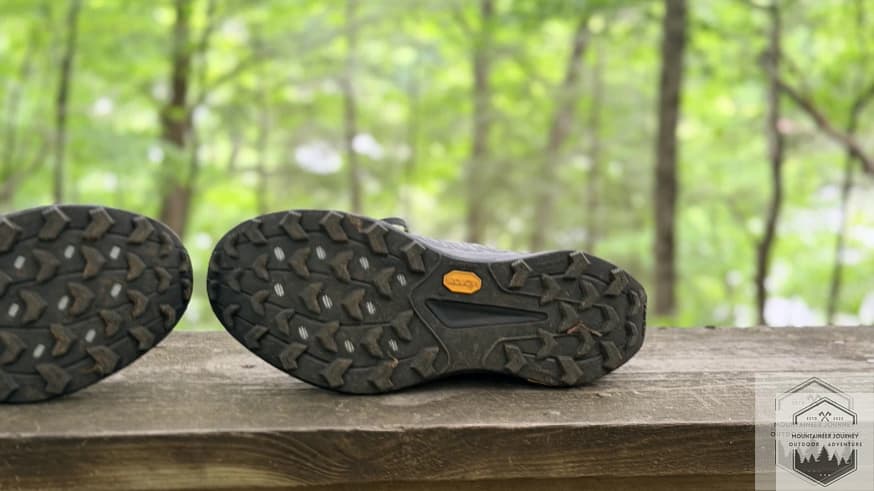
Traction is the biggest upgrade in the Saucony Peregrine 16. The shoe features a Vibram Megagrip outsole with 4mm lugs, and the difference from the previous PWRTRAC outsole on the Saucony Peregrine 15 is obvious.
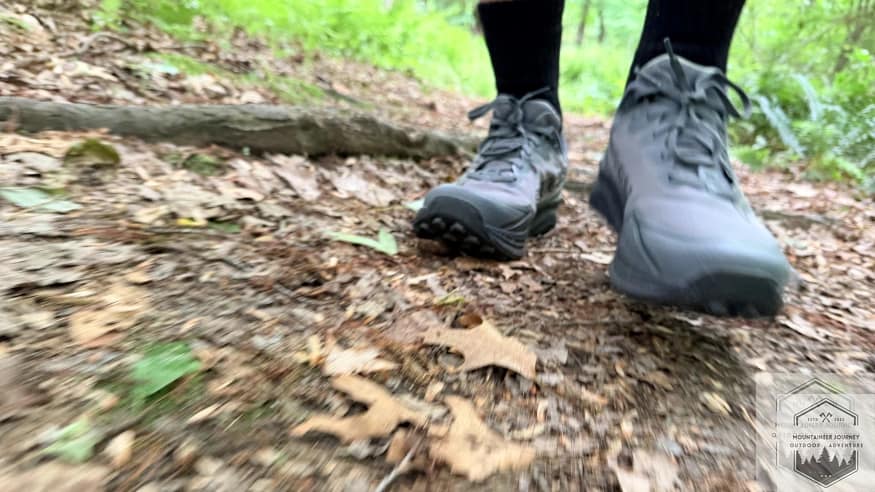
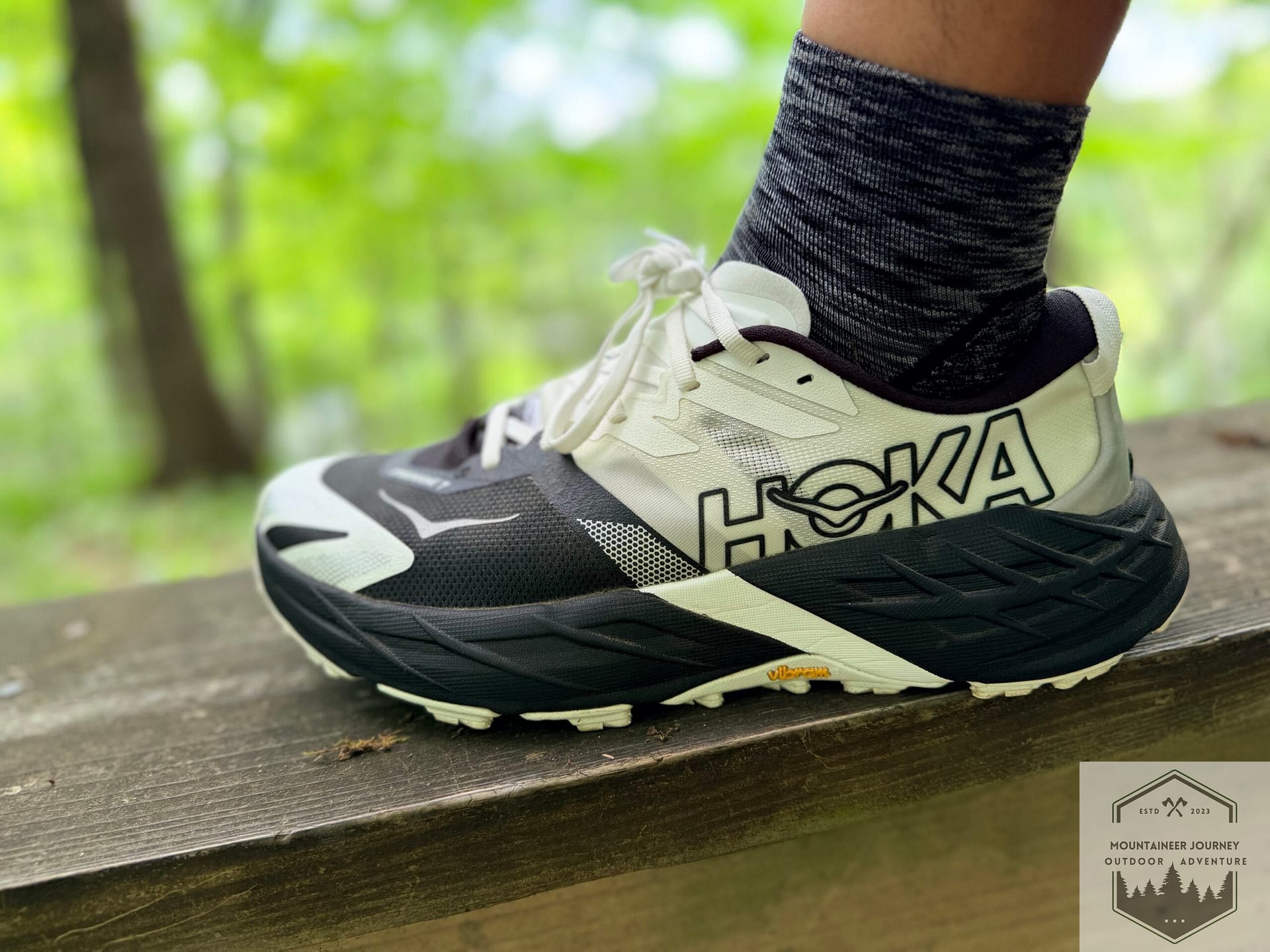
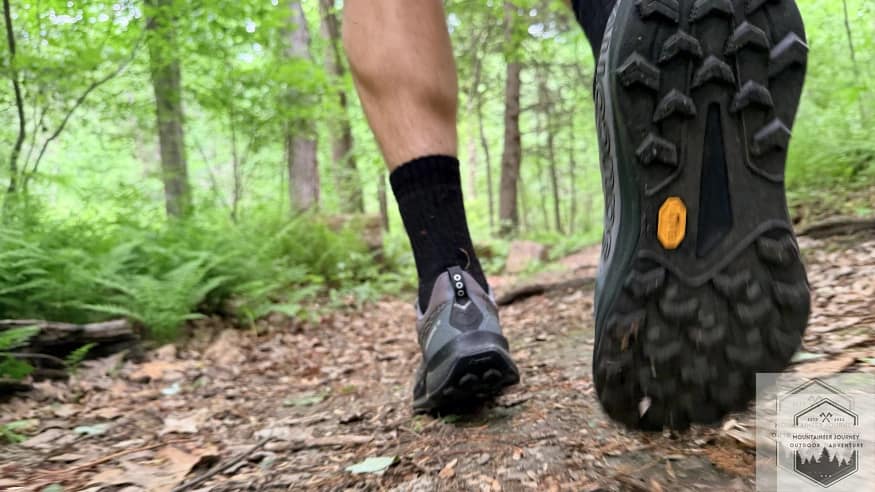
The new Vibram Megagrip outsole has micro-spikes, just like the new Hoka Speedgoat 7. I tested them on wet rock, slick roots, loose gravel paths, and rocky and technical terrain. The excellent grip and added underfoot protection provide a robust base. The Peregrine 16 conforms to uneven surfaces and holds rock-solid grip on challenging technical trails.
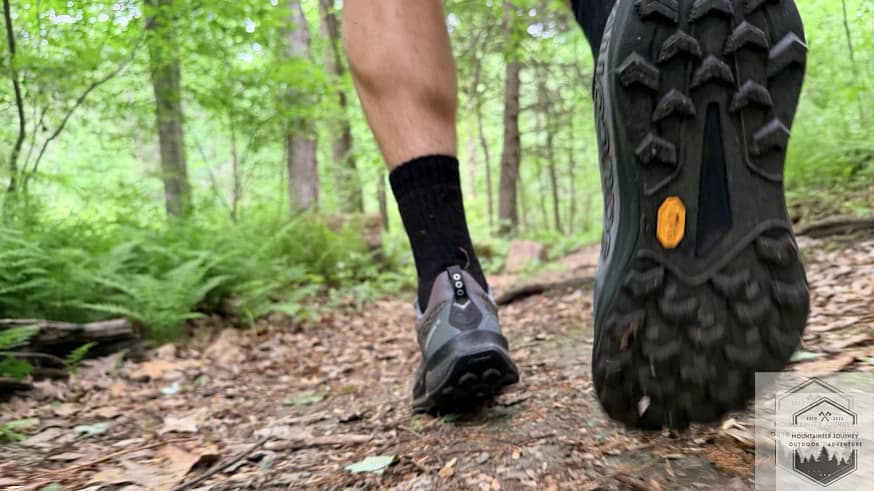
The chevron-shaped lugs give you that extra edge for grip when you need it. They also have reverse-braking lugs on the heel to help you slow down, like the Brooks Cascadia 20. On steep climbs, the forefoot lugs bite well into dirt and rock with great ground contact. I felt this is one of the best shoes for side-hill running during my testing.
One limitation of the shallow lug design is grip on gravel and mud. The lugs don’t bite well into uneven gravel. However, proper form and initial ground feedback make it easy to adjust your stride and keep your foot secure in these scenarios.
Overall, the traction is outstanding. Compared to other trail shoes, the Saucony Peregrine 16 really delivers.
Traction Score: 9/10 (20%)
Stability & Support
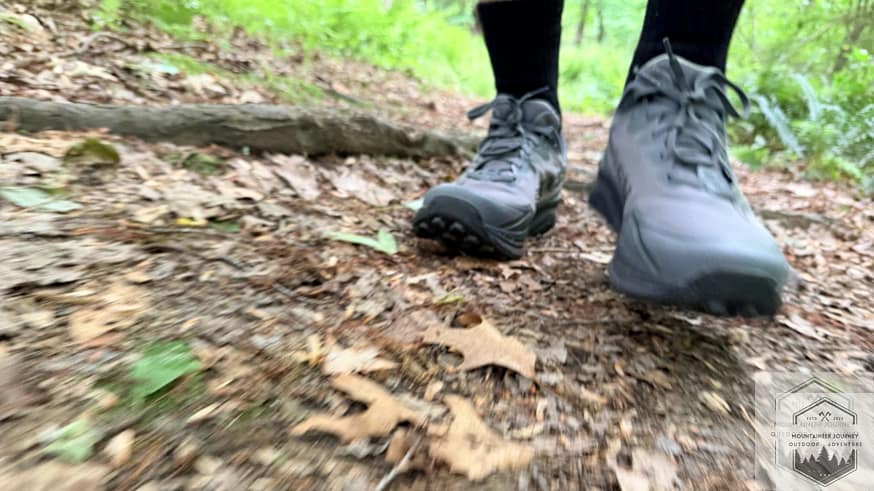
The Peregrine 16 has a low 4mm heel-to-toe drop, which helps it feel stable and connected on technical trails. I like low-drop trail running shoes for rocky terrain because they keep the foot closer to the ground and make it easier to react quickly to uneven surfaces. Testing these on boulder fields, I felt I could react quickly and flip over my stride much
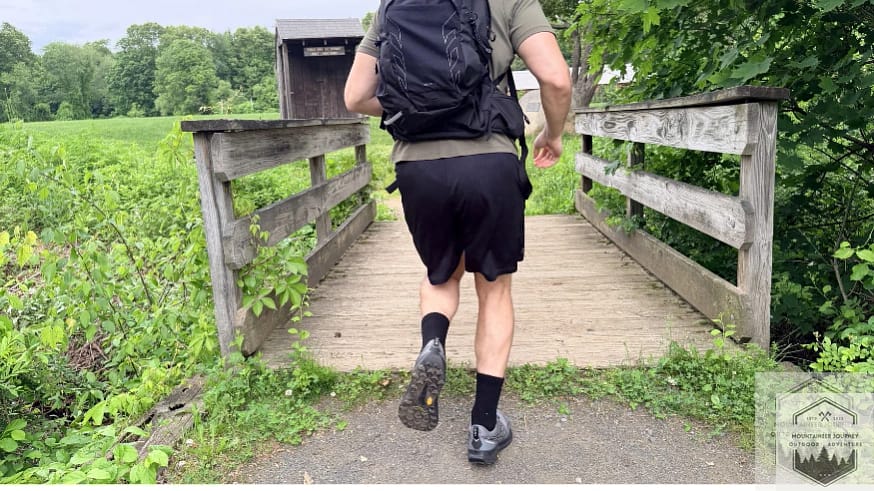
That being said, I really had issues with midfoot lockdown and ankle stability. I constantly rolled my ankle inward during testing, especially on uneven terrain; the ankle height and stability of this model are subpar. Therefore, I don’t recommend these as a hiking shoe, especially if you’re carrying extra weight in a hiking backpack.
A deeper heel cup design would have helped the shoe perform much better during our testing period. The midfoot lockdown comes from the shoe’s high volume, so stick to the regular width or bulk up on your socks. The platform isn’t super wide, so it doesn’t do a great job dispersing forces, but it is made to be nimble and agile rather than a maximum-stability shoe.
At the end of the day, this really depends on what type of runner you are.
If you can consciously control your stride and adapt based on ground feel, stability won’t be an issue. However, if you depend on your shoes to do this work, I would avoid the Peregrine 16.
Stability & Support Score: 7.5/10 (20%)
Weight
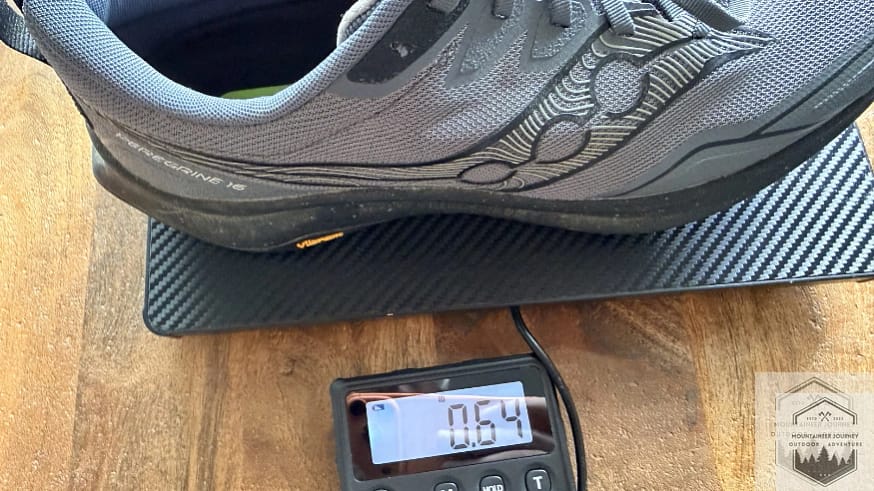
We weighed the Saucony Peregrine 16 at 10.2 oz per shoe on our calibrated scale. This is the same exact weight as the Hoka Speedgoat 7. On foot, it feels quite lightweight, with weight evenly distributed throughout the shoe.
For a trail runner with a Vibram Megagrip outsole, 4mm lugs, a reinforced upper, a toe guard, a rock guard, and added midsole foam, that is a very good weight.
It is not an ultralight racing shoe, but it feels light enough on foot for daily trail running.
Weight Score: 8/10 (15%)
How’s The Overall Protection Of The Peregrine 16?
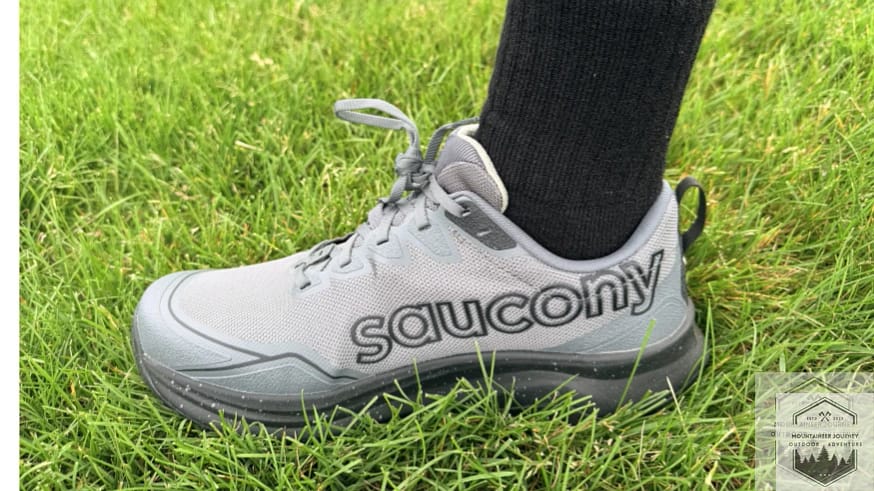
The Peregrine 16 offers better protection than I expected while still feeling moderately flexible. The biggest improvement is the combination of added stack height, softer PWRRUN foam, and the forefoot rock guard.
The shoe does not use a stiff full-length rock plate, but the rock guard protects well against sharp rocks and roots. On rocky trails, I could still feel the trail, but pointy impacts were muted enough that my feet did not feel beat up after longer runs. This is a good middle ground between underfoot protection and ground feel.
The toe bumper is about average. I still feel some rock kicks on heavier, rock-laden trails, but it absorbed a good amount of the impact. The overlays help protect high-wear areas without making the upper feel stiff.
The gusseted tongue helps keep out dirt and small stones, and the shoe works with gaiters for extra coverage on loose gravel, snow, or sandy trails.
Overall, protection is excellent for a flexible trail shoe. The Peregrine 16 gives enough underfoot protection for rocky terrain while still preserving the responsive feel that makes the Saucony Peregrine line popular.
Overall Protection Score: 9/10 (10%)
Is The Saucony Peregrine 16 Worth It?
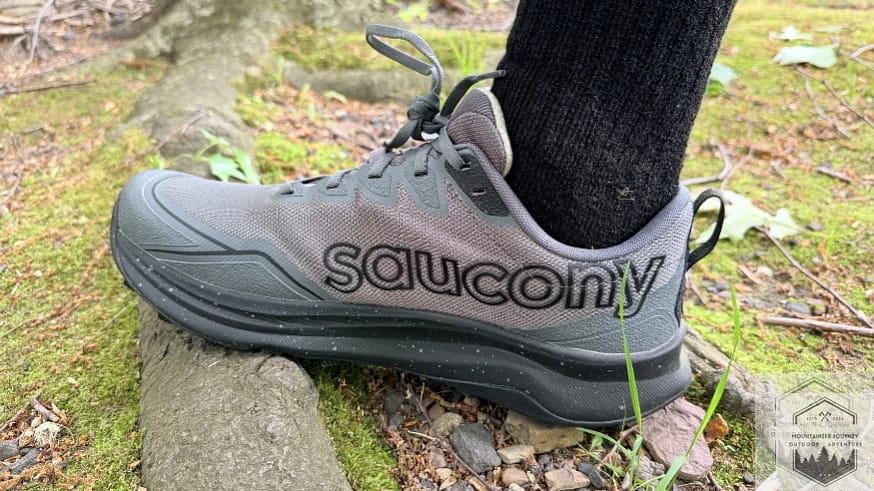
At $150, the Saucony Peregrine 16 offers great value for runners who want a nimble trail shoe with technical grip and solid protection. This is one of the few trail running shoes that offers a lightweight, nimble fit for wide-footed runners, which is such a rare find.
The upgraded midsole foam didn’t compromise its technical trail capabilities, and Saucony kept the Peregrine’s known ground feel and responsiveness.
The weaknesses are also worth noting. I would not buy these shoes if you rely solely on stability-focused shoes. I’d also avoid these if you want a more comfortable trail shoe that still has decent ground feel.
If you’re looking for a more comfortable trail running shoe with a moderate amount of trail feel, check out the Brooks Cascadia 20, our best-rated trail running shoe of 2026. A good alternative to the Peregrine 16, with a minimal stack height and a fit that works for wide-footed trail runners, is the Topo Ultra Aventure 5.
Value Score: 4.5/5 (5%)
Scoring Breakdown
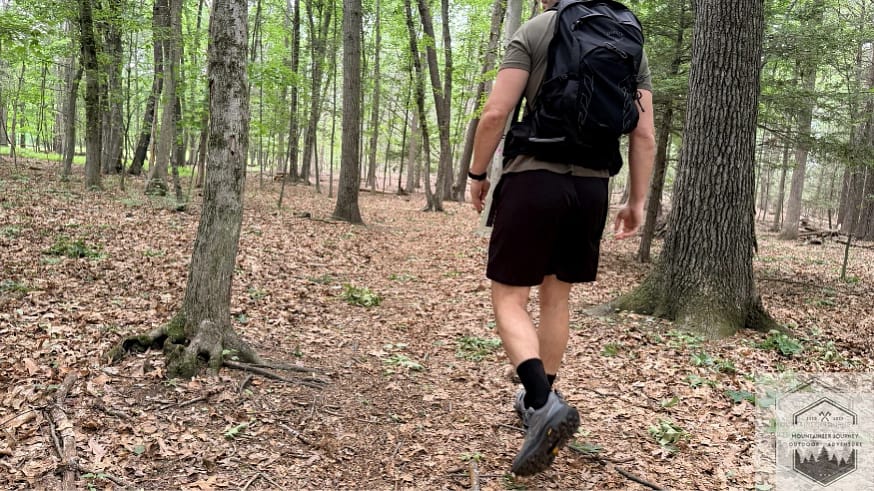
Comfort & Fit (25%): 7.5/10
Traction (25%): 9/10
Stability & Support (20%): 7/10
Weight (15%): 8/10
Overall Protection (10%): 9/10
Value (5%): 4.5/5
Total Weighted Score:
1.875 + 2.25 + 1.40 + 1.20 + 0.90 + 0.45 = 8.075
Overall Score: 8.1/10
Frequently Asked Questions
What terrain is the Peregrine 16 best suited for?
The Peregrine 16 is best for technical trails, rocky terrain, loose dirt, wet rocks, roots, hard-packed snow, dirt singletrack, moderate mud, and varied terrain.
How does the Peregrine 16 compare to the Peregrine 15?
The Peregrine 16 improves on the Peregrine 15 with a new Vibram Megagrip outsole, better wet-surface traction, a higher PWRRUN midsole stack, and a roomier toe box.
How We Tested and Our Methodology
This comprehensive Saucony Peregrine 16 review is based on all objective testing standards. We have tested trail runners for 16+ years and found a formula that satisfies readers, helping them find the right outdoor gear for themselves.
We buy all products with our own money and remain completely independent of manufacturers. No sponsorships or paid promotions influence our objective scoring methodology.
All testing includes direct comparison with competing trail shoes to provide the most accurate assessment possible for your buying decision.

Tyler
Tyler is the founder Mountaineer Journey and a professional Mountain Guide with 15+ years of technical experience in trekking, mountaineering, and trail sports. Having logged thousands of miles from rugged alpine summits to urban paths, Tyler provides rigorous, field-tested insights on hiking, walking, and trail running gear. All reviews are 100% unsponsored and unbiased, ensuring you get honest scoring based on real-world performance. His mission is to help outdoor enthusiasts of all levels find reliable equipment that ensures comfort, safety, and performance on any terrain.