

Our Score
Salomon Quest 5 Review 2026 | Unsponsored
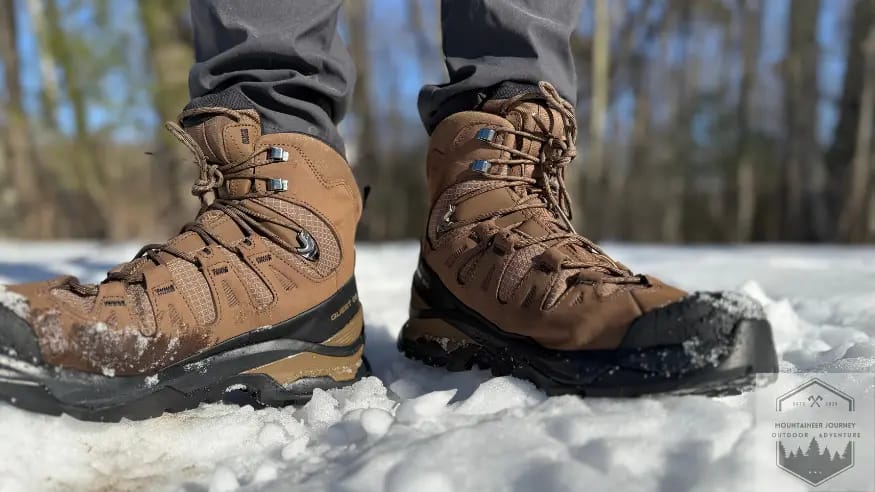
In this article, I’m going to share my HONEST Salomon Quest 5 GTX review for those wondering whether they are WORTH IT in 2026. Previously, we tested the Salomon Quest 4 GTX with good results.
For this review, I have put in over 50 miles of testing the brand-new Salomon Quest 5, released at the beginning of February 2026.
I’m familiar with how they feel and perform on the trails, as well as the improvements from the previous model. I’ll go over comfort, traction, overall protection, water resistance, fit, stability & support, and durability.
As a trail guide with 16 years of experience, I’ve seen boots fail in every way imaginable. Here’s my honest take on the Salomon Quest 5 GTX. I’ll also be directly comparing it to the Salomon X Ultra 5, Hoka Kaha 3, and Lowa Renegade.
Related: Best Salomon Hiking Boots, Best Men’s Hiking Boots
Editor’s Note: This article was updated on 9/30/26 with new testing insights and recommendations.
See Our YouTube Review Of The Quest 5
Salomon Quest 5 GTX Pros and Cons
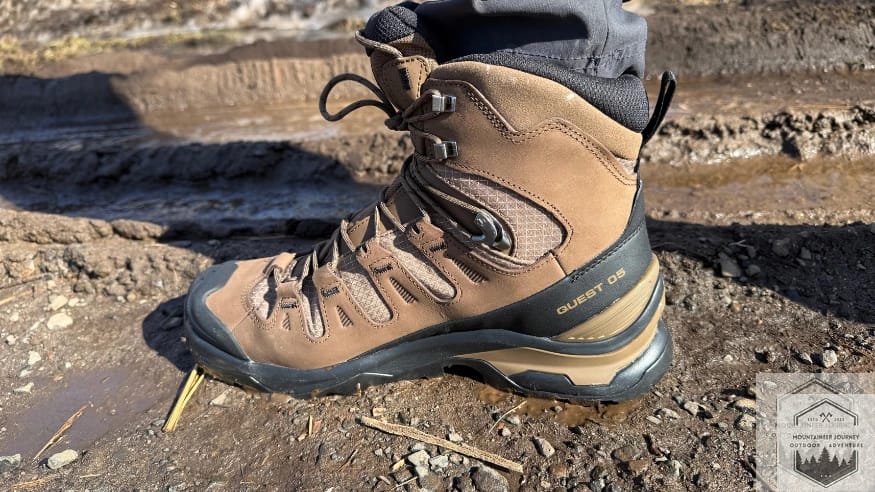
Pros
- Improved durability
- Excellent protection
- Ankle Stability
- Advanced chassis provides stable lateral support
- Impressive Water Resistance
Cons
- Higher Price Point
- Large Fit
Should you buy the Salomon Quest 5 GTX?
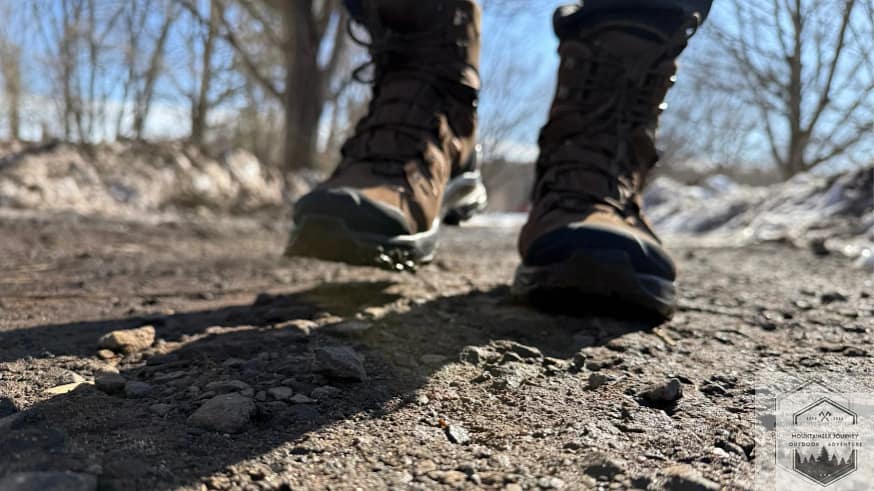
Buy if
- You prioritize ankle stability and support on the trail.
- If you’re looking for a top-rated backpacking boot
- You want a reliable grip with a firm footbed.
DON’T Buy if
- You mainly hike on mild trails without much technical terrain
- You are looking for a budget style hiking boot
- You prefer lighter hiking boots
Salomon Quest 5 Comfort: 8/10
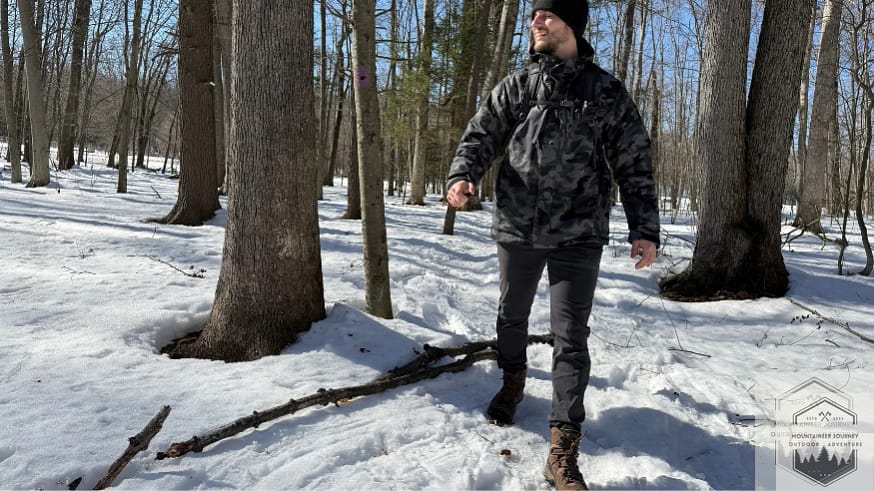
Trying on the Salomon Quest 5 for the first time, I felt they finally improved the boot’s midsole. Before, it was quite narrow, with little to no sock liner. This time, they added an Ortholite sockliner and widened the boot’s midsection.
Step-in comfort was also improved. The insole is a bit cushier than the previous model and has much better shock absorption. The Quest has never been a plush boot; however, this iteration is slightly more comfortable.
I tested the impact absorption with a 40lb backpack across some granite and limestone trails. I felt the impact absorption was good but not top-of-the-line like any of the Hoka Hiking boots. I also got good trail feel.
The toe box has a nice, wide fit without any compressive areas, and it didn’t have any unnecessary toe slams or scratchy overlays. The tongue could use a bit more padding, but it was improved over the previous model with a slightly softer lining.
Descents were a little rough. I kept slamming my toes into the front of the boot, which was firmer due ot the rubberized toe box. Adding a little more padding this area would’ve been much better.
I measured the heel-to-toe drop at 12 mm, which is quite high compared to the previous pair. However, keep in mind these are hiking boots, which allow for that natural heel-to-toe transition.
One area that could have been improved was adding a slightly rockered sole, like the Salomon Elixir Activ. This would have improved the “heaviness” feeling of these boots.
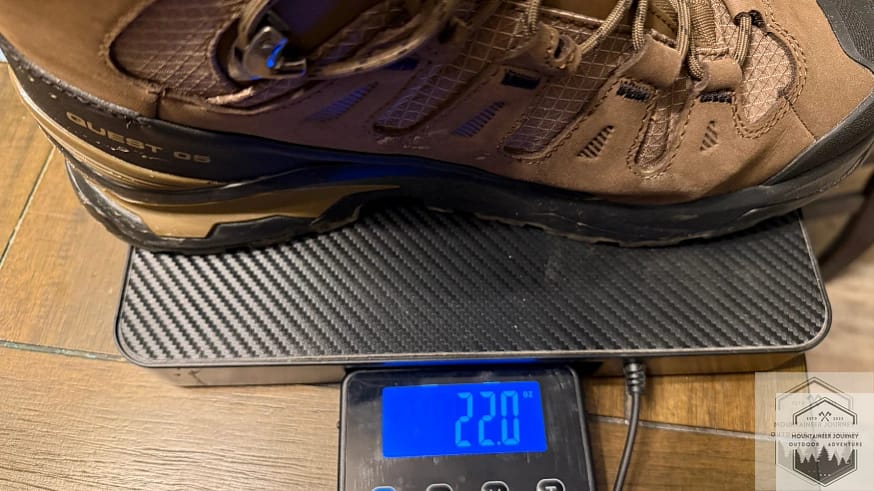
Weighing at 22 oz per pair, these are definitely on the heavier side; however, this is the price you pay for a heavier backpacking boot. For comparison, the Quest 5 weighs 3 oz heavier than the Oboz Bridger, a similar, heavier backpacking boot.
Traction: 8.5/10
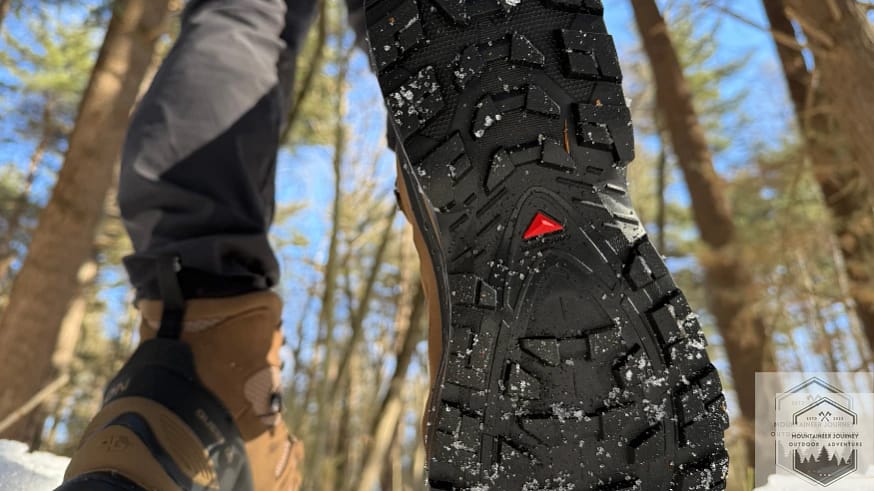
Salomon uses their proprietary Contagrip TA, which is impressive on the trail. What I liked about this iteration was that Salomon added double lugs to the medial and lateral sides of the entire outsole.
This was a game-changer because I could hold a better edge, especially while climbing rocky, uneven terrain, and it helped me bite into the extra grip you need. Also, the heel lugs are placed in a reverse pattern, which helps create more friction while climbing up extremely steep descents. I notice this especially while climbing up uneven gravel.
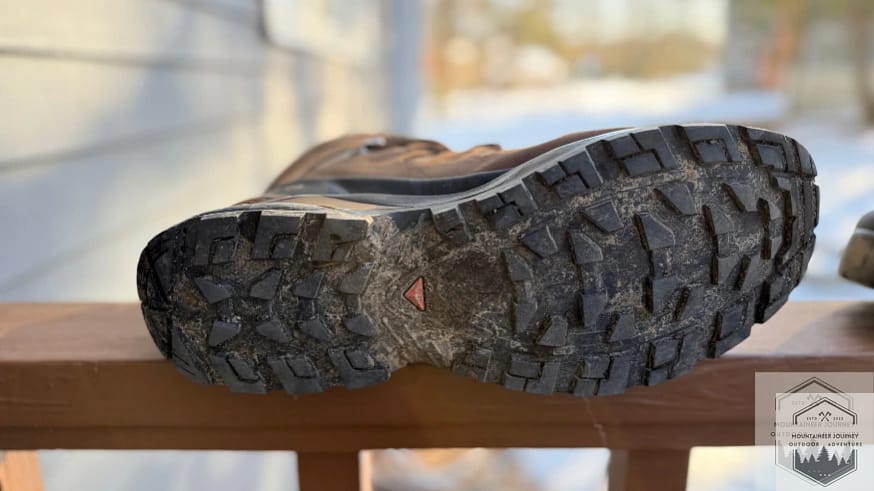
One area for improvement was that the heel width tends to narrow a little towards the heel of the boot. Adding more surface area and possibly a flared heel design would have helped the Quest 5 earn an even higher traction score.
Testing the Quest 5 on snow, limestone, granite, loose gravel, packed dirt, and wet rock showed me what this boot can do and where it falls short. On wet limestone, I had a few slips, but nothing major.
Overall, Salomon finally improved their outsole design with better grip than the previous iteration. However, it still has limitations in wet terrain.
Overall Protection 5/5
Overall protection has always been what the Quest model is known for. It has a robust new buckle throughout the boot, with new rip-stop mesh in low-stress areas to help reduce weight. I didn’t experience any rips or tears in these areas during testing.
The toe bumper is one of the most robust you can ask for in the hiking boot market. No crazy root kicks or worrisome sharp objects will pierce through this.
The gusseted tongue kept debris out of the shoe, and I measured the ankle height at 7 inches. This is perfect for the ankle support many backpackers want. I did not experience ankle rolls or twists during my testing period.
If you’re in the game for overall protection, the Quest 5 is one of the best you can get on the market when it comes to protection.
Water Resistance 5/5
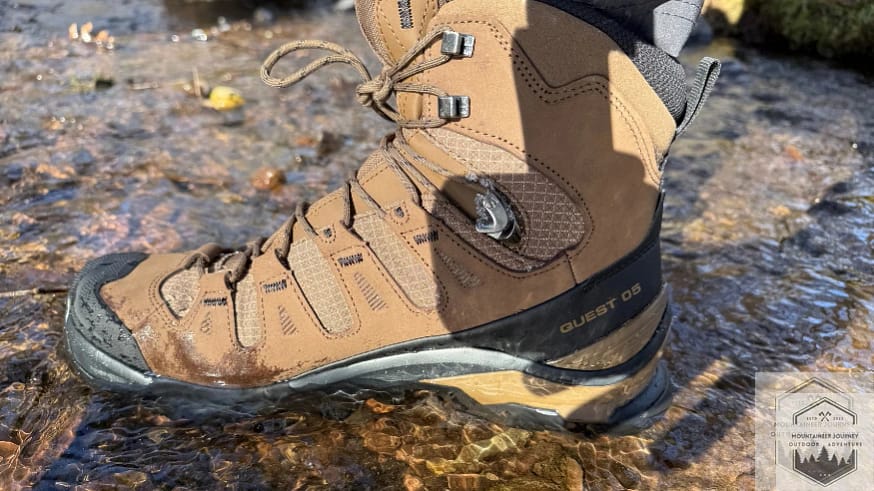
The Quest 5 is equipped with the Gore-Tex liner for waterproofness. I tested these in our ten-minute submersion test and during heavy snow periods.
I am pleased to report that no water got in, and these are fully waterproof boots for creek crossings, snow, and rainy-day hikes.
That said, the heavy nubuck leather and added Gore-Tex liner can get quite hot in the summer months. The breathability is limited, so if you want a lighter, more breathable option, this isn’t the one to go for.
I also noticed the Quest 5 took much longer to dry after being fully submerged in water, which isn’t a great sign for durability. The water lingers on the boots longer, which tends to create more stress risers and break them down quicker.
Does The Salomon Quest 5 Fit Well?
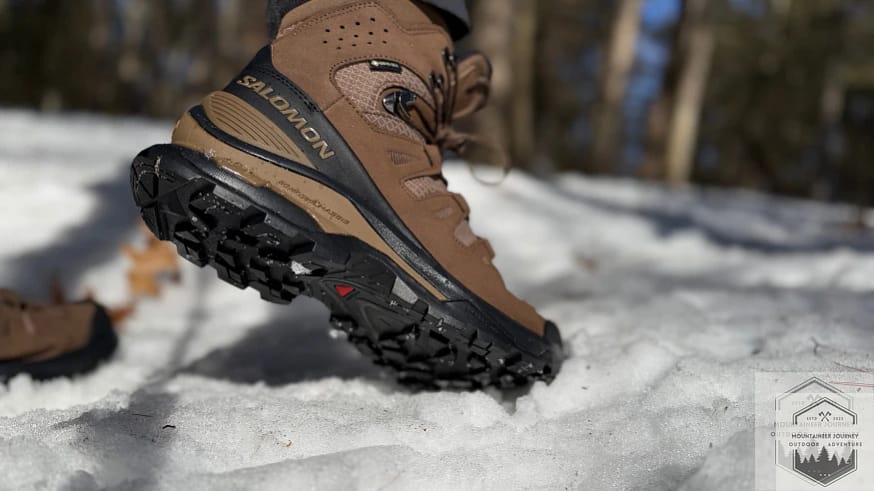
The Quest 5 is the exact opposite fit of the previous iteration. This model actually fits on the larger side. I had a little bit of heel slip when I tested a men’s size 10.5. However, it is easily corrected with a heel-lock lacing technique.
As I said before, you may experience your toes slamming into the front on descents if they do fit slightly longer.
I would recommend moving down a half size if possible.
Salomon Quest 5 Fit 4/5
Quest 5 GTX Stability & Support 5/5
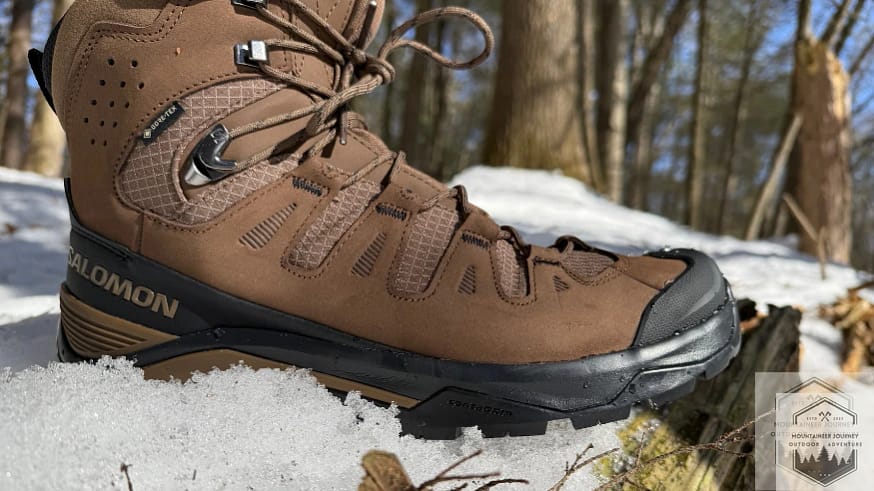
This is what you’ve been waiting for: an extremely stable, over-the-ankle backpacking boot. Salomon really delivered on this iteration.
They brought back SensiFIT technology, a dynamic contour that wraps around your foot from the midsole up to the laces. This completely eliminated internal movement in my foot while hiking uneven terrain and really improved midfoot stability. This is similar to the same lockdown system of the Lowa Renegade.
The great thing about SensiFIT is that it is dynamic and moves with your foot, rather than being a constant cast-like material around your foot. Now add the Active Support Wings, which aid lateral stability with the advanced chassis, and you get some of the best-in-class stability and support in hiking boots.
Testing out the Quest 5 on uphill limestone while trying to hold an edge, I really felt the Active Support Wings kept my ankle from oversupinating and kept me neutral the entire time. Ankle stability is top-notch; however, those with thinner calves will have to really lock down when lacing up these boots because the opening is so wide.
Overall, the Salomon Quest 5 offers some of the best stability and support you can ask for in an over-the-ankle hiking boot.
Durability 8/10
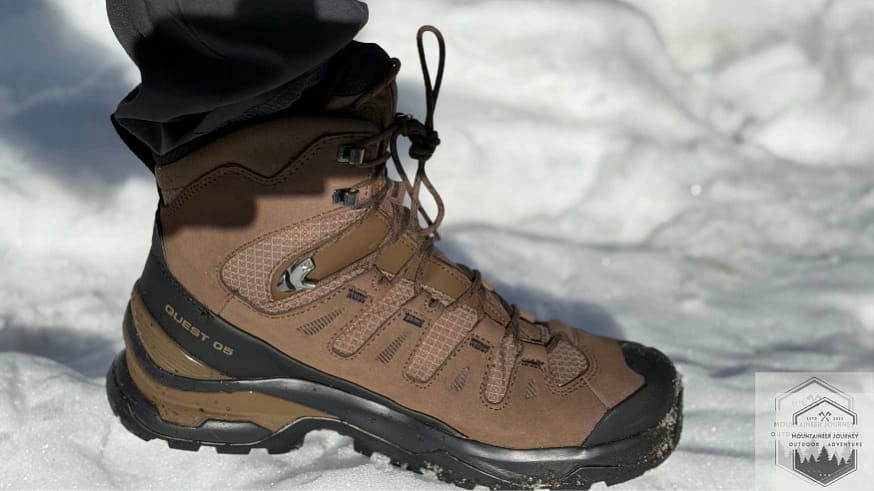
At the time of this writing, I’ve tested the Salomon Quest 5 for approximately 50 miles. I haven’t noticed any breakdown in the seams or stitching, and the lugs are still holding well with no signs of wear.
The outsole is holding up well, with no noticeable abrasion, grip loss, or compression. Salomon didn’t add many stitching seams to this boot, which is good for long-term durability, since fewer stress risers can break down over time.
However, as mentioned before, these boots take much longer to dry than other Nubuck leather boots. So if you’re constantly submerging these boots, keep an eye on them, as that can lead to premature breakdown.
Overall, the durability of the Quest 5 has shown it can be taken
Is the Salomon Quest 5 GTX worth it?
The Quest 5 is made for one type of hiker in mind. These boots are for adventurers seeking top-notch stability and ankle support you won’t find in any other model.
However, this model has the drawback of not providing top-notch comfort and being heavy. These boots are quite bulky and definitely among the heaviest we have tested to date.
One must also consider the price, as these are priced at $240, which is in the higher echelon of hiking boots.
However, if you are an adventurer who needs top-notch ankle support and is looking for a great backpacking boot, this is a very good option.
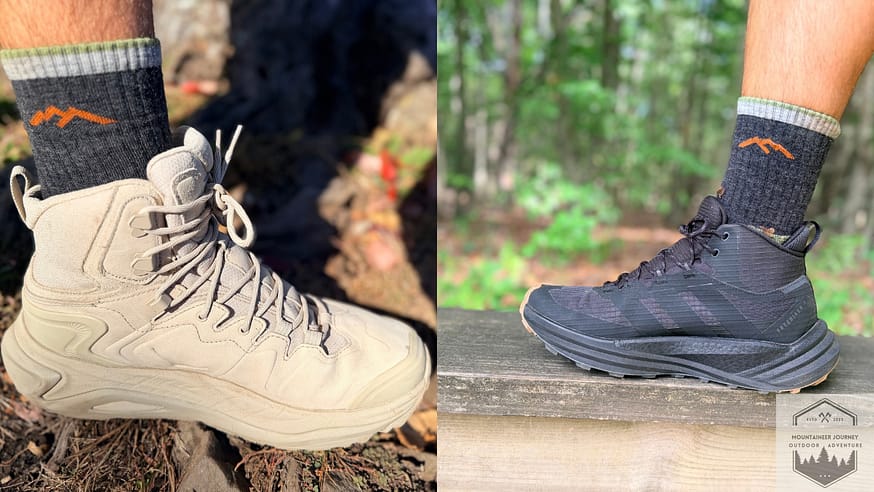
For a lighter option, check out the Salomon X Ultra 5, which has the same Contagrip outsole and stability features but less ankle support. For more comfortable models, check out the Hoka Kaha 3 or Adidas Terrex Free Hiker 3, both with great traction but less stability and ankle support.
Value: 4/5
Scoring Breakdown
Comfort: 8 / 10
Traction: 8.5 / 10
Overall Protection: 5 / 5
Waterproofness: 5 / 5
Stability & Support: 5 / 5
Fit: 4 / 5
Durability: 8 / 10
Value: 4 / 5
Total: 49.5 / 55
Our Rating: 8.7 / 10
How We Tested and Our Methodology
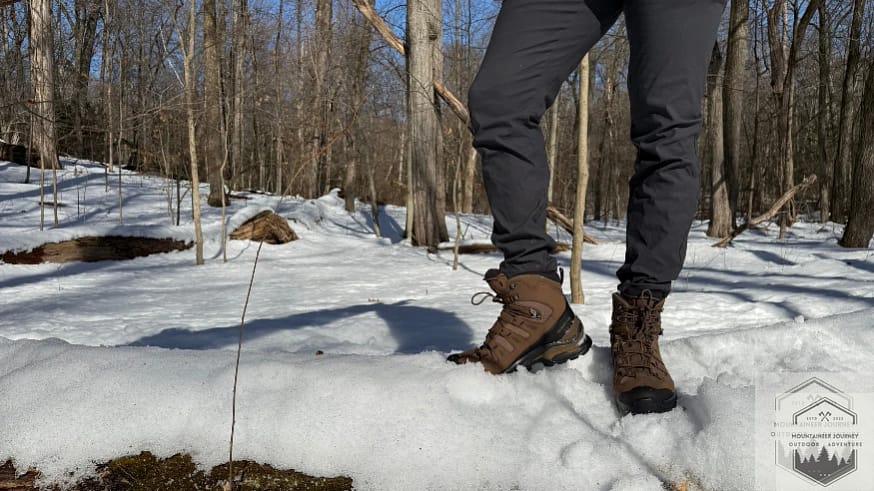
I personally tested the Salomon Quest 5 since its release this year, 2026, with the sole intent of giving you the most unbiased review possible. Mountaineer Journey is a 100% independent publisher with years of testing and reviewing outdoor equipment.
Over the past decade, I have logged over 2,500 hiking miles across diverse terrains, from the rugged Appalachian Trail to the challenging Rocky Mountains. This experience lets me accurately evaluate the Salomon Quest 5’s performance in real-world conditions.
We currently pay for the products we test ourselves; no company or manufacturer pays us to sway our opinions or decisions.
Tyler

Tyler
Tyler is the founder Mountaineer Journey and a professional Mountain Guide with 15+ years of technical experience in trekking, mountaineering, and trail sports. Having logged thousands of miles from rugged alpine summits to urban paths, Tyler provides rigorous, field-tested insights on hiking, walking, and trail running gear. All reviews are 100% unsponsored and unbiased, ensuring you get honest scoring based on real-world performance. His mission is to help outdoor enthusiasts of all levels find reliable equipment that ensures comfort, safety, and performance on any terrain.