Our Score
Brooks Cascadia 20 Review | Unsponsored
Our Verdict
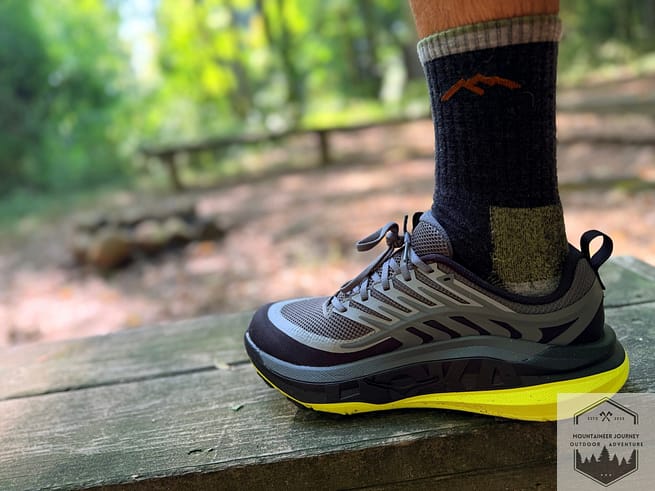
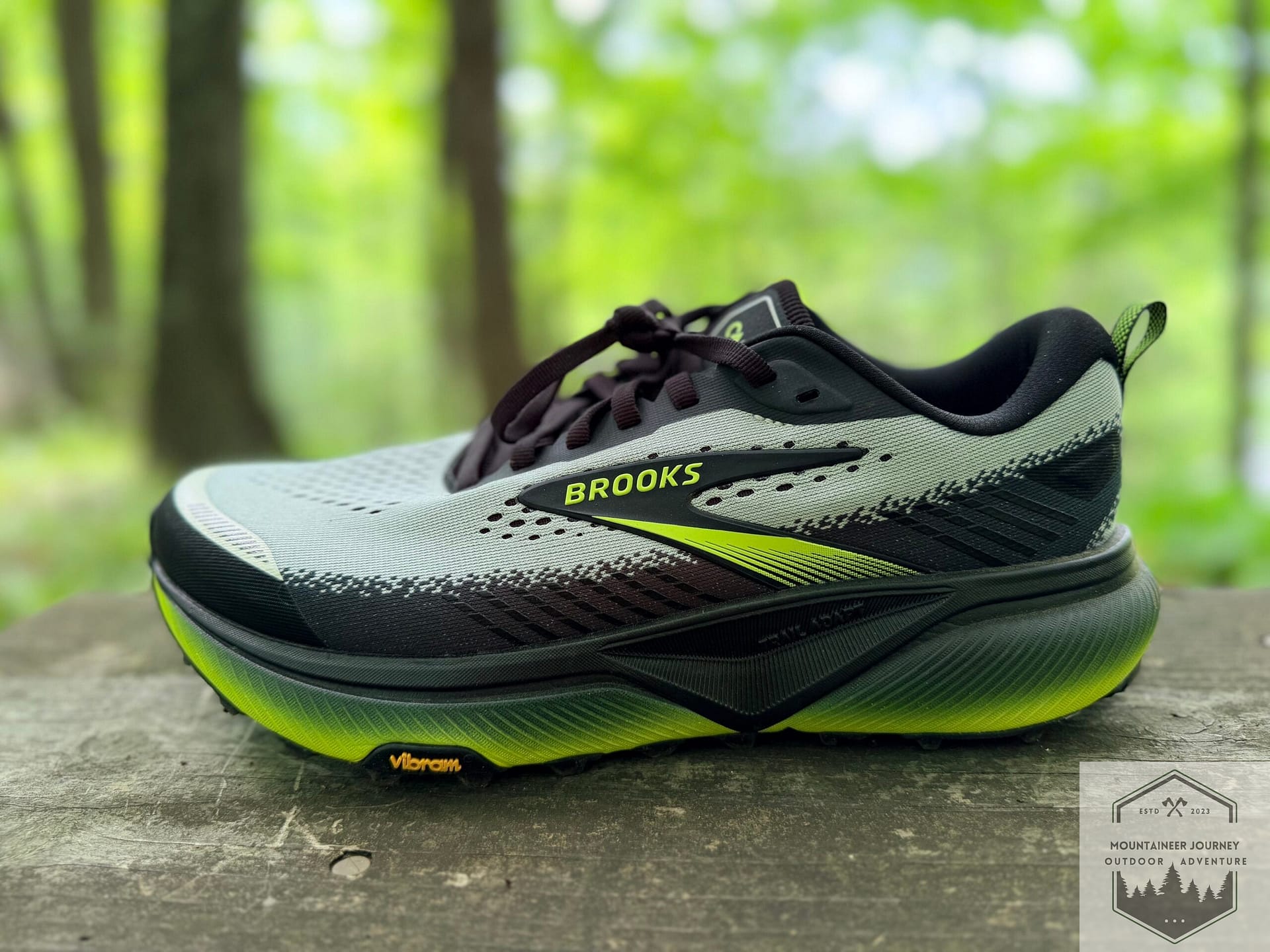
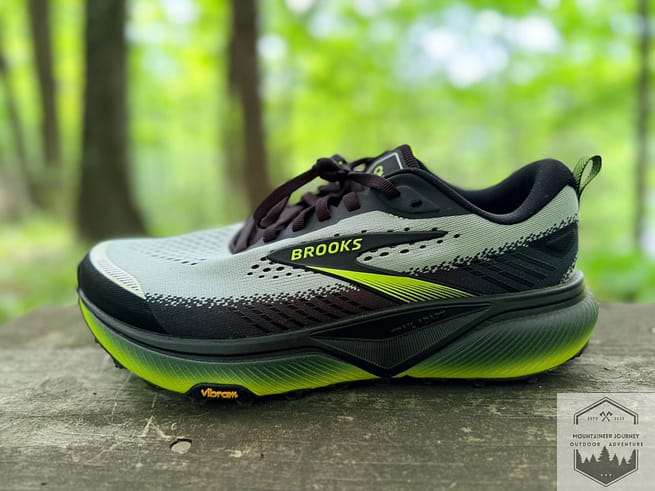
The Brooks Cascadia 20 is our number one best-rated trail running shoe of 2026. The upgraded Vibram Megagrip outsole is what completes this shoe from its previous iteration. The DNA Flash V2 midsole is a massive upgrade with even more cushioning than the Cascadia 19.
Technical trail runners will love the wide platform and mudguard inserts. They also feel a lot lighter than the previous version on foot. They are perfect for hybrid hiking shoes as well as everyday trail running shoes.
This review is completely unsponsored; I bought these with my own money and tested them with zero bias.
Brooks Cascadia 20 Pros & Cons
Pros
- Exceptional traction across varied terrain types
- Excellent comfort
- Available GTX version
- Top-notch stability
Cons
- No rock plate
- Lacks agility

Who should buy the Brooks Cascadia 20
- Trail runners seeking versatile traction across multiple terrain types
- Trail runners who are looking for a very plush model without the instability issues
- Previous buyers of the Cascadia 19, wanting upgraded traction
Who Shouldn’t Buy The Brooks Cascadia 20
- Runners looking for maximum foot protection (no rock plate)
- Those who prefer more ground feel on the trail, like in the Norda 001 or NNormal Kjerag 02
- Runners looking for ultralight trail shoes
Brooks Cascadia 20 Price
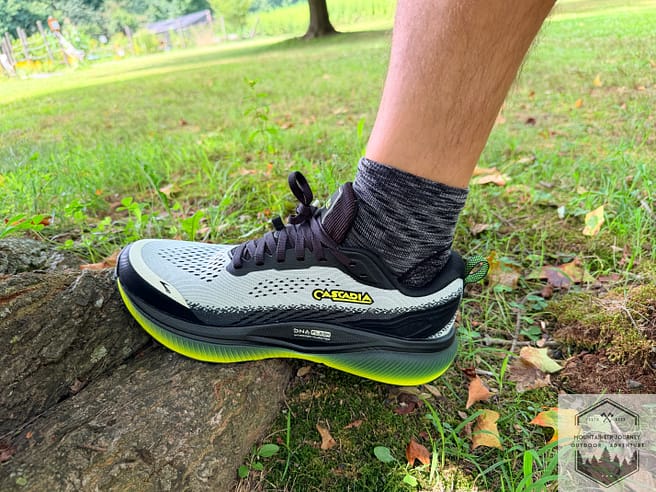
The current retail price for the Cascadia 20 sits at $160.
Comfort & Fit
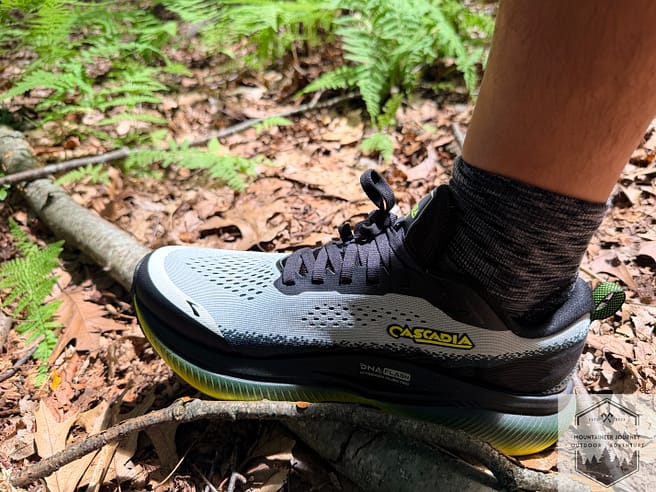
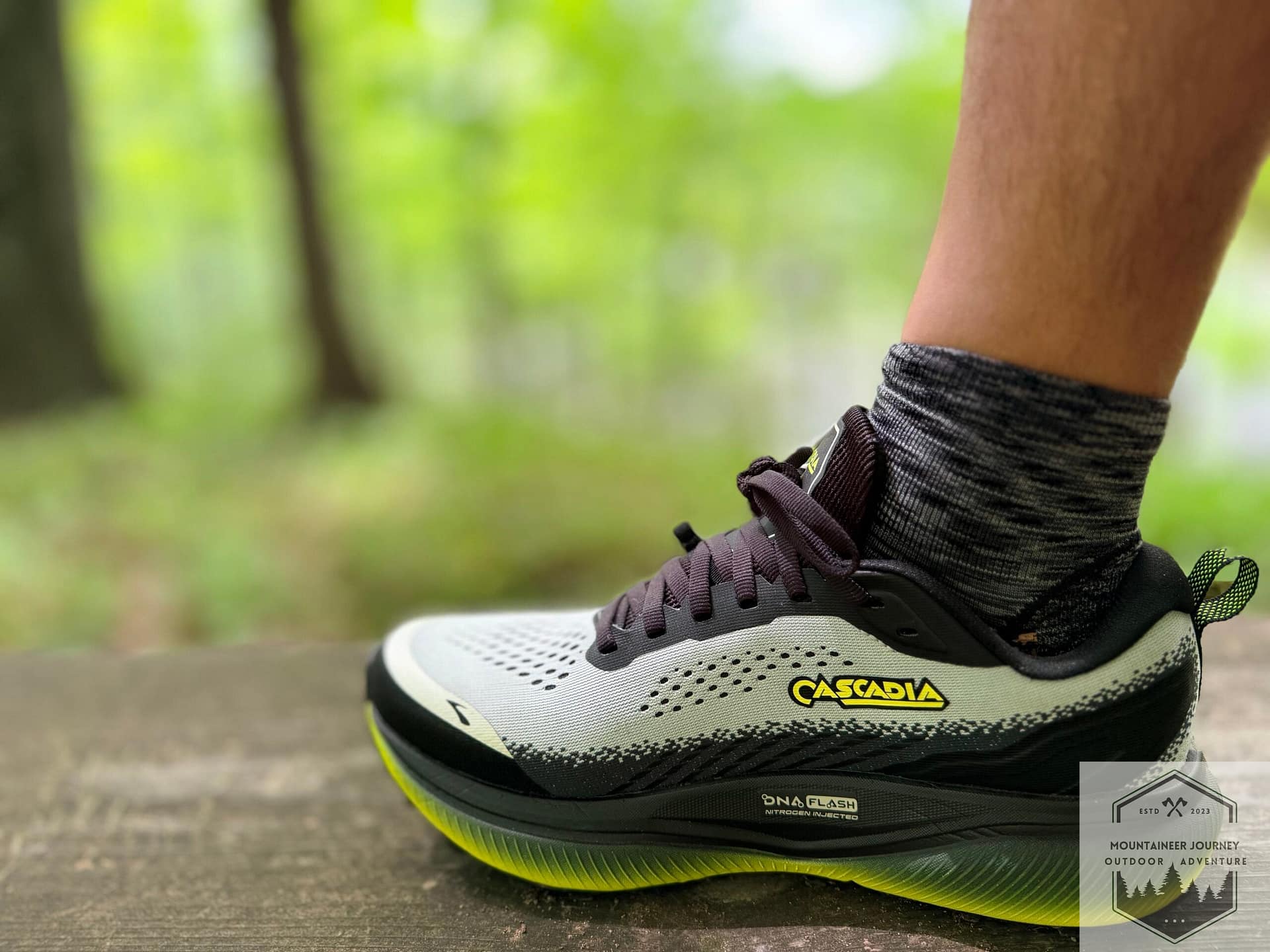
When I first put on the Cascadia 20, I could feel the immediate plus sensation underfoot; the DNA Flash V2 midsole is an upgrade over the previous Cascadia 19. It has a delicate balance of firmness and a plush feeling that doesn’t kill the stability.
I measured the heel stack at 38 mm, which is approximately 3 mm more than the previous iteration. I felt the impact absorption was top-notch. During descents on loose basalt, I felt the Cascadia 20 did an excellent job of absorbing pounding impacts, much better than the Speedcross 6 or even Mafate 5.
The shoes’ impact absorption significantly reduced my foot fatigue during longer trail runs of over 5 miles. On those extended runs, where most shoes would cause me to break down in my form due to exhaustion, the Cascadia allowed me to push a little further.
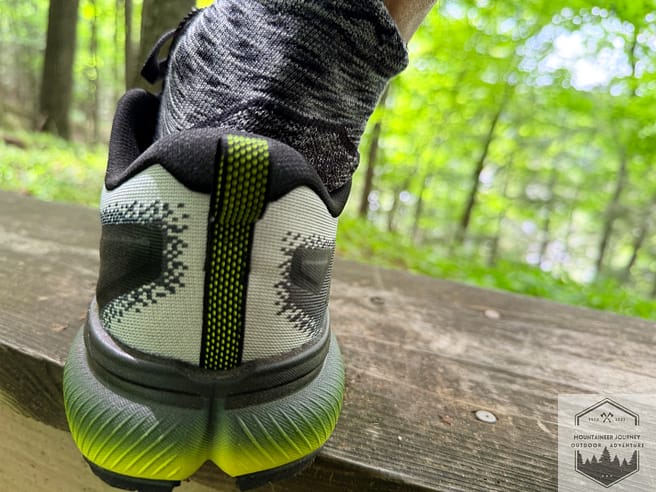
One unique feature of the Cascadia 20 is its plush heel cushioning. Many trail runners forgo this to reduce weight; however, it often becomes an area of irritation after longer miles in other trail running shoes.
The toe box measures at 4.1 in., which is exactly the same width as the previous iteration. Has more than enough room for your toes to splay out for better stability.
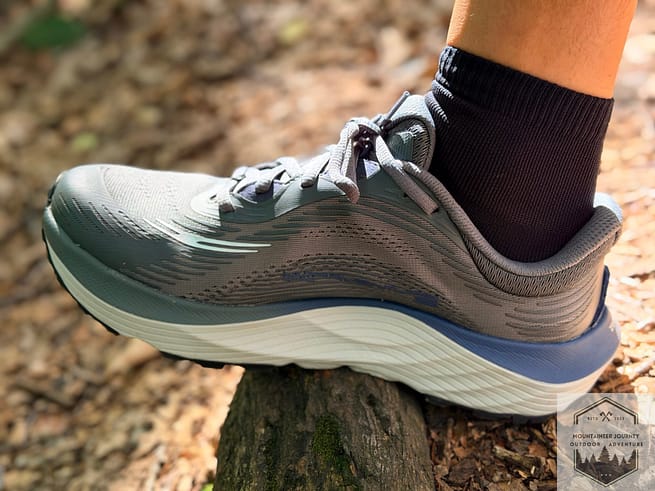
The upper has nice breathable mesh, especially for summer trail running and hiking. Brooks models offer excellent ventilation in their shoes, while the upper conforms well to your foot. This design provides ample space for high-volume feet without feeling compressive.
Overall, these fit true to size. I tested them in size 10.5 E and they fit perfectly. If you have tried Brooks in the past, stick to your normal size. Do not size up or size down. The sizing is very consistent across all Brooks models.
Comfort & Fit Score: 9/10 (20%)
Traction
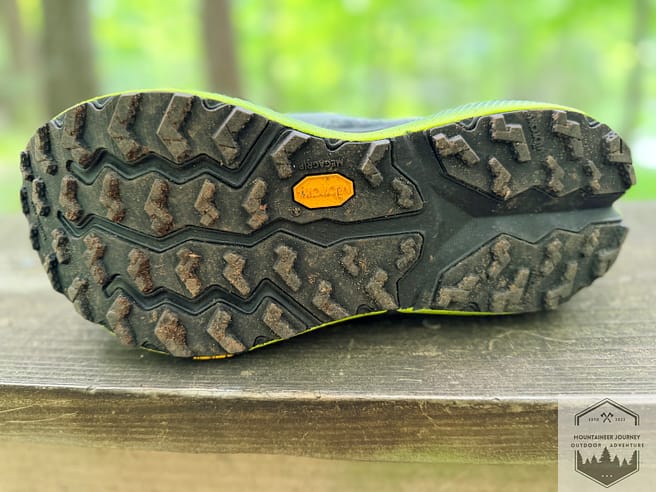
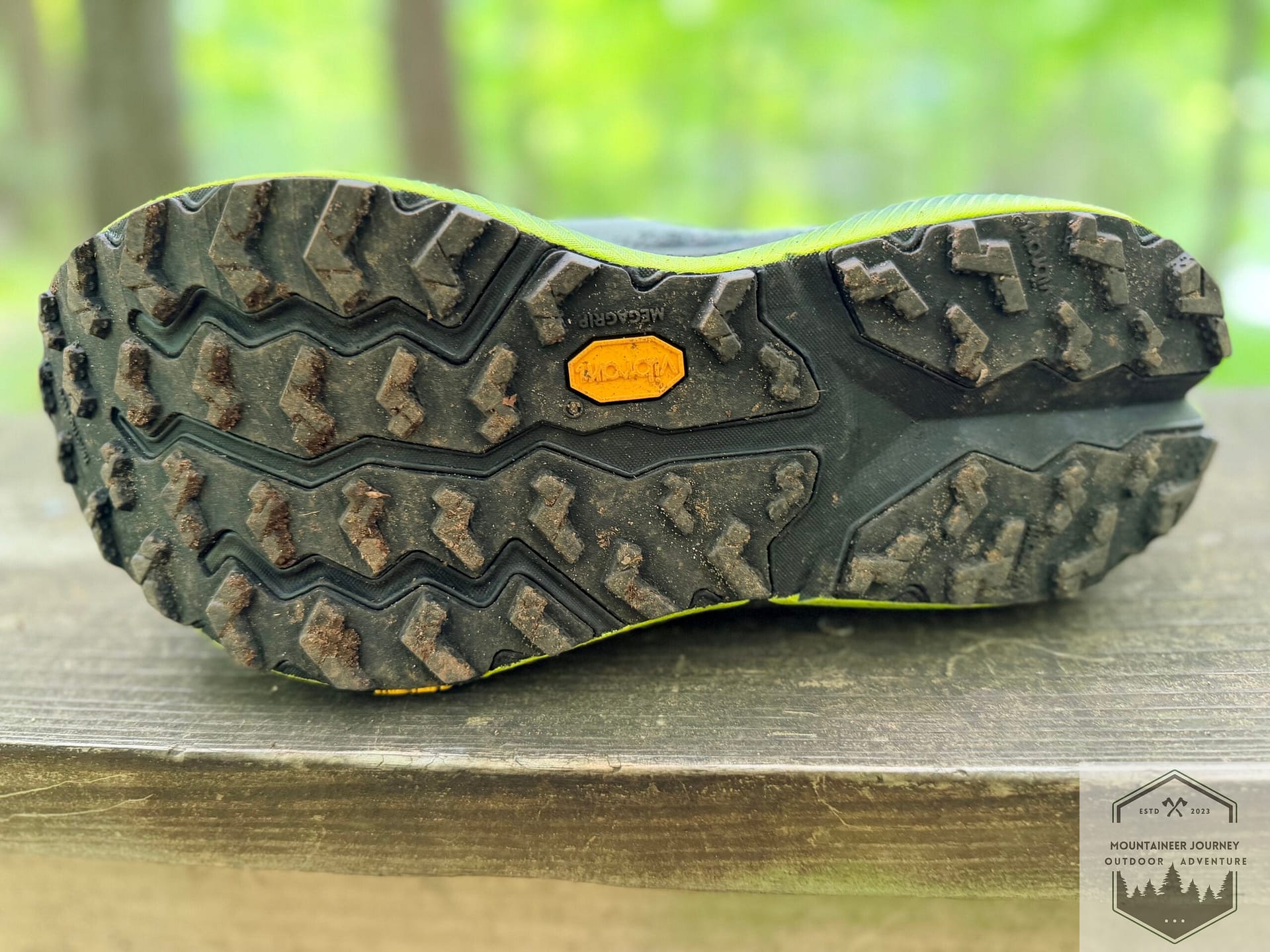
The biggest telltale upgrade on the Cascadia 20 is the Vibram Megagrip outsole. Previously, they had the TrailTack green outsole, which was very good; however, it was not as superior as the Vibram outsoles.
I measured the lugs at 4 mm, and the performance isn’t based on how deep the lugs are. It’s actually how they are patterned throughout the shoe.
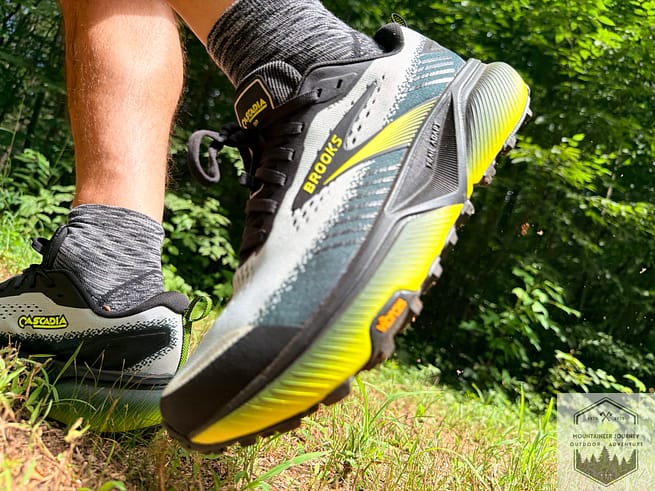
There are double-chevron lugs throughout the medial and lateral edges of the shoe, and they provide grip on uneven terrain, especially when I tested them on limestone and sandstone.
The lugs on the rear foot have a hexagonal shape, which significantly helps reduce side-to-side movement while I was climbing uphill. I noticed the most difference while ascending on limestone with these rear lugs.
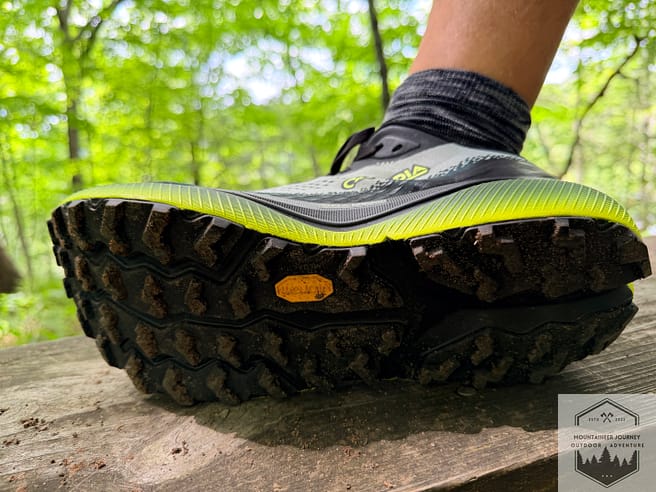
They feature braking lugs in the back to control your descents when you’re coming down a hill. I noticed the biggest difference with the Cascadia 20 when trying to control my footing coming down loose scree and gravel. These did an excellent job of really biting into the surface and maintaining my footing.
On flat, less technical terrain, the lugs provide stable footing with enough grip. The only limitation is in mud. The lugs are not deep enough to aggressively bite into mud. However, that was the only limitation I have noticed during testing.
Traction Score: 9/10 (20%)
Stability & Support

The Cascadia 20 does not have any prescriptive technologies like shanks or plastic posts. However, the Trail Adapt system is specifically designed to have a broad, stable base and areas of flexibility for uneven terrain.
First off, the Cascadia 20 has an extremely broad base in the heel and the forefoot. This disperses torquing forces throughout the shoe rather than having it specifically on one focal part in the mid of the shoe. I felt the broad base really helps keep my footing stable on technical trails without being overly rigid.
The Trail Adapt system is designed to have flexibility in areas where you’ll be encountering uneven terrain. This balances rigidity and flexibility in the shoe. While the Cascadia 20 is not a nimble shoe, it still has some decent flexibility in the outsole to help conform to uneven surfaces.

You can feel most of the rigidity is in the heel and the midfoot of the Trail Adapt system. However, the flexibility increases in the forefoot to help drive your foot forward when running on the trail.
Consistency is the name of the game for the Cascadia 20 across technical trails to lightest trails. If you want stable, secure footing, this one truly delivers on all types of terrain.
Stability & Support Score: 9/10 (20%)
Weight
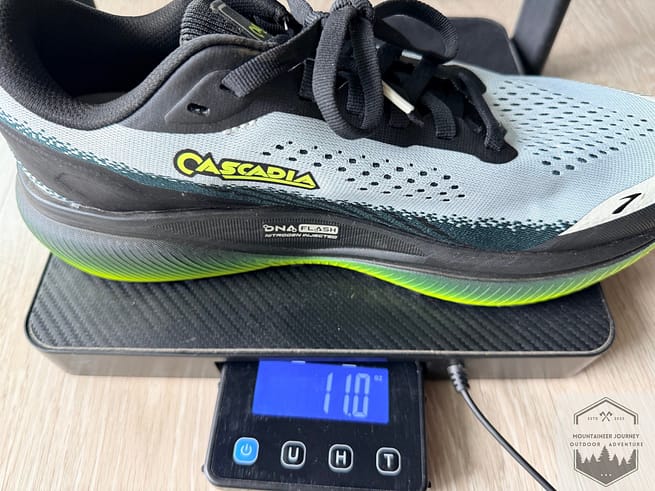
I weighed my men’s size 10.5 2E at 11 oz per shoe. This is actually even lighter than the previous Cascadia 19, which I weighed 11.68 oz per shoe on our calibrated scale.
The Cascadia 20 is not a nimble or agile shoe, so those who are looking for a lightweight option should look elsewhere, such as the NNormal Kjerag 02 or Saucony Peregrine 16.
Otherwise, this shoe is about the average weight of all the trail runners we have tested.
Weight Score: 8/10 (15%)
How’s The Overall Protection Of The Cascadia 20?
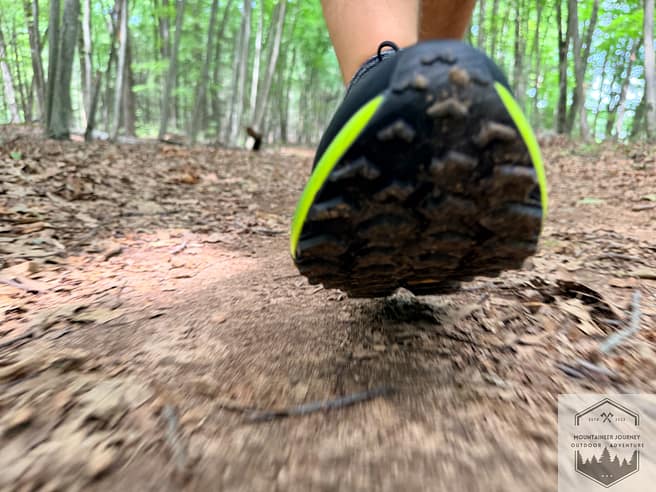
One of the biggest changes from the Cascadia 19 to 20 is the fact that this new iteration does not have a rock plate.
However, with the increased stack height and Trail Adapt system, the Cascadia 20 actually does not require a rock plate. The foot protection underneath is very substantial, and adding a rock plate would have added unnecessary weight and unneeded rigidity.
The stack height does more than well enough to disperse forces without the need for a rigid plate underneath. The upgraded toe bumper in the front does a good job of shielding rock kicks or unwanted impacts through the front of the toe box.
The Cascadia 20 is not a protective fortress; it serves well for everyone from beginner trail runners to advanced hikers and trail runners needing decent protection on the trail.
Overall Protection Score: 8.5/10 (10%)
Is The Brooks Cascadia 20 Worth It?
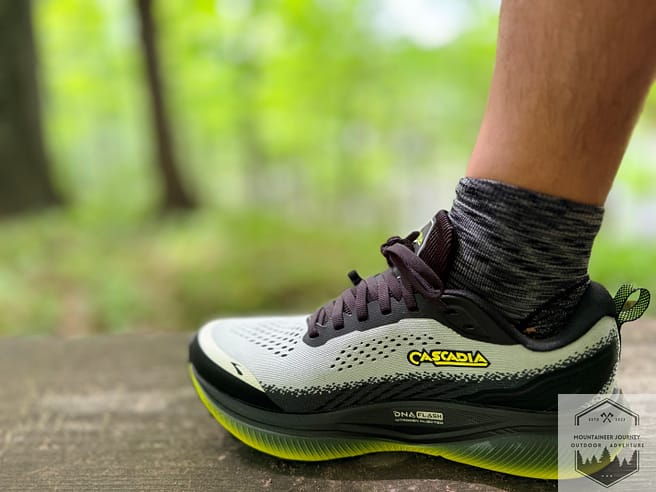
The Brooks Cascadia 20 is an excellent choice for beginning trail runners to the most advanced technical runners out there. It also provides very good value to use as an alternative hiking shoe for those who prefer hiking and trail running shoes.
This shoe really prioritizes grip, comfort, and stability above nimbleness and agility.
Overall, it is our top-rated trail runner of 2026. It’s a do-it-all trail shoe that offers excellent value and does not cost a fortune.
What Other Trail Running Shoes Should You Consider?
The drawbacks of the Cascadia 20 are the weight and responsiveness. If you are looking for more ground feel and a lower stack, check out the Norda 001 or Altra Lone Peak 9+. For a more road-to-trail alternative on lighter trails, check out the Hoka Challenger 8 or Torrent 5.
Value Score: 9.5/10 (15%)
Scoring Breakdown
Comfort & Fit (20%): 9/10
Traction (20%): 9/10
Stability & Support (20%): 9/10
Weight (15%): 8/10
Overall Protection (10%): 8.5/10
Value (15%): 9.5/10
Total Weighted Score: 1.80 + 1.80 + 1.80 + 1.20 + 0.85 + 1.425 = 8.875/10
Our Score: 8.9/10
Frequently Asked Questions
When was the Brooks Cascadia 20 Released?
The Brooks Cascadia 20 was released on August 1st, 2026. Therefore, any reviews you see before that time may be from viewers who got them for free or from a sponsored post.
How Does The Cascadia 20 Fit?
The Brooks Cascadia 20 fits true to size. They also come in a wide width.
Is the Cascadia 20 waterproof?
No, the normal Brooks Cascadia 20 model is not waterproof. However, they do come in a GORE-TEX version. We personally did not test the GORE-TEX version.
How We Tested and Our Methodology

I’ve personally tested the Brooks Cascadia 20 since its release on August 1st, 2026. We stick to objective testing only when it comes to reviewing our outdoor gear. We also give you multiple pictures and videos of us actively testing these shoes rather than making claims without proof.
Mountaineer Journey is a 100% independent publisher with years of testing and reviewing outdoor gear.
We currently pay for the products we test ourselves; no company or manufacturer pays us to sway our opinions or decisions.

Tyler
Tyler is the founder Mountaineer Journey and a professional Mountain Guide with 15+ years of technical experience in trekking, mountaineering, and trail sports. Having logged thousands of miles from rugged alpine summits to urban paths, Tyler provides rigorous, field-tested insights on hiking, walking, and trail running gear. All reviews are 100% unsponsored and unbiased, ensuring you get honest scoring based on real-world performance. His mission is to help outdoor enthusiasts of all levels find reliable equipment that ensures comfort, safety, and performance on any terrain.