

Our Score
Garmin Venu 4 Long-Term Investment Report
The Garmin Venu 4 is a great long-term investment for runners, fitness enthusiasts, and everyday users who want accurate tracking without having to charge their watch every night.
Not for serious trekkers.
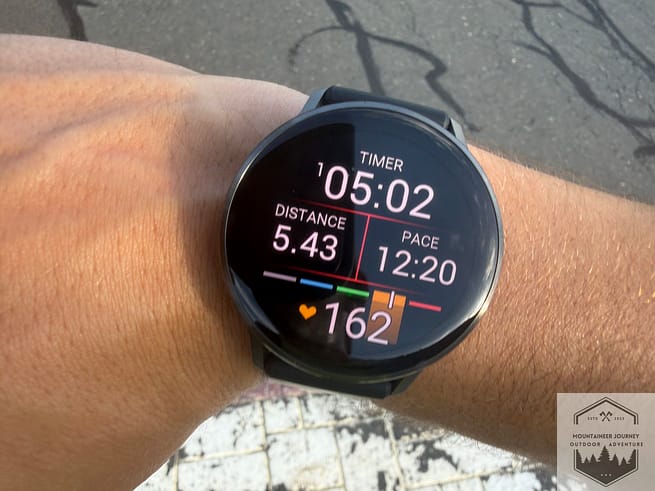
I logged over 45 hikes and runs with the Venu 4 and wore it as my daily watch. The dual frequency GPS, reliable health tracking, predictable battery drain and durable build all support long term ownership.
But the $549.99 price tag is hard to ignore. The watch also doesn’t have full-color topographic maps, which limits its usefulness for hikers venturing into unknown or remote terrain.
Since the Venu 4 was released on September 22, 2025, this report separates proven testing results from reasonable long-term projections. Battery degradation and resale performance can’t be fully established this early in the product’s life.
Related: Garmin Venu 4 Review
Quick Investment Snapshot
Total Investment Score (weighted): 8.1/10
Long-Term Accuracy Retention (25%)
Score: 8.5/10
Accuracy is the Venu 4’s ace.
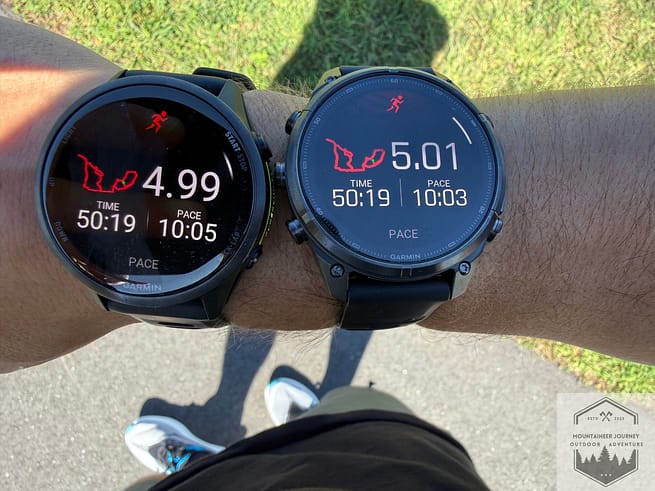
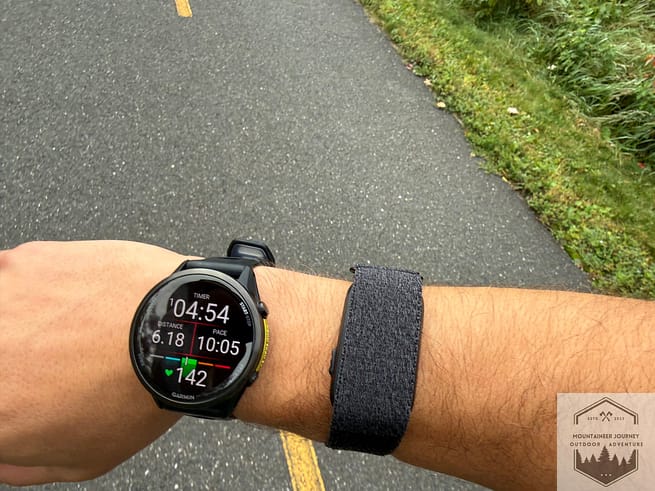
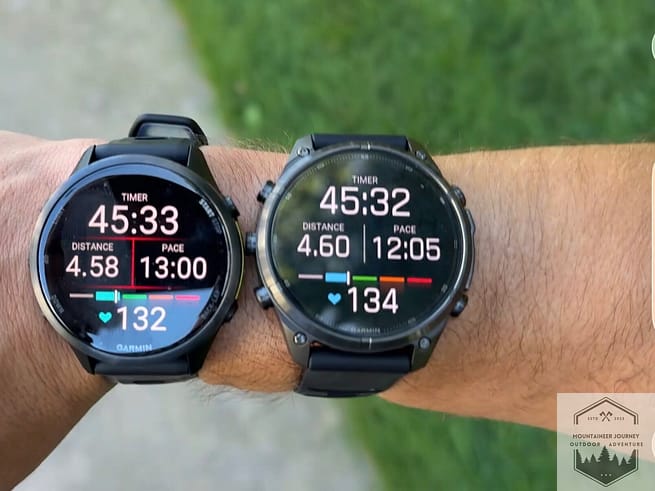
Heart rate testing against a Polar H10 showed a 3-5 bpm variance which is within the expected range for optical sensors.
The watch has dual-frequency GPS across multiple satellite systems, which is a big improvement over the Venu 3’s single-band GPS.
The long game is consistency. I didn’t see a decline in GPS tracking, heart rate accuracy, pace data or connection reliability over 45+ hikes and runs.
The GPS hardware is modern enough to last for several years. Elevation is the main weakness but doesn’t kill the watch’s overall accuracy.
Battery Health Longevity: 25%
Score: 8/10
Battery is solid, not exceptional.
Garmin claims 12 days. Real use: about 8 days with normal settings. Always-on display cuts that to about 4 days. Expect to charge twice as often if you use it.
Multi-band GPS lasts about 16 hours. Fine for day use, not for multi-day trips.
Drain is consistent, which matters more than peak numbers.
Charging takes about 90 minutes. Not fast.
The battery health has been unchanged since we purchased the Venu 4. We still achieve the same 8 days with normal settings since purchase.
Build Durability: 20%
Score: 8/10
Stainless steel and fiber-reinforced polymer construction.
Not as heavy or bulky as a Fenix model, but more premium than entry-level Garmin watches.
After several weeks of heavy trail use, the case and exterior showed no wear. No scratches, no structural damage, no loose parts, no problems with the 2-button control system.
The buttons were easy to use during runs and hikes. The simplified design should reduce frustration for those who don’t want the 5-button layout of more technical Garmin watches.
The display is bright enough for outdoor use and goes up to 2,000 nits. That’s good for direct sunlight, but using it at higher brightness levels will consume more battery.
No material failure during testing.
Software And Update Support: 20%
Score: 8/10
Garmin has one of the best long-term software supports in the GPS watch industry.
That matters because hardware alone doesn’t determine if a watch stays useful. App compatibility, sensor updates, bug fixes, phone connectivity and platform support can extend or shorten the device’s lifespan.
The Venu 4 connects to Garmin Connect, which organizes workout data, health info, training metrics, sleep data, and recovery insights in one place.
It also integrates with Strava and works well for users who already own other Garmin devices.
The watch has over 80 workout profiles, Body Battery, training readiness, training status, heart rate variability, ECG, blood oxygen monitoring, skin temperature sensing, advanced sleep tracking, Garmin Pay, music storage and smartphone connected calling.
These features give the Venu 4 enough depth to remain useful even as the hardware ages.
During sleep testing, its deep sleep estimate was off by only 1-2 minutes from my Oura Ring 4. REM sleep was off by 5-8 minutes. Heart rate variability was within 1-2 milliseconds of the Vivoactive 6 and Oura Ring.
The software limitation is navigation.
The Venu 4 does not have full color topographic maps or true backcountry navigation. That’s a hardware and product positioning limitation, not something that will be fixed in a future update.
Resale Value: 10%
Score: 8/10
The Venu 4 originally launched at $549.99, $100 more than the Venu 3.
That makes for a tougher resale equation.
Garmin’s brand, premium build, accurate GPS and broad health features should help the Venu 4 retain some demand.
It also appeals to a wider audience than a dedicated adventure watch because it’s good for running, gym training, health monitoring and everyday wear.
But the Venu line doesn’t have the same specialized reputation as the Fenix series. Buyers looking for a used Venu will also compare it to discounted older models, cheaper Forerunners and newer lifestyle watches.
At the time of this writing, my current research on used Venu4’s ranges from $380 to $450. So far, the resale value is very good, but time will tell as the model ages more.
How We Test Our Methodology
I created a separate GPS Investment Report alongside our normal GPS reviews to give better insight into long-term value.
Some GPS watches are a real investment. At Mountaineer Journey, we use a simple scoring system based on objective testing to judge whether the watch is worth your money over time, not just on day one.
Aside from performance, knowing what you are getting for your money is just as important in the end.
We do not accept any free GPS watches. We purchase them all with our own money and remain objective in our field testing.

Tyler
Tyler is the founder Mountaineer Journey and a professional Mountain Guide with 15+ years of technical experience in trekking, mountaineering, and trail sports. Having logged thousands of miles from rugged alpine summits to urban paths, Tyler provides rigorous, field-tested insights on hiking, walking, and trail running gear. All reviews are 100% unsponsored and unbiased, ensuring you get honest scoring based on real-world performance. His mission is to help outdoor enthusiasts of all levels find reliable equipment that ensures comfort, safety, and performance on any terrain.