

Our Score
Garmin Venu 4 Review | Unsponsored
In this article, I’m going to share my HONEST Garmin Venu 4 review for those who are wondering if it is WORTH IT in 2026.
The Garmin Venu 4 bridges the gap between smartwatches and multisport trackers. Released on September 22, 2025, the Venu 4 sits between Garmin’s lifestyle-focused lineup and its hardcore adventure watches, such as the Fenix series.
For this review, I logged over 45 runs and hikes with the Garmin Venu 4, so I know exactly how it performs in real-world conditions. I also wore it as an everyday watch during my testing period.
I’ll go over accuracy, battery life, mapping and navigation, features, versatility, and value.
I’ll be sharing my critical opinion backed by 16 years of experience as a trail guide and hiker.
I will also be comparing the Venu 4 to the Garmin Fenix 8, the Apple Watch Ultra 3, Garmin Vivoactive 6, and Garmin Forerunner 170.
Should You Buy the Garmin Venu 4?
Buy If
- You want a lifestyle-fitness balance in a single watch with a premium feel
- You need accurate dual-frequency GPS for hiking and running under tree cover
- You prioritize battery life over daily charging
- You want a great watch that looks sharp enough for everyday wear and performs
- You value comprehensive health tracking and fitness metrics in one device
Don’t Buy If
- You’re looking for ultra-endurance GPS runtime with music streaming
- You need extensive third-party apps or an app ecosystem rivaling Apple or Google
- You’re budget-conscious – at $549.99, this isn’t a casual purchase
- You require full-color topo maps and turn-by-turn navigation for backcountry use
- You want LTE standalone connectivity for phone calls away from your phone
Compare Similar Products
| Comparision | Product | Rating | Price |
|---|---|---|---|
 | 7.8 | Check Lowest Price | |
 | 6.8 | Check Lowest PriceRead Review | |
 | 8.6 | Check LOWEST PriceRead Review |
Garmin Venu 4 Pros and Cons
Pros
- Excellent GPS mapping
- Easy 2-button design
- 2,000 nits display
- Reliable heart rate tracking
- Battery life
Cons
- No full-color maps
- $549.99 price jump
- Always-on display drain
- Inconsistent step count
Garmin Venu 4 Price
The Garmin Venu 4 costs $549.99, a $100 increase from Venu 3. The Venu 4 is available in 41mm and 45mm sizes at the same price.
Accuracy: 30%
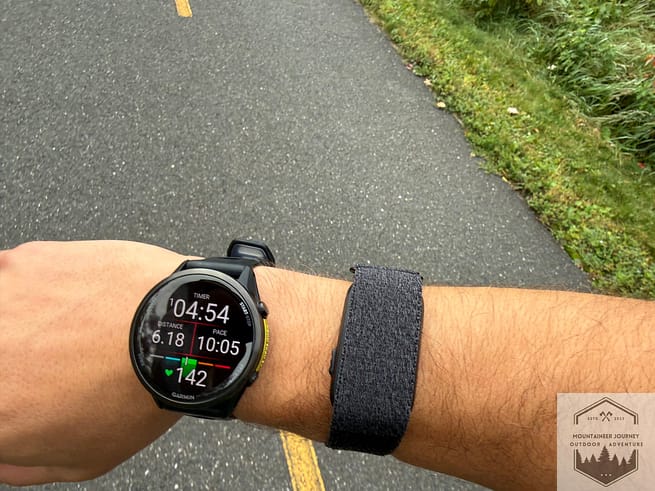
To keep our scoring objective, we compare heart rate data from our Polar H10 chest strap with that of the Garmin Venu 4 during every test. The H10 remains one of the most accurate heart rate sensors on the market.
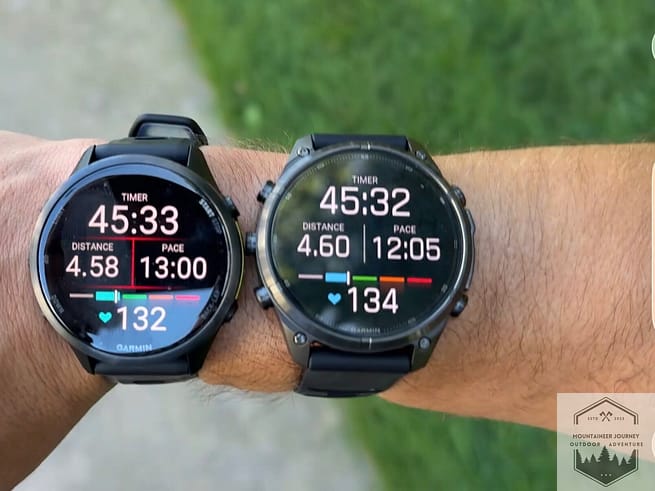
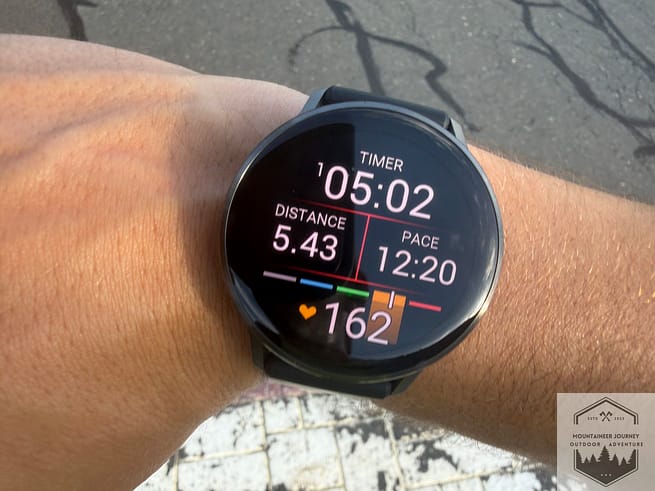
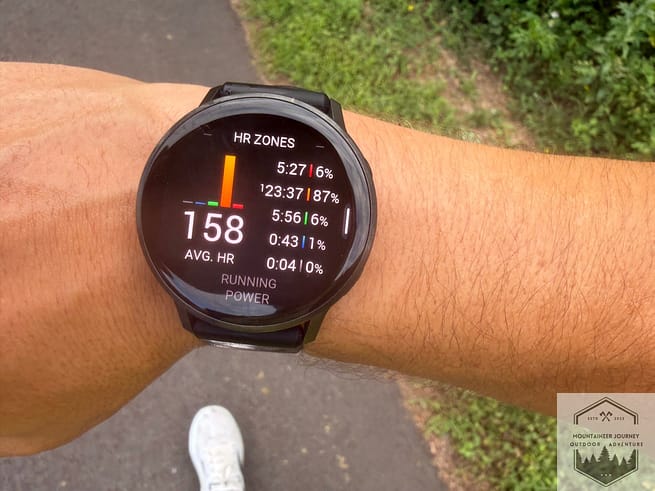
Heart rate accuracy is reliable during workouts with the Gen 5 sensor. During our sustained trial runs, the Polar H10 averaged ~156 bpm while the Venu 4 recorded ~151 bpm – a variance of roughly 3–5 bpm, which is excellent for wrist-based optical sensing.
The Venu 4 uses dual-frequency GPS (L1 + L5) across GPS, Galileo, GLONASS, BeiDou, and QZSS satellite systems. This is a massive upgrade over the single-band GPS in the Venu 3 and makes a real difference on forested Northeast trails.
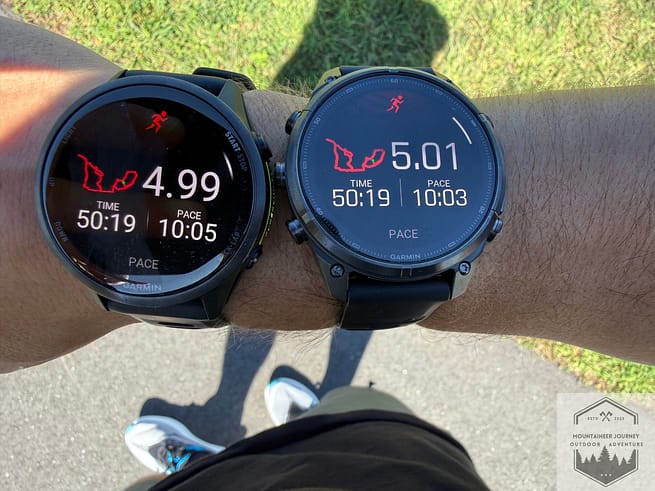
During GPS testing, I compared the Venu 4 against a Garmin GPSMAP 67 and a mapped GPX route to keep results honest. I also cross-referenced against an Apple Watch Ultra 3 on every outing.
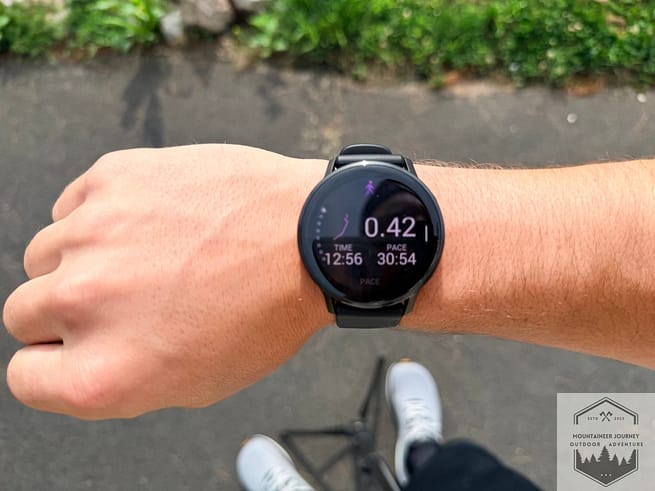
Pace tracking and breadcrumb navigation accuracy were both excellent. It was .02 miles off from the Apple Watch Ultra 3 during our testing – a razor-thin margin that most users will never notice.
Pace tracking during running was very impressive. I compared my pace to the Vivoactive 6 (one of the most accurate GPS watches), and the 4 was within 0:01s of the Vivoactive’s entire pace during an 8-mile run.
Track quality under dense canopy was impressive. Where single-band watches would produce squiggly, erratic lines on heavily wooded trails, the Venu 4’s multi-band GNSS with SatIQ™ technology kept track logs clean and tight.
Elevation tracking on steep terrain was decent but not perfect. I noticed the Venu 4 occasionally underreported ascent compared to my GPSMAP 67 reference, especially on routes with frequent, steep grade changes.
Overall, the accuracy on this performs above what I’d normally expect from a lifestyle-leaning Garmin Venu device.
Accuracy Score: 8.5/10 (30%)
Battery Life: 20%

The Garmin Venu 4 offers up to 12 days of battery life in smartwatch mode.
That’s a slight dip from the Venu 3’s claimed 14 days, but still noticeably ahead of most competitors.
Battery life is better than most Apple and Samsung watches. Where an Apple Watch Series device needs nightly charging, I consistently got 8 days from the Venu 4 with AOD(always display) off, regular notifications, sleep tracking, and 1–2 GPS workouts per day.
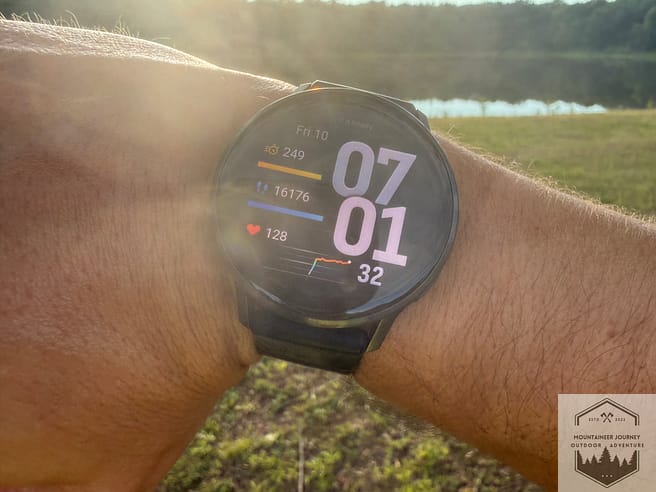
Battery life drops to about 4 days with always-on display enabled. That’s a significant hit, and something to seriously consider if you rely on a glanceable screen throughout the day.
In GPS mode with multi-band GNSS enabled, I got roughly 16 hours. Which is great for most day hikes, but will require nightly charging if this is a trekking trip. What I found: if you’re getting a strong signal from a single GPS, you can switch to single-GPS mode, which saves battery life.
More importantly, battery drain remained predictable from hike to hike, making it easy to estimate remaining runtime.
Charging from less than 20% to 100% takes about 1.5 hours, which is reasonable but not exceptional.
By 2026 standards, the battery life is strong for a lifestyle smartwatch but won’t compete with solar-equipped adventure watches, like the Fenix 8.
For weekend hikers and daily runners, it’s more than sufficient between charges.
Battery Life Score: 8.5/10 (20%)
Mapping & Navigation: 20%
If you mainly want to track distance, heart rate, and pace on familiar trails, this watch does the job well. The breadcrumb GPS was very accurate during my testing, and the back-to-start feature worked reliably even on looping trail networks.
However, if you need real trail navigation with map visuals, turn-by-turn guidance, or off-grid mapping support for remote terrain, this watch will not cover those needs. For that level of navigation, you’d want to look at the Garmin Fenix 8 or a similar adventure-grade device.
The absence of embedded topographic maps can result in a loss of visual landmark context. On unfamiliar trails in the Northeast, where junctions are frequent and signage can be inconsistent, I had to use a smartphone for navigation.
However, you can download various third-party apps that provide turn-by-turn navigation through your phone. At that point, you might as well take out your phone instead of glancing at your watch for navigation.
Off-route alerts are basic and may not be sufficient for complex trail networks, requiring users to stay vigilant.
For hikers sticking to well-marked trails and runners following known routes, the breadcrumb navigation is perfectly functional. It just won’t replace a proper mapping watch for exploration.
Mapping & Navigation Score: 6/10 (20%)
Features & Training: 10%
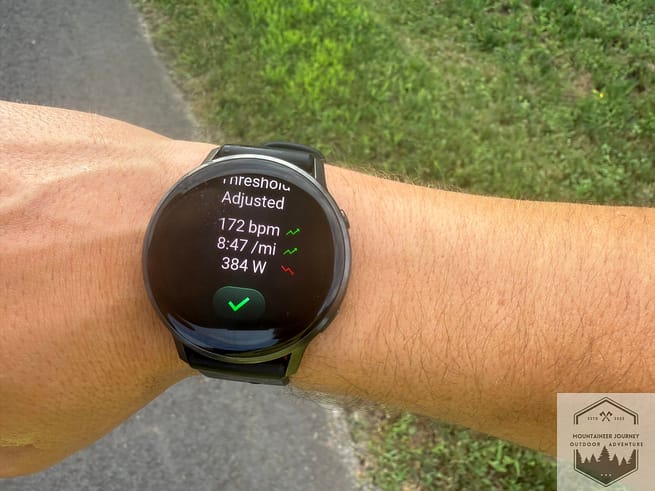
The Garmin Venu 4 packs all the fitness metrics you’d expect from a premium Garmin – and then some.
It supports over 80 different types of workouts, from hiking and trail running to strength training, cycling, swimming, and yoga.
Garmin’s Body Battery monitors energy levels throughout the day, and I found it surprisingly useful for deciding whether to push a hard trail run or take a recovery day.
Combined with training readiness and training status metrics, these metrics give you a more complete picture of your body’s capacity than a competitor like the Coros Pace 4.
The watch provides health status insights based on multiple metrics. The health status feature pulls together heart rate variability, respiration, stress tracking, and activity data to give you a daily snapshot of where you stand.
It features advanced sleep tracking with a sleep alignment metric. The watch tracks sleep stages, including deep sleep, REM, and light sleep.
In my analysis of sleep-tracking accuracy, the Venu 4 demonstrated high precision when benchmarked against the Oura Ring 4. The recorded deep sleep duration varied by only one to two minutes compared to the Oura Ring, while the REM sleep tracking showed a discrepancy of five to eight minutes.
Of all the Garmin watches I have tested, the Venu 4 has been the most accurate at tracking sleep.
My heart rate variability was monitored using the Vivoactive 6 and my Oura Ring, with all readings being within 1-2 ms of each other.
The device includes advanced health-monitoring capabilities, such as ECG and blood oxygen monitoring. Skin temperature sensing rounds out the health data suite, providing continuous monitoring of trends that matter.
The Garmin Venu 4 features lifestyle logging for daily habits, allowing users to track a range of habits. For example, I logged my cold showers and compared the data with days when I didn’t take one. I analyzed metrics such as heart rate variability, sleep score, and stress levels to assess the impact of these cold showers on my overall well-being.
While the feature set is excellent, it lacks some of Garmin’s higher-end training analytics and navigation tools found on the Fenix line.
Garmin Connect App
The Garmin Connect app is essential to the Venu 4 experience. It centralizes all your workouts, health insights, and fitness-tracking data into a single, well-organized dashboard.
Garmin Connect syncs seamlessly across devices, allowing users with other Garmin products to have everything integrated into a single profile. For those who are serious about their fitness journey, this app provides substantial value.
Features & Training Score: 8/10 (10%)
Versatility: 10%
The Venu 4 is designed primarily for runners, fitness enthusiasts, and everyday wear, while still being capable enough for occasional hiking.
The watch has 8 GB of music storage, Garmin Pay for contactless payments, and a voice assistant for basic commands. You can make phone calls from your wrist when connected to your phone.
Using this during trail runs, the features are seamless, especially the two-button system, which simplifies things for those not accustomed to Garmin watches.
For runners and other outdoor athletes, the Venu 4 offers highly accurate fitness tracking and breadcrumb GPS. Also, you can easily sync to other apps like Strava.
For hikers and trail runners out there, the lack of navigation can be a limitation, depending on your goals. True trekkers should not rely on the Venu 4 as their primary navigation device.
As a versatile watch, the Venu 4 is primarily designed for runners and everyday use rather than for outdoor enthusiasts.
For a deeper look at a more budget-oriented Garmin alternative, check out the Garmin Forerunner 55 review. And if you want top-tier smartwatch capabilities, the Garmin Vivoactive 6 is also worth considering.
Versatility Score: 7/10 (10%)
Is The Garmin Venu 4 Worth It?
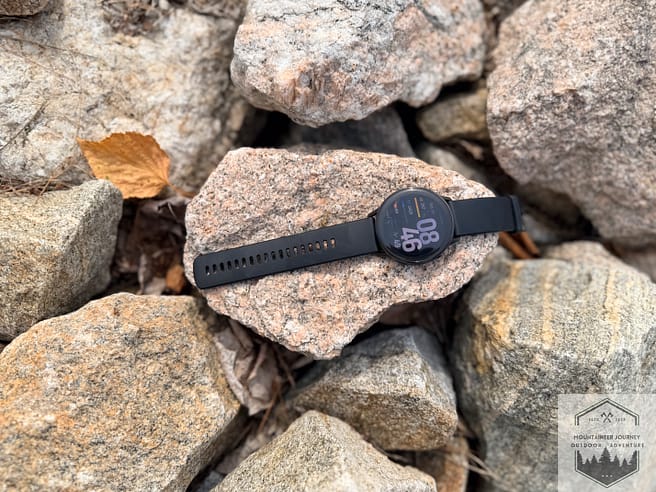
The Venu 4 delivers a compelling package at $549.99 – but it demands that you actually use what it offers to justify the high price tag.
If you’re an athlete or seeking a watch for daily use, the accurate features provide great value.
There are limitations for hikers and trekkers regarding navigation and elevation accuracy. For those looking at navigation-equipped alternatives, the Garmin Fenix 8 and COROS Pace 4 offer fuller mapping capabilities, but at higher prices or with different trade-offs in lifestyle polish.
Compared to the Apple Watch Ultra 3, the Venu 4 trades app ecosystem depth for dramatically better battery life and Garmin’s superior fitness features.
If you only want notifications and casual fitness tracking, the $549.99 price tag is harder to justify. There are more affordable options, like the Garmin Forerunner 55 or 170.
Garmin also has one of the strongest long-term software support records in the industry, increasing confidence that the watch will remain useful for years.
The Venu 4 is built to last. The stainless steel and fiber-reinforced polymer construction held up well across a few weeks of heavy trail use with zero visible wear. Garmin’s track record for long-term software support adds confidence.
Value Score: 7/10 (10%)
Scoring Breakdown
Accuracy (30%): 8.5/10
Battery Life (20%): 8.5/10
Mapping & Navigation (20%): 6/10
Features & Training (10%): 8/10
Versatility (10%): 7/10
Value (10%): 7/10
Total Weighted Score:
2.55 + 1.70 + 1.20 + 0.80 + 0.70 + 0.70 = 7.65
Our Rating: 7.7/10
Frequently Asked Questions
Is the Garmin Venu 4 accurate for hiking?
Yes, the Garmin Venu 4 is accurate for hiking. With dual-frequency multi-band GPS, it produced clean track logs during our testing. However, it should be well known that the Venu 4 does not offer full-mapping capabilities.
How long does the Venu 4 battery last during GPS activities?
The Venu 4 lasts approximately 16 hours in GPS mode with multi-band GNSS.
Does the Venu 4 have navigation features?
The Venu 4 offers breadcrumb trail navigation, back-to-start, course following, and saved waypoints. It does not include full-color topo maps or turn-by-turn directions.
Can you make calls with the Venu 4?
Yes, the Venu 4 has a built-in speaker and microphone that allow you to take phone calls when connected to your smartphone via Bluetooth. It does not offer LTE for standalone calling.
Is the Venu 4 good for trail running?
Yes, the Venu 4 is good for trail running. Multi-band GPS tracking is reliable, heart rate accuracy is strong during sustained efforts.
How We Tested and Our Methodology
I personally tested the Garmin Venu 4 starting in 2025, with continued testing through 2026, with the sole intent of giving you the most unbiased review possible.
Mountaineer Journey is a 100% independent publisher, and our testing team has spent years evaluating outdoor gear in real-world conditions.
Over the past decade, I’ve logged more than 3,000 combined hiking, trail running, and road running miles, which gives me the experience to evaluate accuracy, comfort, and long-term performance – not just lab numbers.
Every category score is based on objective testing, not brand claims.
Accuracy Testing
- Heart rate accuracy gets compared against a trusty Polar H10 chest strap.
- GPS accuracy is double-checked against a handheld GPS unit and a mapped GPX route we’d previously verified.
- We look at four key things when it comes to accuracy: heart rate variance, distance error, GPS track quality, and elevation stability.
Battery Testing
- We test real-world battery drain, whether it’s during a GPS workout or when the watch is just sitting on your wrist.
- When we score battery life, we’re looking at three things: how long it lasts on GPS, how consistent the battery is, and how long the watch lasts in smartwatch mode.
Mapping and Navigation Testing
- Navigation gets scored on its capability, not its price tag.
- Watches without proper navigation get evaluated on breadcrumb accuracy, back-to-start reliability, and course-following performance on known trails.
Features, Versatility, and Value
- Features include training tools, recovery support, and how well the watch integrates with your day-to-day life.
- Versatility is all about how well the watch adapts to running, hiking, heading to the gym, or just wearing it on the job.
- Value is all about whether the price is right, whether you can trust the watch to last, and whether the manufacturer will still be supporting it a year from now.
To make sure every review is consistent, we use the same scoring framework across all our GPS watch reviews: Accuracy • Battery Life • Mapping and Navigation • Features • Versatility • Value
That way, you can easily compare models side by side without worrying about different scoring rules for each one.

Tyler
Tyler is the founder Mountaineer Journey and a professional Mountain Guide with 15+ years of technical experience in trekking, mountaineering, and trail sports. Having logged thousands of miles from rugged alpine summits to urban paths, Tyler provides rigorous, field-tested insights on hiking, walking, and trail running gear. All reviews are 100% unsponsored and unbiased, ensuring you get honest scoring based on real-world performance. His mission is to help outdoor enthusiasts of all levels find reliable equipment that ensures comfort, safety, and performance on any terrain.