Hoka Transport Hike GTX Review | Worth It In 2026?
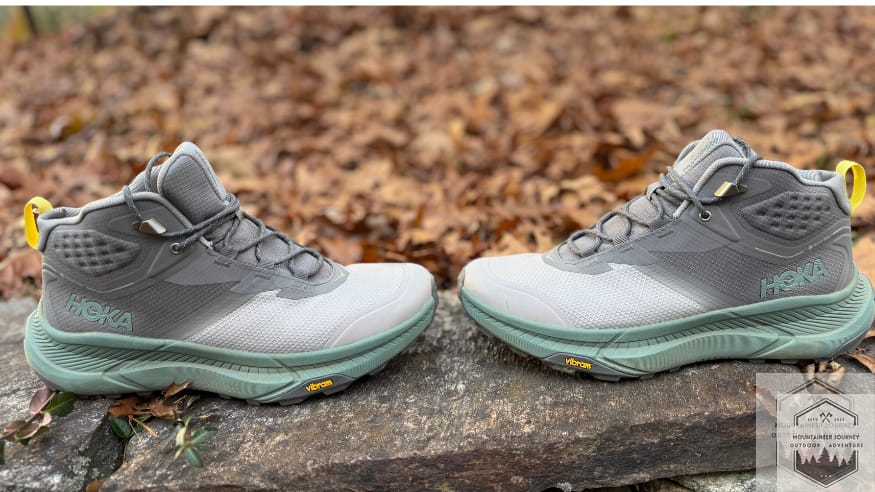
In this article, I’m going to share my HONEST Hoka Transport Hike GTX review for those who are wondering if they are WORTH IT in 2026.
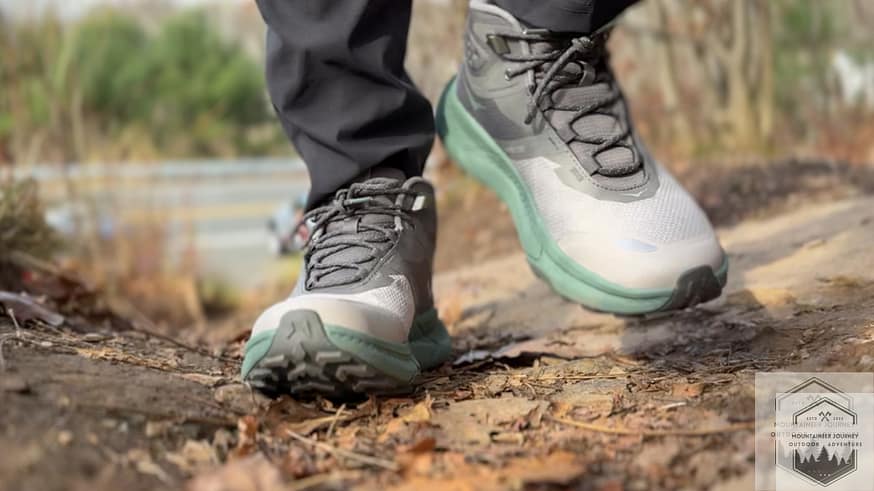
The Hoka Transport Hike GTX was released in the summer of 2025. Hoka was hoping to capitalize on the success of the Transport walking shoe while transforming it into a hiking boot model.
For this review, I’ve put over 60 miles in the Hoka Transport Hike GTX. I’m familiar with how they feel and perform while hiking on the trails. I’ll go over comfort, traction, overall protection, water resistance, fit, stability & support, and durability.
Drawing on over 16 years of hiking experience, including 12 years as a trail guide, I’ll be sharing my impressions along with objective testing scores.
Editor’s Note: We updated this post on 7/14/26 with additional testing insights after further testing over the past 5 months.
See Similar Products

Should you buy the Hoka Transport Hike?
Buy if
- You want a versatile hiking boot
- You prioritize comfort and traction on the trail
- You are a weekend hiker
- You prefer a boot/shoe hybrid for road-to-trail transitions
DON’T Buy if
- You want a top-performing hiking boot
- You prefer a technical hiking boot
- You want superior ankle protection
Hoka Transport GTX Pros and Cons
- Good Comfort
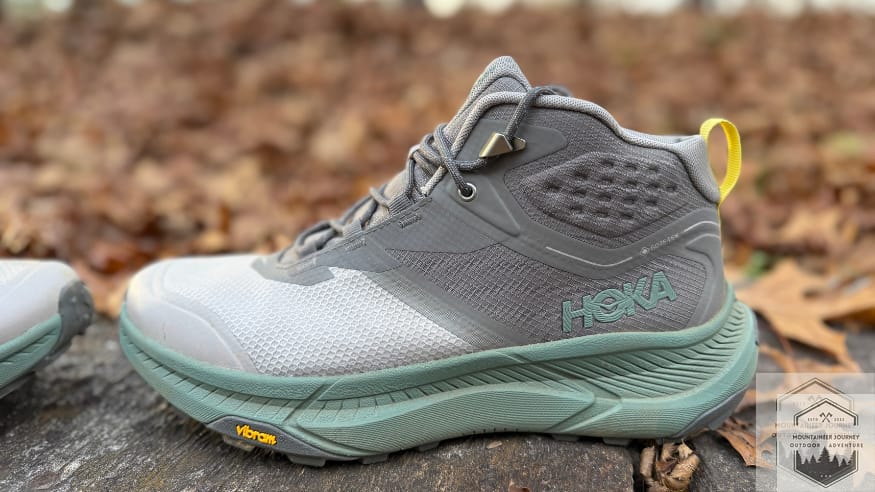
- High-Riding Ankle Support
- Durable Cordura Upper
- Waterproofness
- Price compared to value
Hoka Transport GTX Price
At the time of this writing, the Transport Hike GTX are priced at $190 retail.
Order the Hoka Transport Hike for the LOWEST PRICE AVAILABLE (Do NOT pay retail):
Disclosure: Some of the links on this page are affiliate links, which means we earn a small commission at no extra cost to you. These commissions help fund our unsponsored, fully independent testing so we can keep delivering honest, data-driven reviews.
Hoka Transport Hike Comfort: 8/10
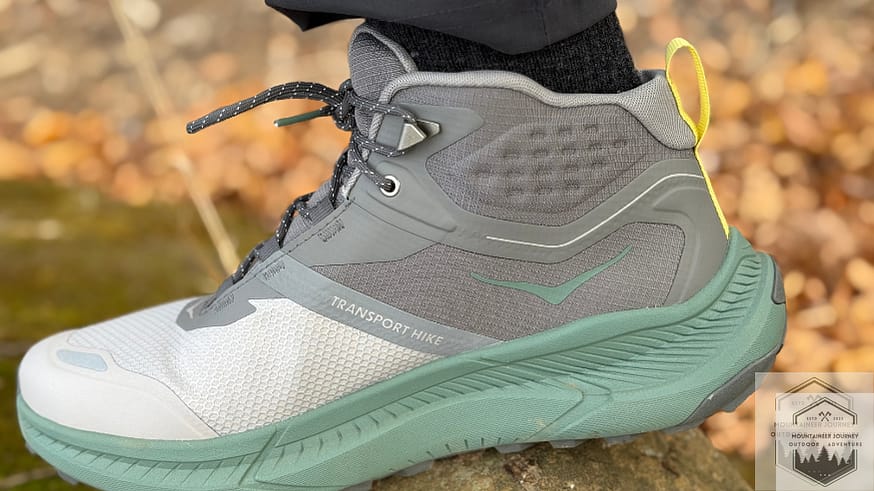
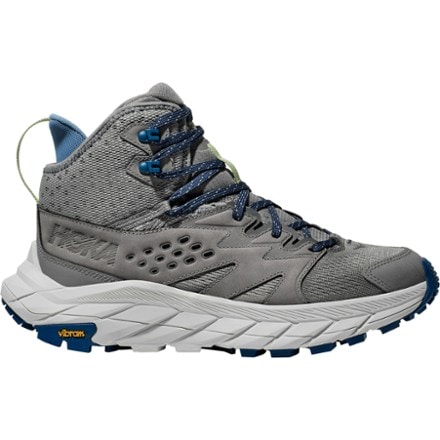
When I first slipped on the Hoka Transport 2 Hike, I felt the upper was nice and flexible, allowing my foot to settle naturally into the boot. The insole is quite plush; however, the overall cushioning is not as soft as Hoka’s more maximalist models, like the Anacapa Breeze.
The Molded PU Sock Liner is quite comfortable and non-abrasive against your foot. When I first hit the trails, the impact absorption was not as impressive as other maximalist hiking boots, but still gets the job done.
The toe box contains a 100% recycled polyester mesh, which allows your toes to breathe despite the Gore-Tex membrane. I felt more than adequate enough room in the toe box. No areas of hotspots or numbness during my testing period.
One of the benefits of the Hoka Transport Hike GTX is that it does not contain nubuck leather, which tends to be less ventilated. The Cordura upper has ventilation mesh pockets throughout the boot, allowing for a great influx of airflow despite the waterproof bootie.
Hoka integrated the Meta-Rocker, which allows an efficient heel-to-toe off while hiking. My foot was much lighter despite the heavier weight on the scale due to the curved rocker geometry on the Transport Hike.
Although this boot weighs 14.5 oz, It feels similar in weight to the Salomon X Ultra 5 one of the lightest boots we have tested to date.
Overall, the Hoka Transport Hike GTX has some really good comfort features. However, do not expect it to be the most maximalist-cushioned hiking shoe like others Hoka has released on the market.
Traction: 8/10
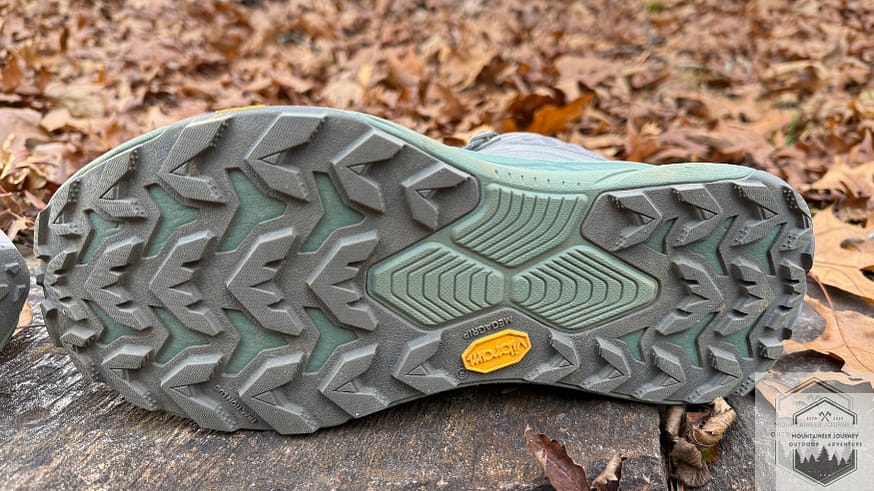
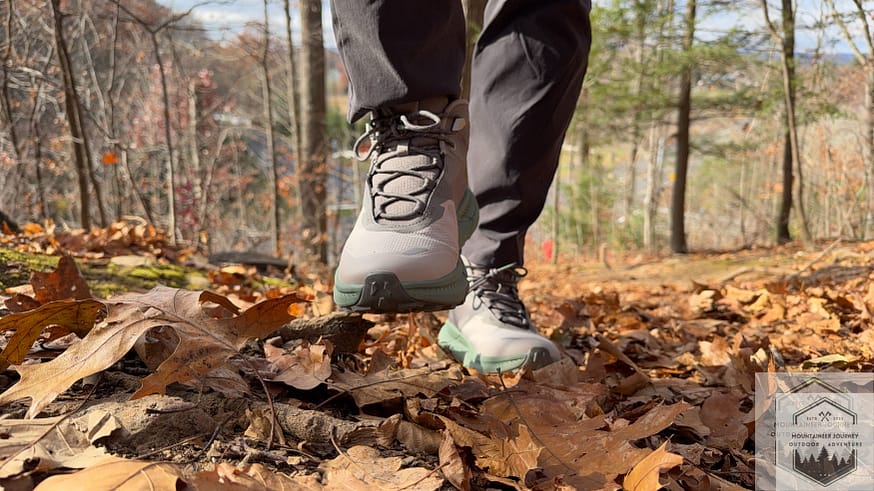
The Transport Hike is equipped with 4mm aggressive Vibram Megagrip lugs. This was a little overkill for a more moderate hiking boot. However, it’s not something to complain about with how well these perform on the trail.
Hoka chose to manage the lugs in a multi-directional manner and also bring them up and over the heel, which allows better ground contact, especially while ascending up steep terrain.
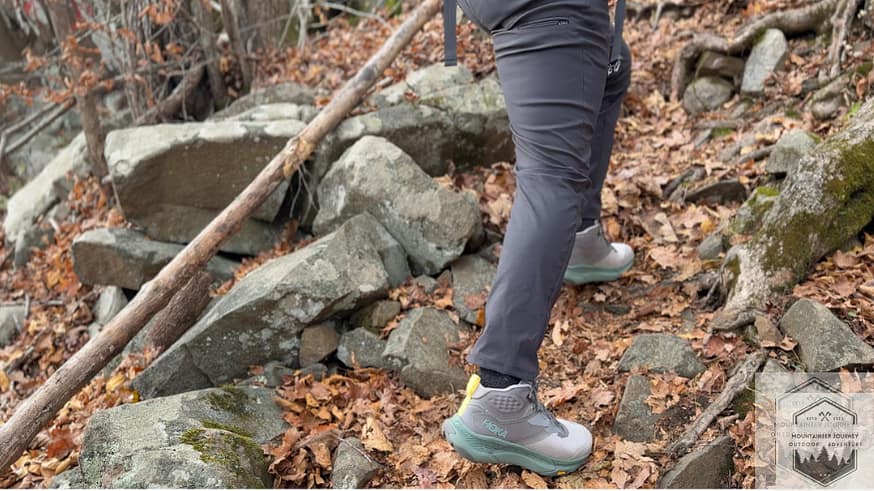
While going up deep inclined shale, I really felt these lugs gripped tight onto the terrain without any slipping. The extended heel lugs really helped me bite into an extra inch of terrain I needed to get up the mountain. Holding an edge was easy with these boots.
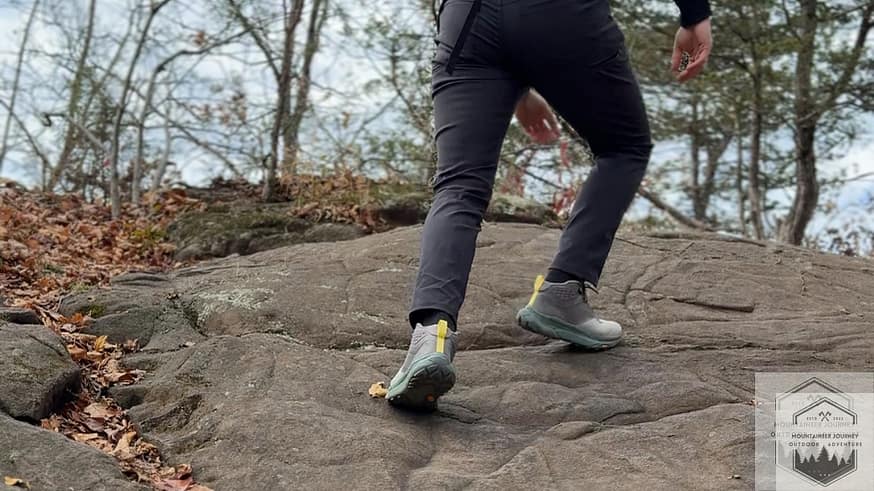
One of my best tests for traction is going up against red-brown basalt, which is one of the harder rocks to get a grip on. The Transport hike did an excellent job of maintaining its grip on this tough terrain.
During testing on wet limestone, the lugs still held on very well with great contact and grip. While the Vibram Megagrip outsole comes at a premium price, it definitely performs above and beyond.
While the Transport Hike GTX did perform admirably on most trails, it is not made for rough technical terrain. Remember, this is a commuter boot that is made for light to moderate trails at the end of the day.
For those looking for a lighter boot that can handle technical trails, check out the La Sportiva Ultra Raptor 3.
Weight
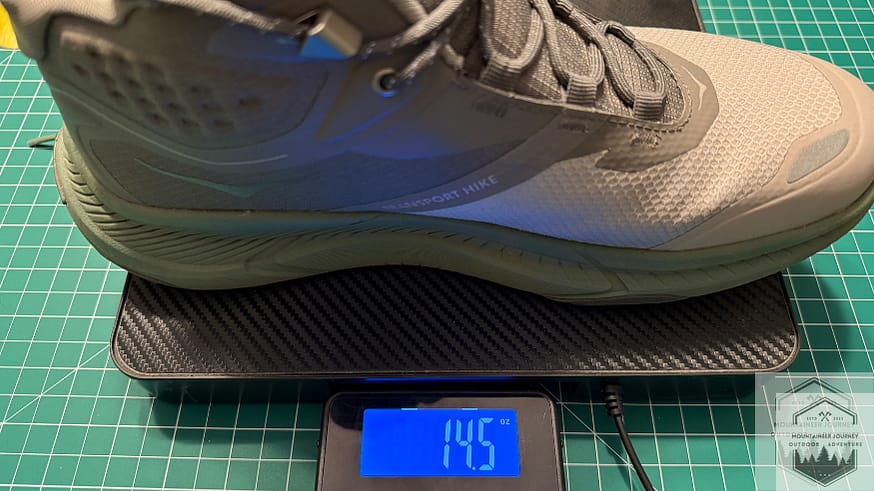
I weighed my men’s 10.5 at 14.5 ounces, which is actually the lightest hiking boot I have tested to date.
Add in the Meta rocker, and these boots really feel smooth and light on the trail. People with foot fatigue issues really will love this boot.
I have never experienced significant foot fatigue during longer hikes, where the weight of the boot tends to work against me.
As a frame of reference, the Salomon Quest 4 weighed in at 48 ounces which makes the Transport Hike 70% lighter!
Overall Protection 3.5/5
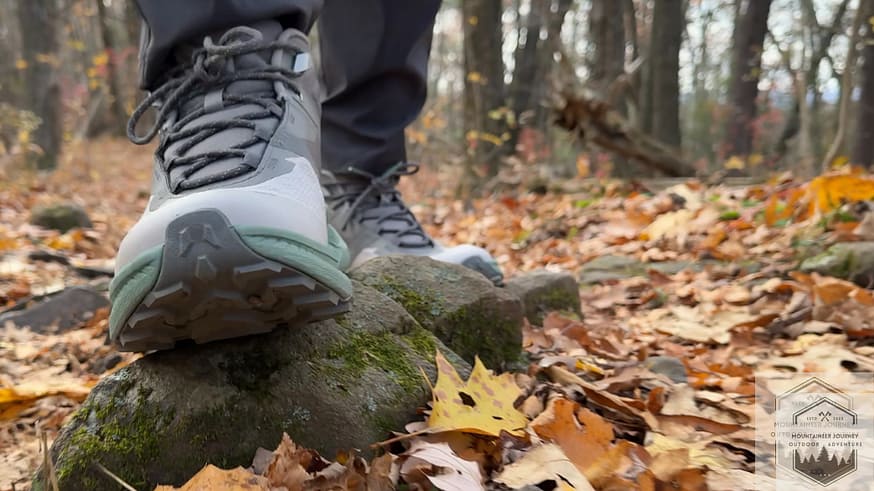
The Hoka Transport Hike GTX mainly uses a combination of traditionally stitched recycled polyester and welding. The rubber toe cap has nice wide coverage and protects against any root kicks.
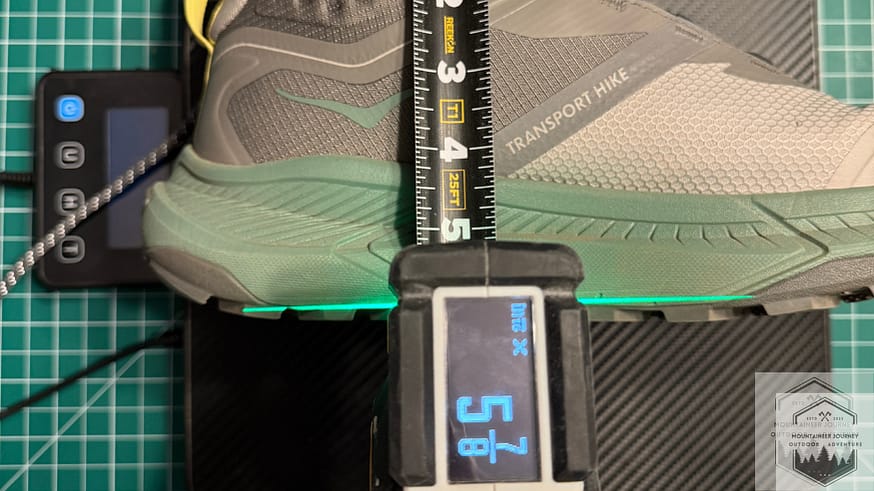
The polyester mesh gets thicker up towards the ankle, where a lot of boots tend to wear and break down. This adds a little bit more ankle protection as well with extra padding. I measured the ankle cuff height at 5.875 inches, which came up and over my ankle malleoli enough for adequate ankle protection.
Speaking of ankle protection, they introduced a new metal lacing hook that is placed at the perfect angle for a nice tight fit. This was impressive because the lacing eyelets were one of my biggest gripes on the newer Hoka Kaha 3.
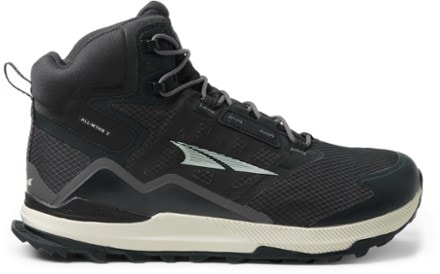
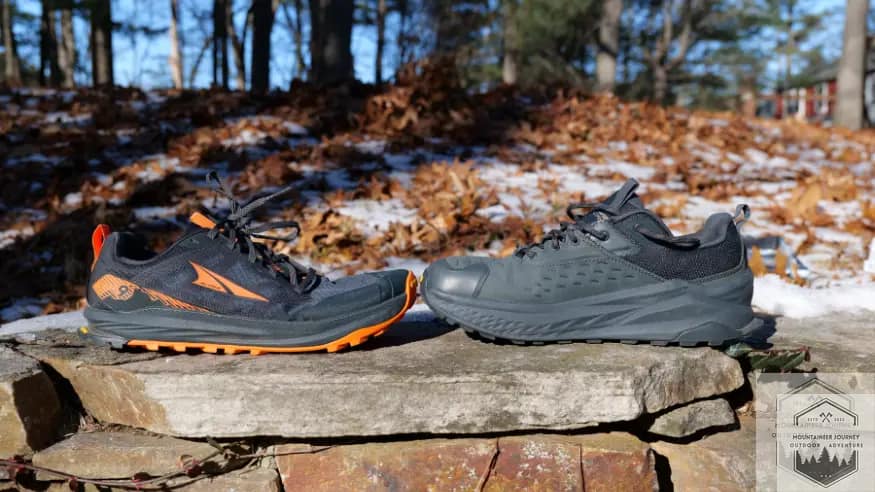
A nice value-add is the 360-degree reflective elements on the boot for hikers at night time. While this boot does not have traditional leather, the Cordura upper definitely adds nice abrasion resistance compared to other textile uppers, like the Altra Lone Peak ALL-WTHR 2.
Water Resistance 5/5
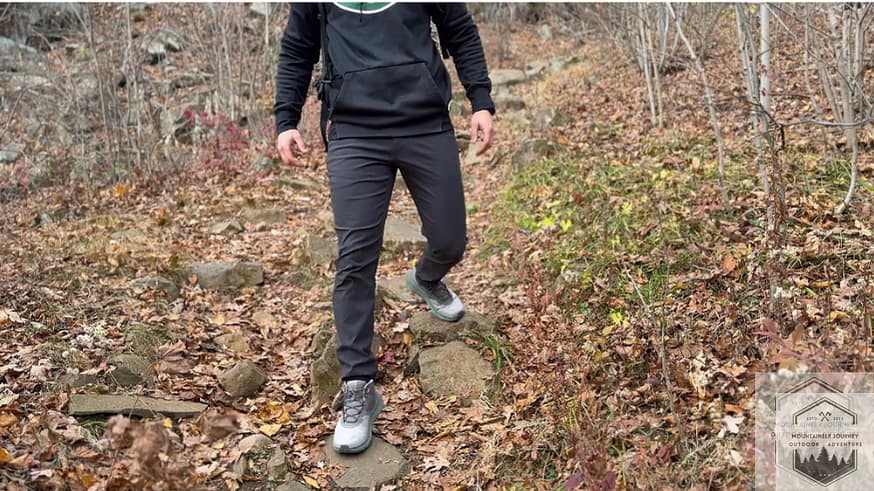
The Hike GTX is equipped with a new GORE-TEX invisible fit but with recycled polyester face fabric, which offers the same durability and waterproof performance as traditional GTX fabrics but with a significantly lower environmental footprint.
The Recycled Polyester fibers also retain less water, which significantly reduces drying time. I noticed this after my 10-minute submersion test.
My boots are dry within 20-30 minutes each time they got wet. Holding less water over time helps maintain the boot’s structure during flexion, improving long-term durability.
I had zero water enter my boot after the 10-minute submersion test.
Hoka was able to balance breathability with water resistance by adding mesh and textile uppers rather than leather. I really felt this boot was much more breathable than many others we have tested to date.
Does The Hoka Transport Hike GTX Fit Well?
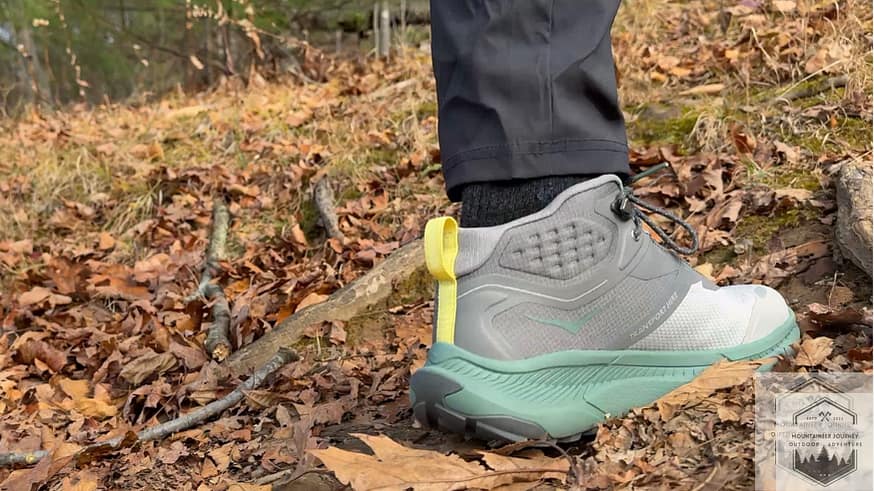
I tested out a pair of men’s 10.5 regular, and they fit slightly long. While it was not enough for me to move down a half size, it was noticeable.
When it comes to width, they’re not particularly narrow or wide-fitting. They’re just about the right width for most hikers.
I was able to get a nice, tight fit with the top metal eyelets. I did not have to perform any special lacing techniques, nor did I notice any heel slipping while on the trail. Overall, the slightly longer length didn’t bother me, and I do not suggest moving down half a size.
Transport Hike GTX Fit 4.5/5
Transport Hike GTX Stability & Support 4/5

My ankle felt very secure during testing, and I didn’t experience any ankle rolls or instability.
This boot does not contain any internal shanks or plastic features to help with stability. On Hoka’s big, high-stack hiking boots, the heel-focused Active Foot Frame is a major reason they feel so stable. It basically cups your foot inside the midsole.
When your foot is cupped inside, it prevents it from overpronating or supinating. This, in turn, allows for more secure footing on the trail. I felt the Active Foot Frame worked best when I was hiking sidehill, preventing any instability.
The Transport Hike isn’t a true maximalist boot, and the stack height isn’t nearly as tall. So while the Active Foot Frame does add some nice stability in the heel, it doesn’t play as big of a role here. It’s helpful, just not the main thing holding this boot together.
The Heel-To-Toe drop is more neutral on this boot. I measured it at 4mm with my caliper. While it is more neutral, I felt my heel-to-toe transitions were excellent because of the added Meta Rocker.
This is a nice add-in for hikers who don’t want to lose their internal ligamentous stability due to higher drop hiking boots.
Durability 8/10

After testing the Hoka Transport Hike GTX for over 60 miles, I can say the durability is pretty tough for a textile-focused hiking boot. The recycled polyester face mesh is key to durability. What’s interesting is that Recycled Polyester Mesh isn’t just better for the environment; it’s actually tougher than most people think.
A recent study showed that rPET handles compressive stress very well, meaning it maintains its structure even when flexed and loaded repeatedly.
In real hiking terms, that translates into an upper that’s less likely to weaken or collapse over time. It’s nice knowing the durability is backed by actual data, not just a sustainability buzzword.
Something I noticed right away is how well-engineered the upper is. There aren’t many seams, and that’s a good thing.
Every seam you add to a hiking boot becomes a potential stress riser -a spot that can crack or separate over time. With fewer seams, the Transport Hike has fewer of those weak points, which translates to better longevity on the trail.
With that being said, there are welded points on this boot that can delaminate quicker than traditional leather hiking boots. While we haven’t noted that during our testing yet, we will update as time goes on.
Is the Hoka Transport Hike GTX worth it?
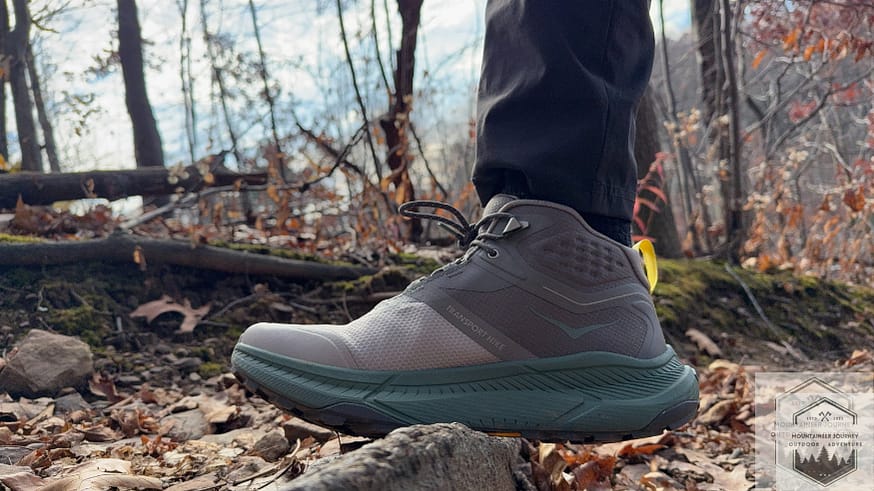
While the Hoka Transport Hike GTX scores very well in our objective testing, one must take into account how they will use this hiking boot.
While it is a great commuter-to-trail hiking boot, remember that it is not the best for rough or technical trails.
The price point of the Hoka Transport GTX is quite tough, coming in at $190. While it performs admirably, it’s a boot made for unique individuals.
The strengths of this hiking boot are the comfort, traction, versatility, and uniqueness.
The drawbacks to consider would be price and usage. If you are looking for an everyday boot that is at a more budget-friendly price, check out the Merrell Moab 3. For those looking for a more technical boot check out the Salomon Quest 4 or Lowa Renegade.
At the end of the day, the Transport Hike GTX isn’t built for everyone and the price point reflects that. BUT for the people this boot is designed for — the commuter-to-trail crowd who wants real waterproofing, real traction, and a clean everyday look, the Transport Hike GTX makes a lot of sense. You just need to know you’re in that group before spending the money.
Value: 3.5/5
Scoring Breakdown
Total: 44.5 / 55
Our Rating: 8.1 / 10
Order the Hoka Transport Hike for the LOWEST PRICE AVAILABLE (Do NOT pay retail):
How We Tested and Our Methodology
I personally tested the Hoka Transport Hike GTX for 8 months with the sole intent of giving you the most unbiased review possible. Mountaineer Journey is a 100% independent publisher with years of testing and reviewing outdoor gear.
Over the past decade, I have logged over 2,000 hiking miles across diverse terrains, from the rugged Appalachian Trail to the challenging Rocky Mountains. This extensive experience allows me to evaluate the Transport Hike’s performance accurately in real-world conditions.
We currently pay for the products we test ourselves; no company or manufacturer pays us to sway our opinions or decisions.

Tyler is the founder Mountaineer Journey and a professional Mountain Guide with 15+ years of technical experience in trekking, mountaineering, and trail sports. Having logged thousands of miles from rugged alpine summits to urban paths, Tyler provides rigorous, field-tested insights on hiking, walking, and trail running gear. All reviews are 100% unsponsored and unbiased, ensuring you get honest scoring based on real-world performance. His mission is to help outdoor enthusiasts of all levels find reliable equipment that ensures comfort, safety, and performance on any terrain.