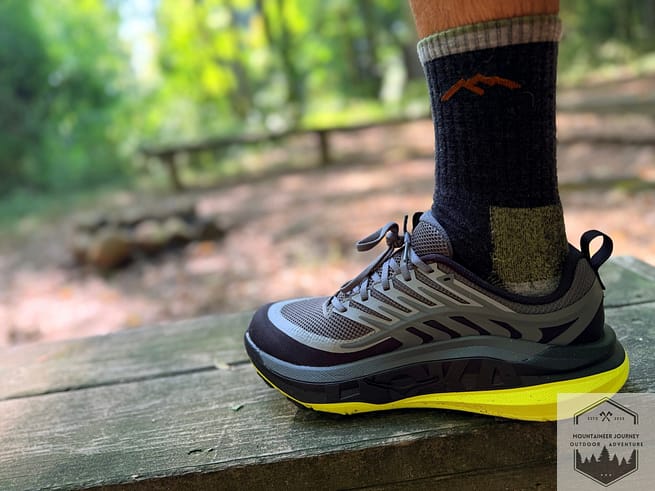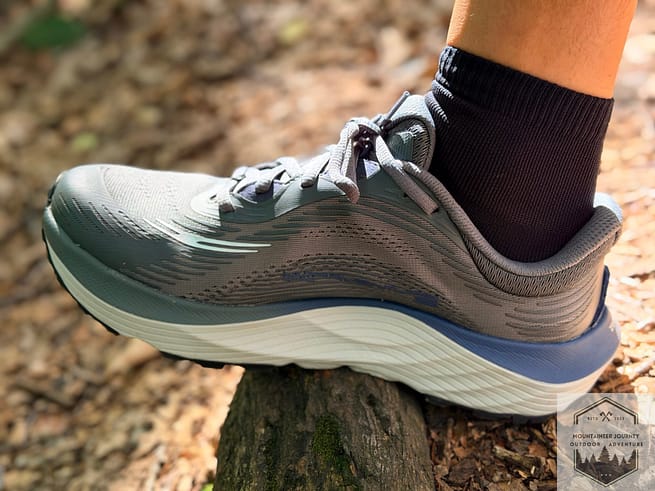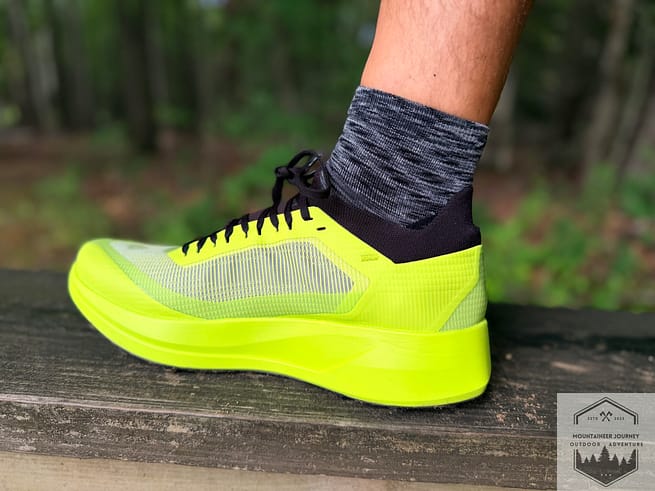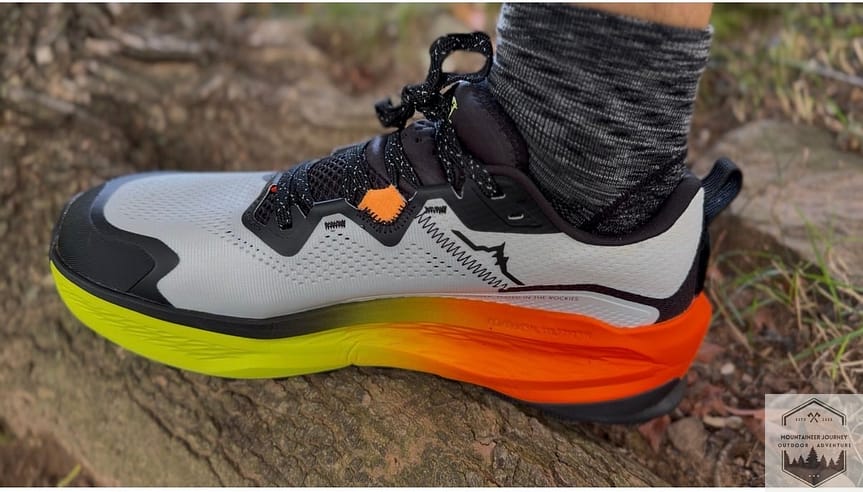
Altra Lone Peak 9+ vs Altra Olympus 6 | Which Is Better?
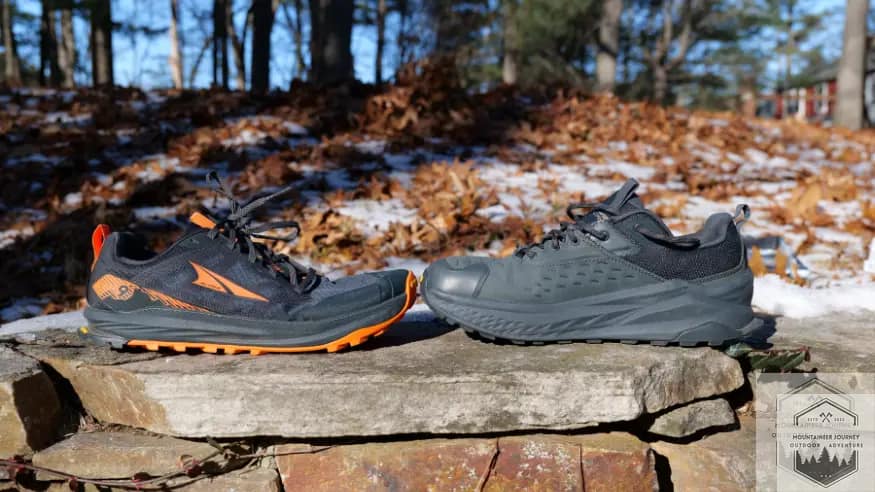
In this article, I’m going to share my HONEST Altra Lone Peak vs Olympus comparison in detail after personally owning both Altra shoes. I have thoroughly tested both of these trail runners on technical trails for countless hours, and I aim to offer an experienced trail runners opinion.
I’ll be comparing these two models head-to-head in categories like price, cushioning, traction, overall protection, fit, breathability, weight and durability.
Then, at the end, I’ll share which trail shoe offers the best overall value for the money and provide my final verdict for which you should buy based on your personal experience needs.
I’ll be sharing my critical scoring with 12 years of experience as a trail runner and gear tester. The same testing approach I’ve used for over 40 trail running shoes in the past two years alone.
Read our individual reviews of the Altra Lone Peak 9+ and Altra Olympus 6.
Altra Olympus vs Lone Peak Price Comparison
Overall, the Altra Lone Peak 9+ is $25 cheaper than the Olympus 6, making it the more budget-friendly option for trail runners.
Olympus 6 Price: $185
Lone Peak 9+ Price: $160
Order HERE for the LOWEST PRICE AVAILABLE
(Do NOT pay retail):
Comfort
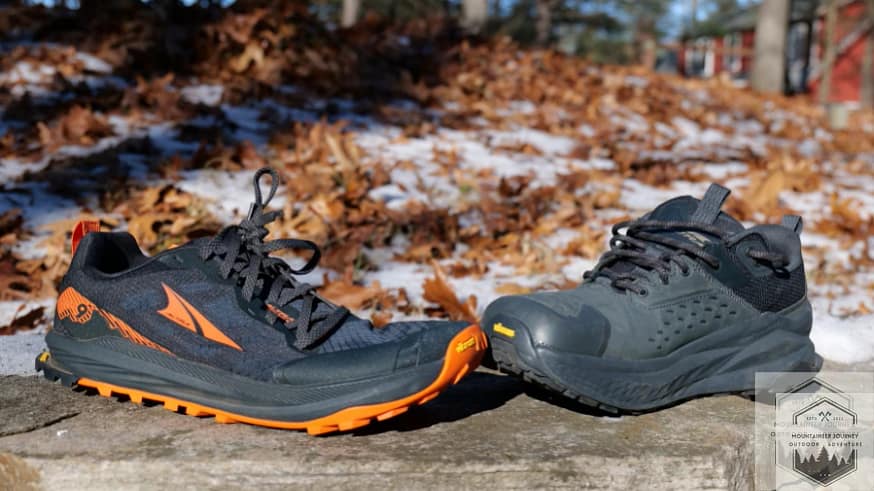
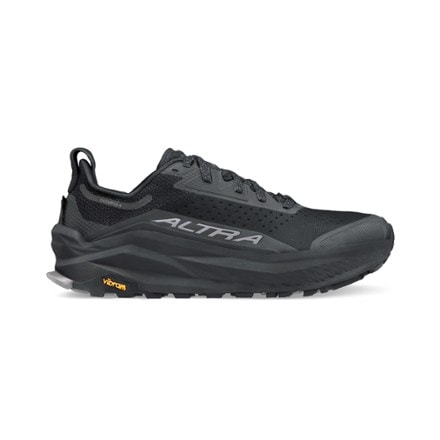
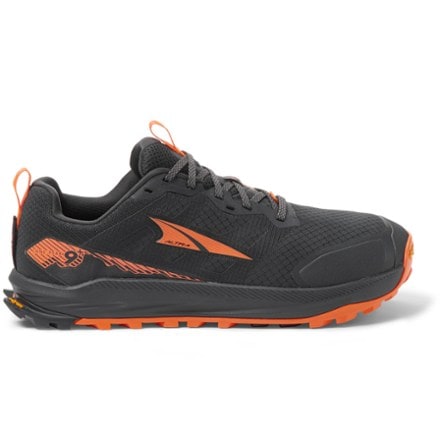
The cushioning difference between these two models is honestly the MOST significant factor in this comparison and it’s not even close! The Olympus 6 features a MASSIVE 33mm stack height with compression-molded EVA foam, making it Altra’s most cushioned trail shoe.
This extra cushioning provides absolutely great shock absorption, and a plush ride that completely dominates during longer distances.
The Lone Peak 9 sports a more moderate 25mm stack height with Altra EGO foam, very solid but definitely different. That 8mm difference in stack height translates to a completely different underfoot experience.
The Lone Peak offers way better ground feel and more responsiveness, making it absolutely ideal for technical terrain where you desperately need to feel the ground beneath your feet. This one is more ideal for technical trail runners.
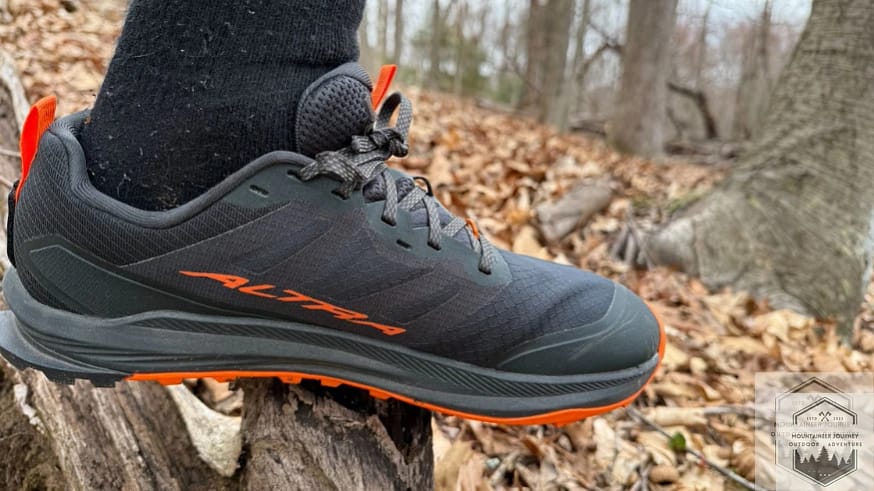
During my extensive testing on sharp rocks and uneven terrain over the past year, the Olympus offers SUPERIOR protection from foot fatigue during those long, punishing days on the trail.
The additional cushioning truly shines when absorbing impact over extended periods. It’s just as well padded as the Hoka Mafate X, our most comfortable trail shoe of 2025. However, this extra cushion definitely comes at the cost of some ground connection, which can be a dealbreaker for some runners.
The Lone Peak 9 provides what I personally call the “goldilocks” amount of cushioning not too soft, not too firm, but just RIGHT. It offers totally adequate protection while maintaining that ground feel that so many trail runners absolutely prefer for technical trails.
The wiggle room in cushioning preferences really depends on your intended use, and I’ve tested both extensively to give you the honest breakdown of both.
For ultra-distance running, backpacking, and those epic long hikes where comfort absolutely trumps agility, the Olympus 6 is hands down superior.
For trail running, day hikes, and technical terrain navigation where you need that responsiveness, the Lone Peak 9’s more balanced approach works way better and that’s coming from someone who’s put serious miles on both models.
Olympus 6 Comfort: 4.5 out of 5
Lone Peak 9+ Comfort: 4 out of 5
Winner: Olympus 6
Traction
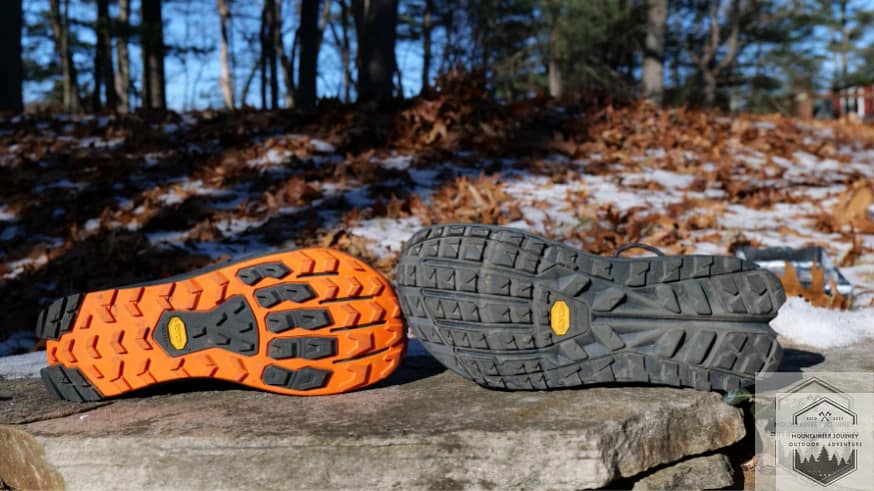
Both Trail shoes use the Vibram Megagrip outsole. The Olympus 6 Vibram Megagrip’s outsole tech along with a re-designed lug pattern, really adds to that max grip you are wanting on the trail. During my testing on both wet and dry surfaces, the traction held up excellent on the Olympus 6.
The Lone Peak 9+ got away from Altra’s MaxTrac outsole and added on the Vibram Megagrip outsole. The lugs are 5mm in well-spaced parts. They have added rubber on the heel aspect of the lugs for that added edge to push through tough terrain.
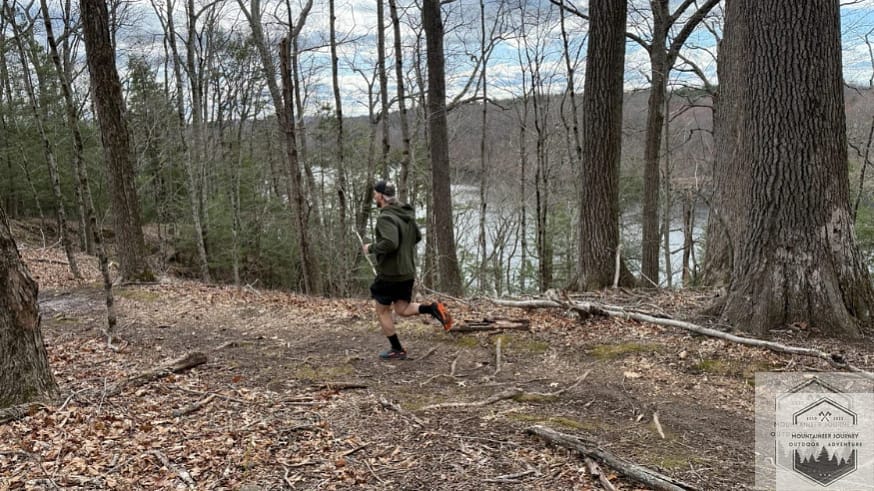
When I put the Lone Peak 9 through its paces on some truly technical terrain, wet granite and, muddy trails I noticed that in real-world conditions the Lone Peak 9 actually ended up giving me more grip than expected.
The lower stack height really helps you know exactly how to train your pace stride, and determine each step with real-time feedback.
The Olympus 6 on the other hand has a high stack height which is great for cushion but unfortunately that also gives you a very detached feel from the ground, which really doesn’t help when you’re trying to navigate technical trails and off-camber sections.The last thing you need is reduced confidence in your shoe’s ability to stick when things get slippery.
As for general purpose running on smoother trails and fire roads, the Olympus 6’s Vibram Megagrip really does shine, but so does the Altra Lone Peak. Both tested very well during my various trail running testing.
Olympus 6 Traction: 4.5 out of 5
Lone Peak 9+ Traction: 4.5 out of 5
Winner: Lone Peak 9+
Overall Protection
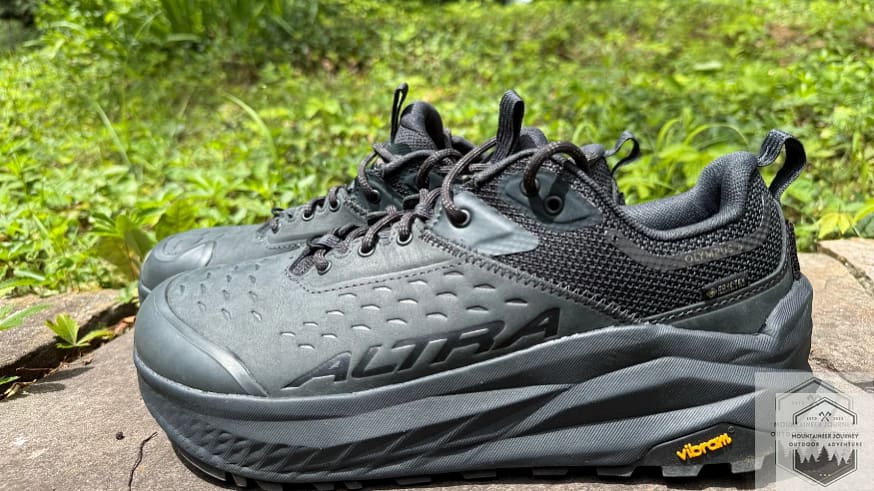
Protection against trail hazards varies wildly between these two models, with each of them having its own strengths in different areas.
The Olympus 6 does a great job of keeping your feet safe. Thanks to the thick 33mm midsole its extra cushioning really makes a difference when you’re stomping on sharp rocks, roots, and other trail hazards.
The build quality is also really robust with extra padding around the ankle & a overall more solid feel. The Olympus 6 also has integrated leather throughout the shoe unlike the fully synthetic Lone Peak.
The Lone Peak 9 packs StoneGuard protection deep into the midsole plus the ripstop mesh upper. While it’s not as cushy as the Olympus, for most trails it gives you ample protection in a package thats way more lightweight & agile.
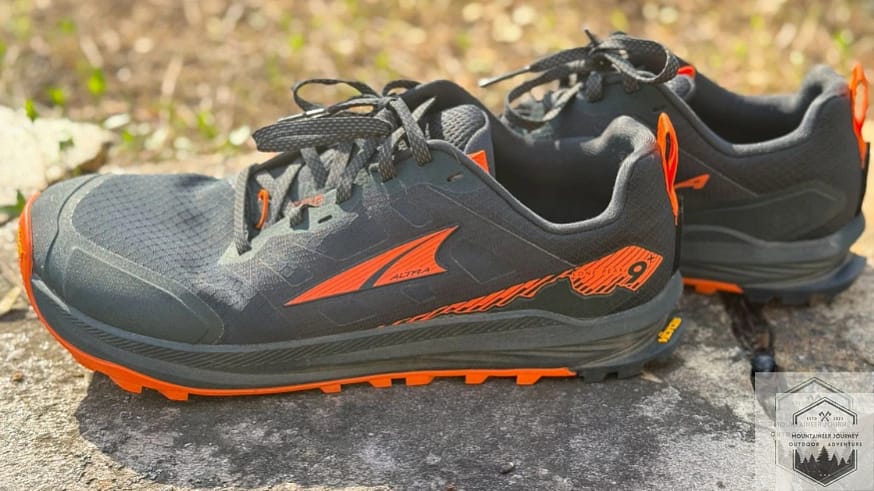
When I put these shoes through their paces on rough rocky ground & technical trails, both of them handled nasty sharp rocks pretty well, but in completely different ways. The Olympus just takes the hit and absorbs it through pure volume of cushioning, whereas the Lone Peak uses its protective plate and a bit of fancy footwork to side-step the problem.
The key difference is protection philosophy: maximum cushioning (Olympus) versus balanced protection with agility (Lone Peak).
Olympus 6 Protection: 4.5 out of 5
Lone Peak 9+ Protection: 4 out of 5
Winner: Olympus 6
Altra Olympus 6 vs Lone Peak 9+ | Which Fits Better?
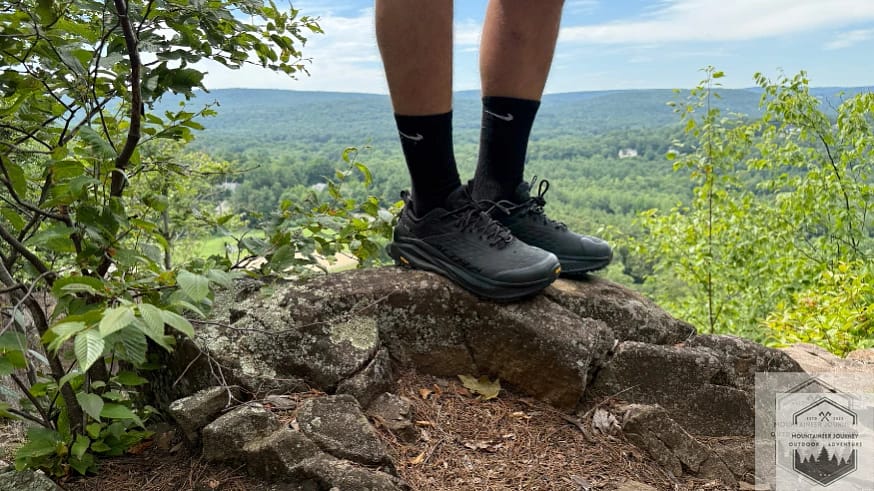
Both trail shoes feature Altra’s signature Footshape Fit design which gives your toes lots of room to spread out naturally. This super roomy toe box is really what sets both of these models apart from regular trail shoes it’s a great selling point for runners with wider feet.
The zero drop geometry is the same in both of the shoes, so heel and forefoot are lined up nice and level. This can take a bit of getting used to if you’ve been running in shoes with a big heel-to-toe drop, but both of these models have been pretty forgiving for me in terms of transitioning over from heel-elevated shoes.
The Lone Peak 9’s upper is made out of a lightweight ripstop mesh that feels super flexible and accommodating to different foot volumes. After a long hike, this flexibility really comes into its own by allowing you to expand, without feeling any pressure points.
The Olympus 6 on the other hand has a slightly more structured upper with some extra ankle padding. This is great if you need a bit more support for that higher platform, as it does provide a bit more protection for your ankle.
During testing, both models run true to size, the extra room in the toe box means you don’t have to worry about sizing up to get enough toe clearance like you would with some other trail running shoes.
The extra cushioning in the Olympus does have a slightly bigger platform, but it doesn’t really make it fit any different.
If you’re a runner with wide feet or if you tend to get a bit of swelling in your feet on long hikes, then both of these models are winners. The Lone Peak 9 has the edge in terms of upper flexibility.
Olympus 6 Fit: 4 out of 5
Lone Peak 9+ Fit: 4.5 out of 5
Winner: Lone Peak 9+
Breathability
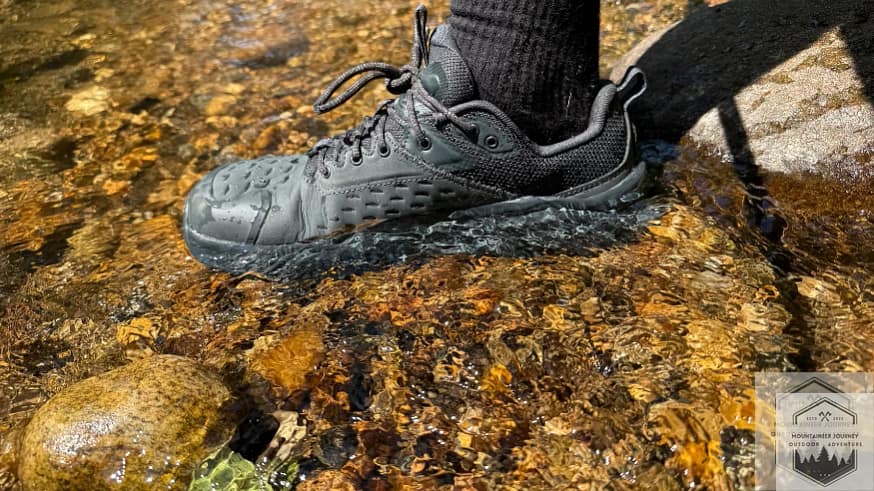
Breathability counts for a lot when its hot and you’re pounding it out on some nasty technical trails for hours in the sun.
The Lone Peak 9 has lightweight ripstop mesh uppers which mean you get all the air you need to keep your feet from overheating. While testing this out in 90°F summers, the mesh design did a very good job of keeping my feet ventilated.
The Olympus 6 has gone the opposite route and got itself a more hefty upper, ankle padding and structural reinforcement. It does have nice air ventilation pockets, however the heavier synthetic and leather materials do not breathe as well as the Lone Peak 9.
If you want straight-up breathability, then the Lone Peak 9 is your easy choice here. If you live somewhere that gets a bit of a chill in the air or you just want all-out comfort then that slightly reduced breathability of the Olympus 6 is just a price you’ll have to pay.
Olympus 6 Breathability: 3.5 out of 5
Lone Peak 9+ Breathability: 4.5 out of 5
Winner: Lone Peak 9+
Durability
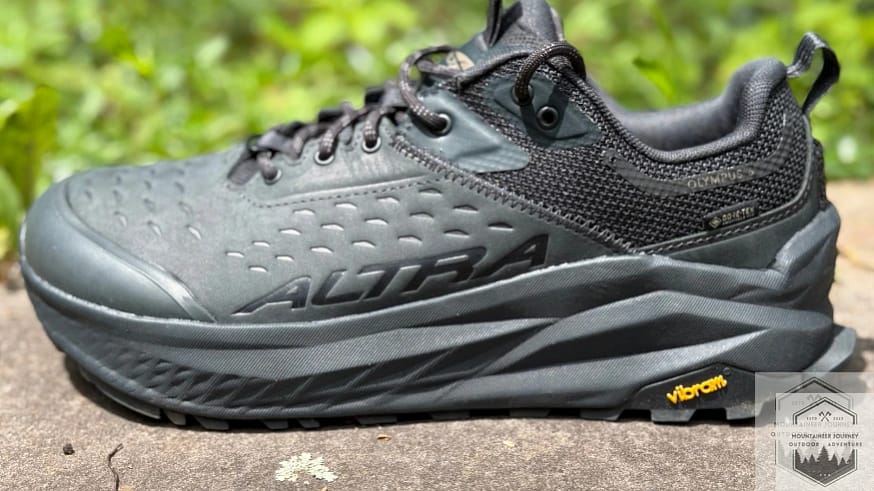
I’ve tested both of these models for over 60 miles each, and I have to tell you the durability is all based on their engineering.
The ripstop mesh of the Altra Lone Peak 9+ is great for breathability and its lightweight profile, however, I did note some delamination in my shoes after 50 miles. It’s nothing to write home about, and it has not changed the performance, delamination can go on to cause further problems with the shoe later on.
The heavier synthetic material combined with leather has held up great for the Altra Olympus 6. No areas of delamination, and most importantly, the outsole is not flat now given its bigger stack height. The shock absorption is still going strong after our continued testing.
As you would have expected, the heavier and less synthetic shoe has held up better in terms of overall durability.
Olympus 6 Durability: 4 out of 5
Lone Peak 9+ Durability: 3.5 out of 5
Winner: Olympus 6
Weight
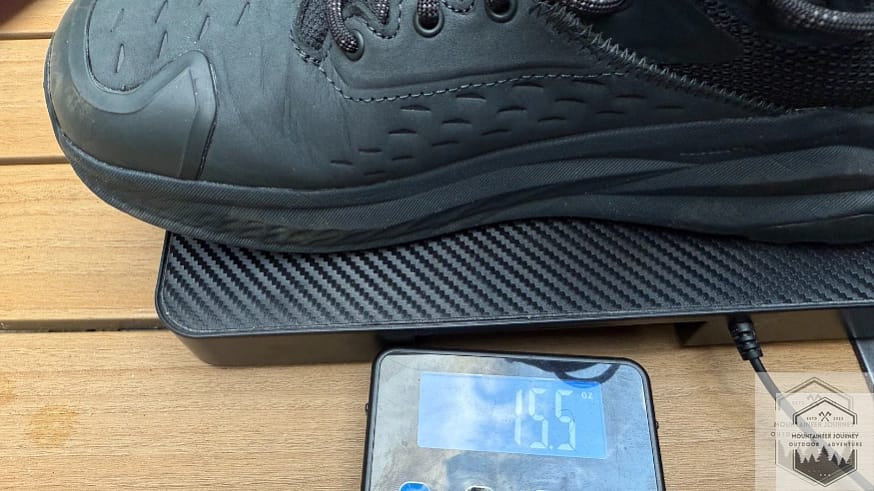
The weight difference between these trail running shoes is substantial and immediately noticeable on the trails.
The Olympus 6 we weighed at 15.5 oz for men’s size 10.5, while the Lone Peak 9 comes in at 11.5 oz for men’s size 10.5 as well. The 3 oz difference becomes a big deal based on your goals.
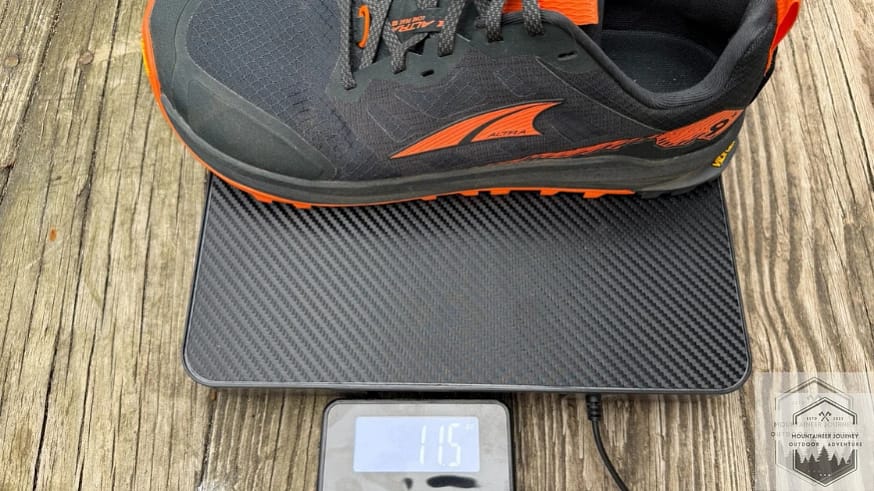
During faster-paced trail running and technical descents, the Lone Peak 9 feels noticeably more agile and responsive. The lighter weight allows for quicker direction changes and more nimbleness over time. This makes the Lone Peak the perfect pair for trail runners who prioritize speed and agility.
The Olympus 6’s extra weight is the price you pay for max cushioning. While heavier, this weight is primarily in the midsole cushioning that provides the plush ride during longer distances. For backpacking and ultra-distance events where comfort outweighs agility, this weight penalty becomes less relevant.
The Olympus 6 it is actually the heaviest trail shoe we have tested to date, which makes it perfect for a hiking shoe hybrid as well.
Olympus 6 Weight: 3 out of 5
Lone Peak 9 Weight: 4.5 out of 5
Winner: Lone Peak 9
Altra Olympus 6 Overall Rating: 8/10
- Cushioning: 4.5 out of 5
- Traction: 4.5 out of 5
- Overall Protection: 4.5 out of 5
- Fit: 4 out of 5
- Breathability: 3.5 out of 5
- Durability: 4.5 out of 5
- Weight: 3.5 out of 5
Total: 28/35
Altra Lone Peak 9 Overall Rating: 8.3/10
- Comfort: 4 out of 5
- Traction: 4 out of 5
- Overall Protection: 4 out of 5
- Fit: 4.5 out of 5
- Breathability: 4.5 out of 5
- Durability: 3.5 out of 5
- Weight: 4.5 out of 5
Total: 29 out of 35
Altra Lone Peak vs Olympus: Which One Should You Buy?
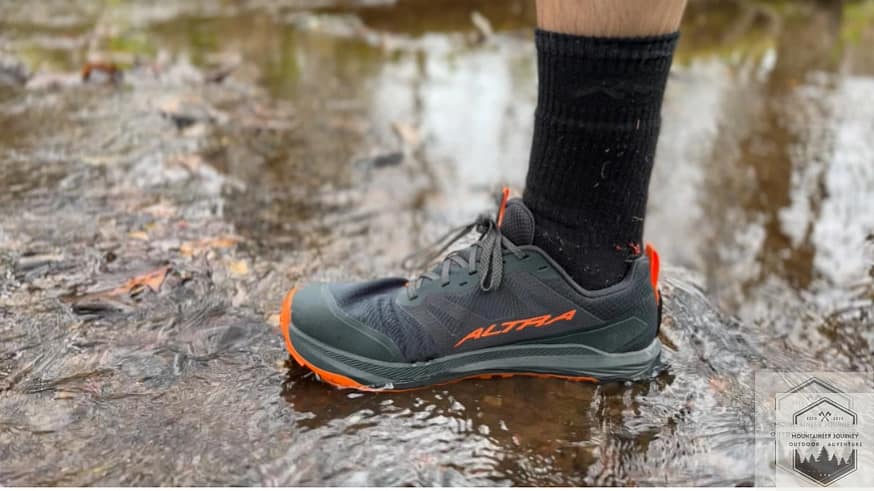
After extensive testing on various trail conditions, the Altra Lone Peak 9+ emerges as the better overall trail shoe for most runners and hikers. Its balanced approach to cushioning, lighter weight, better breathability, and superior versatility make it the more practical choice for the majority of trail users.
The Lone Peak 9 offers the best value for money at $25 less than the Olympus 6, while providing excellent performance across a wider range of use cases. Its moderate cushioning level works well for everything from technical day hikes to 50-mile trail races.
Choose the Olympus 6 if you are looking for a more cushioned, trail shoe hybrid. Also check out the Olympus 6 if durability is a top concern of yours, as it did score higher than the 9+ because of the integrated leather.
Order HERE for the LOWEST PRICE AVAILABLE
(Do NOT pay retail):
How We Tested & Our Methodology
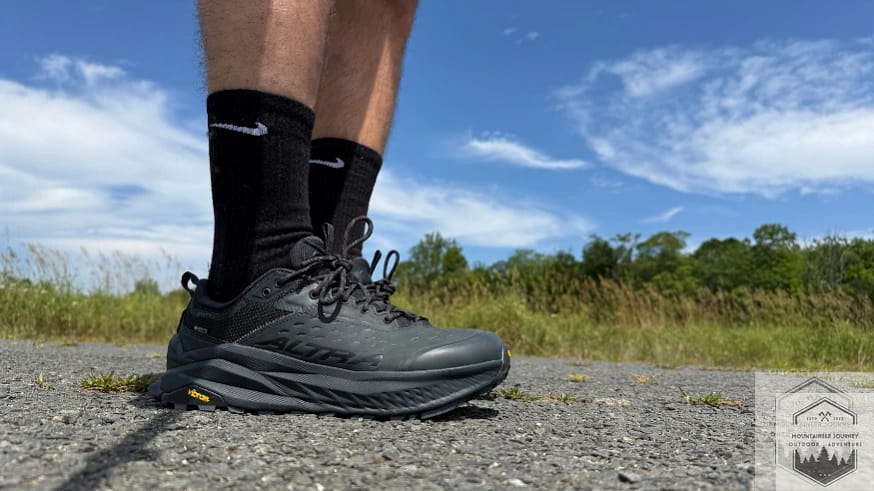
I personally tested both the Altra Lone Peak 9+ and Olympus 6 during 2024 with continued testing into 2025 across 200+ miles of varied terrain, including technical singletrack, rocky scrambles, smooth fire roads, and mixed trail conditions. Testing was conducted with the sole intention of providing you with the most unbiased review possible.
All testing was performed using proper socks appropriate for trail running, and both models were tested in similar conditions to ensure fair comparison. Trail conditions included wet rocks, mud, loose dirt, steep ascents and descents, and various technical terrain types.
We purchased both trail shoes at full retail price with our own funds no manufacturer provided products or compensation that could influence our opinions or final verdict. This ensures our recommendations are based purely on real-world performance and value for trail runners.

Tyler is the founder Mountaineer Journey and a professional Mountain Guide with 15+ years of technical experience in trekking, mountaineering, and trail sports. Having logged thousands of miles from rugged alpine summits to urban paths, Tyler provides rigorous, field-tested insights on hiking, walking, and trail running gear. All reviews are 100% unsponsored and unbiased, ensuring you get honest scoring based on real-world performance. His mission is to help outdoor enthusiasts of all levels find reliable equipment that ensures comfort, safety, and performance on any terrain.