Our Score
Garmin Vivoactive 6 Review
In this article, I’m sharing my HONEST Garmin Vivoactive 6 review for anyone wondering if it is WORTH IT in 2026.
I’ve logged over 70 runs, trail runs, and combined hikes with the Vivoactive 6, so I know exactly how it performs and feels throughout the day and during activities. I’ve also built custom software to compile all my workout data and compare it against reference devices like the Polar H10, so I can share accurate results with you. For more on our testing methodology, see How we test GPS Watches
I’ll cover accuracy, battery life, mapping and navigation, features and training tools, versatility, and, of course, value. I’ll share my critical opinion, backed by 16 years of experience as a trail guide, hiker, and multi-sport athlete.
Related: Garmin Vivoactive 6 Investment Report, Best Garmin GPS Watches
Editor’s Note: I updated this review on 10/21/26 with new testing insights from our Tracklab data on the Vivoactive 6’s accuracy, plus new photos of measurements taken with our digital caliper.I also provided updates on recommendations for alternatives to the Vivoactive 6, along with a direct comparison to a more premium heart rate sensor on the Garmin Forerunner 970. We dropped the Vivoactive 6’s overall score from 8.1 to 7.3.
Compare Similar Products
| Comparision | Product | Rating | Price |
|---|---|---|---|
 | 7.3 | Check Lowest Price | |
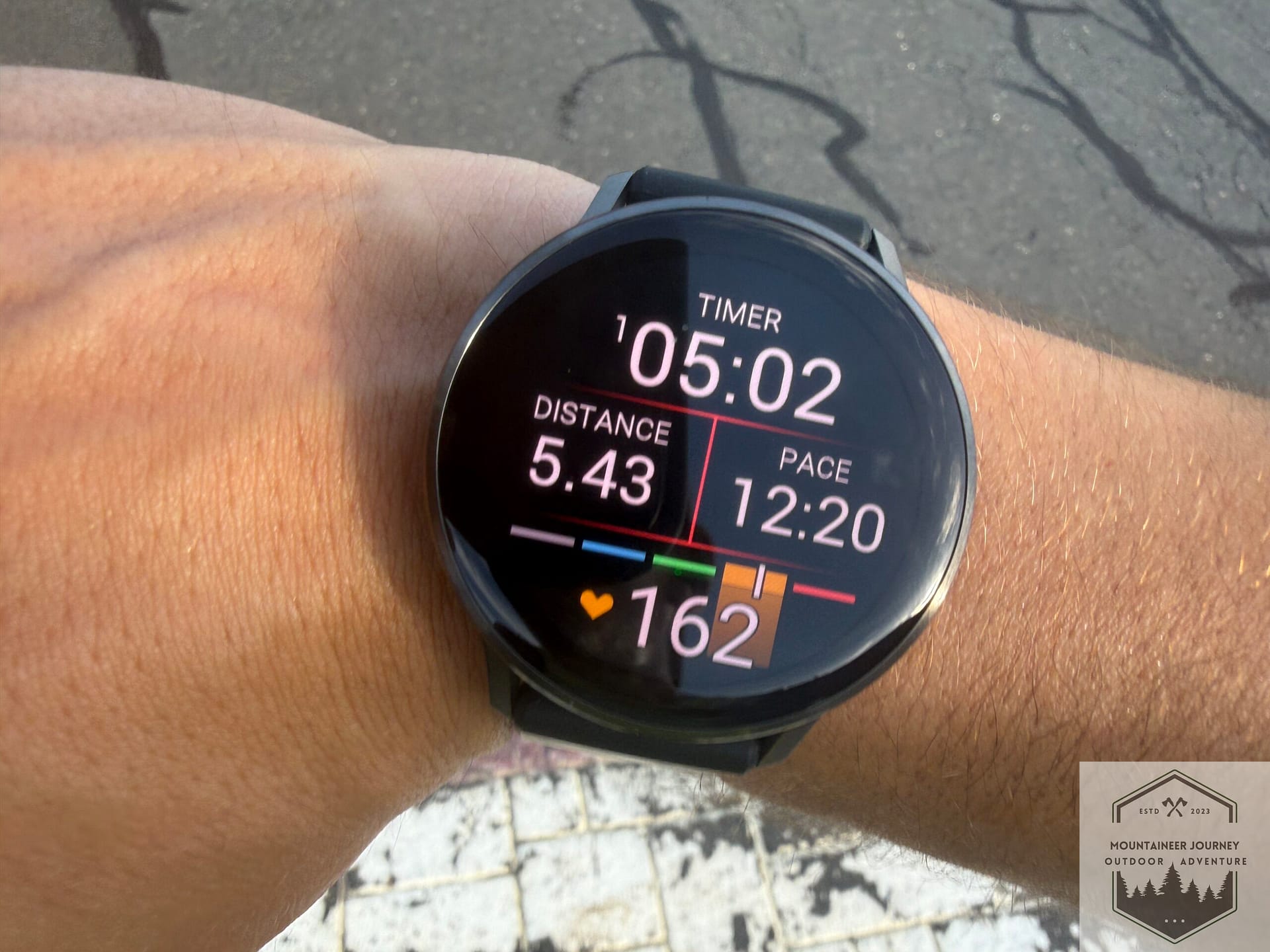 | 7.8 | Check Lowest PriceRead Review | |
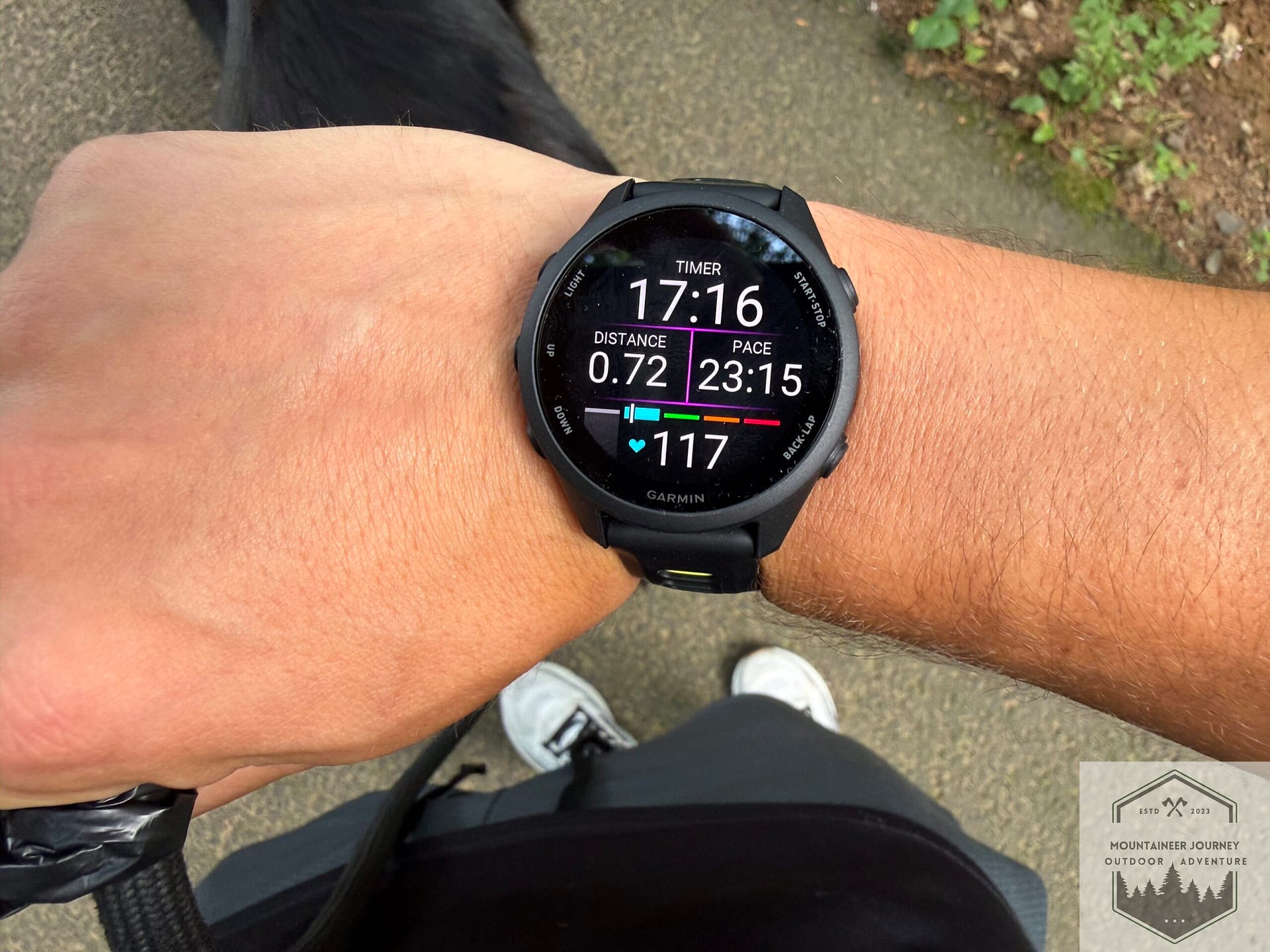 | 6.8 | Check Lowest PriceRead Review |
As an independent reviewer, I purchase all products myself. Some links may be affiliate links that support the site at no cost to you
Should you buy the Garmin Vivoactive 6?

Buy if
- You have smaller wrists and are looking for a smaller watch face with subtle features
You want a lightweight, versatile GPS watch
- You want an everyday watch you can wear 24/7, including while sleeping.
DON’T Buy if
You need full topographic maps or turn-by-turn navigation
You require the most advanced heart rate sensor (Gen5) for elite interval training
You want ECG or advanced medical-grade health features
- You are doing a lot of hill running or any activity that involves elevation tracking; there is no barometric altimeter
Garmin Vivoactive 6 Pros and Cons
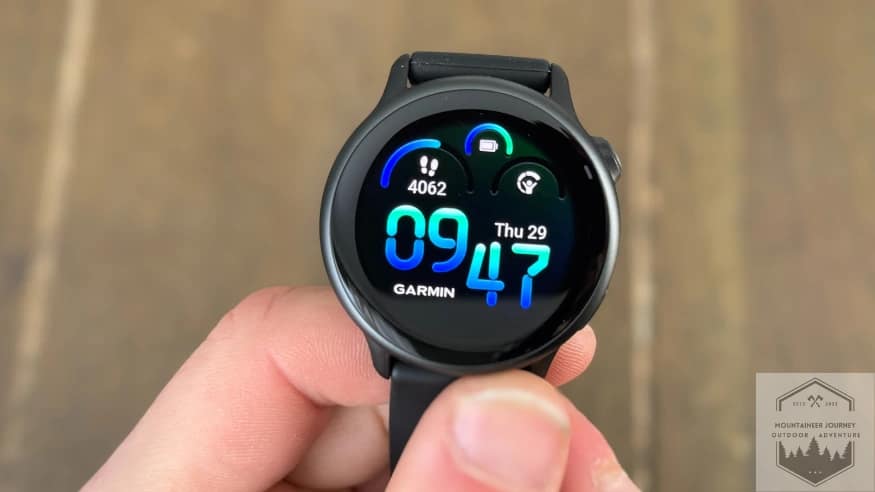
POSITIVES
- Exceptional Battery
- Bright AMOLED Screen
- Versatility
- Lightweight Profile
NEGATIVES
- No Full Mapping
- No Microphone
- Inconsistent Sleep Tracking
Garmin Vivoactive 6 Price
As of this writing, the Garmin Vivoactive 6 costs $299.
Garmin Vivoactive 6 Accuracy: 30%
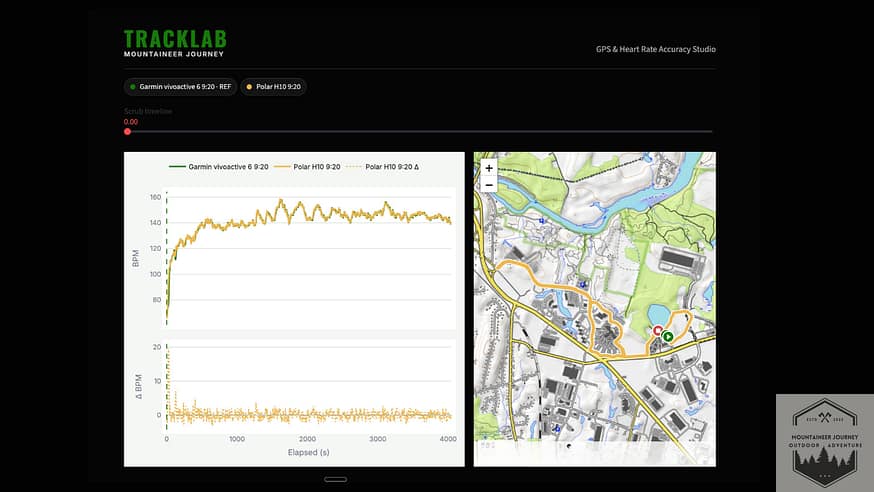
To keep scoring objective, we compare heart rate data from our Polar H10 chest strap with the Garmin Vivoactive 6 during testing. The H10 remains one of the most accurate heart rate sensors on the market.
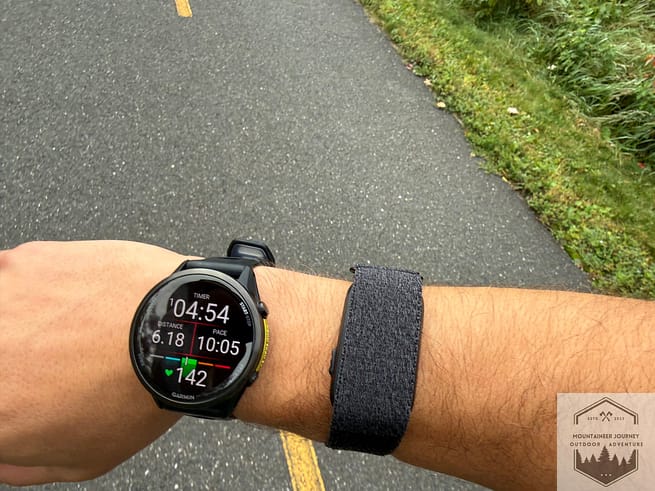
The Vivoactive 6 uses the Elevate V4 optical sensor. During my testing across steady-state runs, hikes, and cadence changes, my heart rate was close to the Polar H10. However, how close?
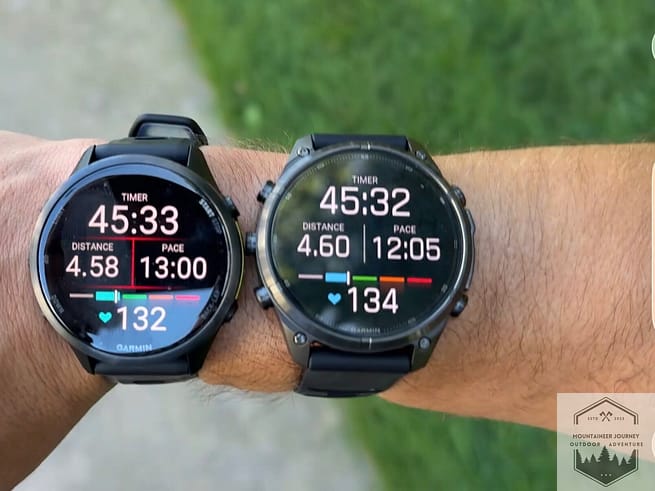
Across multiple workouts, including interval runs, long runs, and trail runs, the Vivoactive 6 averaged only 1.3 bpm off the Polar H10. However, the maximum delta was -31.9 bpm, meaning that during a higher heart rate zone interval session, the furthest the Vivoactive 6 was was almost 32 bpm less than the Polar H10, which is quite a difference, especially for those who are going to be using this as a heart rate tracker for HIIT sessions or quick interval runs.
Where that begins to make more sense is the cadence lock duration. While switching up paces, our Tracklab data showed the Vivoactive 6 was in a cadence lock for 232 seconds, meaning the watch was misrepresenting my heart rate based on my actual steps per minute, which explains why the maximum delta was so high.
Tracklab Vivoactive 6 Results
| Metric | Garmin Vivoactive 6 vs Polar H10 |
|---|---|
| Cadence Lock Duration | LOCKED · 232s |
| Fréchet Drift | 400.4 ft |
| Cross-Track Error | 3.1 ft |
| Distance Over-Report | -1.6% |
| Mean Absolute Error | 1.3 bpm |
| Root Mean Square Error | 2.7 bpm |
| Maximum Delta | -31.9 bpm |
| Bland-Altman Bias | -0.3 bpm |
| Lin’s Concordance | 0.988 |
| Interval Latency | 13.5 s |
Looking at the Bland-Altman Bias, it came in at -0.3 bpm, meaning the Vivoactive 6 mostly underreported heart rate compared to the Polar H10. I wanted to test the Vivoactive 6 further and compare it to a Garmin Gen 5 heart rate sensor, like the Forerunner 970.
Garmin Vivoactive 6 vs Forerunner 970 Tracklab Data
| Metric | Garmin Vivoactive 6 versus Garmin Forerunner 970 |
|---|---|
| Cadence Lock Duration | LOCKED · 186s |
| Elevation MAE | 5.4 ft |
| Elevation Bias | +1.0 ft |
| Ascent Delta | -25.6 ft |
| Fréchet Drift | 413.3 ft |
| Cross-Track Error | 3.3 ft |
| Distance Over-Report | -2.4% |
| Mean Absolute Error | 3.0 bpm |
| Root Mean Square Error | 4.1 bpm |
| Maximum Delta | -16.0 bpm |
| Bland-Altman Bias | -0.7 bpm |
| Lin’s Concordance | 0.974 |
| Interval Latency | 11.3 s |
Our Tracklab data show the Vivoactive 6 had a mean absolute error of 3 bpm compared with the more premium Gen 5 sensor on the Garmin Forerunner 970 for the same exact run. The maximum delta is also quite high, but not as bad as compared to the Polar H10 at -16 bpm.
It’s safe to say the Gen 4 heart rate sensor on the Vivoactive 6 tends to underreport heart rate, based on my comparisons across multiple runs against Garmin V5 sensors and the Polar H10 chest strap.
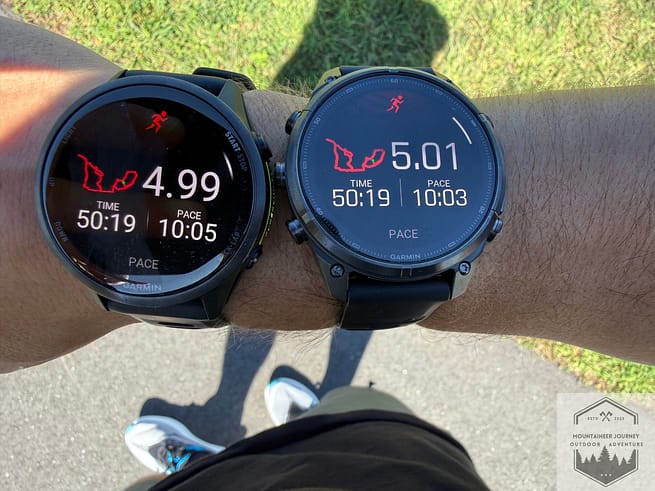
For distance, the Vivoactive 6 was considerably accurate for a GPS watch in its price range. Our tracklab chart shows the Vivoactive 6 was about 400 feet off our pre-routed GPX maps and 413 feet off the Forerunner 970 on the same route. While this may seem like a lot, when I break it down in average miles, the Vivoactive 6 was only off by .07 miles from our pre-routed maps.
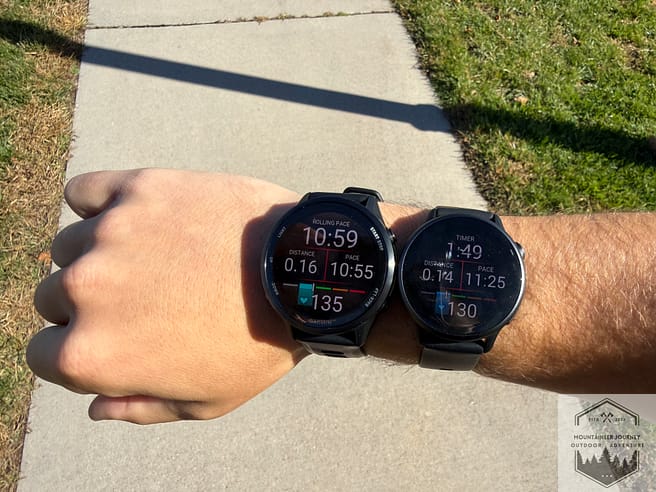
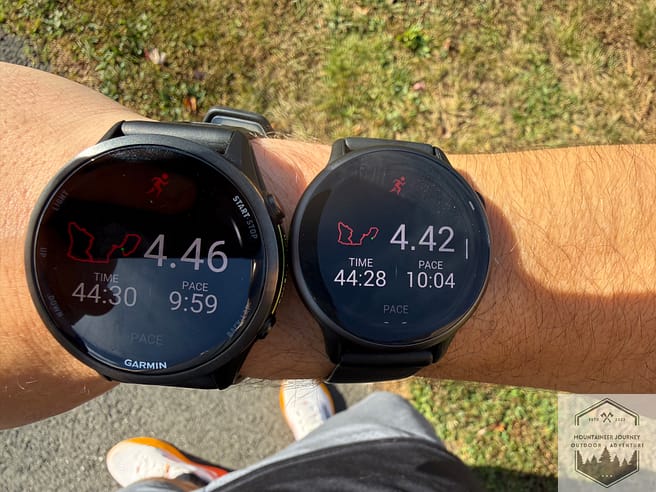
For those who will use the Vivoactive as an everyday training watch, that accuracy matters, especially given its lower price point than more premium GPS watches. For cadence, ground contact time, and vertical oscillation, the Vivoactive 6 was spot on compared with the Forerunner 970. Taking a look at the chart, you can understand why the pace is off by 5 seconds, given the distance drift when you compare it to the Forerunner.
Garmin Forerunner 970 vs. Vivoactive 6: Running Metrics
| Metric | Garmin Forerunner 970 | Garmin Vivoactive 6 |
|---|---|---|
| Distance | 4.46 mi | 4.42 mi |
| Steps Per Minute (Cadence) | 154 spm | 155 spm |
| Pace | 9:59 /mi | 10:04 /mi |
| Vertical Oscillation | 7.9 cm | 7.9 cm |
| Average Ground Contact Time | 263 ms | 262 ms |
| Average Stride Length | 1.01 m | 1.01 m |
| Average Pace (Second Reported Pace) | 9:59 /mi | 10:03 /mi |
Runners and athletes should take note of the Vivoactive 6’s precise running metrics. Compared with the Forerunner, which costs $350 more, the Vivoactive 6 offers a compelling alternative. The Vivoactive 6 lacks a barometric altimeter, so hikers and trail runners who want precise elevation data will find this model lacking.
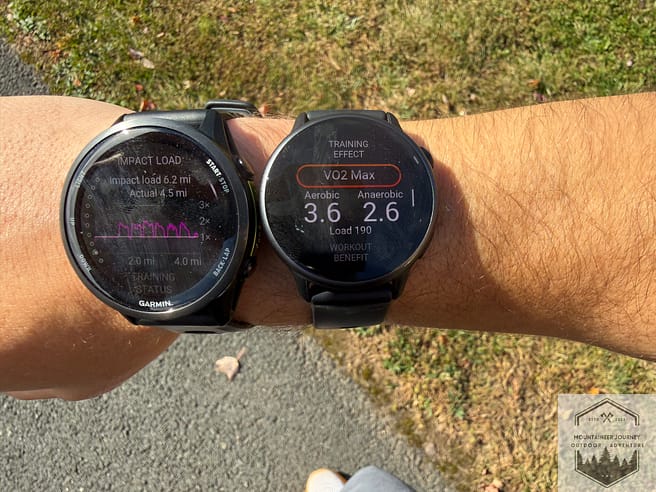
Overall, for a mid-priced GPS watch with a lower-end Gen 4 sensor, the Vivoactive 6 is quite accurate. It does experience cadence lock, as most watches do. It is more on the minimal side and still delivers very good heart rate accuracy, even during quick interval work and fast pace changes.
Having over 400 ft of GPS drift may seem like a lot, but when you compare it to most of Garmin’s best watches, it is right within the range of mileage drift from our pre-routed GPX maps.
Accuracy Score: 7/10 (30%)
Battery Life: 20%
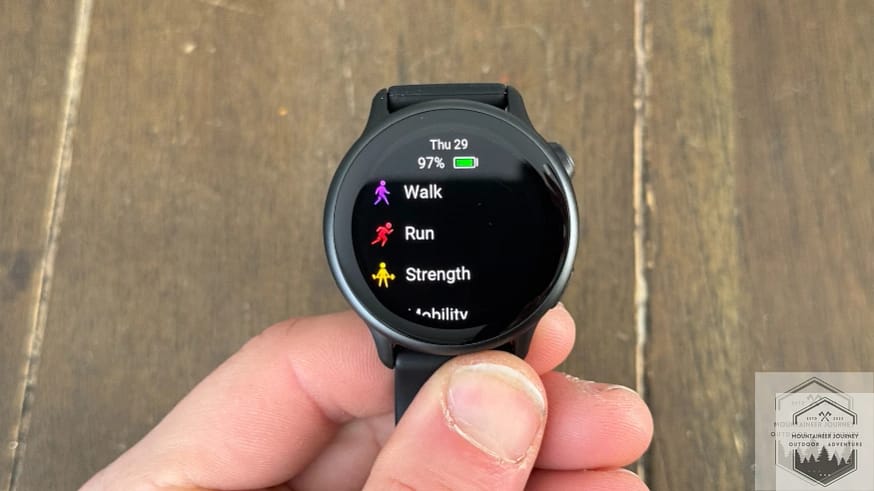
The Vivoactive 6 claims up to 11 days in smartwatch mode, and I’m happy to report this holds up in real-world testing.
During my testing period, I achieved roughly 10.5 days, including three GPS workouts of varying lengths, a gym strength-training session, near-constant wear, and standby periods.
In pre-planned breadcrumb GPS mode during hiking, I saw a predictable drain of about 10-15% per hour. That means a 6-7 hour day leaves you with plenty of battery to spare.
The always-on display had negligible impact on battery thanks to Garmin’s optimization. To keep the testing standardized, I ran the AMOLED display in always-on mode for a full week and still hit the 10-day mark.
Standby drain between outings was minimal. I went days between hikes, and the battery was still ready to go without charging. Compare that to the Apple Watch Ultra 3, which needs charging every day, if not twice a day.
Overall, the battery consistency stayed the same even in below-freezing temperatures and very hot summer days.
Battery Life Score: 8/10 (20%)
Mapping & Navigation: 20%
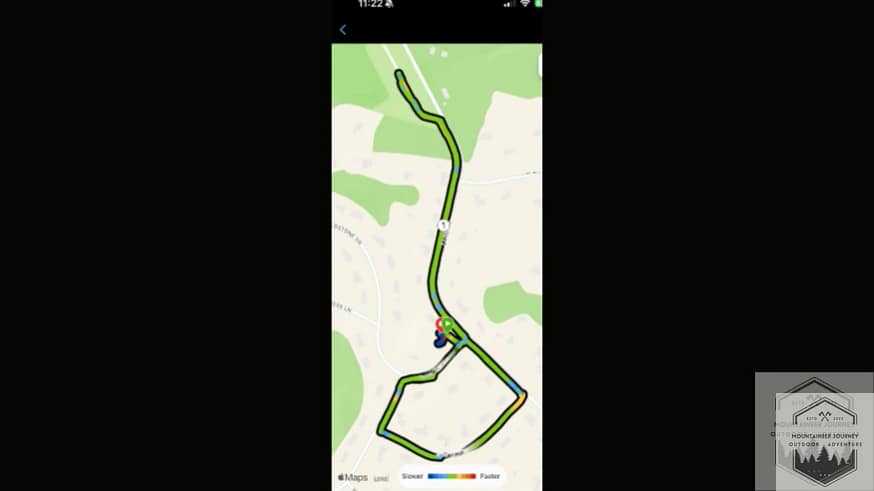
The Vivoactive 6 falls into the Breadcrumb Navigation class, meaning it offers GPX-followable course navigation without full topographic maps.
If you mainly want to track distance, heart rate, and pace while following a pre-planned route, this watch does the job well. The navigation features include Up Ahead alerts for upcoming turns, off-route notifications, and route guidance.
GPX import via Garmin Connect is reliable and straightforward. I loaded several trail routes without any hiccups. You can also send routes from AllTrails to your watch as needed, as I like to do.
I was a little disappointed with the off-route notifications. I purposely moved off route during testing to see how long it takes to trigger the alert. I moved at least 50-75 paces off route each time before the alert triggered. Keep this in mind if you rely on the watch to keep you on trail.
Controls blend touchscreen with buttons effectively. I could navigate in light rain without issues, though the lack of a microphone for voice commands limits quick inputs.
However, if you need real trail navigation with topographic maps, turn-by-turn guidance, or dynamic rerouting when you go off-trail, this watch won’t meet those needs.
For true wilderness navigation, you’ll need to step up to a Fenix 9, Enduro 3, or even the Forerunner 970.
If you’re hiking familiar trails or following well-marked routes, the navigation features work well. For exploring unfamiliar backcountry, you’ll want supplemental navigation.
Mapping & Navigation Score: 6/10 (Breadcrumb Navigation with usability adjustment) (20%)
Features & Training Tools: 10%
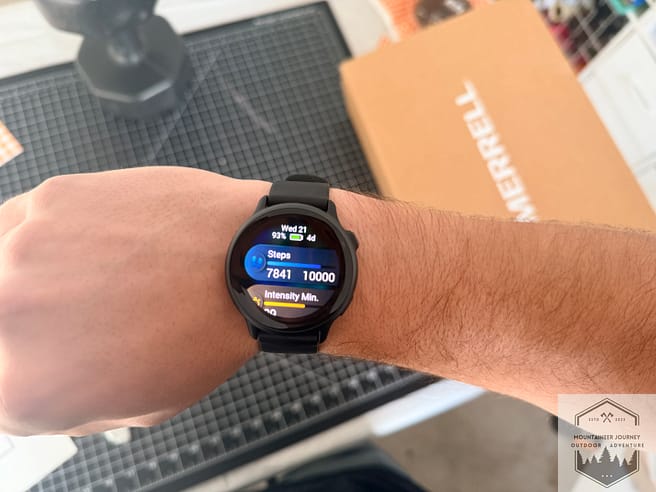
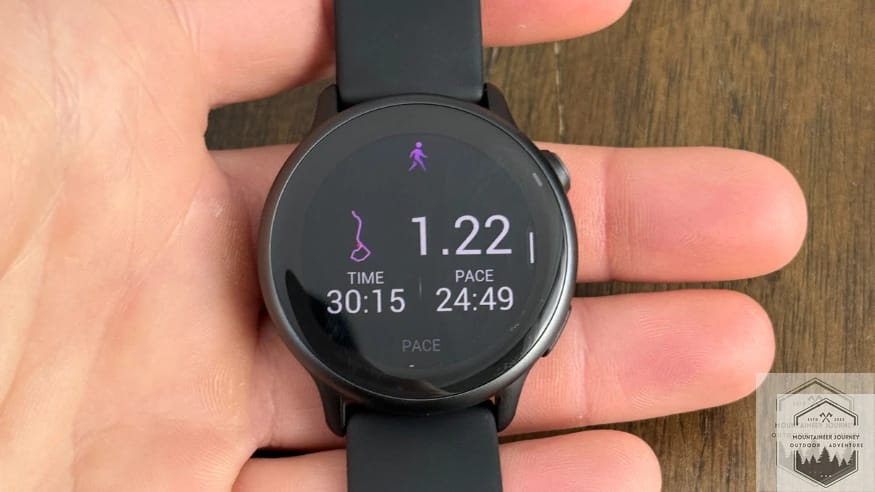
The Garmin Vivoactive 6 packs pro-level metrics typically reserved for pricier Garmin Forerunner models. Running features stand out. PacePro offers real-time pacing adjustments to help you nail negative splits, plus race predictions based on training data.
Running power and running dynamics (cadence, stride length, ground contact time) work without external accessories. You’ll need to upgrade to the Garmin HRM600 chest strap for additional running metrics. If you take a look back at the running metrics on the Vivoactive 6 versus the Forerunner 970 we covered in the accuracy section, you’ll see it is right on par with most of them.
The daily suggested workouts adapt based on your training history and fitness level. Garmin Coach integration provides structured training plans, and Adaptive Training Intensity adjusts recommendations based on your recovery status.
However, the Vivoactive 6 lacks several metrics compared to more premium Garmin watches. This model lacks grade-adjusted pace and stamina zones compared to higher-priced alternatives. Adjusted pace helps if you’re training on many hills and need to adjust your pace based on elevation. Stamina zones help when training up to a race, but they’re not essential.
Health features are quite comprehensive. Body Battery integrates sleep quality, stress, activity, and HRV data to show your energy reserves throughout the day. The morning report summarizes your sleep score, recovery status, and the day’s weather.
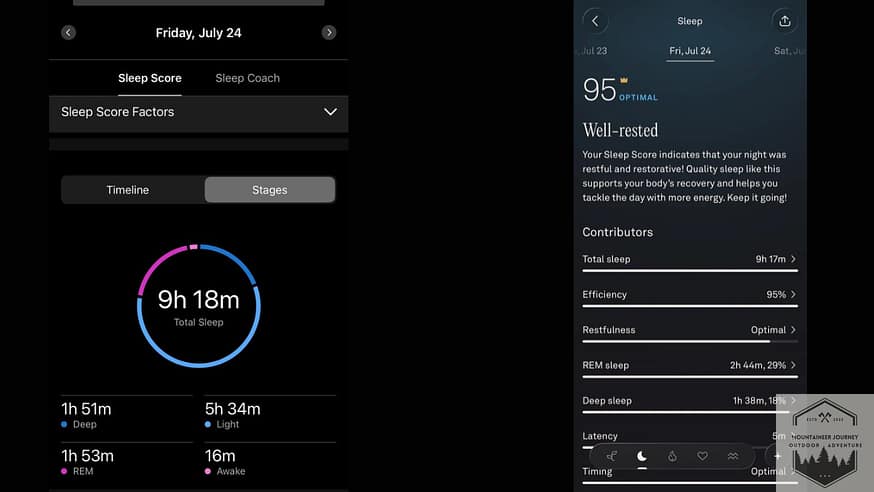
I compared the sleep data with my Oura Ring 4, which was a little inaccurate. Overall, sleep was accurate. However, the REM and deep sleep cycles were quite off. REM sleep was off by 51 minutes, and deep sleep was within 13 minutes.
Sleep tracking isn’t the be-all and end-all with the Vivoactive. However, if you’re looking for a faceless watch with more accurate sleep-tracking data, check out the newer Garmin Cirqa.
The watch records data across 80+ preloaded sport profiles, including cycling, pool swimming, walking, hiking, trail running, and wheelchair activities. Most Garmin watches include all these activity profiles. The only one missing is Archery X, which is available only on the Garmin Fenix 9.
The Garmin Connect app brings it all together in a clean interface. Although it’s very detailed, I find the Garmin app hard for first-time users because it is so complex.
This sensor doesn’t include ECG. However, a comparable watch with the Gen 5 heart rate sensor at a similar price is the Garmin Venu 4.
Features & Training Score: 7.5/10 (10%)
Versatility: 10%
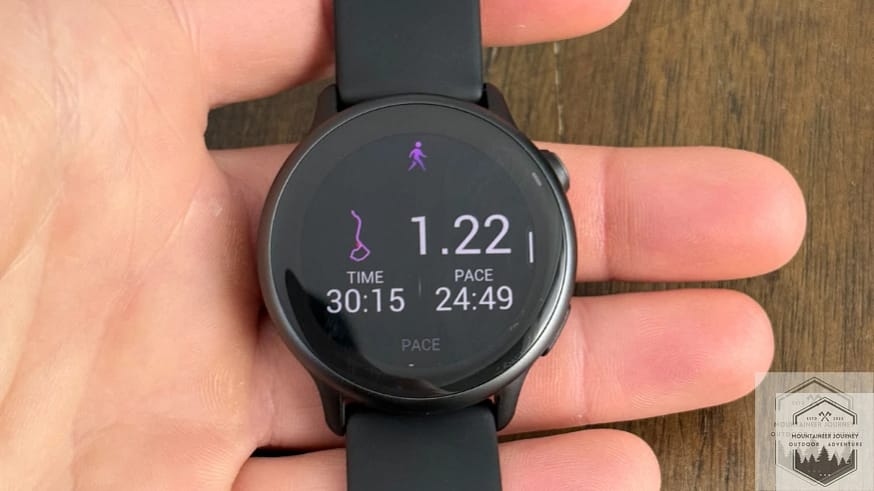
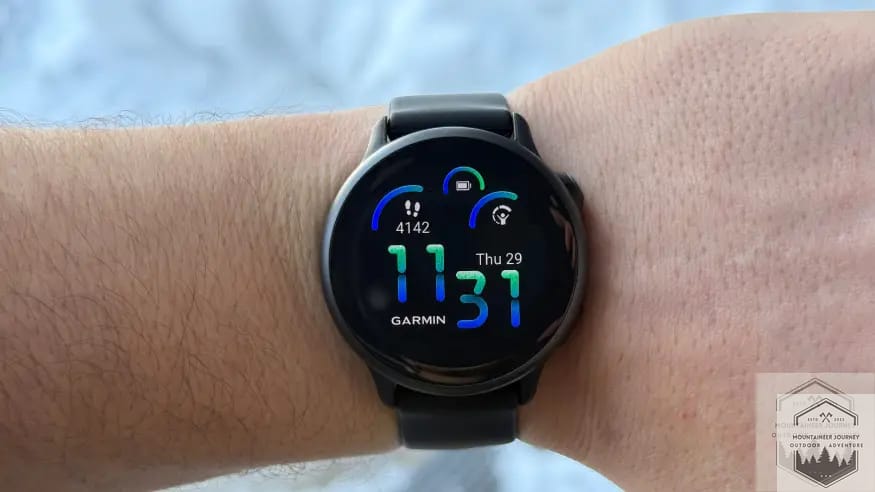
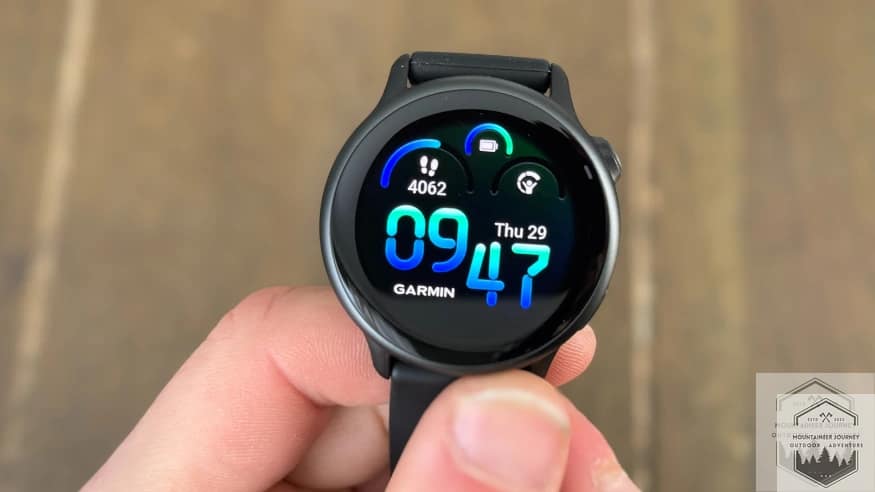
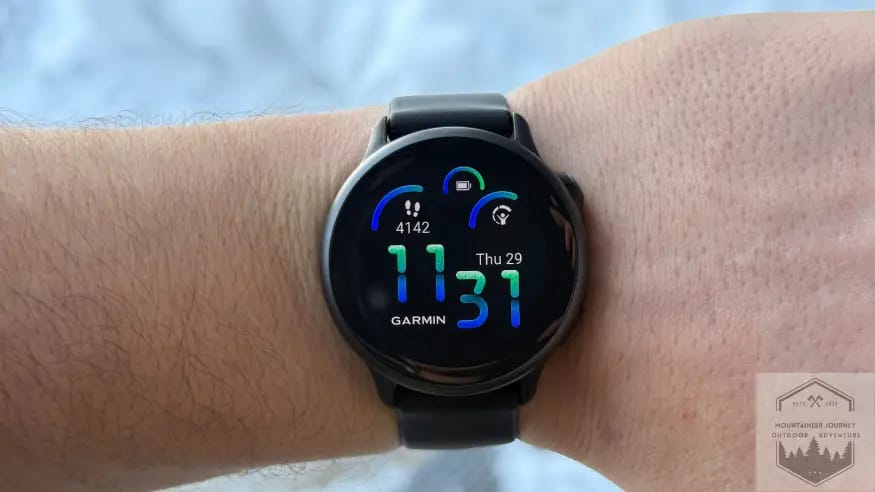
The Vivoactive 6 excels as a multi-activity device for running, hiking, trail running, daily wear, and casual fitness. I measured the total watch length at 41.9 mm with our digital caliper, while Garmin lists it as 42.2. The difference is negligible.
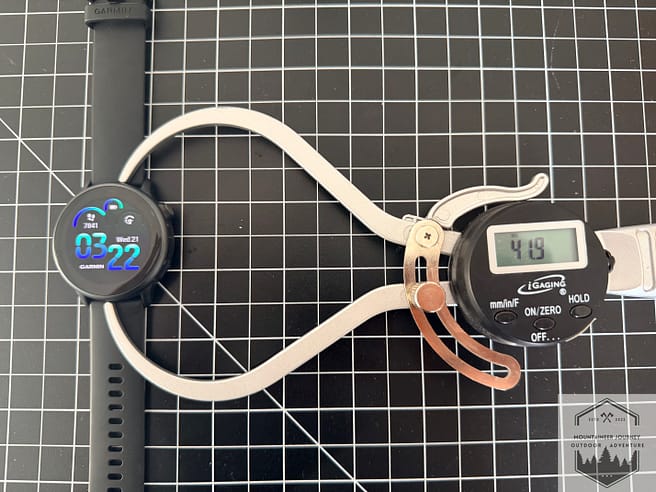
More impressively, the watch’s stack height (or thickness) is only 10.9 mm, which is extremely thin, especially for those with smaller wrists who want a subtle watch build. Compare that to the Fenix 9, which has a stack height of 15.4 mm, and you can understand why it’s easier to sleep in the Vivoactive and use it as a daily watch rather than a bulky wrist weight.
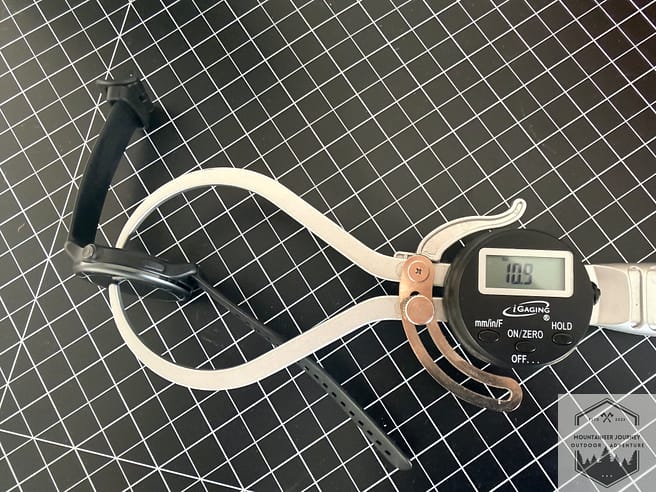
The two-button system is also easier to use; I measured the button length at 6.1 mm, which again proves the Vivoactive 6’s subtle profile. Switching between activity profiles or checking other glances is easy; switching from button mode to the touchscreen is also easy to navigate without frustration.
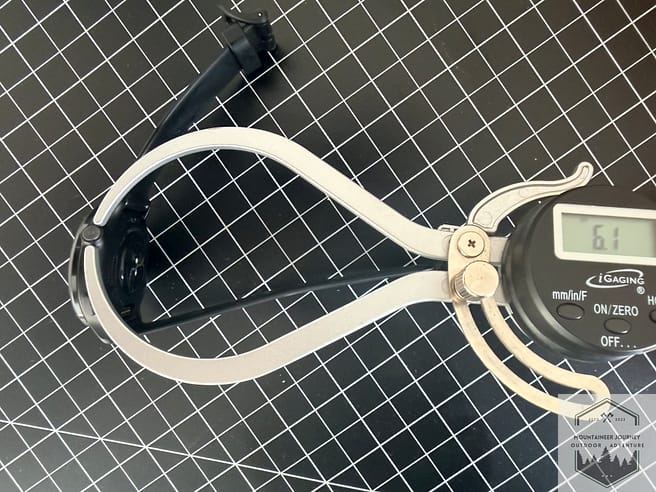
Strength training weight workouts are also seamless with the Vivoactive 6. Typically, with bulkier watches, anytime I put my wrist into extension for push-ups or even bench press, I accidentally click buttons with my hand on watches like the Apple Watch Ultra 3 or the newer Enduro 4.
For outdoor activities, the AMOLED display is on the less premium side for GPS watches. On the same run as the Vivoactive, the Forerunner 970 is much brighter, even with both set to maximum display brightness.
For hiking, the breadcrumb navigation, long battery life, and health tracking make it a reliable trail companion. It doesn’t feel like a running watch forced into hiking duty.
Overall, the Vivoactive 6 should be at the top of your list for daily use. Its lightweight profile and easy-to-use buttons make it more compelling for people with smaller wrists or who want a subtle watch that’s easy to sleep in and wear 24/7.
Versatility Score: 7.5/10 (10%)
Is The Garmin Vivoactive 6 Worth It?
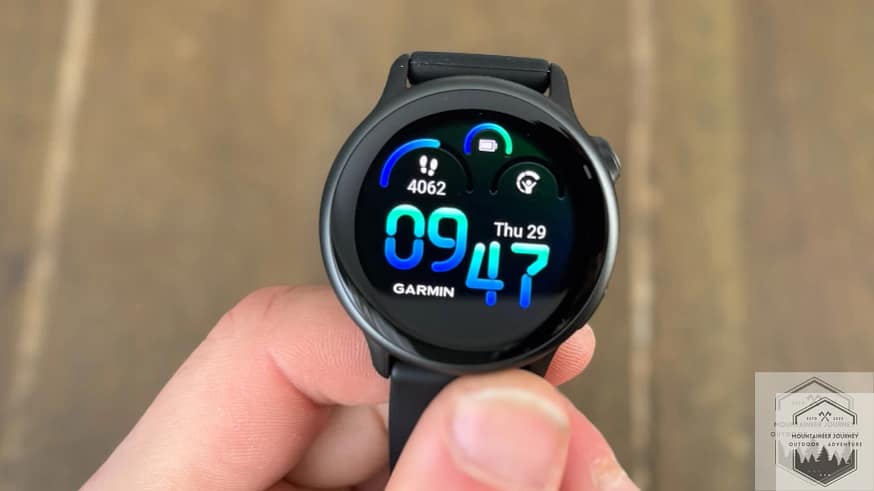
The Vivoactive 6 stands out as a strong $300 option for multisport athletes, runners, gym enthusiasts, and anyone who wants a lightweight GPS watch with an AMOLED screen. Its design avoids the bulk of larger watch faces, making it a practical choice for those who prioritize functionality and comfort.
Compared to higher-end Garmin models like the Venu 4, the Vivoactive 6 skips some premium features (Gen5 sensor, more mapping) but delivers 90% of the fitness tracking capability at a lower price.
This is for those who don’t need full topographic maps, Garmin inReach capabilities, or very advanced fitness tracking. This is the best bang for your buck before moving up to much more expensive models.
For those looking for a GPS watch at a similar price point, the Garmin Forerunner 170 is a great alternative. The screen is slightly brighter, but the watch face is larger overall and has a 5-button layout, plus a barometric altimeter for elevation tracking. The Coros Pace 4 is another strong alternative with a barometric altimeter and a slightly larger watch face, and it costs $50 less; however, it lacks advanced health metrics and the Garmin ecosystem.
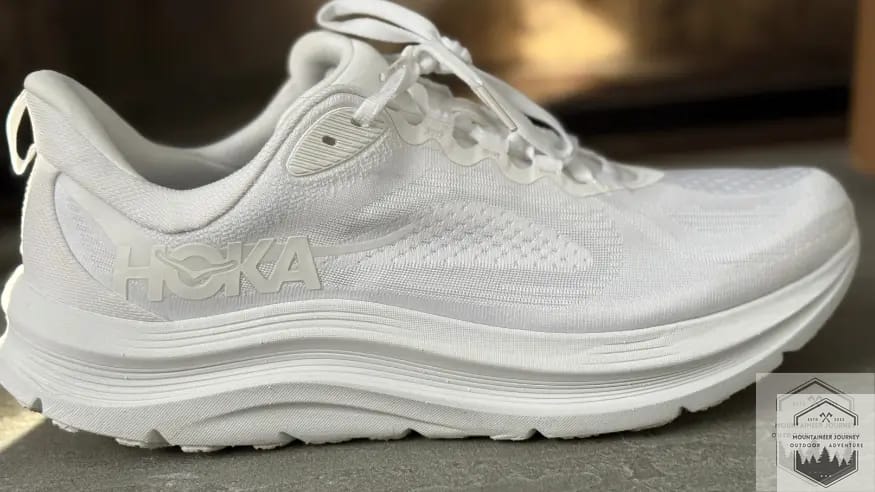
For those looking for a bigger upgrade with full topographic maps, a larger, brighter screen, and more advanced running features like ClimbPro and grade-adjusted pace. The Garmin Forerunner 970 is our top-rated GPS watch of this year.
Value (10%): 9/10
Scoring Breakdown
Accuracy (30%): 7/10
Battery Life (20%): 8/10
Mapping & Navigation (20%): 6/10
Features & Training (10%): 7.5/10
Versatility (10%): 7.5/10
Value (10%): 9/10
Total Weighted Score:
2.10 + 1.60 + 1.20 + 0.75 + 0.75 + 0.90 = 7.30/10
Our Rating: 7.3/10
Frequently Asked Questions
How accurate is the GPS tracking on the Garmin Vivoactive 6?
The Garmin Vivoactive 6’s GPS tracking is excellent for its price tier, with clean track fidelity on tight turns and minimal drift in tree cover.
How long does the Garmin Vivoactive 6 battery last?
Based on our real-time testing, the Garmin Vivoactive 6 battery lasts up to 10.5 days in smartwatch mode with regular workouts and about 6-10 hours of continuous GPS use.
Does the Garmin Vivoactive 6 have navigation?
Yes, the Garmin Vivoactive 6 offers breadcrumb navigation with GPX route following, off-route alerts, and Up Ahead notifications. However, it does not include full topographic maps or dynamic rerouting.
What activities can the Garmin Vivoactive 6 track?
The Garmin Vivoactive 6 can track 80+ activities, including running, hiking, cycling, pool swimming, strength training, walking, and wheelchair activities.
Is the Garmin Vivoactive 6 good for hiking?
Yes, the Garmin Vivoactive 6 for hiking works well on trails where you’re following pre-loaded routes. The long battery life and breadcrumb navigation make it reliable, though you won’t get full topographic maps.
Is the Garmin Vivoactive 6 worth the price?
Yes, the Garmin Vivoactive 6 is worth $299 if you want a fitness-focused smartwatch with excellent battery life and Garmin’s training ecosystem.
How We Tested and Our Methodology
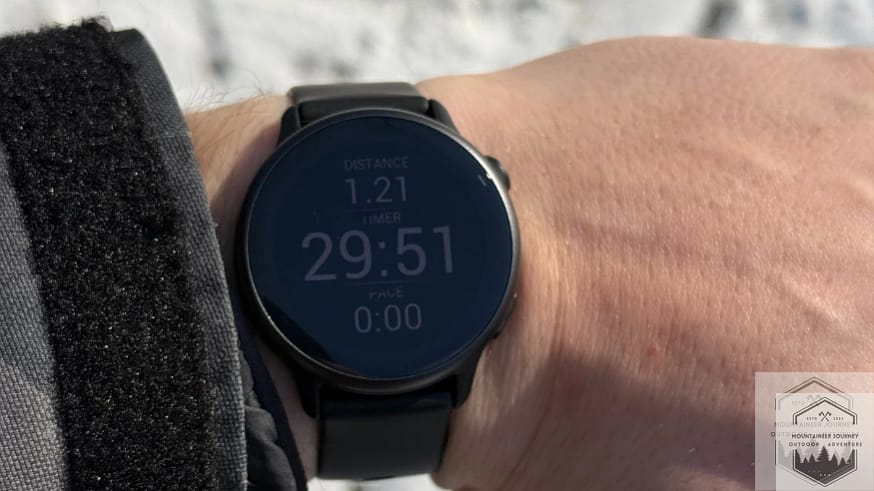
I personally tested the Garmin Vivoactive 6 since its April 2025 release, with continued testing into 2026 with the sole intent of giving you the most unbiased review possible.
Mountaineer Journey is 100% independent, and our testing team has spent years evaluating outdoor gear in real-world conditions.
We base every category score on objective testing, not brand claims.
Accuracy Testing
- We compare heart rate accuracy against a Polar H10 chest strap on every outing.
- GPS, heart rate, and elevation data are plugged into our TrackLab coding software, which gives us a full analysis of accuracy regarding the GPS watch versus pre-mapped GPX files, as well as Polar H10 data
- We cross-reference GPS accuracy against a handheld GPS unit and mapped GPX routes we previously verified.
- We evaluate four key areas: heart rate variance, distance error, GPS track quality, and elevation stability.
Battery Testing
- We test real-world battery drain during GPS workouts and everyday smartwatch-mode wear.
- We score battery life on three criteria: GPS runtime, battery consistency across workouts, and total smartwatch-mode longevity.
Features, Versatility, and Value
- Features include training tools, recovery support, and how well the watch integrates with day-to-day life.
- Versatility covers how well the watch adapts to running, hiking, gym sessions, or just wearing it on the job.
- Value assesses whether the price is justified, whether you can trust the watch to last, and whether Garmin will still be supporting it years from now.
Battery Testing
- We test real-world battery drain, whether it’s during a GPS workout or when the watch is just sitting on your wrist.
- When we score battery life, we’re looking at three things: how long it lasts on GPS, how consistent the battery is, and how long the watch lasts in smartwatch mode.
Mapping and Navigation Testing
We also cross-reference mapping in our TrackLab coding software, where we can determine total drift and distance over- or underreporting.
We score navigation on capability, not price.
We evaluate watches without proper navigation on breadcrumb accuracy, back-to-start reliability, and course-following performance on known trails.

Tyler
Tyler is the founder Mountaineer Journey and a professional Mountain Guide with 15+ years of technical experience in trekking, mountaineering, and trail sports. Having logged thousands of miles from rugged alpine summits to urban paths, Tyler provides rigorous, field-tested insights on hiking, walking, and trail running gear. All reviews are 100% unsponsored and unbiased, ensuring you get honest scoring based on real-world performance. His mission is to help outdoor enthusiasts of all levels find reliable equipment that ensures comfort, safety, and performance on any terrain.