Our Score
Best Hiking Shoes of 2026 | Unsponsored
In this article, I am going to share my picks for the Best Hiking Shoes of 2026.
After testing over 60 hiking shoe models over the last 16 years, I compiled this list based on objective test measures and my case studies of each shoe. This guide is completely unsponsored. I paid for all of these hiking shoes myself.
Testing included comfort, traction, durability, fit, breathability, weight, and value.
Editor’s Note: This guide was updated on 10/5/26 with new recommendations, including the Adidas Terrex Free Hiker 3 Ultra as our number one hiking shoe, plus the Nike Zegama Hike and the Topo Ultraventure 5 for the most up-to-date rankings.
Top 5 Hiking Shoes Of 2026
1
Best Overall Hiking Shoe
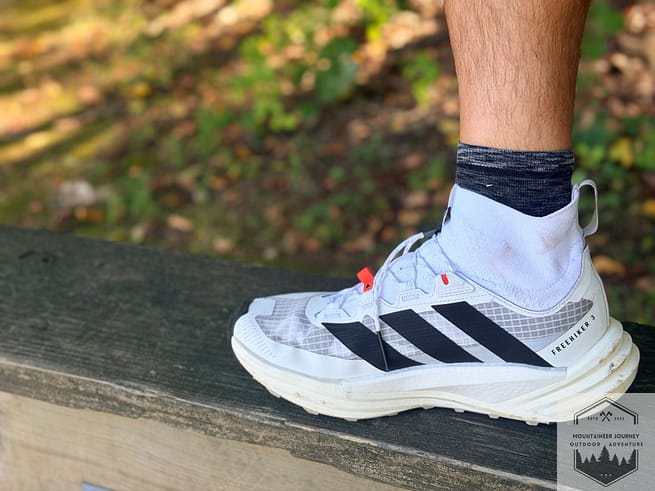
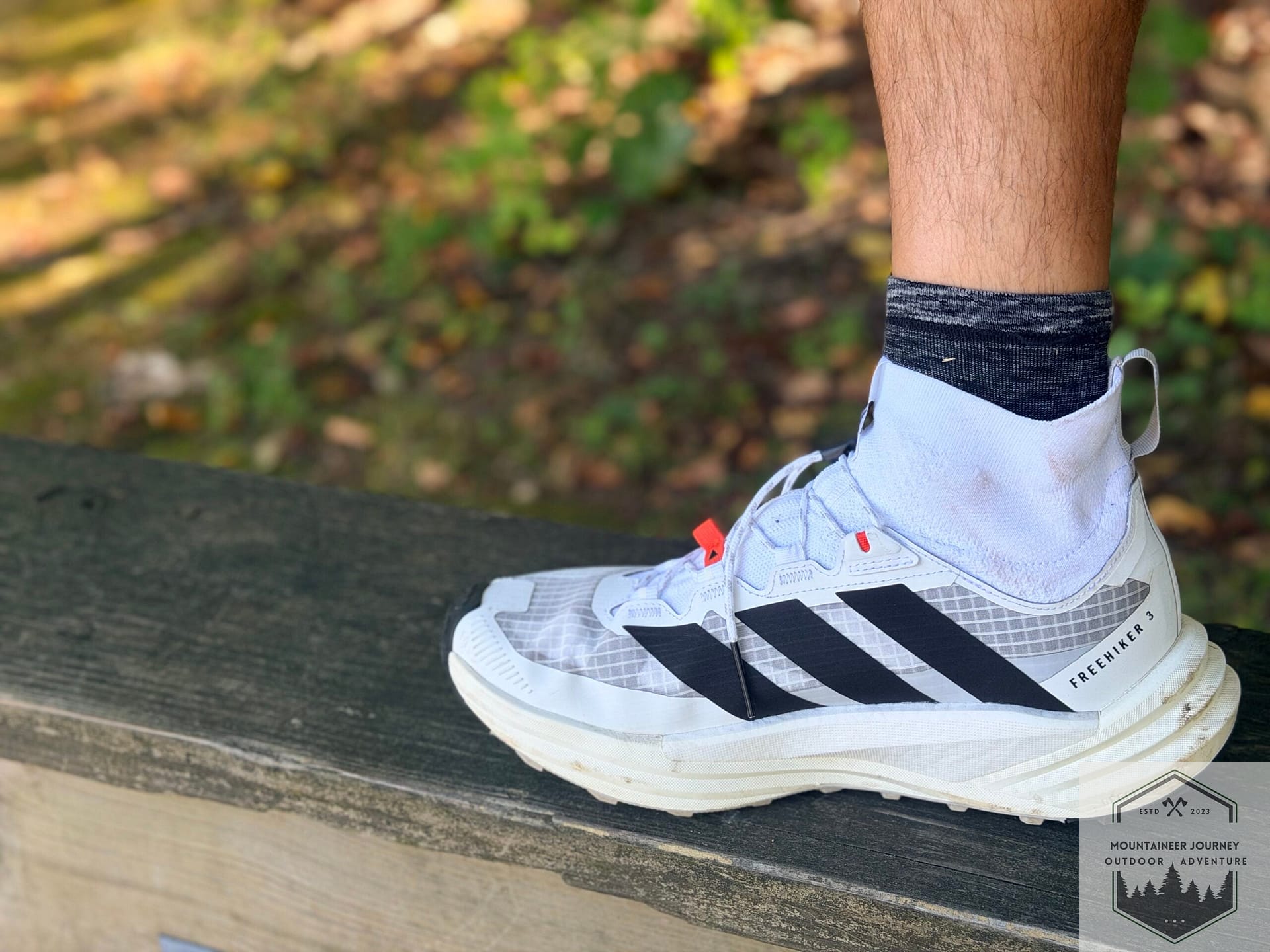
Adidas Terrex Free Hiker 3 Ultra
The Terrex Free Hiker 3 comes in at a premium price but is well worth the investment. Its top-notch stability and trail grip make it our number one recommendation for 2026.
2

Top Rated Budget Hiking Shoe
The Merrell Moab Speed 2 is a lightweight, versatile hiking shoe built for all types of terrain.It's our top recommendation for beginner hikers and budget-conscious buyers.
3
Most Breathable
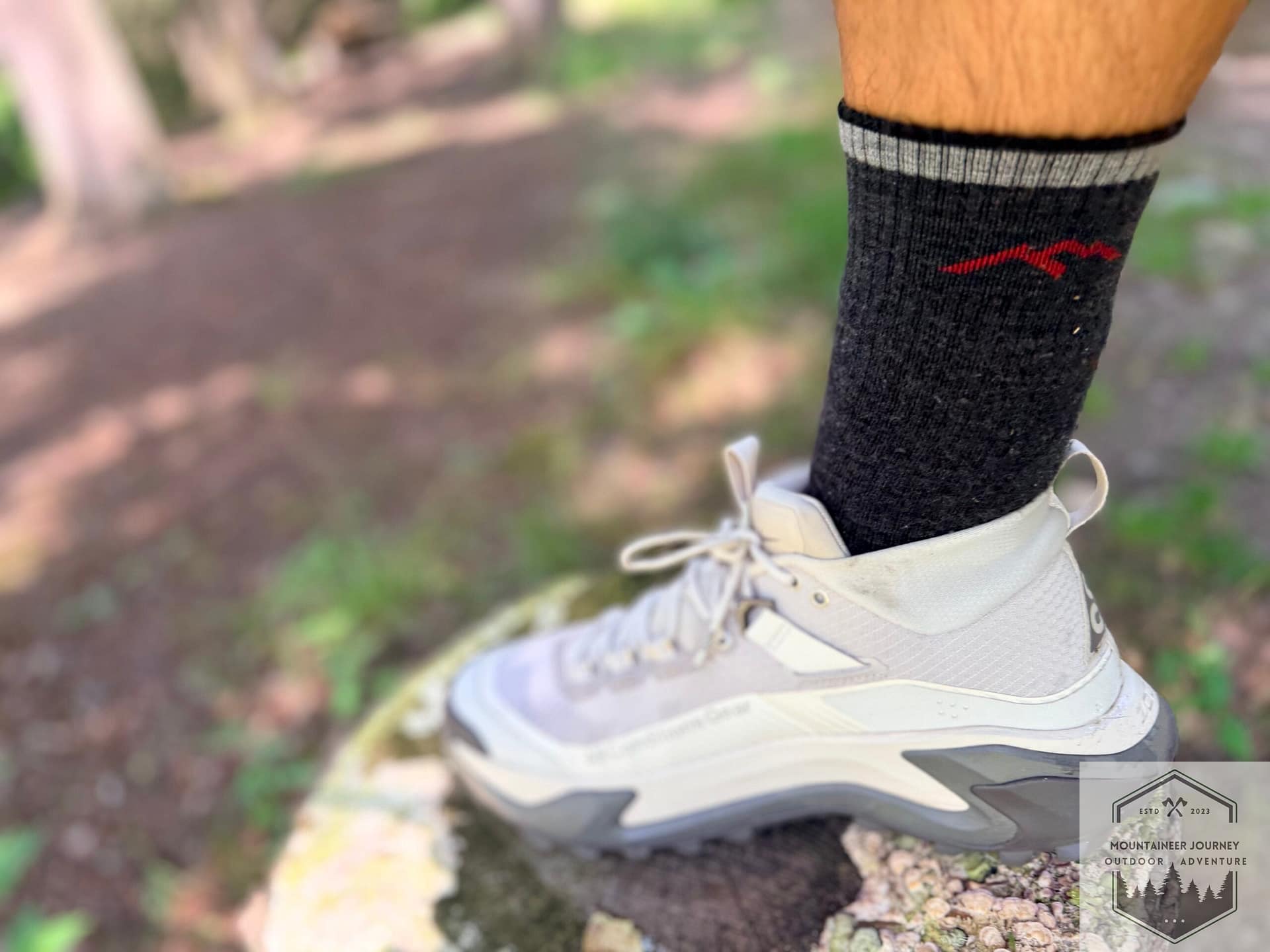
Nike's all-terrain hiking shoe comes in at our number three spot with excellent lockdown and stability. The ventilation pockets throughout the shoe make it ideal for hiking in warmer weather.
4
Best Wide Fit
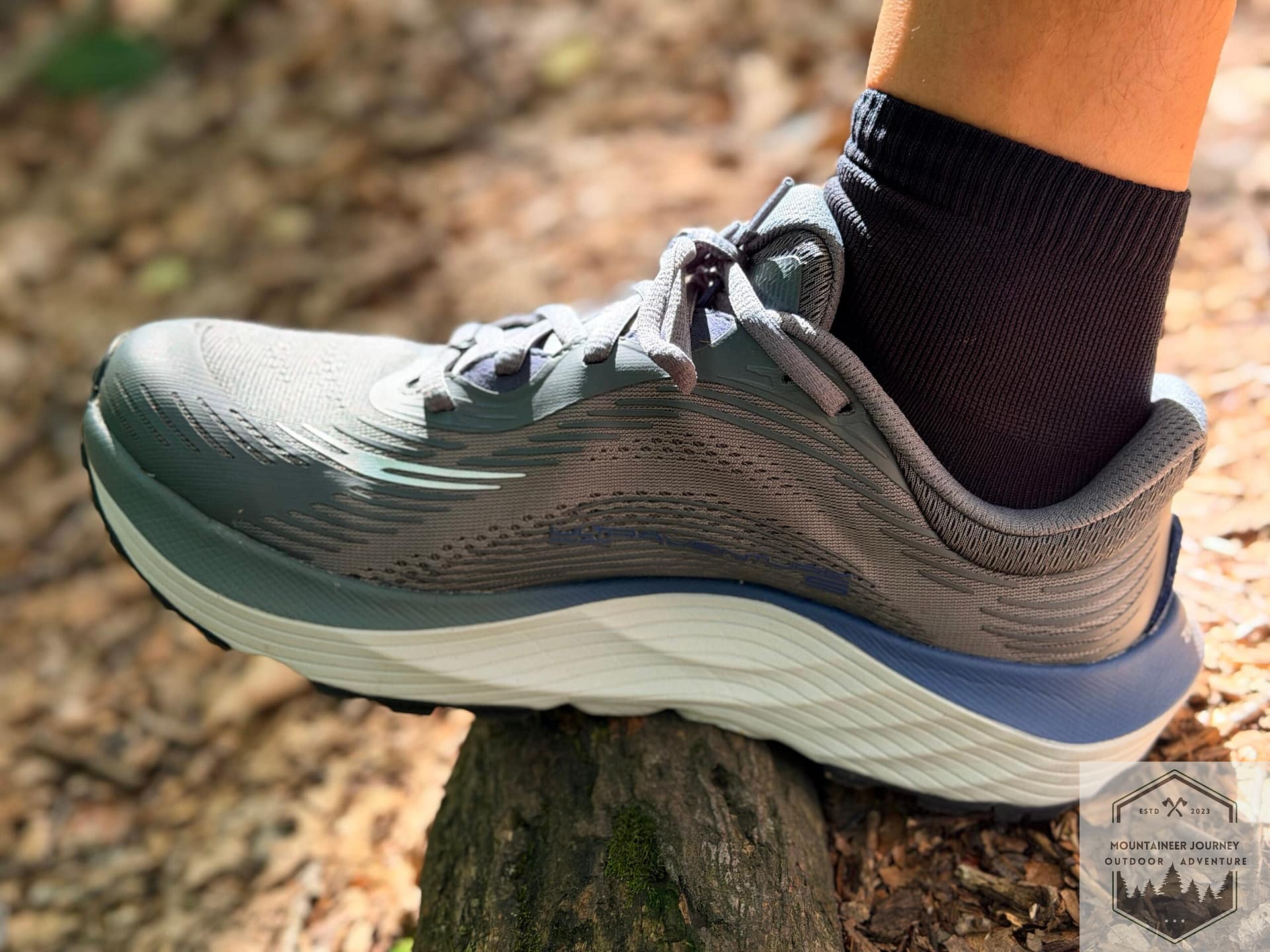
This is easily the best choice for wide-footed hikers in 2026. The Topo Ultraventure 5 is a high-cushioned hiking shoe with a very protective toe box and a neutral drop.
5
Most Comfortable
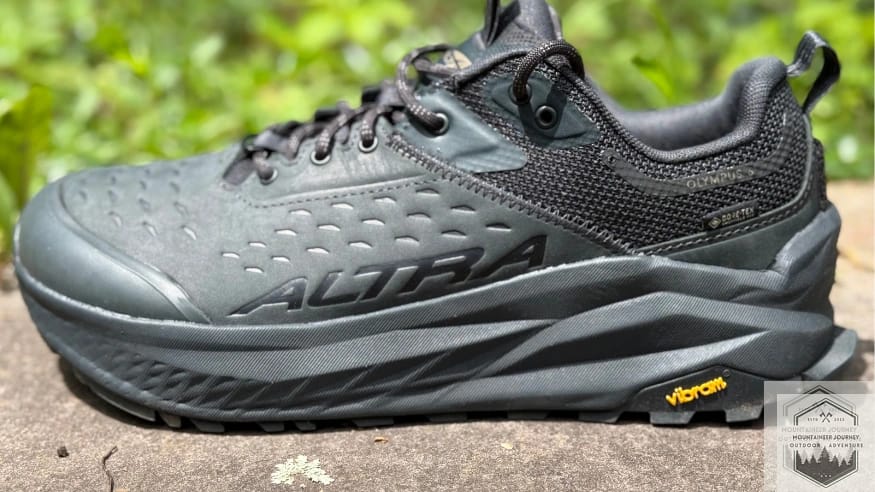
If you're looking for a hiking shoe that's less expensive than the Adidas Free Hiker 3 Ultra but still has a very cushy midsole and excellent bounce, the Altra Olympus 6 is our top option.
Watch this Full Review on YouTube(Over 300k Views!)
Best Hiking Shoe Of 2026
Adidas Terrex Free Hiker 3 Ultra
PROS
- Waterproof
- Great support
- Excellent lockdown
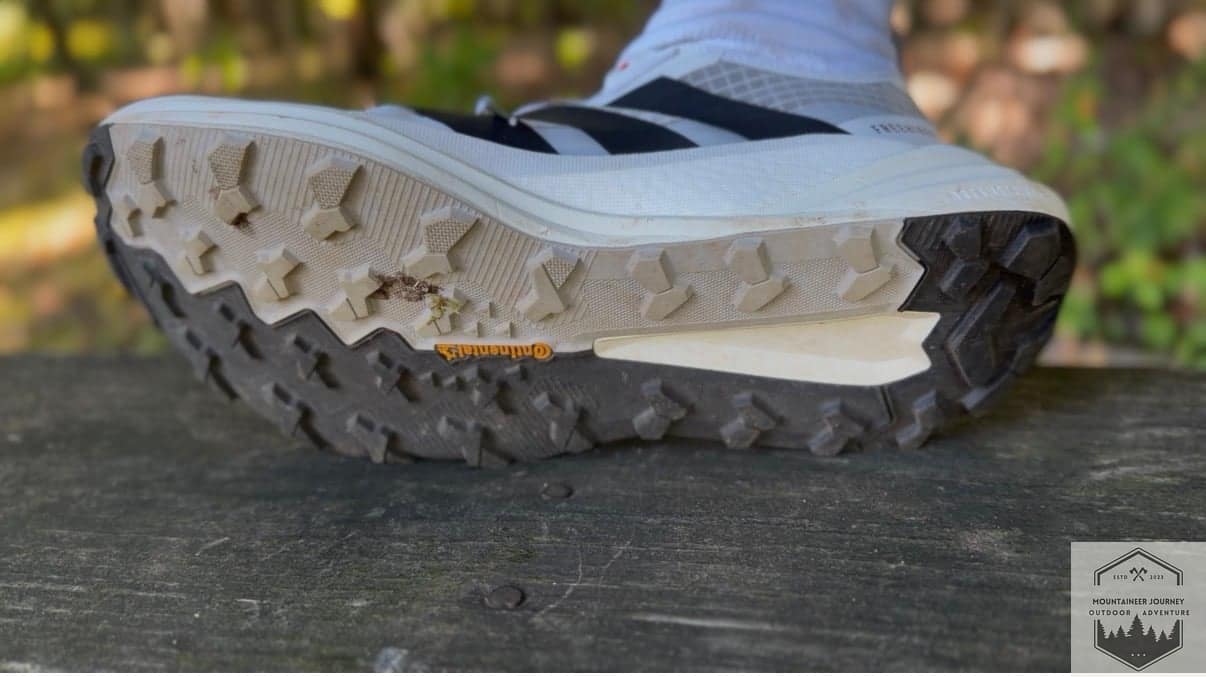
- Grippy outsole
CONS
- Lacing system can be frustrating
- Narrow fit
- Price
Price: $220
The Adidas Terrex Free Hiker 3 Ultra is our best overall-rated hiking shoe of this year. This is best for hikers who want a nimble profile, an excellent, grippy outsole, and a best-in-class support system.
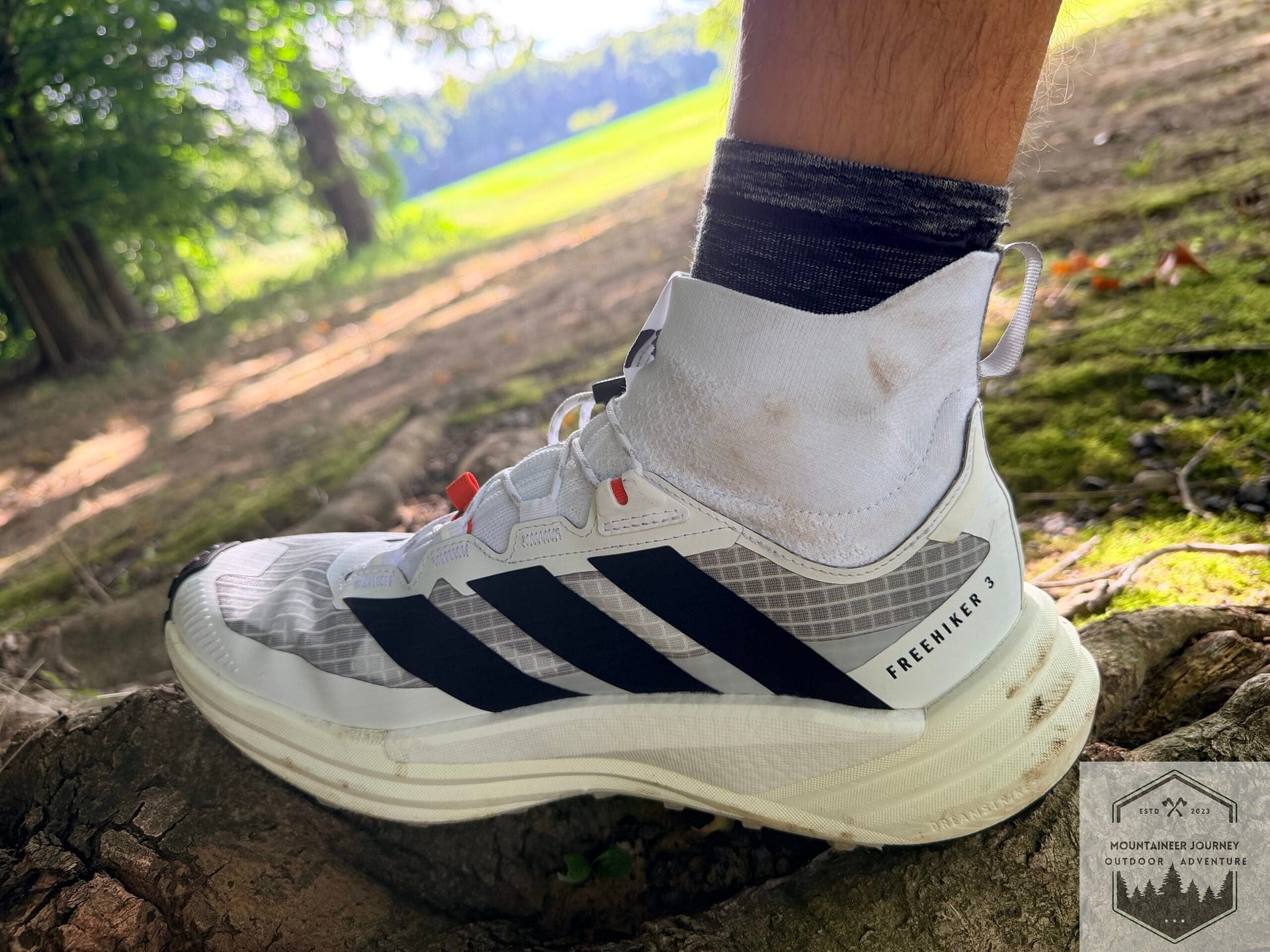
The Dreamstrike+ Midsole offers excellent impact absorption, especially on rocky, uneven terrain. The Continental outsole improved from the previous version and gripped excellently on technical trails, wet terrain, and mixed gravel paths.
The best part of the Free Hiker 3 Ultra is that it stays extremely stable despite its narrower profile. The mesh ankle collar comes up over your ankle joint and provides solid stability without turning it into a full hiking boot. When I tested this in uneven boulder fields, the upper hugged my foot securely, allowing no internal movement, and the outsole conformed to the surface, holding a tight grip on the uneven rocks.
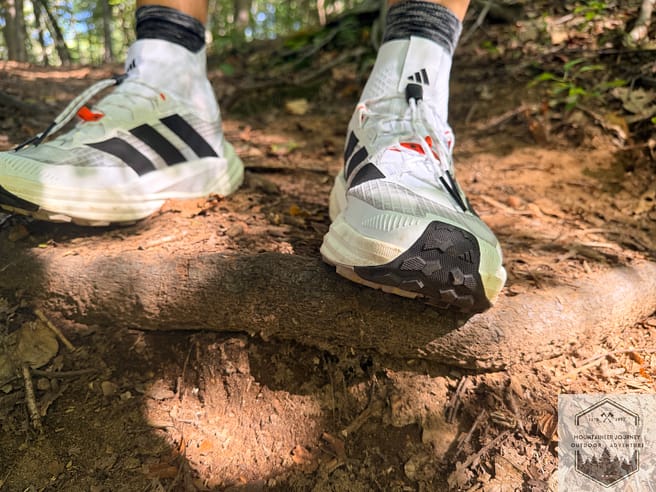
Weighing in at 13.5 oz per shoe, they are quite heavy for a pair of hiking shoes. However, remember that the extra foam and ankle mesh add to that weight. This is the price you’ll pay for the comfort this shoe provides.
Overall, the Adidas Terrex Freehiker 3 Ultra is an excellent waterproof option for beginner-to-advanced hikers. I would choose a different shoe if you need a wider fit and/or want a more nimble, lightweight model.
Read Our Review: Adidas Terrex Free Hiker 3 Ultra Review
Best Budget Hiking Shoe
Merrell Moab Speed 2
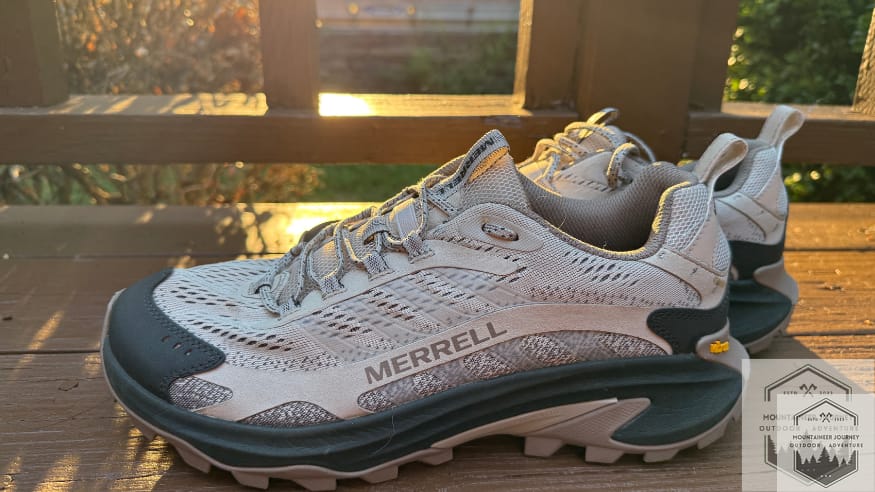
PROS
- Versatile Vibram TC5+ Traction
- Excellent FloatPro EVA Insole Comfort
- Lightweight design
- Durable Ripstop Construction
CONS
- Breathability
- Stiff outsole
Price: $145
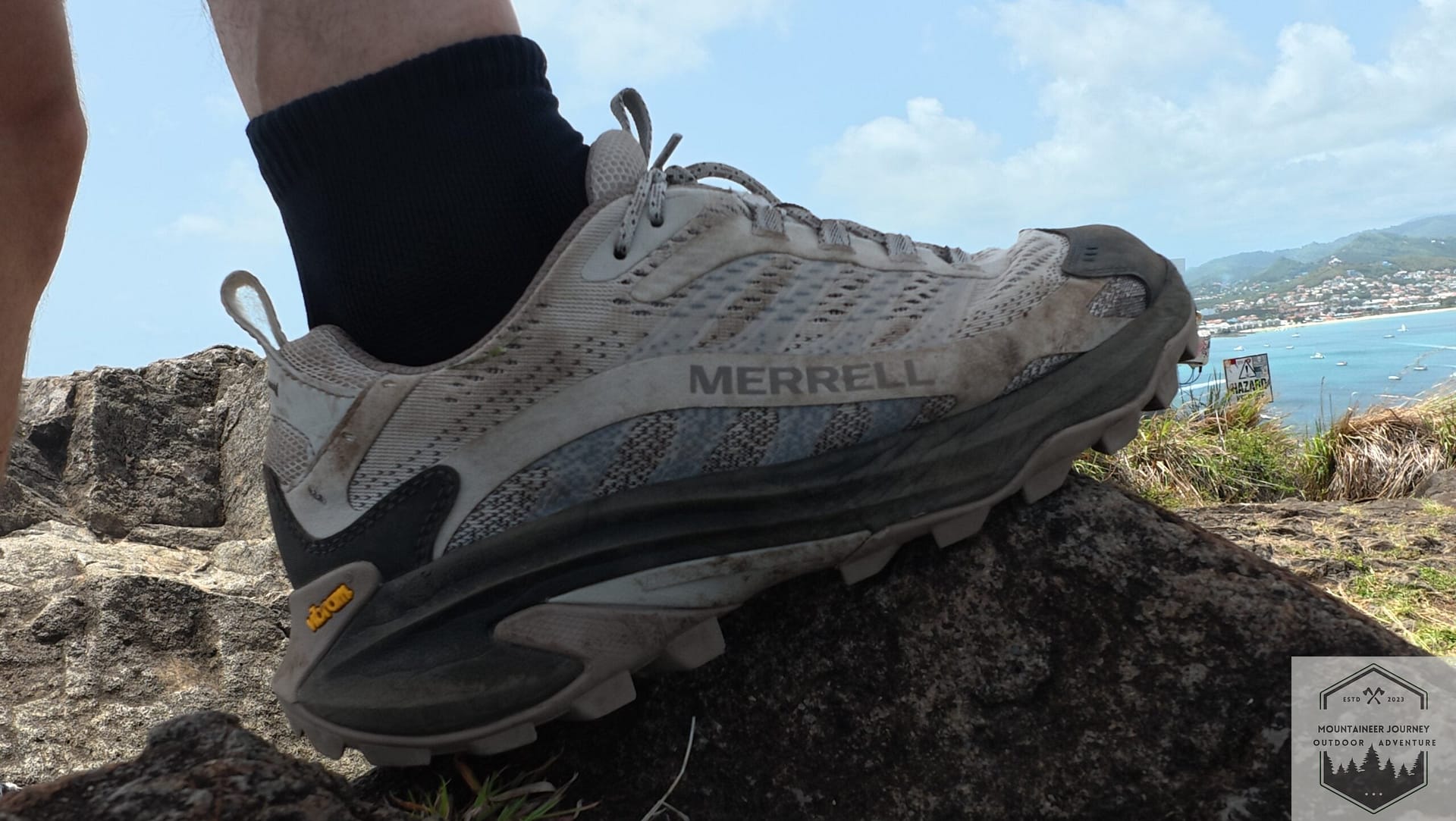
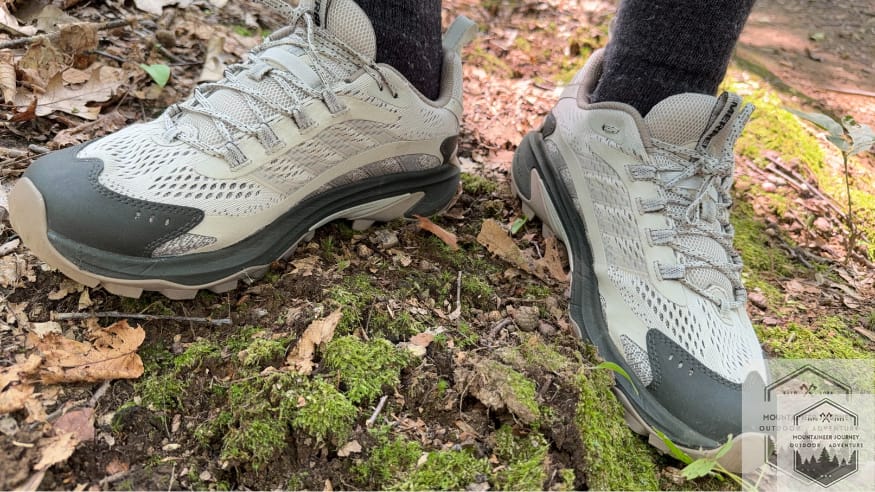
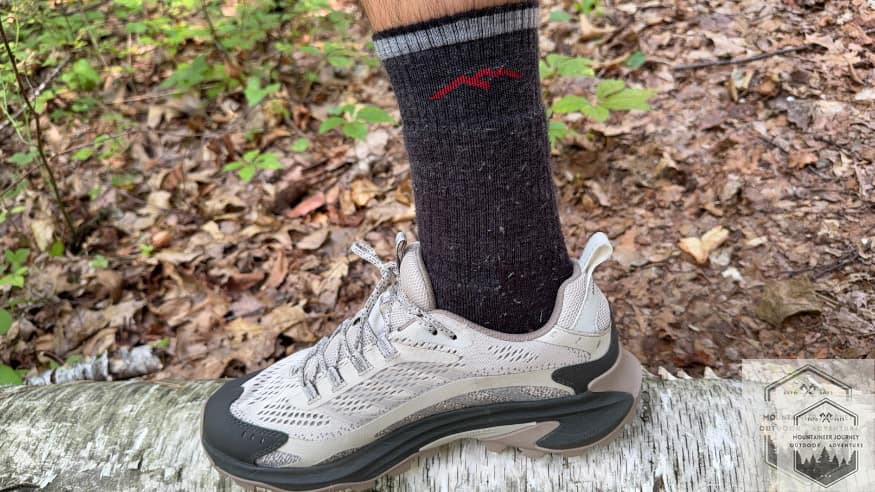
The Merrell Moab Speed 2 is our top budget hiking shoe of the year; at under $150, it’s hard to beat the value it offers. Delivering the perfect balance of lightweight construction, solid traction, and immediate comfort that works for beginner hikers through experienced trekkers.
I recently hiked the Gros Pitons (over 2,500 feet of elevation) in St Lucia with the Moab Speed 2, and that really solidified it as my top option.
With a comfort rating of an impressive 8.5 (among the highest I’ve given hiking shoes), the Moab Speed 2 delivers exceptional comfort, thanks to a FloatPro EVA foam midsole that cradles your foot without adding excess weight.
The impact absorption is quite exceptional, especially while I was climbing the Gros Piton; the midsole adds a layer of protection without being overly blocky. The step-in comfort is firm and comfortable, without the pillow-soft sensation.
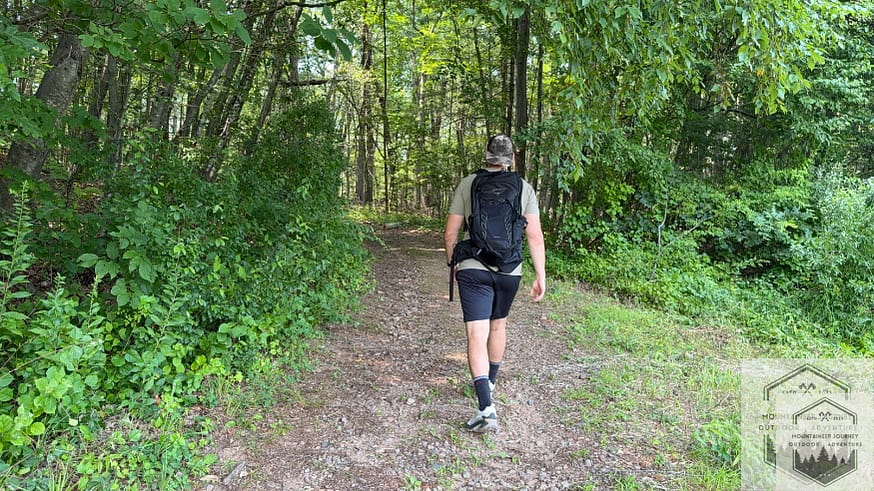
The Moab Speed 2 offers exceptional traction with the Vibram TC5+ outsole. The lugs hold exceptional grip, especially on wet limestone and rock. I maintained a firm, confident grip on multiple wet uphill climbs.
The 10mm heel-to-toe drop (with the added rocker) aids forward momentum by providing a smooth heel-to-toe transition without conscious effort. I found this especially useful on downhill sections when my legs were starting to fatigue; I could control my footing much better.
The shoe’s GORE-TEX waterproof membrane keeps feet dry while the mesh upper maintains a nice balance of airflow; this is where a LOT of hiking shoes struggle.
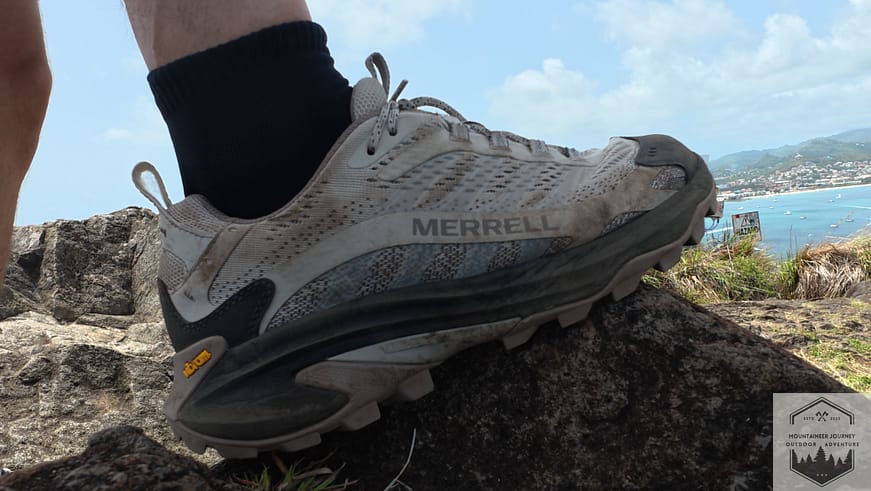
At just 10 oz per shoe, your stride feels much lighter than with traditional hiking boots. The generous toe box room also accommodates foot swelling much better than traditional hiking boots. While it doesn’t have the foot-shaped fit of Altra models (like the Lone Peak 9+), it still offers a very generous toe box.
While carrying a 20 lb backpack, I maintained some of my fastest hikes on the same incline as with other models, thanks to the Moab Speed 2’s lightweight profile and versatility.
At under $150, this true hiking shoe offers exceptional value, outperforming more rugged models while delivering comparable performance. I recommend skipping this model if you prefer more technical hiking and want a more supportive shoe. I also recommend this as our best hiking shoe for beginners.
Read More: Merrell Moab Speed 2 Review
Best Hiking Shoes For Summer
Nike ACG Zegama Hike
PROS
- Excellent traction
- Breathable
- Great ankle support
- Wide toe box
CONS
- Non-waterproof
- Heavy (15 oz per shoe)
Price: $190
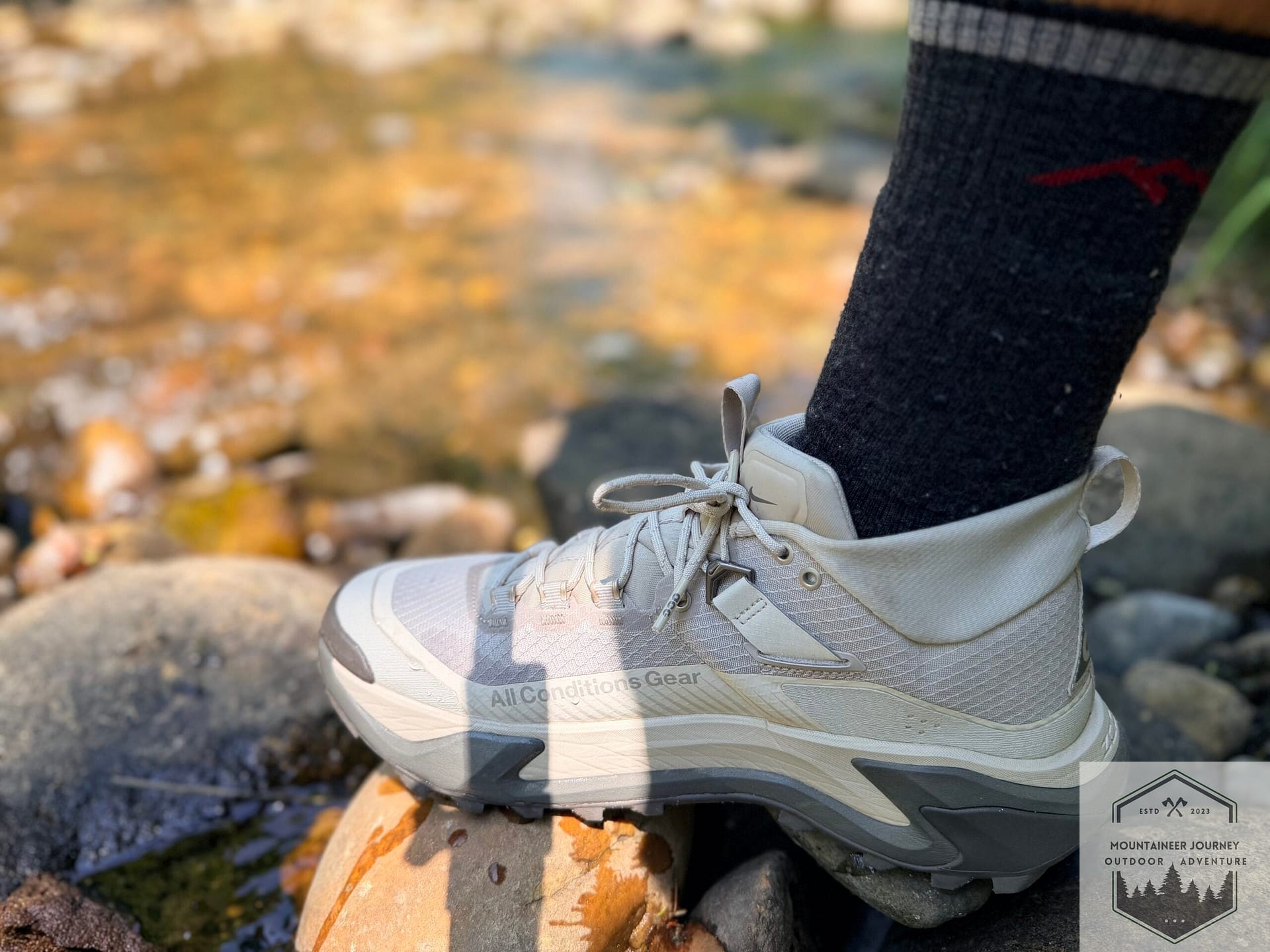
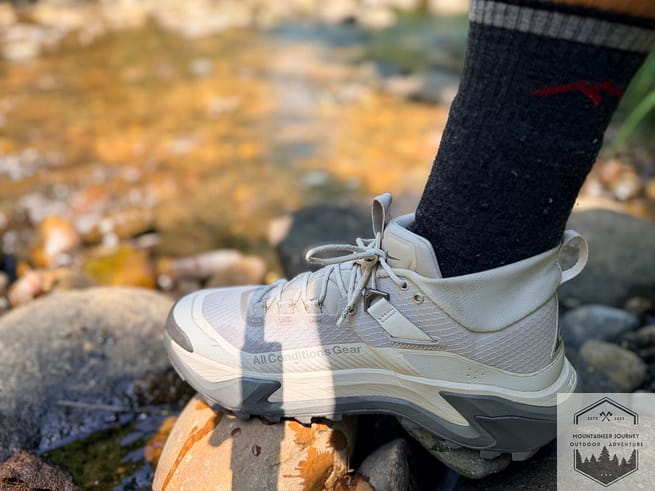
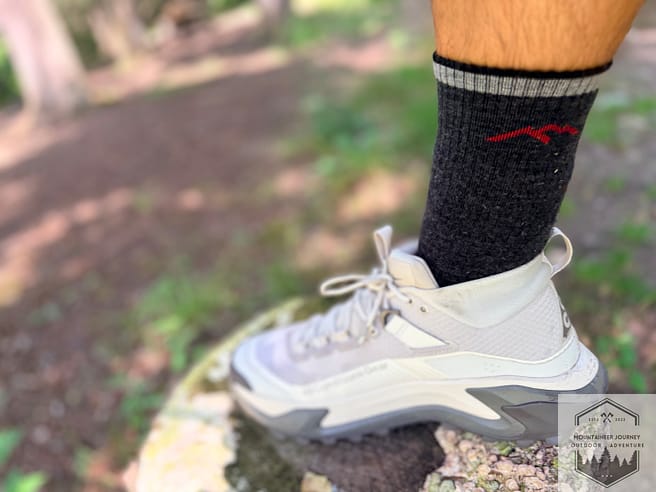
The Nike Zegama Hike is one of the most breathable hiking shoes we have tested currently on the market. I spent a majority of my time testing these in fall and summer conditions, and the ventilation system throughout the upper is solid.
The upper has a buckle integrated into the lacing system, which provides really solid lockdown at the top of your foot. The wide platform also does an excellent job of keeping your foot stable on uneven, technical trails.
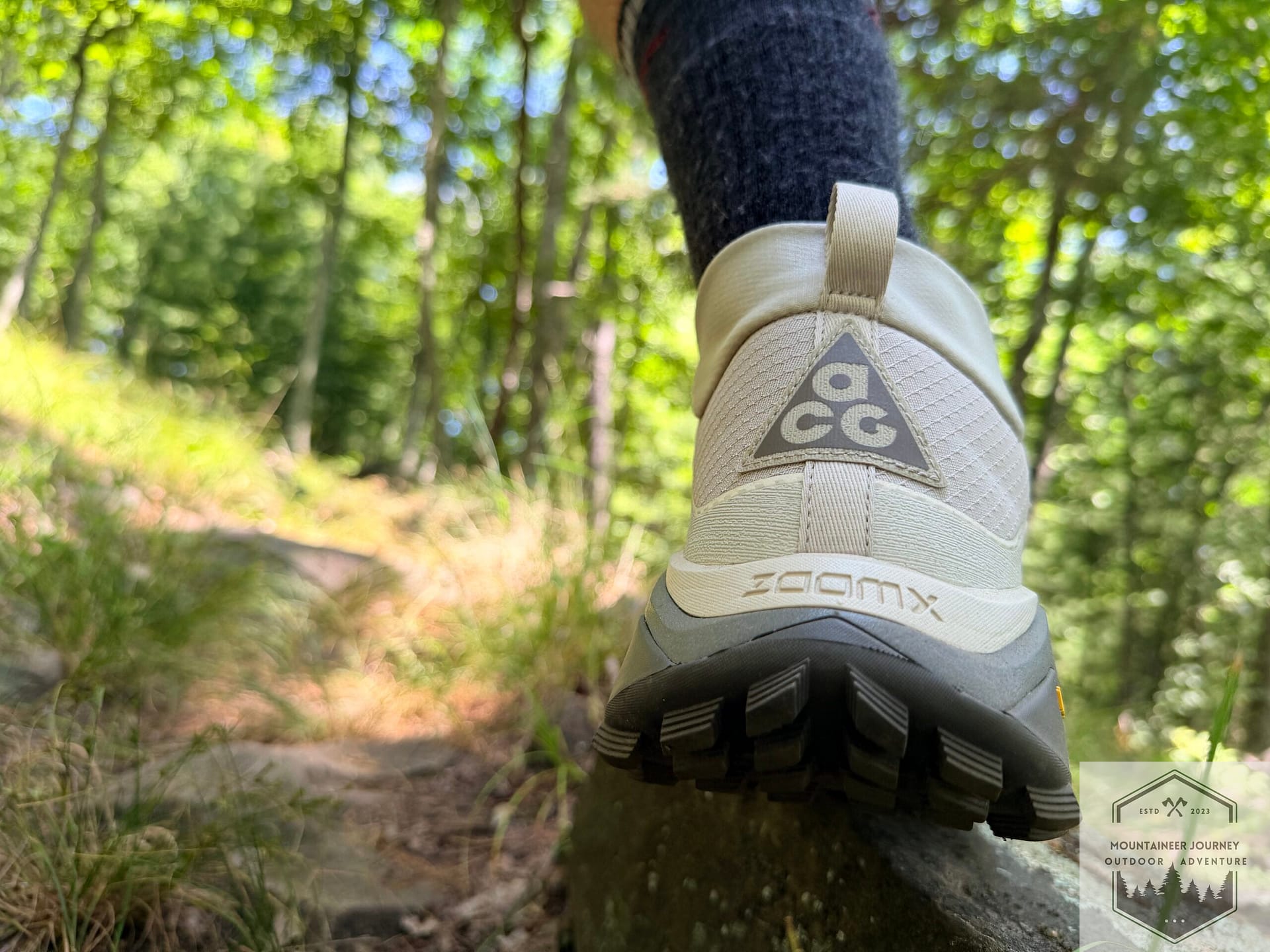
The Zoom-X midsole is not as plush and forgiving as you would expect from a Nike product. The footbed itself is quite firm, so don’t expect these to be extremely comfortable. The stack height is minimal. I measured 32 in the heel and 28 in the forefoot. Impact absorption is decent but not as substantial as the Free Hiker 3 Ultra or Moab Speed 2.
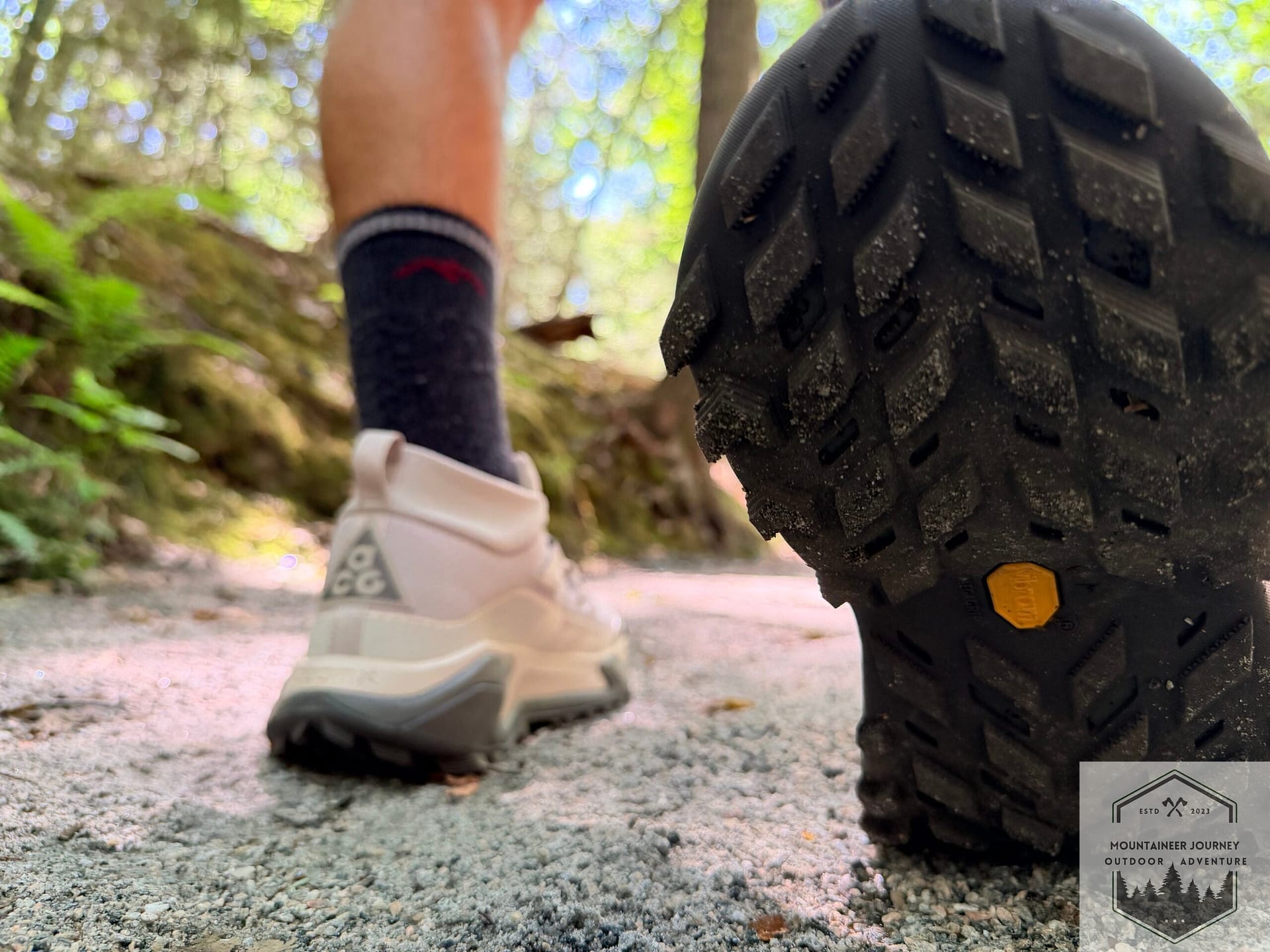
Traction-wise, the Zegama Hike is a monster. They integrated the Vibram Megagrip outsole, which did an excellent job of grip, especially on loose gravel, granite, and limestone. The outsole is quite stiff; therefore, it didn’t conform as well to the surface, so you may have to pay a little more attention to foot placement than with other shoes on technical terrain.
At over 15 oz per shoe, they are quite heavy for a pair of hiking shoes. Therefore, we don’t recommend these if you want an extremely lightweight pair. The Zegama Hike is best for those who want a non-waterproof, extremely breathable, stable hiking shoe.
Read More: Nike ACG Zegama Hike Review
Best Hiking Shoe For Wide Feet
Topo Ultraventure 5
Pros
- Very Good Traction
- Wide Toe Box
- Excellent pronation control
Cons
- No rock plate
- Heavy
- Lacks nimbleness
Price: $155
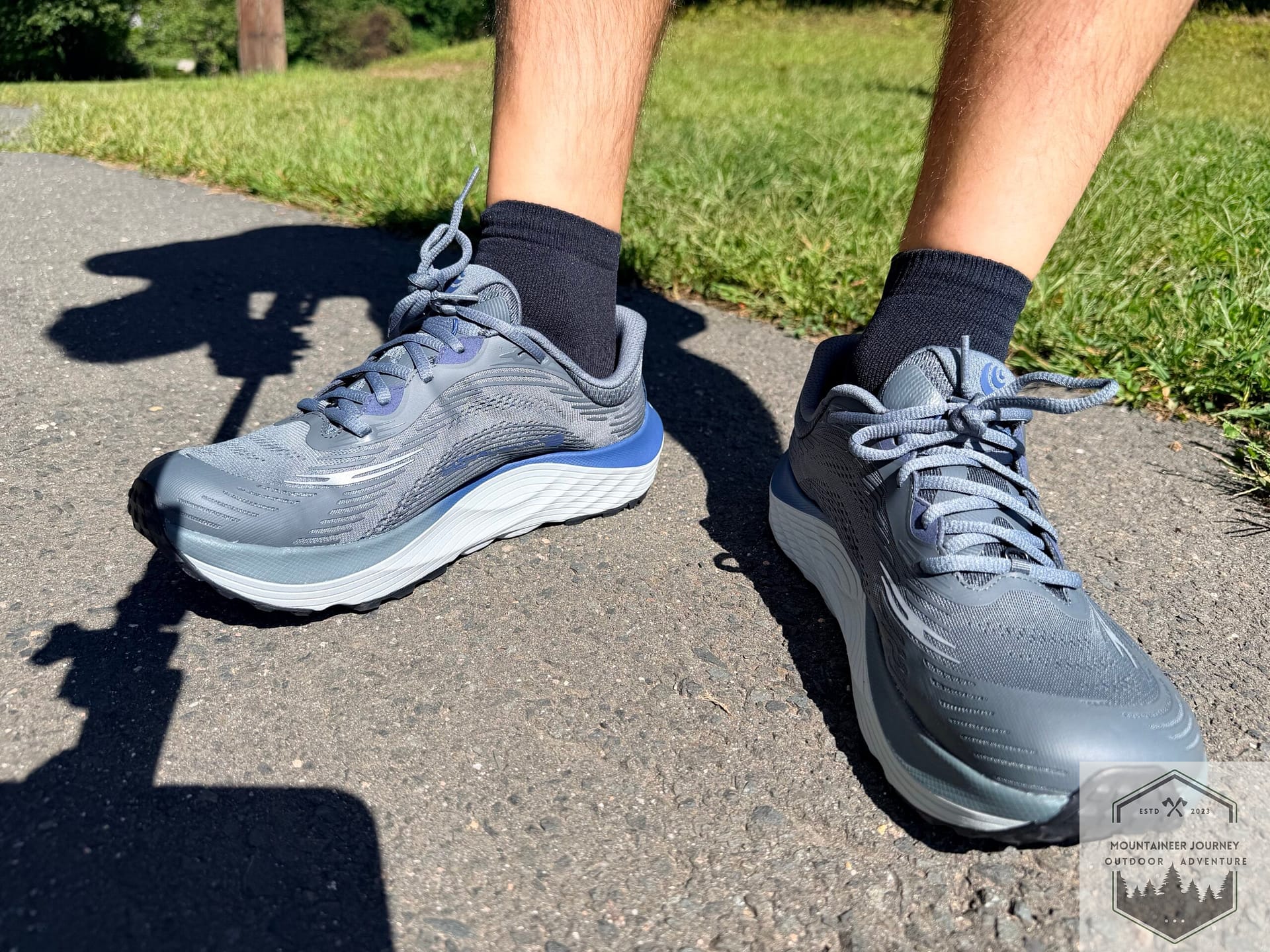
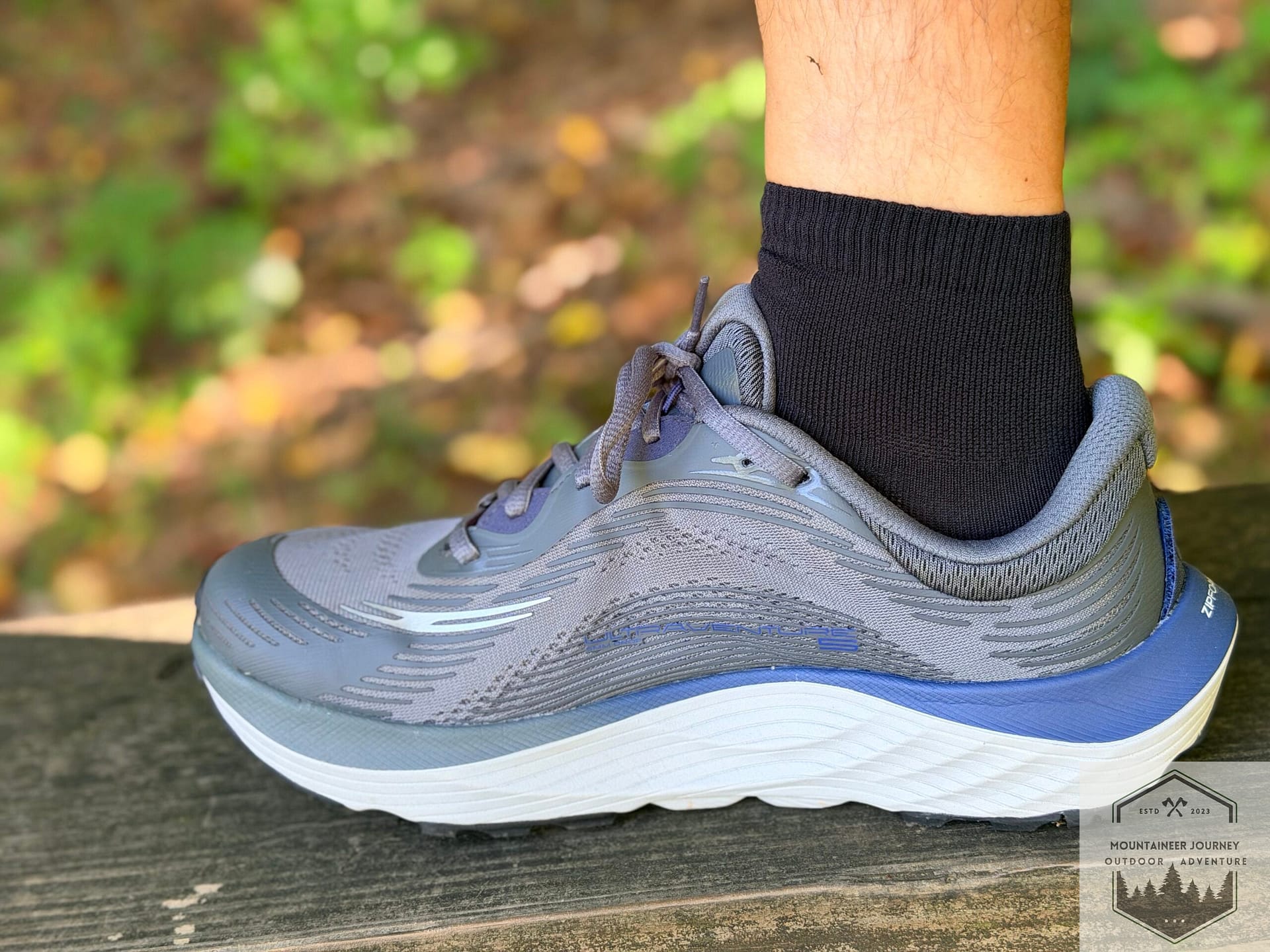
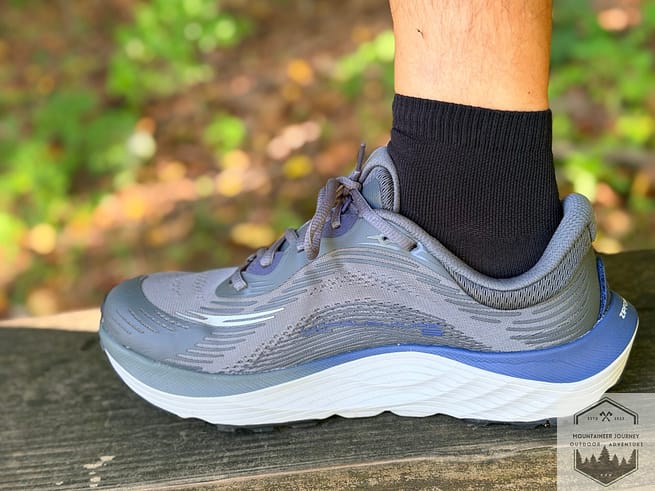
The Topo Ultra Adventure 5 is easily one of the best-fitting shoes for wide-footed hikers. First, the toe box has plenty of room, even in the normal width. Moving up to the wide width gives wide-footed hikers the best possible scenario for room.
Since this is such a wide-platform shoe, it really aids stability on off-camber trails. The wide base, combined with the softer midsole, lets the shoe conform to uneven surfaces and grip well. The Vibram XS TREK EVO Outsole does a very good job with grip on larger boulder fields, technical trails, and dirt singletrack. I did have some trouble slipping on uneven gravel, as the larger lugs in the mid-portion of the shoe do not grip as well.
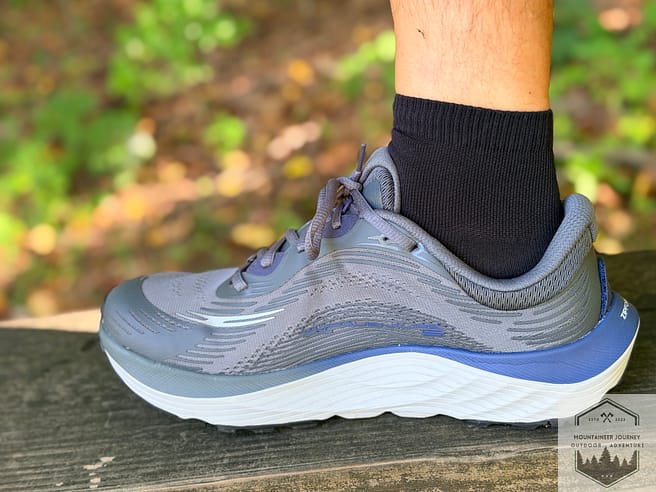
Stability-wise, an arch insert comes up and over the medial portion of your foot, just as it does in deep heel cups on other shoes. However, it really prevented me from overpronating on the trail, even though this isn’t a stiff shank or plastic post.
Overall, the Topa Ultra Adventure 5 is excellent for wide-footed hikers who need extra stability. Avoid this shoe if you want a lightweight, nimble feel, as the 12 oz. weight and wider platform can feel bulky.
Read Our Review: Topo Ultraventure 5 Review
Most Comfortable Hiking Shoe
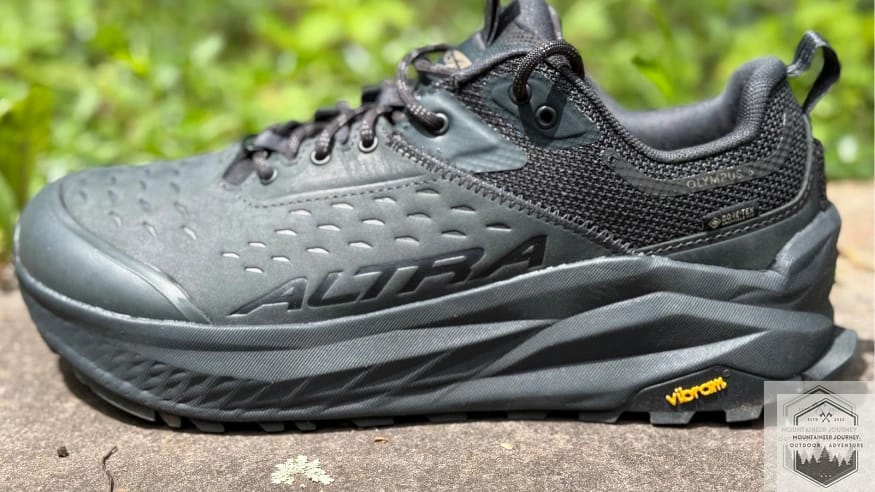
Altra Olympus 6
Pros
- Exceptional toe room with Altra’s Original FootShape design
- Maximum EGO MAX Cushioning
- Wide Toe Box For Splay
- Excellent For Thru-Hiking Distances
Cons
- Heavy 15.5 Oz
- May feel unstable on technical terrain due to high stack
- Breathability Issues
Price: $180
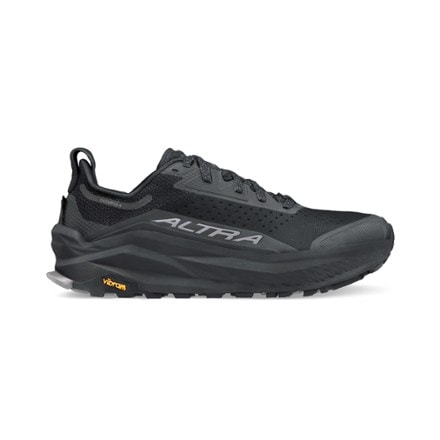


The Altra Olympus 6 caters to hikers who prefer comfort, offering maximum cushioning, and the signature FootShape wide toe box for an accommodating fit.
Ideal for thru-hiking and ultra-distances where comfort matters most, this shoe stays easy on your feet even as the miles stack up. The materials feel tough and built to last through demanding trails.
The step-in comfort of this shoe is comparable to that of the Mafate X, a maximum-stack trail/hiking shoe hybrid.
When you step into these shoes, you’ll notice the midsole platform is extremely comfortable and plush. This shoe is ideal for those who want maximum impact absorption.
With a 33mm stack height, the priority is maximum cushioning over trail feel. The zero-drop platform is an acquired taste. As you can see in my testing videos, the 0mm heel-to-toe drop promotes a natural gait and balanced forefoot loading, reducing Achilles strain on extended hikes.
However, be careful to introduce yourself to zero drop slowly, especially if you’re not used to it, as it can cause injury.
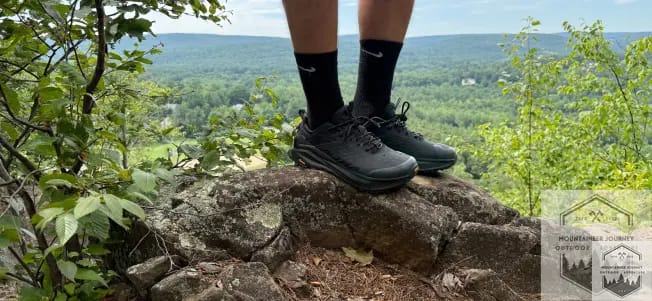
The upgraded Vibram Megagrip outsole with 3.5mm lugs handled loose terrain, loose gravel, and limestone with confidence during our testing. I did note that wet conditions were tougher to hike in because the 3.5 mm lugs did not bite as deeply as the industry-standard 5 mm lugs.
One limitation of the shoe is its performance on downhill sections. The large, blocky outsole provides stability thanks to its flared heel design, but it limits agility on downhill trails.
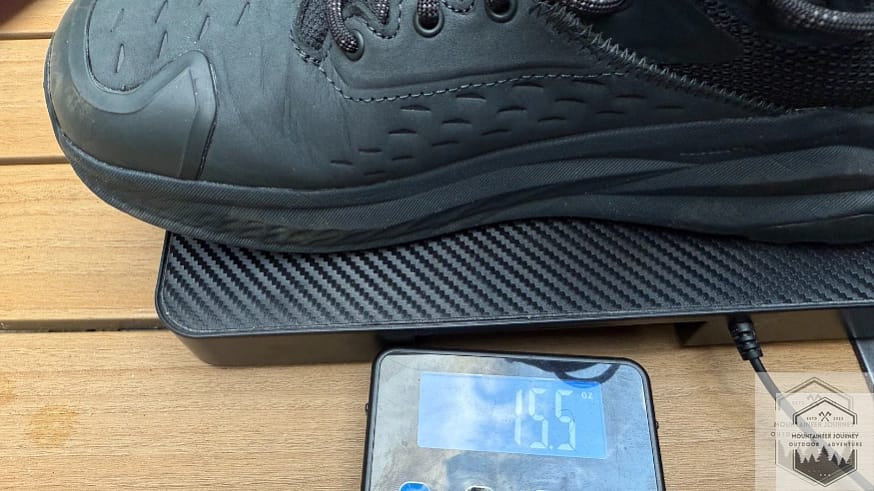
The weight is definitely worth considering on the Olympus 6. We weighed each shoe at 15.5 oz, the heaviest we have measured for any shoe.
The Altra Olympus 6 stands out as a great option for those seeking the most comfortable shoe for extended adventures. However, just like the Topo Ultra Adventure 5, I would avoid this shoe if you want a lightweight, nimble profile and aggressive grip.
Read Review: Altra Olympus 6 Review
How We Objectively Test For The Best Hiking Shoes Of 2026
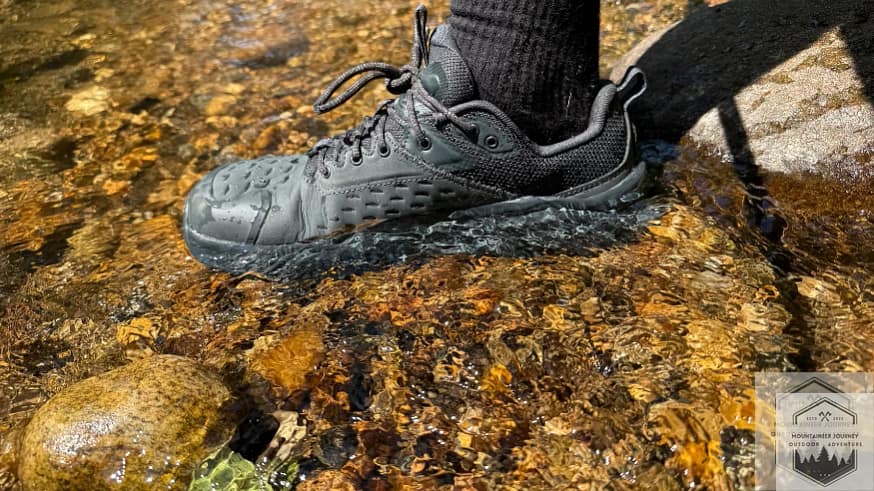
I like to objectively rate all my hiking shoes in specific categories before writing reviews.
I have compiled a list of specific categories, weighted to give you the best possible overall score, to help you decide on a hiking shoe.Over the past 16 years, I’ve fine-tuned this formula. I personally select each shoe for real-world testing, so my rankings are unbiased and trustworthy.
Our weighted categories are:
Comfort: (20% of weighted score)
Traction: (20% of weighted score)
Stability & Support : (20% of weighted score)
Weight: (15% of weighted score)
Overall Protection: (10% of weighted score)
Durability: (10% of weighted score)
Value: (5% of weighted score)
Based on these objective measures, we can calculate an overall score for each hiking shoe review.
Comfort
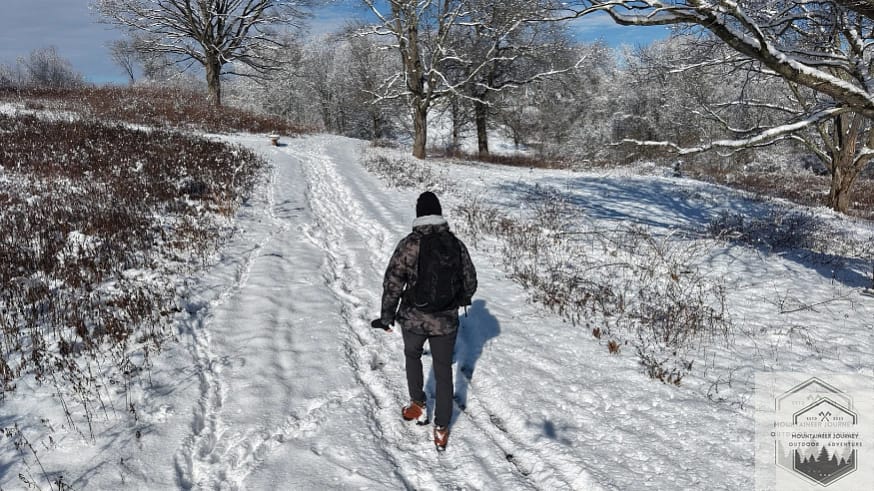
I will go over each testing category and how I objectively test for each to give you the best possible selections. When it comes to hiking shoe comfort, my first impression is: How does the midsole feel?
When I first slip on the shoe, does my foot sink into comfortable cushioning? Or do I feel pressure points when first trying them on?
When I first slipped on the Altra Olympus 6, I immediately felt the plush EGO MAX foam cradling my foot. The zero-drop platform felt natural and balanced from the first step. Compared to the Speedcross 6, the footbed is much firmer.
Impact absorption is one of the most important scores for comfort. Higher-stack shoes tend to have better impact absorption, but that is not always true in every use case. I will take these shoes out on the trail and notice how much the foam dulls impact on uneven terrain as well as flatter sections.
The next objective measure for comfort is the toe box room. Some hiking shoes offer generous toe box space, while others can be more compressive. The Altra Olympus 6 and Topo Ultravanture 5 excel here with their generous toe box room, which promotes natural toe splay and a very stable platform.
One of the last objective measures I use for comfort is heel cup and ankle comfort. The Merrell Moab Speed 2 is a great example of a shoe that offers excellent comfort without unnecessary restriction. Excessive pressure on your heel and ankle can make for a bad hiking experience.
Additional measures I use for comfort include ease of walking, cushioning response over distance, and how comfort changes after 20+ miles. These objective measures help me determine an overall comfort score. Comfort is the most important score when testing hiking shoes.
Traction
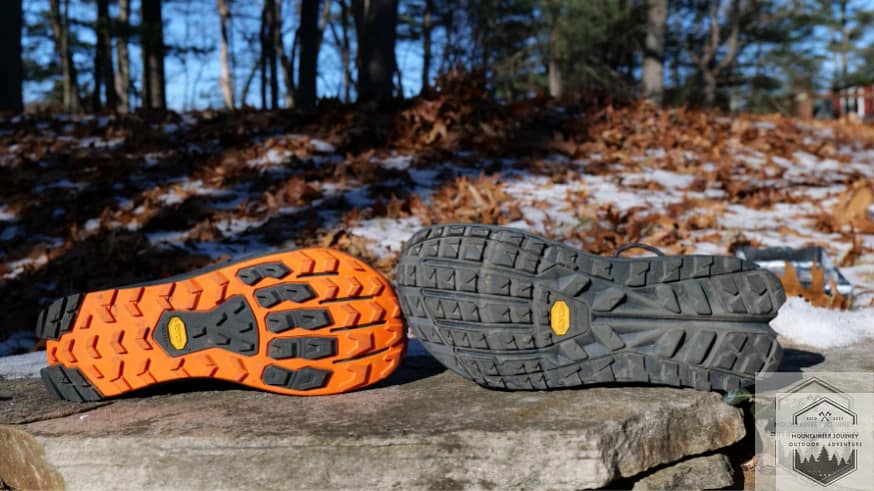
The next measuring category is traction. Traction is mainly measured by lug performance and outsole compounds. Many hiking shoes source their outsoles from companies like Vibram. Other companies, like Salomon, produce their own compounds, such as Contagrip.
I test outsoles directly and compare them. For example, I conducted a case study comparing Salomon Contagrip and Vibram. Both perform excellently, with slight advantages depending on terrain type.
I assess the outsole’s overall makeup. Is it stiffer or softer? A soft outsole tends to conform to uneven surfaces differently from a rigid compound. This matters on technical trails where you want the outsole to conform to uneven terrain and help hold your foot in place.
Next, I measure the lugs. Deeper lugs, like the Speedcross 6’s 5 mm chevrons, work better on muddy trails, loose terrain, and steep descents. Shallower lugs excel on rocky ground and flatter trails.
Next, after measuring the lugs, my on-trail test includes multiple different testing scenarios in warm, dry, and wet conditions. I test most of my hiking shoes on granite, basalt, sandstone, limestone, gravel, and dirt singletrack. I also take shoes off-camber trails to note differences in grip and traction in all these specific scenarios.
Stability & Support
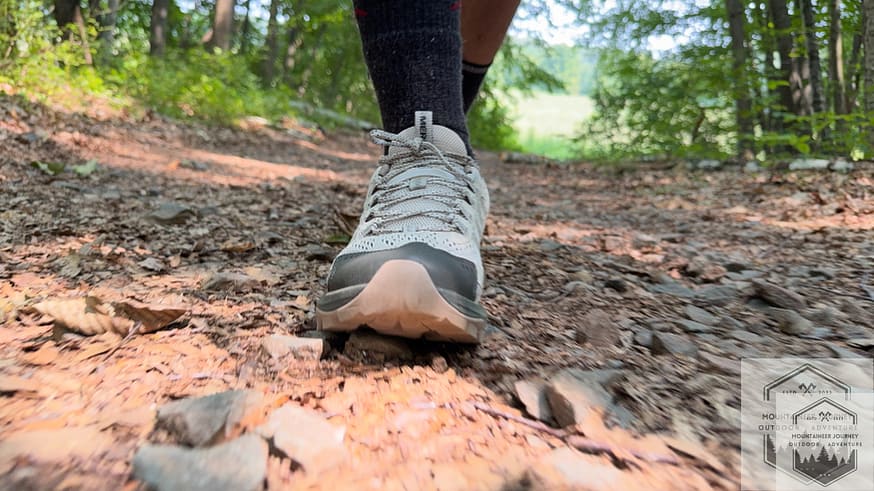
Stability and support are critical factors for hiking shoes, especially when navigating uneven terrain or carrying a heavy pack. When comparing hiking shoes to hiking boots, stability and support matter because hiking shoes typically don’t offer ankle protection.
However, newer hiking shoes like the Nike Zegama Hike or Terrex Free Hiker 3 Ultra have mesh ankle cuffs that offer a bit more ankle stability than the ankle cuffs on traditional hiking shoes.
To objectively test stability, I evaluate how well the shoe maintains balance and prevents excessive foot roll during various movements, including steep descents and side slopes. The internal membrane of the hiking shoe should hug your foot tightly so there’s no excess foot movement inside the shoe.
I pay close attention to midsole stiffness and heel cup construction, as these elements significantly contribute to overall stability. I assess these objectively on both uphill and downhill terrain and take notes during testing.
I assess support by examining arch support, heel lockdown, and the shoe’s ability to keep the foot securely in place without creating pressure points.I test shoes on technical terrain where lateral stability matters, noting how they perform when I shift weight or make quick directional changes.
A secure fit, combined with structural features such as a firm heel counter and supportive overlays, enhances stability and support. Overall, it depends on how much support and stability you want out of your hiking shoes. Ultimately, it comes down to personal preference and the specific trails you will be on.
Overall Protection
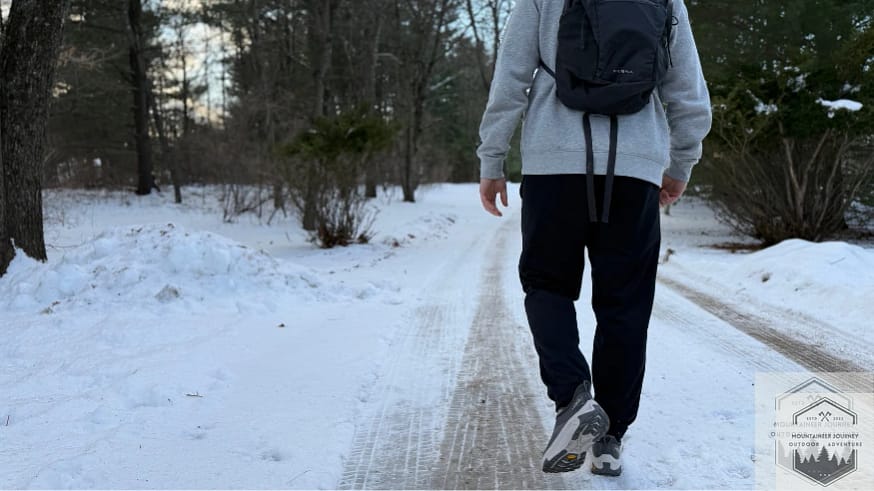
When testing overall protection, I focus on how well the hiking shoe shields your feet from common trail hazards like sharp rocks, roots, and uneven terrain. One important lesson I learned after years of testing these shoes is the fact that a rock plate does not always indicate excellent overall protection.
I have had hiking shoes like the Speedcross 6, which offer better footbed protection without a plate, compared to the Altra Lone Peak 9+, which has a rock plate.
I evaluate the presence and effectiveness of a protective toe cap, the midsole’s sturdiness to guard against impacts, and the shoe’s ability to provide support and cushioning that minimizes injury risk. I also consider how well the shoe’s upper material resists abrasion and punctures in off-trail terrain. Many embedded welded meshes tend to scratch and rip easily.
Durability
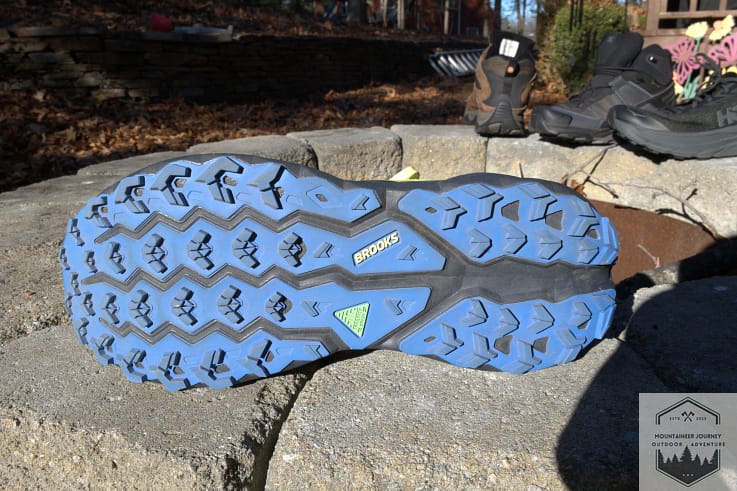
What’s the point of purchasing a hiking shoe that won’t last? For durability scoring, I start by assessing the overall construction and the quality of the upper material. Synthetic mesh uppers save weight but may wear more quickly than reinforced designs.
The Merrell Moab Speed 2’s nylon ripstop and TPU upper prove durable over 100+ miles. However, regardless of design, we test how long it lasts under extended wear and tear.
Next are midsole compression and lug wear. Softer outsoles like the Contagrip tend to wear more quickly than more robust ones made by Vibram. However, I’ve also seen some lugs wear much quicker than others, regardless of the company that constructed them.
Higher-stack shoes with great energy return will have a lot of midsole compression over time, losing the impact absorption rating as these compress too much over time. For example, the new Altra Olympus 7 worries me because of its excellent energy return and midsole bounce. Over time, that may wear off with repeated mileage.
Value
My final objective test puts it all together. Do the previous measures represent the product well for the price?
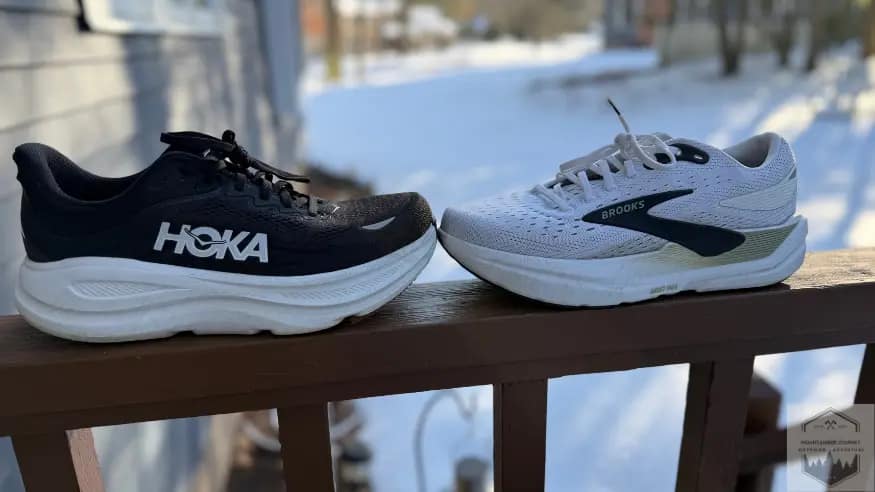
The Merrell Moab Speed 2, at under $150, delivers exceptional performance that rivals $200+ outdoor footwear. The Hoka Transport 2 at $180 offers features comparable to premium alternatives; it excels on paved roads, so you must choose wisely.
Value means getting maximum performance for your investment. Budget hiking shoes may score lower overall, but can represent excellent value for recreational hikers on established trails.
At the end of the day, our goal is to give you the best bang for your buck and the hiking shoe that offers the most exceptional value for you specifically.

Tyler
Tyler is the founder Mountaineer Journey and a professional Mountain Guide with 15+ years of technical experience in trekking, mountaineering, and trail sports. Having logged thousands of miles from rugged alpine summits to urban paths, Tyler provides rigorous, field-tested insights on hiking, walking, and trail running gear. All reviews are 100% unsponsored and unbiased, ensuring you get honest scoring based on real-world performance. His mission is to help outdoor enthusiasts of all levels find reliable equipment that ensures comfort, safety, and performance on any terrain.