Best Hiking Boots for Wide Feet 2026 | Unsponsored Testing
In this article, I am going to share my best hiking boots for wide feet.
All of these boots were bought with my own money. This review is completely unsponsored and unbiased.
My testing has covered over 50 models across limestone, shale, basalt, sandstone, granite, and wet trails, with a specific focus on toe box width, midfoot volume, heel fit, and overall wide-foot comfort.
Every boot on this list was evaluated through real trail miles, objective measurements, and a weighted scoring system I have refined over more than a decade. No brand sent me a free product. No one paid for placement. These are the boots that genuinely accommodate wide feet.
Related: Best Lightweight Hiking Boots, Best Budget Hiking Boots, Most Comfortable Hiking Boots
Top 5 Boots For Wide Feet



Best Overall Hiking Boot for Wide Feet
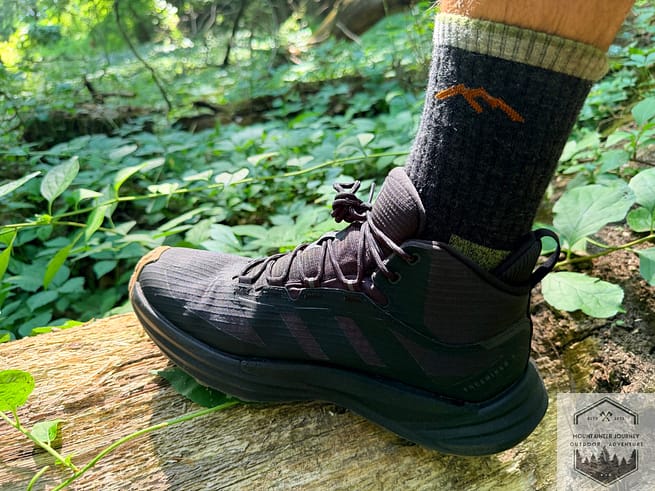
Adidas Terrex Free Hiker 3
- Lightweight, 14 oz per boot
- Roomy Toe Box
- Continental rubber outsole rivals Vibram grip
- Great impact absorption
- Runs warm
- Higher price point
- Toe bumper doesn’t fully cover toes
Price: $200
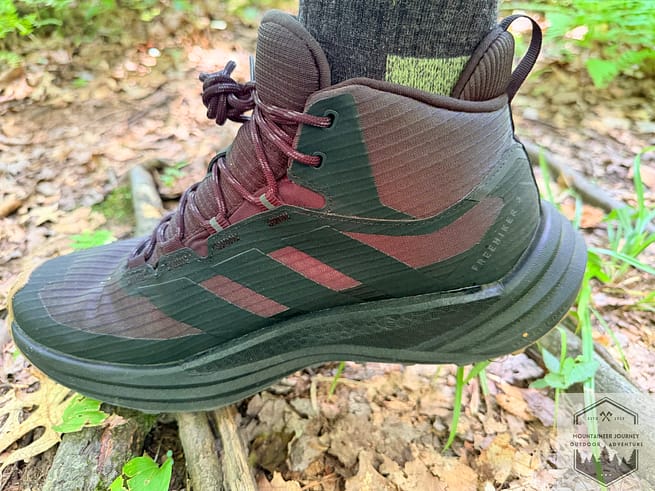
The Adidas Terrex Free Hiker 3 is my pick for the best overall hiking boot for wide feet in 2026. At roughly 14 oz per boot, it is one of the lightest lightweight hiking boots that still delivers serious wide-foot accommodation.
I tested this boot over 40+ miles across mixed terrain-dirt singletrack, limestone, shale, basalt, and sandstone-including steep descents and wet 35-degree limestone inclines. The impact absorption from the Dreamstrike+ midsole with Adidas Boost was exceptional, going both uphill and downhill, cushioning my feet without feeling mushy or unstable.
The wide toe box is where this boot truly shines for wide-footed hikers. In my men’s 10.5, the fit was true to size with a roomy toe box, no heel slip, and enough room for my toes to splay naturally. The boot can accommodate a lot of foot shapes without needing to size up or hunt for a dedicated wide-width option.
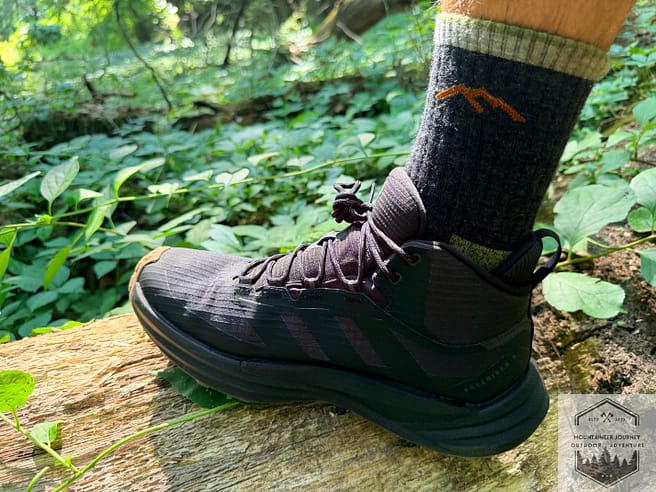
One downside is the toe bumper. It only covers about half the toe box, leaving your big toe and small toe exposed.
The Continental rubber outsole is on par with Vibram in my testing. The 5 mm deep, well-spaced double-chevron lugs provided reliable traction across every surface I tested, and the flared heel design adds more lugs and extra stability on steep descents.
Deep, well-spaced lugs enhanced traction on every surface. The double-chevron patterns really help to hold an edge on these sides of the boot.
The 41 mm heel stack gives you a generous platform, and the wide sole prevents the lateral roll-overs that plague wide-footed hikers in narrower boots. Ankle support comes through the snug upper fit rather than a rigid internal shank, which keeps the boot feeling agile rather than stiff.
The waterproofing of this boot successfully passed a 10-minute submersion test and remained effective during multiple creek crossings, attributed to the Gore-Tex liner.
In wet conditions, the boot effectively prevents moisture from penetrating, while still offering a degree of breathability. However, it may retain heat, making it less ideal for summer hiking conditions.
The main drawbacks: The synthetic lacing hooks may show wear over time, and the $200 price tag puts it out of budget.
This is also not the boot I would choose for heavy backpacking loads.
Read More: Adidas Terrex Free Hiker 3 Review
Best Budget Boot for Wide Feet
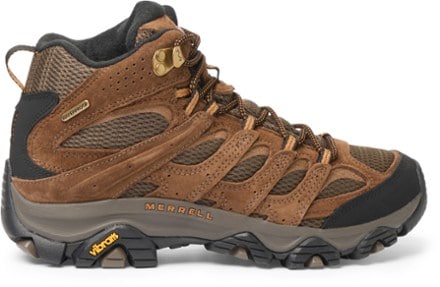
Merrell Moab 3
- Unbeatable value under $130
- Accommodating fit
- Excellent waterproofing and durability
- Excellent durability
- Available in dedicated wide sizes
- Heavy
- Limited breathability
- Wide version may run too loose for some
Price: $120
The Merrell Moab 3 is the best budget hiking boot for wide feet in 2026, and it is not even close at this price point.
The Merrell Moab 3 is ideal for beginners and average day hikers who need a wide-fitting boot without spending over $200.
I tested the Moab 3 over 300 miles across three years, including the White Mountains in Vermont. After all those miles, this boot proved to be one of the most durable hiking boot options I have ever reviewed-the outsole showed minimal wear even past 300 miles.
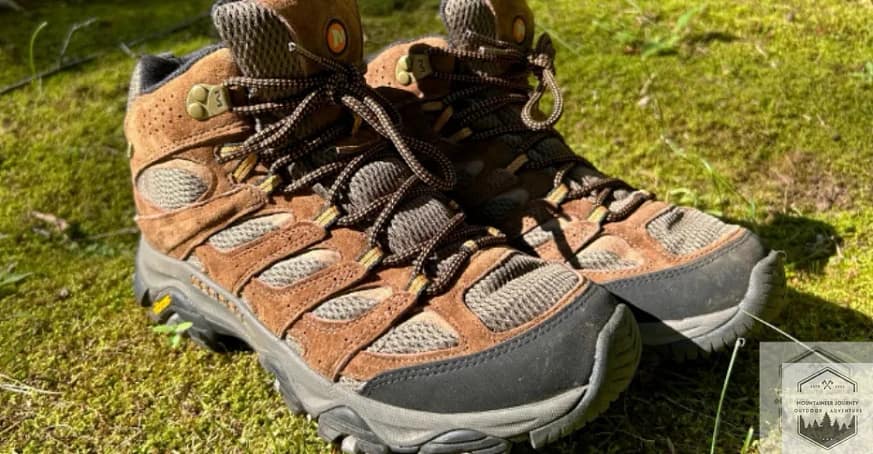
The toe box room and the shoe’s overall volume are very sleek and accommodating. I measured the toe box at 74mm for a regular-width boot.
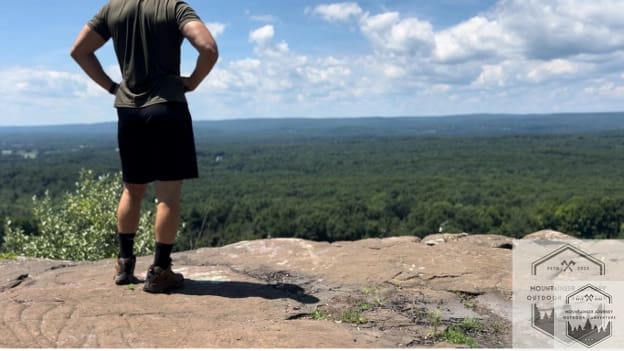
That extra toe space and wiggle room make a real difference on long treks. The Merrell Moab 3 is known for its roomy fit and offers wide sizes for extra width. The contoured heel cup does an excellent job of locking in your stability on uneven trails, rather than using plastic shanks.
Even with that generous volume, the fit provides a tight lockdown through the lacing system. You get enough room in the forefoot without sacrificing security through the midfoot and heel.
The Vibram TC5+ outsole with 5 mm lugs handled shale, granite, and wet mud with reliable traction. The Merrell Waterproof membrane passed my 10-minute submersion test and handled river crossings while drying relatively quickly.
For a budget boot, the Moab 3 provides excellent ankle cushioning. While it doesn’t offer as much cushioning as the Kaha 3, it still has a moderate level of padding.
Drawbacks include the boot’s weight (about 1.1 lb per boot), limited breathability, and the fact that the dedicated wide version may actually be too loose for some hikers.
I recommend starting with the regular width and evaluating volume before jumping to the wide-the standard already has a wide toebox that works for many wide-footed hikers.
Read More: Merrell Moab 3 Review
Most Comfortable Boot for Wide Feet
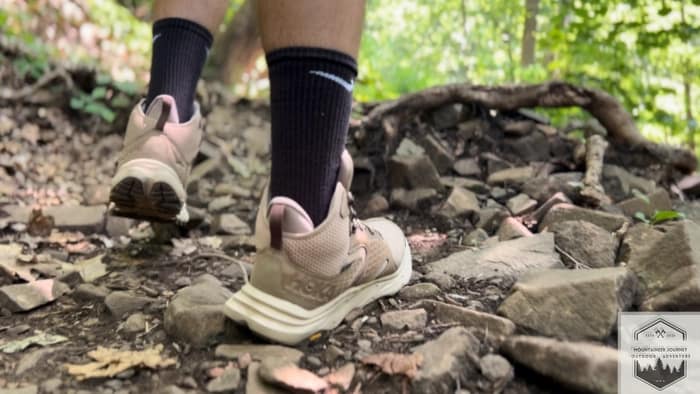
Hoka Anacapa 2
- Best-in-class comfort rating (9.5/10)
- Very wide toe box and accommodating fit
- Excellent waterproofing with Gore-Tex
- Vibram Megagrip outsole for reliable traction
- Price at ~$195
- Heel can feel slightly tight initially
- Some loss of heel stability after ~100 miles(outsole compression)
The Hoka Anacapa 2 Mid GTX is the most comfortable hiking boot on our 2026 list for wide feet.
With a comfort score of 9.5/10 (the highest I have given for a hiking boot) this boot feels inviting the second you slip it on. The elevated stack height effectively absorbs impact, particularly on uneven limestone and basalt, as demonstrated during testing.
I field-tested the Anacapa 2 over 22 months and roughly 100 miles of mixed terrain. The wide toe box provides generous toe space, and the overall fit is extremely accommodating for wide feet.
The Metarocker geometry and sugarcane EVA footbed provide a comfortable fit mile after mile. The plush outsole minimized foot fatigue, so I stayed steady on my feet easily.
The heel is slightly tight compared to the forefoot, but it is not enough to offset the benefits for wide-footed hikers. In my size 10.5, the boot ran true to size with no need to size up.
The Hoka Anacapa 2 is unique because its combination of nubuck leather and synthetic materials offers a roomy fit. This design allows the upper to adapt to high-volume feet, ensuring a comfortable experience without hot spots or overly tight areas.
The Vibram Megagrip outsole provided excellent traction during my testing, climbing on granite, and bit very well into uneven terrain.
The Gore-Tex waterproof membrane earned a perfect 5/5 score for waterproofness in my submersion test. Waterproof membranes can keep feet dry in wet conditions, and this one does so without turning the boot into a sweatbox.
Choose the Anacapa Breeeze(non-waterproof version) for more breathability and the same accommodating fit.
After about 100 miles, I noticed that part of the outsole at the heel started to compress. This has diminished the rebound effect, which has impacted the stability score of the Anacapa 2. However, the overall comfort remains unaffected.
Read Review: Hoka Anacapa 2 Mid GTX Review
Best Backpacking Boot for Wide Feet
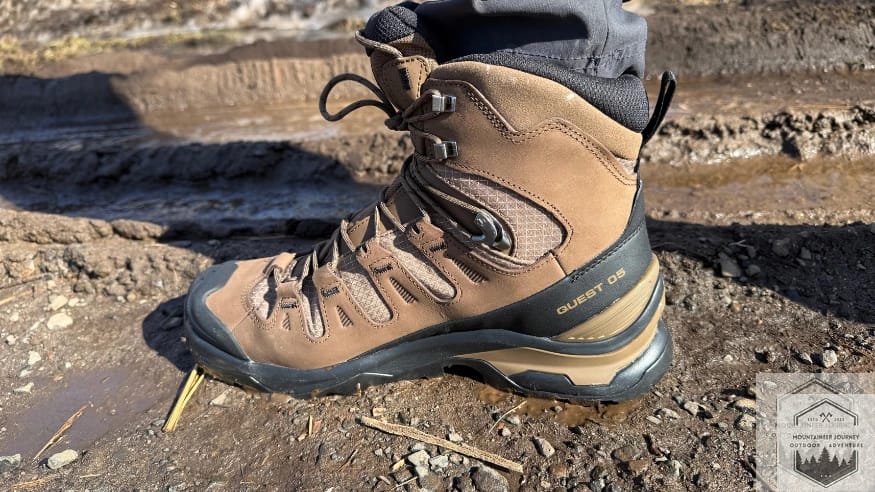
Salomon Quest 5
- Class-leading stability and support
- Excellent protection for heavy loads
- Much stability and support.
- Improved wide fit compared to Quest 4
- Fully waterproof
- Heavy
- No “wide” option
- Runs 1/2 size large
Price: $240
The Salomon Quest 5 is one of our top-rated backpacking boots, and Salomon has significantly improved the wide-foot fit compared to previous Quest models.
The wider mid-portion and added Ortholite sock liner make this a much more viable option for hikers with wide feet tackling difficult day hikes or loaded backpacking trips.
I tested the Quest 5 over 50+ miles with pack loads up to 40 lbs. The toe box offers a nice, wide fit without compressive overlays-a welcome change from the Quest 4’s tighter profile. The midfoot and heel also have an accommodating fit; however, it did take me over five hikes to break in the heel side of the boot.
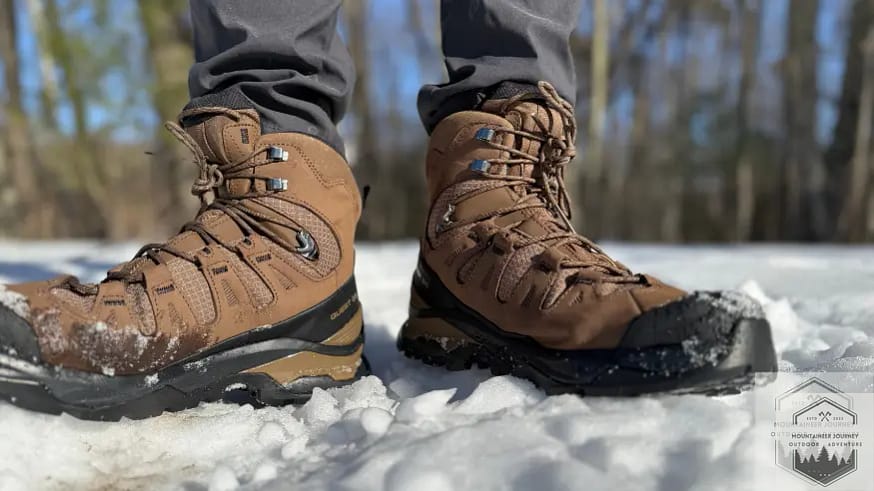
Impact absorption is good, though not quite at the level of the Anacapa 2. The lower stack height allows much better ground feel and connection rather than a very cushioned ride.
The ankle fit is slightly loose. For those with smaller calves, you’ll want to get an extremely tight lacing fit.
The Salomon Quest 5 Gore-Tex keeps feet dry even in streams up to 6 inches deep, which I verified during my submersion tests. However, the leather can take a long time to dry after being fully submerged, so those who frequently immerse their boots in water should keep this in mind.
At 22 oz per boot with a 12 mm heel-to-toe drop and approximately 7-inch ankle height, this is a serious midweight hiking boot built for protection and more stability under heavy loads.
The Advanced Chassis and Active Support Wings provide excellent lateral stability on steep descents and uneven terrain. The support on this boot is rigid, and I didn’t experience any overpronation.
The biggest drawback for wide-footed hikers is that there is no official wide-width option. The regular fit tends to run large, to those who are looking for a wider fit, I would actually not recommend moving a half size down but sticking with the normal size that tends to run slightly large.
Read Review: Salomon Quest 5 Review
Best Leather Boot for Wide Feet
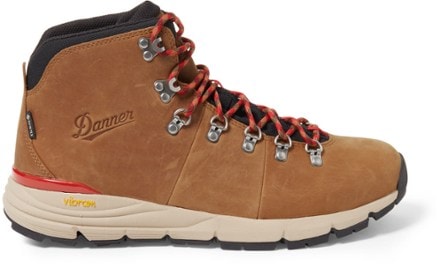
Danner Mountain 600
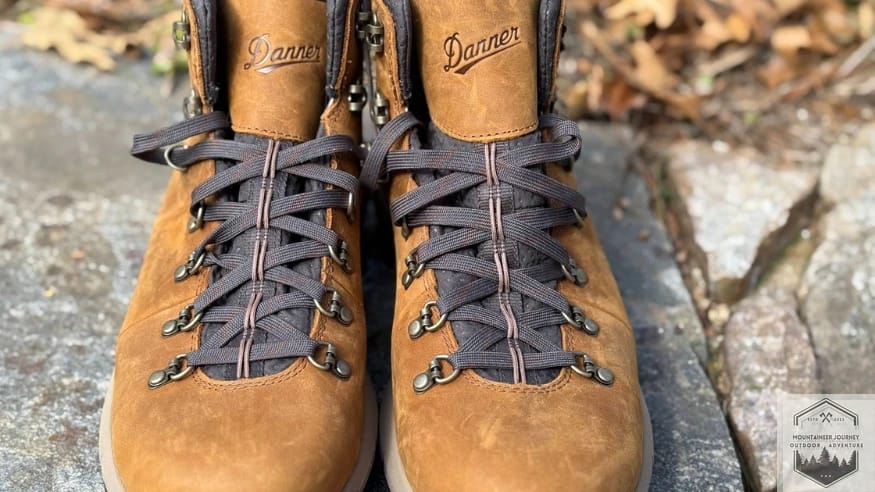
- Widest toe box tested at 3.27 inches (83 mm)
- Full-grain durable leather construction
- Rockered sole for smooth stride
- Resoleable and recraftable by Danner
- Heavy at ~1.74 lb per boot
- Midfoot can feel narrow for some
- Lateral heel hot spots on longer hikes
Price: $240
The Danner Mountain 600 is the top wide-fitting leather boot on this list. With a measured toe box width of 3.27 inches (~83 mm), it has the widest toe box of any hiking boot I have tested.
I tested this boot over 85 miles in 2024 and continued testing through 2026. The full-grain leather upper paired with the Danner Dry waterproof membrane passed my 10-minute submersion test with no leaks.
The flood height is about 5 inches. The Nubuck leather upper provides flexibility and comfortably accommodates wide feet. Over time, the leather on the Mountain 600 molds to your foot shape, which is significant since many leather hiking boots are rigid and do not conform well to your feet.
The rockered sole and Vibram Fuga outsole with 5 mm triangular lugs deliver smooth flexibility that is unusual for a leather boot. For a durable hiking boot made of full-grain leather, the stride feels more fluid than you might expect.
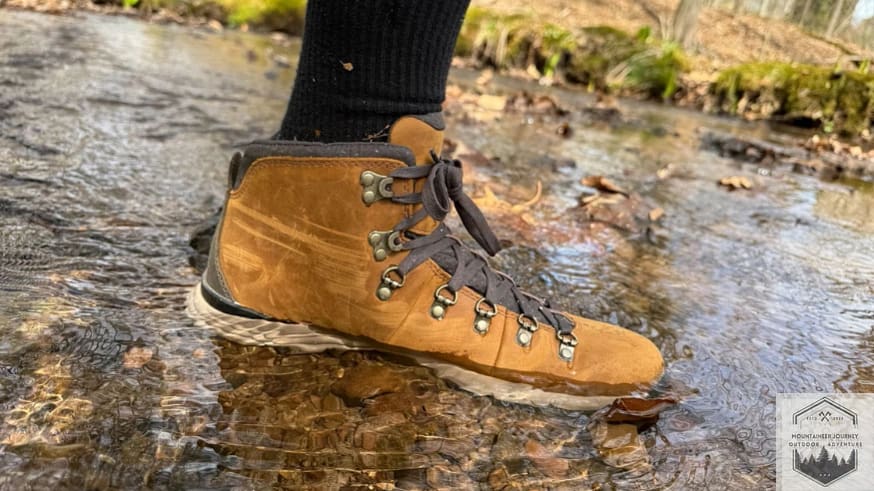
The out-of-box comfort I rated a 9/10, though comfortable hiking boots require minimal break-in time, and this one needs roughly 5 miles for the outsole to start loosening up.
There are trade-offs. Despite the wide toe box, there is some midfoot narrowing that hikers with high-volume, wide feet should be aware of. I also experienced lateral heel hot spots on hikes over 5 miles. The boot is heavy at 1.74 lb per boot, and the leather reduces breathability significantly.
The fit is a bit tight overall, particularly at the top of the foot. If you have wider feet as I do, I recommend selecting a half size larger if you find yourself between sizes.
This is the ideal option for those who need a wide toe box, as the rest of the boot fits snugly.
One major advantage: Danner offers a resoleable and recraftable service, which makes this boot a long-term investment. The durability was rated 8/10 through my testing with no structural failures.
Read Review: Danner Mountain 600 Review
Additional Wide Foot Options
These are the boots worth mentioning but did not crack the top 5.
6. Zamberlan Vios GTX
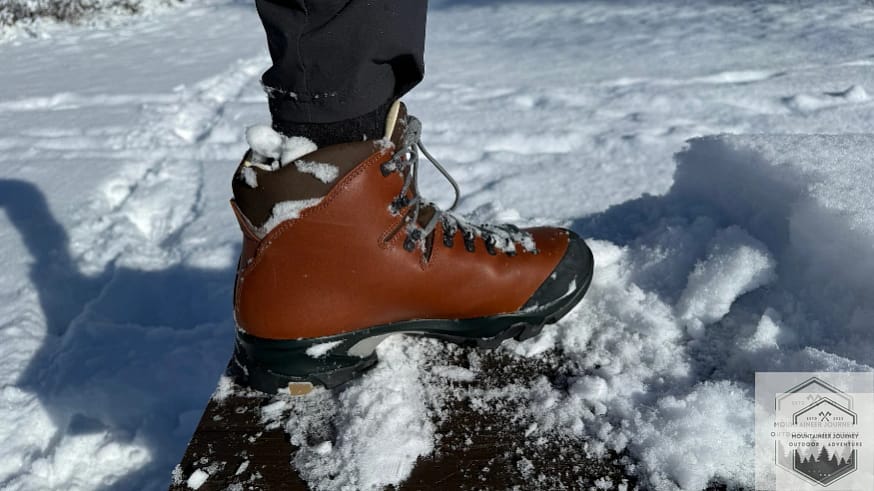
The Zamberlan Vioz GTX is a premium leather backpacking boot with solid construction and a traditional European fit. However, European brands typically have narrower fits than U.S. brands. The price is also very high ($380).
The Vioz runs narrow enough in the toe box that I could not justify including it in the top five for wide feet specifically. If you have moderately wide feet and want a highly versatile, durable leather boot for multi-day treks, it is worth trying on. Read our full Zamberlan Vioz GTX Review.
7. Hoka Kaha 3 GTX
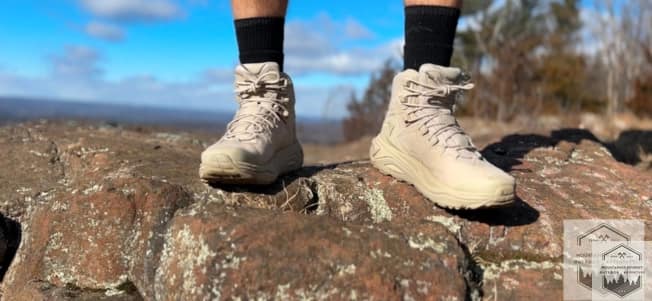
The Hoka Kaha 3 GTX is our best overall hiking boot of 2026 and offers nearly two inches of EVA cushioning with effective waterproofing for wet conditions. The comfort is outstanding-it earned a 9.5/10 comfort score-but the toe box is not as wide as the Terrex Free Hiker 3 or the Danner Mountain 600. For hikers with moderately wide feet who prioritize cushioning, it is an excellent choice. Read our full Hoka Kaha 3 GTX Review.
How We Test Hiking Boots for Wide Feet
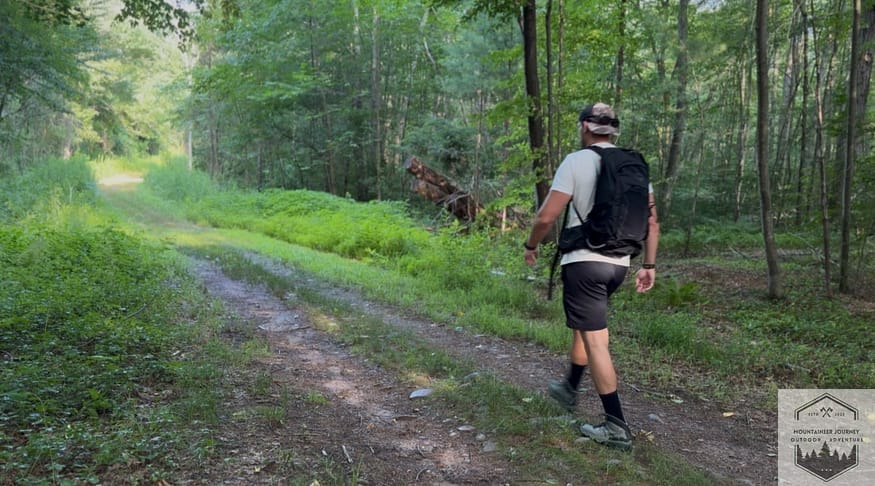
I like to objectively measure all my hiking boots across specific categories before posting my reviews. I have compiled a list of weighted categories adapted for wide-foot needs, giving you the best possible overall score before deciding on a specific pair of boots for wide feet.
I have iterated this formula over the past 16 years to perfect it. Every boot is purchased with my own money, worn on real trails, and evaluated without sponsorship influence.
Wide Foot Fit and Comfort (20% of weighted score)
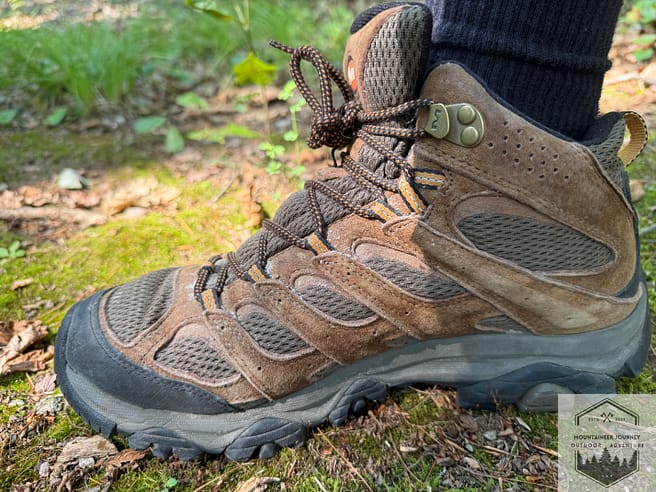
This is the most heavily weighted category for wide-footed hikers. I start by assessing how the toe box accommodates width and height; anatomical toe boxes allow toes to splay naturally and reduce pressure. A roomy toe box helps prevent bunions and toe rubbing, which is critical for foot health on longer hikes.
I measure the distance from the toe box to the heel, divide by two to find the exact midfoot, and then measure the width at that point. This tells me how the boot accommodates more volume through the midfoot, not just at the toes. Midfoot pressure points are a common complaint for wide-footed hikers, and this measurement exposes boots that look wide but actually squeeze at the arch.
Heel fit matters just as much. I check for heel slip, hot spots, and how well the ankle collar cushions without restricting. A high-volume fit can accommodate thicker socks and foot swelling, and I always test with the same Darn Tough Full Cushion hiking socks for consistency.
Break-in period is noted for each boot-some need 5+ miles to soften up, especially leather models. If you need tips, check our guide on how to break in hiking boots.
Dedicated wide sizing options include 2E or 3E widths, but many boots on this list accommodate wide feet in standard sizes. Sizing up by one full size can increase boot width, though it can also introduce heel slip and other fit issues.
Traction (18% of weighted score)
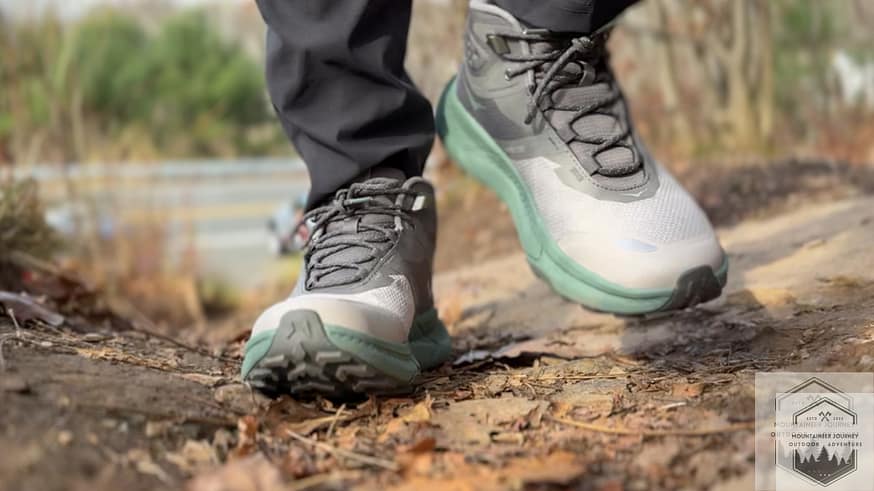
I test every boot on uneven terrain, flat terrain, steep ascents, and wet surfaces, including limestone, granite, shale, and mud. The outsole material-whether Continental, Vibram Megagrip, or Salomon’s Contagrip-is evaluated for grip in both wet and dry conditions.
Lug depth and spacing directly affect performance. Deep, well-spaced lugs clear mud and dig into loose surfaces better than shallow, tightly packed patterns.
I also evaluate how the outsole performs on wet trails specifically, since wider boots tend to contact more surface area and can either help or hurt depending on lug design.
Overall Protection (9% of weighted score)
I assess the toe bumper coverage, the upper material’s durability, and the lateral protection. The Terrex Free Hiker 3’s toe bumper, for example, does not fully cover the toes-a notable trade-off for its lighter weight.
Gusseted tongues keep debris out, and ankle support from higher cuffs helps prevent sprains on uneven ground. For wide feet, I also check whether protective overlays compress the forefoot, which would negate any width benefits.
Waterproofness (9% of weighted score)
Every boot goes through my 10-minute submersion test in a creek. I note any waterlogging, measure how high the waterproof membrane extends, and evaluate real-world creek crossing performance.
Hoka Kaha 3 GTX features effective waterproofing for wet conditions, demonstrating that waterproof membranes can keep feet dry without completely sacrificing airflow. I also track drying time, which matters for multi-day trips.
Stability and Support (9% of weighted score)
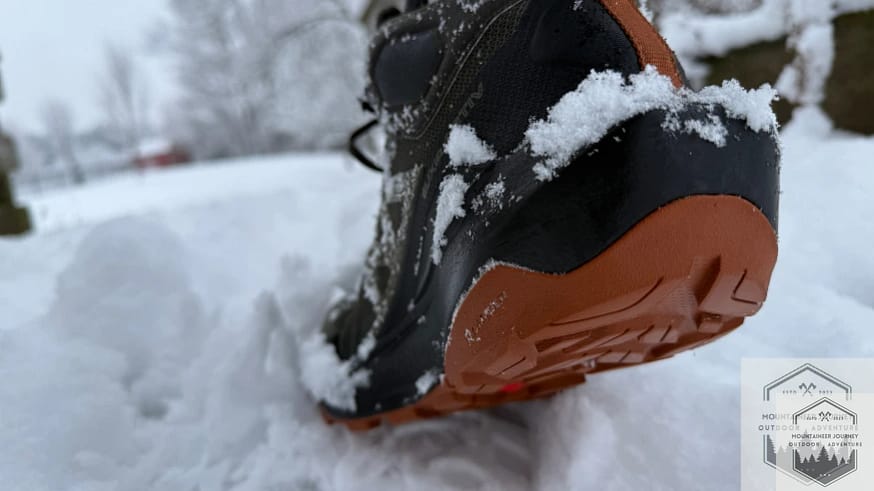
Ankle cuff height and security are my first measures. I twist each boot to assess torsional stability-better torsional rigidity prevents overpronation and supination for more natural foot movement while backpacking.
Wide platform stability is particularly important for wide-footed hikers. Flared heels and wider soles, like those on the Terrex Free Hiker 3 and Anacapa 2, provide extra stability that narrower platforms cannot match. Advanced chassis systems, such as those in Salomon boots, provide lateral support.
Wide Foot Specific Fit (9% of weighted score)
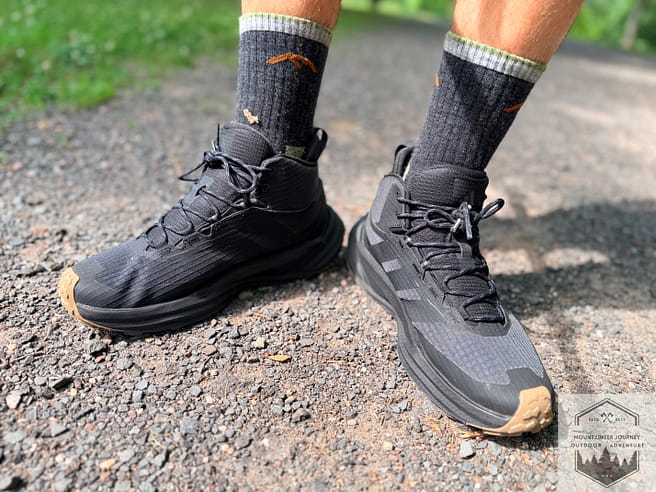
Beyond general fit, I measure toe box width at the widest internal point and compare against category averages. Numerous hiking boots feature anatomically shaped toe boxes for comfort, but external measurements can be misleading-thick bumpers and overlays reduce internal space.
I test sizing recommendations specifically for wide feet, noting whether going up half a size helps or introduces new problems. Hiking boots for wide feet should have a generous toe box, but width alone is not enough-the boot needs to accommodate the shape of your foot through the midfoot and heel as well.
I also evaluate lacing system effectiveness, since adjustable lacing allows you to relieve pressure in specific zones without loosening the entire boot.
Durability (18% of weighted score)
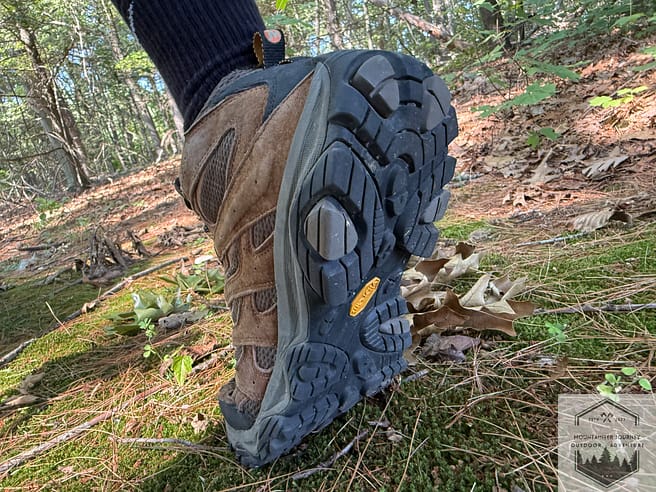
I assess overall material quality, sole wear patterns, and upper longevity over extended testing periods-always 100+ miles minimum before finalizing durability scores. Synthetic and welded materials may save weight but tend to break down faster than durable leather and traditional stitching.
The Moab 3 showed minimal outsole wear after 300 miles. The Danner Mountain 600 had no structural failures through two years of testing.
Value for Wide Feet (9% of weighted score)
Value comes down to whether the boot’s performance for wide feet justifies its price. The Merrell Moab 3 at under $130 delivers extraordinary value for boots for wide feet. The Danner Mountain 600, at $220, costs more but offers resolability and a wider toe box than anything else on the market.
A cheaper hiking boot may not score as well overall but may represent excellent value for what it costs.
A good fit for your specific foot shape is worth more than any spec sheet. Spend time trying options with the socks you will actually wear on the trail, and prioritize the boot that keeps your feet comfortable without compromise.
How We Tested and Our Methodology
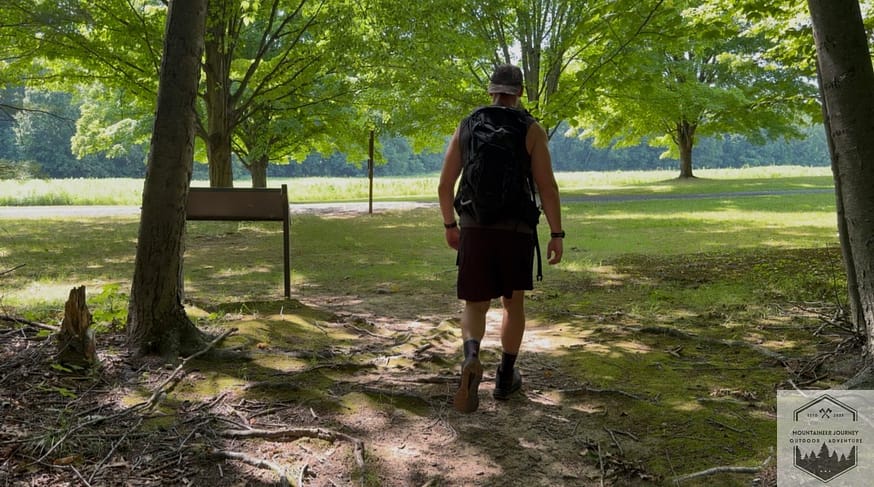
I bought all the hiking boots with our own money and tested them objectively. We do not accept any free products or sponsorships.
I have been refining my scoring system over 16 years of experience to give you the most unbiased score. The real reason I do this is so you get the best possible model based on your needs rather than making brands happy.
We also record cinematic footage of us ACTUALLY testing these boots, not just reading a spec sheet to you and making broad, nonspecific claims about testing. Check out our YouTube for more, with over 2.2 million views.
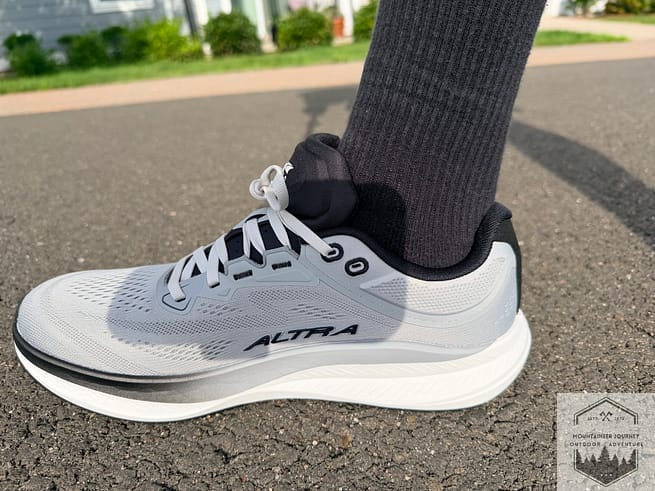
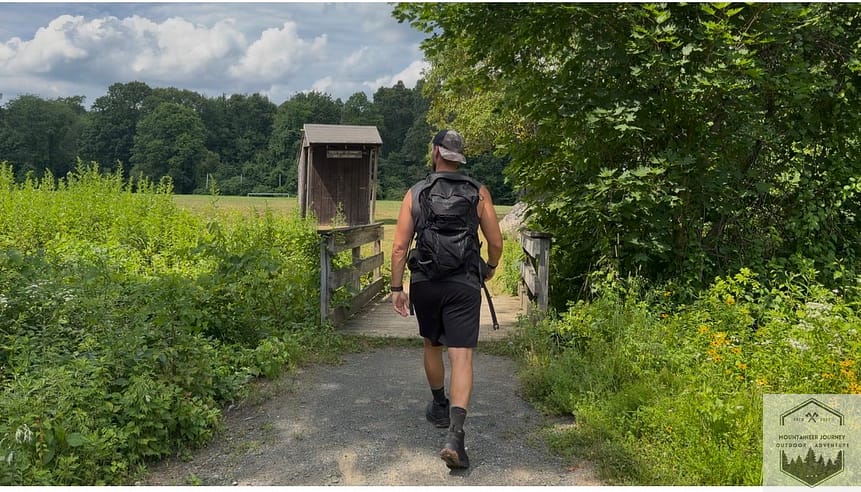

Tyler is the founder Mountaineer Journey and a professional Mountain Guide with 15+ years of technical experience in trekking, mountaineering, and trail sports. Having logged thousands of miles from rugged alpine summits to urban paths, Tyler provides rigorous, field-tested insights on hiking, walking, and trail running gear. All reviews are 100% unsponsored and unbiased, ensuring you get honest scoring based on real-world performance. His mission is to help outdoor enthusiasts of all levels find reliable equipment that ensures comfort, safety, and performance on any terrain.