Our Score
Hoka Kawana 3 Review | Worth It In 2026?
Disclosure: These links may provide a discount and in return, give us a commission to help run this website
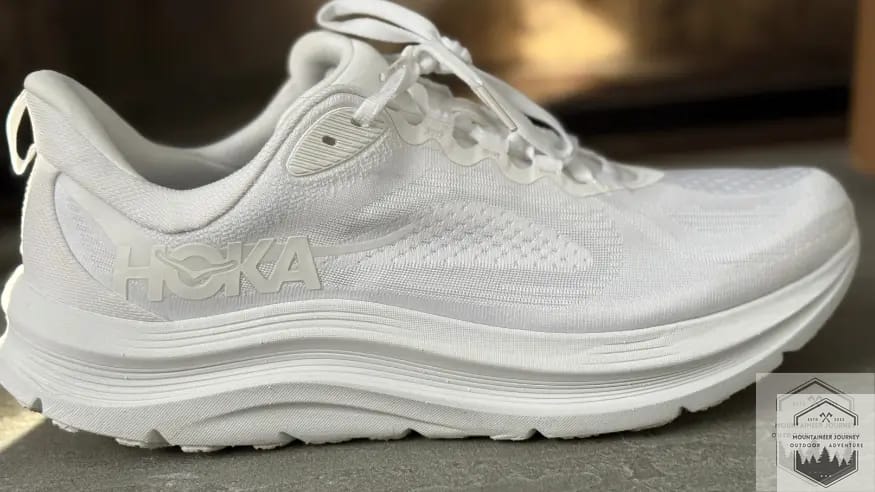
In this article, I am going to give my HONEST Hoka Kawana 3 review after testing the since their early January 2026 release.
As someone who has been testing walking shoes for over 16 years, the Kawana 3 is a neutral “do-it all” type of shoe.
I’ve put these shoes through rigorous testing to give you an honest assessment of whether they’re worth the investment for you.
Compare To Similar Products

Most Comfortable Walking Shoe
8.7

Hoka Bondi 9
Our most comfortable walking shoe 2025. Extreme comfort and great energy return. Improved upper with enhanced breathability
Hoka Kawana 3 Pros and Cons
Pros
- Moderate Stack Height
- Improved Tongue Comfort
- Aggresive Rocker
Cons
- Tight Fit
- Average Impact Absorption
- Ankle Stability
Who Should Buy the Hoka Kawana 3
- You prefer very narrow shoes with minimal padding.
- You prefer a lighter shoe at a more budget price, under $150?
- You want a very aggressive rockered sole for excellent heel-to-toe transitions.
Who Shouldn’t Buy The Hoka Kawana 3
- You prefer maximum plush cushioning in your shoes with wide options.
- You are looking for a stability-focused walking shoe
- You are you looking for an extremely voluminous walking shoe
Hoka Kawana 3 Price
Currently The Hoka Kawana 3 is priced at $140 retail.
Hoka Kawana 3 Comfort
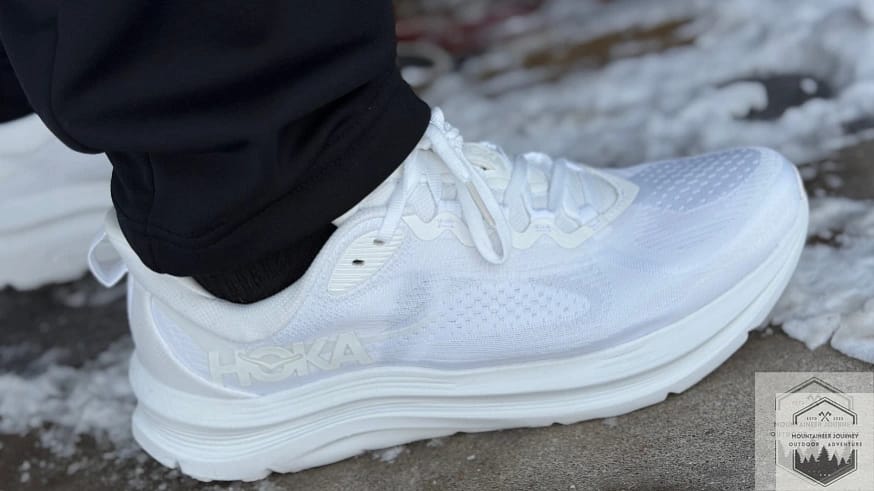
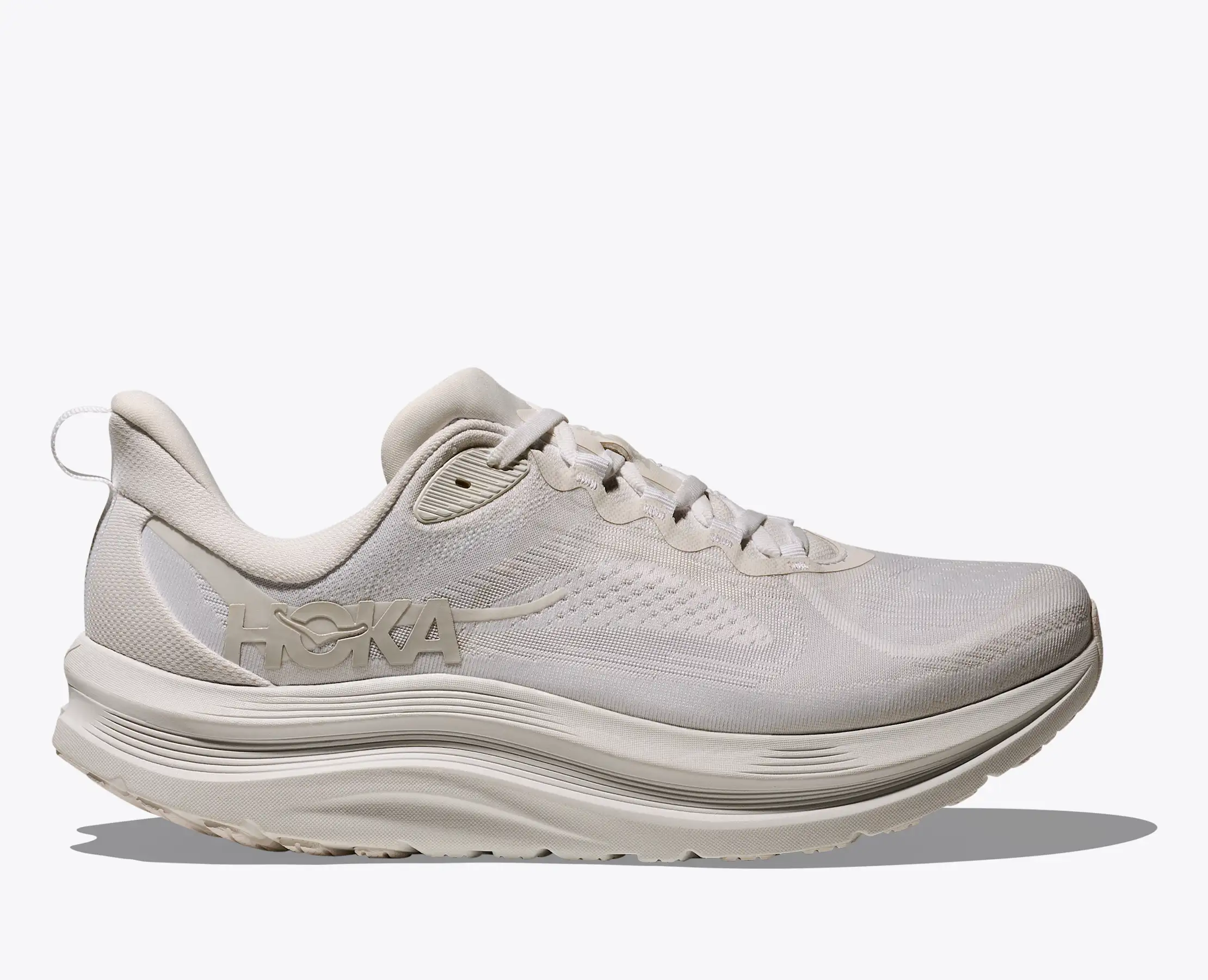
Getting into the Hoka Kawana 3 was nice and easy. Step in comfort is very similar to the Solimar 2. It’s not overly plush, but it’s also not dead firm. It lands in that balanced middle ground.
The thin textile mesh upper does get a little compressive near the end of the toe box. Outside of that, I didn’t run into any hot spots or pressure points during testing.
But let’s get this out of the way. If you want that deep, marshmallow feel you get from the Bondi 9 or even the Clifton 10, this isn’t that kind of shoe.
The Kawana 3 is tuned more for structure and efficiency than pure softness.
Underfoot, the footbed has a little bounce, but it’s not pillow like. On my calipers, I measured 30 mm in the heel and 25 mm in the forefoot.
That’s enough stack to take the edge off hard pavement, but it still feels more minimal than Hoka’s comfort first models.
On longer walks, I did notice mild foot fatigue creep in sooner than it would in a higher stack option. It’s not harsh, but you feel more of the ground over time, especially if you are doing hour plus walks on concrete.
In terms of ride, I’d compare it closer to the Hoka Transport 2 than something like the Bondi. It’s that same idea of a firmer, more controlled platform with a purpose behind it.
The heel collar is a real upgrade. Hoka added plusher lining around the heel and ankle, and it makes the shoe feel more finished back there. Heel comfort is simply better than earlier versions.
The tongue is the one area that still feels a bit lean. It runs slightly compressive, and a touch more padding would have bumped the comfort score up, especially when you cinch the laces down.
Break in took me just over two weeks of daily walking miles.
Out of the box the upper felt snug, but it gradually loosened and conformed to my foot in a way that felt more natural by the end of that period.
Kawana 3 Meta Rockerd
The Kawana 3 has one of the most aggressive Hoka Meta rockers I’ve tested out to date.
The aggressive rocker keeps your foot moving forward during your heel-to-toe transition, making it more efficient and lightweight.
When it comes to stride efficiency, go after the Kawana 3 if you really love that aggressive rocker feature.
Comfort Score: 7.5/10 (30%)
Support
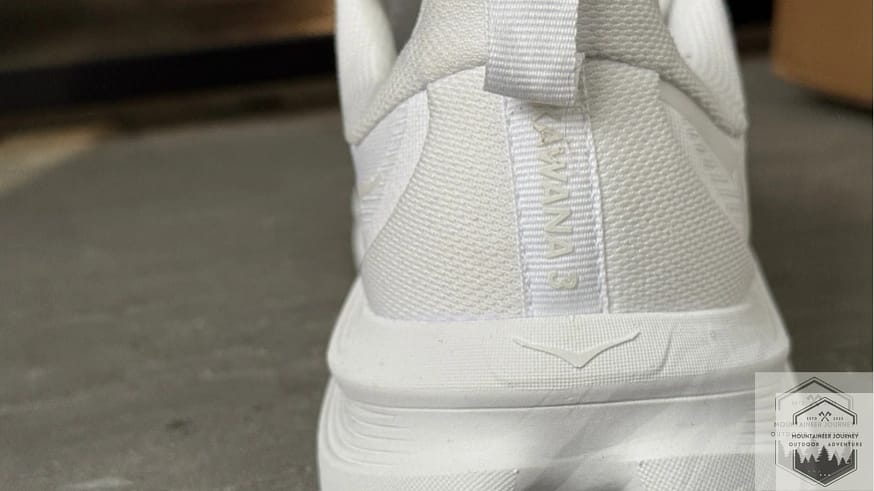
The Kawana 3 doesn’t have any of the prescriptive stability tech you get in something like the Gaviota 6. No guide rails. No built in motion control. It’s a simpler, neutral setup.
Hoka markets it as “neutral stability,” but in my testing, the upper design plays a big role in how stable it feels.
The ankle cuff sits noticeably low, well below my ankle joint.
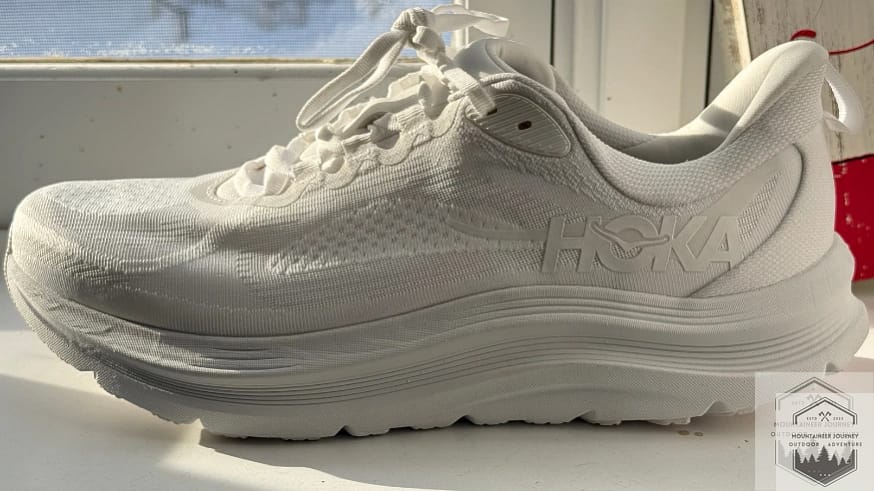
On flat pavement, that wasn’t a problem. But once I stepped onto slightly uneven gravel, I could feel the difference right away.
On slightly uneven gravel, I noticed a small inward roll at the ankle. Nothing that felt dangerous, and I never came close to a sprain, but it did make the shoe feel less planted the moment the terrain stopped being predictable.
Where the Kawana 3 fights back is the base.
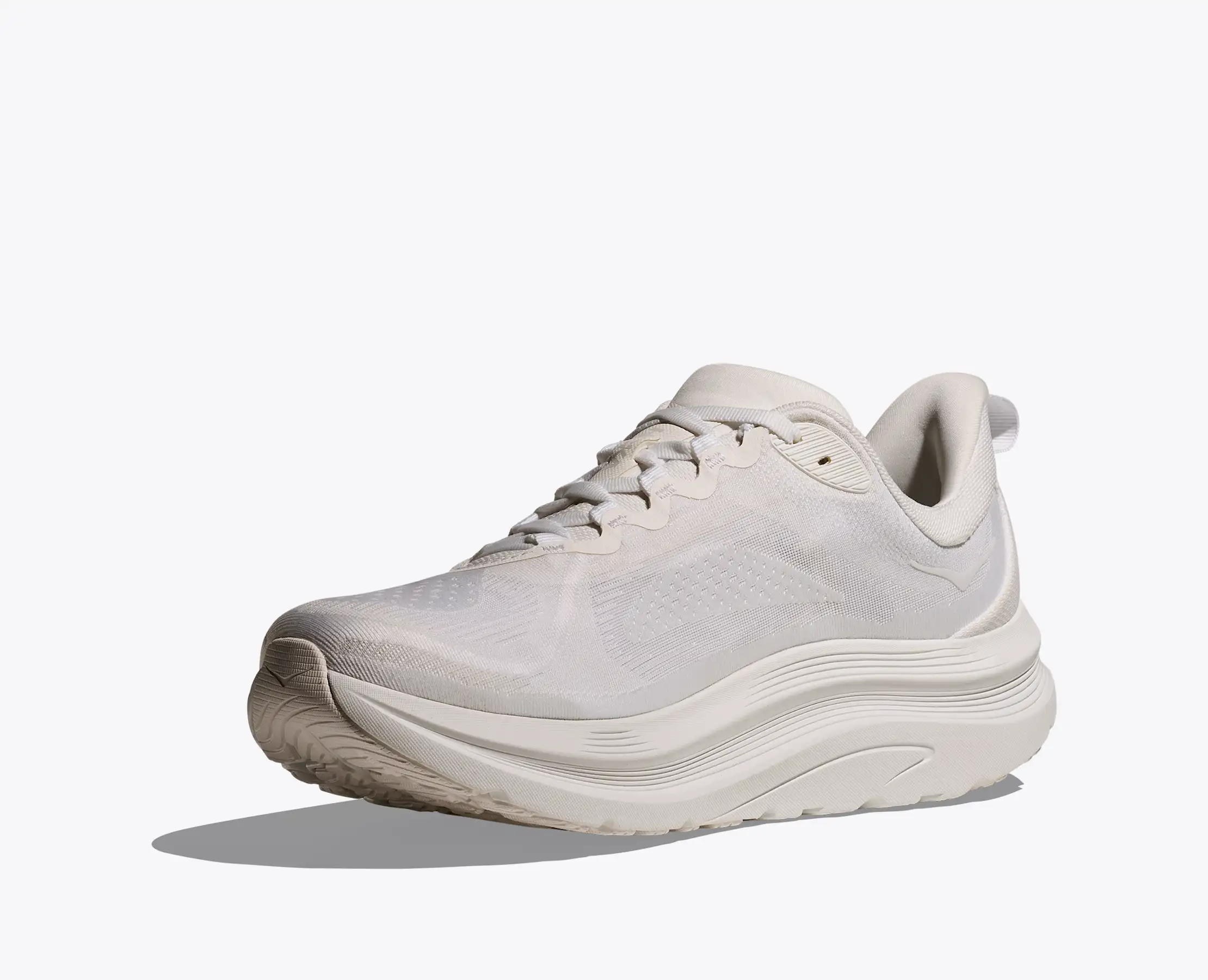
The rubber outsole flares wider than the upper, so your foot sits down into the platform instead of perching on top of it.
That wider footprint helps reduce that tippy sensation some neutral walkers get when the midsole is narrow.
The upper is thin, but it runs snug. Not an aggressive race style lockdown, but tight enough that my foot didn’t slide around inside the shoe. That lack of internal movement adds a bit of stability even without true support features.
Overall, this is not a stability focused walking shoe.
If you need a shoe that actively guides your stride, the Kawana 3 isn’t built for that.
But if you want a neutral ride with a wider base that keeps things reasonably controlled, it does a decent job, as long as you stay mostly on flat ground.
Support Score: 7/10 (20%)
Traction
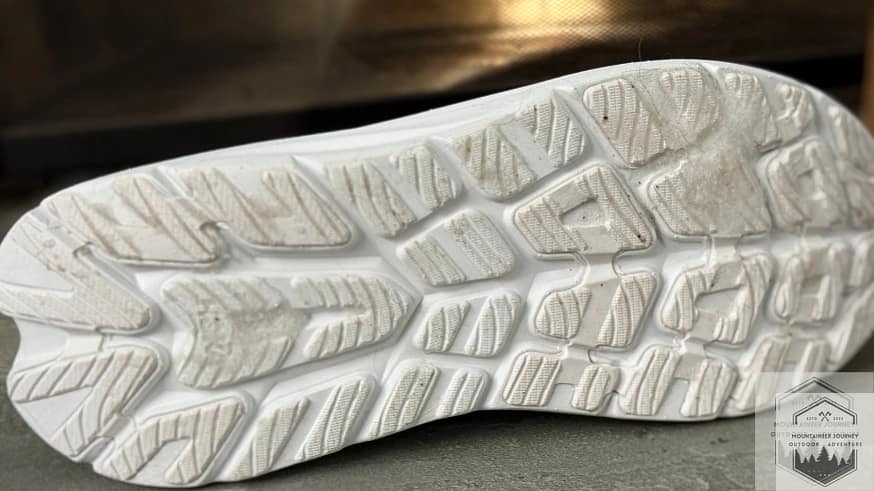
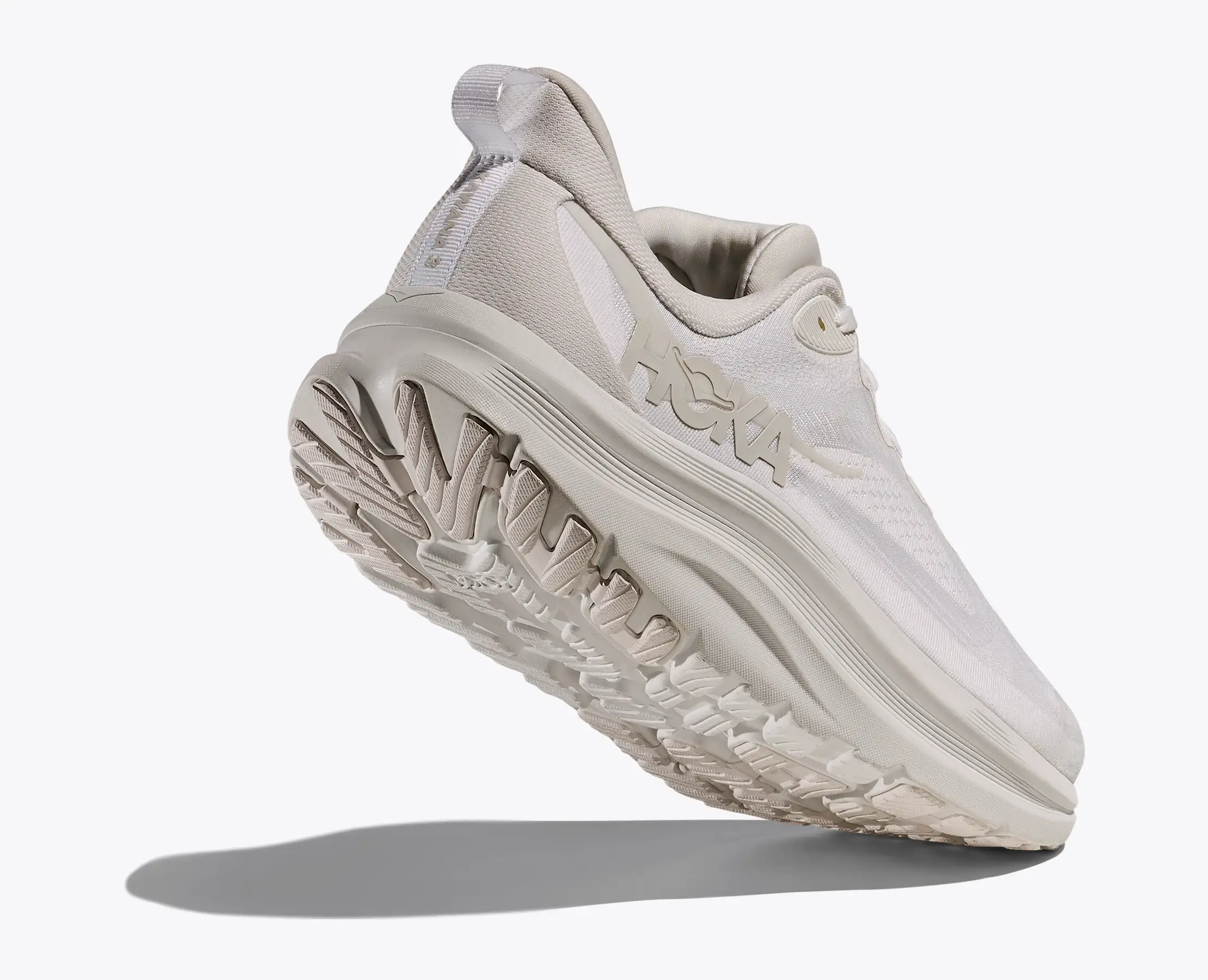
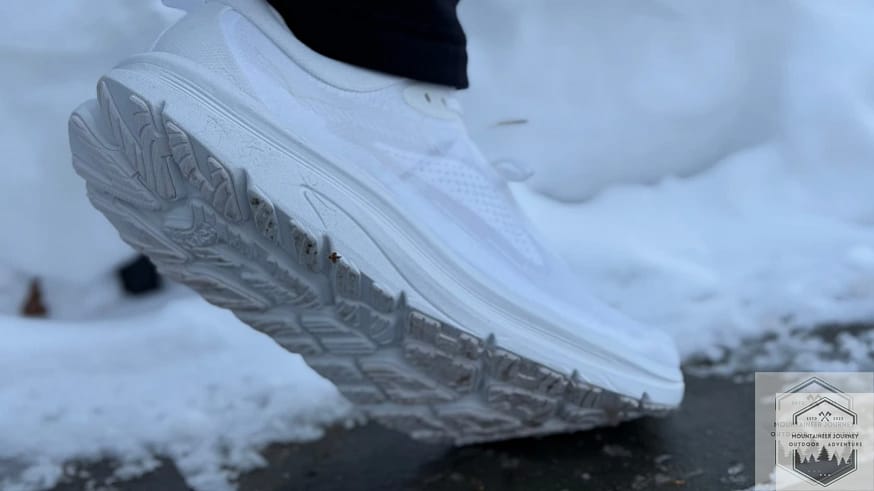
Hoka doesn’t clearly name the exact outsole compound here. They mainly call out zonal rubber placement, with rubber laid down in the higher wear zones.
Instead of using raised tread islands like the Brooks Ghost Max 3, the Kawana 3 uses more indentations and cutouts to keep weight down. It’s a smart way to shave ounces, but it usually comes with a tradeoff.
I tested the Kawana 3 on gravel, concrete, asphalt, hospital floors, and indoor surfaces like laminate and hardwood.
Traction was very good across the board. On clean indoor floors it felt confident, and on gravel and pavement I didn’t have any shaky grip issues.
My bigger concern is durability.
Those indentations reduce rubber coverage, and that can lead to faster visible wear, especially if you’re a heel striker or you rack up a lot of miles on abrasive pavement.
It reminded me of what I saw on the Clifton 9, where the outsole design does its job early, but the wear patterns show up quicker than you’d expect.
To be fair, Hoka did protect the most important contact points. The high impact zones have rubber where you need it, and that’s what helps the shoe grip well in the first place.
Overall, traction is strong. Just keep an eye on the outsole over time, because the weight saving design may show wear sooner than a full coverage rubber build.
Traction Score: 8/10 (15%)
Weight
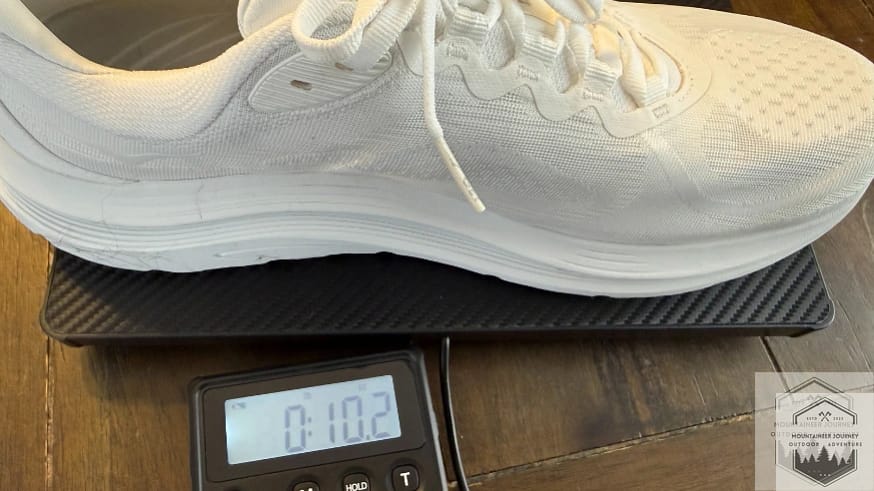
I weighed my men’s 10.5 at 10 oz.
That’s a little disappointing, because the Kawana 3 is positioned more like a minimalist, low foam daily shoe. With a modest stack, I expected it to come in lighter.
And on foot, it feels exactly like a 10 oz shoe. It doesn’t disappear once you start moving, and even with that aggressive rocker, it never feels lighter than the scale says.
Weight Score: 7.5/10 (15%)
How Does The Hoka Kawana 3 Fit?
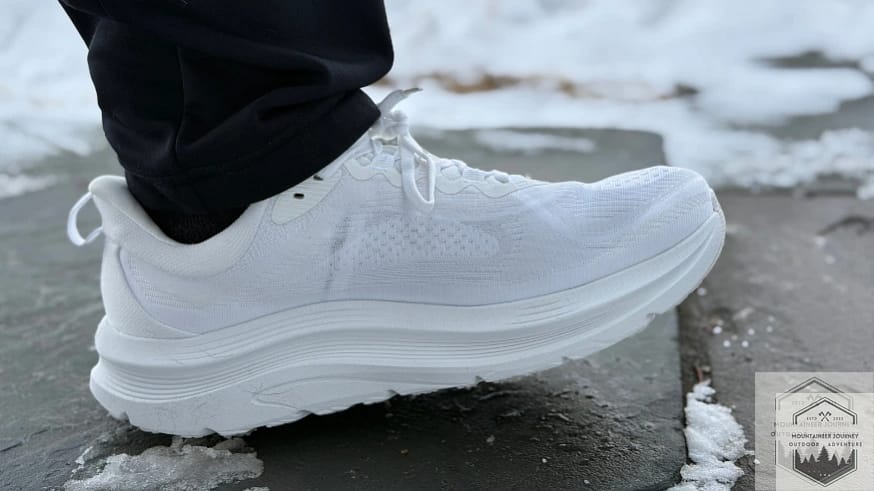
I tested the Kawana 3 in a men’s size 10.5 (which is a regular width), and it was just a bit too snug.
It’s worth noting that Hoka doesn’t actually make this shoe in wide sizes, which is a bit of an issue if your feet need a little extra room – as mine do.
The upper material on the Kawana feels pretty compressive around the top of the foot and on the inner side, and the overall shape of the shoe is pretty narrow.
This tightness is most noticeable through the middle part of the foot.
Oddly though, the toe box and heel parts of the shoe are pretty roomy. I had enough space in the front, and the back didn’t feel cramped at all.
So, if you’re someone who normally wears a wide fitting shoe, or even just a bit wider than average, I’d say give the Kawana 3 a pass.
The midfoot fit just isn’t comfortable enough to recommend it’s going to be too tight to make it work.
Fit Score: 7/10 (15%)
Is the Hoka Kawana 3 Worth It?
At $140, the Hoka Kawana 3 really appeals to a smaller niche of walkers.
It is not a plush, comfort first shoe, but it can handle all day walking without falling apart. I got good grip across mixed surfaces, and the platform feels stable enough for daily use as long as you stay mostly on predictable terrain.
If you want a true do it all walking shoe that does everything reasonably well but does not really dominate in any one area, the Kawana 3 makes sense. It is capable, efficient, and tuned more for forward momentum than soft cushioning.
This is also an easy stay away if you are wide footed. The overall volume runs low, the midfoot fit is narrow, and without wide sizing it is simply not a safe pick for wider feet.
If you want more comfort and a more forgiving fit, I would look elsewhere. The Altra Experience Flow 2 gives a better overall walking experience, and the Hoka Gaviota 6 is the better choice if you want more stability with a more comfort focused ride.
Value Score: 7.5/10 (5%)
Scoring Breakdown
Comfort (30%): 7.5/10
Support (20%) : 7/10
Traction (15%): 8/10
Weight (15%) : 7.5/10
Fit (15%) : 7/10
Value (5%) : 7.5/10
Total Weighted Score:
2.25 + 1.40 + 1.20 + 1.125 + 1.05 + 0.375 = 7.40 / 10
Our Rating: 7.4/10
Frequently Asked Quesstions
What is the Hoka Kawana good for?
The Hoka Kawana is made for everyday walkers looking for a neutral shoe without maximum plush cushioning.
Do Hoka Kawana run big or small?
The Hoka Kawana runs quite small. The upper is quite compressive and does not allow a lot of expansion.The shoe is not for wide-footed individuals.
How We Tested and Our Methodology
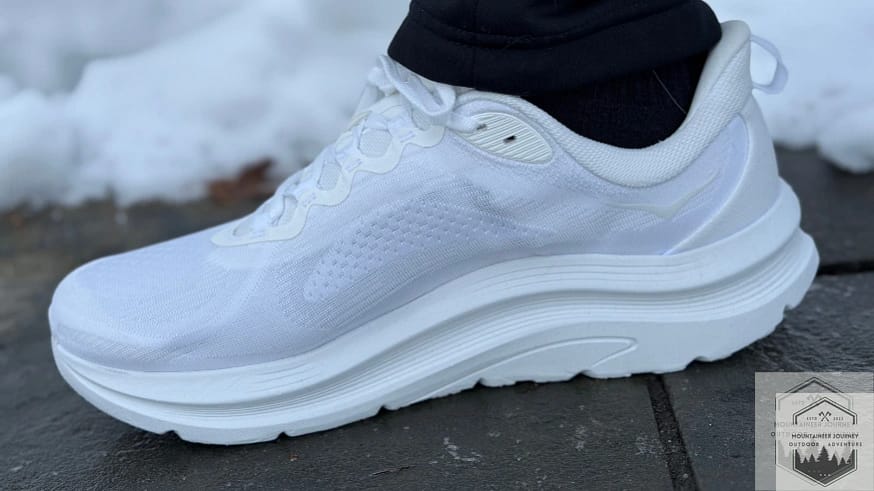
I personally tested the Hoka Kawana 3 since its 2026 release. This testing included daily walks, testing on various floor surfaces, and on the treadmill.
Due to inclimate weather, we were unable to test the Kawana 3 on light trails. We will update this review as soon as possible, once we finish testing on light trails with this shoe.
All shoes tested are purchased independently without manufacturer sponsorship or free products. This is so we can test WITHOUT pressure from sponsorships and keep everything objective.
My 16+ years of footwear testing experience includes thousands of miles in various shoe categories, from lightweight running shoes to heavy hiking boots. This background enables accurate assessment of how the Kawana performs in real world conditions.

Tyler
Tyler is the founder Mountaineer Journey and a professional Mountain Guide with 15+ years of technical experience in trekking, mountaineering, and trail sports. Having logged thousands of miles from rugged alpine summits to urban paths, Tyler provides rigorous, field-tested insights on hiking, walking, and trail running gear. All reviews are 100% unsponsored and unbiased, ensuring you get honest scoring based on real-world performance. His mission is to help outdoor enthusiasts of all levels find reliable equipment that ensures comfort, safety, and performance on any terrain.