Our Score
Garmin Cirqa Review 2026 | Unsponsored
Our Verdict: Should You Buy The Garmin Cirqa In 2026?
The Garmin Cirqa is a solid recovery band if you already own a Garmin watch and want deeper sleep, stress, and heart rate variability data without wearing a bulky device to bed. It is a good fit for people who want a faceless wristband (or compatible arm-band), but its activity tracking lags behind even a basic screen-based fitness tracker.
Think of the Cirqa as a quiet sensor that fills the gaps your watch misses when it’s charging or sitting on your nightstand. It is not a standalone device for serious athletes.
Buy If
- You already own a Garmin watch and want 24/7 HRV and recovery data without wearing a bulky watch to bed
- You care more about recovery trends and sleep quality than live pace or distance during workouts
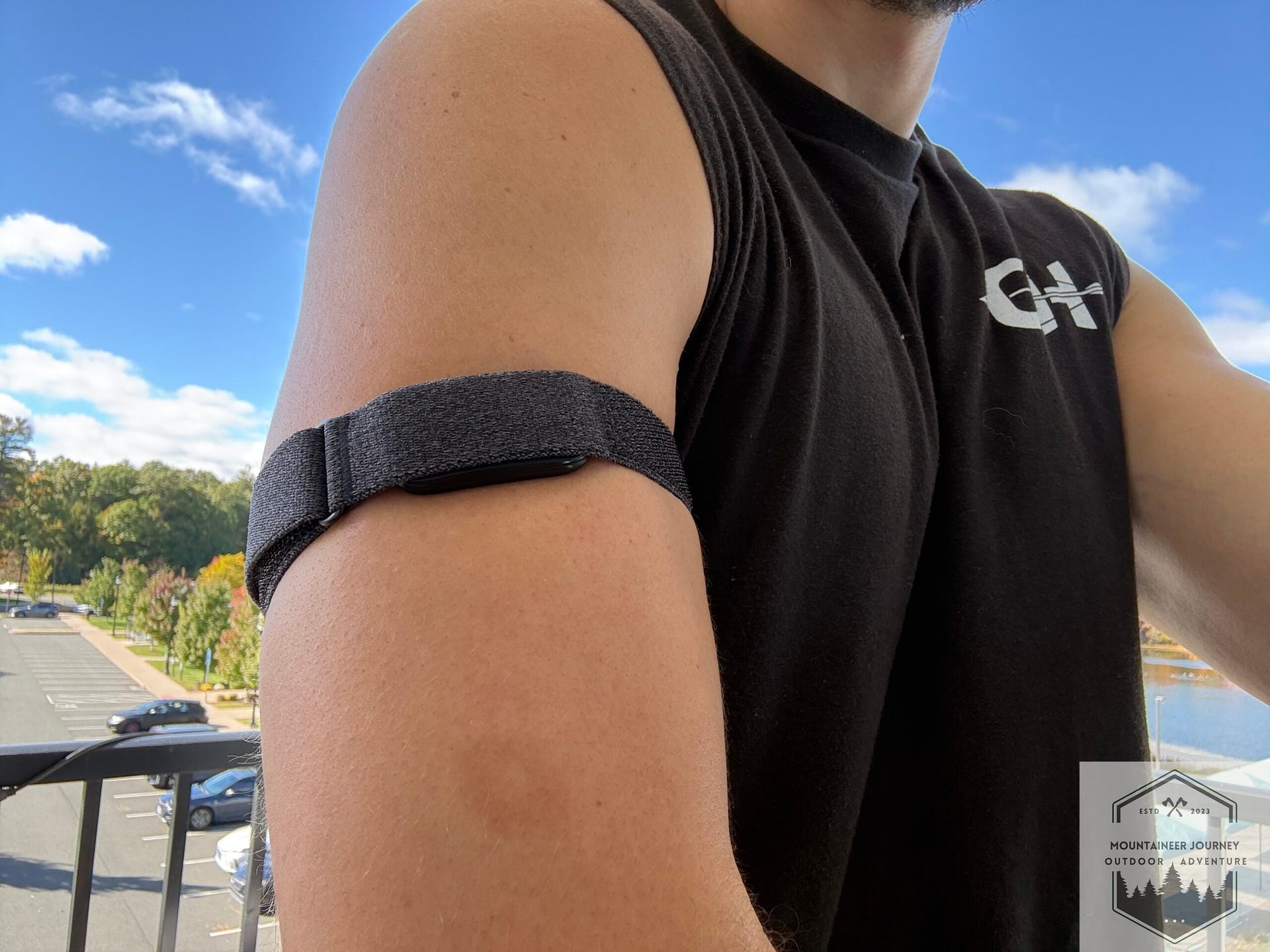
- You want a nearly invisible band on your wrist (or arm) and care more about recovery trends than on-device metrics during workouts
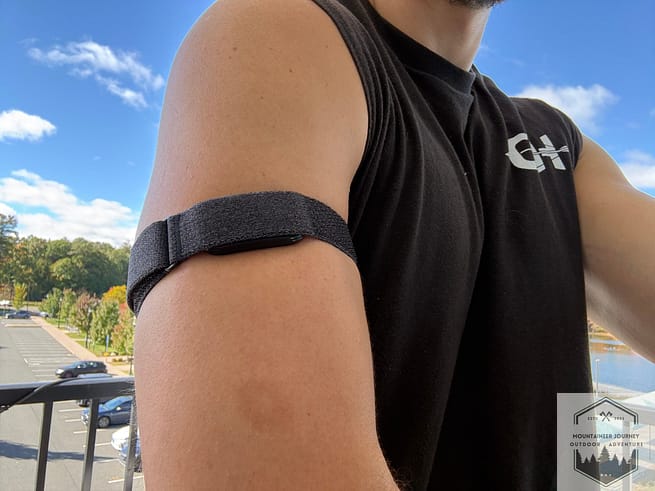
- You prefer to wear your faceless watch on your upper arm
- You value subscription-free core features
Don’t Buy If
- You want full activity tracking and navigation in a single device
- You need live pace, heart rate, or distance feedback during runs without pulling out your phone
- You are looking for a GPS device that can guide you through backcountry terrain
- You do not already own a Garmin watch or plan to buy one
- You expect on-device notifications, a display, or any kind of visual feedback during exercise
- You want a do-everything wearable that replaces both your watch and your recovery band
Related: How West Test GPS Watches
Compare Similar Products
| Comparision | Product | Rating | Price |
|---|---|---|---|
 | 5.9 | Check Lowest Price | |
 | 8.1 | Check Lowest PriceRead Review | |
 | 6.8 | Check Lowest PriceRead Review |
As an independent reviewer, I purchase all products myself. Some links may be affiliate links that support the site at no cost to you
Garmin Cirqa Pros and Cons
Pros
- Faceless design
- Easy 24/7 wear
- Arm-band compatible
- No subscription fee for basic features
- Very lightweight
Cons
- Activity tracking is lacking if worn alone without a paired watch
- No GPS, no maps, no on-device feedback of any kind during workouts
- Automatic workout detection is clunky
Garmin Cirqa Price
The Garmin Cirqa costs $199.99 USD. The additional armband is $50 as an accessory.
Accuracy: 30%
To keep our scoring objective, we use the same accuracy protocol for every Mountaineer Journey watch or band review. For the Garmin Cirqa, we focused heavily on heart rate, heart rate variability, and how well it lined up with proven reference devices during testing.
Since the Cirqa has no GPS of its own, “accuracy” here covers heart data, recovery trends, and how well the band integrates with GPX tracks for outdoor use.
We compared the Cirqa’s continuous heart rate against a Polar H10 chest strap during trail hikes and tempo runs. The Polar H10 remains one of the most accurate heart rate sensors on the market, and we use it as our baseline for every review.
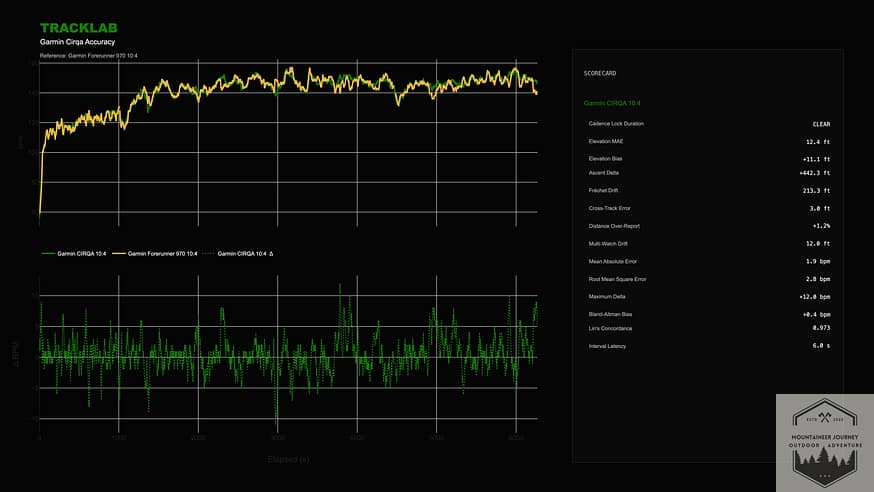
I used my custom TrackLab software to compare time-aligned data between the Garmin Cirqa and the Polar H10. TrackLab syncs the two data streams second by second and computes the metrics you see below, so there is no guesswork involved.
Here is what we found in plain language:
TrackLab Performance Chart
| Metric | Result |
|---|---|
| Cadence Lock Duration | CLEAR |
| Elevation MAE | 12.4 ft |
| Elevation Bias | +11.1 ft |
| Ascent Delta | +442.3 ft |
| Fréchet Drift | 213.3 ft |
| Cross Track Error | 3.0 ft |
| Distance Over Report | +1.2% |
| Multi Watch Drift | 12.0 ft |
| Mean Absolute Error | 1.9 bpm |
| Root Mean Square Error | 2.8 bpm |
| Maximum Delta | +12.0 bpm |
| Bland Altman Bias | +0.4 bpm |
| Lin’s Concordance | 0.973 |
| Interval Latency | 6.0 s |
The Cirqa uses Garmin’s Gen 4 heart rate sensor, which makes sense given the price tag. Compare that to the Gen 5 sensor on the new Garmin Fenix 9, which had a MAE (mean absolute error) of 0.9 BPM compared to the Cirqa’s 1.9 BPM; the difference is clear.
Maximum delta is how much the watch misses compared to the Polar H10. A maximum delta of 12 BPM is substantial and could put you in another heart rate zone. However, one has to remember that the Cirqa is faceless, so you aren’t seeing your heart rate in real time. This is a post-workout tracker unless you pull out your phone mid-workout to check your heart rate.
The 6-second latency interval is acceptable for a Gen 4 heart rate sensor. You can expect this latency during shorter burst-interval runs. When I paced myself at a 5-minute 10K pace, then walked for 2 minutes, a 6-second interval latency was reasonable. However, for someone seeking precise 30-second splits during hill intervals, this latency could be a problem.
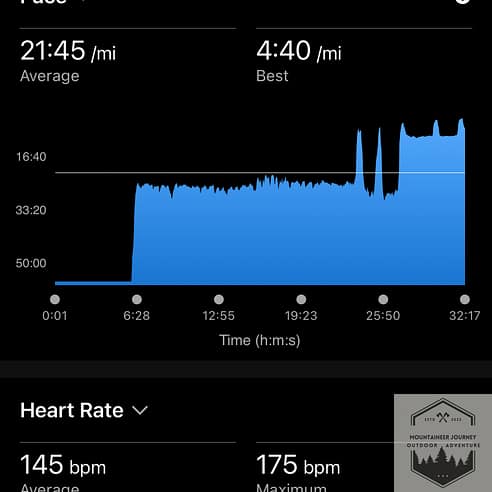
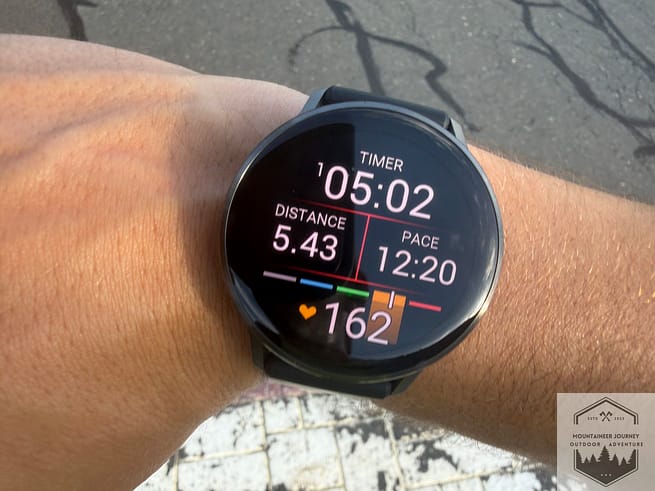
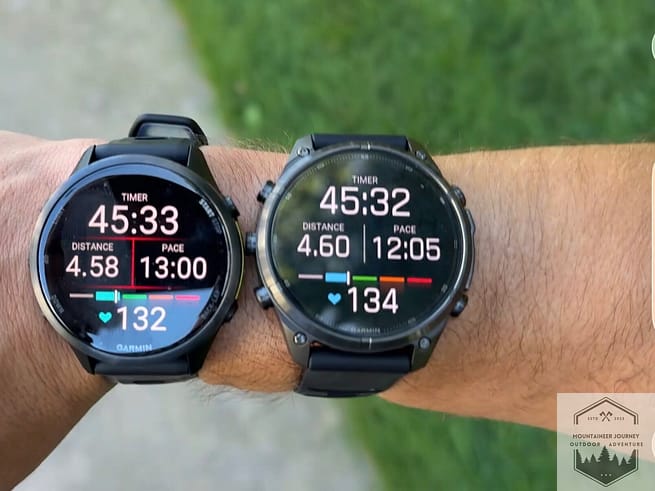
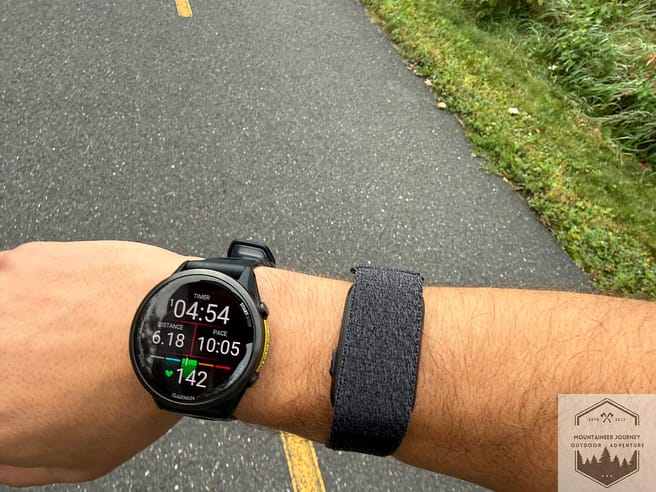
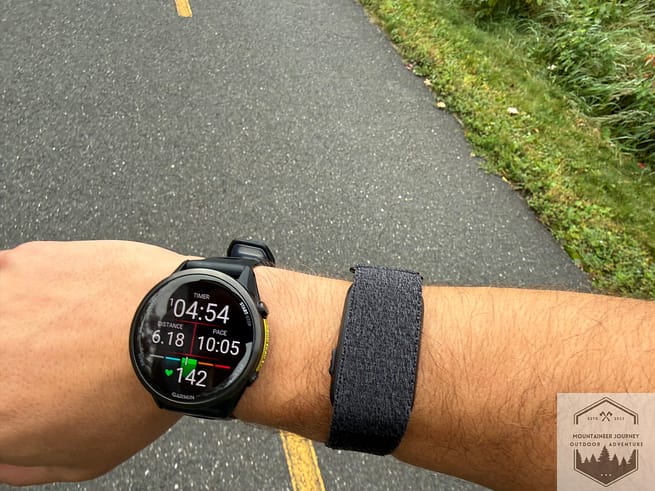
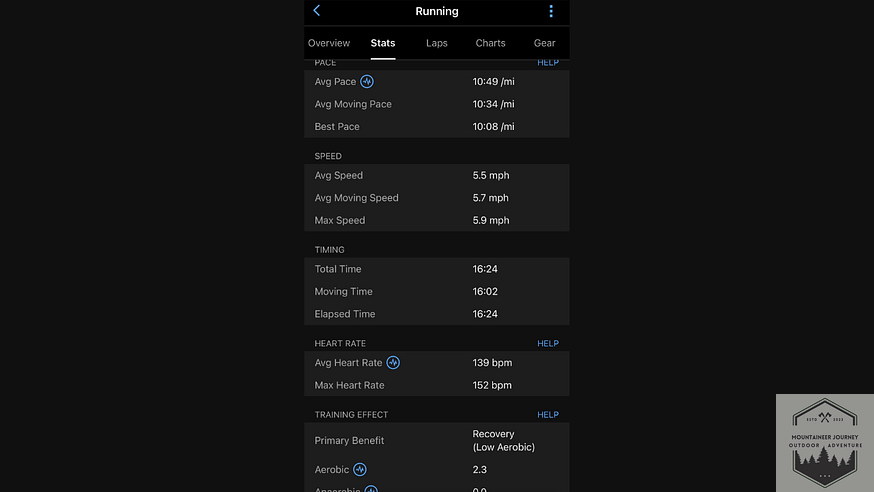
However, one issue comes into play with activity tracking. For example, I compared the Garmin Forerunner 970 while wearing the Cirqa during a regular run. It took 6 minutes for the watch to start recording my run. Looking back at the data, the watch was active during the activity, but it didn’t pick up my pace until 6:05 into the run, which is one of the problems with a faceless watch, since you can’t see the data unless you have your phone out during your workout.
The Garmin Cirqa lacks built-in GPS for outdoor activity tracking. All location, distance, and elevation data comes from a paired Garmin GPS watch or your phone. So we kept the score focused on heart rate accuracy, not GPS or elevation, since we don’t want to falsely compare this data to the device we’re wearing during the activity (like our phone or another Garmin watch).
Overall, the Cirqa’s heart rate accuracy is pretty good for a faceless watch. However, keep in mind the pacing-lock issues I saw on certain activities, where it took a while for the watch to start counting my running cadence.
Accuracy Score: 7/10 (30%)
Battery Life: 20%

Removing the screen gives the Garmin Cirqa a significant edge in battery endurance. Garmin claims up to 10 days of battery life. However, in our real-world testing, we got about 8 days of battery life with continuous wear and 1 to 2 workouts per day.
Compared to other faceless watches, which average 5 to 7 days of battery life, the Cirqa is right there. Recharging is quite fast, too. I charged it from under 20% to full in under 30 minutes, some of the fastest charging times I’ve seen on a watch.
Battery Life Score: 8.5/10 (20%)
Mapping & Navigation: 20%

Anyone wanting turn-by-turn trail directions, topo contours, or breadcrumb backtrack will still be using the watch screen, not the Cirqa band. If you go off grid without a phone or watch, the Cirqa gives you nothing for orientation.
Therefore, given the lack of navigation, that still counts toward the watch’s total score to make our scoring objective across all watches.
Mapping & Navigation Score: 0/10 (20%)
Features & Training: 10%
The Garmin Cirqa’s core features center on 24/7 continuous heart rate monitoring, heart rate variability-based readiness, sleep tracking, and basic activity detection. However, the activity detection is untrustworthy. It can take up to 20 minutes of elevated heart rate for the watch to recognize you’re active. So I always recommend starting the activity on your phone before you begin.
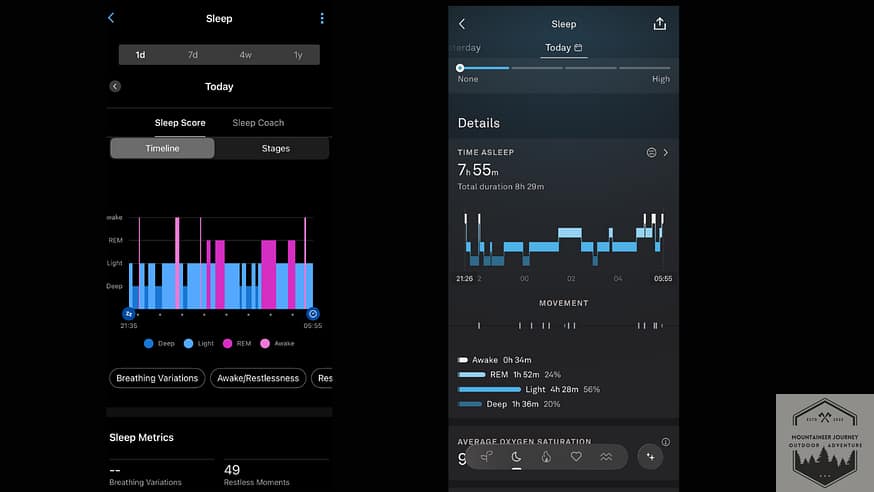
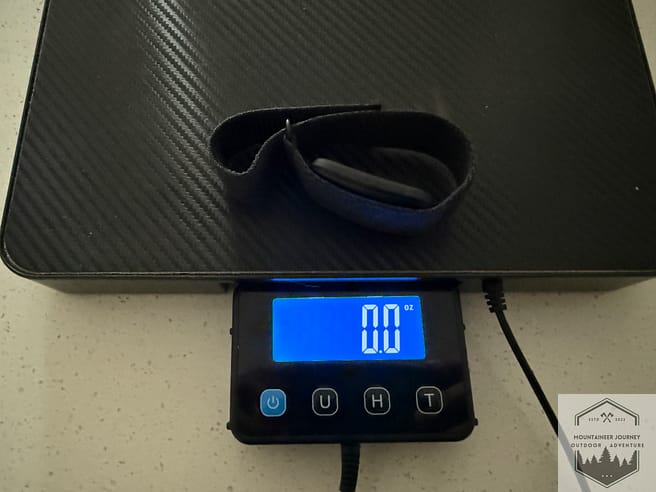
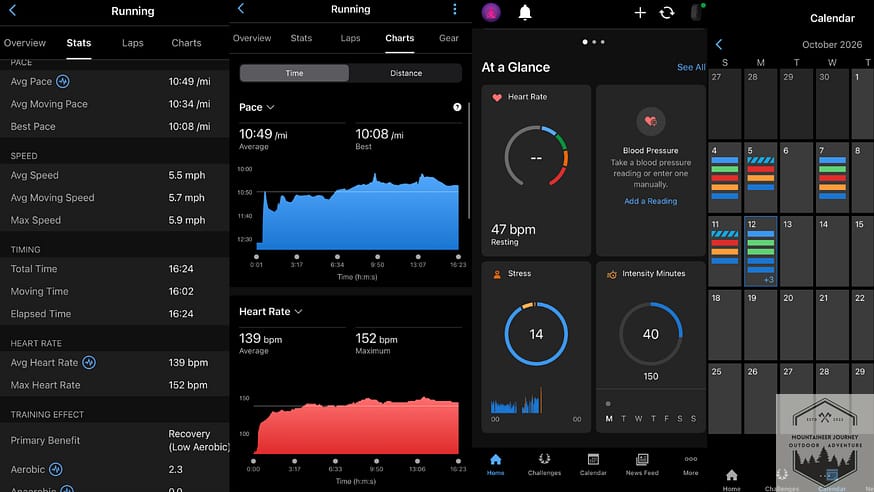
Sleep tracking is where the Cirqa really shines and becomes valuable. I compared my sleep data to my Oura Ring 4 for accuracy. In the picture above, you can see that the Cirqa was within 5 minutes of total sleep time and within 10 minutes of total deep sleep time compared to my Oura Ring. REM sleep was a little off (+25 mins), but overall, the sleep detection time is very accurate, which matters most. Beyond the sleep data, the watch is very small and minimal, weighing less than 20 g, which makes it much easier to sleep in than the bulky Fenix 9 or Enduro 3.
The heart rate variability during sleep was also extremely accurate, within 1ms of my Oura Ring 4 data. Based on the HRV data, the Garmin Cirqa also creates a body battery and a morning readiness score. These scores give you a baseline for energy drained or gained after a great night’s sleep or a hard workout.
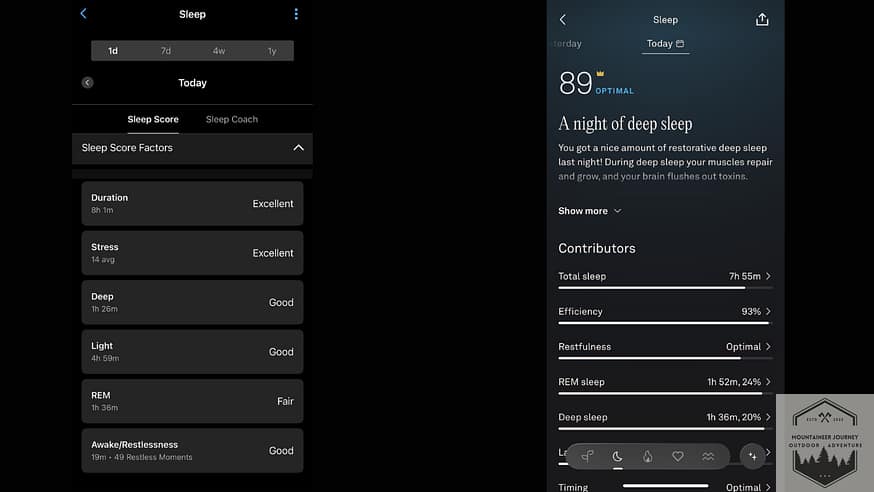
Morning readiness gives you an ideal score on whether to take it easy or push, based on your stress levels as interpreted through your HRV scores. This is nice data. However, anecdotally, I don’t see a strong correlation between my body battery and training readiness scores based on how I feel that day.
Always-on wear gives Garmin Connect a clearer and more complete picture of recovery than wearing a regular watch only during workouts. That is the entire point of this device.
Without a screen, the Cirqa cannot show live pace, distance, or heart rate during workouts. For mid-run data, you need a paired watch or phone. The physical control button lets users manually start or stop activities, but the device offers no visual confirmation, which is annoying because I have to check my phone every time to confirm the activity started.
Activity tracking is lacking because it is blind while you’re moving. For runners or hikers who want pace tracking and heart rate at your fingertips, this device simply doesn’t deliver.
The Cirqa adds value by combining its continuous data with your regular Garmin watch (if you have one), which you may only wear for workouts, not throughout the entire day. Training and recovery metrics improve because you get round-the-clock heart rate and sleep data.
Features and Training Score: 7.0/10 (10%)
Versatility: 10%
For everyday use, the Garmin Cirqa is very compatible. Its main versatility comes from being subtle. It’s lightweight, with a faceless design that reduces extra screen time and blue-light exposure at night.
The lack of standalone value for people who don’t own or don’t want a Garmin watch is real. Without a paired device, you get passive health metrics and sleep data, but no way to explore your workout data in real time. For those users, the Cirqa is a niche tool, not a do-everything wearable.
The best way to describe who the Garmin Cirqa is best for. It’s for those looking for an alternative to a WHOOP or Oura ring with highly accurate heart rate sensing and great sleep tracking. In addition, those who own a Garmin watch can use the Cirqa as a supplemental recovery tool and may find much better value than those who use the Cirqa as a standalone watch.
The Cirqa is incredibly versatile as a secondary device but very limited as an only device. The user who gets the most from it is an existing Garmin owner who often takes their watch off, especially at night, and wants continuous health metrics without the bulk.
Versatility Score: 6.5/10 (10%)
Is The Garmin Cirqa Worth It?
The Garmin Cirqa delivers a focused package at $199 that makes strong sense for two specific types of people: someone who already owns a Garmin watch and wants more focused sleep and recovery data, and someone who wants the Cirqa to replace their WHOOP or Oura ring at a lower price.
Compare that to the Whoop, which charges around $200 annually; Garmin Cirqa is free, with no hidden fees. Garmin has one of the strongest long-term software support records on the market, which makes me more confident they will add more features to the Cirqa over time. The Garmin hardware is built to take a beating, and the durable band materials confirm it’s meant for active use, not just sitting on a shelf.
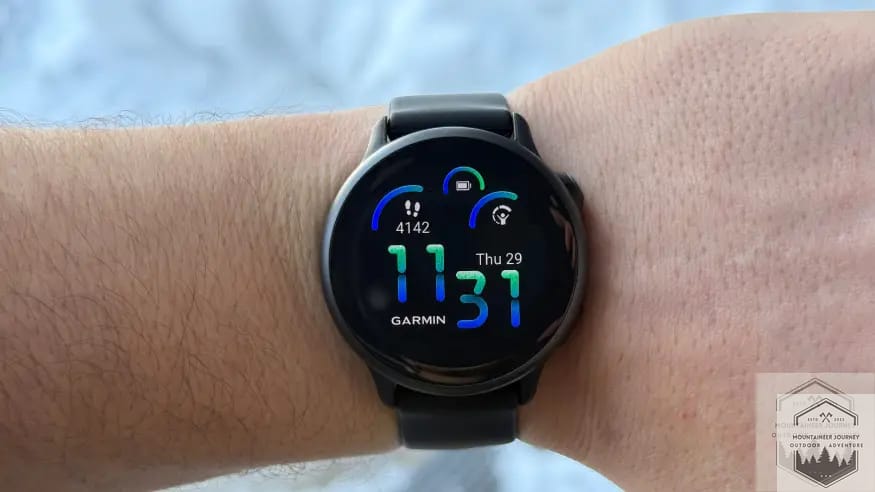
If you are starting from zero devices with no Garmin ecosystem investment, the value drops significantly. At that point, the Garmin Vivoactive 6 is a good choice, with a watch face and improved metrics for $100 more.
The Garmin Forerunner 170 is another good choice for $100 more, with great training metrics, plus breadcrumb GPS and music storage. If you want to invest significantly more, the Garmin Forerunner 970 is our best-rated GPS watch of 2026, with excellent GPS accuracy and top-notch features.
Value Score: 7.5/10 (10%)
Scoring Breakdown
Accuracy (30%): 7/10
Battery Life (20%): 8.5/10
Mapping & Navigation (20%): 0/10
Features & Training (10%): 7/10
Versatility (10%): 6.5/10
Value (10%): 7.5/10
Total Weighted Score:
2.10 + 1.70 + 0.00 + 0.70 + 0.65 + 0.75 = 5.90
Our Rating: 5.9/10
Frequently Asked Questions
Can The Garmin Cirqa Replace A GPS Watch For Hiking?
No. There is no screen, no GPS, and no maps.
How Accurate Is The Garmin Cirqa Compared To A Chest Strap?
In plain terms, the Cirqa averaged less than 2 bpm off from our Polar H10 chest strap across all testing. Occasional spikes reached up to 12 bpm during sudden changes in effort, but overall it matched most efforts very closely.
Is The Garmin Cirqa Comfortable To Sleep With?
Yes. The band’s lightweight design and lack of a screen make it almost invisible during sleep.
How We Tested and Our Methodology

I personally reviewed and tested the Garmin Cirqa myself since its release.
Mountaineer Journey is a 100% independent publisher, and our testing team has spent years evaluating outdoor gear in real-world conditions. We accept no sponsorship, and we earn every score through objective testing.
Over the past decade, I’ve logged more than 3,000 combined hiking, trail running, and road running miles, which gives me the experience to evaluate GPS accuracy, comfort, and long-term performance, not just lab numbers.
Every category core is based on objective testing, not brand claims.
Accuracy Testing
- We compare heart rate accuracy against a Polar H10 chest strap on every outing.
- GPS, heart rate, and elevation data are plugged into our TrackLab coding software, which gives us a full analysis of accuracy regarding the GPS watch versus pre-mapped GPX files, as well as Polar H10 data
- We cross-reference GPS accuracy against a handheld GPS unit and mapped GPX routes we previously verified.
- We evaluate four key areas: heart rate variance, distance error, GPS track quality, and elevation stability.
Battery Testing
- We test real-world battery drain during GPS workouts and during everyday smartwatch mode wear.
- Battery life is scored on three criteria: GPS runtime, battery consistency across workouts, and total smartwatch mode longevity.
Features, Versatility, and Value
- Features include training tools, recovery support, and how well the watch integrates with day-to-day life.
- Versatility covers how well the watch adapts to running, hiking, heading to the gym, or just wearing it on the job.
- Value assesses whether the price is justified, whether you can trust the watch to last, and whether Garmin will still be supporting it years from now.
Battery Testing
- We test real-world battery drain, whether it’s during a GPS workout or when the watch is just sitting on your wrist.
- When we score battery life, we look at three things: how long it lasts on GPS, how consistent the battery is, and how long it lasts in smartwatch mode.
Mapping and Navigation Testing
- We score navigation on capability, not price.
- We evaluate watches without proper navigation on breadcrumb accuracy, back-to-start reliability, and course-following performance on known trails.
- Mapping is also cross-referenced in our TrackLab coding software, where we can determine the total amount of drift and the distance over- or underreported.

Tyler
Tyler is the founder Mountaineer Journey and a professional Mountain Guide with 15+ years of technical experience in trekking, mountaineering, and trail sports. Having logged thousands of miles from rugged alpine summits to urban paths, Tyler provides rigorous, field-tested insights on hiking, walking, and trail running gear. All reviews are 100% unsponsored and unbiased, ensuring you get honest scoring based on real-world performance. His mission is to help outdoor enthusiasts of all levels find reliable equipment that ensures comfort, safety, and performance on any terrain.