Our Score
Garmin Fenix 9 Review | Unsponsored
Our Verdict
The Garmin Fenix 9 is a top-rated GPS watch released on August 28th, 2026. The Fenix 9 is the first watch to have Garmin InReach services as an add-on for an additional $100.
Overall, the Fenix 9 offers solid accuracy, upgraded navigation and mapping, and longer battery life than the Fenix 8. So at $999, the Fenix 9 is a serious investment for those dedicated to advanced training metrics and premium watch capabilities.
The Fenix 9 introduces new training metrics, including stamina zones, and offers a more streamlined customization process to suit your needs. Although it is quite an expensive watch, those who are serious about advanced topographic mapping for extended training goals and long hikes will find it worth the investment based on our testing.
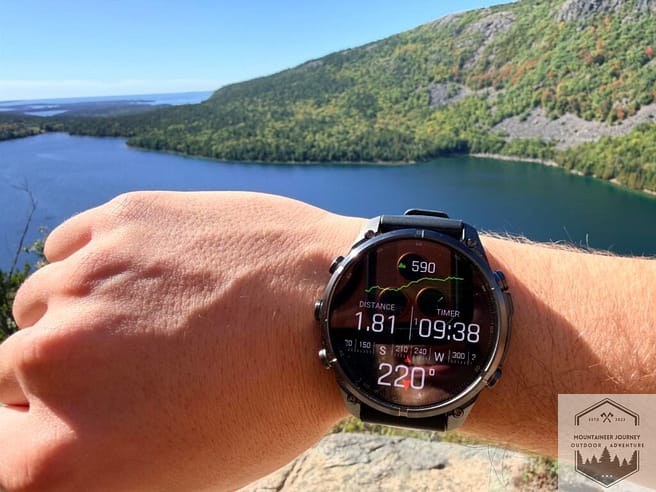
I personally tested the Garmin Fenix 9 while trekking, hiking, and running, as well as on a recent visit to Acadia National Park, so to say I’ve put this watch through real-world testing is an understatement. I also put the Garmin Fenix 9 testing data through our new GPS watch data software, Tracklab. For more on the in-depth software, read here: How We Test Our GPS Watches.
Related: Garmin Forerunner 970 vs Fenix 9
Editor’s Note: We updated this review on 10/5/26 with new testing insights on battery and performance, as well as new pictures after further testing.
Compare Similar Products
| Comparision | Product | Rating | Price |
|---|---|---|---|
 | 8.9 | Check Lowest Price | |
 | 8.5 | Check Lowest PriceRead Review | |
 | 8.3 | Check Lowest PriceRead Review |
Should You Buy the Garmin Fenix 9?
Buy If
- You want premium metrics such as advanced tracking measures (stamina zones, diving metrics, Archery X) currently not available for other watches
- You need accurate topographic GPS mapping that’s easier to navigate than the Fenix 8
- You want the only GPS currently on the market that has Garmin InReach technology for off-grid tracking and safety
- You want premium battery life with better dynamic battery modes to increase watch use time
Don’t Buy If
- You need LTE standalone connectivity
- You need basic running and workout features without advanced metrics such as stamina zones
- You don’t need full topographic mapping
- You don’t want to pay a premium price for a GPS watch (cheapest version is $999)
Garmin Fenix 9 Pros and Cons
Pros
- Excellent topographic mapping accuracy
- Gen 5 heart rate sensor
- Brighter screen than Fenix 8
- Battery life
Cons
- Requires chest strap for best running metrics
- High Cost
- Bulkier Watch Face
Garmin Fenix 9 Price
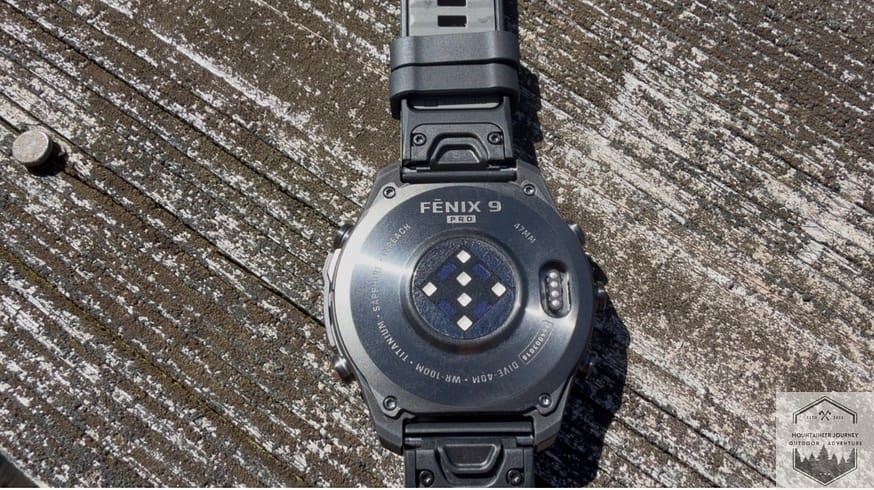
The Garmin Fenix 9, the cheapest watch, costs $999 (the 43mm version with no inReach). The most expensive version (51mm watch face, solar, and inReach) costs $1,299. The version that was tested for this review is the Fenix 9 Pro with InReach technology and a 47mm watch face.
For advanced running features, you’ll need an additional $169 Garmin HRM chest strap for running economy and step-speed loss metrics.
Accuracy: 30%

| Metric | Garmin Fenix 9 vs Polar H10 |
| Cadence Lock Duration | LOCKED – 93s |
| Fréchet Drift | 5.5 m |
| Cross-Track Error | N/A |
| Distance Over-Report | -0.7% |
| Multi-Watch Drift | 6.4 m |
| Mean Absolute Error | 0.9 bpm |
| Root Mean Square Error | 2.2 bpm |
| Maximum Delta | -27.1 bpm |
| Bland-Altman Bias | -0.2 bpm |
| Lin’s Concordance | 0.992 |
| Interval Latency | 13.0 s |
To keep our scoring objective, we compare heart rate data from our Polar H10 chest strap with the Garmin Fenix 9 during every test, and we compile it in our Tracklab custom comparison table.
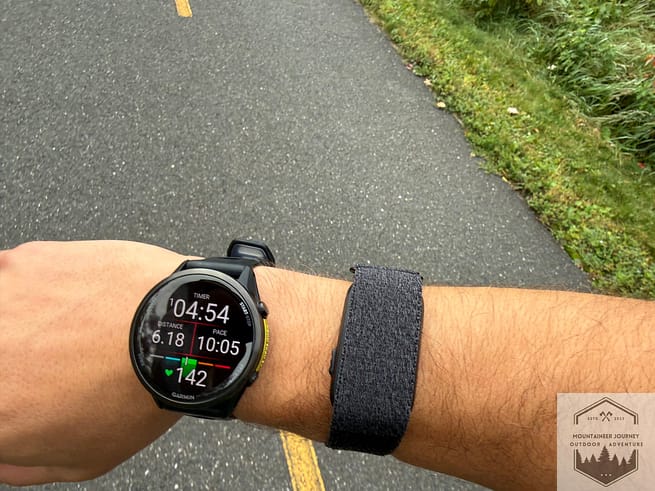
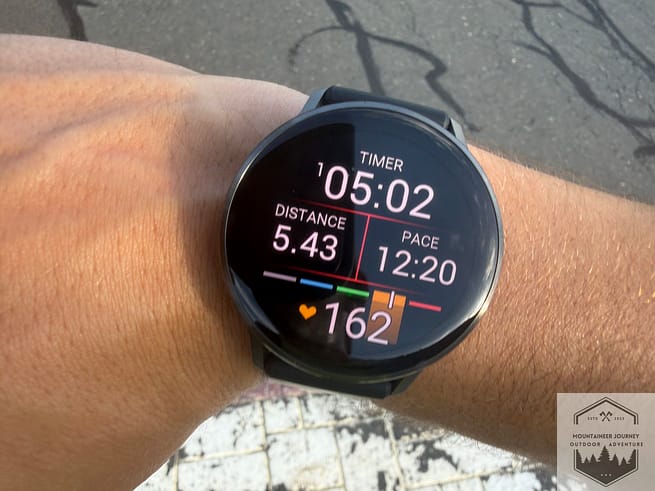
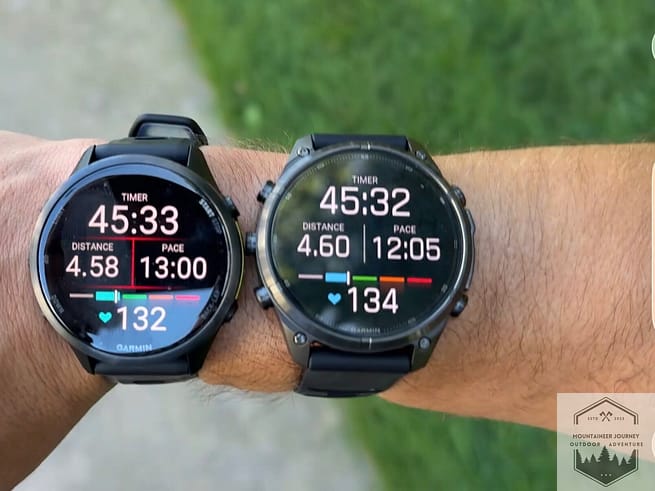
During all my long runs and hikes, the wrist heart rate sensor readings were found within 1-2 bpm of the Polar H10 chest strap. This makes sense because I saw the same with the Garmin Forerunner 970, which uses the same Gen 5 heart rate sensor.
I’ve noticed other Garmin watches have inaccurate heart rate readings for the first 10 minutes of my long runs, with the heart rate completely off (up to 30 bpm), and they take a few minutes to recalibrate before returning to an accurate reading. This hasn’t happened so far while testing the Fenix 9.
The Fenix 9 has some of the best accurate GPS testing scores we have given to a watch. I had previously downloaded GPX maps of the courses to the watch before beginning my hike and/or long run.
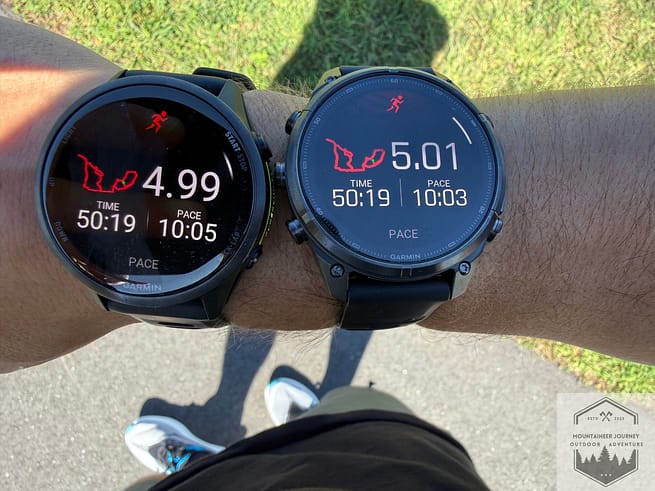
Doing a 6-mile interval run. As you can see in the chart above, the Fenix 9 only had a 5.5 M(or 18 feet) total drift compared to the previous routed GPX. This is extremely accurate for post-workout analysis and route accuracy during use. The off-road alerts were quick and snappy. Just 5-10 ft off the hiking course triggered an off-route alert.

Step speed loss and running economy are advanced training metrics that can help tune up your running game; however, they require the $170 Garmin HRM chest strap.
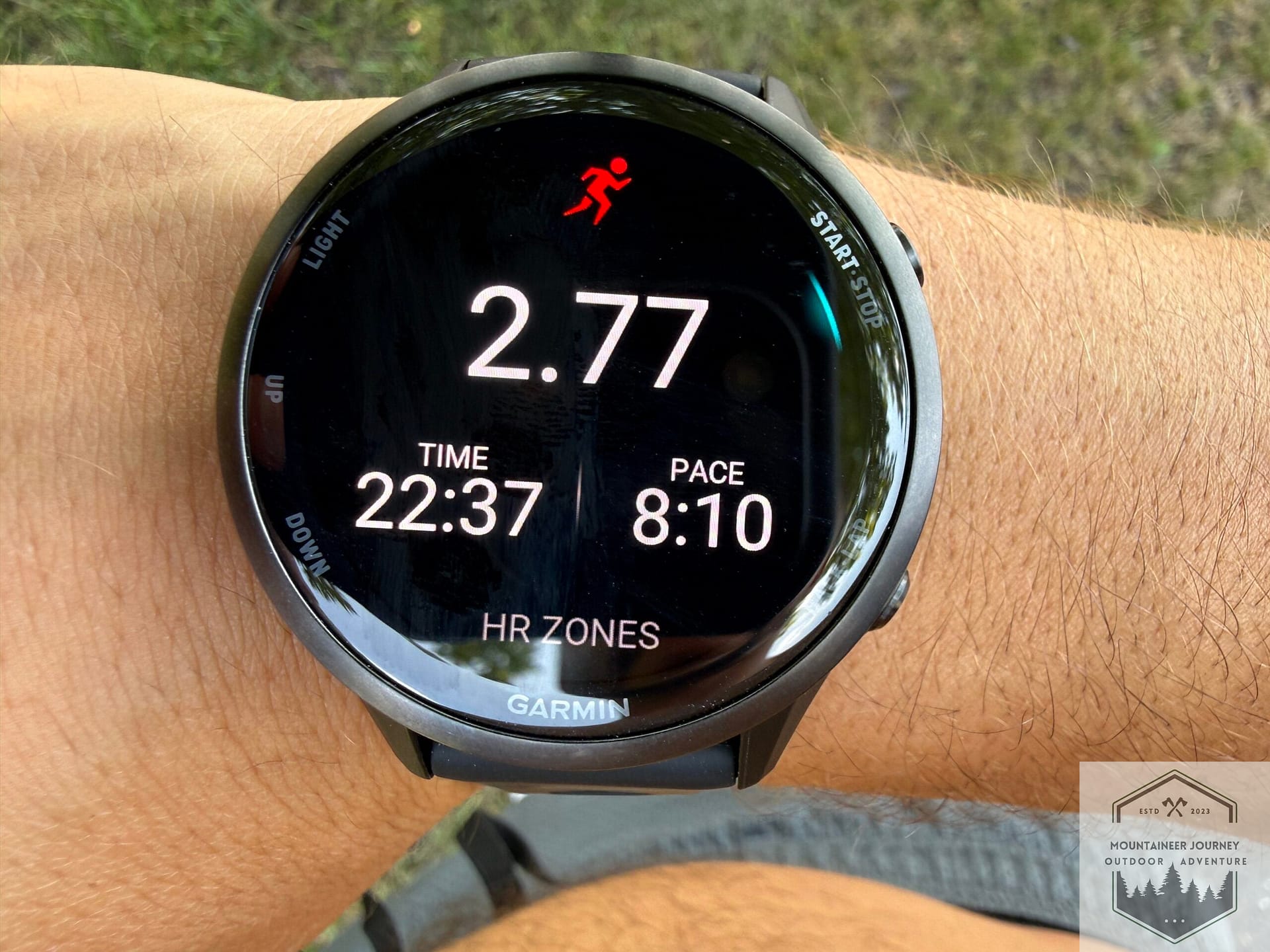
Pace tracking was highly accurate during my running sessions. In speed workouts involving interval training, once my speed increased, the Fenix 9 accurately reflected my pacing intervals. In comparison, the Apple Watch Ultra 3, worn on my other wrist, lagged by approximately 3 to 5 seconds before matching the correct pacing.
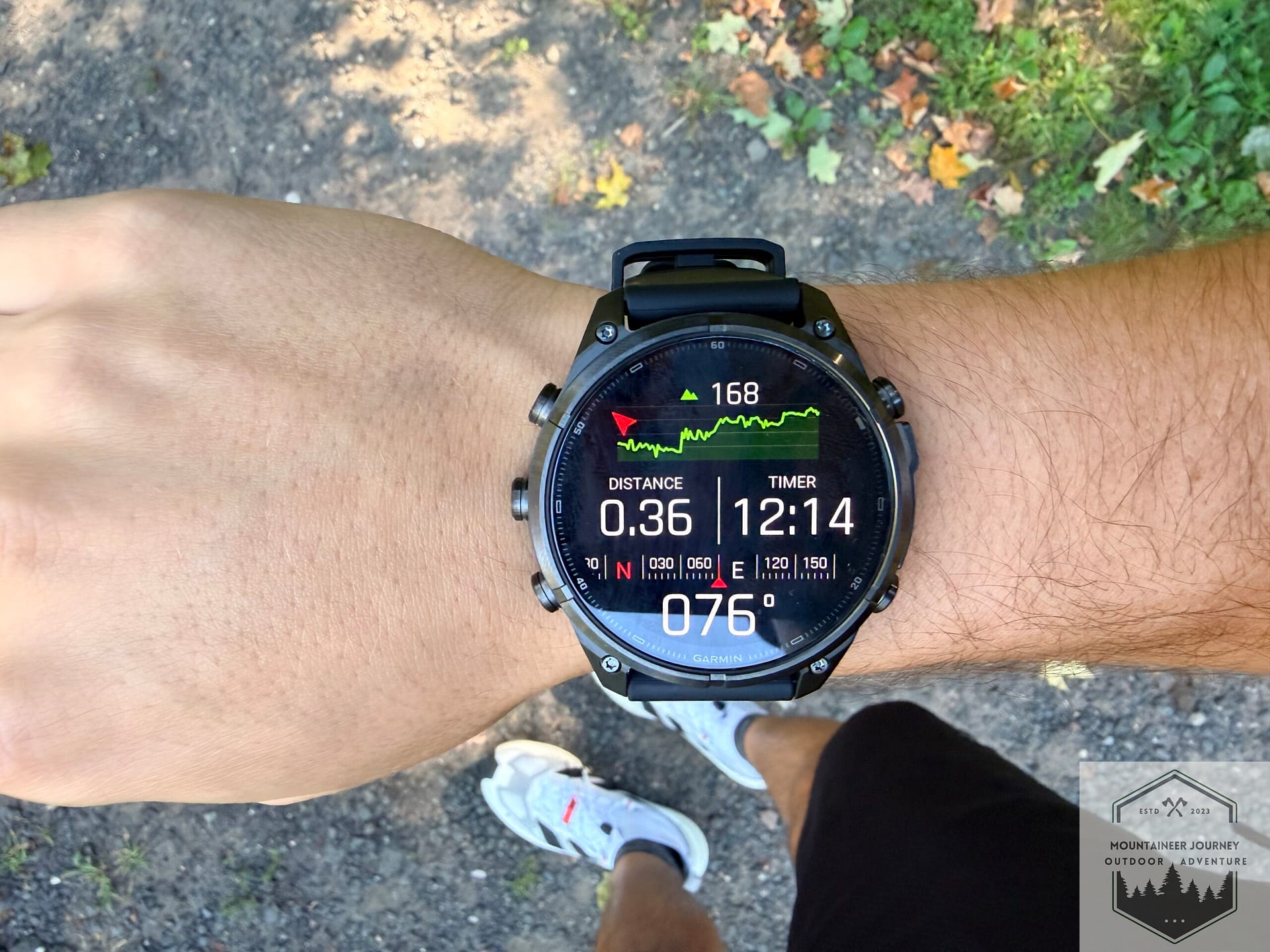
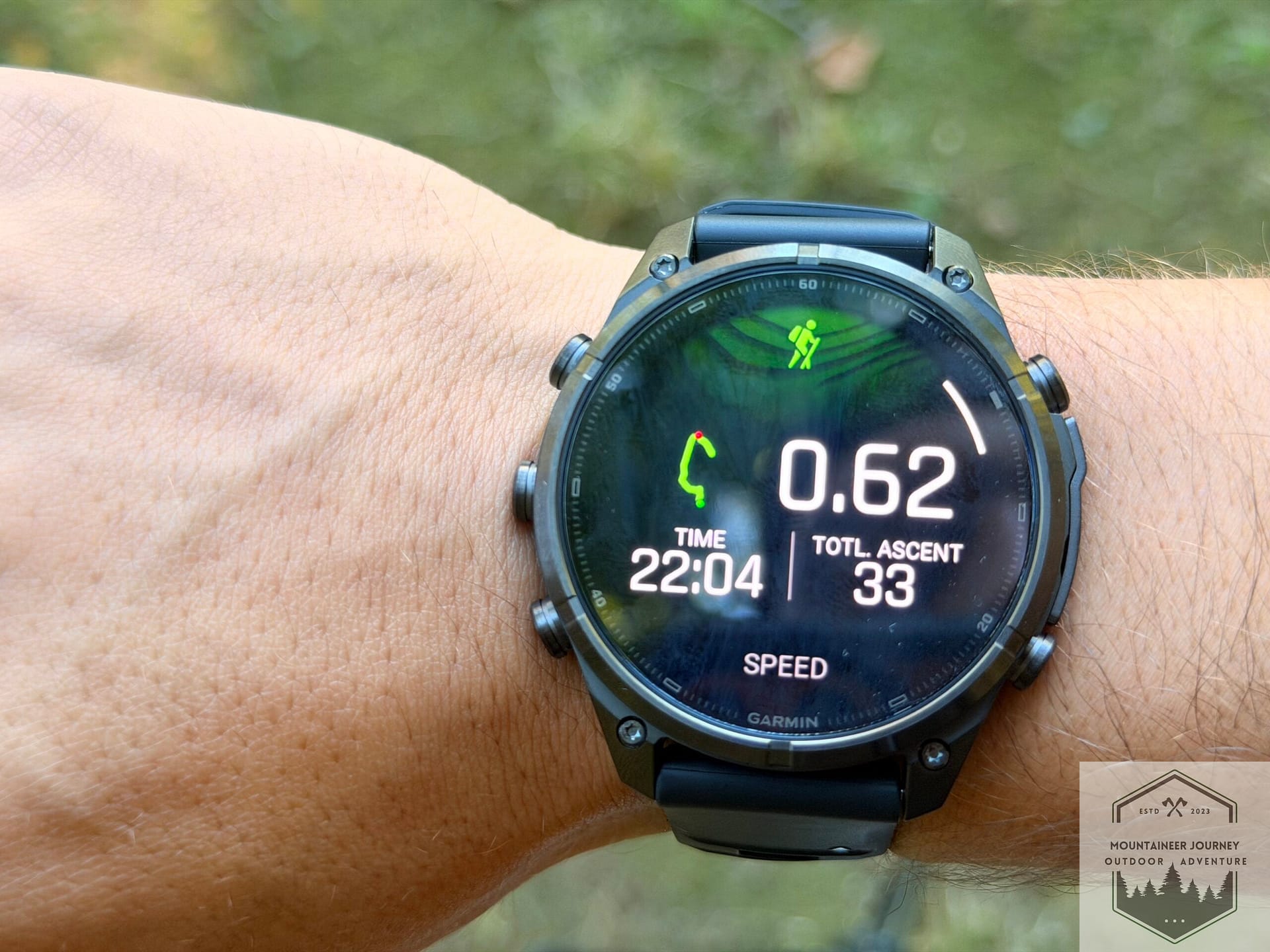
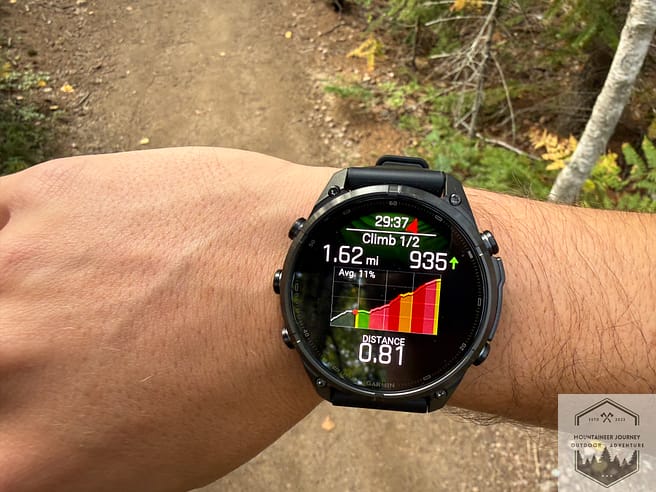
The elevation tracking was accurate, consistent with the previous iteration. ClimbPro proved an effective tool during hiking sessions, providing essential information on the elevation covered and the elevation yet to come.
The device’s accuracy matches that of the Garmin Fenix 8, as expected given the identical tracking features and use of the Gen 5 heart rate sensor. For those seeking the most current and precise measurements of heart rate, pace, and GPS accuracy, the Fenix 9 is the superior option.
Accuracy Score: 9/10 (30%)
Battery Life: 20%
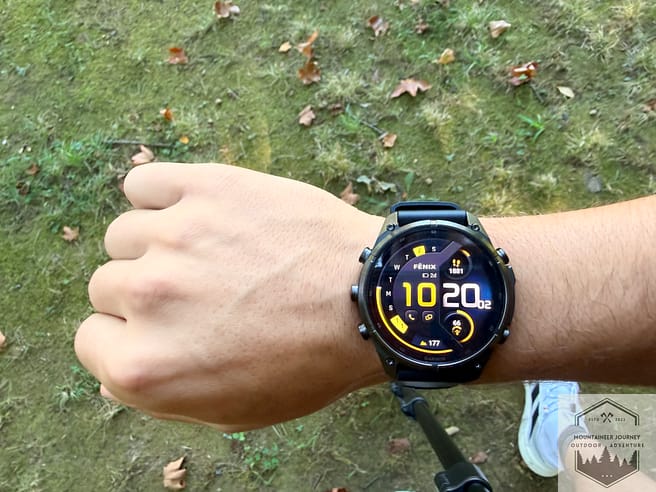
Smartwatch-only mode. I was getting close to 13 days of battery life with the brightness turned down, but you aren’t buying the watch to keep it in smartwatch-only mode.
With 1-2 GPS workouts per day with Always-On display, I got around 6 days of full battery life. This was on Activity Mode (Max Accuracy). Lowering the brightness also saves battery life.
Garmin added dynamic modes to the Fenix watch to improve battery life and streamline the process. You have Activity Mode (Max accuracy), which gives you the best possible accuracy, but the lowest battery life. Activity Mode (Normal) is the best option for those who want to balance accuracy and battery life.
There is also an Activity Mode (Max Battery). While testing this with 1-2 GPS workouts per day, the battery life dropped to 3 days total.
Charging from under 20% to full took me about 85 minutes total with the charger supplied by Garmin.
We haven’t been able to test every single one of Garmin’s battery profiles, and we’ll continue to test and update this review as needed. However, based on the data we have so far, battery life is better than the Fenix 8.
Battery Life Score: 8.5/10 (20%)
Mapping & Navigation: 20%
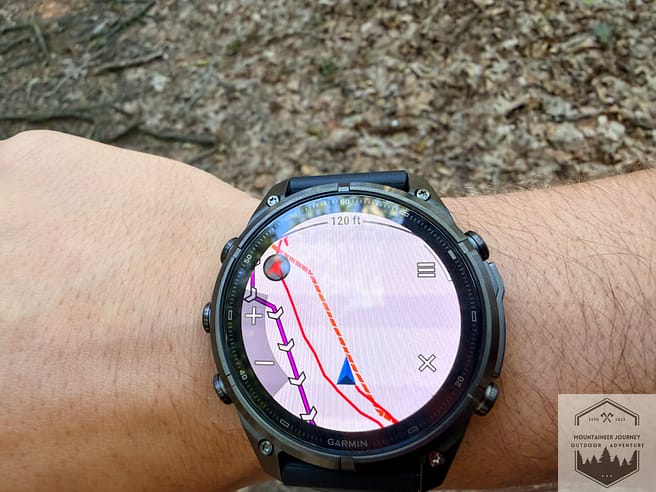
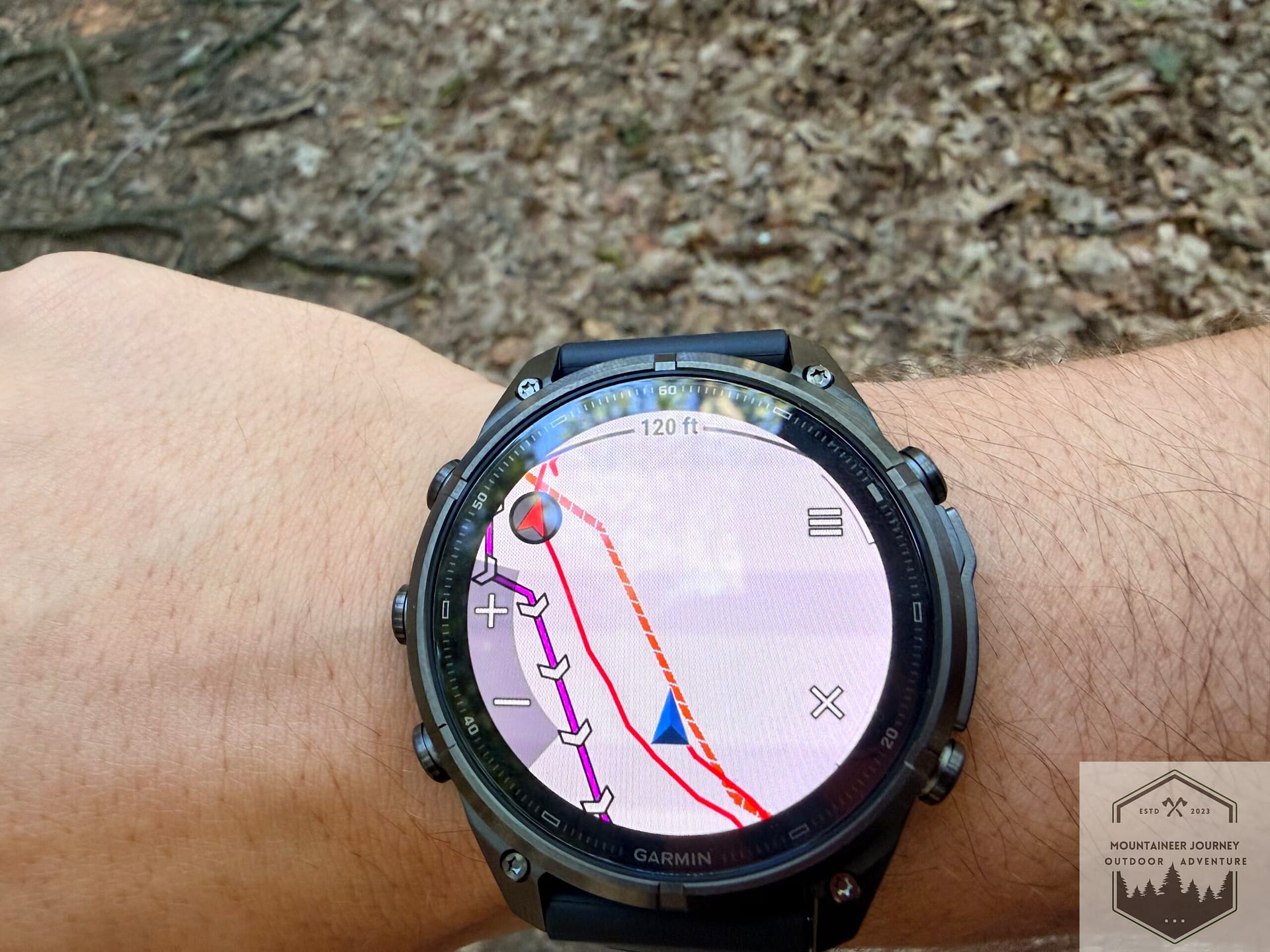
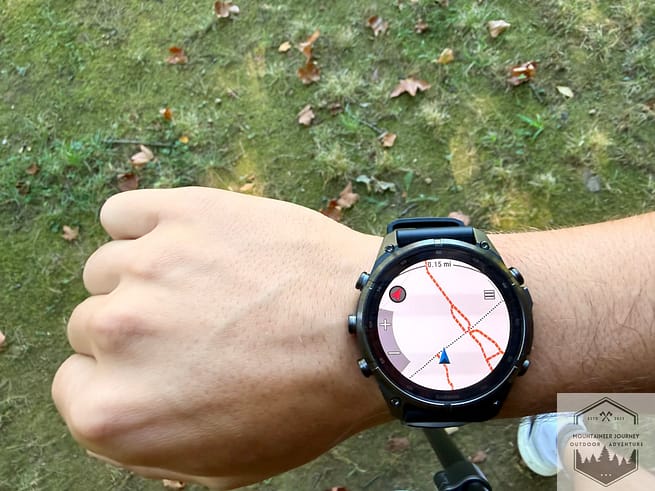
Using the topographic maps, I found it much easier to pan and zoom compared to the Fenix 8, which took an extremely long time to load. Although the topographic maps were still somewhat clunky to pan and zoom, they remained usable without causing frustration.
I tested a previously verified GPX map for a 12-mile run; the turn-by-turn navigation was spot on. One quirky aspect I found was that the off-route alerts were a little delayed, but the back-to-start navigation was very accurate.
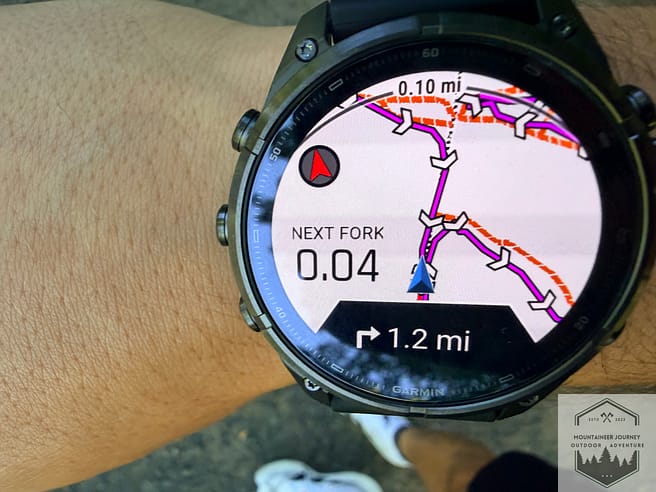
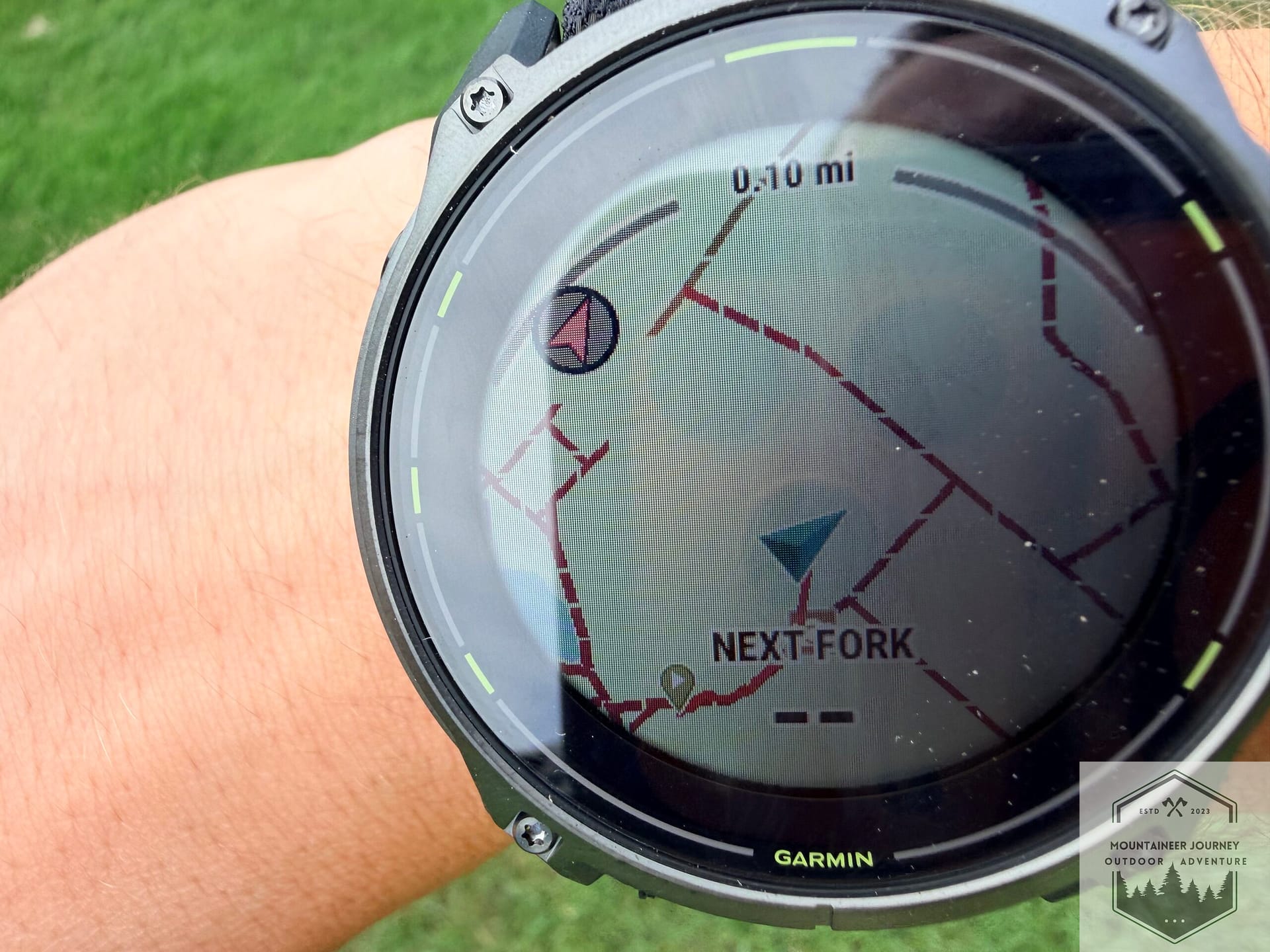
The next-fork navigation was also extremely accurate during my hiking testing; even with multiple turns within .02 miles of each other, it recognized the correct turn and kept us on the right trail.
You can download the Outdoors+ subscription for further metrics like satellite imagery and boundaries. These overlays add real value for hikers who want to visualize terrain features and land access before committing to a route.
For multisport athletes who rely on complex navigation tasks, the Fenix 9 has some of the best navigation available. While panning and zooming are still clunky like the Fenix 8, most of the experience is smooth.
Mapping & Navigation Score: 9/10 (20%)
Features & Training: 10%
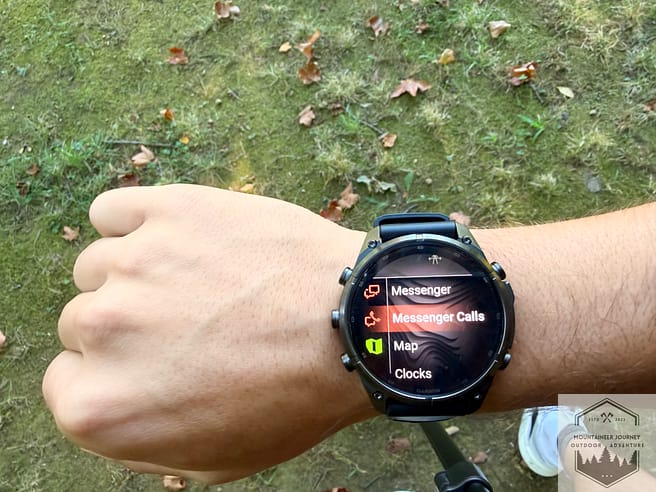
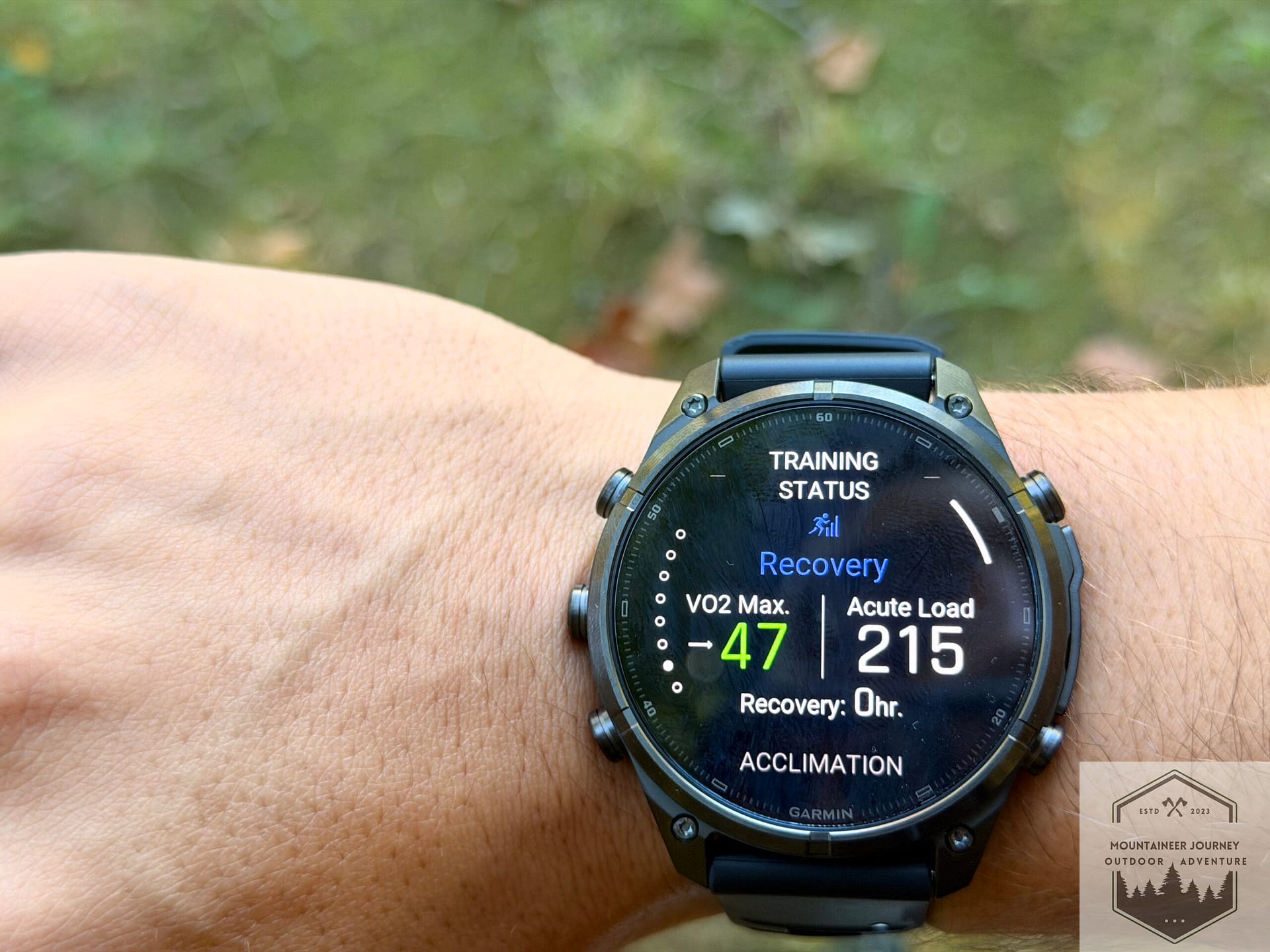
I have tested many Garmin watches over the years, and they seem to add new training metrics with each iteration. The newest is stamina zones. Stamina zones are calculated based on your best efforts and how long you can hold that intensity.
The stamina curve gives you an idea of how long you can hold your current effort based on previous training performances. One helpful use is predicting how long you can hold a pace during a race. For example, based on my training, the stamina zones show me how long I can hold my 8:15 running pace before I start to burn out.
The Fenix 9 has the same running metrics as previous premium devices, such as running tolerance and impact load. Running tolerance gives you an overall picture of the intensity and miles you’ve been putting in and how much more you should be expected to give. This feature is especially helpful for anyone training for a race.
Client Pro is useful, especially for hikes and trail runs. It gives you the percentage gradient and distance during climbs. This is useful for those looking to keep pace intervals in check while gaining elevation.
The Fenix 9 Pro is currently the only GPS watch that offers the option to add Garmin InReach. InReach used to be available only on Garmin’s satellite communicators. However, this is the first watch Garmin has introduced with InReach technology.
InReach requires a monthly subscription and a $100 add-on to the Fenix 9. InReach enables satellite messaging and emergency SOS contact (no phone connection required).
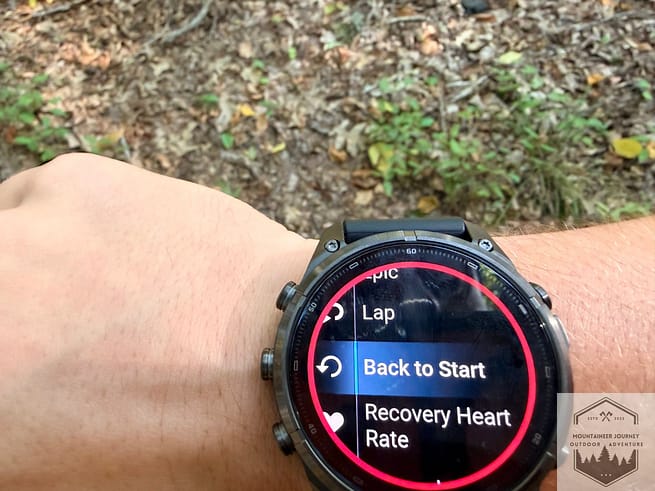
This is a major upgrade for backcountry hikers who don’t want to spend an additional $300-400 on a satellite communicator. It also enables live tracking so you can send updates to family and friends.
Without going into major detail on every single feature that the Fenix 9 offers, just know that it offers every single feature other premium watches have, such as the Forerunner 970.
The key differentiator between the Fenix 9 and other premium Garmin GPS watches is not the features themselves (other than the new InReach). It’s rather the battery, advanced mapping, and possibility of adding InReach.
Features & Training Score: 8.5/10 (10%)
Versatility: 10%
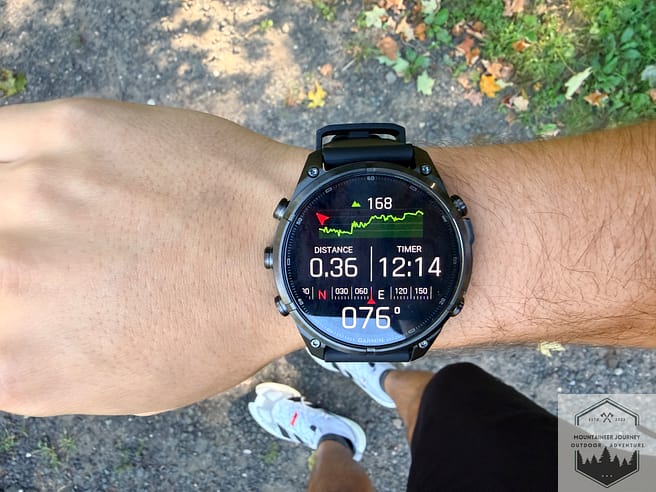
For multisport and everyday use, the Fenix 9 Pro comes out on top for versatility.
The screen is much brighter than the previous Fenix 8 and offers better everyday versatility than bulkier options like the Enduro 3 (Garmin claims up to 3,000 Nits).
Compared to other GPS watches, it blows the Apple Watch Ultra 3 out of the water on battery life. Right now, it has the longest battery life of any GPS watch we have tested, excluding the solar-charged ones.
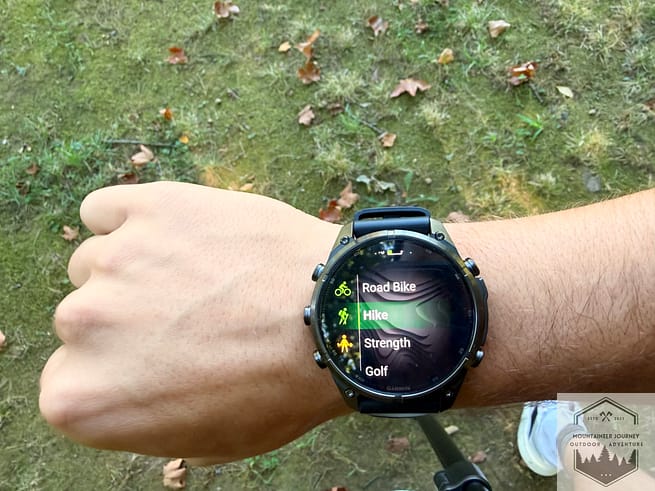
Setting up Spotify, Strava, and Garmin Pay was easy and user-friendly. Changing glances and the data screens on the Activities tab is quick and useful.
You can change almost anything on the Fenix 9 to suit your style without making it overly complicated. Overall, this is one of the most customizable GPS watches on the market, making it easy for on-the-go and everyday use.
For everyday use, this watch is more on the bulkier side, especially with the 47 mm watch face we tested. Sleeping with it at night can be cumbersome and annoying because of how long and bulky the face is. However, that is one of the bigger trade-offs for the number of features this watch carries.
Versatility Score: 9/10 (10%)
Is The Garmin Fenix 9 Worth It?
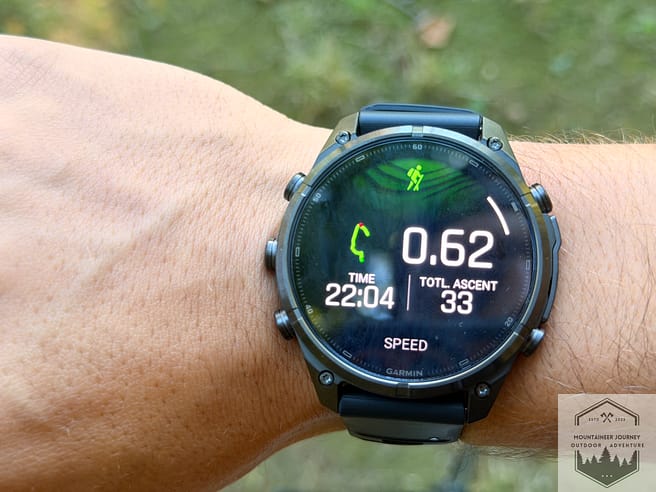
The Fenix 9 starts at $999, but you can go up to $1,299 by adding Garmin InReach and the 51 mm watch face. For this review, we tested the Fenix 9 Pro 47 mm with Garmin InReach, which costs $1,199. The question is whether this price tag is actually worth it.
The Garmin Fenix 9 is definitely worth it if you are the right type of person for this watch. If you are a performance-driven athlete and want the most up-to-date analytics and accurate GPS, the Fenix 9 Pro should be at the top of your list.
Currently, this is the only Garmin GPS watch with inReach connectivity, for an additional $100 (including the monthly subscription), rather than the InReach Minis, which can cost upwards of $399.
This watch is designed for users who prioritize long battery life and for backcountry adventurers who depend on accurate GPS for extended day hikes or multi-day trips. Despite these features, it is still suitable for everyday wear since it is significantly less bulky than the Fenix 8.
If you still want topographic mapping but aren’t ready to pay the premium price tag, check out the Garmin Forerunner 970, which still includes topographic maps and accurate GPS. For longer battery life, check out the Garmin Enduro 3, which is solar-powered and lasts up to 320 hours in ideal sunlight.
Overall, the Garmin Fenix 9 is one of our top-rated GPS watches of 2026; just be sure you’re using the watch to its full extent, and it is well worth its price tag.
Value Score: 9/10 (10%)
Scoring Breakdown
Accuracy (30%): 9/10
Battery Life (20%): 8.5/10
Mapping & Navigation (20%): 9/10
Features & Training (10%): 9/10
Versatility (10%): 9/10
Value (10%): 9/10
Total Weighted Score:
2.70 + 1.70 + 1.80 + 0.90 + 0.90 + 0.90 = 8.90
Our Rating: 8.9/10
How We Tested and Our Methodology
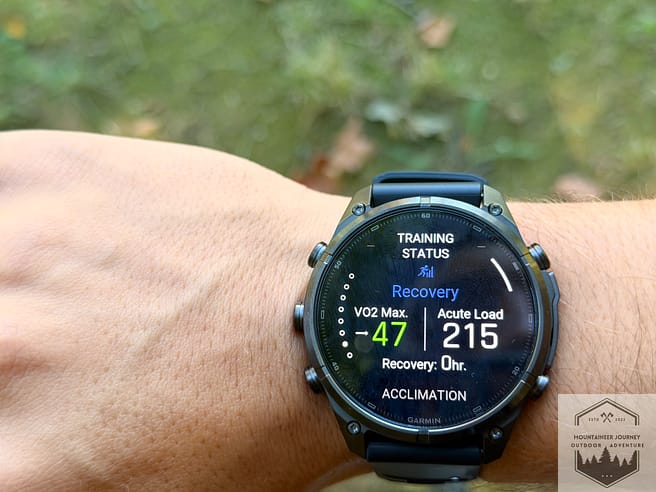
I personally continue to test the Garmin Fenix 9 Pro to give you the most accurate details and testing results.
Mountaineer Journey is a 100% independent publisher, and our testing team has spent years evaluating outdoor gear in real-world conditions. We accept no sponsorship, and we earn every score through objective testing.
Over the past decade, I’ve logged more than 3,000 combined hiking, trail running, and road running miles, which gives me the experience to evaluate GPS accuracy, comfort, and long-term performance, not just lab numbers.
Every category score is based on objective testing, not brand claims.
Accuracy Testing
- We compare heart rate accuracy against a Polar H10 chest strap on every outing.
- GPS, heart rate, and elevation data are plugged into our TrackLab coding software, which gives us a full analysis of accuracy regarding the GPS watch versus pre-mapped GPX files, as well as Polar H10 data
- We cross-reference GPS accuracy against a handheld GPS unit and mapped GPX routes we previously verified.
- We evaluate four key areas: heart rate variance, distance error, GPS track quality, and elevation stability.
Battery Testing
- We test real-world battery drain during GPS workouts and during everyday smartwatch mode wear.
- Battery life is scored on three criteria: GPS runtime, battery consistency across workouts, and total smartwatch mode longevity.
Features, Versatility, and Value
- Features include training tools, recovery support, and how well the watch integrates with day-to-day life.
- Versatility covers how well the watch adapts to running, hiking, heading to the gym, or just wearing it on the job.
- Value assesses whether the price is justified, whether you can trust the watch to last, and whether Garmin will still be supporting it years from now.
Battery Testing
- We test real-world battery drain, whether it’s during a GPS workout or when the watch is just sitting on your wrist.
- When we score battery life, we’re looking at three things: how long it lasts on GPS, how consistent the battery is, and how long the watch lasts in smartwatch mode.
Mapping and Navigation Testing
- We score navigation on capability, not price.
- We evaluate watches without proper navigation on breadcrumb accuracy, back-to-start reliability, and course-following performance on known trails.
- Mapping is also cross-referenced in our TrackLab coding software, where we can determine the total amount of drift, distance over- or underreported.

Tyler
Tyler is the founder Mountaineer Journey and a professional Mountain Guide with 15+ years of technical experience in trekking, mountaineering, and trail sports. Having logged thousands of miles from rugged alpine summits to urban paths, Tyler provides rigorous, field-tested insights on hiking, walking, and trail running gear. All reviews are 100% unsponsored and unbiased, ensuring you get honest scoring based on real-world performance. His mission is to help outdoor enthusiasts of all levels find reliable equipment that ensures comfort, safety, and performance on any terrain.