Our Score
Garmin Enduro 3 Review | Unsponsored
The Garmin Enduro 3 is the ultimate choice for endurance athletes, thru-hikers, and outdoor adventurers who demand the longest possible GPS battery life without sacrificing core navigation and fitness features.
With its lightweight 63-gram titanium bezel and large 51mm display, it offers exceptional comfort for extended wear despite its size. The watch excels in dual-frequency multiband GPS accuracy enhanced by SatIQ technology, making it reliable for outdoor adventures. Solar charging significantly extends battery life during outdoor activities, delivering up to 320 hours of GPS tracking under ideal sunlight. If you want most of the powerful features of the Fenix 8 series at a substantially lower price, the Enduro 3 is an excellent value.
However, this watch is not suited for those seeking a compact or professional everyday watch under 47mm, users who want speaker and microphone capabilities for calls or voice commands, or those preferring the brightest AMOLED display over a memory-in-pixel screen
The Enduro 3 is a rugged, feature-rich, and battery-optimized GPS watch tailored for serious outdoor enthusiasts and athletes who value performance and endurance over everyday smartwatch flair.
Should You Buy the Garmin Enduro 3?

Buy If
- You want premium training metrics like running tolerance and running economy for serious running performance
- You need accurate topographic GPS mapping that’s easier to navigate than the Fenix 8
- You prioritize 5 to 6 day battery life with always-on display and daily GPS workouts
- You value voice feedback features for weather and activity queries
- You want the latest Gen 5 heart rate sensor accuracy for training
Don’t Buy If
- You need LTE standalone connectivity
- You’re budget conscious, as this watch requires an additional chest strap for key features like running economy
- You want ultra-endurance battery life exceeding 20 hours in multi-band GPS mode
- You prefer simple fitness tracking without advanced new metrics
- You don’t need topographic mapping and would prefer a simpler running watch
Compare Similar Products
| Comparision | Product | Rating | Price |
|---|---|---|---|
 | 8.3 | Check Lowest Price | |
 | 8.5 | Check Lowest PriceRead Review | |
 | 7.8 | Check LOWEST PriceRead Review |
Garmin Enduro 3 Pros and Cons
Pros
- Best battery life across all GPS modes
- Solar charging efficiency doubled over Enduro 2
- Built-in LED flashlight with multiple modes
- Dual-frequency multiband GPS with SatIQ accuracy
Cons
- Large 51mm case not suited for smaller wrists
- MIP display harder to read than AMOLED watches
- Premium pricing at $899.99
- No speaker, microphone, or dive features
Garmin Enduro 3 Price
The Garmin Enduro 3 costs $899.99, approximately $300 less than the current Fenix 8 Solar.
Accuracy: 30%
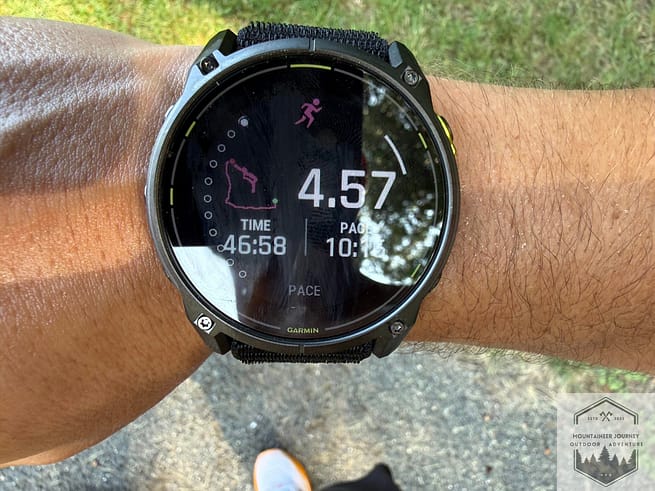
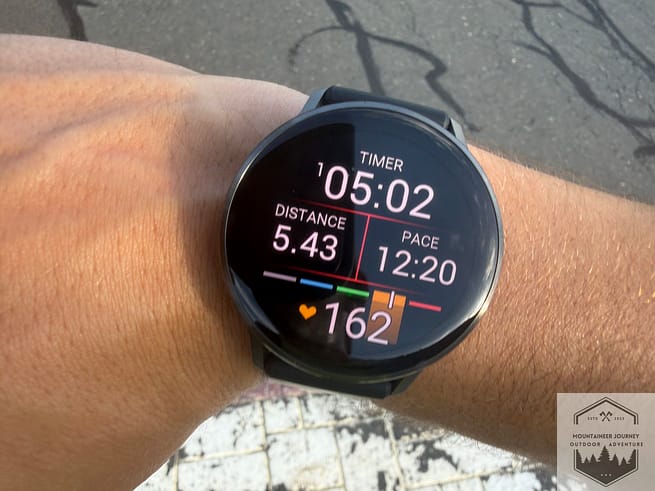
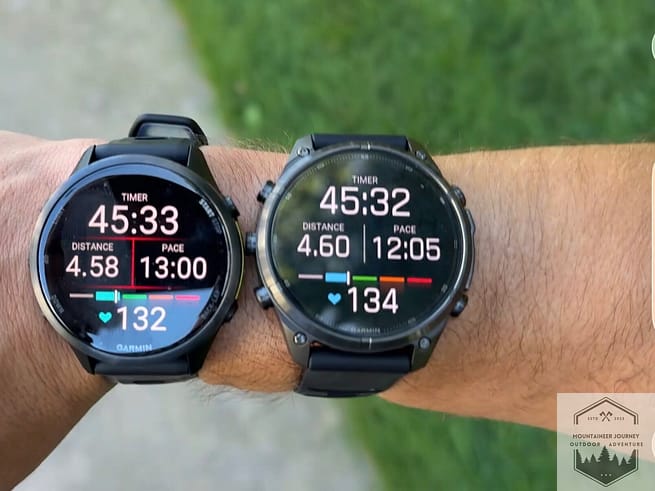
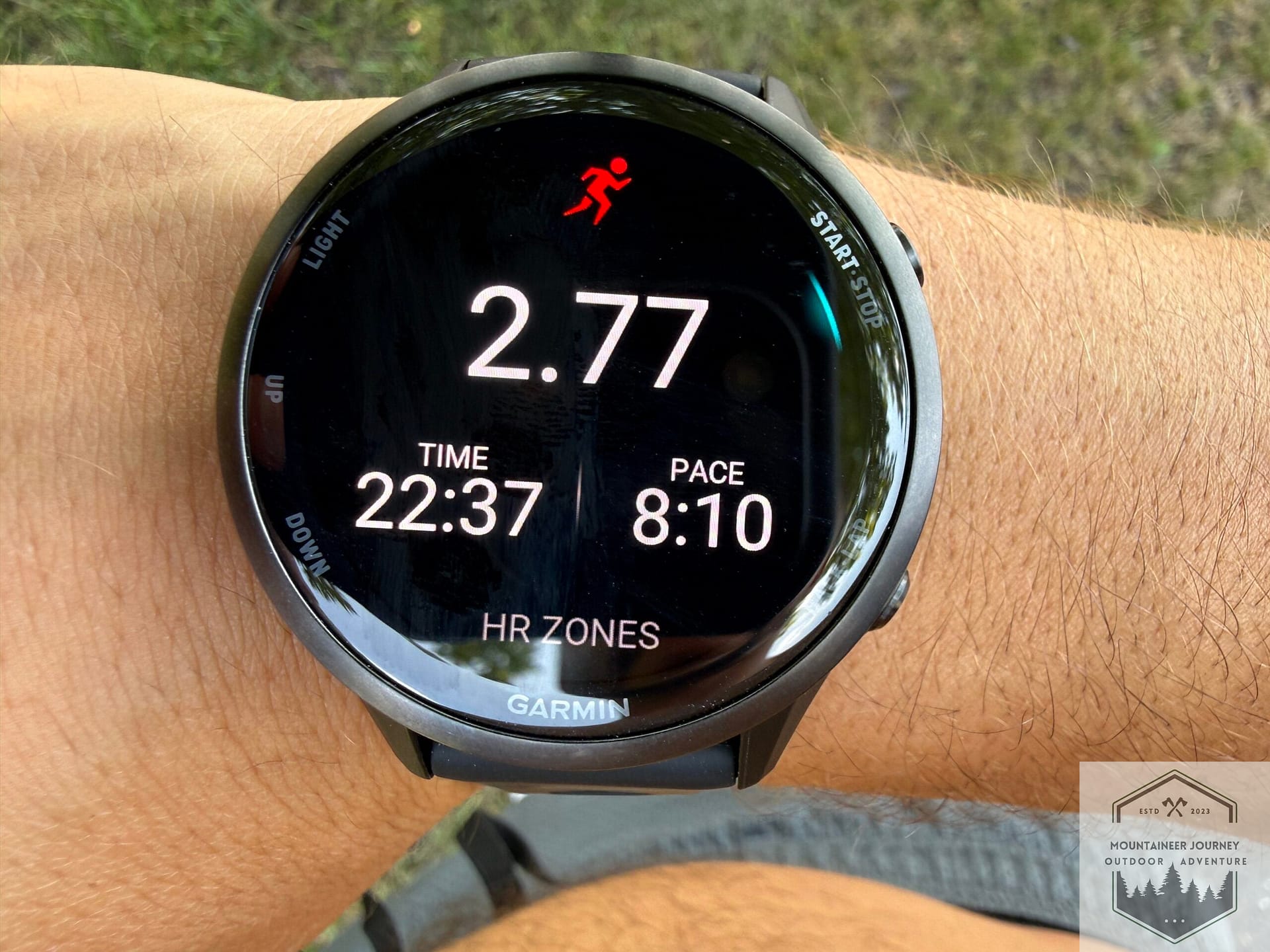
When comparing my heart rate data with the Polar 10 chest strap, the Enduro 3 was within 3-4 beats per minute of the chest strap. When I switched to interval running, there was a 3-5-second lag on the Enduro 3 when I was switching heart rate zones. This watch includes the higher-end Gen 5 sensor, unlike the other lower-end watches Garmin features, like the Forerunner 170.
Enduro 3 uses dual-frequency and MULTI GNSS for better accuracy, pulling from GPS, GLONASS, Galileo, and other satellite systems simultaneously. During testing, the Enduro 3 is accurate to within 0.03 miles over 3.5 miles, a razor-thin margin most trail runners and hikers will never notice in the field. This was confirmed using my Garmin GPSMAP 67.
GPS accuracy is reliable across various modes, including GPS only. Enduro 3’s GPS tracks showed minimal wobble during testing on a mix of open ridgelines and wooded singletrack. Where single-band watches would produce squiggly, erratic lines, the Multi-band mode maintained tight, consistent tracks.
The watch also includes Garmin’s SatIQ technology, which dynamically switches between satellite systems and dual frequency depending on conditions. SatIQ saves significant battery by scaling down GPS precision when conditions allow.
However, I did notice that my accuracy was slightly off when switching to SatIQ mode under certain conditions, particularly in heavy canopy and on tight switchbacks. In those scenarios, forcing all systems plus multiband mode produced cleaner track logs.
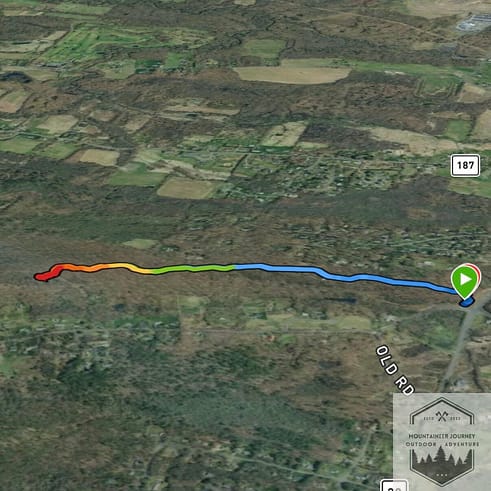
One feature worth calling out is the position enhancement system. After an activity, the Enduro 3 can go back and post-process your GPS tracks, smoothing out any segments flagged as questionable. This is a smart software solution to the inherent tradeoff between battery savings and GPS accuracy.
Compared to the Fenix 8 Solar in equivalent GPS modes, the Enduro 3 delivered nearly identical accuracy. The differences I found were only visible under the most challenging conditions, such as steep forested climbs where the canopy blocked large portions of the sky.
Accuracy Score: 8/10 (30%)
Battery Life: 20%
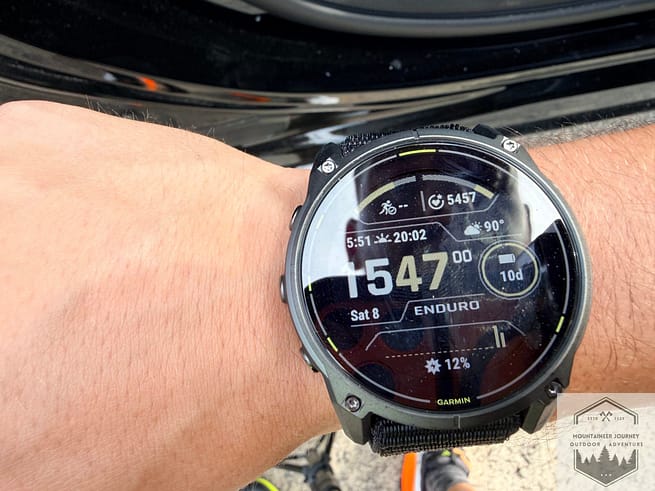
The Garmin Enduro 3 delivers the best battery life of any GPS watch on the market in 2026. That is not a close call.
Garmin claims significant improvements in solar efficiency with the redesigned solar ring, and my real-world testing backs that up. I noted that the GPS tracking without solar could last up to 110 hours
With solar, it can last up to 320 hours in GPS mode under ideal bright sunlight conditions. However, the sunlight conditions need to be in a quite clear and open space; if you’re under tree cover, the solar panel will not get enough light.
I noted that the multi-band mode lasts approximately 80-85 hours with solar enabled.
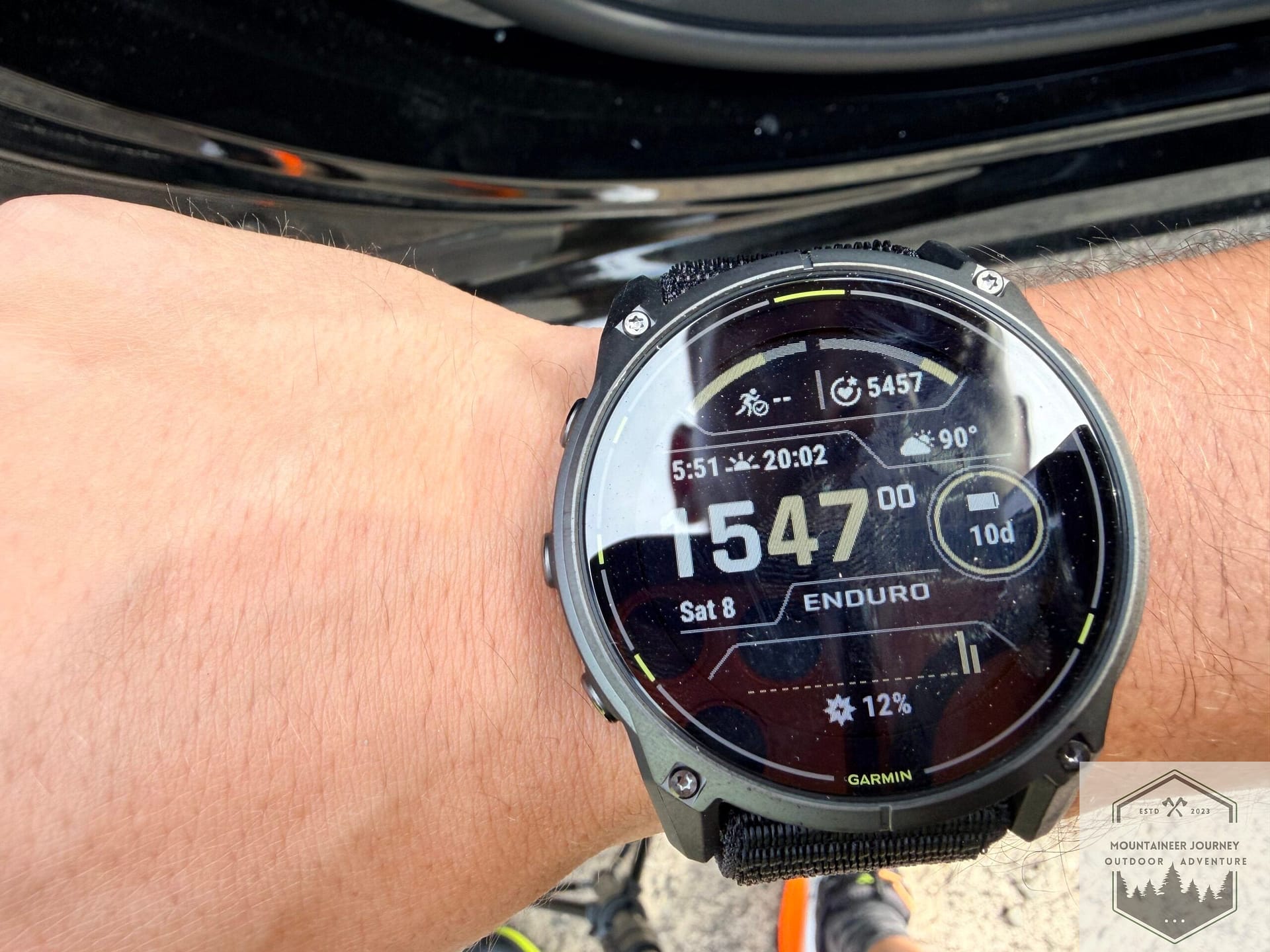
In smartwatch mode, it can last up to 30 days; however, I don’t imagine many people keeping the Enduro 3 in smartwatch-only mode, since it is designed for outdoor adventures.
The solar panel provides 30 minutes of GPS battery life per hour of sunlight (at least 60,000 lux outside), which is roughly double what the Enduro 2 could harvest.
During my own testing over a few weeks, battery burn during a long trail run in GPS-only mode was impressively low. An eight-hour outing in GPS-only consumed roughly 14% of the battery, which is consistent with reaching that 110-hour ceiling.
The Enduro 3 matches the Fenix 8 Solar’s battery life while weighing less. It offers 40-60 hours of GPS battery life in GPS-only mode, depending on the model and GPS mode, compared to the Fenix 8. This makes it ideal for multi-day adventures and ultras.
Charging from near-zero to full takes about two hours with the included cable, which is reasonable given this battery’s capacity.
One important note: if you keep the map screen active during GPS tracking, battery drain increases substantially. Navigating to data pages or watch face views during long activities is a simple way to manage your longer battery life.
This watch is ideal for multi-day adventures and ultras. For those looking for a cheaper alternative with less battery life, check out the Forerunner 970.
Battery Life Score: 9.5/10 (20%)
Mapping & Navigation: 20%
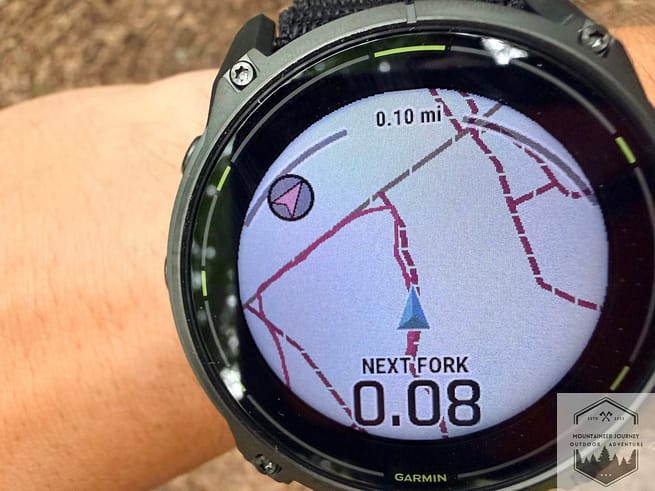
The Enduro 3 comes preloaded with TopoActive maps and full navigation capabilities that rival Garmin’s top GPS watches.
Dynamic round trip routing is one of the standout navigation features. Set a specified distance, and the watch generates loop routes from your current position. I found this incredibly useful for trail running when you want to explore new terrain without having to pre-plan every detail.
The off-route alerts were quick and accurate. Just going approximately 10 ft off course triggered the alert and routed me back onto the trail.
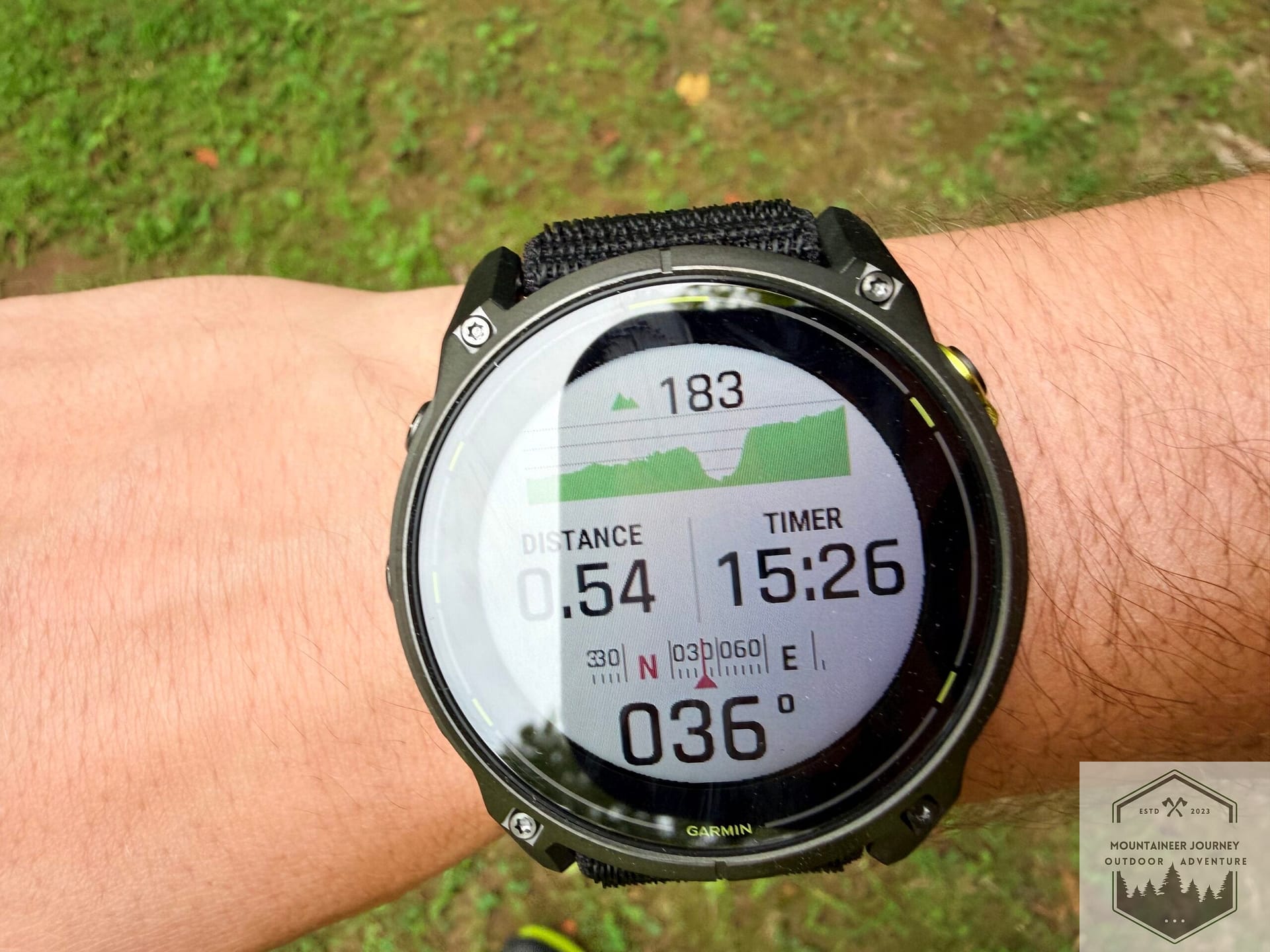
ClimbPro technology provides ascent visualization during hikes and runs, showing remaining elevation, gradient, and distance for each climb segment. For ultrarunners trying to pace themselves between aid stations, this information is essential.
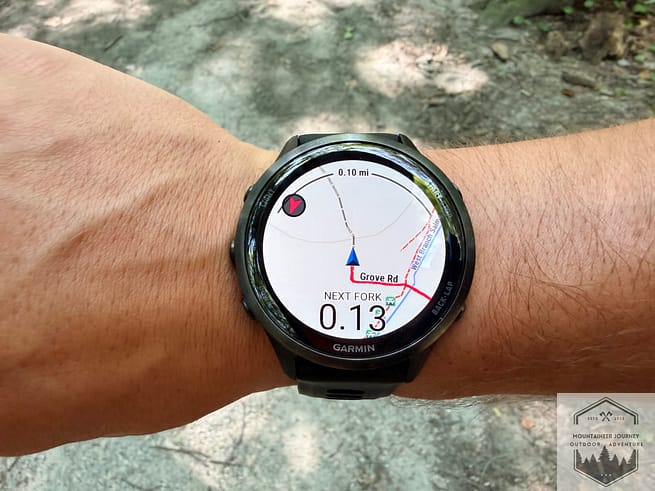
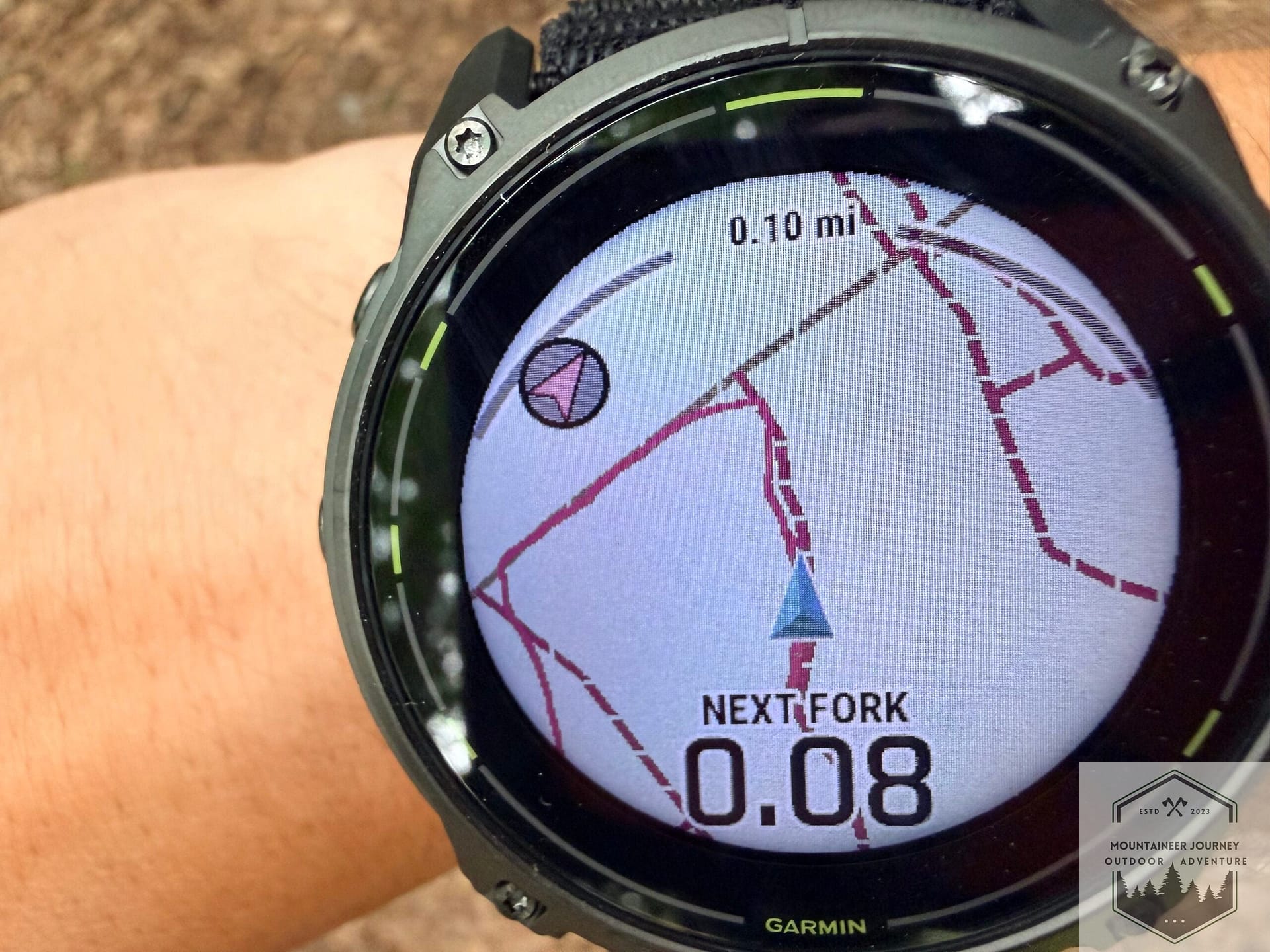
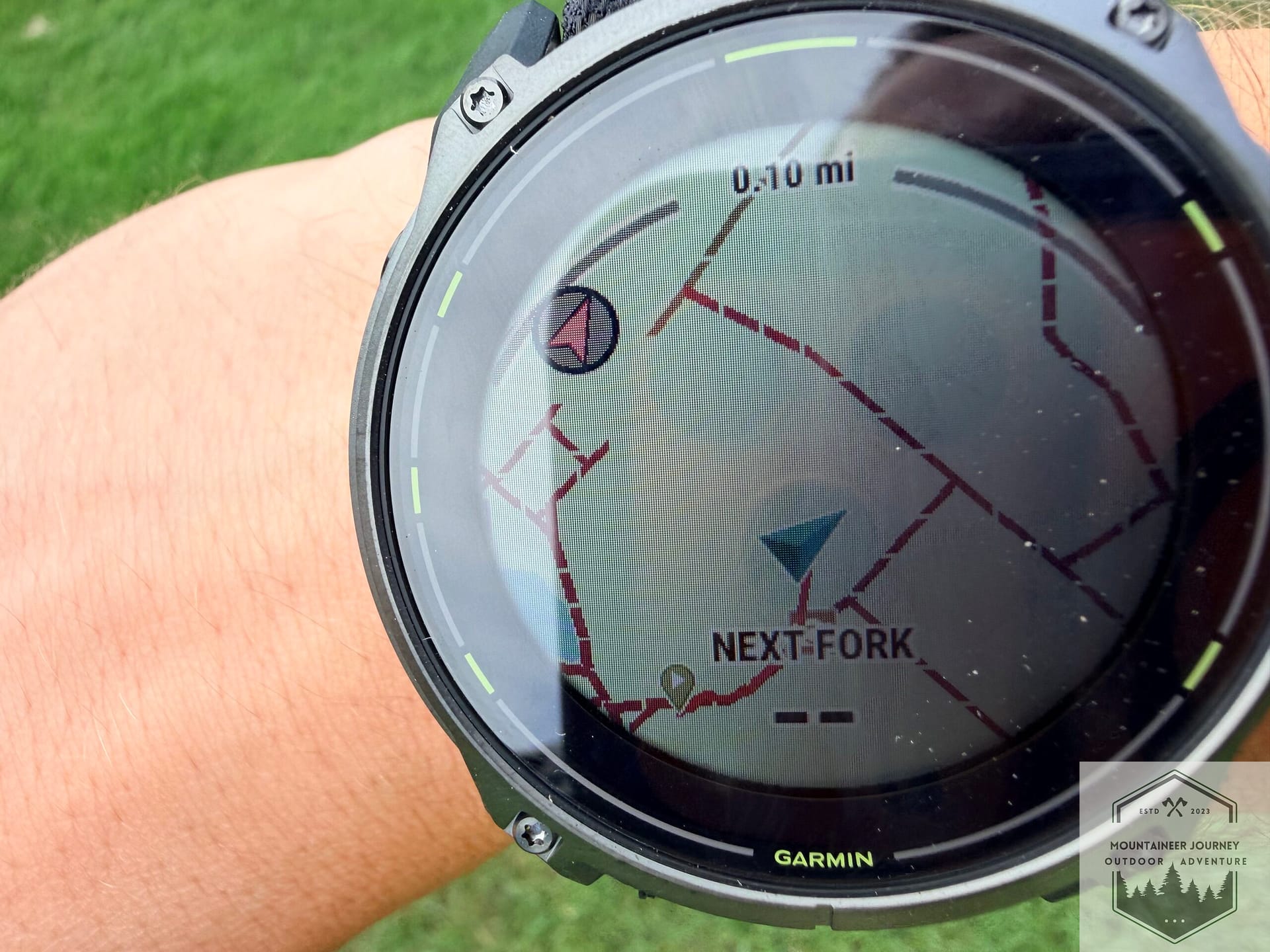
Next Fork navigation highlights upcoming trail intersections on the map, which is a smart feature for complex trail networks where junctions are frequent and signage is unreliable. Back-to-start functionality and breadcrumb accuracy were both reliable throughout my testing.
Garmin Connect allows uploading of GPX files for route navigation, and its integration with the Garmin Connect ecosystem makes course planning straightforward.
The Enduro 3 has a redesigned user interface for easier navigation through menus, maps, and settings. Map zooming and layer controls feel faster and more intuitive compared to the previous generation.
One trade-off worth mentioning: the solar ring makes the display area slightly more visually cluttered than obvious non-solar watches. The solar display elements around the bezel are more visible than on the Enduro 2, and while Garmin improved the design to reduce the impact, they still make the screen harder to read than on watches without a solar component.
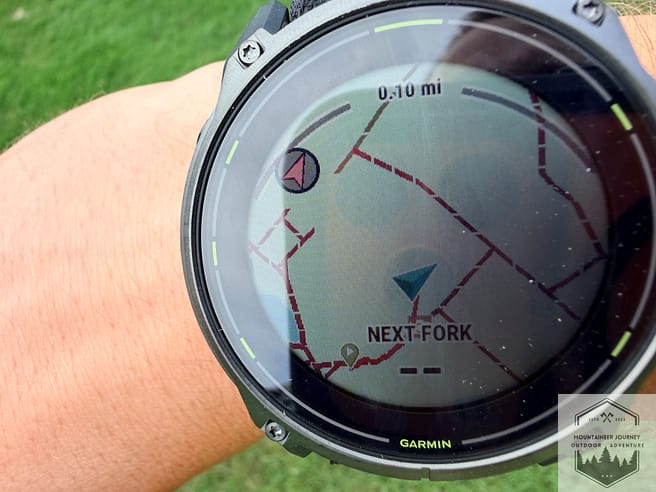
The MIP display is sometimes quite hard to read under bright conditions. This is nothing like the AMOLED screens on most non-solar watches. It takes getting used to, and it’s not always ideal under outdoor conditions.
Mapping and Navigation Score: 8/10 (20%)
Features and Training: 20%
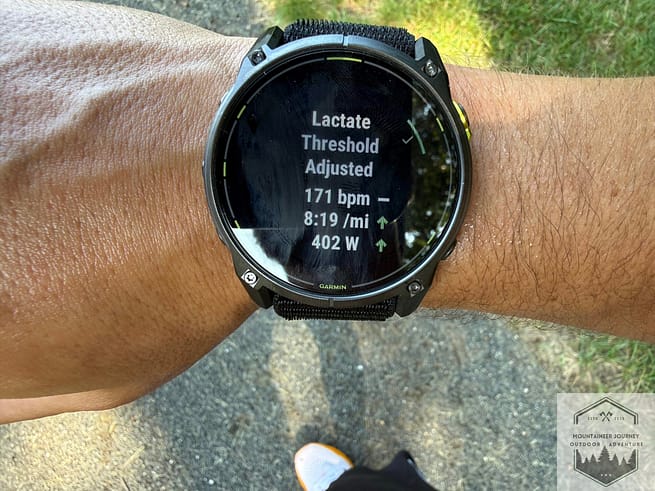
The Garmin Enduro 3 packs all the features you’d expect from a premium Garmin outdoor watch, and then some.
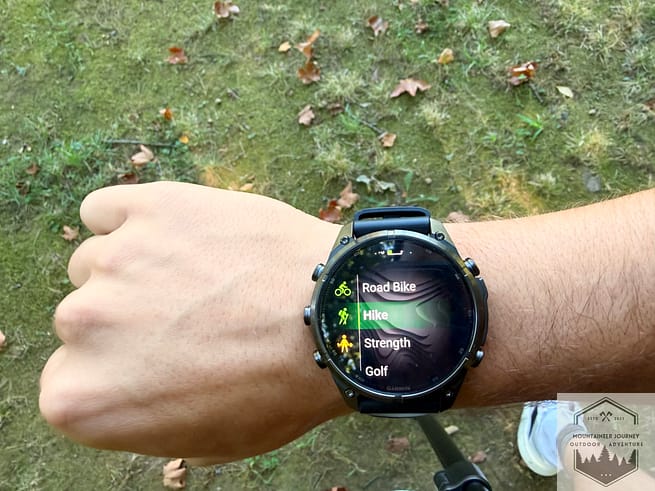
It supports comprehensive sports profiles, including ultrarunning, trail running, hiking, adventure racing, cycling, skiing, and more. Enduro 3 is ideal for backpacking and trail running, and the watch is built to handle just about anything you can throw at it in the backcountry.
Through the Garmin Connect app, you can also track your golf outing with accurate distances for each hole and score tracking.
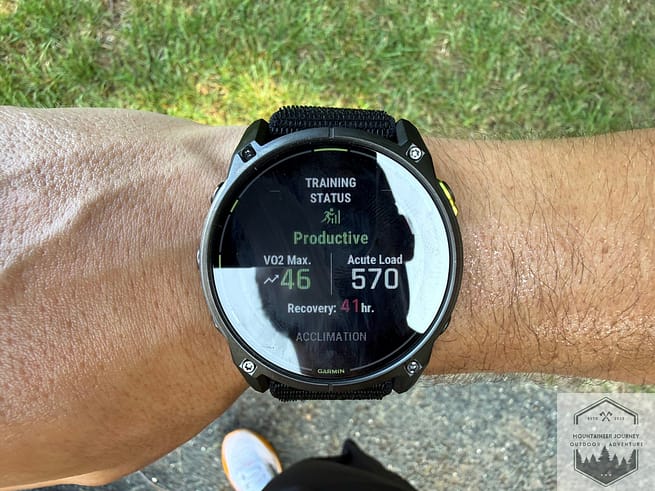
Training metrics are deep. You get VO2 max estimates, recovery time, training readiness, training status, training load, endurance score, and stamina tracking. Daily suggested workouts and Garmin Coach training plans help structure your preparation.
VO2 estimates are slightly more accurate than the lower-end Garmin watches. The VO2 max score takes into account heat acclimation and provides a mathematical formulation to not reduce your predicted race times or VO2 estimates if you do a few runs in warmer weather.
The body battery feature monitors your energy reserves throughout the day, which I found genuinely useful for deciding whether to push a hard session or take a recovery day. The body battery is calculated using your sleep score and training load.
Sleep tracking and various health metrics are included in the Enduro 3’s features. You get sleep score analysis, stress monitoring, pulse ox readings, wrist temperature sensing, and the new ECG app.
Compared to my Oura Ring 4, the sleep tracking was quite accurate. It was within 10 minutes of both deep and REM sleep during multiple sleep cycles.
The Enduro 3 incorporates a built-in LED flashlight useful for training in low-light conditions. It includes multiple brightness levels, a red light mode, and a strobe function for visibility during early-morning or evening runs. This is a feature I have come to rely on more than I expected.
The strobe light was more effective than my $100 running headlamp for early morning runs.
The watch also supports offline music storage for Spotify, contactless payments through Garmin Pay, and incident detection for safety during solo outings. The Garmin Messenger app integration allows basic messaging from your wrist when paired with your phone.
Garmin has prioritized battery life and outdoor capabilities over smartwatch features in the Enduro 3. That means you lose the speaker and microphone found in the Fenix 8, so no voice commands and no phone calls from your wrist.
For some users, that is a meaningful omission. For others, especially those buying this watch for what it does best in the mountains, it is not an issue.
Features and Training Score: 7.5/10 (10%)
Versatility: 10%
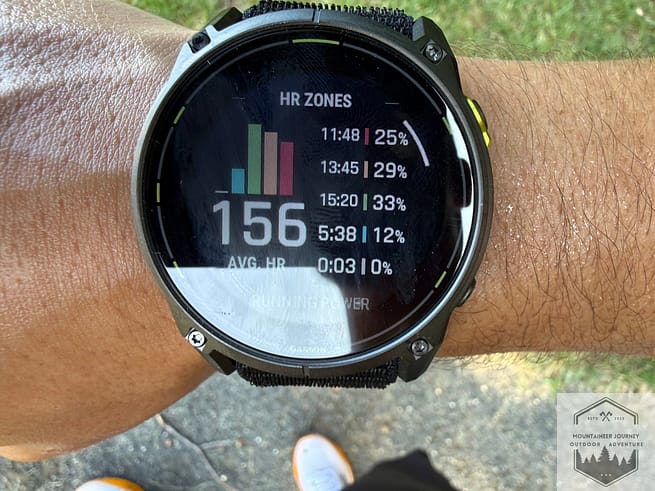
The Garmin Enduro 3 is purpose-built for endurance athletes, and that focus comes with trade-offs in daily versatility.
The 51mm case size is large and very bulky for an everyday watch to wear to the office.
The Enduro 3 uses a transflective memory-in-pixel display. The MIP display can be much harder to read on other very bright watches, like the Venu 4 or even the Coros Pace 4.
For ultrarunning, adventure racing, thru-hiking, and any multi-day activity, this is a great watch that excels in its element. The combination of battery endurance, lightweight construction, and comprehensive navigation features makes it the top choice for serious outdoor athletes.
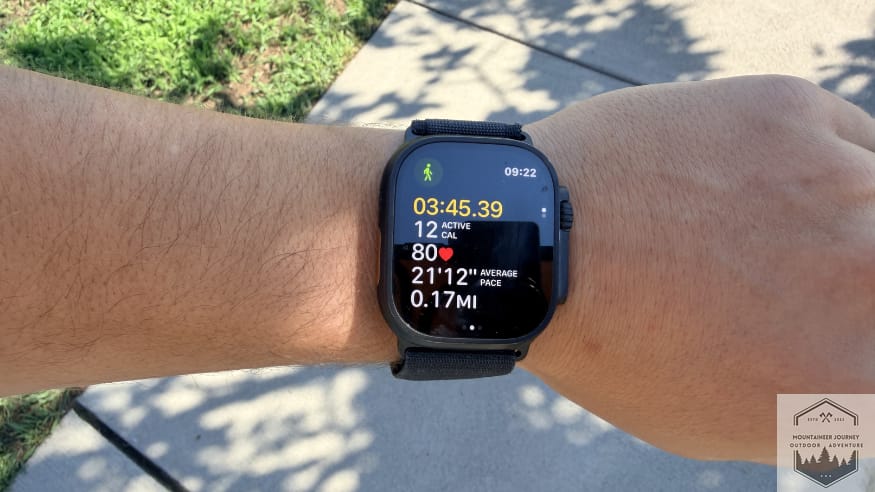
For everyday wear and versatility across different environments, the story is more nuanced. If you alternate between trail running on weekends and office work during the week, the large screen and thick profile may not be ideal. Compared to the Apple Watch Ultra 3 or even the Forerunner 170, the Enduro 3 is clearly an outdoor-first device rather than a lifestyle crossover.
The Garmin Enduro 3 has a 10 ATM water resistance rating, suitable for water pressure at 100 meters, so swimming and water activities are covered. However, it lacks the dive capabilities of the Fenix 8, so scuba divers and serious underwater athletes will need to look elsewhere.
Overall, the profile of the Enduro 3 is much like the Fenix model. Really built for those who need the features, but definitely not an everyday watch to wear at work.
Versatility Score: 7/10 (10%)
Is the Garmin Enduro 3 Worth It?
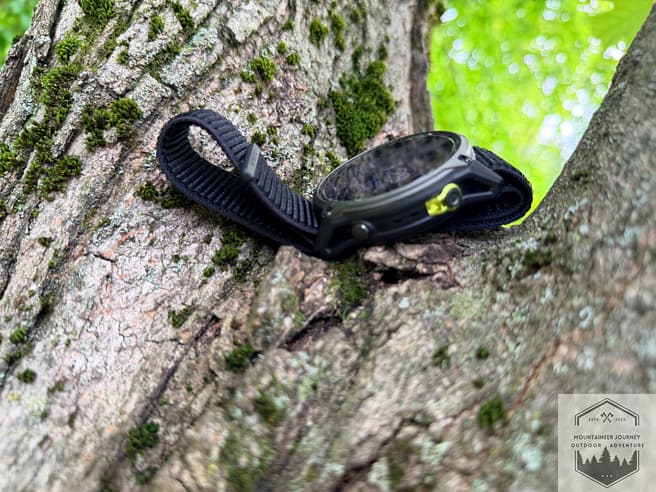
At $899.99, the Enduro 3 offers exceptional value for its target audience. The Enduro 3 costs $899, while the Fenix 8 Solar costs $1,199. The Enduro 3 outperforms the Fenix 8 Solar in battery performance while weighing significantly less.
The Enduro 3 features a 51mm titanium bezel and a scratch-resistant sapphire glass lens. These are premium materials that support long-term durability in harsh outdoor conditions.
For endurance athletes who spend extended time in the backcountry, the value is clear. Fewer charges, less dependence on power sources, and the confidence that your new watch will last through any event or expedition. The long-lasting battery life alone justifies the price for anyone who has been burned by a dead GPS watch mid-race.
If you don’t need all the features oriented toward ultra-endurance, or if you primarily want a smartwatch for daily life with occasional outdoor use, the value diminishes.
For those users, something like the Garmin Forerunner 170 or the Garmin Vivoactive 6 will serve you better at a lower price point. Check out the Forerunner 970 at a lower price point, but with the same mapping capabilities.
Value Score: 8/10 (10%)
Scoring Breakdown
Accuracy (30%): 8/10
Battery Life (25%): 9.5/10
Mapping & Navigation (20%): 8/10
Features & Training (10%): 7.5/10
Versatility (10%): 7/10
Value (5%): 8/10
Total Weighted Score:
2.40 + 2.375 + 1.60 + 0.75 + 0.70 + 0.40 = 8.23
Our Rating: 8.3/10
How We Tested and Our Methodology

I personally tested the Garmin Enduro 3 over multiple weeks of active use, including trail runs, day hikes, overnight backcountry trips, and daily wear, with the sole intent of giving you the most unbiased review possible.
Mountaineer Journey is a 100% independent publisher, and our testing team has spent years evaluating outdoor gear in real-world conditions.
Over the past decade, I’ve logged more than 3,000 combined miles of hiking, trail running, and road running, which gives me the experience to evaluate accuracy, comfort, and long-term performance rather than just repeating manufacturers’ claims.
Every category score is based on objective testing, not brand claims.
Accuracy Testing
- Heart rate accuracy gets compared against a Polar H10 chest strap on every test outing.
- GPS accuracy is double-checked against a handheld GPS unit and a mapped GPX route we had previously verified.
- The position enhancement feature was evaluated by comparing raw tracks to post-processed results across multiple activities.
- We tested in multiple environments including open ridgelines, dense forest canopy, mixed weather, and steep mountainous terrain.
Battery Testing
- We test real-world battery drain during GPS workouts across GPS only mode, all systems plus multiband, and Max Battery configurations.
- Solar charging efficiency was tested under varying conditions from direct strong sunlight to cloudy overcast skies.
- Smartwatch mode longevity was evaluated over consecutive weeks of normal daily use with notifications, sleep tracking, and periodic activities.
- Charging speed and consistency were measured from near-zero to full charge.
Features, Versatility, and Value Assessment
- Training feature completeness and accuracy were evaluated across running, hiking, and strength training profiles.
- Daily wear comfort and versatility testing included office settings, casual wear, and extended overnight use for sleep tracking.
- Price-to-performance value analysis was measured against competing Garmin watches and alternatives across similar price points.
- Long-term reliability expectations account for Garmin’s documented history of continued firmware support and feature updates.
To make sure every review is consistent, we use the same scoring framework across all our GPS watch reviews: Accuracy • Battery Life • Mapping and Navigation • Features • Versatility • Value
That way, you can easily compare models side by side without worrying about different scoring rules for each one.

Tyler
Tyler is the founder Mountaineer Journey and a professional Mountain Guide with 15+ years of technical experience in trekking, mountaineering, and trail sports. Having logged thousands of miles from rugged alpine summits to urban paths, Tyler provides rigorous, field-tested insights on hiking, walking, and trail running gear. All reviews are 100% unsponsored and unbiased, ensuring you get honest scoring based on real-world performance. His mission is to help outdoor enthusiasts of all levels find reliable equipment that ensures comfort, safety, and performance on any terrain.