Our Score
Arc’teryx Konseal Trek Boot Review 2026 | Unsponsored
Our Verdict
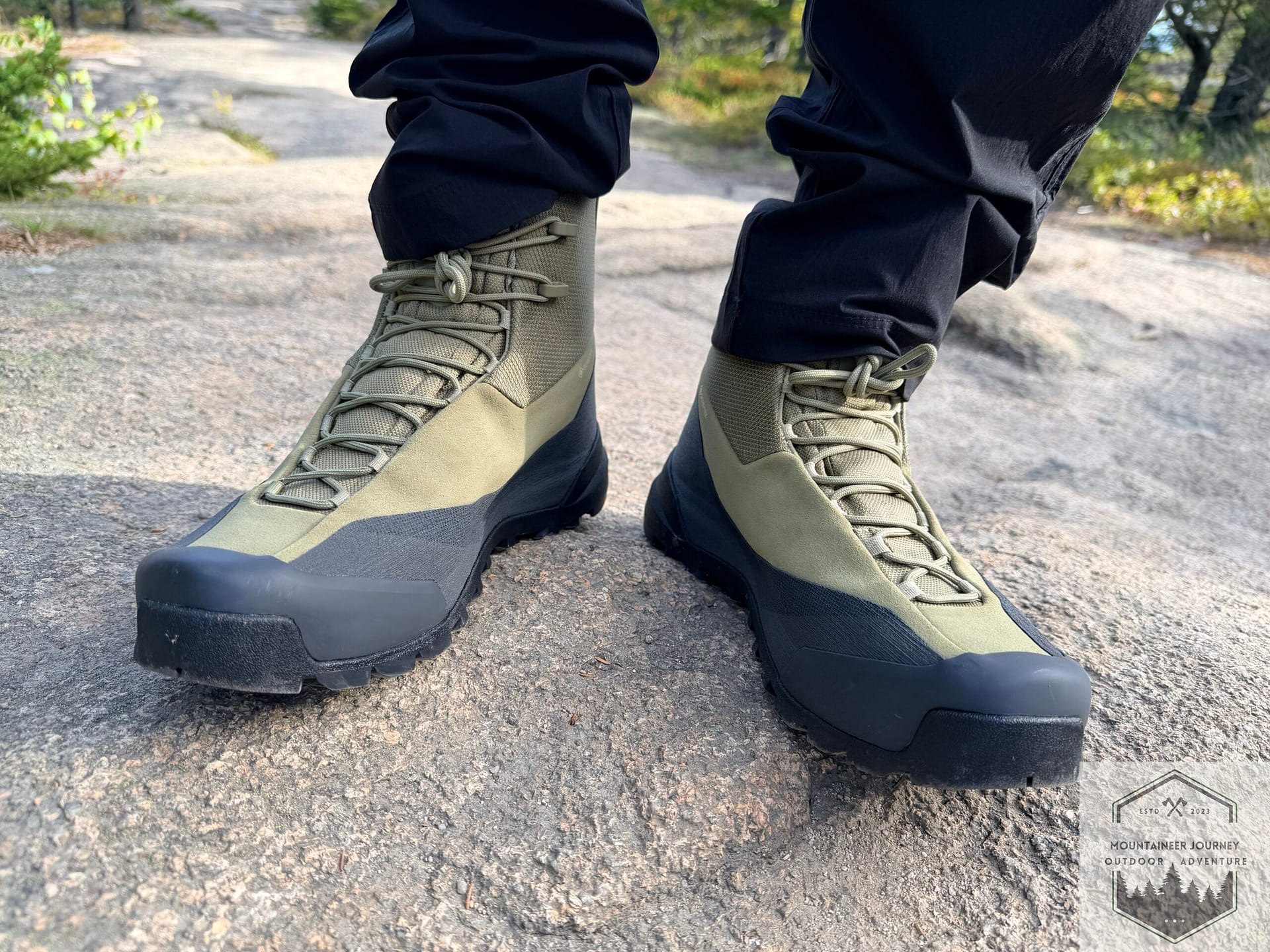
The Arc’teryx Konseal Trek Boot is a no-nonsense hiking boot built for those who need maximum stability and protection on tough, technical terrain. It’s not lightweight or ultra-breathable, but it excels where it counts. If you’re a backpacker or scrambler who regularly tackles rugged mountain approaches, this boot will serve you well.
That said, if you’re mainly hiking easy, well-groomed trails, or if you need a roomy toe box for long descents, this boot is definitely not for you. It’s on the heavier side and can be uncomfortable on steep downhills. Also, if you prioritize breathability or want a lighter, more flexible boot, look elsewhere.
The Konseal Trek is a highly durable boot designed for technical hikers who require stability and superior traction. It isn’t suitable for casual weekend hikers or those seeking a lighter, more breathable option.
Konseal Trek Pros and Cons
Pros
- Excellent lateral stability and ankle support
- Very stiff platform and strong upper protection
- Aggressive traction
Cons
- Overkill for easy trails
- Toebox comfort
- Expensive
Arc’teryx Konseal Trek Boot Price
As of this writing, the Arc’teryx Konseal Trek Boot retails for $280. That puts it firmly in the premium category, and there’s no way around it.
Compare Similar Products
| Comparision | Product | Rating | Price |
|---|---|---|---|
 | 8.5 | Check Lowest Price | |
 | 8.9 | Check Lowest PriceRead Review | |
 | 8.8 | Check Lowest PriceRead Review |
As an independent reviewer, I purchase all products myself. Some links may be affiliate links that support the site at no cost to you
Should You Buy The Arc’teryx Konseal Trek Boot?
Buy if
- You want a backpacking boot with excellent stability that stays planted with a 30 to 40-pound heavy pack on loose, rocky, and off-trail terrain
- You regularly scramble on rock slabs, or mixed rock where precise edging and a stiff platform matter more than a hiking shoe-like flex
- You hike in wet climates and value Gore-Tex waterproofing and leather protection more than maximum ventilation
DON’T Buy if
- You want to spend significantly less than two hundred dollars on a hiking boot
- You mainly hike mellow, well-groomed trails where a lighter mid or trail runner offers all the support you need
- You have very wide feet or need an especially tall, roomy toe box for long descents and swollen feet
Comfort: 7.5/10
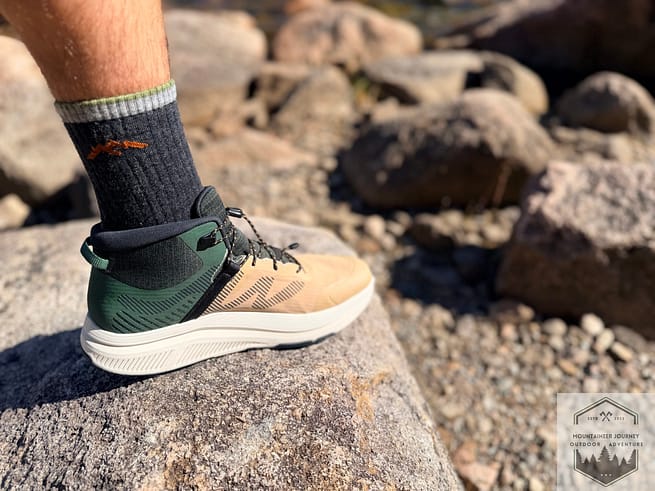
My first impressions slipping on the Konseal Trek were immediately different from most hiking boots I have tested. This is not a soft, pillow-like ride. The first thing I noticed is the firm, supportive platform under your foot. It feels planted, secure, and intentional.
That said, the footbed comfort is actually quite good for such a stiff leather boot. The midsole offers decent EVA cushioning, and on rocky steps and long days on uneven ground, the impact absorption was reassuring. The foot fatigue I felt was minimal, even for a rigid boot.
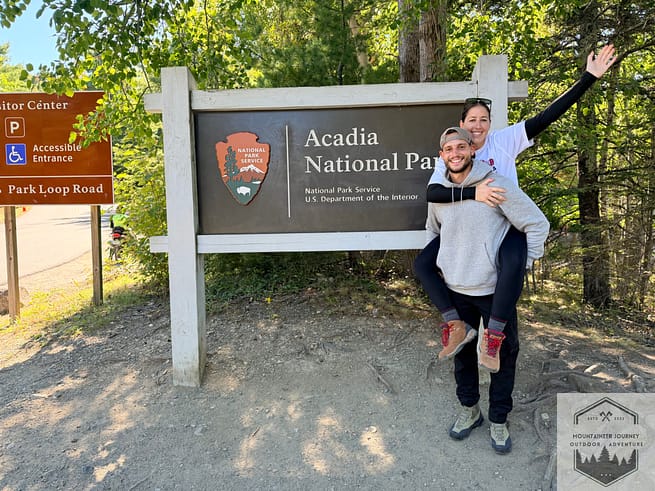
I did break in this boot before testing them in Acadia National Park. It took three small hikes of 5 miles or less for the nubuck leather upper to soften around the ankle collar and forefoot. On those first outings, I had initial hotspots across the top of my foot where the leather and overlays pressed during toe-off, plus some stiffness around the ankle collar. Those went away completely once the leather started to flex and mold.
The downhill toe-box experience raises significant concerns. During granite descents, I consistently hit my toe against the front of the boot, despite using careful heel-lock lacing techniques. The toe box appears inadequately designed, causing discomfort during extended descents. Contributing factors include the boot’s internal forefoot volume and insufficient toe-box padding. Even fully cushioned socks didn’t reduce the impact on my toes.
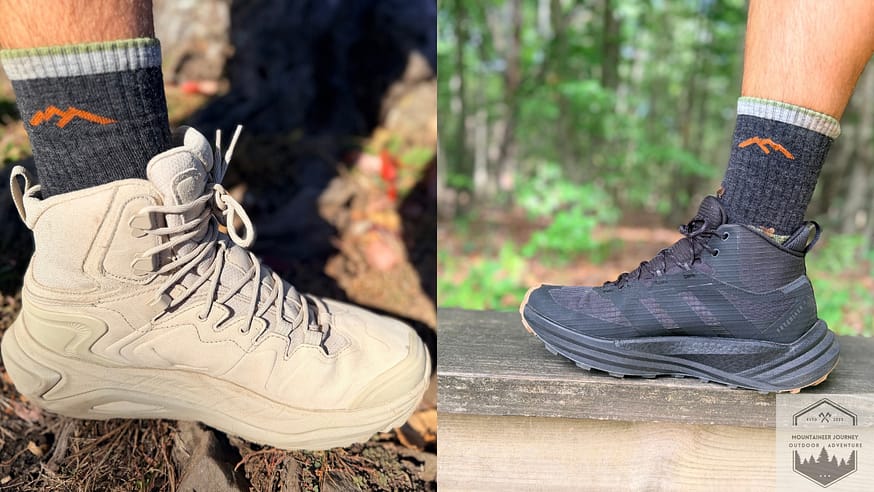
The ankle collar padding is adequate. It’s not as plush as the Hoka Kaha 3, but the mid-height collar provided enough cushioning that I never rubbed my Achilles or the sides of my ankle during my longer hikes of 5 miles or more.
Overall, the footbed comfort and impact absorption are good. But the stiff ride, combined with the low-profile toe box, can limit all-day comfort on steep downhills. For flat to rolling technical terrain, though, this boot is surprisingly comfortable for how much protection it offers.
Weight
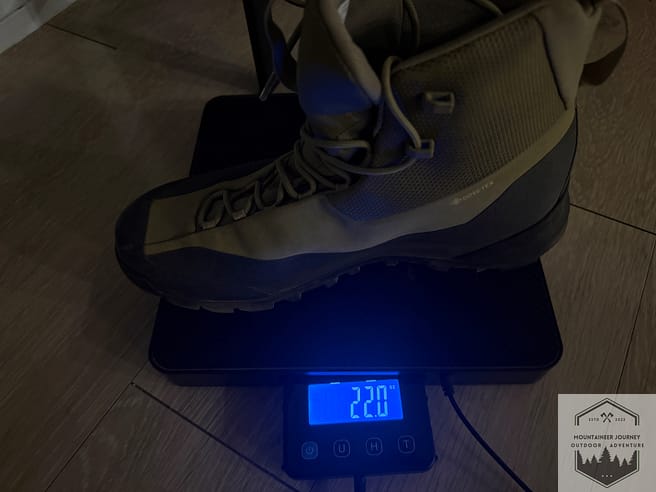
I weighed my men’s 10.5 at 22 oz per pair on our calibrated scale. This is closer in weight to the Hoka Kaha 3s (20.49 oz) but felt noticeably heavier on foot than the Kahas. These don’t feature much of a rocker sole, so the heel-to-toe transition isn’t smooth.
If you are a backpacker, scrambler, or someone who regularly carries heavy loads on technical terrain, you will tolerate the weight just fine. If you are a fast and light hiker or prefer the feel of a trail runner, these will feel like anchors. For a lighter alternative, check out our roundup of the best lightweight hiking boots.
Traction: 9/10
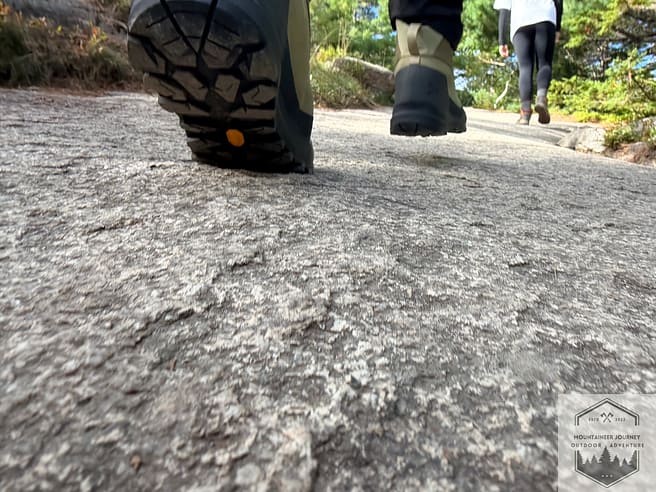
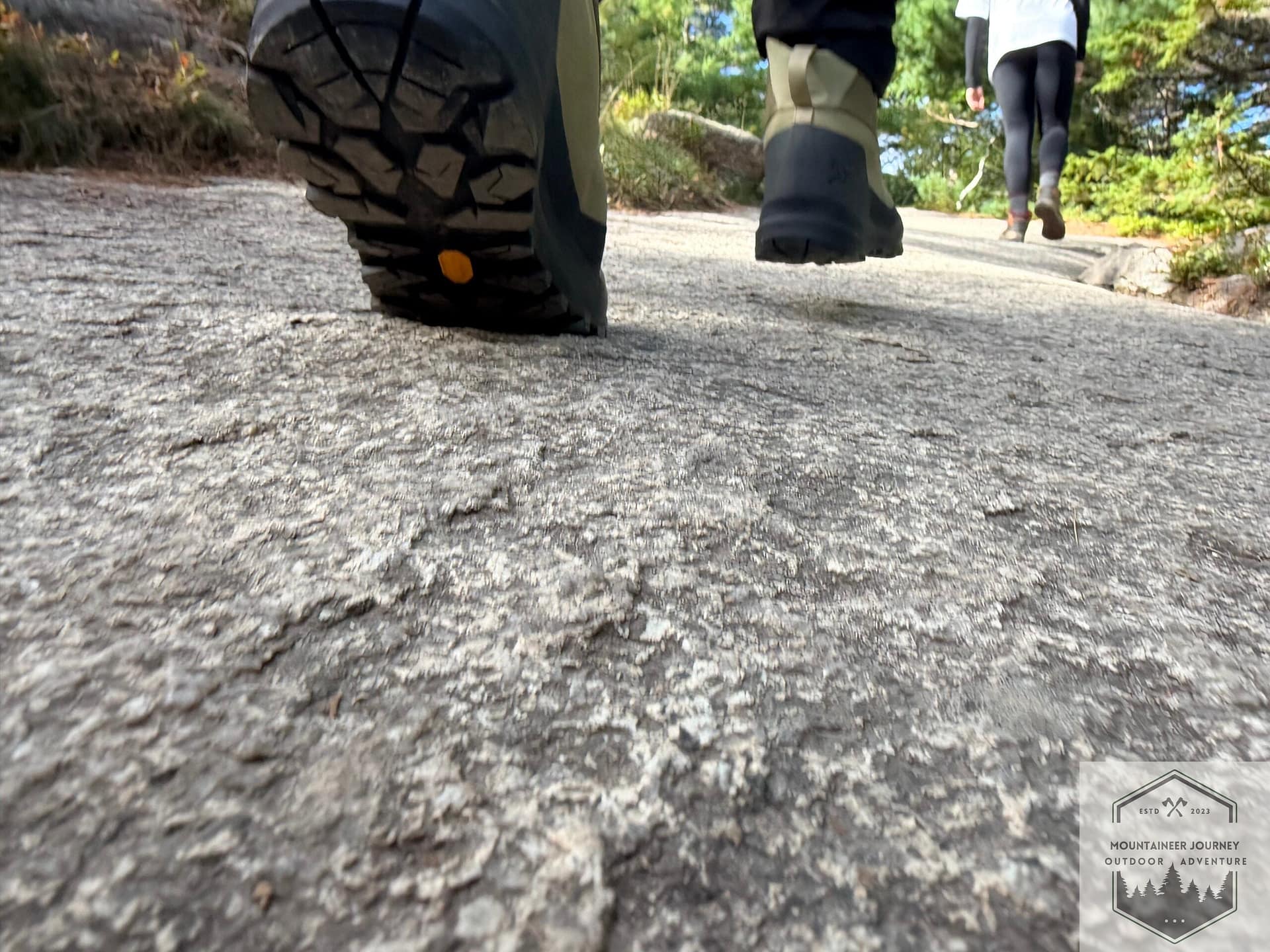
The Konseal Trek features a Vibram Megagrip outsole with a rubber compound that absolutely delivers. I measure the lugs at 5 mm, and they feature quadrilateral lugs in the forefoot that help with flexible rock climbing and toe-offs on technical trails. The boots include double chevron lugs on both the medial and lateral aspects, providing enhanced traction on uneven terrain. During testing on wet granite, the aggressive lug design kept my feet stable and planted.
On gravel descents, the rear braking lugs gripped the loose terrain effectively. They offered enough flexibility to conform slightly to the surface, keeping my footing stable.
My biggest test was granite slabs in Acadia National Park. The traction was excellent in both dry and damp conditions. Edging on smooth rock was outstanding, almost reminiscent of how climbing shoes grip, but with the added traction and protection of a full hiking boot. I was especially impressed with its grip on dirt- or sand-covered rock; during those scrambles, it was extremely effective.
Mud shedding was decent, though not as fast as wider-spaced lug patterns on some other boots like the Timberland Mt. Maddsen 2.0.
Compared to other boots I know well, including several that also use Vibram MegaGrip, the Konseal Trek sits at or near the top for rock grip. The climbing zone adds precision for edging on rock in a way most standard hiking boot outsoles simply can’t match. The boot excels in technical terrain and scrambling conditions.
The Konseal Trek performs exceptionally on technical terrain, including scrambles and boulder fields. It’s likely overkill on flatter terrain, but still useful and effective.
Overall Protection: 5/5
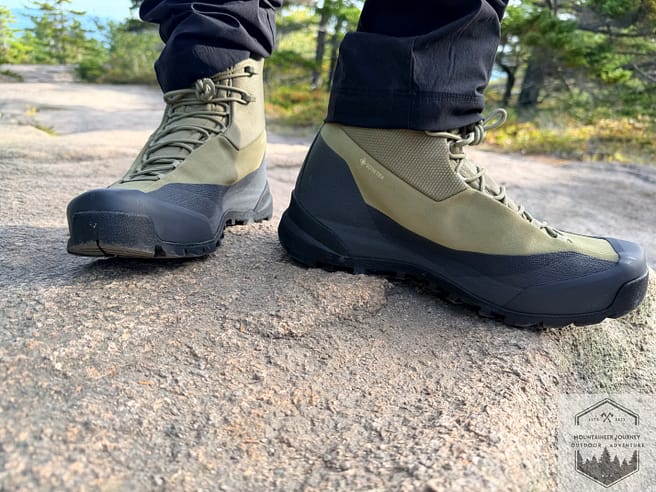
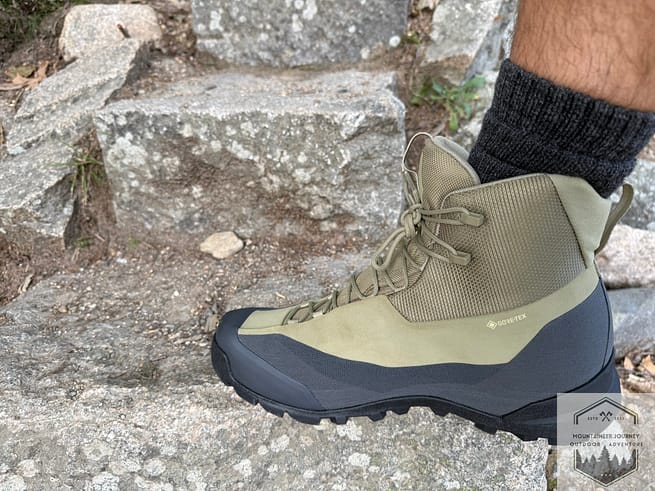
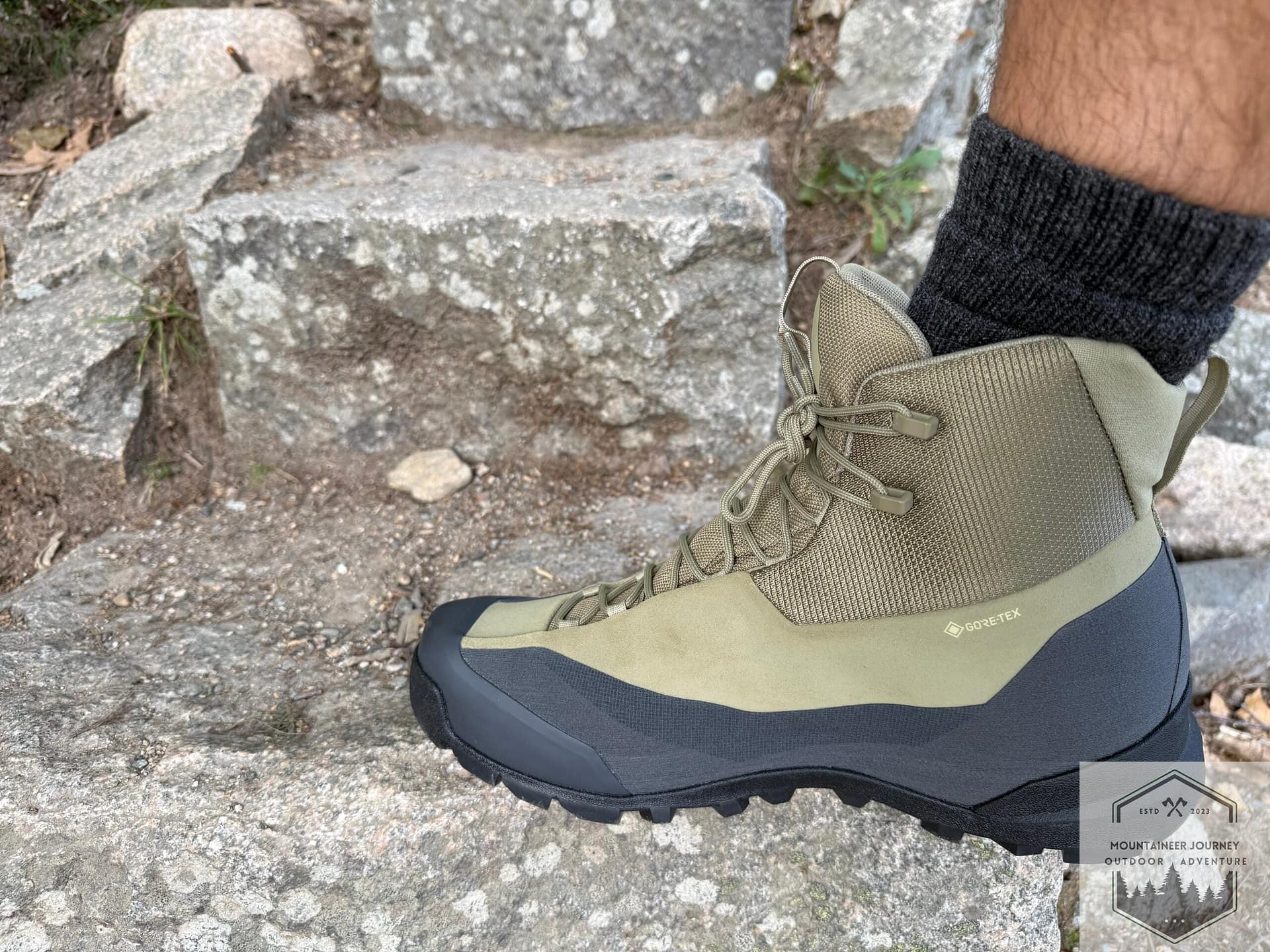
The first thing I noticed about the Konseal Trek is how much protection it packs into a boot that still feels relatively nimble. The upper is nubuck leather but still quite thin, yet tough enough to resist scrapes and tears on the trail. The rubber rand wraps high around the toe and sides, and a molded TPU toe cap overlay
The Konseal Trek protects against sharp rocks with rubber overlays and that beefy toe cap, with no issues. I kicked into exposed granite edges multiple times and never once worried about foot injury.
The mid-height collar provides good coverage around the ankle, not as high as the Salomon Quest 5, but more than enough for a mid-height ankle cuff.
This is a very stiff boot with great overall protection. It feels close to a light mountaineering boot in terms of security.
Water Resistance: 5/5
The Konseal Trek features a waterproof Gore-Tex liner using the Invisible Fit construction, which bonds the Gore-Tex membrane directly to the nubuck leather upper. During our 10-minute submersion test and several creek crossings, the boot kept my feet completely dry.
That said, the Gore-Tex liner reduces breathability, but even in the mid-70s, I still felt quite comfortable.
How Does The Konseal Trek Fit?
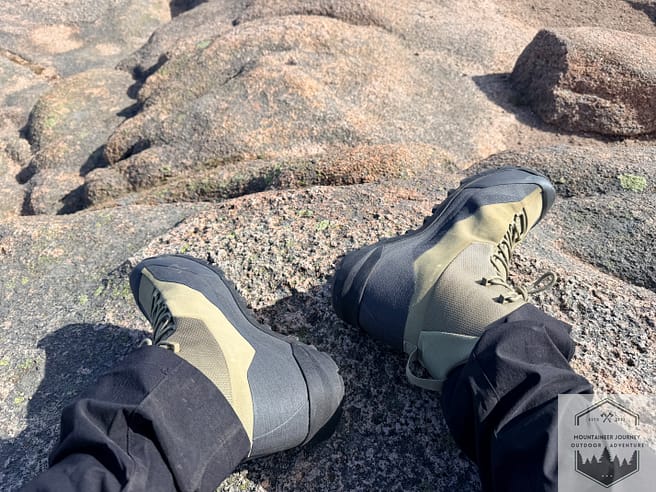
I tested out a men’s size 10.5. Lengthwise, the boot runs true to my usual Arc’teryx sizing. However, I would consider going up half a size if I bought this boot again, specifically for more downhill room.
The overall shape is moderately narrow in the heel and midfoot, with a more precise fit. The heel hold is generally good, especially once you cinch down the extended lacing system properly. The boot has a secure, locked-in fit from high lacing that extends well down the forefoot, and dialing in the fit for edging and scrambling is straightforward.
Volume over the instep and midfoot is snug but not cramped for my medium-volume foot. High-volume feet might feel tight. After the first couple of outings, once I found the right lacing pattern, there was no heel slippage.
The tongue stays centered throughout the day. One minor gripe: the stock flat laces are a decent amount longer than needed, leaving excess material to tuck or wrap. Swapping for shorter laces would be a simple improvement.
Fit: 4/5
Stability & Support: 4.5/5
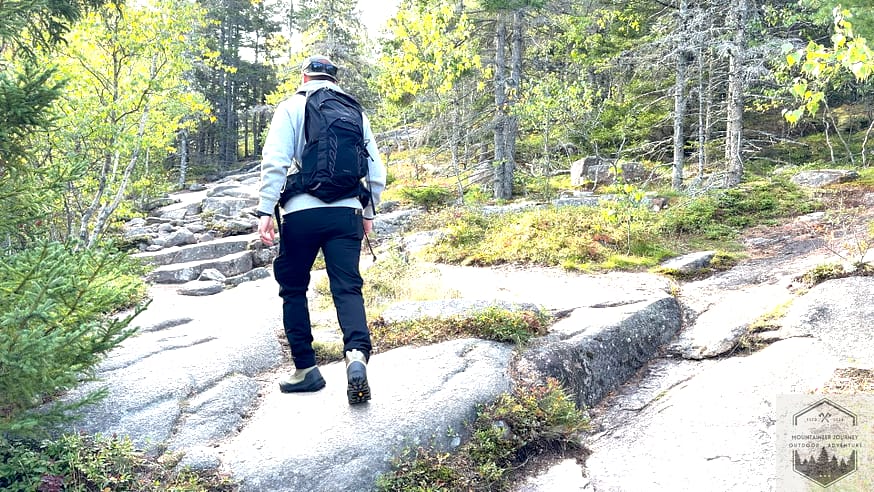
Stability is one of the defining strengths of the Arc’teryx Konseal Trek and a primary reason to choose it over lighter boots. This boot is built to keep your foot planted.
The stiff leather upper, mid-height collar, and firm platform create a locked-in feel that is especially noticeable when side-hilling or climbing granite slabs. I felt no lateral play at all. The carbon fiber shank under the midfoot adds rigidity that prevents the sole from flexing around sharp edges.
Under a 35-pound pack on loose talus and mixed rock, I felt zero risk of ankle roll. The outsole width provides a nice, stable base, especially for quick movements across rocky technical sections. This is where the Konseal Trek is more adaptable and agile than a technical boot as bulky as the Salomon Quest 5 or Lowa Renegade.
Out-of-the-box arch support is adequate for my medium arch. I did not feel the need to swap insoles, though hikers with very flat or very high arches might benefit from a custom footbed.
This boot feels overbuilt for simple trails, and absolutely dialed for anything technical. If you prioritize stability and ankle support above all else, the Konseal Trek is hard to beat.
Is The Arc’teryx Konseal Trek Boot Worth It?
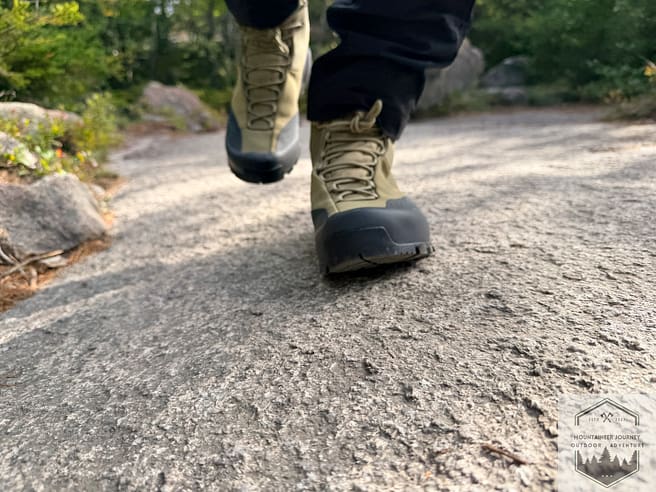
Yes, the Arc’teryx Konseal Trek is absolutely worth it for the right hiker. This is not a boot for everyone, but for the audience it serves, it delivers at a very high level.
This boot is perfect for hikers who need an extremely stable approach boot that still has some nimbleness and is lighter than heavier boots that weigh you down with unnecessary bulk. Its strengths come from its stiffness and stability, especially on difficult terrain. Traction is excellent across all the different types of terrain I tested them on, especially on granite and limestone.
The biggest drawback is the price, at $280, it is definitely above even the premium hiking boots like the Hoka Kaha 3 or Salomon Quest 5. However, that price tag comes with Arc’teryx name.
If you are a technical backpacker, scrambler, or alpine hiker who values security over speed, this boot should absolutely be on your shortlist. It can do double duty as both a day hike boot on technical terrain and a multi-day backpacking boot on rugged approaches. However, I do feel the price is a little high given the objective scores it earned.
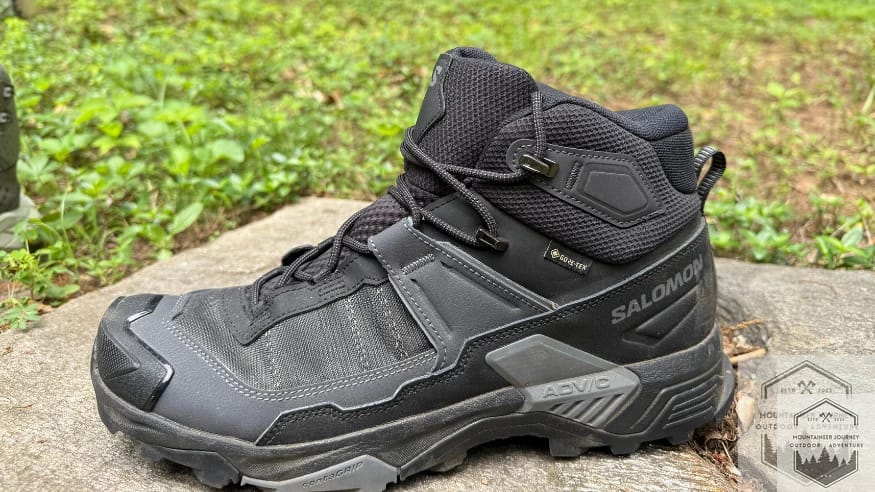
For a more budget-friendly option with a lightweight technical feel, the La Sportiva Ultra Raptor 3 is a great alternative. For those looking for the right shoe to hit the sweet spot between all-day wear comfort and technical capability, also consider the Salomon X Ultra 5 Mid GTX.
Value: 4 / 5
Scoring Breakdown
Comfort: 7.5/10
Traction: 9/10
Overall Protection: 5/5
Waterproofness: 5/5
Fit: 4/5
Stability & Support: 4.5/5
Value: 3.5/5
Total: 38.5 / 45
Our Rating: 8.5 / 10
How We Tested and Our Methodology
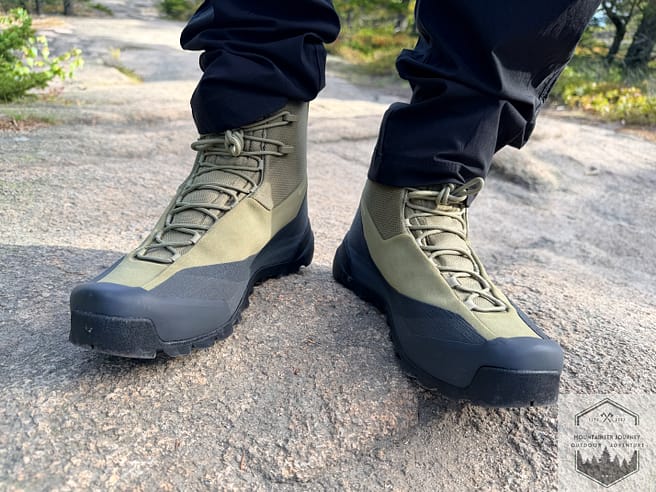
I personally tested the Arc’teryx Konseal Trek Boot since its summer 2026 launch, with the sole intent of giving you the most unbiased review possible. Mountaineer Journey is a 100% independent publisher with years of testing and reviewing outdoor equipment.
I wore these boots on several different hikes, covering over 40 miles. The scores are based on first-hand, objective testing standards, providing a clear assessment of who these boots suit and who they may not.

Tyler
Tyler is the founder Mountaineer Journey and a professional Mountain Guide with 16+ years of technical experience in trekking, mountaineering, and running. Having logged thousands of miles from rugged alpine summits to training for half marathons, Tyler provides rigorous, field-tested insights on hiking, walking, and trail running gear. All reviews are 100% unsponsored and unbiased, ensuring you get honest scoring based on real-world performance. His mission is to help outdoor enthusiasts of all levels find reliable equipment that ensures comfort, safety, and performance on any terrain.