

Our Score
Garmin Forerunner 55 Review | Worth It In 2026?
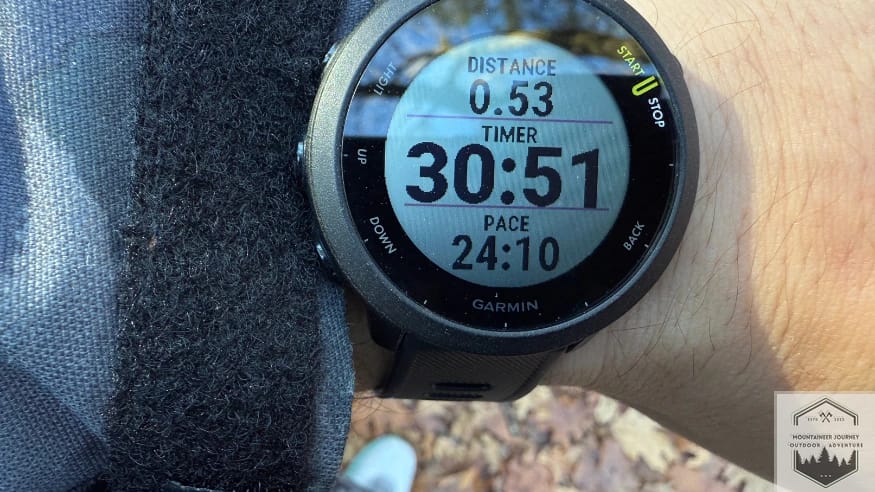
In this article, I’m going to share my HONEST Garmin Forerunner 55 review for those who are wondering if it is WORTH IT in 2026.
The Garmin Forerunner 55 was released in the summer of 2021. It’s been a go-to GPS watch primarily for runners, but it has started to make its way into the hiking realm too.
For this review, I logged over 45 hikes and trail runs with the Forerunner 55, so I know how it performs for hiking and running in the real world.
I have been testing out this GPS watch since 2022, mainly on the Northeast USA trails.
I’ll go over accuracy, battery life, mapping and navigation, versatility, and of course, value.
I’ll be sharing my critical opinion backed by 16 years of experience as a trail guide and hiker.
Related: Garmin Forerunner 55 Investment Report
Should you buy the Garmin Forerunner 55?
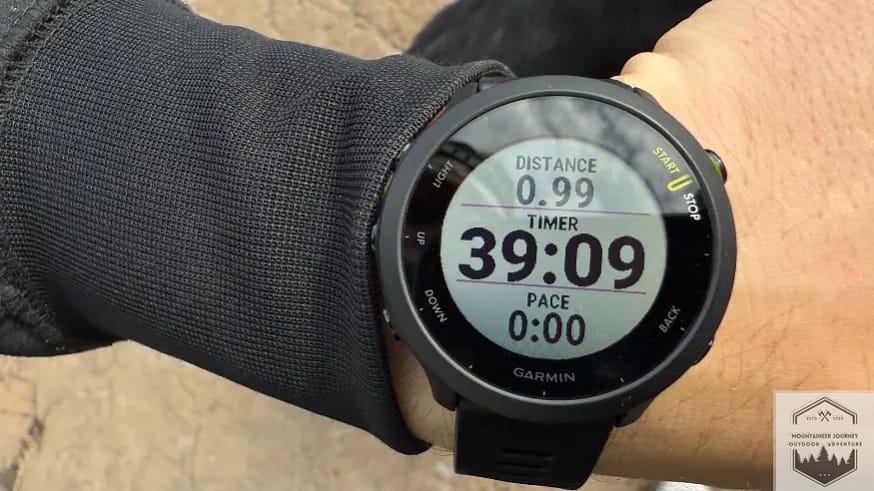
Buy if
- You want a budget GPS watch
- You use your GPS mainly for running on light trails
- You’re an amateur hiker, or experienced runner
- You value simplicity and ease of use
- You’re not overly concerned with ultra precision or a huge sensor lineup
DON’T Buy if
- You are engaged in ultras or require a long battery life
- You prefer a high-resolution display
- You train across a diverse set of sports
- You want the MOST accurate GPS watch
- You want advanced multisport features
Garmin Forerunner 55 Pros and Cons
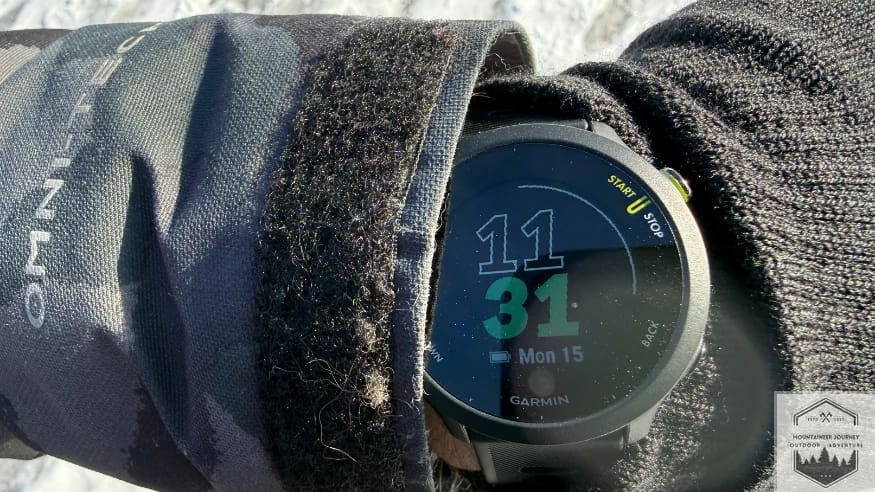
Pros
- Simple User Experience
- Accurate heart rate sensor
- Inexpensive
Cons
- Lack of true navigation
- Battery life limited on longer workouts
Garmin Forerunner 55 Accuracy: 30%

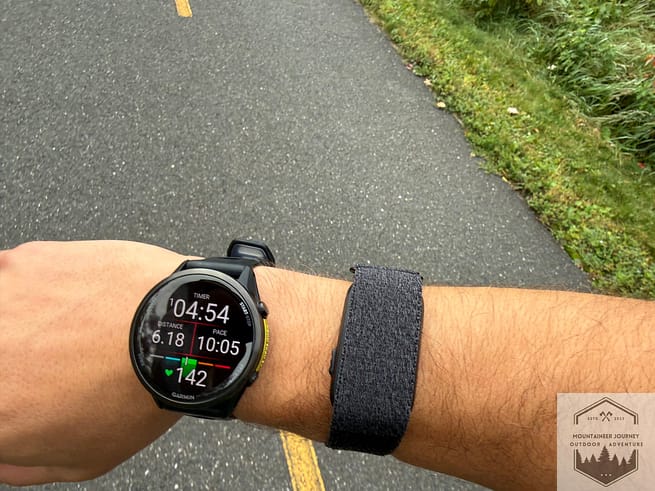
To keep our scoring objective, we compare our heart rate on our Polar H10 chest strap to the Garmin Forerunner 55 during our testing. The H10 is one of the most accurate heart rate sensors on the market.
It uses the Elevate V3 optical sensor, which averaged a 1.8 bpm variance against the Polar H10 during our testing. That’s the kind of accuracy you want, especially from a budget GPS watch. This was done while running, and hiking in summer and winter conditions.
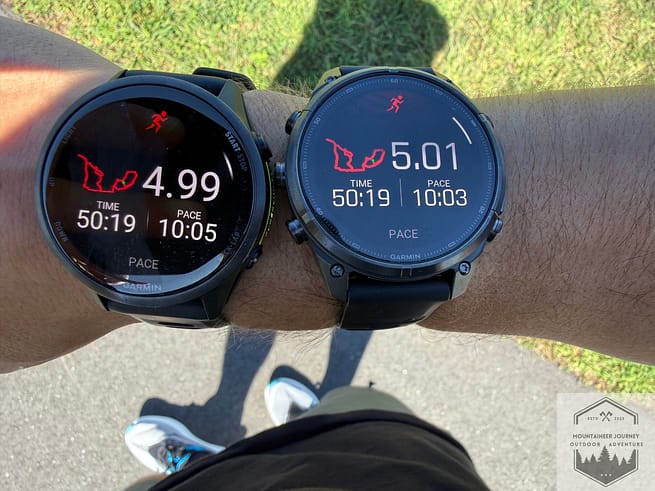
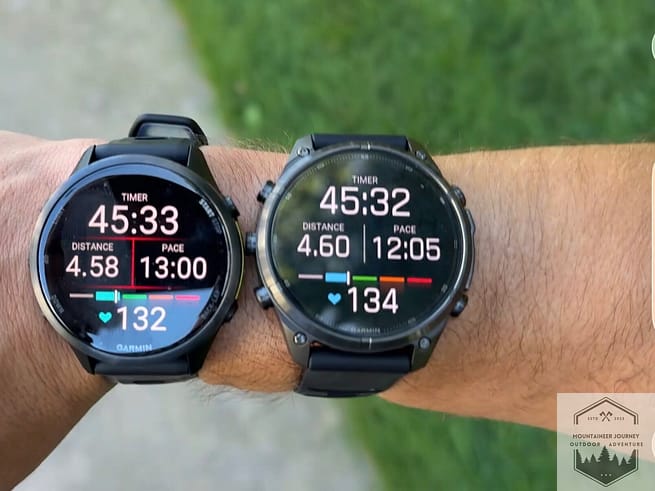
During GPS testing, I compared the Forerunner 55 against a Garmin GPSMAP 67 and a mapped GPX route to keep the results honest.
I use my mapped GPX for real-time feedback on the trail as well as the GPSMAP 67 for actual proof. On my first trail run while testing out the Forerunner 55, I noted the GPS to be quite accurate.
However, the elevation was off about 4-5 feet during the entire hike, cross-referenced against my mapped GPX route from AllTrails.
Total distance was off by an average of .06 miles, which was not bad. I tested this on steep, hilly hikes and flat runs to see how it behaved in both extremes.
The GPS track quality was the biggest disappointment. The lines during my testing were very squiggly and didn’t match our GPX mock-up.
While this may be a non-issue for some users, it can make you think you’re off course, especially when you’re following a pre-planned map.
Overall, the heart rate accuracy on the Forerunner 55 stands out for the price. That reliable HR data, plus solid distance accuracy, gives most people what they need to track progress and train smarter.
The track line itself could be cleaner, but at this price, I’m not shocked. Distance was solid. Track smoothness is the tradeoff.
This moderate level of accuracy, combined with the user-friendly Garmin Connect mobile app, makes it a formidable contender in the world of GPS watches.
Accuracy Score: 7/10 (30%)
Battery Life: 20%

It’s worth noting that the Forerunner 55 isn’t as power-packed as some of the more expensive Garmin models or watches with larger batteries. Considering its price, the battery life is solid for a budget Garmin.
The battery life is claimed to last 20 hours in GPS mode and up to 2 weeks in smartwatch mode.
During testing, GPS mode lasted about 17.5 hours, but it depends on brightness and settings. I did keep the brightness as low as possible.
In smartwatch mode, we found it lasted approximately two weeks.
By 2026 standards, 20 hours of GPS isn’t that impressive compared to newer models.
Especially for those wanting much longer times or prefer solar-powered watches.
Battery Life Score: 7/10 (20%)
Mapping & Navigation 20%
The Forerunner 55 does offer only basic pre-planned breadcrumb GPS. The only mapping it offers is a basic tracker for known routes.
If you mainly want to track distance, heart rate, and pace, this watch does the job.
However, if you need real trail navigation, route following with map visuals, turn-by-turn guidance, or off-grid mapping support (e.g., remote trails, unfamiliar terrain), this watch will not cover these needs.
Mapping & Navigation Score: 3/10 (Orientation only) (20%)
Features & Training 10%
The Garmin Forerunner 55 has basic features such as heart rate, steps, distance, and other basic health metrics.
The watch isn’t limited to running. It can track activities like cycling, swimming, walking, hiking, and yoga.
In addition to these tracking capabilities, the Forerunner 55 features both fitness tracker mode and smartwatch mode.
These modes provide comprehensive fitness tracking options, allowing users to monitor various metrics such as steps taken, calories burned, and floors climbed.
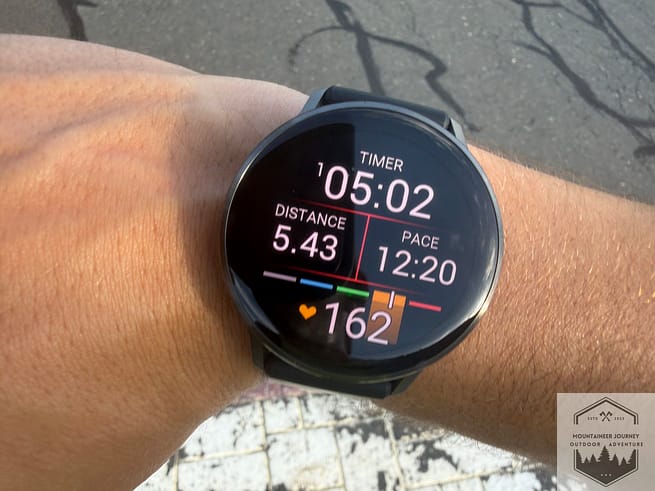
During a run, the watch displays metrics including: Current time, heart rate, pace, distance, elapsed time, and lap information.
The Forerunner 55 also includes features like daily suggested workouts based on your training history and fitness level.
These suggestions help you maintain a consistent training regimen and push your limits safely. I found this to be helpful on days I was drained, finding a good recovery routine.
In addition to basic health metrics, the Forerunner 55 includes a stress management tool that monitors respiration rates.
Women’s health tracking is another standout feature. The Forerunner 55 includes a dedicated widget for monitoring the menstrual cycle, which can be accessed through the Garmin Connect app.
Sleep tracking is another feature of the Forerunner 55. By monitoring your sleep patterns and quality, the watch provides insights into how well you’re resting and recovering.
Personally, I did not find the sleep tracking feature to be very impressive. It does not track deep sleep, REM, or light sleep as other more sophisticated watches will.
The watch does feature basic safety features like incident detection and assistance for emergency contacts.
Garmin Connect Mobile App
The Garmin Connect mobile app is a crucial part of what makes the Forerunner 55 such a good experience. This app lets you put all your workouts & health stats into one tidy place, making it a lot easier to keep an eye on your progress.
Being able to see all the details in one go makes the whole watch experience a lot more user friendly.
The app isn’t just for syncing Forerunner 55 data. You can also pull in info from other Garmin devices, like the smart scale.
The app includes adaptive training plans that adjust based on your effort and recovery. You get the right advice at the right time to hit your fitness goals. It’s ideal for those looking to keep their workouts fun and switching things up from time to time.
Features & Training Score: 6/10 (10%)
Versatility 10%

The Forerunner 55 is still a formidable watch at its price point. However, the versatility is not great. While you can use it for various activities, it lacks an actual real-time barometer as it corrects itself once the activity is done for elevation during hiking and/or other altitude sports.
The lack of a touchscreen hurts usability, especially when you’re moving quickly. For those running and want easy access, you have to know your way around the buttons which can be quite cumbersome, especially while keeping up a quick pace.
I also noticed the buttons became less responsive after my first 6 months of use, which made it even tougher to use during intense activity.
The Forerunner 55 is fine for daily running, some hiking, daily wear, and basic cardio. It lacks that “level up” ability when it comes to tracking more demanding multisport activities.
Versatility Score: 5/10 (10%)
Is The Garmin Forerunner 55 Worth It?
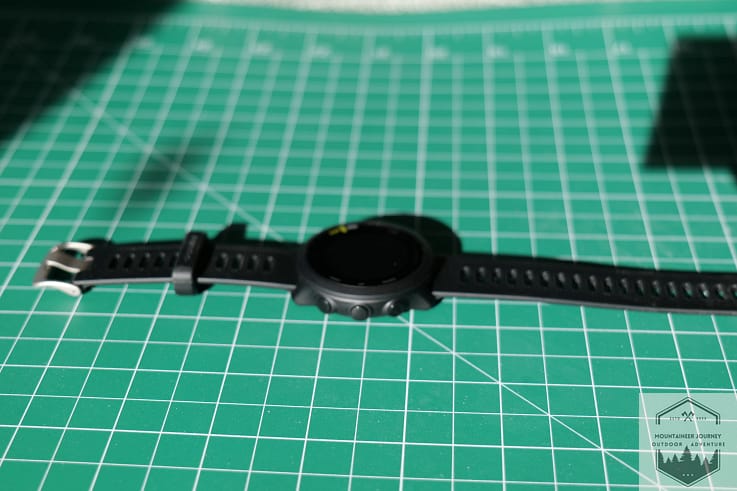
The Forerunner 55 delivers some of the best value you’ll find at this price. At around $199, it offers features you’d usually see in more expensive models.
So if you’re on a budget and don’t want to compromise on quality or functionality, this is the perfect choice.
Compared to higher end Garmin models like the Fenix 8 series, the Forerunner 55 is 80% less. It may not have all the bells and whistles of the premium models but it has more than enough for most users.
So it’s a more affordable option for those who need a GPS watch without the price tag (remember, there’s no true navigation).This watch only has basic breadcrumb GPS with pre-planned routes.
Despite being cheaper, the Forerunner 55 is a budget friendly price that doesn’t skimp on performance. Its durable design, decent tracking and full feature set makes it a great value for its size and offerings.
You get a reliable and versatile fitness tracker that can compete with more expensive models.
When you look at price versus performance, durability, brand reputation, and resale value, the Forerunner 55 scores high.
It has a lot of features at a fraction of the cost of premium models so it’s a smart investment if you want to upgrade your fitness journey without breaking the bank.
Overall, the accuracy of the Garmin Forerunner 55 is solid for its price range. You get reliable GPS tracking and precise heart rate monitoring, with some trade-offs in track smoothness and elevation detail.
For those looking for alternatives (that have navigation), models like the COROS Pace Pro and Garmin Fenix 8 offer better navigation and deeper multisport tools, but you’ll pay a lot more for them.
Value (10%): 8/10
Scoring Breakdown
Accuracy (30%): 7/10
Battery Life (20%): 6/10
Mapping & Navigation (20%): 3/10
Features & Training (10%): 6/10
Versatility (10%): 5/10
Value (10%): 8/10
Total Weighted Score:
2.04 + 1.34 + 0.60 + 0.60 + 0.50 + 0.80 = 5.88
Our Rating: 5.9/ 10
Frequently Asked Questions
How accurate is the GPS tracking on the Garmin Forerunner 55?
The GPS tracking on the Garmin Forerunner 55 is reasonably accurate for its price, with an average deviation of about 0.06 miles in our testing. Just remember this is watch tracks, but does not guide or display maps.
How long does the battery last on the Garmin Forerunner 55?
The Garmin Forerunner 55 battery lasts up to 17.5 hours in GPS mode and up to two weeks in basic smartwatch mode based on our real-time testing.
Does the Garmin Forerunner 55 have heart rate monitoring?
Yes, the Garmin Forerunner 55 includes heart rate monitoring with its Elevate V3 optical sensor.
What activities can the Garmin Forerunner 55 track?
The Garmin Forerunner 55 can track running, cycling, swimming, walking, general cardio, and yoga.
Is the Garmin Forerunner 55 good for hiking?
Yes, the Garmin Forerunner 55 for hiking works well on light and moderate trails, as long as you don’t need real navigation or elevation data in real time.
Is the Garmin Forerunner 55 worth the price?
Yes, the Garmin Forerunner 55 is worth the price at $199 if you intend to use the features it offers.
How We Tested and Our Methodology
I personally tested the Garmin Forerunner 55 since 2022, with continued testing into 2026 with the sole intent of giving you the most unbiased review possible.
Mountaineer Journey is a 100% independent publisher, and our testing team has spent years evaluating outdoor gear in real-world conditions.
Over the past decade, I’ve logged more than 3,000 combined hiking, trail running, and road running miles, which gives me the experience to evaluate accuracy, comfort, and long-term performance—not just lab numbers.
Every category score is based on objective testing, not brand claims.
Accuracy Testing
- Heart rate accuracy gets compared against a trusty Polar H10 chest strap.\
- GPS accuracy is double-checked against a handheld GPS unit and a mapped GPX route we’d previously verified.
- We look at four key things when it comes to accuracy: heart rate variance, distance error, GPS track quality, and elevation stability.
Battery Testing
- We test real-world battery drain, whether it’s during a GPS workout or when the watch is just sitting on your wrist.
- When we score the battery life, we’re looking at three things: how long it lasts on GPS, how consistent the battery is, and how long the watch lasts in smartwatch mode.
Mapping and Navigation Testing
- Navigation gets scored on its capability, not its price tag.
- Watches without proper navigation get lumped together as Orientation Only, which means no maps, no breadcrumb routes, no turn-by-turn guidance – but still good for basic tracking on familiar trails.
Features, Versatility, and Value
- Features cover things like training tools, recovery support and how well the watch integrates with your day-to-day life.
- Versatility is all about how well the watch adapts to running, hiking, heading to the gym or just wearing on the job.
- Value is all about whether the price is right, whether you can trust the watch to last, and whether the manufacturer will still be supporting it a year from now.
To make sure every review is consistent, we use the same scoring framework we use across all our GPS watch reviews:
Accuracy • Battery Life • Mapping and Navigation • Features • Versatility • Value
That way you can easily compare models side by side, without having to worry about different scoring rules for each one.

Tyler
Tyler is the founder Mountaineer Journey and a professional Mountain Guide with 15+ years of technical experience in trekking, mountaineering, and trail sports. Having logged thousands of miles from rugged alpine summits to urban paths, Tyler provides rigorous, field-tested insights on hiking, walking, and trail running gear. All reviews are 100% unsponsored and unbiased, ensuring you get honest scoring based on real-world performance. His mission is to help outdoor enthusiasts of all levels find reliable equipment that ensures comfort, safety, and performance on any terrain.