

Our Score
Osprey Daylite Plus Review 2026 | Unsponsored
Our Verdict:
After carrying the Osprey Daylite Plus for well over a year on day hikes through rolling 5+ mile hikes, light trails across New England ridgelines, and as an everyday bag around my hometown, I can confidently say this is one of the most versatile small daypacks I have ever tested.
The Daylite Plus costs $80, weighs just 1.2 pounds, and holds 20 liters of gear. That combination of low weight, fair price, and genuine trail capability makes it stand out as one of Mountaineer Journey’s best-rated day packs for lighter carry.
My clear verdict: if you are a casual day hiker, a commuter, or a traveler who wants one pack that does it all without weighing you down, the Osprey Daylite Plus is an excellent choice. But if you are hauling heavy loads up technical mountain routes, you need to look elsewhere.
Here is my quick breakdown of who this pack is made for and who should skip it:
If you are looking for a dedicated hydration pack with beefy hip belt pockets, this is not the right choice either.
If you stick to 8- to 12-mile day hikes with loads under about 12 to 15 pounds, the Daylite Plus delivers a comfortable carry that punches well above its price point.
If you want a budget-friendly daypack that works just as well grabbing groceries as it does on a weekend trail, this is your go-to pack.
If you regularly carry more than 15 pounds or need a serious harness system with load lifters for steep mountain terrain, the Daylite Plus will let you down.
Osprey Daylite Plus Price
The Osprey Daylite Plus costs $80 at full retail in 2026.
Who Should Buy The Osprey Daylite Plus
Not every pack works for every person. Let me spell out exactly when the Daylite Plus shines and when you should look at something else so you can decide quickly.
Buy The Osprey Daylite Plus If
- You want a lightweight pack for 5- to 10-mile day hikes on well-maintained trails where you are carrying a rain shell, snacks, water, and maybe a camera.
- You keep your total load under about 12 to 15 pounds and value simplicity over a technical harness system with load lifters.
- You want one pack that can go from the office to the trail. I carried a 13-inch laptop during the week and swapped it for a rain jacket, food, and a 2-liter bladder on weekends without missing a beat.
- You are a traveler who wants a compact personal item on planes that doubles as a summit pack for side hikes the next morning.
- You appreciate osprey packs that attach to larger Osprey travel packs as an add on, giving you modular flexibility on bigger trips.
Skip The Osprey Daylite Plus If
- You regularly carry more than about 15 pounds. The thin waist strap offers minimal support for heavy loads, and the shoulder straps will start to dig.
- You want proper load lifters and a substantial, padded hip belt for mountainous terrain. The Daylite Plus is not that kind of pack.
- You want to carry heavier loads over longer trails with significant elevation gain. Consider the Osprey Talon 22 or a framed 24- to 28-liter pack instead.
- You need dedicated hip belt pockets for quick access to small essentials while moving. The Daylite Plus does not have them.
Osprey Daylite Plus Kinetic Comfort: 8.5/10
When I test kinetic comfort, I am evaluating how the pack feels while I am actually walking, climbing switchbacks, and moving through terrain, not just standing still in a gear shop. This is where a backpack either earns your trust or loses it.
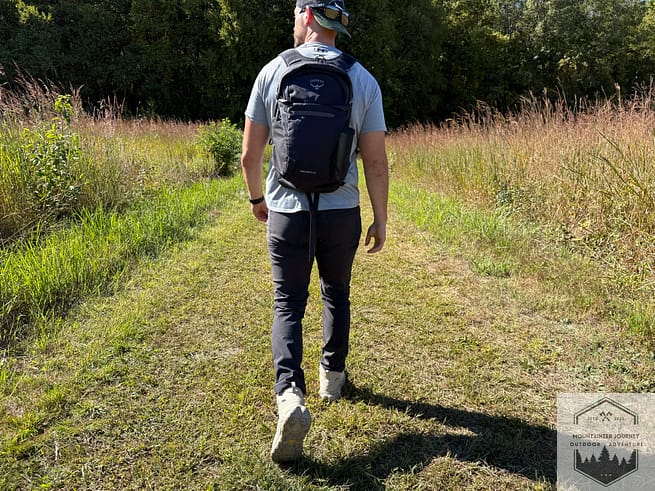
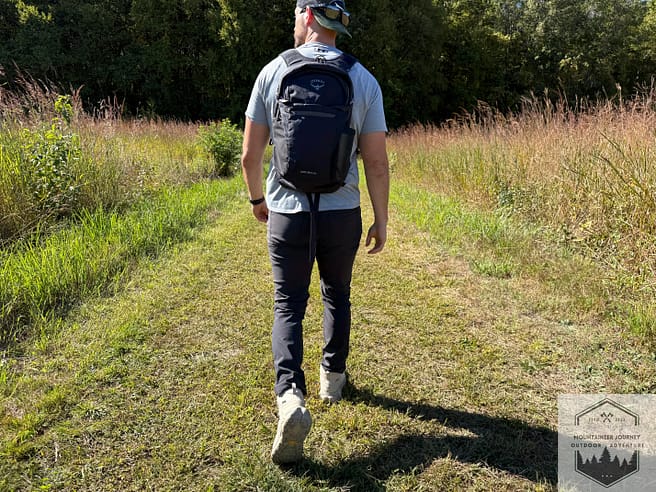
The padded shoulder straps on the Daylite Plus surprised me. For a pack at this price point, the foam density and width are genuinely comfortable. With 10-12 pounds of gear, the straps distributed weight evenly across my shoulders without any hot spots or friction. The adjustable sternum strap, which includes an emergency whistle, keeps the shoulder straps from splaying outward and helps maintain a stable carry on undulating trail.
The AirScape back panel provides ventilation and comfort, with foam ridges that create channels for airflow. This was much more ventilated than the Osprey Talon 22 (same AirScape channel). On warmer summer hikes, I noticed far less moisture buildup against my back than with a flat-panel pack I used before. Is it as breathable as the Talon 22’s suspended mesh panel? No. But for an $80 pack, the ventilation is very respectable.
I also spent full days exploring city streets with a laptop, rain shell, and water inside, and the Daylite Plus felt like it disappeared on my back. At 1.2 pounds, the lightweight design means the pack adds almost no extra weight to your carry.
Comfort starts to taper off around 15 pounds. At that weight, I felt the shoulder straps begin to compress, and the lack of a true frame became noticeable on my lower back after about 5 miles. The simple adjustable waist strap helps with stability but does not transfer load to your hips the way a padded hip belt does.
The back panel has some foam structure but no metal frame, which means it conforms to your spine rather than creating a rigid shelf. On my medium build, this felt great. When I handed it to a broader-shouldered friend, he found the panel a touch narrow but still workable.
Chassis And Load Support: 7.5 / 10
Under “chassis,” I include the foam back panel, strap attachment points, the removable hip belt, and how the spacious main compartment holds and stabilizes weight inside the 20-liter shell.
The Daylite Plus is not trying to be a load-hauling machine, and judging it as one would be unfair. But I still pushed it to see where the limits are.
I deliberately overloaded the pack with 3 liters of water in the hydration sleeve, a compact camera, a light puffy jacket, a full lunch, and a field guide to hit roughly 15 pounds. On relatively flat trails through a Connecticut state park, the pack handled it without drama. The main compartment has a horseshoe opening that lets you organize gear so heavier items sit close to your back, which helps keep the center of gravity where it belongs.
On steeper climbs and short scrambles, I started to notice some sway with the pack at that 15-pound threshold. Without a rigid frame, the Daylite Plus relies entirely on its foam panel and your strap adjustments to stay put.
Tightening the sternum strap and the waist strap helped reduce bouncing, but it cannot match the lockdown feel of something like the Talon 22 with its internal plastic frame sheet.
The compression straps on the sides of the pack are useful for cinching down a partially loaded bag so the contents don’t shift. When the pack is fully packed and tight, the stable carry improves noticeably.
Compared to more technical day packs I have tested, the Daylite Plus is clearly tuned for lighter carry. It is comfortable for short hikes and moderate day outings but not for longer treks with significant weight. That is a fair trade for a pack that weighs only 1.2 pounds and costs $80.
On The Fly-Utility: 8 / 10
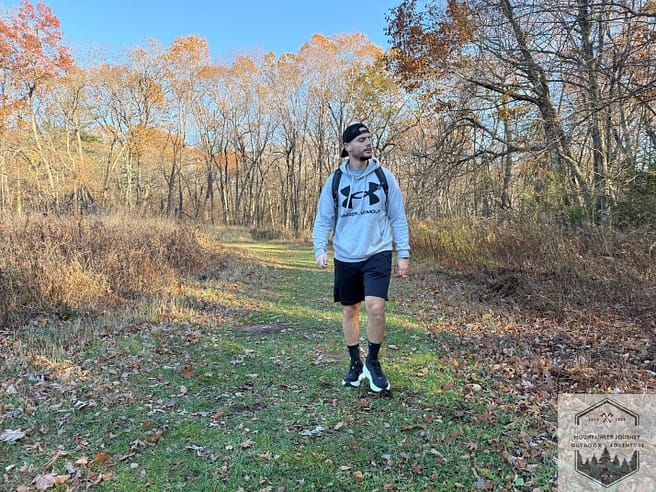
“On the fly” in my testing means how well I can access essentials without taking the pack off and how quickly I can grab what I need while moving down the trail. The Daylite Plus has five external pockets, and each one earns its place.
The side mesh pockets hold standard water bottles, though I found that a 1 liter Nalgene sits a bit loosely when the main compartment is stuffed full. Slimmer bottles and collapsible flasks stay put better. These water bottle mesh pockets are adequate but not the deepest I have used.
The front shove-it pocket is one of my favorite features. I stashed a thin wind shell in the front pocket during a blustery ridge walk on the Long Trail and pulled it out without breaking stride. The front stuff pocket fits bulkier items without taking space from the main compartment.
A small external zippered pocket on top stores frequently used items, a snack bar, or even a smaller pocket knife. It includes a key clip inside so I never have to fish around for my car keys.
The main compartment opens with a large horseshoe-shaped zipper that gives you wide access to everything inside. There is enough room for a rain jacket, lunch, first aid kit, and a layer or two without feeling cramped, and the pack offers just enough space for a solid day on the trail.
The dual-purpose padded sleeve inside accommodates either a laptop up to about 15 inches or a hydration reservoir up to 3 liters. I used a 2-liter bladder on most of my test hikes and routed the hose through the pass-through port at the top. It worked cleanly with no kinking.
On commute days, I slid my 13-inch laptop into the same padded laptop sleeve, and it rode securely against my back. Although I wouldn’t fully trust the dual-purpose sleeve to be drop-proof, so still be very careful when you are carrying something as fragile as a laptop.
I tested the YKK zippers with light gloves during early spring mornings on the trail and had no trouble with the pulls. They track smoothly and feel reliable, which matters when you are grabbing gear in cold fingers. Smaller sections let you access essentials quickly without taking off the backpack.
Trail Verified Resilience: 8.5 / 10
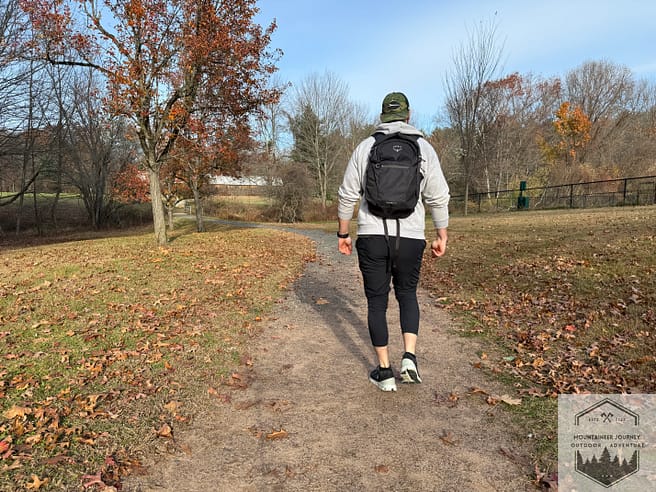
I have used the Osprey Daylite Plus across three hiking seasons from early 2024 through mid 2026.
The pack is made from 210D Nylon Oxford fabric and constructed from recycled polyester that resists light moisture. After many of miles of use, the main body shows no signs of structural wear.
However, I noticed minor abrasion marks on the bottom panel after the first couple of months of regular use, which matches what other users have reported. Those marks are cosmetic and have not deepened or turned into tears over the following two years.
The pack’s zippers are from the reliable YKK brand, and every single one still tracks perfectly. The buckles on the sternum strap and the compression straps remain tight with no cracking. I have not found a single loose thread on any seam, which speaks well to the stitching quality of Osprey products at this price level.
For weather resistance, the recycled polyester and nylon construction handles light rain and drizzle without soaking through immediately. However, it is not waterproof. Therefore, I would absolutely use a rain cover at any sign of rain on the trail.
The Daylite Plus can last for years with regular use, and mine shows no signs of quitting anytime soon.
Is The Osprey Daylite Plus Worth It?
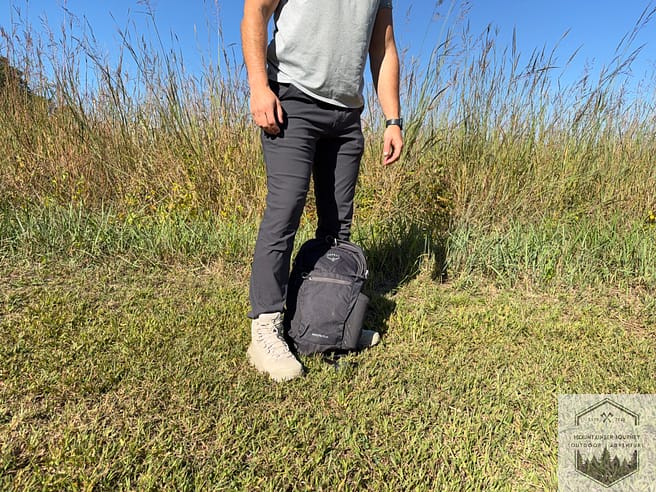
At $80 and just 1.2 pounds, the Osprey Daylite Plus is one of the strongest values I have found in the lightweight daypack category. My overall impression has only solidified: this is a comfortable, durable, and genuinely versatile pack that earns a permanent spot in my gear room.
It handles 5 to 12 mile fair weather day hikes beautifully, works as a weekend city exploring bag, and serves as a reliable light commuting pack during the work week.
Would I buy it again at full price in 2026? Absolutely. I would grab the black colorway again because it transitions seamlessly from trail to office.
Of all the daylite packs and lightweight daypacks in my gear room, this is the one I reach for most on days when I know my load will stay under 12 pounds.
Value: 9/10
Scoring Breakdown
Kinetic Comfort: 8.5/10
Chassis And Load Support: 7.5/10
On-the-Fly Utility: 8/10
Trail-Verified Resilience: 8.5/10
Value: 9/10
Total: 41.5 / 50
Our Rating: 8.3 / 10
Frequently Asked Questions
What size laptop fits in the Osprey Daylite Plus?
The padded sleeve comfortably holds laptops up to about 15 inches, though 13 inch laptops fit the most securely with room to spare.
How far can you comfortably hike with the Daylite Plus?
For loads under about 12 pounds, I have done 12-mile days without discomfort. Once you push past 15 pounds or exceed 8 to 10 miles, the lack of a frame and substantial hip belt becomes noticeable. It is comfortable for short hikes and moderate day outings but not built for longer treks with heavy gear.
What hydration bladder fits in the Daylite Plus?
The pack features a dedicated hydration sleeve for a 3-liter bladder, though I found a 2-liter reservoir to be the practical sweet spot for weight and balance. The hose routing port at the top works cleanly with most major bladder brands.
How does the Osprey Daylite Plus compare to the smaller Osprey Daylite?
The standard Osprey Daylite is a 13-liter pack without a laptop sleeve, making it better for ultra-minimal short trips. The Daylite Plus adds 7 liters of capacity, the dual purpose padded sleeve, and more organizational pockets, making it far more versatile for everyday use and longer day hikes.
How does the Daylite Plus compare to the Osprey Talon 22?
The Talon 22 has an internal frame, a padded hip belt, and better load support for weights up to 40 pounds. It costs $175 and weighs more. The Daylite Plus is lighter, cheaper, and better suited for casual day hikes and daily use, but it cannot handle the heavier loads or technical terrain that the Talon 22 thrives on.
How We Tested The Osprey Daylite Plus
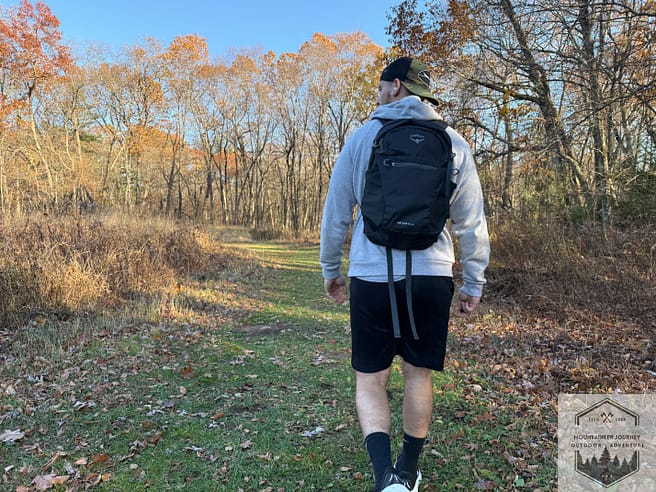
I personally tested the Osprey Daylite Plus to give you the most unbiased review possible. Like other reviews you see out there, we actually test our products with zero sponsorships and zero bias. We carefully calculate each score to help you find the best outdoor product for your needs.
To keep our ratings consistent, I compared the Daylite Plus under similar loads and routes against the Osprey Talon 22, the REI Flash 22, and a Gregory Nano 20 from our test fleet. This direct comparison approach ensures that scores reflect real performance differences rather than isolated impressions.
Mountaineer Journey is a 100% independent publisher. Over the past decade, I have logged more than 5,000 miles of hiking across diverse terrain, from the Appalachian Trail to the Rocky Mountains. We pay for the products we test; no company or manufacturer pays us to sway our opinions.
- High-quality photos and videos of actual on-trail testing
- No sponsorships or free gear accepted
- Real trail use across multiple seasons and terrain types
- Direct comparisons against competing packs under matched conditions

Tyler
Tyler is the founder Mountaineer Journey and a professional Mountain Guide with 15+ years of technical experience in trekking, mountaineering, and trail sports. Having logged thousands of miles from rugged alpine summits to urban paths, Tyler provides rigorous, field-tested insights on hiking, walking, and trail running gear. All reviews are 100% unsponsored and unbiased, ensuring you get honest scoring based on real-world performance. His mission is to help outdoor enthusiasts of all levels find reliable equipment that ensures comfort, safety, and performance on any terrain.