

Our Score
Garmin Fenix 8 Review | Worth It In 2026?
In this article, I’m going to share my HONEST Garmin Fenix 8 review for those wondering whether it is WORTH IT in 2026.
The Garmin Fenix 8 dropped in late 2024 as the flagship sports watch in the Fenix line, and it’s been turning heads ever since. This thing is built for serious hikers, trail runners, and outdoor adventurers who demand the absolute best from their gear.
For this in-depth review, I logged over 70 hikes and trail runs with the 47mm AMOLED model, so I know exactly how this Fenix watch performs when the trail gets tough.
I’ve been testing the Garmin Fenix 8 since late 2024, putting it through its paces on Northeast USA trails across all four seasons.
I’ll cover GPS accuracy, battery life, mapping and navigation features, versatility, and whether that high price tag actually makes sense.
I’ll be sharing my critical opinion backed by 16 years of experience as a professional trail guide, trail-runner, and professional gear reviewer. Unlike many sponsored reviews, I’ve put these through real-world abuse on technical terrain to provide an objective, data-driven assessment you can actually trust.
I also run the Mountaineerjourney.com YouTube Channel, with over 6,500 subscribers and over 2.2 million views, where you can watch video versions of all our reviews and comparisons.
Related: Garmin Fenix 8 Long-Term Investment Report
Editor’s Note: We updated this review on 7/19/26 with new pictures and insights after further testing.
Should you buy the Garmin Fenix 8?

Buy if
You want the most advanced GPS watch for hiking and outdoor adventures
You prioritize premium mapping and navigation features with full topo maps
You need multi-day battery life for long backpacking trips
You value the crisp AMOLED display and touchscreen functionality
You want voice commands and new dive features in one package
DON’T Buy if
Budget is a primary concern (this watch starts at $800 and can easily go over $1200 depending on advanced features)
You prefer smaller, lighter GPS watches for casual use
You only need basic GPS tracking without advanced features
You’re satisfied with your current Fenix 7 Pro or Epix Pro
You don’t actually utilize mapping and navigation features
Garmin Fenix 8 Pros and Cons
Pros
- Top GPS Accuracy
- Exceptional Battery Life (29 days in smartwatch mode)
- Full-color Topo Maps With Turn-By-Turn Nav
- Top-Rated Durability
Cons
- High Price Point
- Steep Learning Curve For New Users
- Bulkier Watch
Garmin Fenix 8 Price
At the time of this writing, the Garmin Fenix 8 47mm AMOLED is priced around $999.
Garmin Fenix 8 Accuracy: 30%
To keep our scoring objective, I compared heart rate readings from the Garmin Fenix 8’s optical heart rate sensor with those from my Polar H10 chest strap during every testing session.
The Fenix 8 uses the same proven sensor as the Epix Pro, and during my testing, it averaged a 1.4 bpm variance compared to the Polar H10. That’s genuinely impressive, better than the Garmin Vivoctive 6 and the Venu 4.
The lag time was minimal; each time my heart rate spiked above Zone 2 during an ascent, the Polar H10 chest strap and the Fenix 8 were in harmony. This was the most accurate watch I’ve tested for heart rate accuracy.
During GPS testing, I compared the Fenix 8 against my Garmin GPSMAP 67 and pre-verified GPX routes.
The multi-band GNSS system supporting GPS, GLONASS, and Galileo geo satellites delivered exceptional GPS tracks throughout my testing. In dense forests and urban canyons, where other watches struggle to maintain satellite connectivity, the Fenix 8 maintained solid satellite connectivity.
Distance accuracy averaged just 0.03 miles across varied terrain, flat trails, steep mountains, normal asphalt roads, and heavy tree cover.
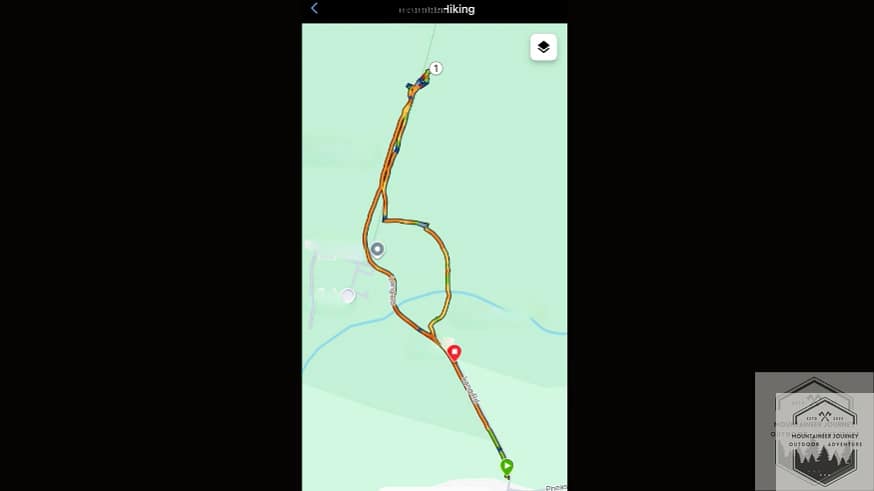
The GPS track quality stood out immediately. Unlike budget watches that produce squiggly lines through tight switchbacks, the Fenix 8 drew smooth, accurate paths that matched my verified routes almost perfectly. The satellite connectivity was quick and maintained a great connection throughout every testing period.
Elevation accuracy, thanks to the barometric altimeter, stayed within 3.5 feet of my reference data. The watch corrects in real-time rather than waiting until after your activity.
Where I noticed occasional hiccups was during rapid transitions—like jumping from shade to direct sunlight or moving between buildings. The watch would briefly search before locking back on, but it never completely lost me.
Overall, the Garmin Fenix 8’s GPS accuracy puts it at the top of its class. Garmin continues to lead here, and it shows.
Accuracy Score: 9/10 (30%)
Battery Life: 20%
The Fenix 8 absolutely crushes the competition in terms of battery life. This is where spending the extra money actually pays dividends.
Garmin claims up to 29 days in smartwatch mode for the 47mm AMOLED model and 48 hours in full GPS mode. Compare that to the Apple Watch Ultra 3, which barely got past 30 hours in normal smartwatch mode during our testing.
During my real-world testing with the AMOLED display active, notifications enabled, and normal daily use, I consistently hit 16.5 to 18 days in smartwatch mode. That’s with the always-on display enabled and regular syncing to the Garmin Connect app.
In GPS mode with navigation active and ClimbPro running, I logged 10+ hours on a single charge during mountain hikes. The watch still showed 43% remaining after an 8-hour backcountry session, with the maps continuously displayed. This was approximately a 4.1% hourly burn rate.
Consider the Solar model if you need “ultra” level battery life. However, if you’re an Ultra racer with a 30-hour cutoff, this watch will not finish the race in Multi-Band mode. You must toggle to ‘All Systems’ at 50% battery to prevent it from dying on your wrist.
The charging cable works reliably, though I wish Garmin would standardize on a single charging cable across its new watches. A full charge takes about 90-120 minutes from empty.
For multi-day backpacking trips, this offers better battery life than any Apple Watch or most competing Garmin models at this price.
Battery Life Score: 9/10 (20%)
Mapping & Navigation: 20%

The navigation features on the Fenix 8 are genuinely unmatched. This is where the watch stands out from the rest of the market and other Garmin watches. I was extremely impressed.
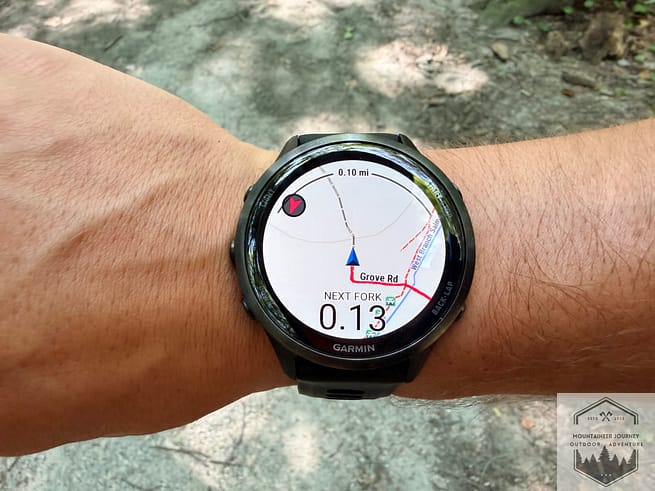
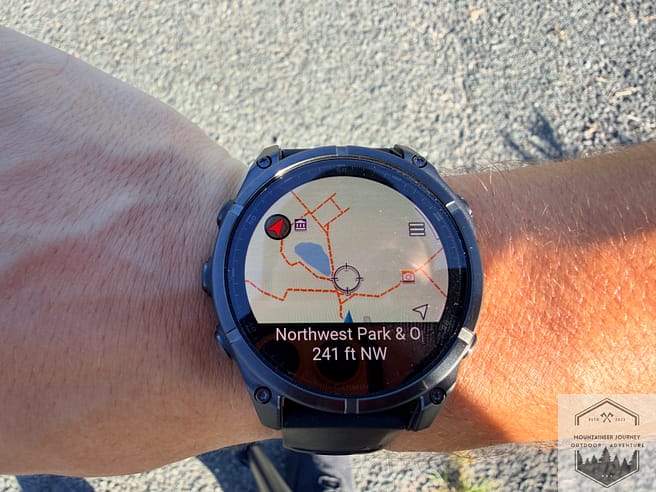
Full-color topographic maps come preloaded, and they’re LIT UP on that AMOLED screen. You can swipe left or right through different data pages while keeping the map visible, and the touchscreen makes panning and zooming intuitive.
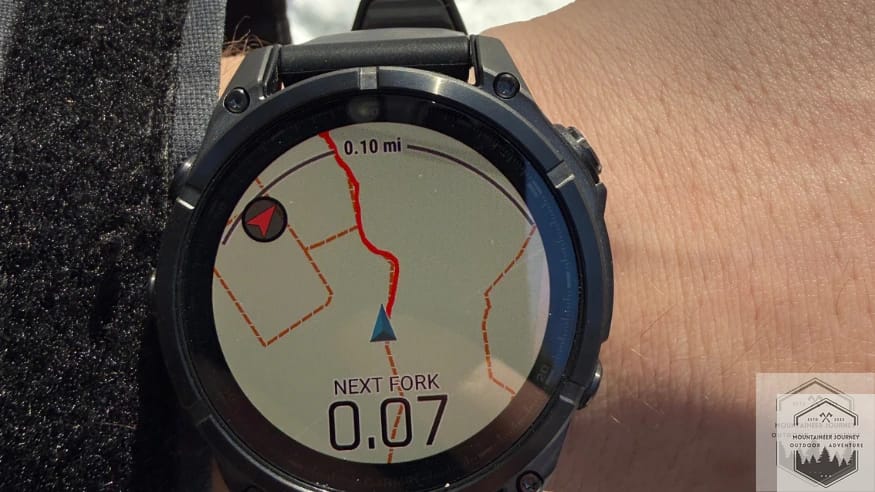
During my testing, I used the turn-by-turn navigation on unfamiliar trails in the White Mountains. The watch alerted me before every junction, showed the upcoming terrain profile, and estimated climb durations with surprising accuracy.
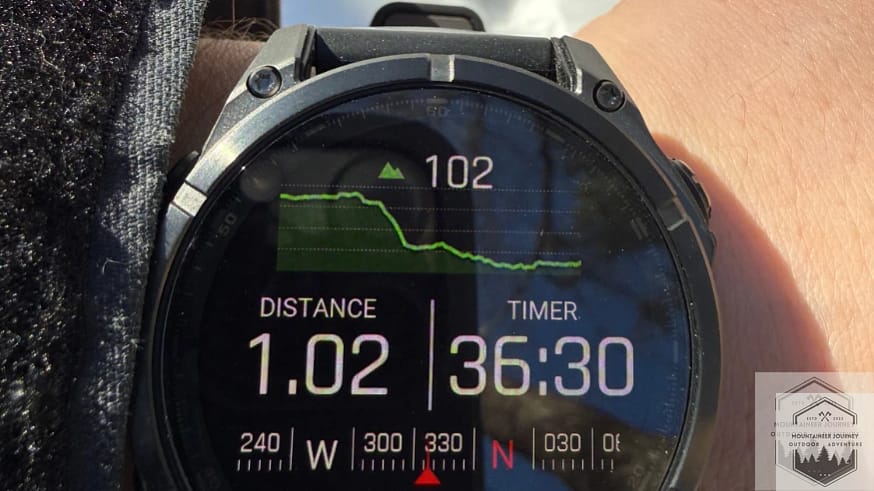
ClimbPro remains one of my favorite features. Seeing the gradient breakdown of the upcoming climb shows how long it will take to reach the summit and what percentage grade to expect, which entirely changes how you pace yourself.
Although I do like to keep myself surprised at times, the ClimbPro was super accurate and kept me dialed in while I tried to maintain a Zone 2 Heart rate zone.
The off-course alerts actually work. When I intentionally veered off my planned route, the watch buzzed within 25-45 feet and immediately offered to create a route back to my original path or adjust my distance goal through dynamic round-trip routing. This was similar to the Coros Pace 4, but even quicker.
You can create routes directly in Garmin Connect or import GPX files, and they sync seamlessly. The watch stores waypoints, recent courses, and favorite locations in a consolidated Saved menu for quick access.
This interface took some time to get used to; if this is your first time with true navigation on your watch, be patient.
Map readability in direct sunlight is excellent on the AMOLED. In dim conditions, the brighter screen makes a real difference compared to older MIP displays on previous Garmin watches.
This is the feature set that justifies the Fenix 8’s existence. If you need true mapping and navigation, nothing else comes close.
Mapping & Navigation Score: 9/10 (20%)
Features & Training: 10%
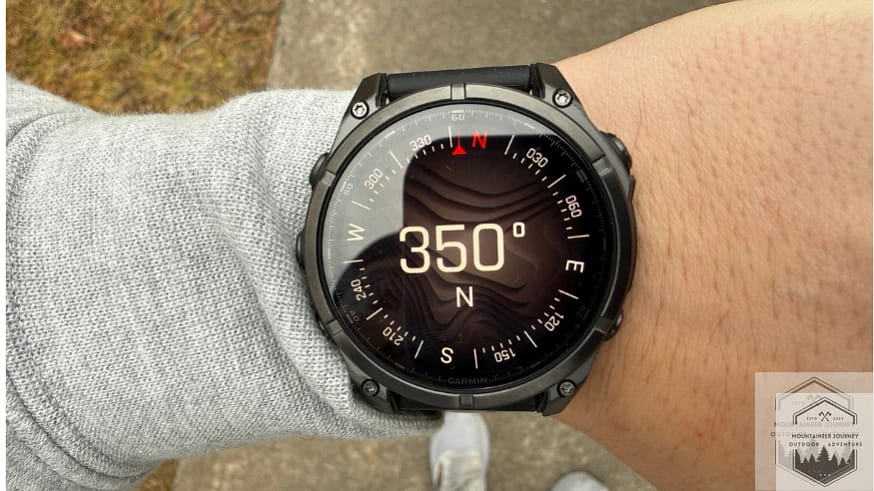
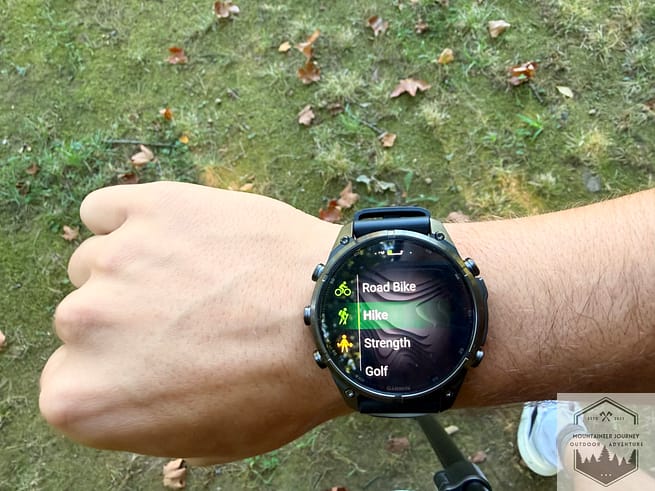
The Garmin Fenix 8 packs an absurd number of sports features. With 80+ preloaded activity profiles, it covers everything from trail running to river tubing to golf (rivaling the dedicated Approach S70).
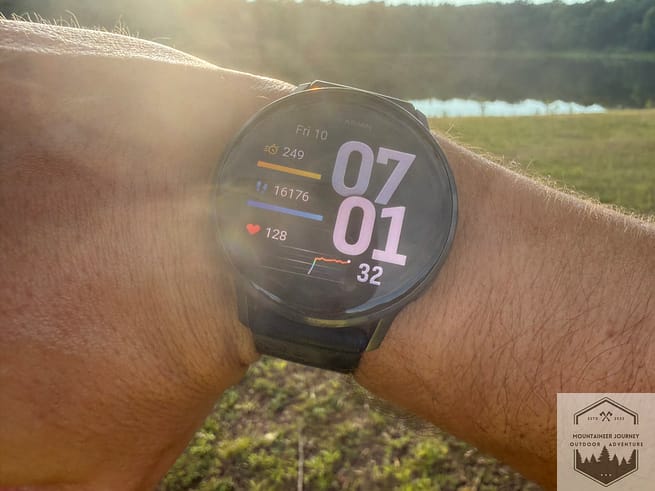
Core tracking includes heart rate, steps, distance, elevation gain, and comprehensive health metrics. The watch monitors stress levels, sleep quality, Body Battery for energy tracking, and provides personalized Morning Reports each day.
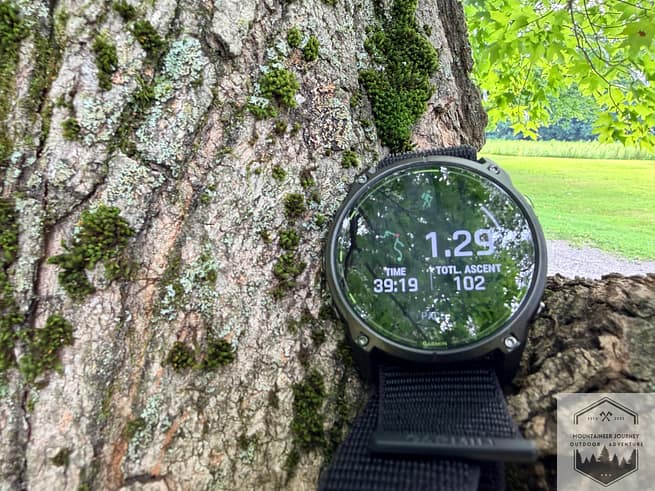
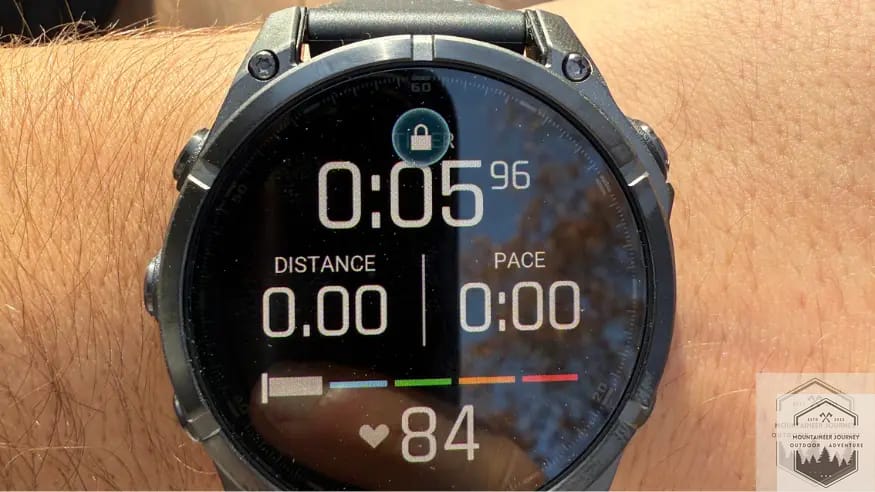
During runs and hikes, the display shows current pace, heart rate zone, distance, elapsed time, and whatever additional metrics you configure. Most of the time, I like to keep my heart rate, distance, and elevation on one screen at once.
New features on the Fenix 8 include voice commands that actually work. I tested voice messaging and phone calls through the watch’s speaker and microphone. During trail running, it tracks your location. I like to add voice notes about where I change up my stride or try something new. I can see exactly where I was on the trail during each voice note.
The LED flashlight built into the watch body provides legitimate utility during pre-dawn starts and post-sunset returns. It’s brighter than I expected.
The depth sensor enables new dive features for recreational diving down to 40 meters. Although I didn’t test this specifically for diving.
The sleep tracking on the Garmin Fenix 8 is quite accurate compared to my Oura Ring. While overall sleep accuracy is very high, there are still discrepancies between REM and deep sleep; however, it is much more accurate than any other watch I’ve tested, including my Oura Ring.
Garmin Connect Mobile App
The Garmin Connect app ties everything together. All your workouts, health stats, sleep data, and training insights live in one place.
The interface has improved significantly over the past few years. Data visualization is clean, and you can drill down into individual activities for detailed analysis.
Route planning works smoothly; I can easily plan my routes ahead of time and sync them up instantly before a run or hike.
One minor gripe: the app can be slow to sync after particularly data-heavy activities. It’s not a deal-breaker, but I’m hoping Garmin addresses this with software updates.
Features & Training Score: 9/10 (10%)
Versatility: 10%
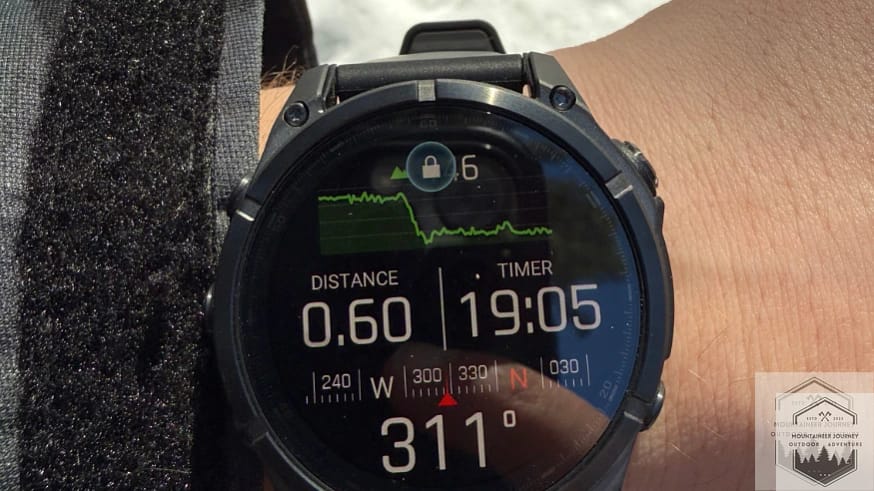
The Fenix 8 handles just about anything you throw at it, though it’s clearly optimized for outdoor adventure over daily smartwatch use.
Multi-sport tracking is seamless. Transitioning from swim to bike to run in triathlon mode requires zero thought. The watch auto-detects changes in activity and accurately logs everything.
Daily wear comfort depends on your wrist and tolerance. The 47mm AMOLED model isn’t small by any means; it sits prominently and weighs enough to remind you it’s there.
The titanium bezel and sapphire crystal shrug off impacts that would destroy cheaper watches. I’ve banged this thing against granite, scraped it through brush, and submerged it in everything from mountain streams to my showers. Not a scratch on the crystal.
Button operation in cold conditions (with gloves) works well—the five physical buttons handle all the basic tasks without needing the touchscreen. However, in wet conditions, definitely opt for using the buttons instead.
The AMOLED watch drains faster than Solar models, so there’s a trade-off between display quality and maximum endurance.
Versatility Score: 8.5/10 (10%)
Is The Garmin Fenix 8 Worth It?

This is the question that matters, and the honest answer is: it depends entirely on who you are.
At $999+, the Garmin Fenix 8 represents a serious investment. You can buy the Garmin Forerunner 170 for $300 less and get 90% of the running features.
But if you need comprehensive mapping and navigation, multi-day battery life, and rugged durability that survives backcountry abuse, nothing matches the Fenix 8.
For upgraders from the Fenix 7 Pro or Epix Pro, the new connectivity features (voice commands, phone calls, satellite messaging on Pro models) may justify the upgrade. If you’re coming from a Fenix 6 or older, the improvements are dramatic.
The watch is genuinely overkill for casual users. If you run three times a week and occasionally hike local trails, this is way too much for you. Definitely best to save your money if you are looking for modest features.
For ultramarathoners, serious mountaineers, and adventure athletes who depend on their GPS watch in remote conditions, the Fenix 8 is the right tool. The satellite connectivity options on Pro models add genuine safety value for off-grid adventures.
Longevity is also a plus for the Fenix 8 model. Previous Fenix models still receive updates, dating back to 2017.
Value (10%): 8/10
Scoring Breakdown
Accuracy (30%): 9/10
Battery Life (20%): 9/10
Mapping & Navigation (20%): 9/10
Features & Training (10%): 9/10
Versatility (10%): 8.5/10
Value (10%): 8/10
Total Weighted Score:
2.7 + 1.8 + 1.8 + 0.9 + 0.85 + 0.8 = 8.6
Our Rating: 8.6/10
Frequently Asked Questions
How accurate is the GPS on the Garmin Fenix 8?
The GPS tracking on the Garmin Fenix 8 is the best I’ve tested to date. In my testing, it was only 0.03 miles off my mapped GPX.
How long does the Fenix 8 battery last during hiking?
With GPS and navigation active, the 47mm AMOLED model lasted 10+ hours on my mountain hikes, with significant battery remaining (less than 50%). In smartwatch mode, expect 16.5-18 days with normal use.
Is the Fenix 8 worth upgrading from the Fenix 7 Pro?
If you want voice features, phone call capability, and a refined navigation interface, the upgrade makes sense. If your Fenix 7 Pro meets your needs, no need to upgrade.
What’s the difference between the Fenix 8 AMOLED and Solar models?
AMOLED models offer a brighter, more vibrant display and a snappier touchscreen response. Solar models provide longer battery life (especially with sun exposure) but use less vibrant display technology.
Can you use the Fenix 8 for diving?
Yes, the Fenix 8 includes a depth gauge and depth sensor rated for recreational diving to 40 meters.
Is the Garmin Fenix 8 good for backpacking?
Absolutely. The multi-day battery life, comprehensive topo maps, and ClimbPro features make it ideal for extended backcountry trips. I call it the best GPS watch available for serious backpacking.
How We Tested and Our Methodology
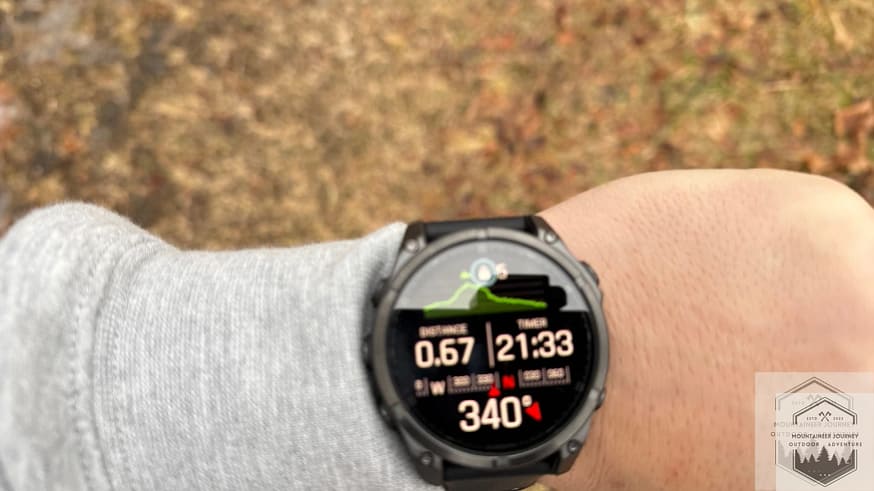
I personally tested the Garmin Fenix 8 for over 12 months since late 2024, with the sole intent of giving you the most unbiased review possible.
Mountaineer Journey is a 100% independent publisher, and our testing team has spent years evaluating outdoor gear in real-world conditions.
Over the past decade, I’ve logged more than 3,000 combined miles of hiking, trail running, and road running, which gives me the experience to evaluate accuracy, comfort, and long-term performance—not just lab numbers.
Every category score is based on objective testing, not brand claims.
Accuracy Testing
Heart rate accuracy gets compared against a trusty Polar H10 chest strap.
GPS accuracy is double-checked against a handheld GPS unit and a previously verified mapped GPX route.
We look at four key things when it comes to accuracy: heart rate variance, distance error, GPS track quality, and elevation stability.
Battery Testing
We test real-world battery drain, whether it’s during a GPS workout or when the watch is just sitting on your wrist.
When we score the battery life, we’re looking at three things: how long it lasts on GPS, how consistent the battery is, and how long the watch lasts in smartwatch mode.
Mapping and Navigation Testing
Navigation gets scored on its capability, not its price tag.
Watches with full mapping receive higher scores than those limited to breadcrumb navigation or orientation-only tracking.
Features, Versatility, and Value
Features cover things like training tools, recovery support and how well the watch integrates with your day-to-day life.
Versatility is all about how well the watch adapts to running, hiking, heading to the gym or just wearing on the job.
Value is all about whether the price is right, whether you can trust the watch to last, and whether the manufacturer will still be supporting it a year from now.
To make sure every review is consistent, we use the same scoring framework we use across all our GPS watch reviews: Accuracy • Battery Life • Mapping and Navigation • Features • Versatility • Value
That way you can easily compare models side by side, without having to worry about different scoring rules for each one.

Tyler
Tyler is the founder Mountaineer Journey and a professional Mountain Guide with 15+ years of technical experience in trekking, mountaineering, and trail sports. Having logged thousands of miles from rugged alpine summits to urban paths, Tyler provides rigorous, field-tested insights on hiking, walking, and trail running gear. All reviews are 100% unsponsored and unbiased, ensuring you get honest scoring based on real-world performance. His mission is to help outdoor enthusiasts of all levels find reliable equipment that ensures comfort, safety, and performance on any terrain.