Our Score
Best Trail Running Shoes Of 2026 (Unsponsored)
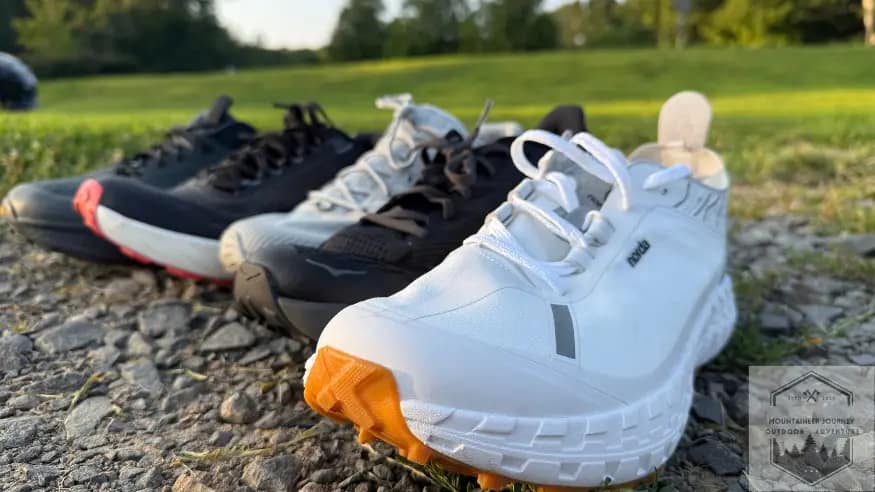
In this article, we will be reviewing the absolute best trail running shoes of 2026. This review caters to everyone from the beginning trail runner to the most advanced Ultra athlete.
As always, this review is 100% non-sponsored. We bought every single one of these shoes with our own money and tested them using our proprietary scoring system. I’ve been testing trail shoes for over 16 years (running in over 60 different models) and have built a perfect scoring system based on objective standards.
Our goal is simple: to help you find the best pair for your next adventure without the marketing hype.
Related: Best Trail Running Shoes For Hiking
Editor’s Note: We updated this review on 10/4/2026 with new insights and recommendations, as well as adding the Sylan 2 to our top 5.
Top 5 Trail Running Shoes
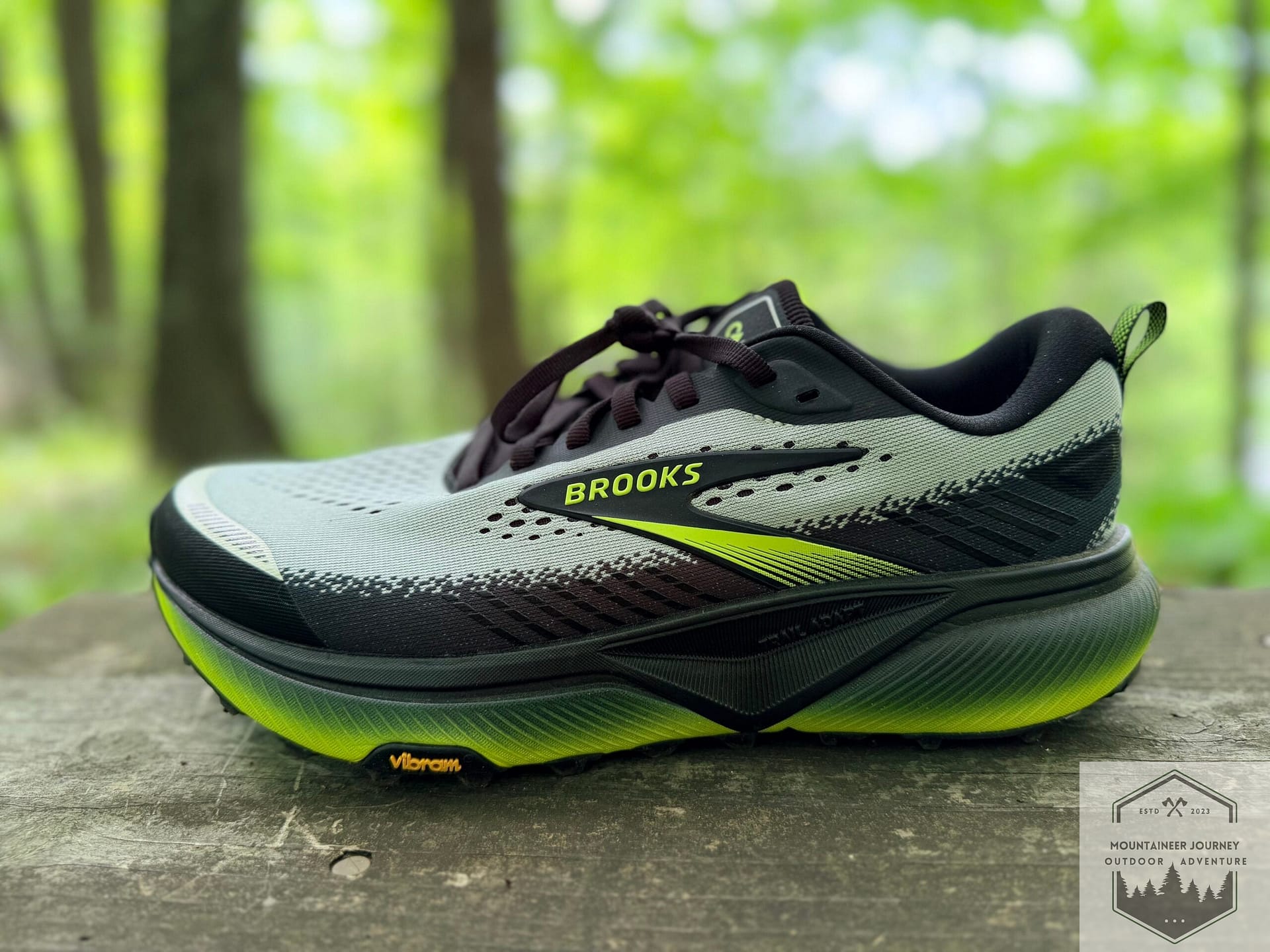
Our best all-around trail running shoe. Designed for beginners to technical trail runners. Excellent footbed comfort and spot-on grip.
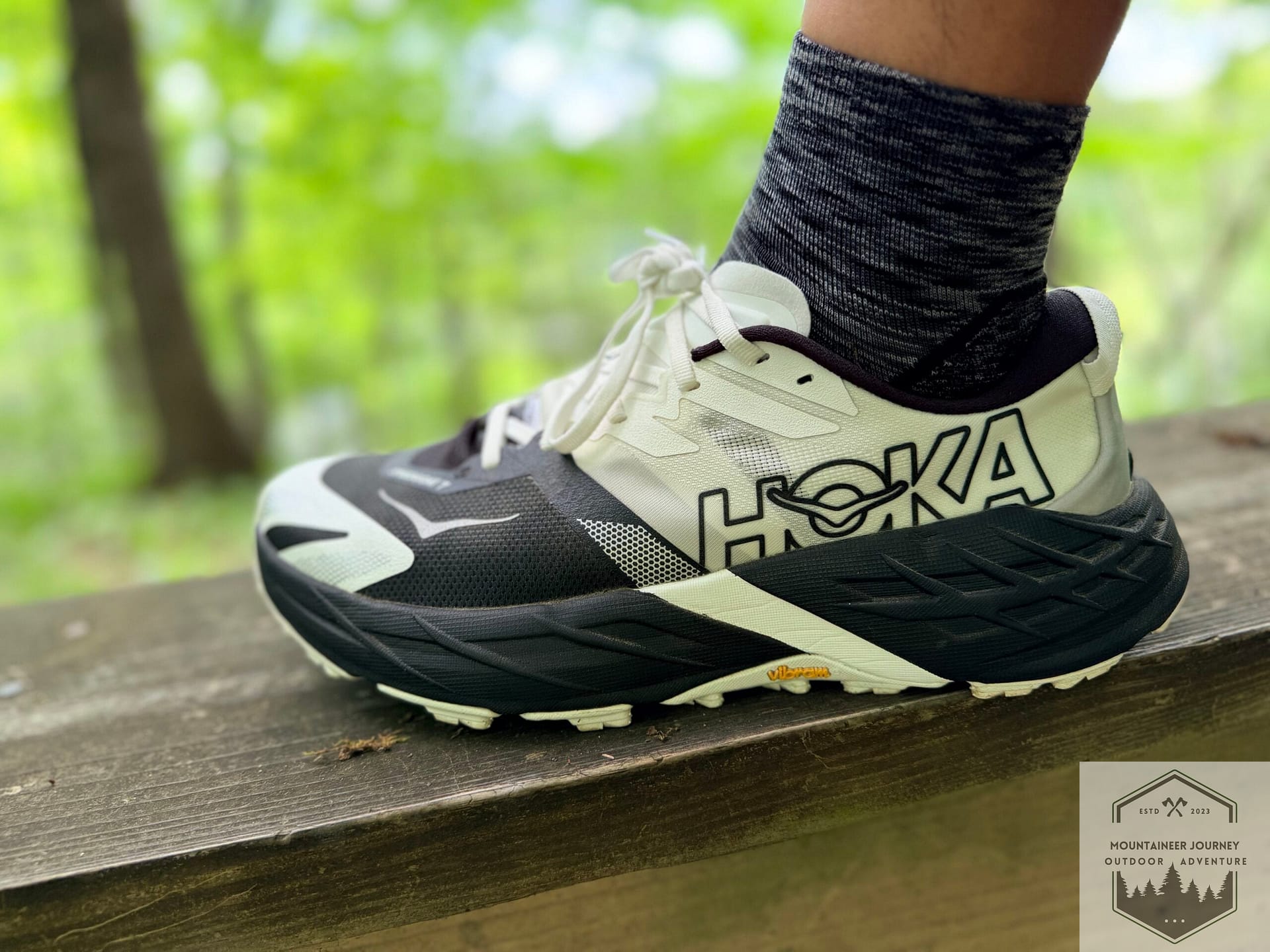
Speedgoat 7 is a great, versatile trail shoe as well as a desirable hiking shoe. The Vibram Megagrip outsole performed extremely well on all the trails we tested it on. Excellent cushioning and impact absorption.
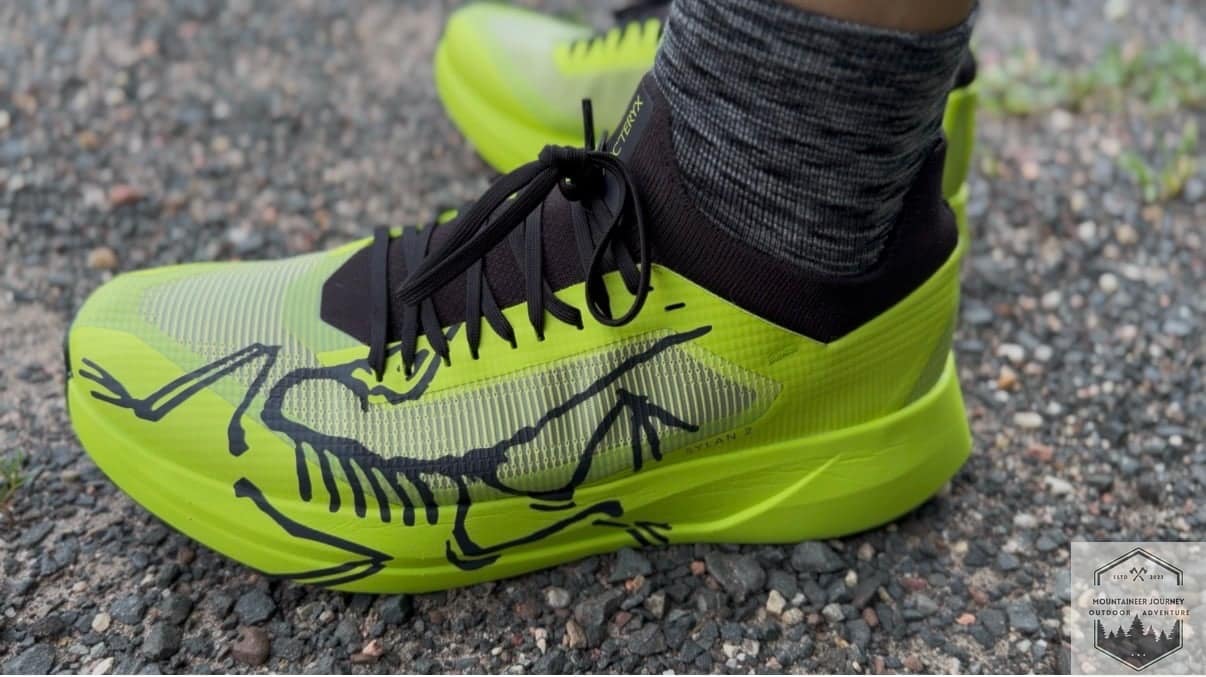
Our top-rated trail running shoe for technical trails, as well as our best lightweight trail running shoe. Designed for quick, agile moves on uneven terrain.
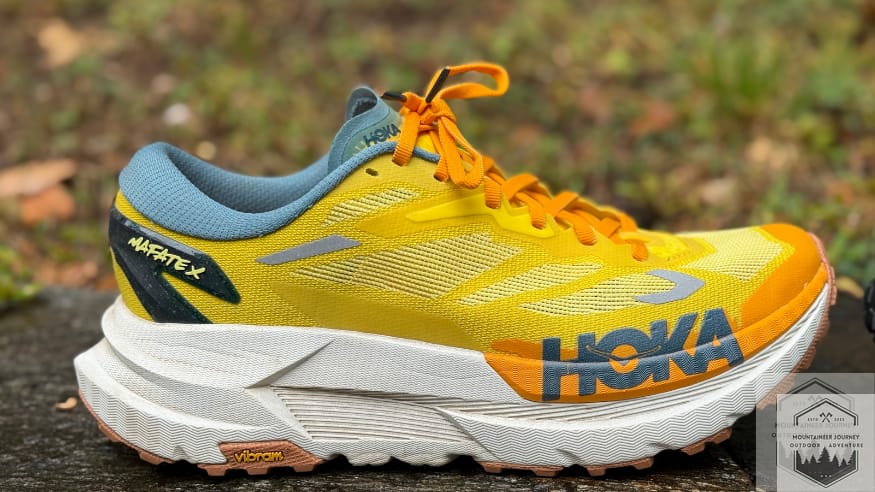
Our most comfortable trail running shoe with excellent impact absorption and energy return. Not the most stable for those always on technical trails.
The oldie but goodie, great for wet and muddy conditions. These are for those who prefer a higher heel-to-toe drop and excellent stability.
See Our Hands-On YouTube Review Of The Best Trail Running Shoes
The BEST Trail Running Shoe Of 2026
Brooks Cascadia 20
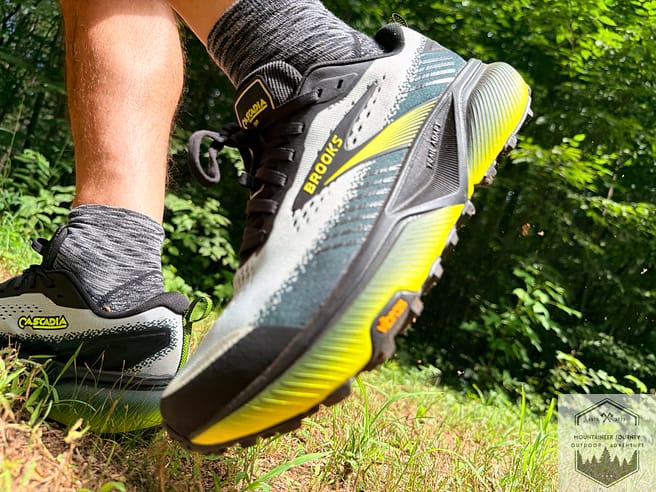
Brooks Cascadia 20 Rating: 9.1/10
The Brooks Cascadia 20 is the best overall trail shoe of 2026. It doesn’t have the highest score in any objective scoring category, per se, but it has the best overall profile.
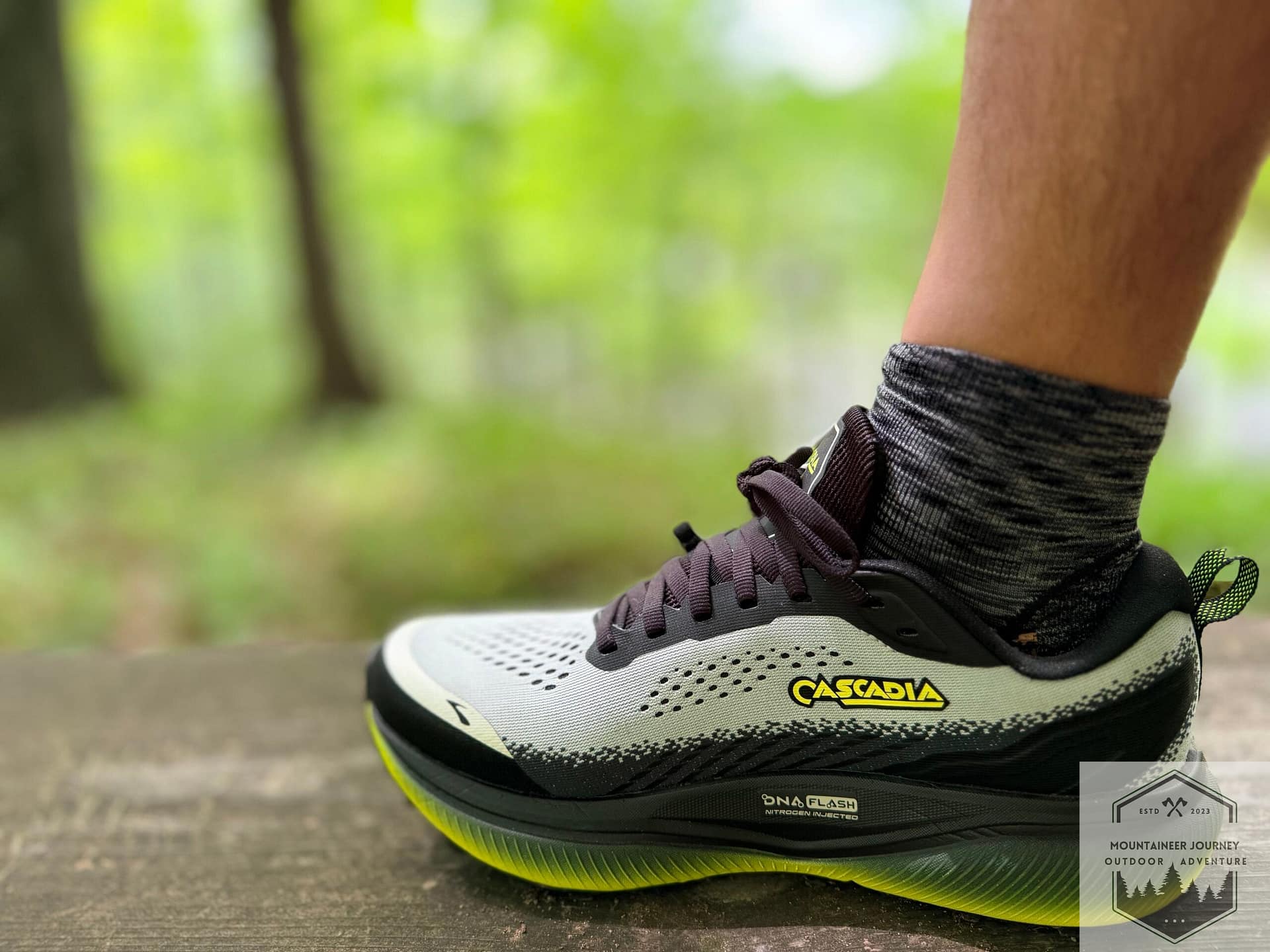
Starting with the DNA V2 flash midsole, it balances plushness with top-notch density for stability. The impact absorption is outstanding, especially for trail runners who want comfort without losing ground feel.
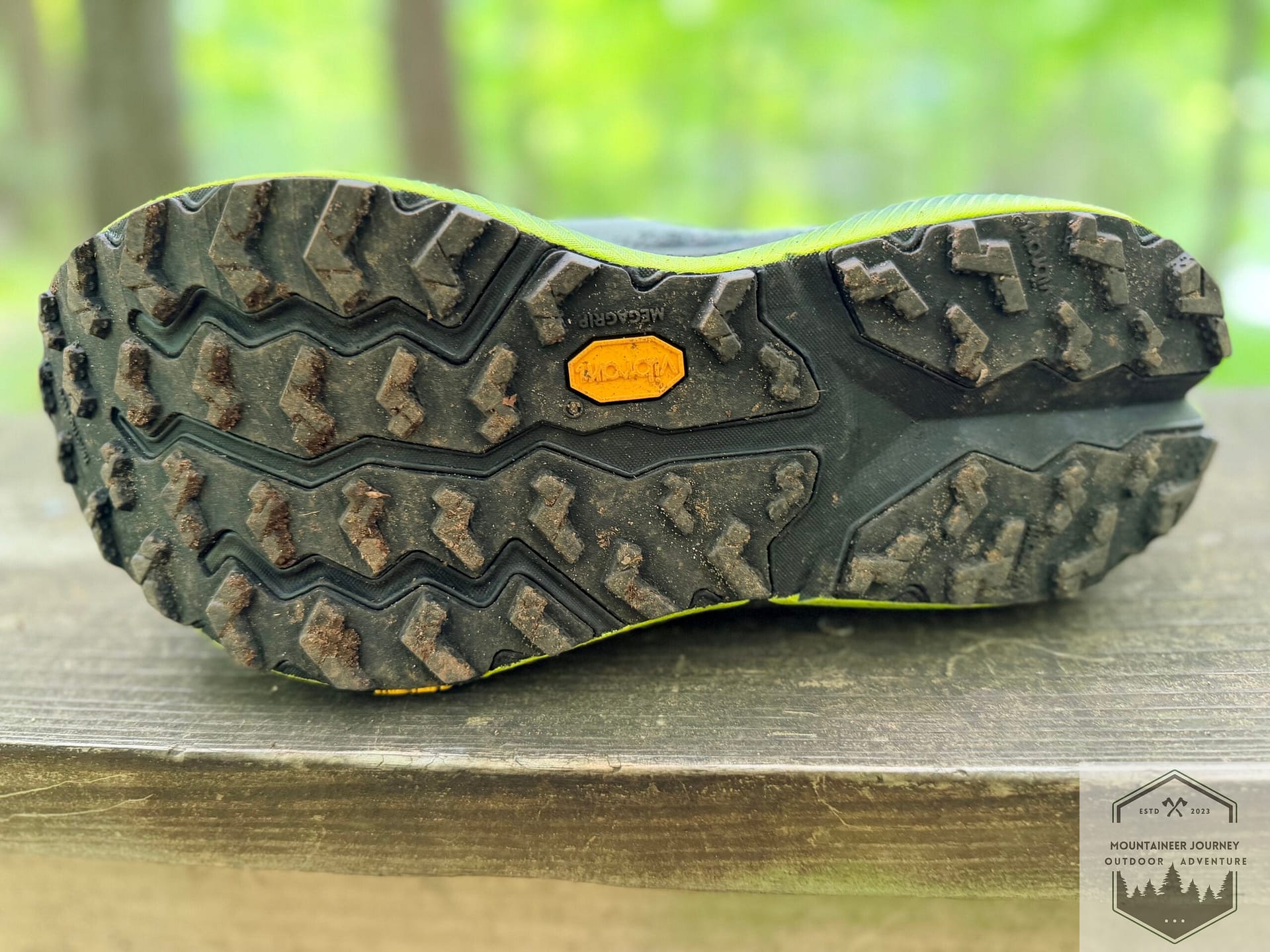
Brooks introduced the Vibram Megagrip outsole to the 20, which replaces the previous Trail Track green outsole. This updated lug profile and outsole really added the extra edge that the Cascadia 19 was missing. Side-hilling with the double-chevron lugs on the medial and lateral edges of the shoe added the extra grip needed.
If you look at the back profile of the lugs on the Cascadia 20, they’re more hexagonal. This will really help trail runners looking for a shoe that can brake well on downhills. The only terrain the Cascadia 20 was limited in was deep mud.
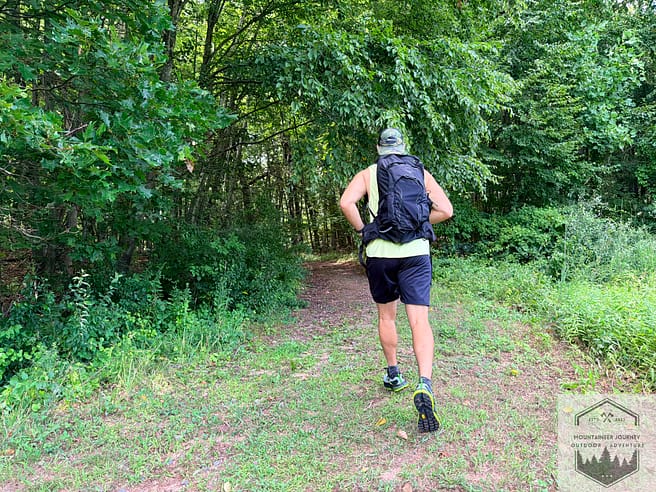
Stability-wise, the Cascadia 20 is built on a wide platform, a very secure upper, and the Trail Adapt system. The wide base and the forefoot and heel really disperse torquing forces when hitting technical trails that aren’t even terrain. This is built specifically for trail runners who don’t want a massively rigid shoe BUT don’t want to lose stability to malleability.
One downside of the Cascadia 20 is its weight and lack of nimbleness. They weigh 11 oz per shoe on the scale and, because of the wide platform, don’t have a very agile profile. If you want a lighter alternative and a more nimble profile, check out the NNormal Kjerag 2, or even the Norda 001.
One unique feature of the Cascadia 20 is its large volume and upper flexibility. I tend to overpronate with my left foot; therefore, I use an arch insert, which the Cascadia 20 can accommodate.
Overall, the Cascadia 20 is our top-rated trail running shoe of 2026. Use it on light trails to technical trails, as well as hiking. It has you covered.
Read Our Review: Brooks Cascadia 20 Review
Most Versatile Trail Running Shoe
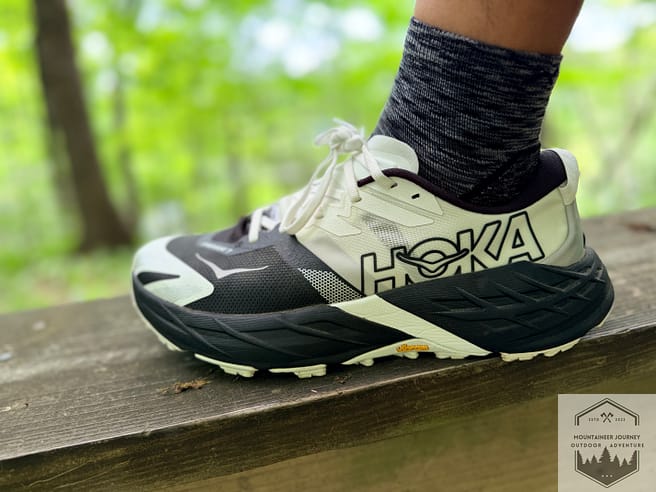
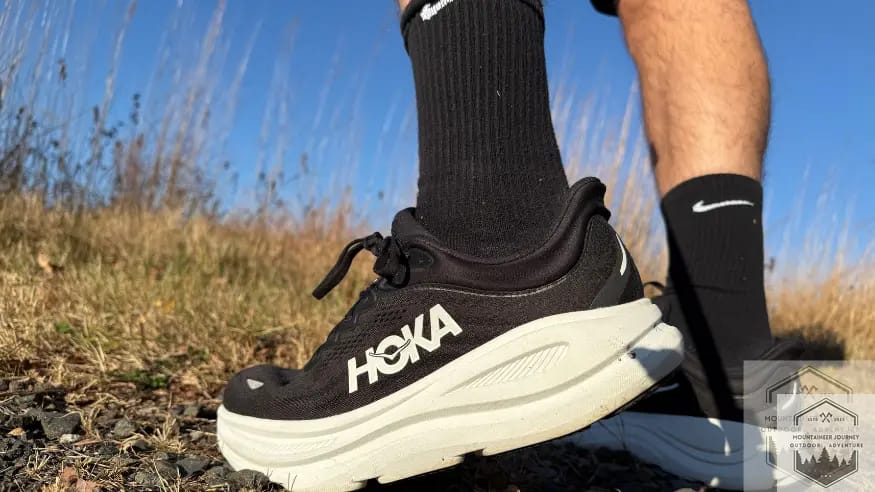
Hoka Speedgoat 7
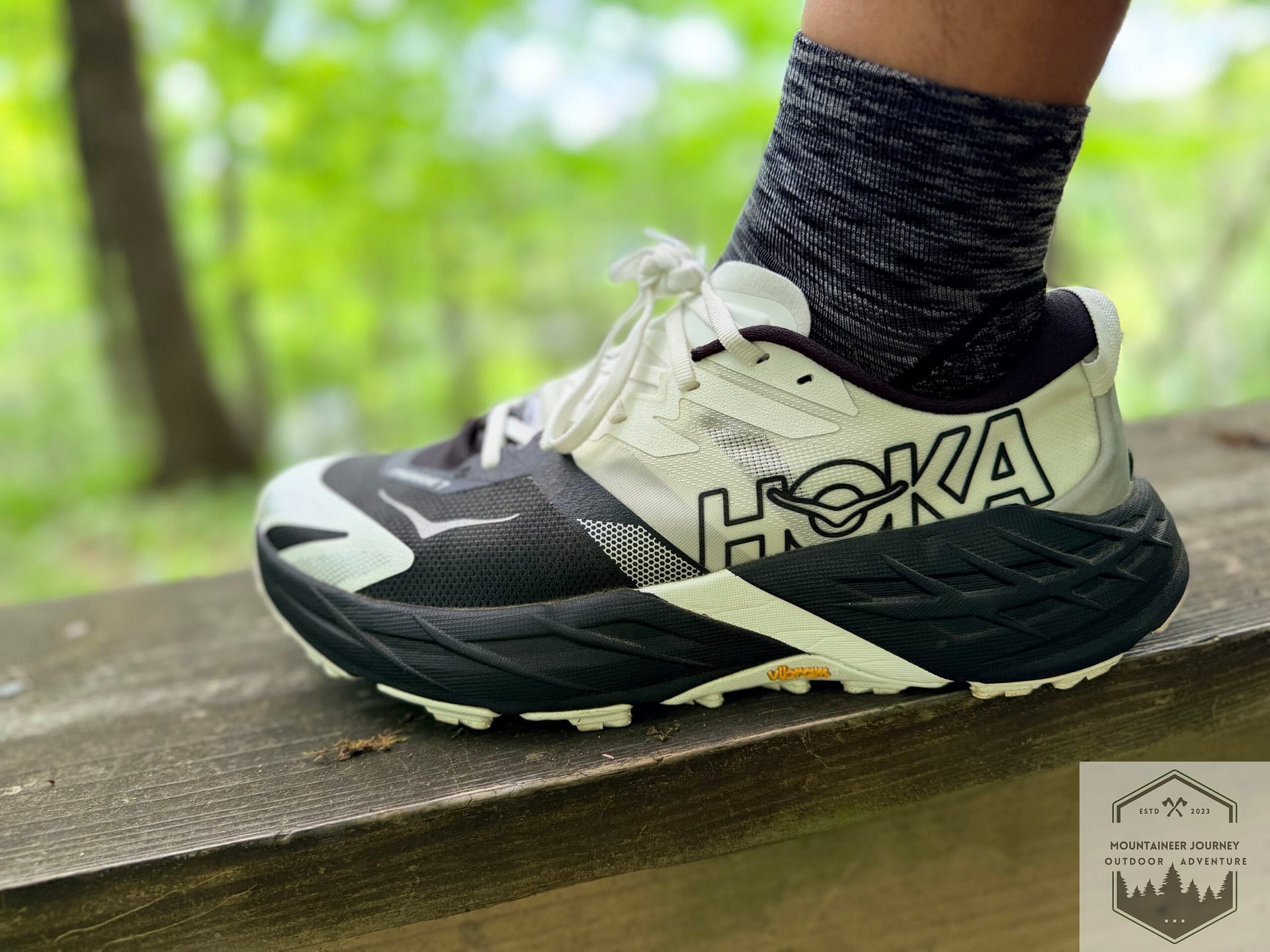
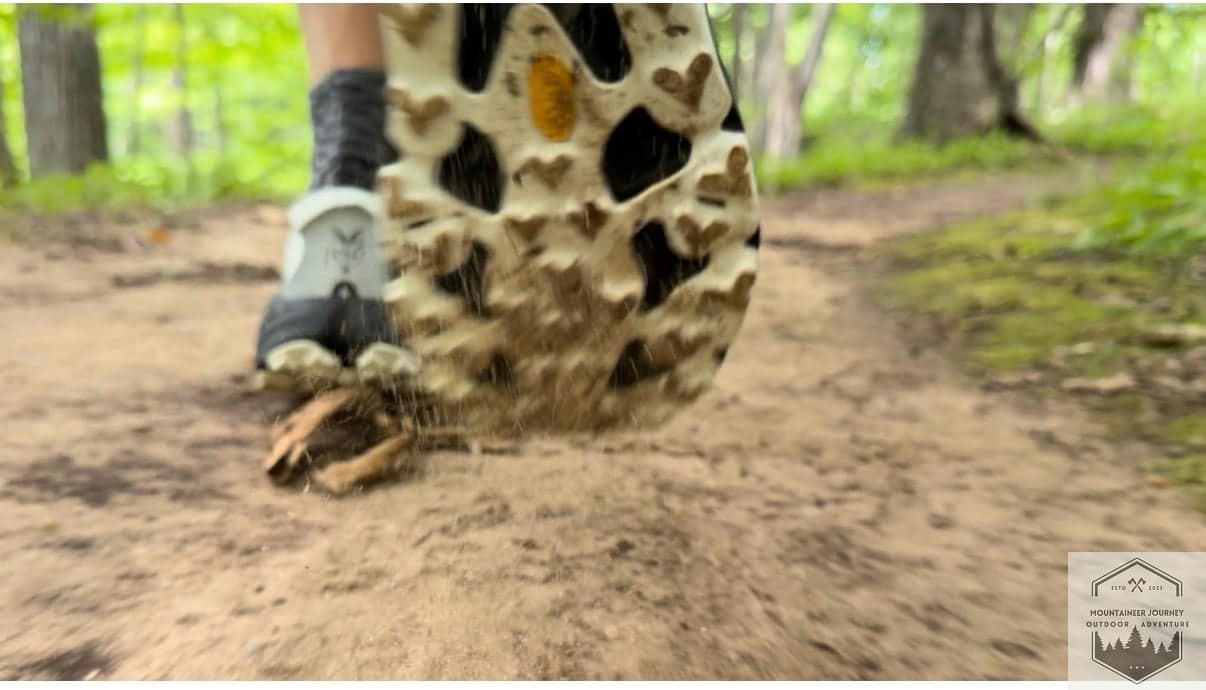
Hoka Speedgoat 7 Rating: 8.4/10
The Hoka Speedgoat 7 is an all-around crowd pleaser. It is mighty cushioned and performed very well in our testing for impact absorption. The Speedgoat 6 was very firm, and Hoka really made up for it with the 7. See Hoka Speedgoat 7 vs 6 for more.
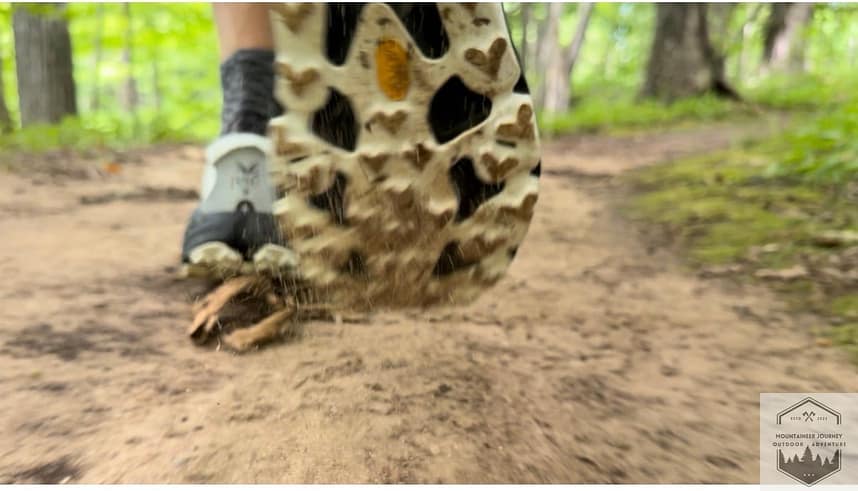
Vibram Megagrip lugs, combined with the flared heel design, really help the Speedgoat 7 eat up the terrain. It isn’t the first choice for technical trails, but it can handle them effectively. However, I tested the Speedgoat 7 in both winter and summer conditions, and the grip worked well in mixed terrain.
It lacks a traditional rock plate, but the 37 mm heel stack provides ample protection without one. The Speedgoat 7 is a lightweight and agile shoe, weighing only 10 ounces per shoe. This design improves performance on trail runs, allowing for more acceleration.
While hiking, the shoe’s lightweight nature minimizes foot fatigue, making it an effective choice for both activities. One downside is the break-in time; it took about 5 to 10 miles to fully break in, so be patient when first trying the Speedgoat 7s.
The Speedgoat 7 has a true-to-size fit in terms of length; however, they tend to be narrow and quite compressive. During my trial with a men’s size 10.5 wide, I found them slightly narrow, which might not provide adequate comfort for those with wider feet.
If you have wide feet, consider alternatives like the Topo Ultraventure 5 or the Altra Lone Peak 9+, which offer a more accommodating fit. However, we recommend the Hoka Speedgoat 7 for mild to moderate trails and for those who want a comfortable, versatile hiking shoe.
Read Our Review: Hoka Speedgoat 7 Review
Best Lightweight Trail Running Shoe
Arc’teryx Sylan 2
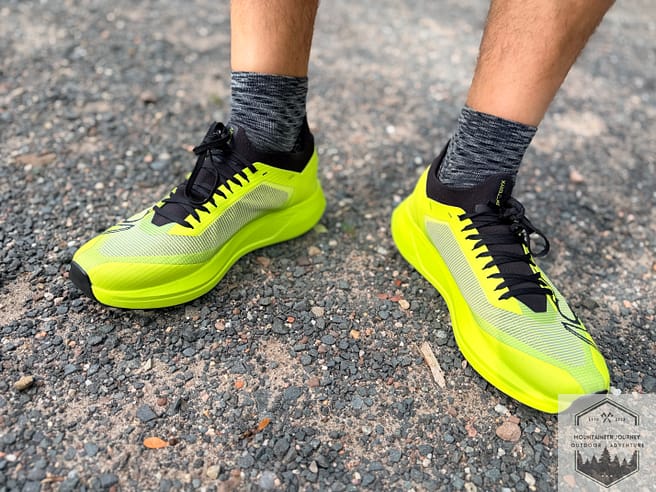
Our Rating: 8.6/10
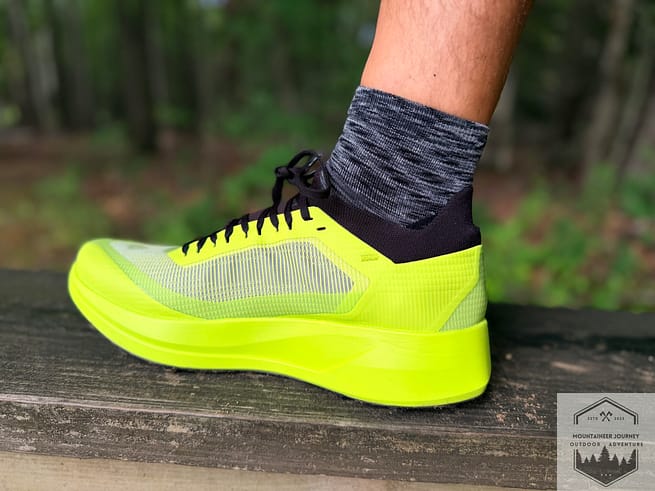
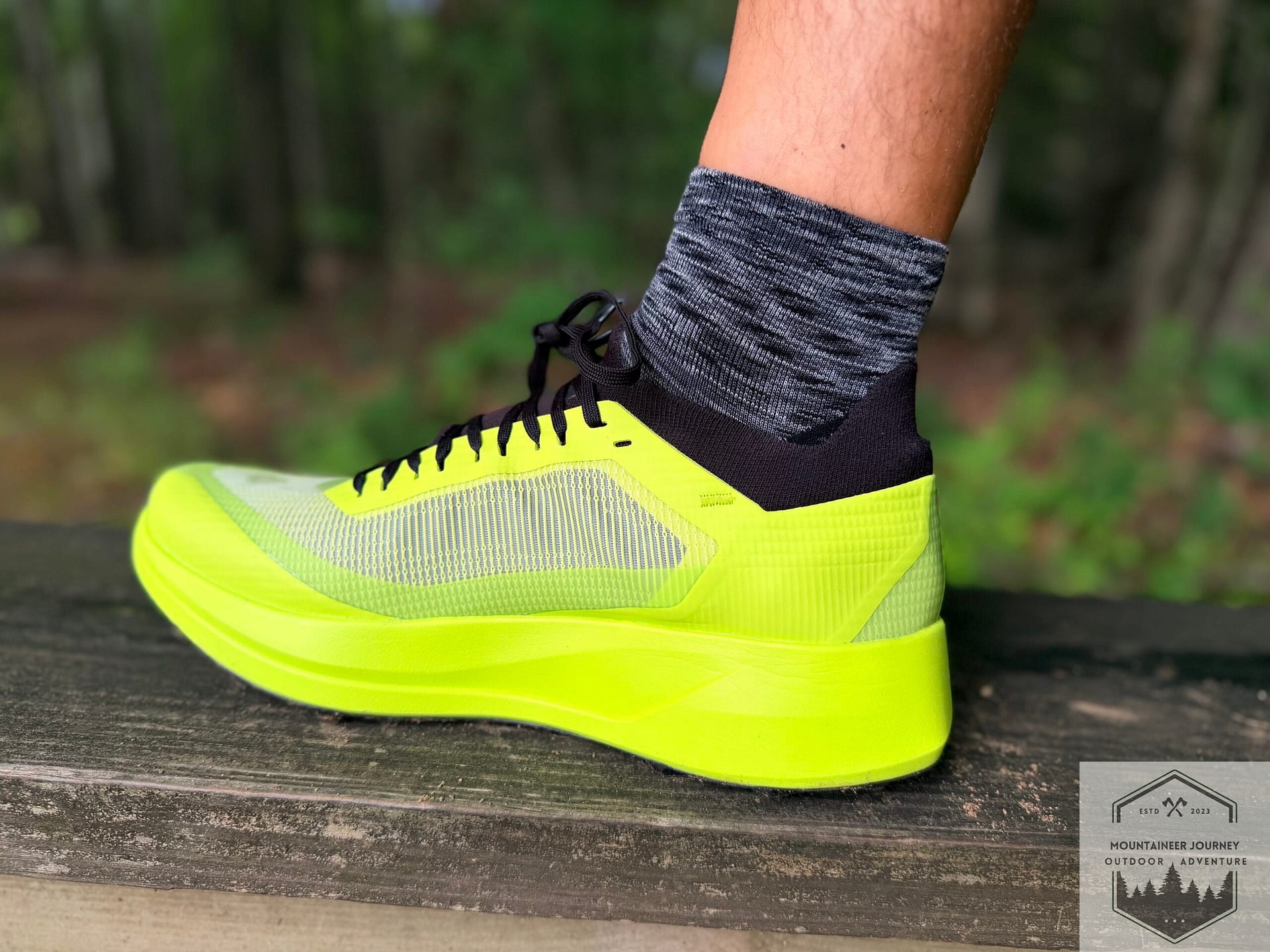
The Arc’teryx Sylan 2 is an ultra-lightweight, nimble trail running shoe for runners who want a fast model with an energetic ride. This trail shoe suits runners who prefer stability and control over a plush, comfort-focused ride.
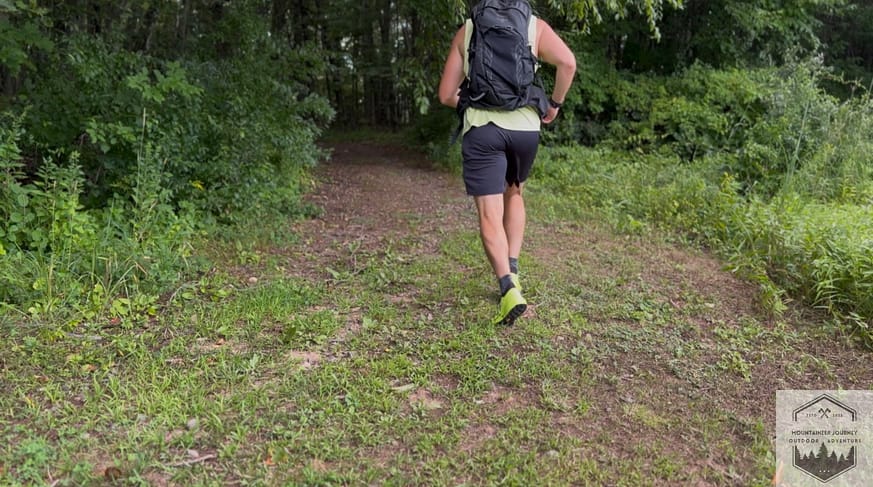
While testing the Sylan 2 on technical trails, I found it responsive and quick, especially on uneven terrain. The midsole’s energy return was slightly disappointing. However, I found the shoe has virtually no midsole compression, which is a great value on off-camber trails.
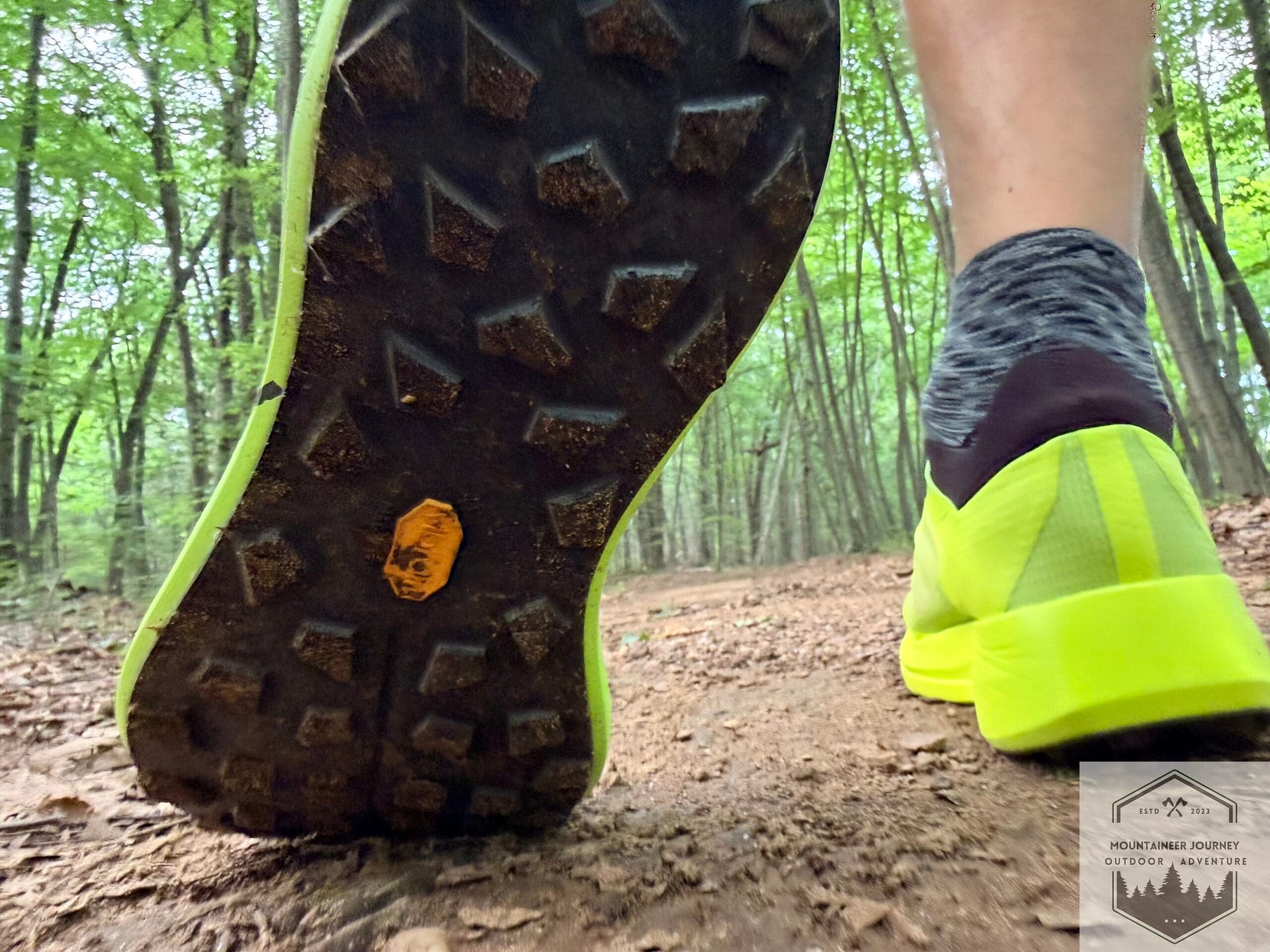
The Sylan 2 features a Vibram Megagrip Litebase outsole; it is one of the strongest grip setups I have tested on a carbon-plated shoe. The outsole uses a tapered lug pattern, with a lug height of 4.5 mm around the perimeter and 3.5 mm in the center. The dual height design serves two purposes: the taller perimeter lugs bite into loose terrain and wet rock, while the shorter center lugs provide a stable platform on firmer ground, especially on singletrack and flat terrain.
Overall, this is a great trail running shoe for those who want a tight fit with technical trail running capabilities. Also, this shoe fits extremely tight; I would avoid this if you are a wide-footed runner. Unfortunately, it does come at a premium price of $220 and fits a smaller niche of runners.
Read Our Review: Arc’teryx Sylan 2 Review
Most Comfortable Trail Running Shoe
Hoka Mafate X


Our Rating: 8.6/10
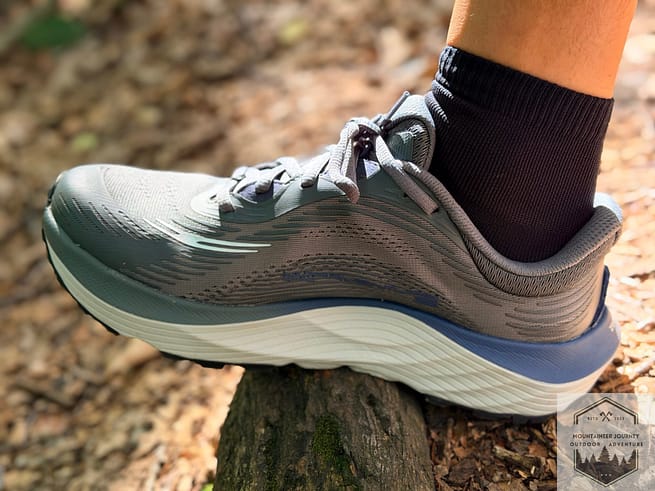
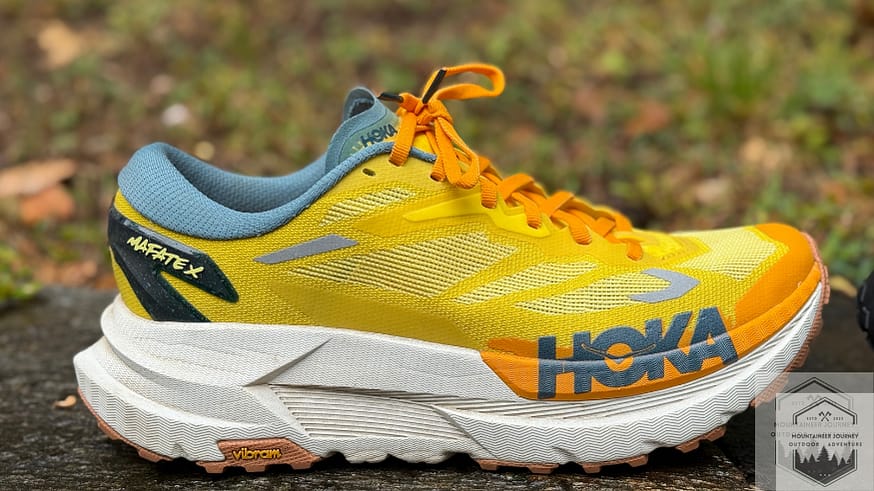
The Hoka Mafate X is designed for ultra-distance runners and has features that maximize comfort and performance over long distances. With a 47mm heel and 41mm forefoot stack, it’s like running on clouds. The upper is engineered mesh for durability and breathability.
The first time I put the Hoka Mafate X on the trail, it felt like my feet were inside shock-absorbing armor. Every step on that rocky climb felt like I was rolling on a soft cloud.
The PEBA foam and carbon plate combo gave a springy push that turned impact into propulsion, and the thick cushioning kept my joints fresh. I remember bombing down a long downhill and expecting that usual knee jolt, but it never came. That’s when I realized the Mafate X isn’t just another max-cushioned trail shoe; it’s a pure endurance machine, a great race shoe option.
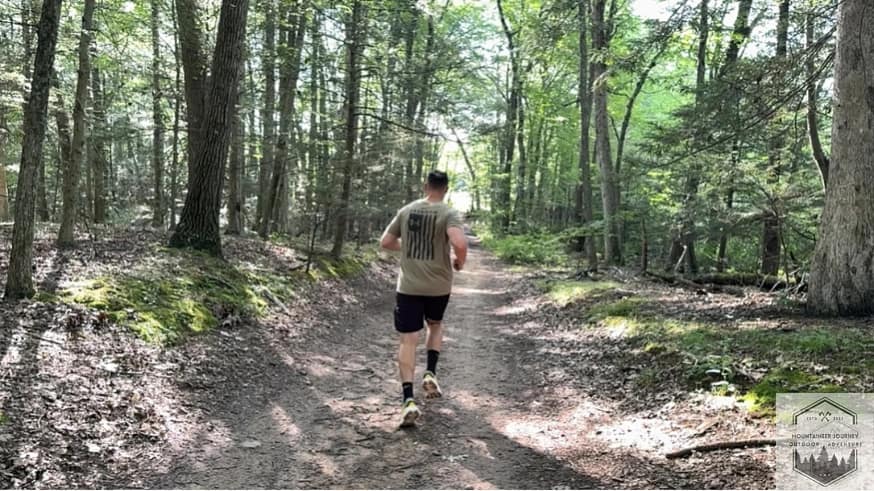
Comfort is rated among the best of all the trail shoes we’ve tested. It’s not without its downsides. The high stack definitely reduces ground feel and sensitivity on the trail.
During testing, I noticed some instability issues while climbing on high-grade, uphill terrain. While Hoka has many stability features in the shoe, such as the forked carbon plate and TPU heel counter, these can’t fully counteract the topple-over effect from such a plush outsole.
While the Hoka Mafate X is heavier than some competitors, it makes up for it with good shock absorption and energy return. The combination of cushioning and traction is confidence-inspiring on the downhills.
The Mafate X is best for those looking for maximum cushion or a recovery-day shoe. Skip this model if you need maximum security or grip. In that case, you’ll be better off with the Cascadia 20 or Norda 001.
Read Our Review: Hoka Mafate X Review | Worth It In 2026?
Best for Muddy Conditions
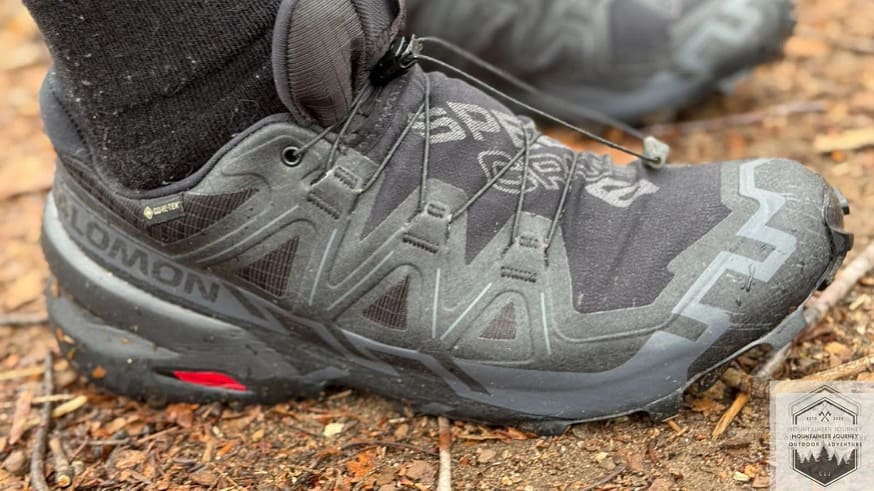
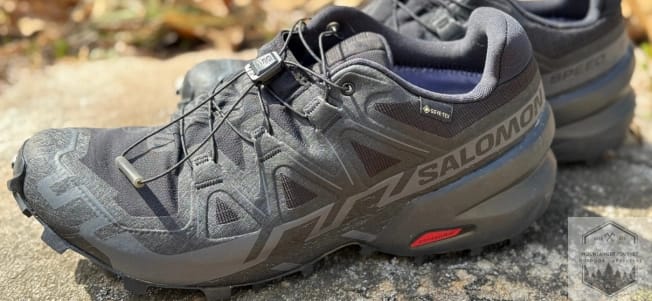
Salomon Speedcross 6


Our Rating: 8.4/10
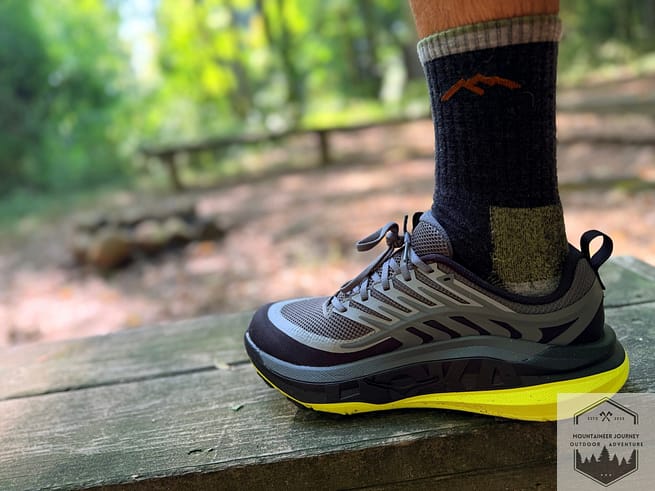
The Salomon Speedcross 6 is designed with one thing in mind: tackling the toughest, muddiest trails out there. It’s truly at home in off-trail environments where the going gets rough, thanks to an aggressive outsole with seriously chunky Contagrip lugs.
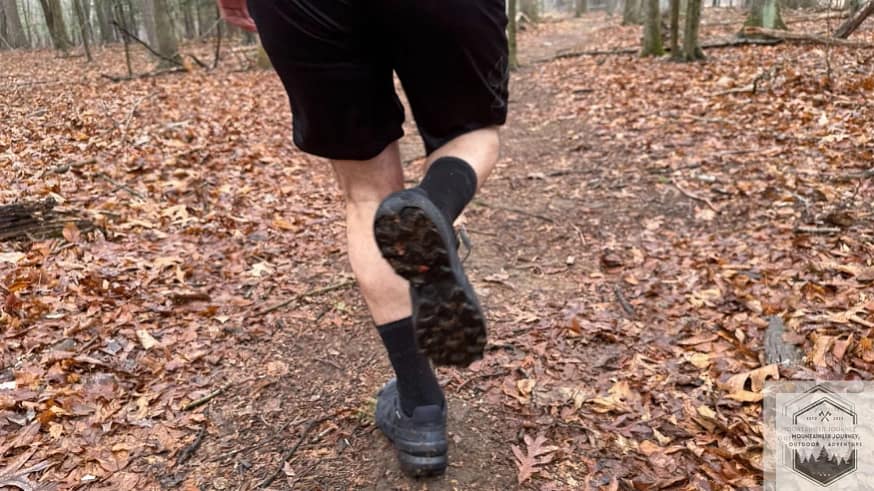
The Contagrip outsole can run quite soft; however, Salomon incorporated a very firm midsole to counteract any instability you may experience. So impact absorption is not one of the highlight of this trail shoe.
The upper is new and improved compared to the previous iteration; it still hugs your foot well and maintains internal stability, but the breathability is much better.
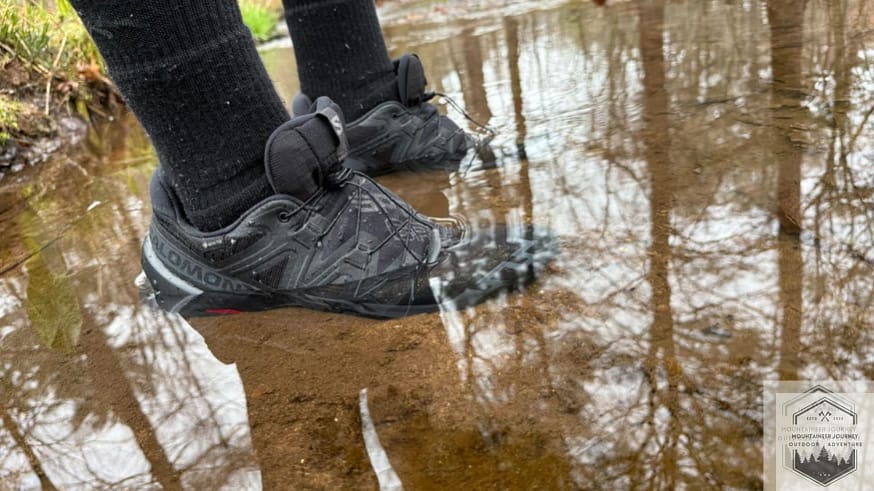
The Gore-Tex membrane keeps your feet bone dry, even when everything around you gets squelchy. All of which makes the Speedcross 6 the perfect pick for tackling tough terrain; loose dirt, rocky outcrops, and full-on mudbaths are all fair game.
While the Speedcross 6 has plenty of upsides, it also comes with a couple of downsides you should know about. First, it’s a bit heavy at 13 oz, not as light as some other trail runners out there. This was surprising because the stack height is quite minimal. Second, it doesn’t offer much cushioning, which might feel harsh on longer runs or hard surfaces.
That helps explain why the Salomon Speedcross 6 is still a bit of a legend in the trail running community all these years on. People love its durability and dependability on the toughest trails around, and that hasn’t changed after our objective testing.
Read Our Review: Salomon Speedcross 6 Review | WORTH IT In 2026?
Honorable Mentions Trail Running Shoes
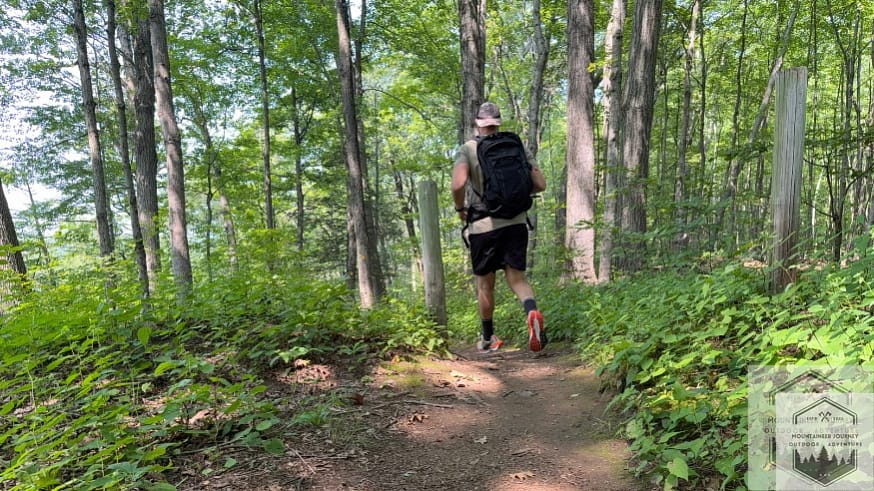
6. Hoka Challenger 8: While the Hoka Challenger 8 is our favorite road-to-trail shoe, it missed the Top 5 because its outsole simply isn’t aggressive enough for the technical, rocky trails that our top picks dominate. See Our Review: Hoka Challenger 8 Review.
7. Merrell Agility Peak 5: Offers incredible traction on rugged terrain thanks to its Vibram Megagrip outsole, but it missed our Top 5 because the stiff midsole and rigid tongue lack the long-distance comfort found in our higher-ranked picks. See Our Review: Merrell Agility Peak 5 Review.
8. Altra Olympus 7: The Olympus 7 is a good choice for wide-footed runners. The EGO midsole compresses a lot on uneven terrain, so you may encounter the topple-over effect but there is some pop and springiness to it as well. Olympus 7 is best suited for wide-footed trail runners who want a zero-drop, comfortable trail shoe. See Our Review: Altra Olympus 7 Review.
9. Hoka Stinson 8: The Hoka Stinson 8 is much more blocky and firmer compared to the cushioned Stinson 7. The upgraded outsole and lug pattern are great for sidehilling. However, the shoe is quite blocky and not made for quick, agile turns on technical trail terrain. See Our Review: Hoka Stinson 8 Review.
10. Altra Lone Peak 9+: Finally fixes the franchise’s biggest flaw by adding a Vibram Megagrip outsole to its legendary wide toe box, but questions regarding the long-term durability of the lightweight mesh upper keep it from cracking our Top 5. See Our Review: Altra Lone Peak 9+ Review | Worth It In 2026?
How We Tested
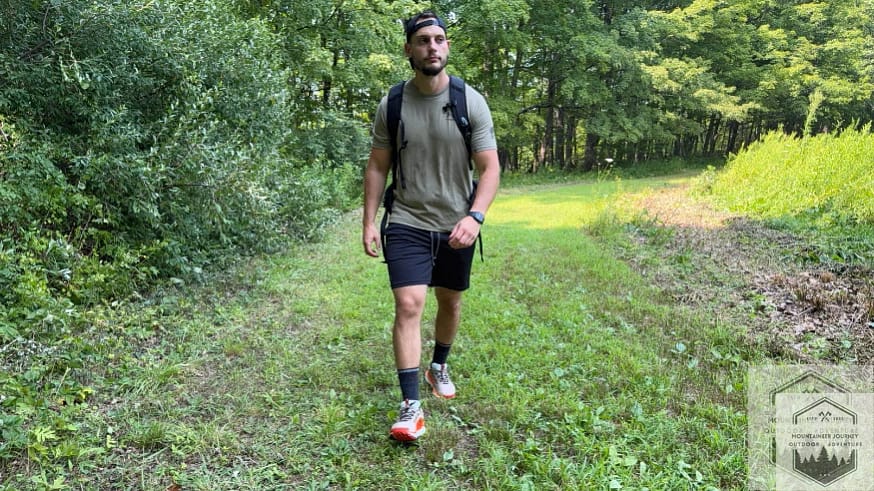
Testing out trail running shoes isn’t exactly a cakewalk. Each pair underwent tough real-world testing on all sorts of terrain: think mountain running that’s more up a rocky trail than down, and ultra-distance hikes where you’re on your feet for hours.
Our testers test each pair of trail running shoes for at least 50 miles. However, we continue to test all the shoes throughout the year and in upcoming years. We compare these models to the previous iterations as well to give great insight into helpful additions or downgraded iterations.
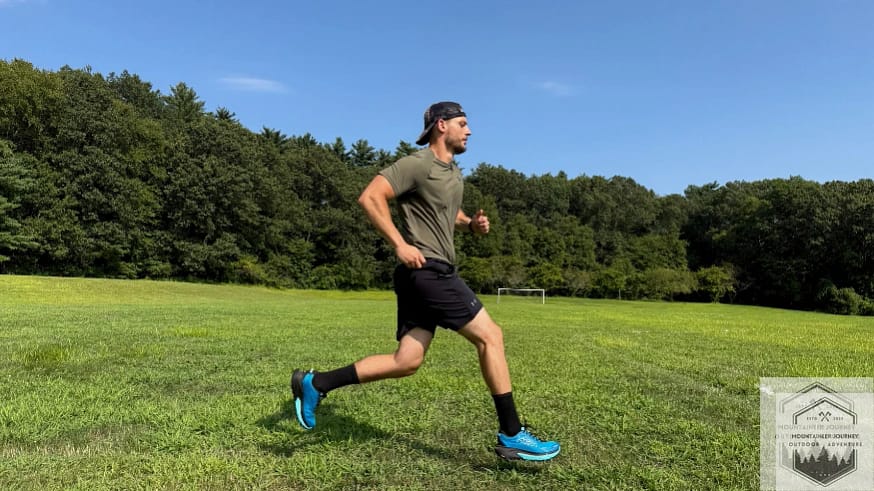
We evaluate each shoe using seven key metrics we’ve developed over 16+ years of trail running experience to provide the most objective scoring possible. These are comfort and fit, traction, support and stability, weight, overall protection, durability, and value.
We also weight these scores based on the most accurate score for each shoe. That very thorough testing process lets us be super clear about what each shoe is good at and what it’s not, so you can make an informed decision.
Here are our Weighted Metrics:
Comfort & Fit: 20%
Traction: 20%
Stability & Support: 20%
Weight: 15%
Overall Protection: 10%
Durability: 10%
Value: 5%
Why Trust Mountaineerjourney.com
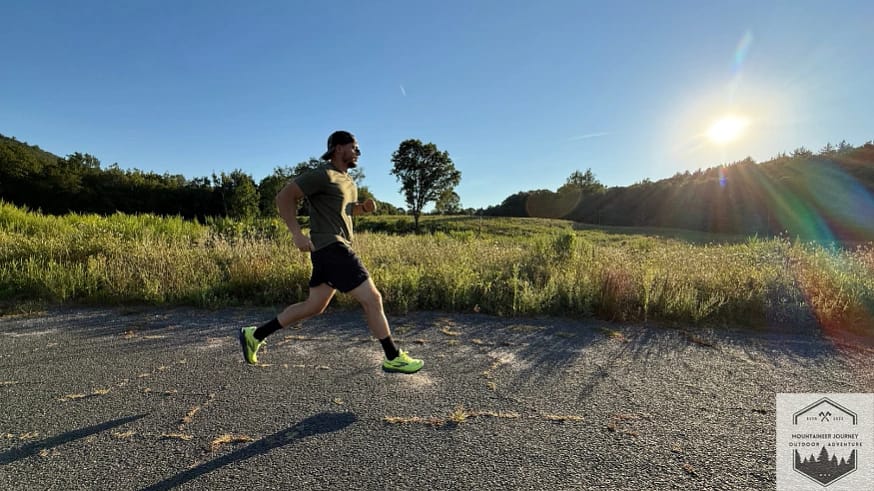
We take pride in objectively scoring each trail running shoe. We buy each product with our own money. We are not swayed by any sponsored, paid reviews, or free products. You can be assured that our testers have years of experience and follow an unbiased approach to objectively score each shoe, so you can find the best recommendations for your needs.
As you can see, each review includes multiple photos and videos of us testing the products, showing durability over time, and testing each shoe on various types of terrain. We also do head-to-head comparisons of each shoe to show you the differences in which shoe would fit your needs based on each scenario.
Comfort & Fit (20%)
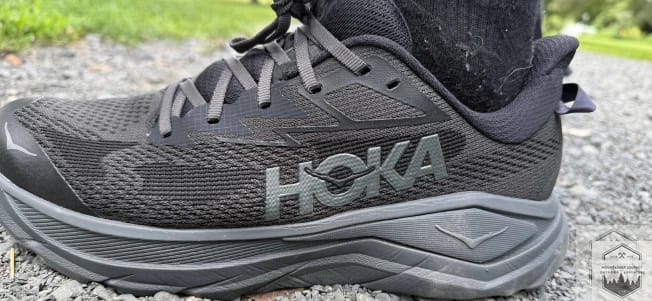
Comfort and fit is probably the most important metric for objectively scoring trail shoes. A truly comfortable trail shoe is one you can lace up, hit the trail, and forget I’m wearing it until the run is over. That means the midsole needs to strike the perfect balance between softness and responsiveness, the upper should move with your foot rather than against it, and the overall fit needs to stay consistent no matter how the terrain shifts beneath you.
Take the Hoka Mafate X, for example. The moment I slipped them on, I felt like my feet were being cradled by shock-absorbing armor soft, yet secure. During long climbs, that PEBA and EVA combo gave me bounce without instability.
On the opposite end, the Altra Timp 5 offered a totally different kind of comfort more grounded, natural, and minimal. Its zero-drop platform and roomy toe box let my toes spread naturally, though I felt a touch of stiffness under the midfoot early on until the shoe softened slightly over time.
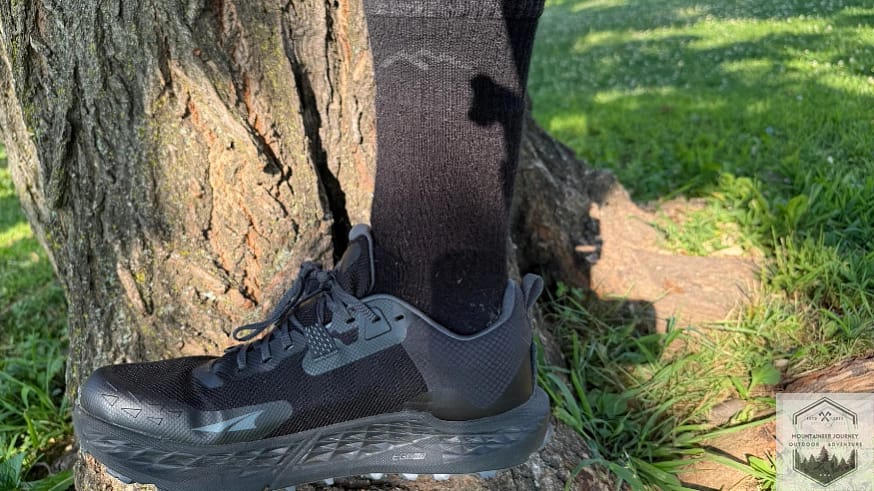
Some runners prefer a high stack height, while others don’t. Higher stack heights don’t always mean better comfort and impact absorption. Some may also offer better energy return than others.
We scrutinize every aspect of comfort and fit. We analyze step-in comfort, lace bite potential, heel padding, impact absorption, outsole firmness, and overall volume.
Ultimately, comfort and fit are highly personal, but the goal is always the same: a shoe that molds to your stride, keeps your foot secure, and doesn’t demand constant adjustment.
Traction (20%)
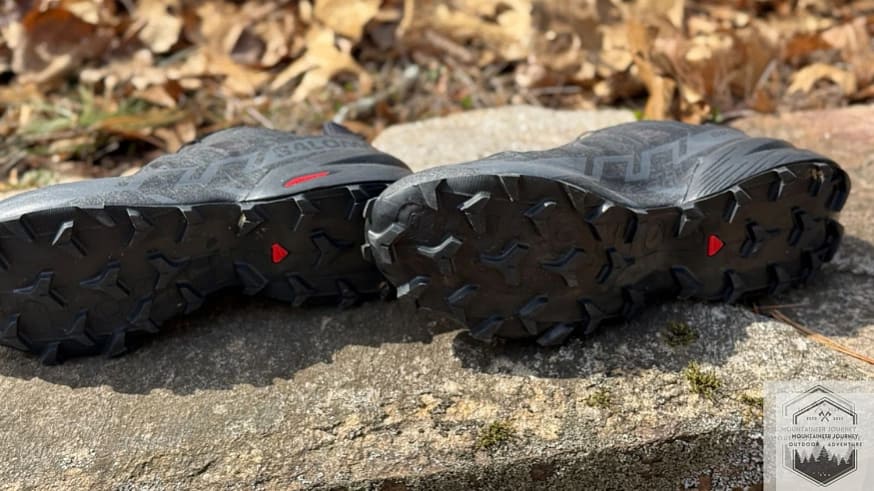
Over years of testing, I’ve learned that good traction isn’t just about how deep the lugs are; it’s about how they interact with the terrain beneath you, the spacing between them, and the grip compound itself.
Many outsoles feature different lug types, spacing, and depths.Typically, deeper lugs hold grip better than shallow ones on most surfaces. Then you have to consider the outsole: you have Contagrip by Salomon and Vibram, and many other brands.
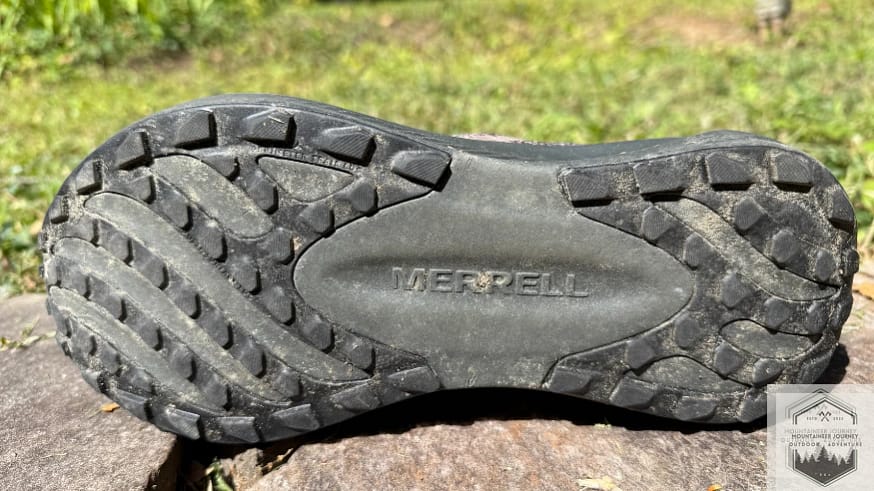
Some trail shoes stick very well to technical terrain with flexible outsoles that help conform to uneven surfaces. Sometimes those more aggressive outsoles for technical trails don’t grip as well on flat surfaces.
On the other hand, the Salomon Speedcross 6, bites into soft ground like no other. The 5.5mm chevron lugs claw through mud and flat terrain like nothing else. You feel every step anchor deep, giving you that reassuring “grip and go” feel. But once you transition to firm ground or rock slabs, those same lugs can feel harsh and almost too pronounced.
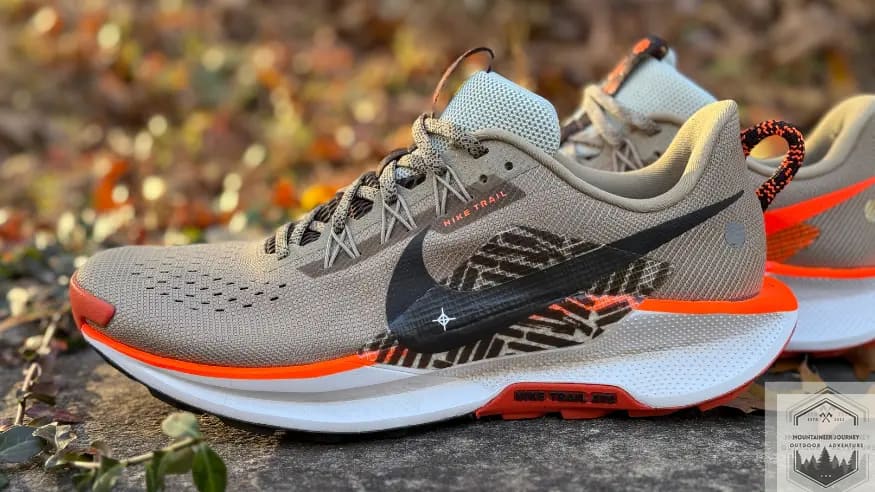
Meanwhile, shoes like the Merrell Nova 4 or Nike Pegasus Trail 5 sit at the opposite end of the spectrum, designed for versatility rather than aggression. The Nova’s 4mm Quantum Grip outsole is perfect for packed dirt or road-to-trail transitions but loses confidence once the ground turns slick. The Pegasus, with its shallow 3.2mm lugs, feels more like a road runner trying to dress up for the trail smooth on gravel, but I never felt that “bite” I needed when descending through loose rock. These less aggressive lugs are better for road-to-trail transitions.
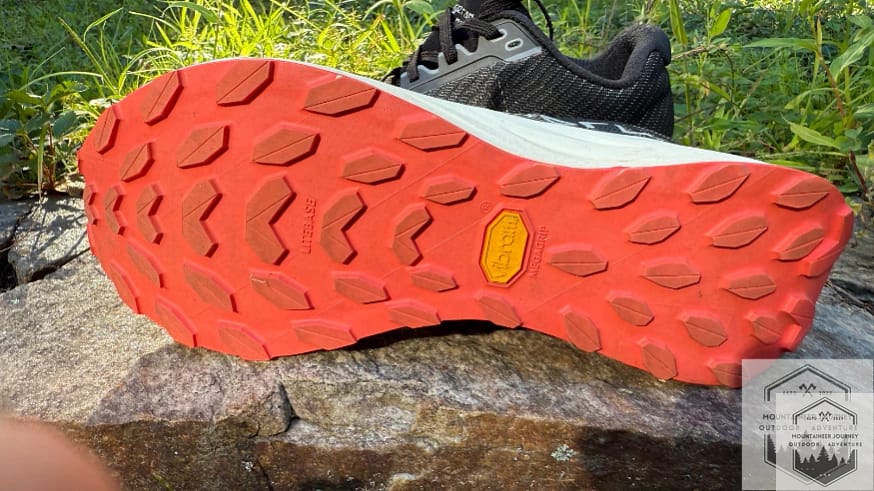
Ultimately, great traction is about trust the kind that lets you stop overthinking your footing and just move. What matters most is how that grip translates to confidence —because on the trail, confidence is traction.
Stability & Support (20%)
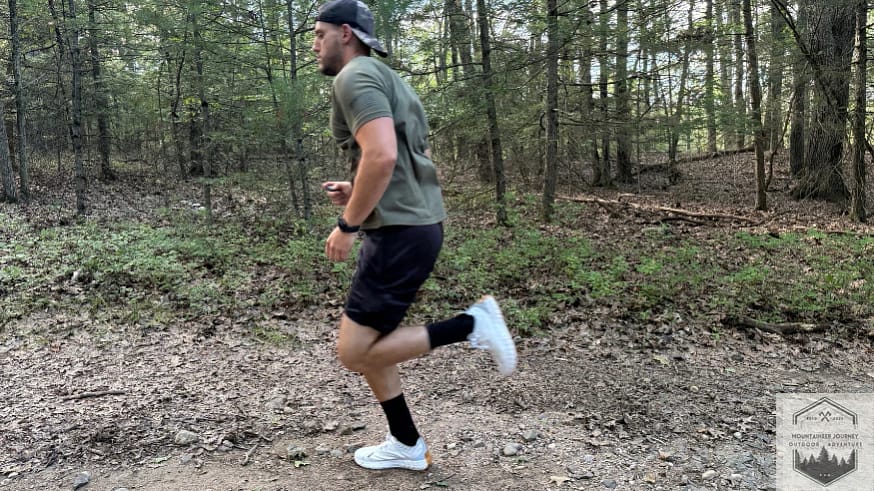
Stability just isn’t a performance factor; it’s injury prevention. Every step tests the shoe’s ability to keep your foot centered over the platform. Over the years, I’ve realized stability doesn’t come from one design feature; it’s the sum of stack height, midsole firmness, landing width, internal stability features, and how securely the upper holds your foot in place.
The Hoka Stinson 8 is a perfect example of a shoe that breaks the old rule that “high stack equals instability.” At 40mm in the heel, it looks like it should be tippy, but that H-Frame design and wide platform are surprisingly planted.
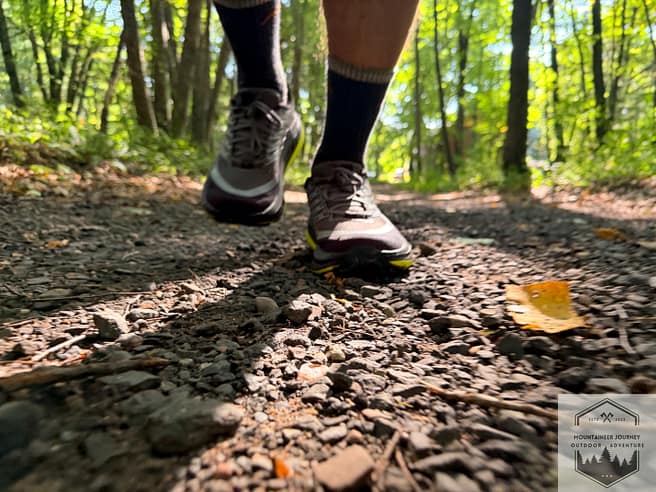
Contrast that with something like the Altra Timp 5, which dials stability in a completely different way. With its zero-drop platform and wide 114mm forefoot, it keeps you low and balanced over the ground. I remember descending a rocky hill in Connecticut where every other shoe would’ve rolled; the Timp 5 kept me centered, letting my foot flex naturally without fighting the terrain. That natural stability is what makes Altra shoes so distinct: they don’t “correct” your stride; they let your foot handle the trail as it should.
We test how much the shoes fit your foot like a glove. A nice, secure upper fights internal foot movement for more secure footing. Torsional stability is also another factor we consider. A trail shoe with strong side-to-side rigidity fights instability on uneven terrain.
Midsole overcompression can cause the dreaded topple-over effect, leading to ankle instability and injuries. However, higher stack models tend to have some midsole compression and energy return, which comes down to preference rather than wanting the top-stability model.
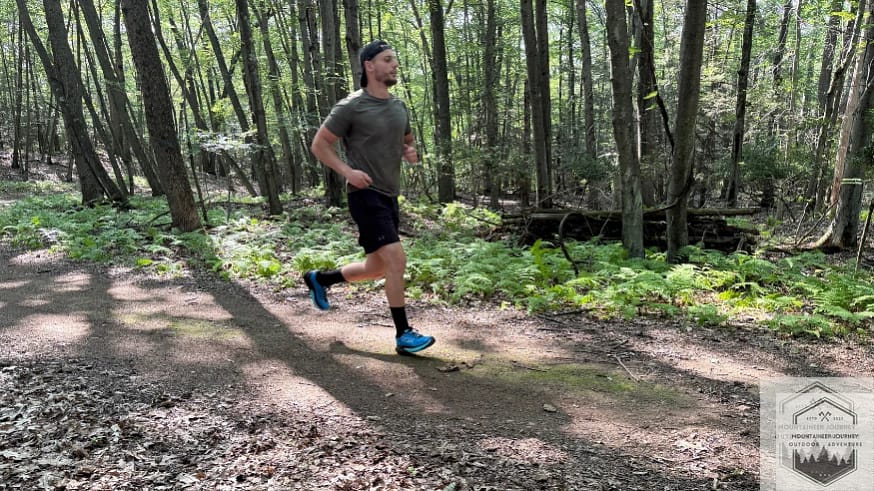
Stability comes down to control. The easier your foot and ankle can stay stable on the trail, the better ride you are going to have overall.
Weight (15%)
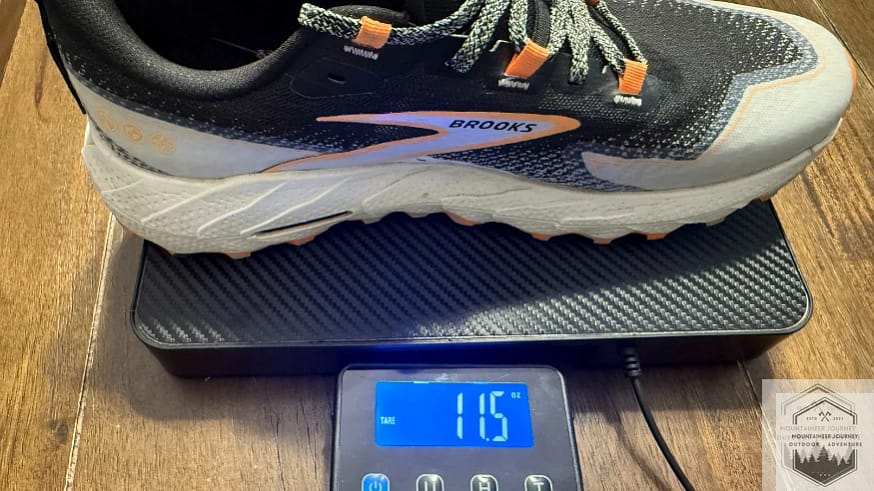
Weight is an important factor when testing trail shoes. Increased weight on a long-distance run could spell disaster, especially when it comes to foot fatigue. Not all shoes are created equal when it comes to weight.
It’s all about the shoe’s “feel” on your foot. Shoes with a rocker tend to feel lighter because they give you an easier heel-to-toe transition. For example, the Challenger 7 weighs 10 ounces, but add in the Meta Rocker, and the shoe feels like it’s in the ultralight category of shoes that weigh 8 ounces.
However, higher-stack models tend to have a bulkier outsole, which can lead to more foot fatigue constantly taking that block-like outsole around the trail with you the entire time.
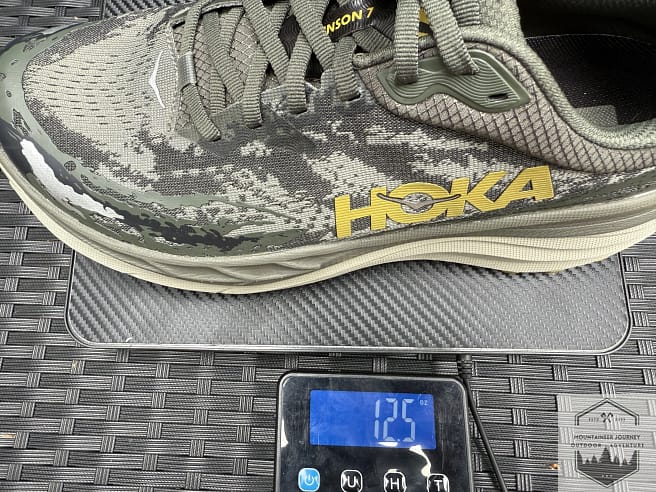
Remember, this is all a balance game because at the end of the day, a higher stack shoe tends to weigh more, yet a lower stack shoe I won’t give you the protection you want/need.
Overall Protection (10%)
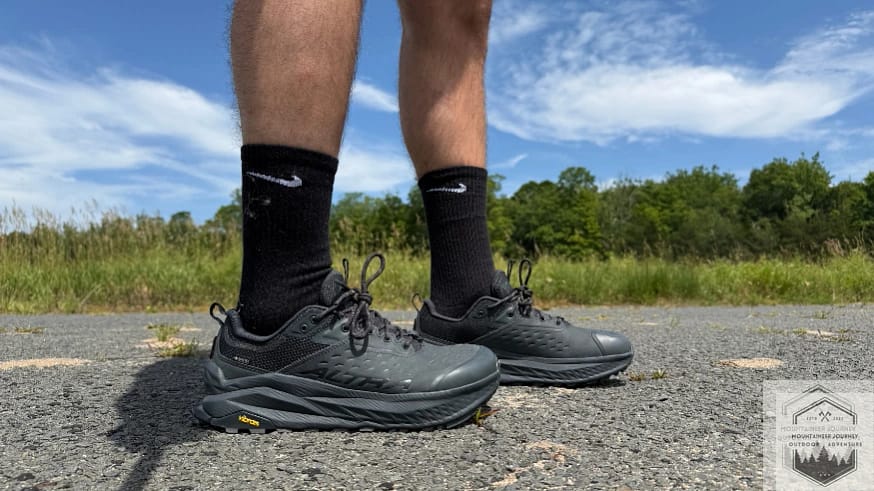
Protection features like rock plates and large toe bumpers shield your feet from sharp rocks and obstacles.
Underfoot protection is crucial while testing out these trail runners. Underfoot protection usually comes in two forms: high-stack models vs. traditional rock-plate models like the Altra Lone Peak 9+. Traditional rock plates can either be forked or full. Fork plates tend to have more flexibility and protect the necessary areas.
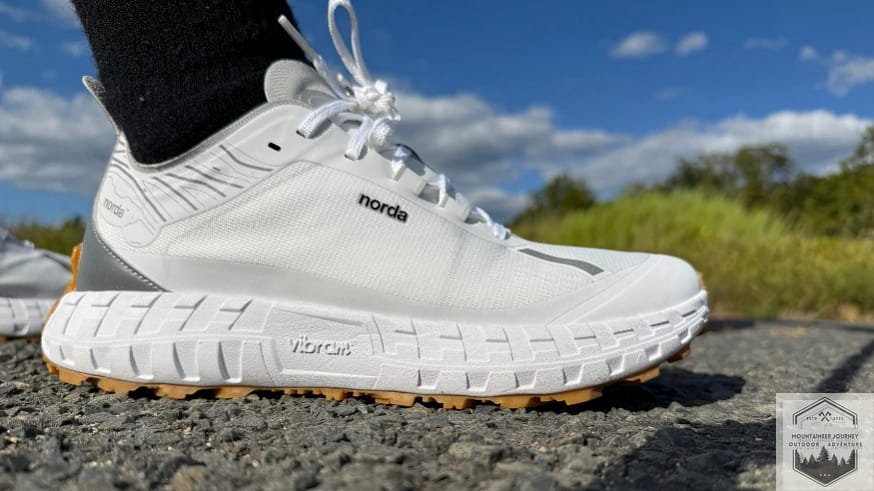
The next part of overall protection is the upper. Now a lot of trail running shoes like the NNormal Kjerag 2 have built-in Kevlar features that really up the game when it comes to the upper. Others use textile materials that can easily rip or tear against abrasive trail surfaces.
Durability (10%)
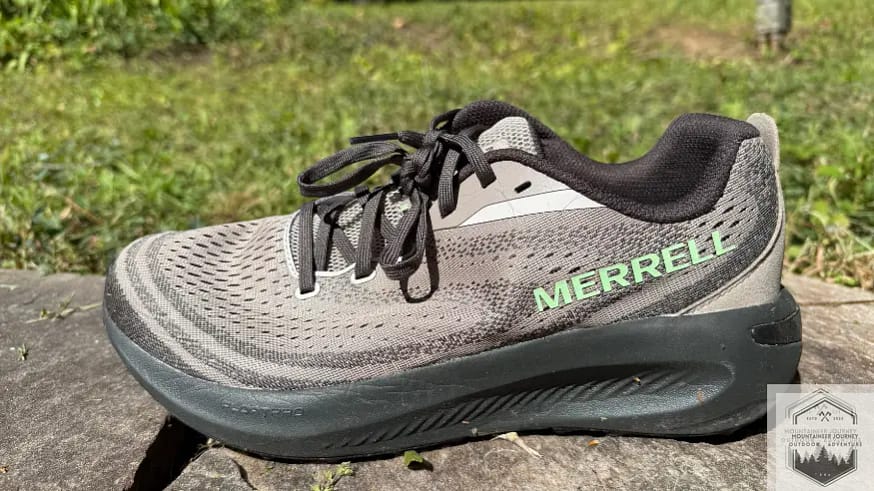
Durability means everything to us when we test out these shoes and share our findings with you. We test all our trail runners a minimum of 30 miles, often going up to over 100 for most of them.
First, we look at the outsole lugs and notice any abrasion or compression. Some lugs wear prematurely, which can change the grip over time. Midsole or outsole compression can ruin energy return or reduce much-needed impact absorption.
Upper materials are just as important. The Norda 001, for instance, is designed for durability and is one of our longest-lasting trail runners, thanks to its premium Dyneema upper.
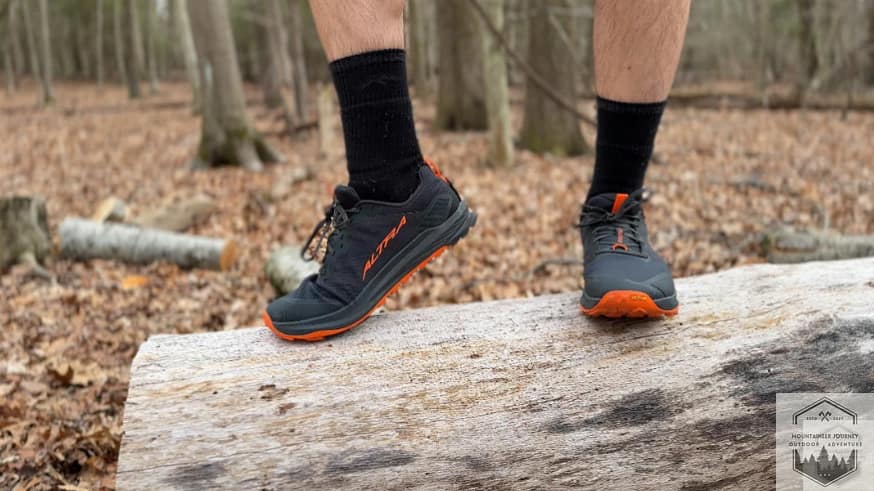
Lightweight trail running shoes can sometimes compromise durability, with welded synthetic overlays. Other lightweight runners like the Arc’teryx Sylan 2’s have durable uppers but come at a premium cost.
Overall, the most important measure is how well these shoes hold up over time with repeated miles.
Value (5%)
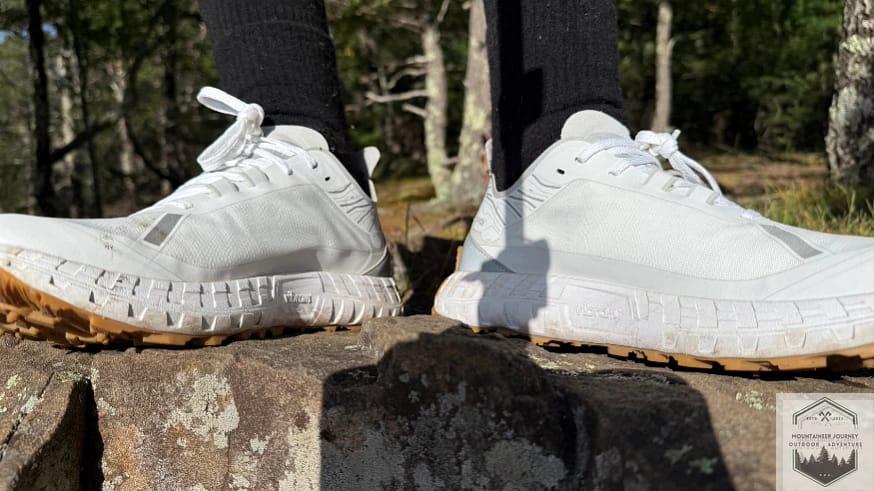
The value metric ties all these scores together. You must weigh the shoe’s actual cost against its total performance score. Paying over $200 for a trail shoe should guarantee top-tier performance and durability.
Conversely, a budget-friendly shoe like the Merrell Nova 4 can offer a high value score by delivering excellent performance at a lower price point.
At the end of the day, we want you to save as much money as possible while still getting the best trail shoes possible.
Ultimately, the right trail running shoe will depend on your specific needs and running environment.
Frequently Asked Questions
What are the key factors to consider when choosing trail running shoes?
When choosing trail running shoes, focus on fit and comfort, traction and stability, and cushioning and durability.
Why is traction important in trail running shoes?
Traction is essential in trail running shoes because it helps you maintain control on uneven terrain and prevents slips, giving you secure, stable footing.
How do I know if a trail running shoe fits properly?
To know if a trail running shoe fits properly, make sure there’s enough wiggle room in the toe box, a snug fit around the midfoot and heel, and breathable materials to keep your feet comfortable and blister-free.
What special features should I look for in trail running shoes?
Key trail running shoe features include gaiters to keep debris out, waterproof membranes for wet weather, and rock plates for protection against sharp terrain.

Tyler
Tyler is the founder Mountaineer Journey and a professional Mountain Guide with 15+ years of technical experience in trekking, mountaineering, and trail sports. Having logged thousands of miles from rugged alpine summits to urban paths, Tyler provides rigorous, field-tested insights on hiking, walking, and trail running gear. All reviews are 100% unsponsored and unbiased, ensuring you get honest scoring based on real-world performance. His mission is to help outdoor enthusiasts of all levels find reliable equipment that ensures comfort, safety, and performance on any terrain.