

Our Score
Hoka Challenger 8 Review | Worth It In 2026?
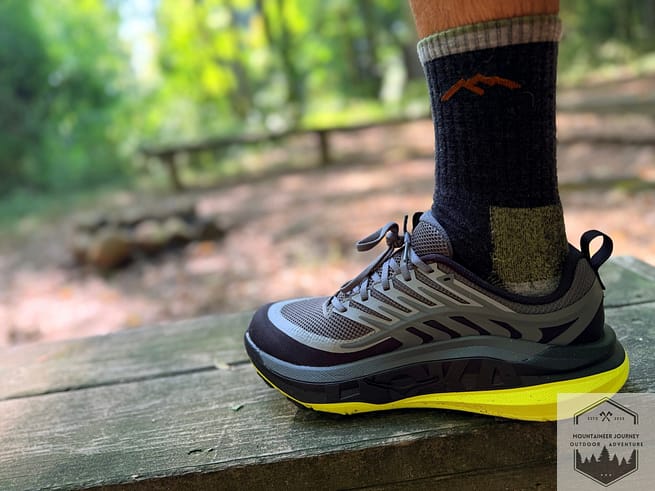
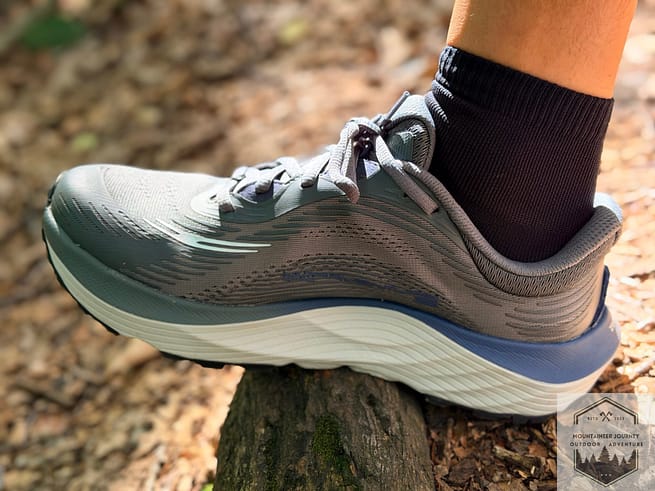
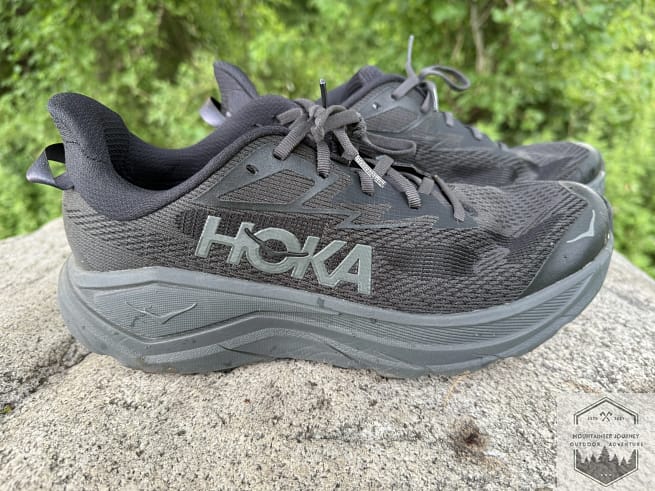
In this article, I’m going to share my HONEST Hoka Challenger 8 review for those who are wondering if the upgrade is WORTH It in 2026. As a seasoned trail runner with over 16 years of experience testing trail running shoes, I recommend these for runners looking for an extremely lightweight and comfortable pair of trail running shoes.
For this review, I have been constantly testing my pair of Challenger 8’s since their release in July of 2025.
I’m very familiar with how they feel and perform on the trails. I’ll go over comfort/fit , traction, stability & support , weight, overall protection, and durability.
I’ll be giving a score of each category based on OBJECTIVE testing standards and an overall score with recommendations at the end.
The Challenger 8 is one of the most comfortable trail running shoes out on the market today. If you can live with the soft outsole and decent traction, then they are totally worth it.
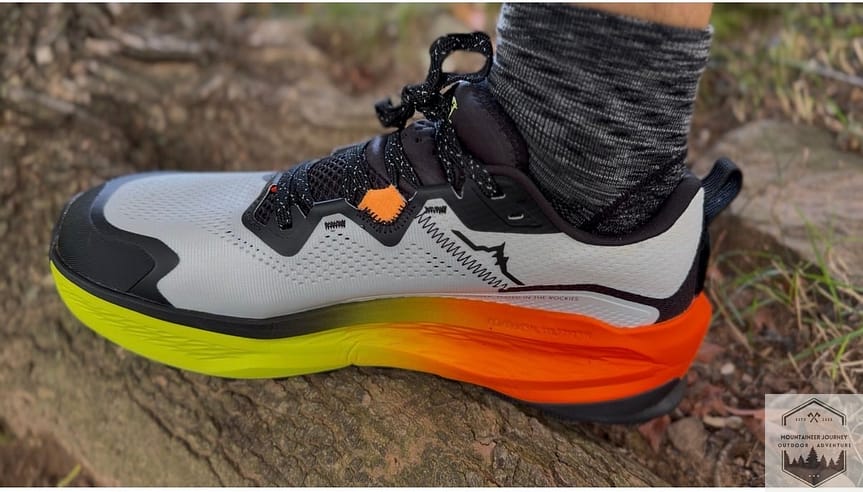
They compete very well with the Merrell Agility Peak 5, Hoka Speedgoat 5, Altra Lone Peak 9+ , and Salomon Speedcross 6.
Editor’s Note: This review was updated on 12/22/25 with new scoring and durability, as well as new insights after further testing miles.
Challenger 8 Pros and Cons
Pros
- Excellent Comfort
- Improved Upper
- Ultra Lightweight
- Ultimate Trail To Road Shoe
Cons
- Average Durability
- Soft Outsole
- Shallow Lugs
Should you buy the Hoka Challenger 8 ?
Buy if
- You want one of the most highly-rated, comfortable trail running shoes available this year
- You are looking for an ultralightweight pair of trail shoes
- You want a perfect “Road To Trail Shoe”
DON’T Buy if
- You prefer a budget trail running shoe
- You want the Vibram Megagrip outsole
- You prefer a low-stack trail shoe
Hoka Challenger 8 Price
Right now, the Challenger 8 retails for $155, I’ve tracked down the current pricing on Hoka.com and other retailers below
Disclosure: These links may provide a discount and in return, give us a commission in order to run the website 🙂
Watch this Full Review on YouTube!
Hoka Challenger 8 Comfort & Fit : 9/10 (20%)
To no one’s surprise, when I first put on the Challenger 8, I felt the complete bliss of the Challenger 7, a heavily cushioned footbed with plushness all around.
The Compression EVA midsole, is nice and bouncy with that Ultra Comfort every Hoka user is looking for.
To my delight, they made the cushioning very balanced, I felt better trail responsiveness than the previous models especially on gravel terrain.
The toe box has plentiful room without any room for compression. The silky sockliner is an upgrade with the recycled polyester mesh on top which is much less rigid and more forgiving.
I was able to perform my first run without any break-in period, I didn’t experience any blisters or hot spots.
I felt the fit was much more dialed in than the previous models as well as the other trail shoes we have tested in our collection.
The toe box I measured at 3.6 inches It was just wide enough for my toes to splay out and give a nice wide, stable base. The inner lining of the shoe was nice and sleek without any scratchy overlays.
The tongue has a lot of plush material that is a nice barrier between itself and the top of your foot without any constriction.
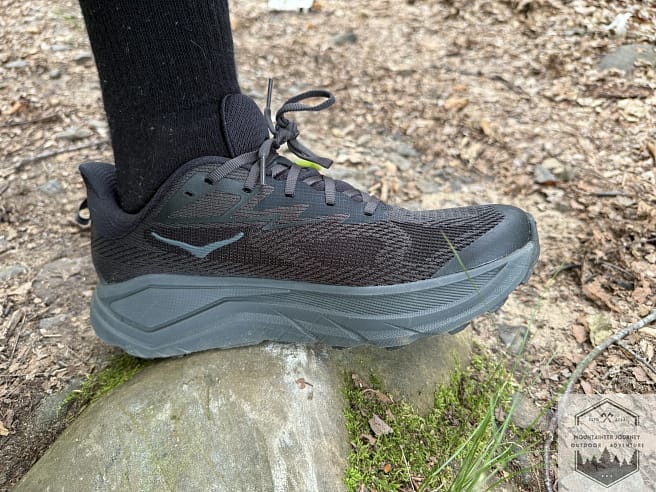
I felt the heel tab was a major upgrade. The heel has more padding, which I noticed testing on uphill terrain. My heel pressed back into the padding with a nice plush rebound.
I tested a men’s 10.5 regular, I didn’t have to size up or down. The Challenger 8 gets a perfect score for fit.
The shock absorption on the previous model was elite. However, somehow Hoka added even more stack height for EVEN MORE shock absorption. The impact attenuation is top-tier. Other than the Hoka Mafate X, no other trail shoe competes with the Challenger 8 when it comes to impact absorption.
Overall, the comfort and fit of the Challenger 8 is easily one of the best for 2026.
Traction: 8.5/10 (20%)
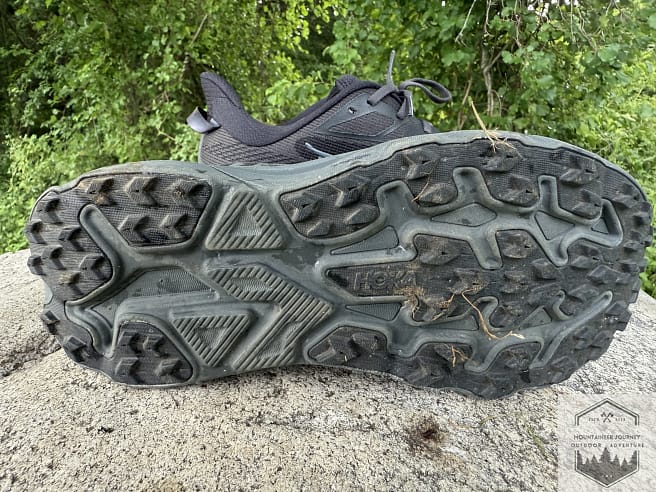
The Hoka Challenger 8 does not feature the Vibram Megagrip outsole.
The Durabrasion outsole is softer than most outsoles which was a negative for the Challenger 7.
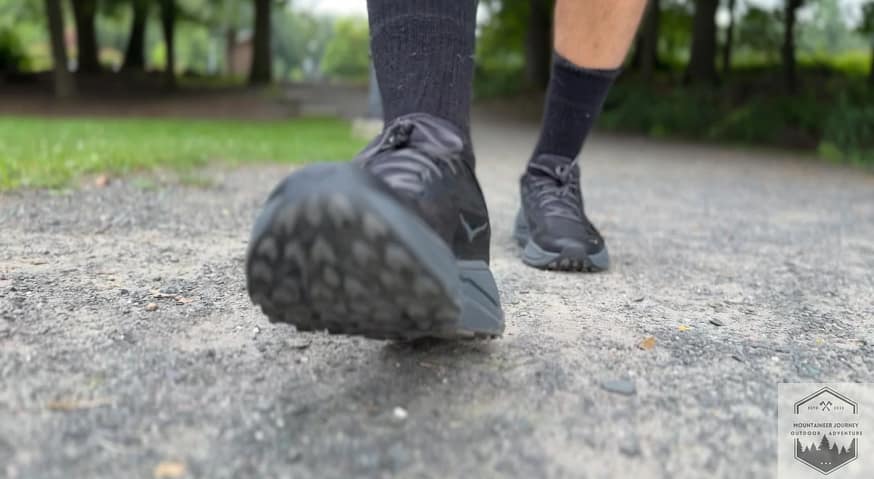
However, with the 8 the outsole features more grooves in between the 4mm lugs. I noticed this upgrade RIGHT AWAY.
My foot was able to flex further due to the grooves, but it also helped shed mud and gravel faster than ever before. This is a game-changer, especially since 4mm lugs are relatively shallow for technical mud.
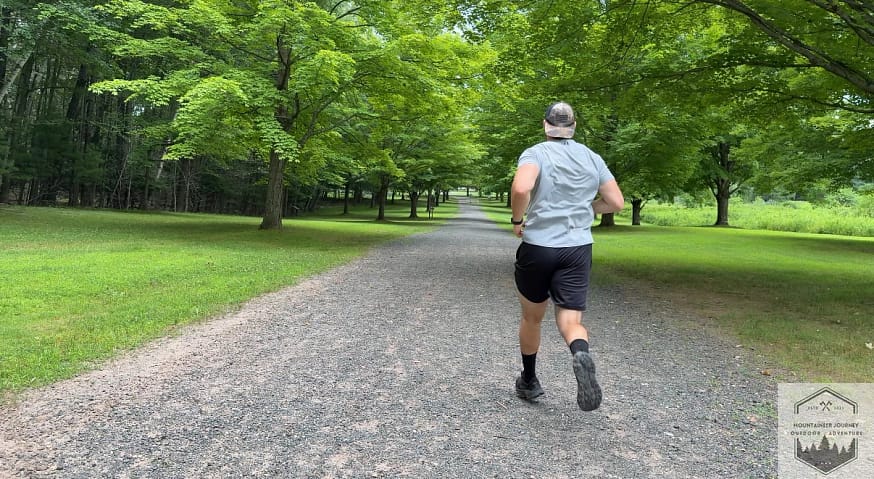
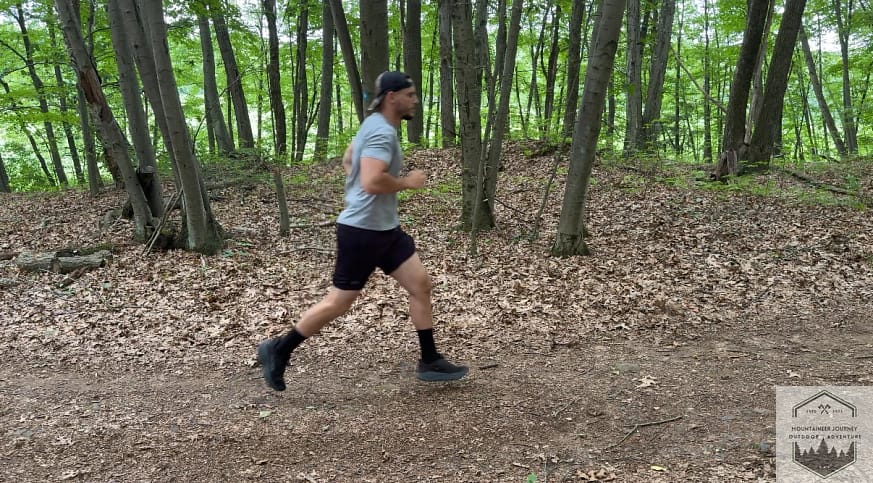
When I tested the 8 on technical terrain, it held up better than expected given my previous experience with the 7. The shallow lugs were much more effective and grippy. However, the Challenger 8 is not made specifically for technical trails, I struggled on rocky boulder descents during testing.
Traction was comparable to the Merrell Agility Peak 5, While the Agility Peak 5 offers more ‘bite’ on loose dirt, the Challenger 8 feels significantly more natural when you hit a mile of pavement to get back to the trailhead.
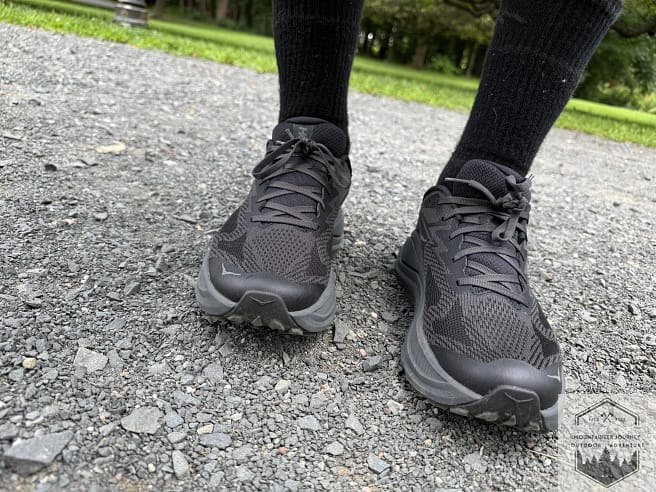
The Challenger 8 also regains the crown as the best “Trail To Road Shoe”. The transition from a gravel trail to asphalt or concrete is seamless and very subtle. This also adds to the versatility of the shoe for dual usage as a trail shoe and regular running shoe.
Overall, the Challenger 8 has some of the best traction for versatile terrain with some limitations on technical terrain. I’m confidently ranking it as the premier road-to-trail hybrid for 2026.
Stability & Support 8.5/10 (20%)
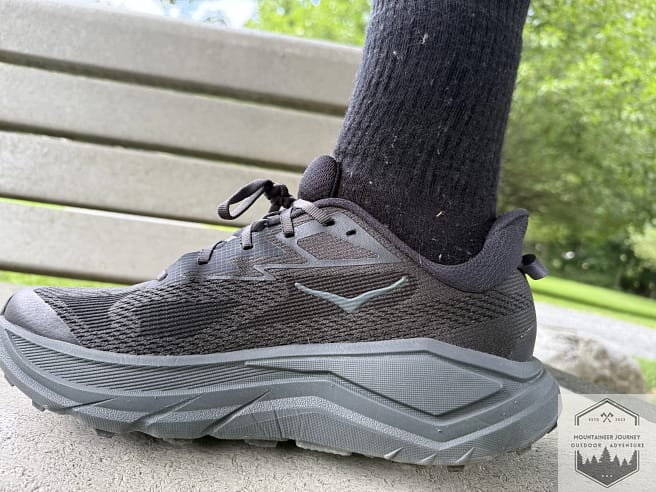
The upgraded recycled polyester mesh really adds an upper hand to the Challenger 8.
The mesh is VERY breathable for summer trail running as well as acting as a “seatbelt” for your foot reducing any unwanted internal motion. Even during a humid 90-degree July afternoon, I didn’t feel that ‘swamp foot’ weight gain you usually get with thicker trail uppers.
The upper also conforms well to your foot without over-compressing it, or forming any hot spots.
Hoka claims the Challenger 8 to have “neutral” stability, however the upper tells a different story. While there are no internal technologies in the shoe like a rearfoot frame, the upper really becomes stiffer towards the heel giving it excellent heel counter stiffness as if it does have a rearfoot frame.
The torsional stability is upgraded by the new premium engineered mesh throughout the shoe, giving it that extra you need on the trail.
The stability is really impressive on flat terrain or even using it as a running shoe on pavement. Even as a neutral shoe, the wide base provided enough inherent stability to keep my stride neutral on tired legs.
Weight 9/10 (15%)
The Challenger 8 is one of the lightest trail runners I have personally tested to date. I weighed my men’s 10.5 at 10 oz flat.
The high stack height with high-cushion technologies is a real oxymoron. Impressively this shoe has remained light but also has the “lightweight feel” on the trail as well.
Add in the meta rocker, and you have a nice smooth transition that feels very lightweight on the trail.
For comparison, the Challenger 8 weighs 1.5 ounces less than the newer Mafate 5.
How’s The Overall Protection Of The Challenger 8?
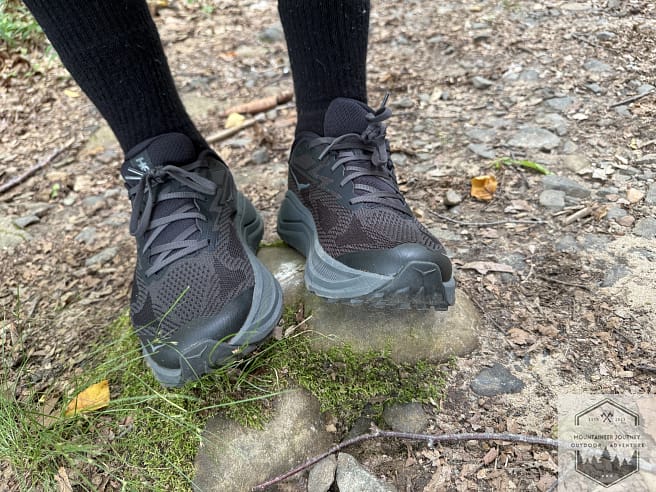
The Hoka Challenger 8 does not incorporate a rock plate for foot protection on the trail. However, the high stack height ensures no trail debris would be able to penetrate the footbed.
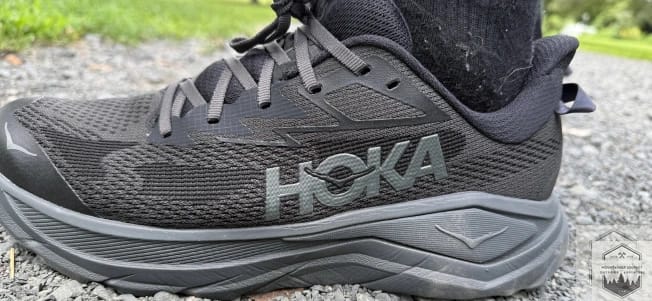
In addition, Hoka added a 3D printed rubber toe cap that is much more robust than the previous model. The toe cap also expands out further covering the entire toe box to protect against rock kicks.
The lack of sensitivity is not the most ideal for technical trails, but the high stack height really protects your foot and compensates for the soft outsole and lack of a rock plate.
The Challenge Ray is also available in waterproof and non-waterproof versions.
Hoka Challenger Overall Protection 7.5/10 (10%)
Durability 8/10 (10%)
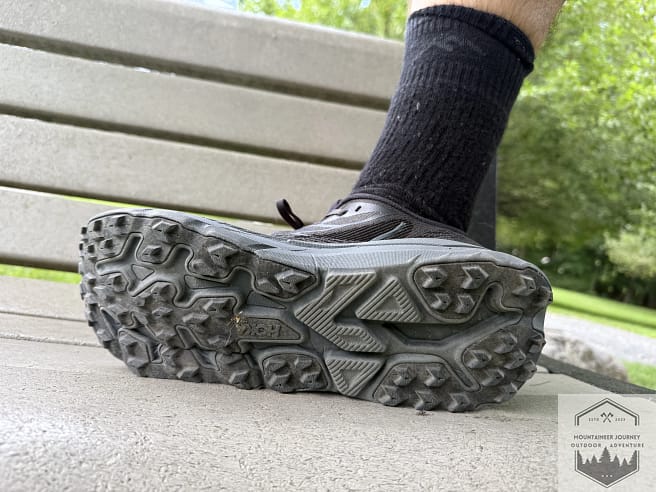
The previous iterations of the Challenger definitely had durability concerns because of the upper and soft outsole.
I will say the new upper mesh is definitely more resilient and robust. I haven’t noticed any scrapes or rips in the mesh as others noticed right away in the previous models.
While the outsole is still soft, it is definitely upgraded with a higher stack height that may flatten out over time but will maintain its bounciness and shock absorption just purely because the high stack height has room to lose some to wear and tear.
Overall, after testing the Challenger 8 for 80 miles now I have been very impressed with how well the traction has held up here.It really depends on where you take this shoe through. If you use it on intended lighter trails and road transitions, it will last you much longer than taking it on terrain it’s not intended for.
Is the Hoka Challenger 8 worth it?
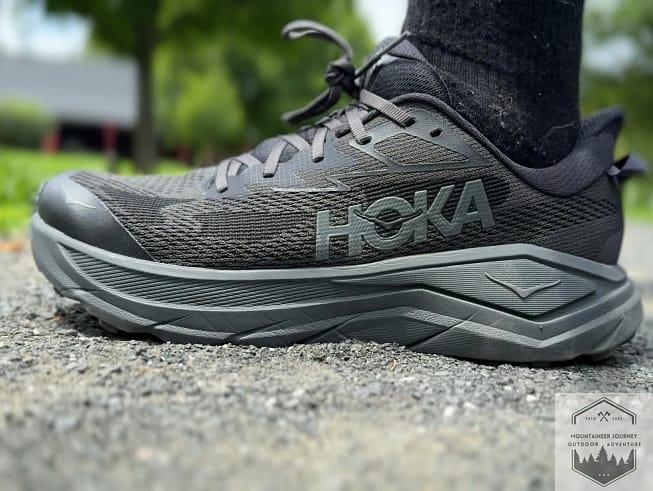
If you are looking for one of the most comfortable trail shoes on the market that can handle easy road to trail transitions, as well as the versatility of a running shoe then the Challenger 8 is well worth it.
For the price of $155, they are definitely one of my top picks for a trail runner under $175.
At today’s prices, these are my favorite trail to road shoes under $200.
For those looking for extreme traction and trail sensitivity, I will say the Challenger 8 may not be your best bet because of the softer outsole and lack of a rock plate.
For me, the Challenger 8 is all about mild to moderate trails while still enjoying a comfortable ride without the hassle of trail feel and stiffness.
For those looking for stronger alternatives for traction, check out the Norda 001, or even the Salomon Sense Ride 5. For stronger alternatives when it comes to traction check out the Hoka Speedgoat 6,Altra Lone Peak 9+, or Merrell Agility Peak 5.
Value: 4.5/5 (5%)
Scoring Breakdown
Comfort & Fit (20%): 9/10
Traction (20%) : 8.5/10
Stability & Support (20%): 8.5/10
Weight (15%) : 9/10
Overall Protection (10%) : 7.5/10
Durability (10%) : 8/10
Value (5%) : 4.5 / 5
1.80 + 1.70 + 1.70 + 1.35 + 0.75 + 0.80 + 0.45 = 8.55 / 10
Our Rating: 8.5 / 10
We purchase all products we review with our own money to maintain the highest level of integrity, and do not accept free products or sponsorships.
How We Tested and Our Methodology
I personally tested the Hoka Challenger 8 since their release this year in 2025 with continued testing into 2026, with the sole intent of giving you the most unbiased review possible. Mountaineer Journey is a 100% independent publisher with years of testing and reviewing outdoor equipment.
Over the past 16+ years, I’ve logged thousands of trail miles across everything from smooth single-file roads to steep, technical singletrack. This deep experience allowed me to create an OBJECTIVE scoring system for all trail shoes for the most unbiased scores possible.
This kind of hands-on experience helps me evaluate how a trail running shoe truly performs—whether it’s truly stable, grips well on varied surfaces, and holds up over time under real mileage.
We currently pay for the products we test ourselves; no company or manufacturer pays us to sway our opinions or decisions.

Tyler
Tyler is the founder Mountaineer Journey and a professional Mountain Guide with 15+ years of technical experience in trekking, mountaineering, and trail sports. Having logged thousands of miles from rugged alpine summits to urban paths, Tyler provides rigorous, field-tested insights on hiking, walking, and trail running gear. All reviews are 100% unsponsored and unbiased, ensuring you get honest scoring based on real-world performance. His mission is to help outdoor enthusiasts of all levels find reliable equipment that ensures comfort, safety, and performance on any terrain.