

Our Score
Garmin Forerunner 170 Review | Unsponsored
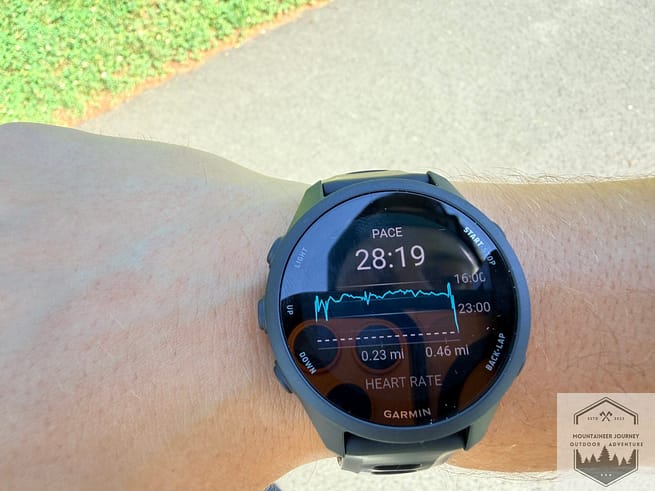
In this article, I’m going to share my HONEST Garmin Forerunner 170 review after 6 months of real-world testing.
The Garmin Forerunner 170 is a mid-range running watch designed for recreational and intermediate runners.
Garmin launched this new Forerunner as a step up from the Forerunner 165, packing in premium training insights and software features once reserved for pricier models.
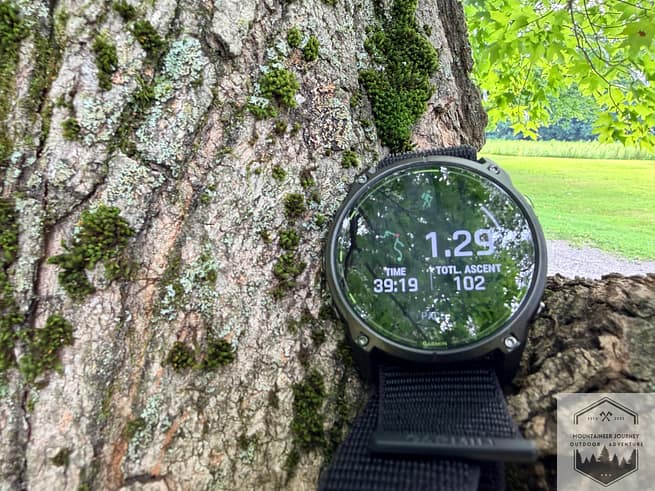
I tested this watch extensively on Appalachian trails, during urban runs, and in daily use across all seasons.
I’ll break down accuracy, battery life, mapping and navigation, features and training, and versatility, all backed by objective data and hands-on experience.
I’ll be sharing my critical opinion backed by 16 years of experience as a trail guide and hiker.
Our Verdict
After 6 months on northeast trails and running, the Forerunner 170 is decent for casual to intermediate road running and easy hiking. It shines in Garmin’s ecosystem, training tools, and display clarity.
The critical weaknesses are real, though. The Forerunner 170 lacks multi-band GPS, which means GPS tracking degrades under canopy and in rugged terrain.
Heart rate accuracy using the Elevate Gen 4 sensor fell short during high-intensity sessions. No topographic maps limit their usefulness for serious hikers.
The target user here is someone who prioritizes running metrics, values training readiness and training status data, and wants smart features like Garmin Pay or phone-free listening without needing ultra-high precision in extreme conditions.
Should you buy the Garmin Forerunner 170?
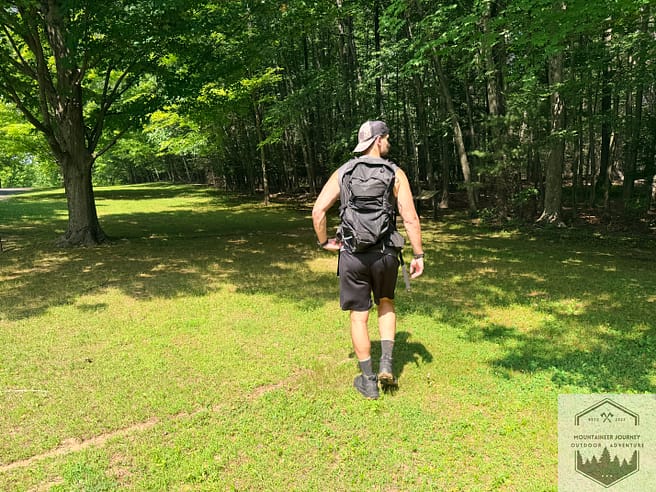
Buy If
- You primarily run on roads or well-marked trails
- You want basic GPS tracking without complex navigation needs
- You value Garmin ecosystem integration and the Connect app
- You need smartwatch features like Garmin Pay and music storage
- You are a casual hiker who stays on familiar routes
Don’t Buy If
- You need accurate heart rate monitoring for precise training zones
- You hike in challenging terrain requiring a reliable GPS
- You want topographic maps for navigation
- You require multi-band GPS for accuracy under canopy or urban canyons
- You need reliable elevation data for mountain activities
- You depend on a triathlon mode or an advanced multisport switching
Compare Similar Products
| Comparision | Product | Rating | Price |
|---|---|---|---|
 | 8.6 | Check LOWEST PriceRead Review | |
 | 8.1 | Check Lowest PriceRead Review | |
 | 6.8 | Check Lowest Price |
Garmin Forerunner 170 Pros and Cons
Pros
- Bright AMOLED display
- Advanced training metrics
- Comfortable Band
- User-friendly interface
Cons
- Heart rate variance
- Single-band GPS
- Short battery life
- No topo maps
- No offline maps
Forerunner 170 Accuracy: 30%
To keep the scoring objective, I compared heart rate data from a Polar H10 chest strap with that of the Forerunner 170 during every testing session. The H10 remains one of the most trusted heart rate sensors available.
Heart rate accuracy is consistent with that of the Elevate Gen 4 sensor, but consistency does not imply precision.
During a 25-minute treadmill run, the watch averaged 150 bpm, compared with 154 bpm on the Polar H10. Maximum heart rate was nearly identical at 182 bpm on both. That average gap of 4 bpm is tolerable for steady-state running.
The problem shows up during intervals and steep hiking. On mountain climbs, I recorded deviations of 5 to 8 beats per minute. The sensor lags when heart rate spikes rapidly. For anyone relying on precise training zones, this is extremely lacking.
Heart rate readings align with chest-strap measurements during tests at steady intensities, but diverge under load.
GPS accuracy of the Forerunner 170 matches that of the Forerunner 55 in open conditions. On clear road runs, path distances matched expected routes within 1-2% error.
The Forerunner 170 uses single-band GPS tracking across GPS, GLONASS, Galileo, BeiDou, and QZSS constellations. But without multi-band mode, signal penetration under tree cover is compromised.
On forested trails with overhead canopy, I watched the GPS track drift off the actual path. Curves were smoothed, corners were missed, and the total distance was underreported.
Overlaying recorded tracks on mapped topography confirmed the errors. The single-band GPS is what holds back both accuracy and navigation on this watch.
The Forerunner 170 includes a barometric altimeter. Elevation plots were smoother than the Forerunner 165 in several comparison tests.
Yet during rapid ascent and descent on mountain switchbacks, elevation data sometimes lagged or underestimated cumulative gain. Barometric calibration was needed regularly to keep readings honest.
In terms of accuracy, the Forerunner 170 was less accurate than other Garmin watches.
Accuracy Score: 7/10 (30%)
Battery Life Performance: 20%
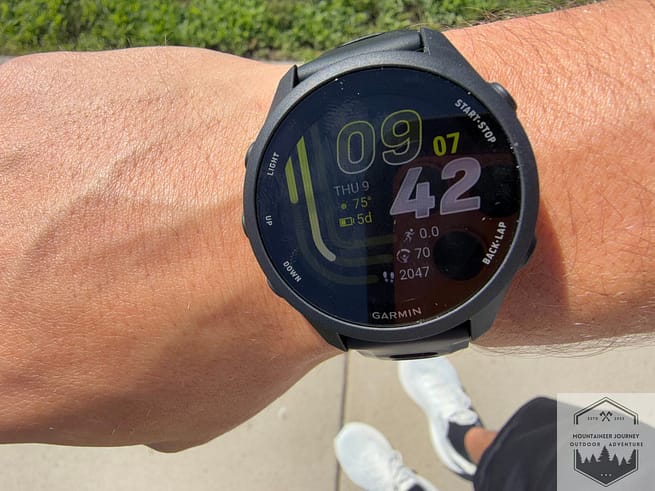
Garmin claims the Forerunner 170 lasts up to 10 days in smartwatch mode. All systems’ GPS mode is rated at up to 14 hours. During real-world testing, the reported battery life falls short of manufacturer claims.
With always-on display, notifications enabled, and daily runs, I recorded a reliable 5-6 days of battery life. A single 3.5-hour hiking session using all-systems GPS reduced the battery from 50 percent to 25 percent, aligning with the 14-hour specification but highlighting the practical limitations.
The Forerunner 170’s battery life is shorter than the Forerunner 165’s, which is worth noting for anyone comparing models within the Forerunner line.
Over my 6-month testing period, I did not observe dramatic battery degradation.
Battery Life Score: 7/10 (20%)
Mapping and Navigation: 20%
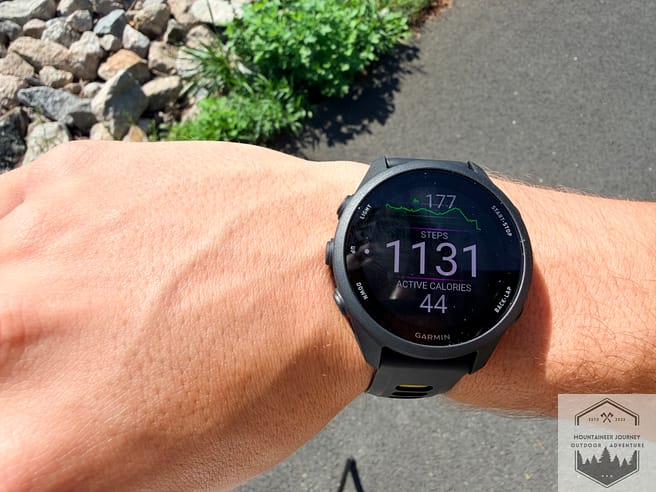
This is where the Forerunner 170 falls short for hikers. There are no onboard topographic maps.
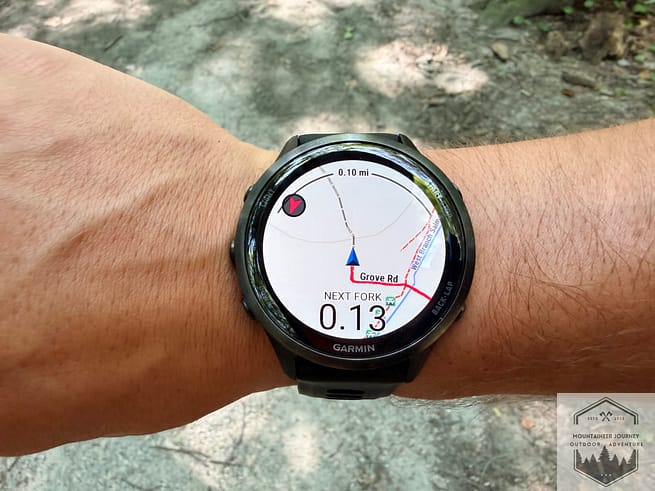
The display does not support map tiles or contour lines. Navigation relies entirely on breadcrumb trails and basic turn-by-turn where available.
On well-marked trails with good visibility, the breadcrumb path, combined with elevation data from the barometric altimeter, kept me on track during steady ascent. That is the best-case scenario.
On a forested trail with overhead cover, the watch produced wrong-turn markers.. I lost confidence in the navigation multiple times on unmarked terrain.
The all-systems GPS mode does improve positioning over GPS only, but still struggles under dense canopy and in deep valleys.
Compared to dedicated hiking GPS units like the Garmin GPSMAP series or handheld eTrex models, the Forerunner 170 is not in the same category.
For those needing real navigation, the Garmin Fenix 8 remains the better choice among Garmin watches,
Mapping & Navigation Score: 5/10 (20%)
Features and Training: 10%
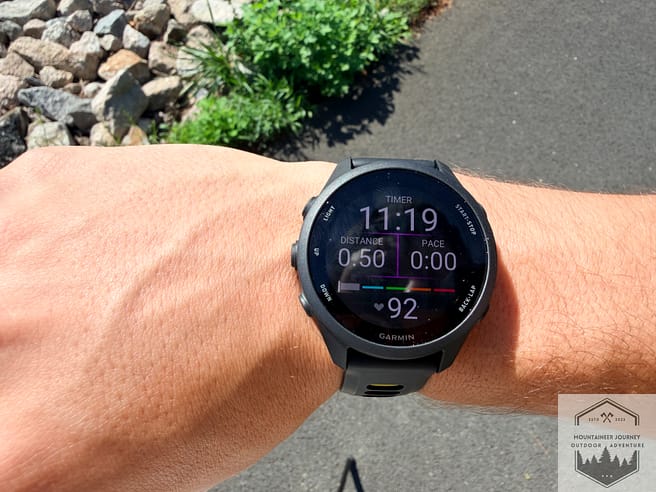
The Forerunner 170 offers advanced training metrics previously reserved for higher-end models, and this is where the watch earns its keep. It aims to provide advanced coaching features at a more accessible price, and it delivers.
Training readiness and training status give you daily insight into recovery and workload. During weeks of heavy trail running, these metrics accurately flagged when I needed to pull back.
The new quick workout feature and quick workout tool let you build running workouts directly on the watch. Garmin Coach supports running and cycling plans with a fitness coach that adapts to your progress.
Race-pace tools and grade-adjusted pace bring race-time predictions into your daily training analysis. The pace timing predictions really depend on whether they were much more accurate during cooler days than on very warm days.
It provides more than 80 preloaded sport profiles, including winter sports, racket sports, gym sessions, and strength training. The Forerunner 170 performs reliably in various sports activities, though it lacks a dedicated triathlon mode. The watch can generate voice alerts during workouts.
Sleep score is a bit unpredictable compared to my Oura Ring 4; the REM and Deep sleep are pretty inaccurate.
Garmin Pay is available on all Forerunner 170 editions. The watch includes smart notifications for smartphone alerts. Garmin Share integration keeps data flowing across devices.
New software features and future updates should continue to add value through bug fixes and new functionality, consistent with Garmin’s historical support for the Forerunner line.
Features & Training Score: 8.5/10 (10%)
Versatility: 10%
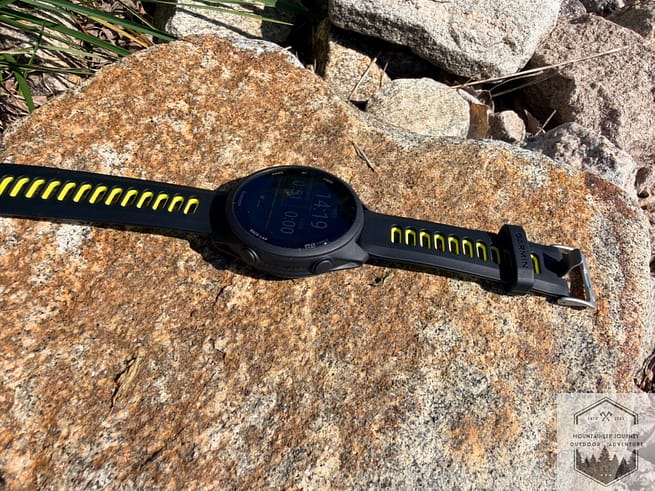
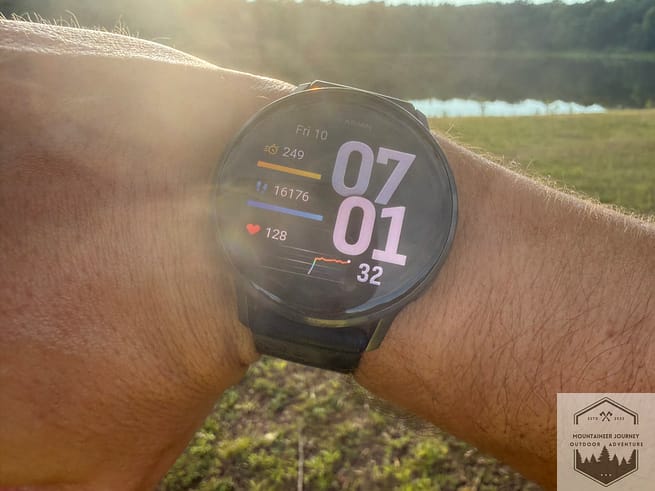
It has a lightweight design and features 5ATM water resistance. Day-to-day wear is comfortable, and the AMOLED display works well indoors and out. Although the watch is not as bright outside as the Apple Watch Ultra 3.
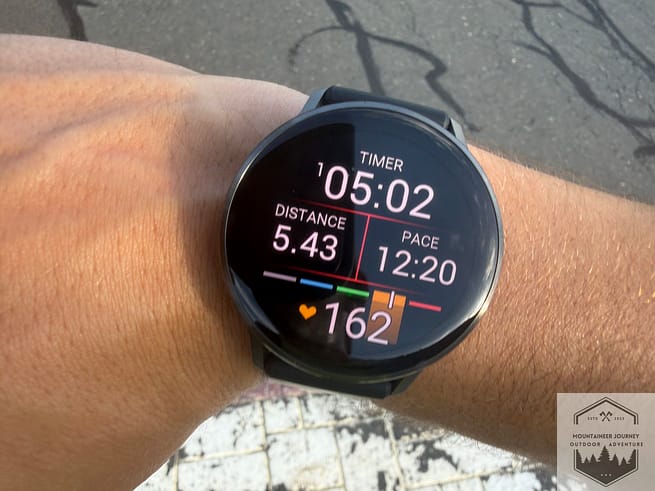
Road running and track work: Performance is strong. GPS and distance stay stable in unobstructed environments. Pacing metrics, sports modes, and the user interface make it a great watch for road runners.
Trail running and hiking: This is where compromises show. Elevation data lag on steep terrain. GPS drift under canopy is noticeable. Navigation is limited to breadcrumbs. For fast trail sessions, HR lag and GPS smoothing undermine confidence in the data.
Swimming: Pool lap recognition and open water support work. Optical HR is less reliable in water, so pairing a chest strap is recommended for serious swim training.
Winter and cold weather: Batteries drain faster in lower temperatures during my testing. Display visibility remained excellent. Button controls with gloves performed well, a real advantage over touchscreen-only watches like the Apple Watch SE or Apple Watch.
Who this watch is for: Road runners, casual hikers, gym-goers, and anyone who wants a capable running watch for daily wear without spending on premium models.
Who it is not for: Alpine hikers, ultramarathon runners needing extended battery, or anyone who depends on topo maps and multi-band GPS. For those users, the Garmin Fenix 8 or Coros Pace 4 is a better fit.
Versatility Score: 7/10 (10%)
Is The Garmin Forerunner 170 Worth It?
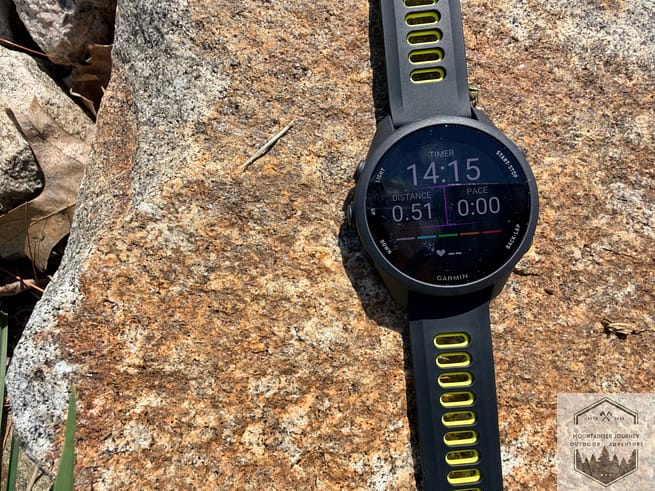
The Garmin Forerunner 170 offers great value if you use it for what it does best.
The Forerunner 170 is designed primarily for everyday users, with a focus on runners and general daily activities. Its single-band GPS limits its suitability for hikers and outdoor enthusiasts who require more precise navigation and tracking.
When evaluated against its price, features, and performance, the watch offers reasonable value for casual users but falls short for those demanding advanced outdoor capabilities.
For those looking for true navigation and more accuracy, check out the Coros Pace 4 or Garmin Vivoactive 6.
Value (10%): 7.5/10
Scoring Breakdown
Accuracy (30%): 7/10
Battery Life (20%): 7/10
Mapping & Navigation (20%): 5/10
Features & Training (10%): 8.5/10
Versatility (10%): 7/10
Value (10%): 7.5/10
Total Weighted Score: 2.10 + 1.40 + 1.00 + 0.85 + 0.70 + 0.75 = 6.80
Our Rating: 6.8/ 10
Frequently Asked Questions
Does the Forerunner 170 have topographic maps for hiking?
No. The Forerunner 170 does not include onboard topo maps. Navigation is limited to breadcrumb trails and basic routing. No offline mapping either.
How accurate is the heart rate monitor during exercise?
During steady runs, heart rate tracked within about 4-5 bpm of a Polar H10 chest strap. During intervals and steep climbs, deviations reached 5-8 bpm, with noticeable lag.
Can the Forerunner 170 replace a dedicated hiking GPS device?
No. The lack of topographic maps, multi-band GPS, and waypoint navigation makes it unsuitable for technical or off-trail hiking.
Does it support dual-frequency GPS?
No. The Forerunner 170 uses single-band GNSS across multiple constellations. It does not support multi-band GPS, which limits precision under challenging signal conditions.
How We Tested and Our Methodology
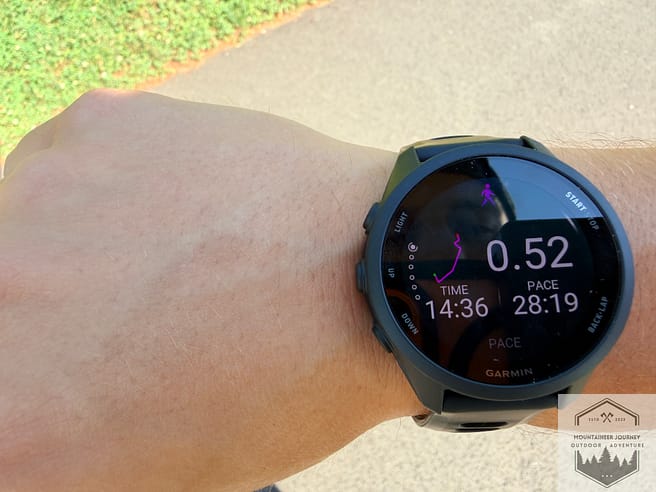
I personally tested the Garmin Forerunner 170 for over 6 months with the sole intent of giving you the most unbiased review possible. Devices were purchased independently. No free units, no sponsorships.
Every category score is based on objective testing, not brand claims.
Accuracy Testing
- Heart rate accuracy gets compared against a trusty Polar H10 chest strap.\
- GPS accuracy is double-checked against a handheld GPS unit and a mapped GPX route we’d previously verified.
- We look at four key things when it comes to accuracy: heart rate variance, distance error, GPS track quality, and elevation stability.
Battery Testing
- We test real-world battery drain, whether it’s during a GPS workout or when the watch is just sitting on your wrist.
- When we score the battery life, we’re looking at three things: how long it lasts on GPS, how consistent the battery is, and how long the watch lasts in smartwatch mode.
Mapping and Navigation Testing
- Navigation gets scored on its capability, not its price tag.
- Watches without proper navigation get lumped together as Orientation Only, which means no maps, no breadcrumb routes, no turn-by-turn guidance – but still good for basic tracking on familiar trails.
Features, Versatility, and Value
- Features cover things like training tools, recovery support and how well the watch integrates with your day-to-day life.
- Versatility is all about how well the watch adapts to running, hiking, heading to the gym or just wearing on the job.
- Value is all about whether the price is right, whether you can trust the watch to last, and whether the manufacturer will still be supporting it a year from now.
To make sure every review is consistent, we use the same scoring framework we use across all our GPS watch reviews:
Accuracy • Battery Life • Mapping and Navigation • Features • Versatility • Value
That way, you can easily compare models side by side without worrying about different scoring rules for each one.

Tyler
Tyler is the founder Mountaineer Journey and a professional Mountain Guide with 15+ years of technical experience in trekking, mountaineering, and trail sports. Having logged thousands of miles from rugged alpine summits to urban paths, Tyler provides rigorous, field-tested insights on hiking, walking, and trail running gear. All reviews are 100% unsponsored and unbiased, ensuring you get honest scoring based on real-world performance. His mission is to help outdoor enthusiasts of all levels find reliable equipment that ensures comfort, safety, and performance on any terrain.