Our Score
Garmin Forerunner 970 Review | Unsponsored
In this article, I’m going to share my HONEST Garmin Forerunner 970 review for those who are wondering if it is WORTH IT in 2026.
The Garmin Forerunner 970 is a premium GPS running and multisport smartwatch designed for serious athletes. Launched in May 2025 as the successor to the Forerunner 965, this sports watch packs a 1.4 inch AMOLED display behind a sapphire crystal, a titanium bezel, and a five button layout that combines legacy Garmin controls with a responsive touchscreen user interface.
For this review, I tested the Forerunner 970 for over one year of running, walking, and hiking, wearing it daily as my primary watch. I know exactly how it performs across real life conditions.
I’ll go over accuracy, battery life, mapping and navigation, features, versatility, and value.
I’ll be sharing my critical opinion backed by 16 years of experience as a trail guide and hiker.
I will also be comparing the Forerunner 970 to the Garmin Fenix 8, the Apple Watch Ultra 3, and other Garmin watches in the lineup.
Editor’s Note: This post was updated on 9/15/2026 with our TrackLab coding software for heart rate and GPS accuracy, plus new photos/videos after further testing.
Should You Buy the Garmin Forerunner 970?
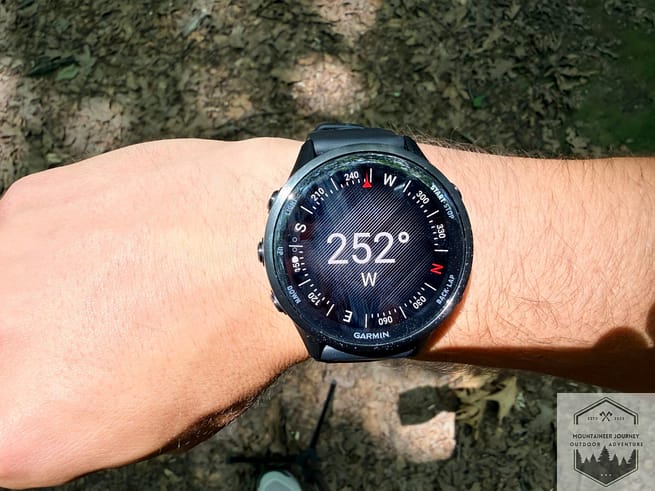
Buy If
- You want premium training metrics like running tolerance and running economy for serious running performance
- You need accurate topographic GPS mapping that’s easier to navigate than the Fenix 8
- You prioritize 5 to 6 day battery life with always-on display and daily GPS workouts
- You value voice feedback features for weather and activity queries
- You want the latest Gen 5 heart rate sensor accuracy for training
Don’t Buy If
- You need LTE standalone connectivity
- You’re budget conscious, as this watch requires an additional chest strap for key features like running economy
- You want ultra endurance battery life exceeding 20 hours in multi-band GPS mode
- You prefer simple fitness tracking without advanced new metrics
- You don’t need topographic mapping and would prefer a simpler running watch
Compare Similar Products
| Comparision | Product | Rating | Price |
|---|---|---|---|
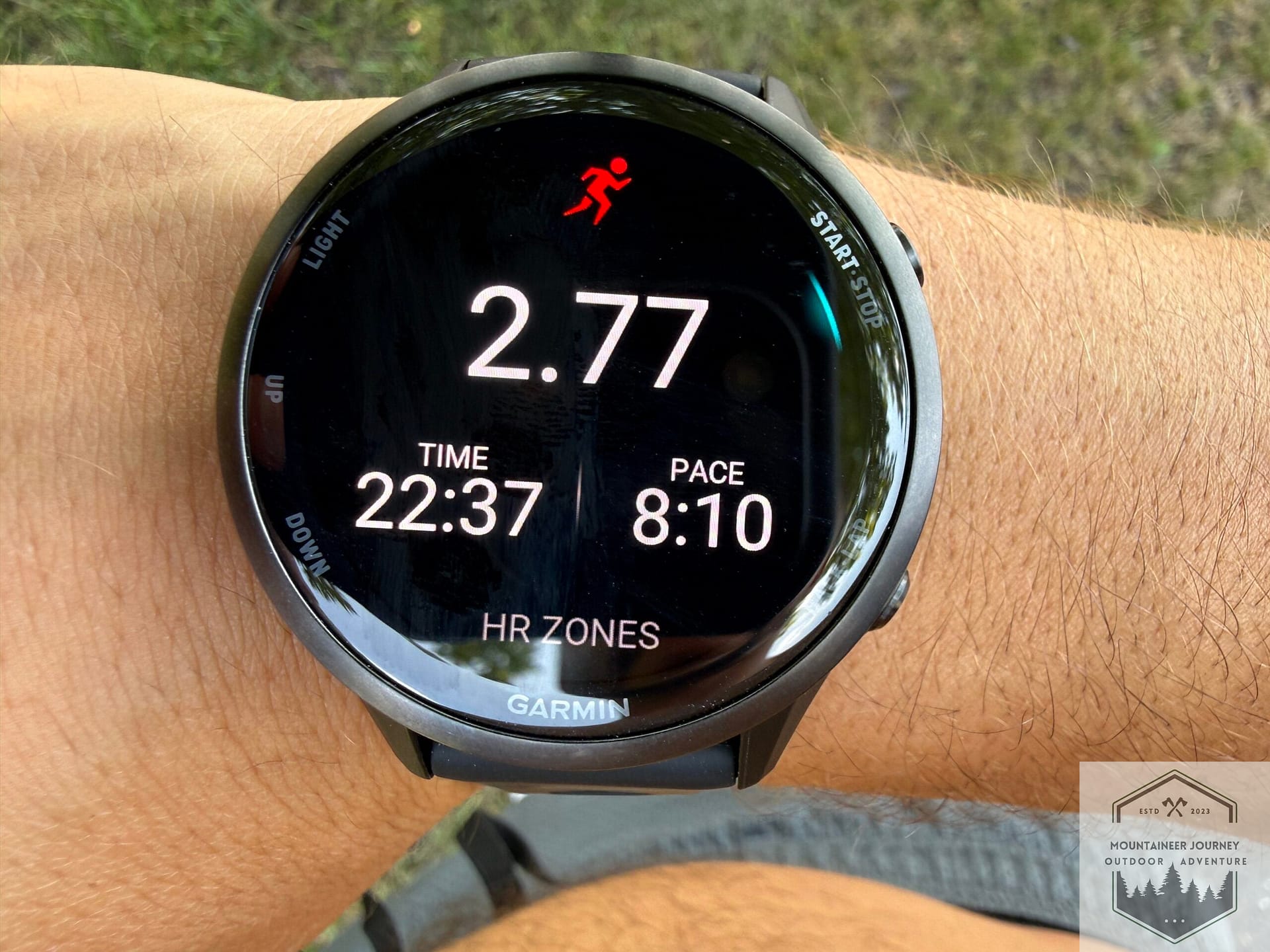 | 8.5 | Check Lowest Price | |
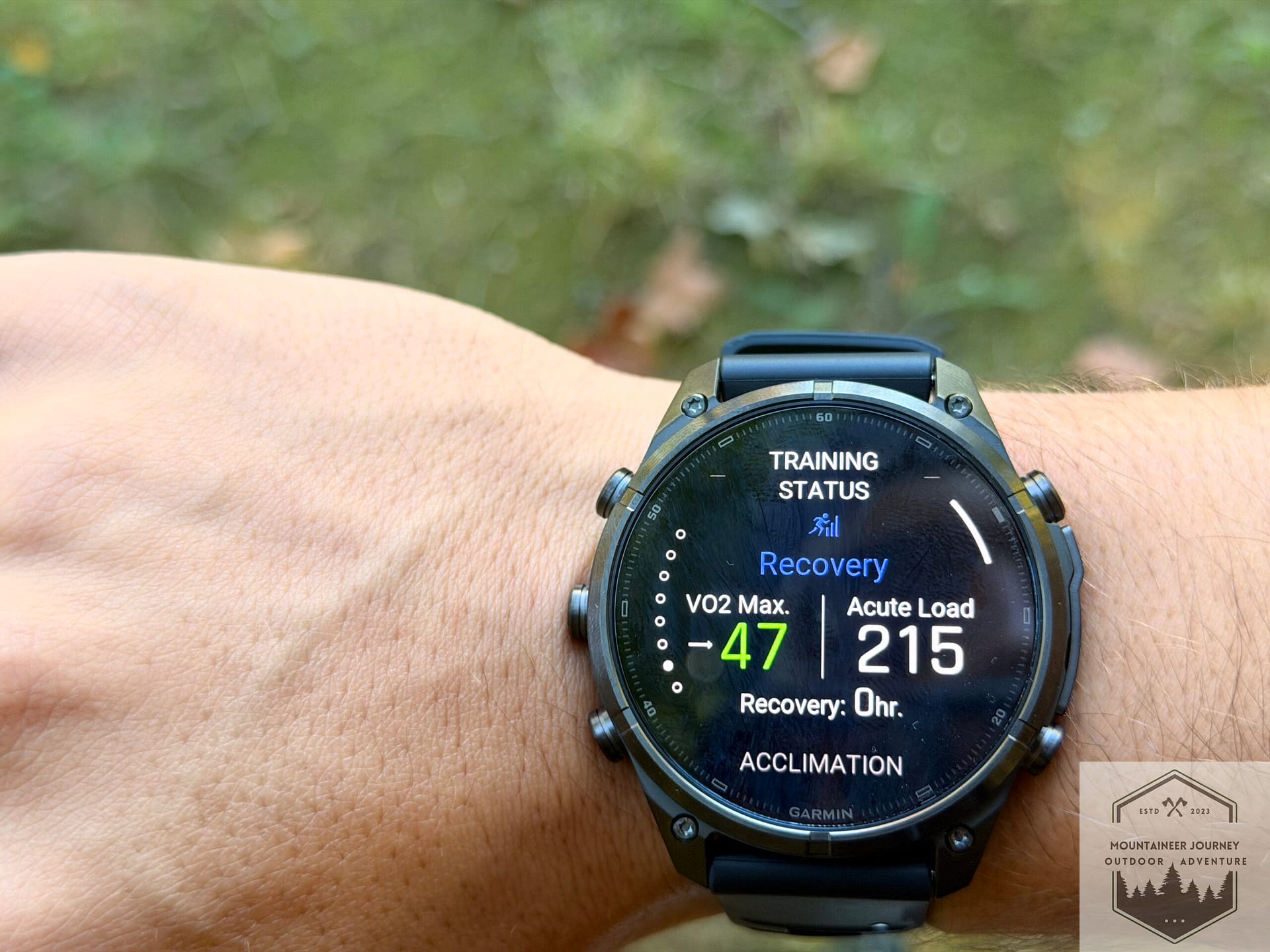 | 8.9 | Check Lowest PriceRead Review | |
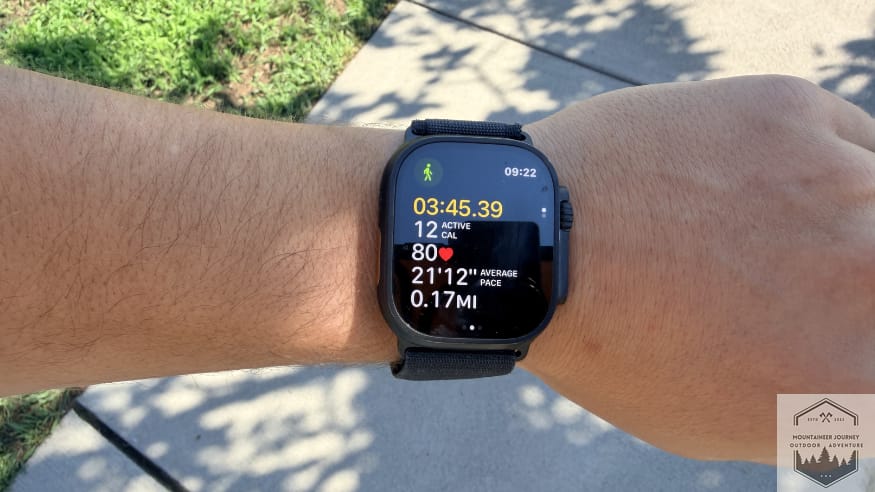 | 7.8 | Check LOWEST PriceRead Review |
Garmin Forerunner 970 Pros and Cons
Pros
- Excellent topographic mapping accuracy
- Gen 5 heart rate sensor with improved accuracy
- Training readiness and new running features
- Built-in flashlight with red light mode
- Battery life
Cons
- Requires chest strap for best running metrics
- No LTE connectivity
- $749 premium price point
Garmin Forerunner 970 Price
The Garmin Forerunner 970 costs $749, up from $599 for the 965. That is a significant jump, and you need to factor in the additional cost of the Garmin HRM 600 chest strap at roughly $169 if you want to unlock the full suite of running economy and step speed loss metrics.
Accuracy: 30%

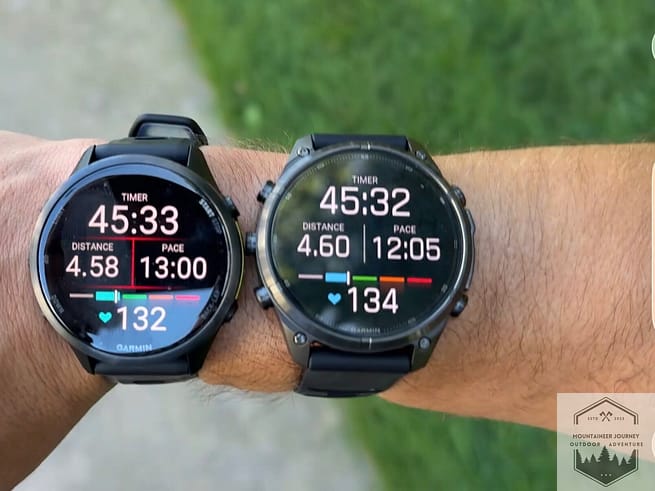
To keep our scoring objective, we compare heart rate data from our Polar H10 chest strap with that of the Garmin Forerunner 970 during every test. The H10 remains one of the most accurate heart rate sensors on the market.
The Forerunner 970 features a new Garmin Elevate Gen5 optical HR sensor; the heart rate accuracy was very consistent during testing.

| Metric | Value |
| Cadence Lock Duration | LOCKED – 268s |
| Fréchet Drift | 21.0 ft |
| Cross-Track Error | N/A |
| Distance Over-Report | -1.1% |
| Multi-Watch Drift | 19.2 ft |
| Mean Absolute Error | 2.3 bpm |
| Root Mean Square Error | 4.4 bpm |
| Maximum Delta | +33.9 bpm |
| Bland-Altman Bias | +1.2 bpm |
| Lin’s Concordance | 0.968 |
| Interval Latency | 16.0 s |
As you can see from our table, the Forerunner 970 averaged 1.2 bpm higher than the strap on a 5-mile run. This is excellent for wrist-based optical sensing and mirrors the accuracy I saw with the new Garmin Fenix 9 (around 1 BPM difference compared to the chest strap).
During speed workouts where I was in Zone 3 and Zone 4, the variance was even closer at 1 to 2 BPM compared to the Polar H10.
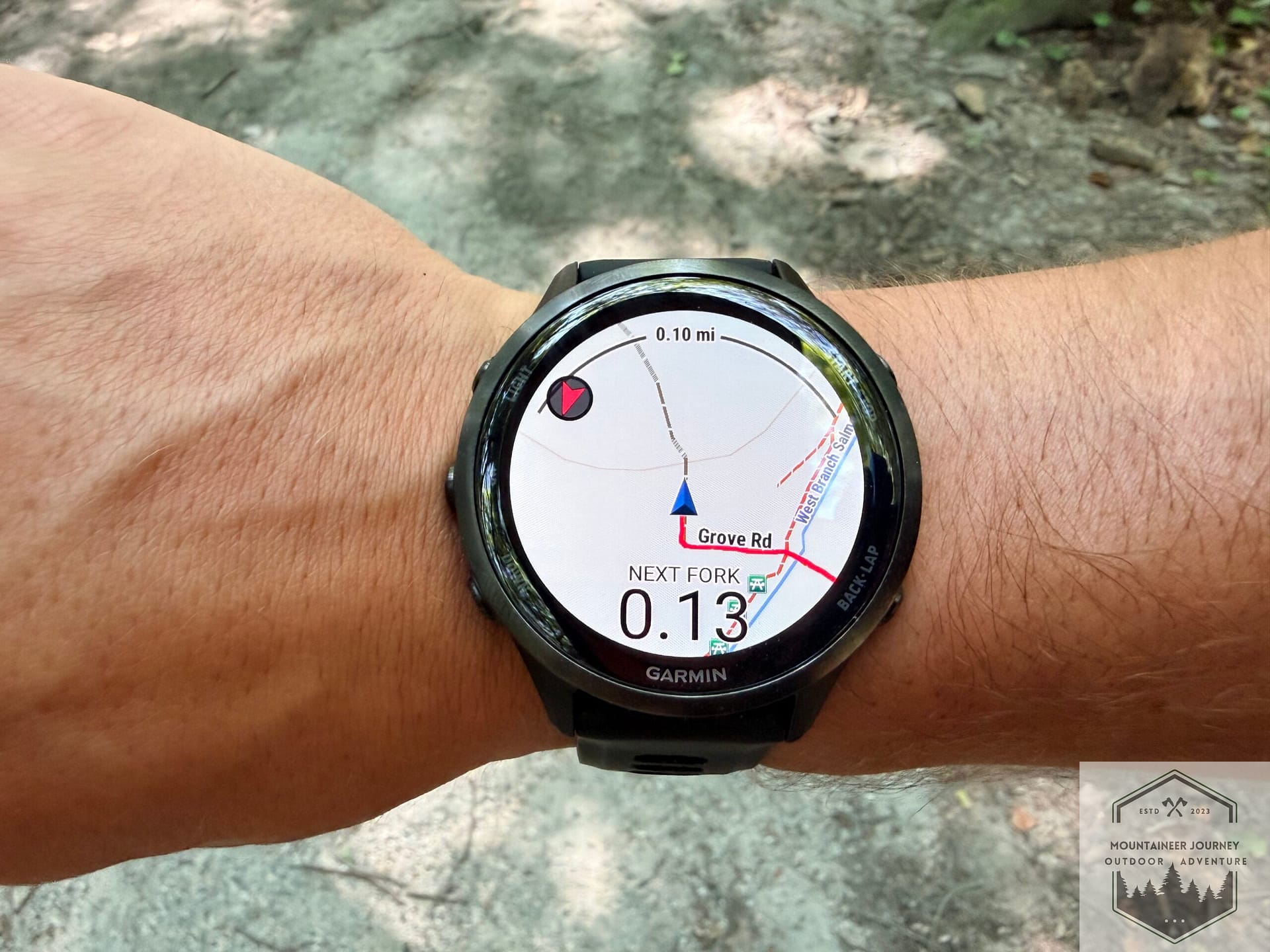
The Forerunner 970 delivers excellent GPS accuracy during testing. I downloaded pre-mapped GPX maps through my Garmin Connect app and got turn-by-turn navigation on the trails, even under dense tree cover.
From the same table above, the Forerunner 970 drifted only about 21 feet during a pre-routed GPX run; you can’t get much closer to accurate GPS readings before and after your runs.
The Forerunner 970 definitely has a much cleaner layout compared to the Fenix 8 when it comes to topographic maps. At times, the Fenix felt clunkier and had less ability to pan and zoom into the maps.
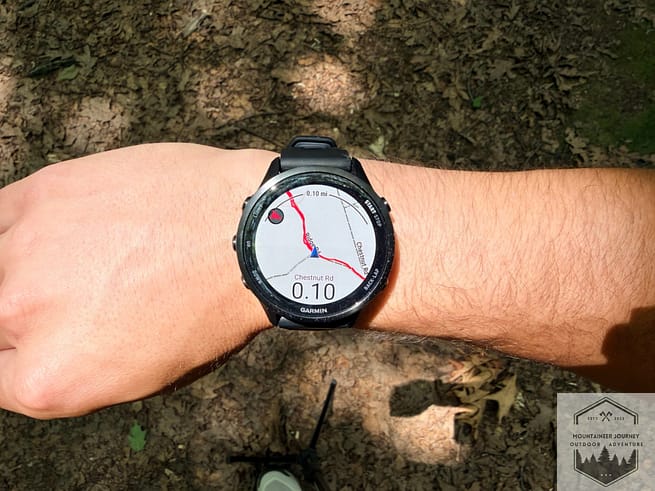
Off-route alerts are quick and responsive. I purposely went off route multiple times, and within a few feet I was already getting my off-trail alert. The Forerunner 970’s GPS accuracy rivals the best in class.
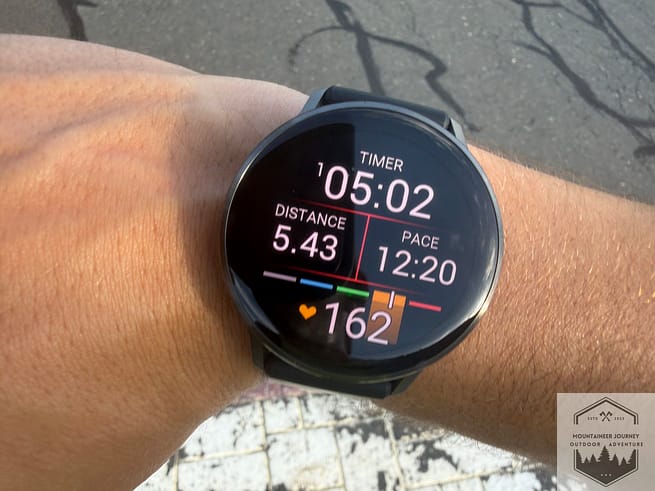
Pace tracking during interval workouts on tracks showed a 16-17 second display lag. This isn’t a big deal for longer pacing intervals. However, if you’re doing 30-second interval hill runs, by the time you finish each interval, the watch is just catching up compared to a chest strap.

The watch tracks running economy and running metrics, but running economy and step speed loss require the Garmin-associated chest strap. Without the chest strap, running economy estimates are more limited and less precise.
In multi-band GPS mode with SatIQ technology, track quality under dense forest canopy was very good during my testing. While other GPS watches (such as the Coros Pace 4) often produce erratic, squiggly lines, the Forerunner 970 maintained precise, clean track logs with minimal drift.
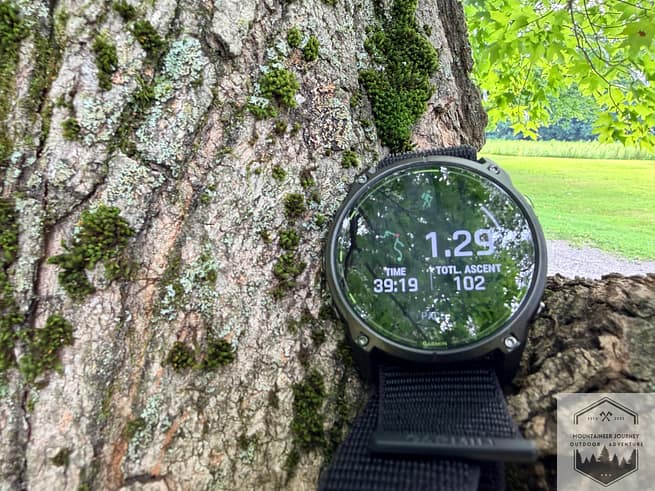
Elevation tracking and grade-adjusted pace performed strongly on steep terrain. During a demanding hike involving over 2,000 feet of elevation gain, the contour data displayed on the maps screen closely matched verified trail profiles.
Accuracy Score: 9/10 (30%)
Battery Life: 20%
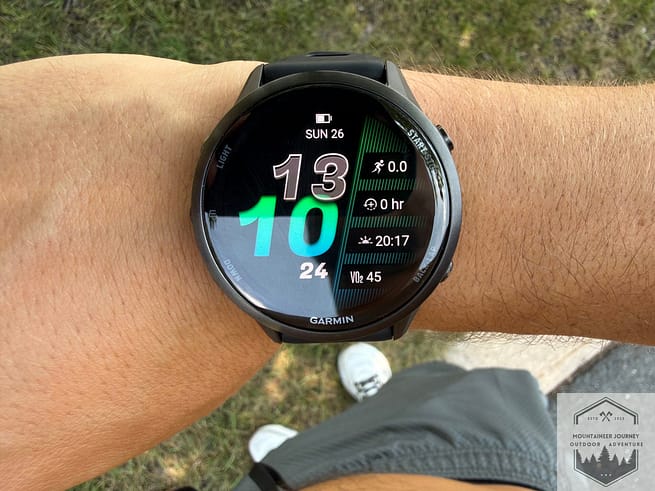
During my testing, the Forerunner 970 lasted up to 15 days in smartwatch mode.
For an always-on display that lasts about 5 days with 1-2 GPS workouts daily, reduce the brightness to 1/3rd(not many users know this). This simple adjustment can significantly extend battery life while still providing good visibility on sunny days with the AMOLED screen.
For battery life, the multi-band GPS mode lasts about 20 hours. To optimize this, enable auto-select mode in your settings. This feature will automatically choose single-band GPS when you’re in an open area where it can provide good accuracy. This helps conserve battery life by preventing unnecessary use of the multi-band GPS.
With auto-select mode, it saved me about two hours of GPS use, pushing runtime to roughly 22 hours. GPS-only GNSS mode offered up to 26 hours of battery life during testing.
| Mode/Actvity | Battery life |
| Smartwatch Mode | 15 days |
| Always-On Display(1/3 brightness) – 1-2 GPS workouts per day | 5 days |
| Multi-Band GPS | 20 hours |
| Multi-Band GPS (Auto-select) | 22 hours |
| Multi-Band GPS + Music | 12 hours |
Adding offline music playback to GPS activities further reduces runtime. Expect roughly 14 hours with GPS plus music, and around 12 hours in multi-band plus music scenarios. In my opinion, you will have your phone for most of your workouts, so you might as well keep the music running to save your battery life.
Charging from under 20% to full took me about 75 minutes total with the charger Garmin supplied.
By 2026 standards, the real-world battery life is solid for a premium sports watch but will not compete with solar-equipped adventure watches like the Garmin Fenix 8. However, a massive upgrade over the Apple Watch Ultra 3, which needs to be charged daily.
For daily runners and weekend hikers, it lasts more than long enough between charges.
Battery Life Score: 7/10 (20%)
Mapping & Navigation: 20%
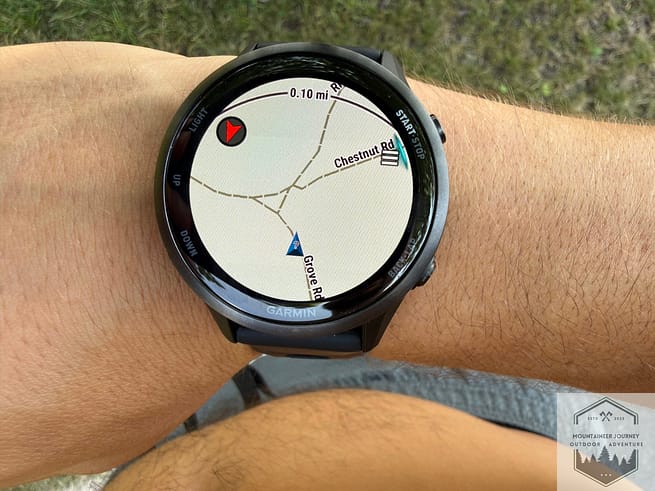
You can easily pan and zoom on the maps screen, which is easier than on the Fenix 8 during my testing. The AMOLED display improves map readability and the overall user interface experience, making trail junctions and contour lines much easier to read at a glance.
GPS track quality and waypoint navigation performed reliably on every outing. Turn-by-turn navigation for loaded routes worked well, and off-course alerts fired correctly when I deliberately veered from my planned path during a test hike.
You can download the Outdoors+ subscription for further metrics like satellite imagery and boundaries. These overlays add real value for hikers who want to visualize terrain features and land access before committing to a route.
However, there are some quirks. Round-trip routing had flaws during my testing. On one occasion, the route simply ended rather than recalculating when I went off course.
For hikers and trail runners who depend on map visuals for exploration, the Forerunner 970 delivers a genuinely useful navigation experience. Compared to breadcrumb-only watches like the Garmin Forerunner 170, it is a completely different category.
Mapping & Navigation Score: 8.5/10 (20%)
Features & Training: 10%
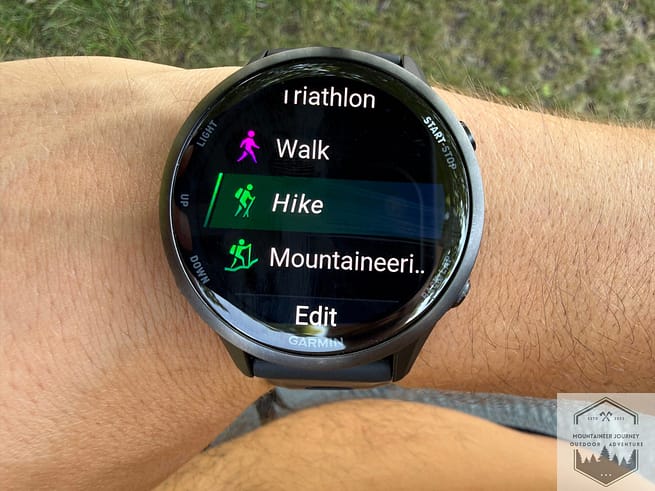
It offers new running metrics like Running Tolerance and Impact Load. Running tolerance assigns a mileage value to run intensity, giving you a clear picture of your overall load and how close you are to overtraining. These new metrics, along with training load and training status, provide a comprehensive view of your body’s readiness.
The training readiness score is a nice feature I noticed, which helped me calculate my VO2 max while running this summer, and it was quite accurate. During half marathon pace intervals, my VO2 max estimates correlated well with expected performance.
Garmin recently introduced a race predictor feature that uses your current training statistics to estimate your performance in various distances, including 5K, 10K, half-marathon, and full marathon.
After completing a half-marathon in 1 hour and 57 minutes, I continued my training with the Forerunner 970. However, the race predictor indicated that my projected time for a half-marathon would be around 2 hours and 14 minutes. So far, I’ve found the race predictor somewhat unreliable.
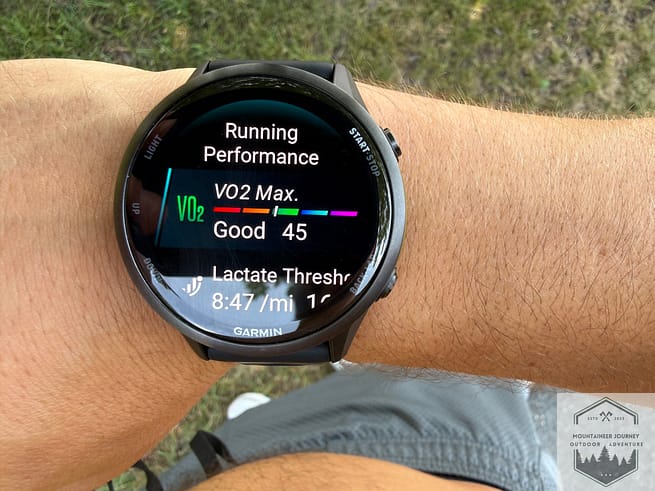
The Forerunner 970 supports phone calls via Bluetooth, and it features voice commands for hands-free operation. Voice feedback is nice and easy for asking about the weather, pinned activities, or other quick answers you may need.
The Forerunner 970 does not support LTE, so you need to keep your phone within 30 feet to answer calls and texts. Unfortunately, Apple phones don’t provide a keyboard for texting on the 970. However, Android phones do offer a keyboard for texting directly from the watch.
Another nice feature is the built-in LED flashlight, which you can also set to red light so it doesn’t disrupt your circadian rhythm when you get up at night. The LED flashlight also includes a strobe mode for visibility on night runs.
Garmin Forerunner 970 Strobe Light
As you can see in this video, the strobe light on the 4970 is great for early morning runs and/or dark runs at night. It provides nice visibility to traffic and others.
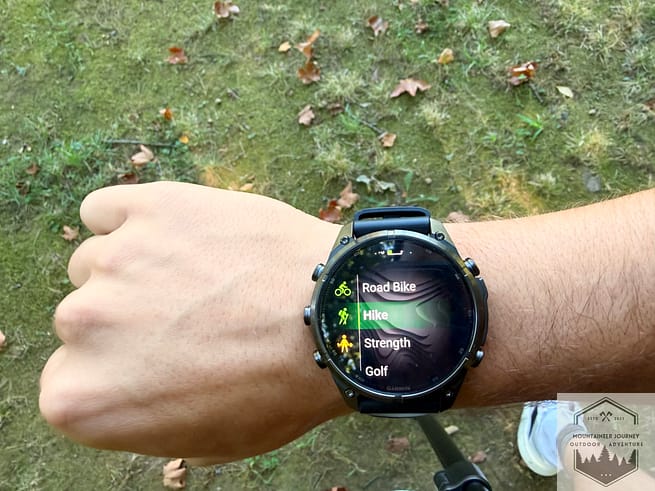
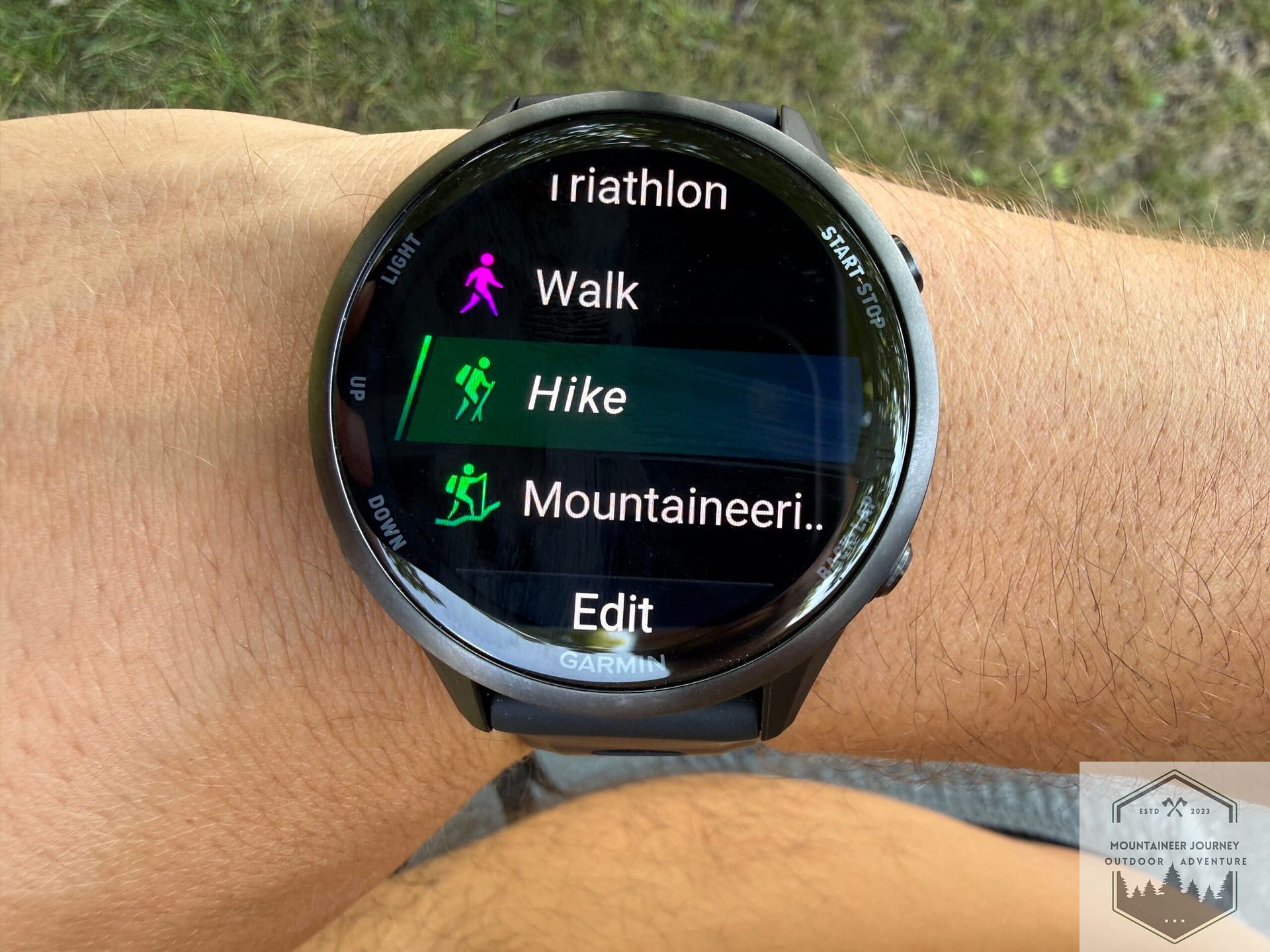
The five-button layout combined with touchscreen input reduces the learning curve for navigating menus during activities. For those not used to Garmin watches, the layout can take some getting used to. Pinning your most common activities can help streamline things.
The Forerunner 970 includes ECG functionality for Afib detection, and it tracks skin temperature and heart rate variability. Combined with Body Battery energy monitoring and daily suggested workouts, the software features and health data suite are comprehensive.
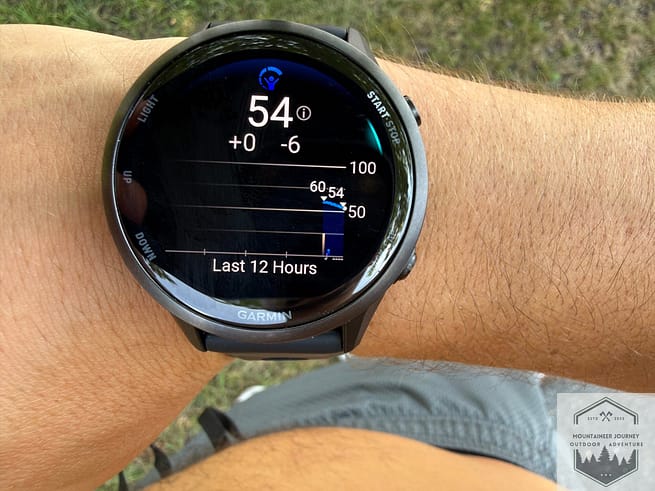
Body Battery is an interesting feature, as it combines your HRV, sleep score, and recent physical activity to give you an overall score of how well your mental and physical energy should be. I found it consistently gave me a round-about score of how well I’ve been resting.
The 970 also offers a sleep score and accurate sleep-stage tracking. Directly compared to my Oura Ring 4, the 970 sleep tracking was within 1 minute of total sleep, 10-15 minutes of deep sleep, and REM sleep over 4 weeks of average testing.
The watch includes offline music storage for playback, and Garmin Pay allows for contactless NFC payments on the watch. These smart features round out the experience for everyday use beyond sports tracking.
Compared to the Coros Pace 4 or other watches in this range, the Forerunner 970 offers a deeper training ecosystem, though it does require the HRM-600 chest strap to unlock its most distinctive running features.
Features & Training Score: 8.5/10 (10%)
Versatility: 10%
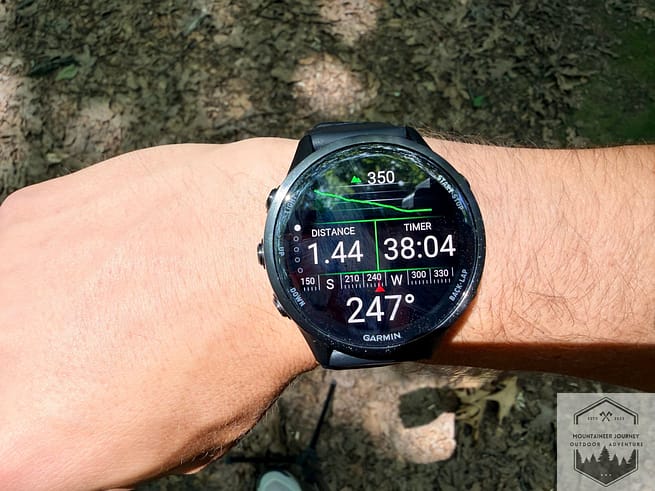
The Forerunner 970 is built for serious runners and triathletes rather than casual fitness users, and its versatility reflects that focus.
The best part of the Garmin Forerunner 970 is that it can be used by multi-sport athletes with perfect balance. Personally, I tested this one for running, hiking, trail running, and walking, as well as everyday use. It didn’t feel like any of these features and/or metrics lean towards one sport or the other. The usability is very balanced.
The Garmin Forerunner 970 is much lighter and less bulky than the Fenix 8 but has just as many features in its arsenal. The titanium bezel and sapphire crystal make it scratch-resistant and durable enough for daily wear, but it may feel bulky on smaller wrists, especially during sleep tracking.
For sports tracking, the watch covers road running, trail running, hiking, swimming (waterproof to 10 ATM with solid lap detection), cycling, pool triathlon, obstacle racing, disc golf, and more. Auto lap, structured workout support, data fields customization, and timing gates round out the running features nicely.
For anyone looking for a watch that does not lean toward one sport or the other while lacking in other abilities for their preferred activities, the Garmin Forerunner 970 delivers.
At the time of this writing, the 970 has the highest versatility score out of all of our GPS watches.
Versatility Score: 9/10 (10%)
Is The Garmin Forerunner 970 Worth It?
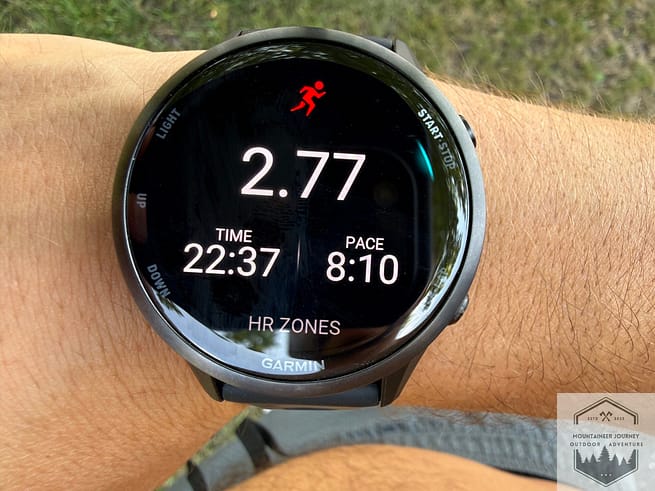
The Forerunner 970 delivers a compelling package at $749, but it demands that you actually use its advanced running features and mapping to justify the premium price.
The Forerunner 970 is generally well regarded for its GPS accuracy and performance analytics.
If you are a serious runner or triathlete who wants tracked running tolerance, running economy, and detailed, accurate topographic navigation on your wrist, this watch is hard to beat.
The Forerunner 970 has a sapphire crystal display, enhancing durability, and the titanium bezel construction held up with zero visible wear across my year of testing.
The Forerunner 970 includes new running metrics not found in the Forerunner 570 or older models, making it a genuine upgrade for those coming from previous Garmin Forerunner generations.
Compared to the Fenix 8, it is lighter AND cheaper while sharing many of the same sports features and mapping capabilities.
If you only want notifications and casual fitness tracking, the $749 price tag is harder to justify. There are more affordable options like the Garmin Forerunner 55 or Garmin 170 for much lower prices.
Overall, the Garmin Forerunner 970 is one of our top-rated GPS watches of 2026. If you make use of all of the features, it is well worth the price.
Value Score: 9/10 (10%)
Scoring Breakdown
Accuracy (30%): 9/10
Battery Life (20%): 7/10
Mapping & Navigation (20%): 8.5/10
Features & Training (10%): 8.5/10
Versatility (10%): 9/10
Value (10%): 9/10
Total Weighted Score:
2.70 + 1.40 + 1.70 + 0.85 + 0.90 + 0.90 = 8.45/10
Our Rating: 8.5/10
Frequently Asked Questions
Is the Forerunner 970 accurate for trail running and hiking?
Yes, the Garmin Forerunner 970 is highly accurate for trail running and hiking. It has multi-band GPS, and we rated the accuracy at 9 out of 10 based on our testing.
How long does the battery last with GPS activities?
Multi-band GPS lasted me approximately 20 hours. However, if you are in an open area and have auto-select mode on, this will save you the initial two hours of battery time.
Do I need the chest strap for the best features?
Yes. The running economy and step speed loss metrics only work with the Garmin HRM 600 chest strap, which costs roughly $169 separately.
Is the topographic mapping better than the Fenix 8?
In my testing, pan and zoom operations on the Forerunner 970 were smoother and more responsive than the Fenix 8. Map clarity is comparable, and the AMOLED display makes contour lines and trail detail easier to read.
How We Tested and Our Methodology

I personally tested the Garmin Forerunner 970 for over a year, starting in 2025 and continuing through 2026, to give you the most unbiased review possible.
Mountaineer Journey is a 100% independent publisher, and our testing team has spent years evaluating outdoor gear in real-world conditions. We accept zero sponsorship, and every score is earned through objective testing.
Over the past decade, I’ve logged more than 3,000 combined hiking, trail running, and road running miles, which gives me the experience to evaluate GPS accuracy, comfort, and long-term performance, not just lab numbers.
Every category score is based on objective testing, not brand claims.
Accuracy Testing
- We compare heart rate accuracy against a Polar H10 chest strap on every outing.
- GPS, heart rate, and elevation data are plugged into our TrackLab coding software, which gives us a full analysis of accuracy regarding the GPS watch versus pre-mapped GPX files, as well as Polar H10 data
- We cross-reference GPS accuracy against a handheld GPS unit and mapped GPX routes we previously verified.
- We evaluate four key areas for accuracy: heart rate variance, distance error, GPS track quality, and elevation stability.
Battery Testing
- We test real-world battery drain during GPS workouts and during everyday smartwatch mode wear.
- Battery life is scored on three criteria: GPS runtime, battery consistency across workouts, and total smartwatch mode longevity.
Mapping and Navigation Testing
- Navigation gets scored on capability, not price tag.
- Watches with full offline maps are evaluated on map clarity, pan and zoom responsiveness, turn-by-turn reliability, off-course alerts, and overlay layer performance across varied terrain.
Features, Versatility, and Value
- Features include training tools, recovery support, and how well the watch integrates with day-to-day life.
- Versatility covers how well the watch adapts to running, hiking, heading to the gym, or just wearing it on the job.
- Value assesses whether the price is justified, whether you can trust the watch to last, and whether Garmin will still be supporting it years from now.
To make sure every review is consistent, we use the same scoring framework across all our GPS watch reviews: Accuracy • Battery Life • Mapping and Navigation • Features • Versatility • Value
That way, you can easily compare models side by side without worrying about different scoring rules for each one.
Battery Testing
- We test real-world battery drain, whether it’s during a GPS workout or when the watch is just sitting on your wrist.
- When we score battery life, we’re looking at three things: how long it lasts on GPS, how consistent the battery is, and how long the watch lasts in smartwatch mode.
Mapping and Navigation Testing
- Navigation gets scored on its capability, not its price tag.
- Watches without proper navigation get evaluated on breadcrumb accuracy, back-to-start reliability, and course-following performance on known trails.
Features, Versatility, and Value
- Features include training tools, recovery support, and how well the watch integrates with your day-to-day life.
- Versatility is all about how well the watch adapts to running, hiking, heading to the gym, or just wearing it on the job.
- Value is all about whether the price is right, whether you can trust the watch to last, and whether the manufacturer will still be supporting it a year from now.
To make sure every review is consistent, we use the same scoring framework across all our GPS watch reviews: Accuracy • Battery Life • Mapping and Navigation • Features • Versatility • Value
That way, you can easily compare models side by side without worrying about different scoring rules for each one.

Tyler
Tyler is the founder Mountaineer Journey and a professional Mountain Guide with 15+ years of technical experience in trekking, mountaineering, and trail sports. Having logged thousands of miles from rugged alpine summits to urban paths, Tyler provides rigorous, field-tested insights on hiking, walking, and trail running gear. All reviews are 100% unsponsored and unbiased, ensuring you get honest scoring based on real-world performance. His mission is to help outdoor enthusiasts of all levels find reliable equipment that ensures comfort, safety, and performance on any terrain.