Our Score
Adidas Terrex Free Hiker 3 Ultra Review 2026
Our Verdict
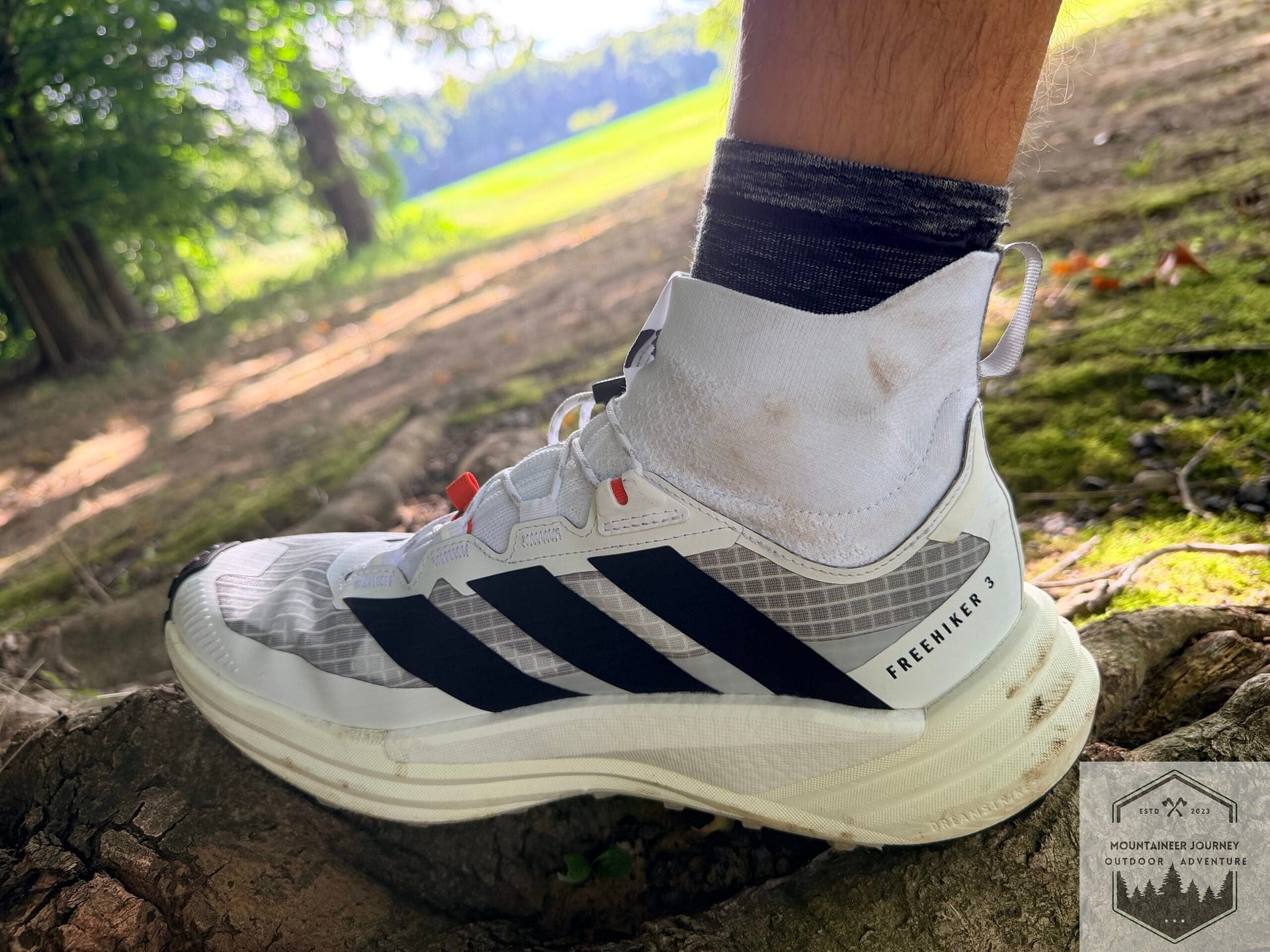
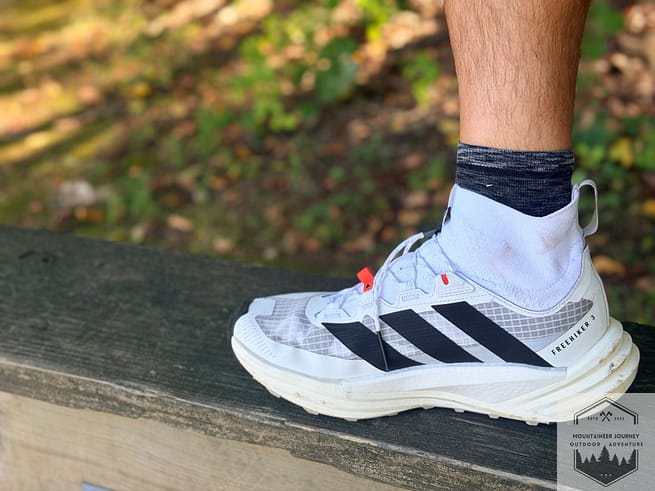
The Adidas Terrex Free Hiker 3 Ultra earned our top rating as the best hiking shoe of 2026 for good reason. It combines a full Gore-Tex waterproof membrane, a Continental rubber outsole, and a dual foam midsole system featuring Hyperboost Pro and Dreamstrike+ that together create something genuinely special on the trail.
The shoe’s dual-foam midsole delivers a soft, springy ride with high shock absorption at impact and impressive energy return. Unlike overly cushioned models that leave you feeling sloppy underfoot, this shoe strikes a balance between plush comfort and responsive stability. The Terrex Free Hiker 3 has a Gore-Tex liner that scored 5/5 in our water resistance tests, and the Continental outsole gripped wet limestone like it was dry pavement.
During my test hikes across basalt, wet limestone, sandstone, and gravel, the shoe proved itself on every surface I threw at it. The mesh ankle collar gives it hiking boot-level stability without the weight penalty, and the overall construction feels purpose-built for serious trail use.
After extensive testing, I am rating the Adidas Terrex Free Hiker 3 Ultra a 9.2/10, making it our top-rated hiking shoe for 2026.
Adidas Terrex Free Hiker 3 Ultra Pros and Cons
PROS
- Waterproof
- Great support
- Excellent lockdown
- Grippy outsole
CONS
- Lacing system can be frustrating
- Narrow profile
Who Should Buy the Adidas Terrex Free Hiker 3 Ultra
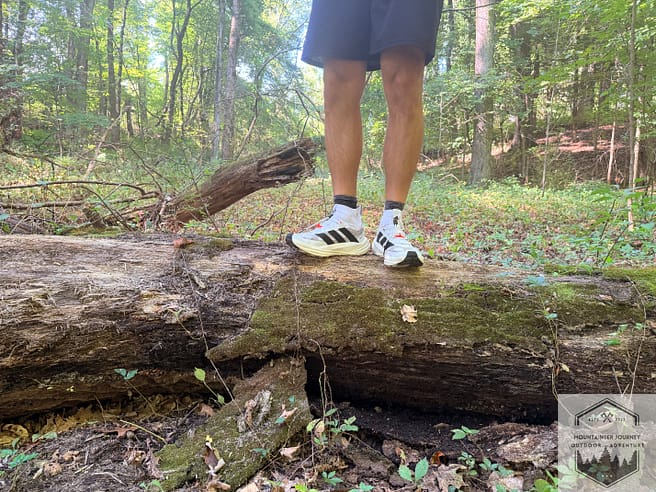
- Day hikers seeking maximum comfort and cushioning without the mushy, unstable feel of some competitors
- Technical trail enthusiasts who need a shoe flexible enough to navigate obstacles yet stable enough for confidence on uneven terrain
- Hikers wanting reliable Gore-Tex waterproofing and outstanding traction on wet and dry surfaces
Who Shouldn’t Buy The Adidas Terrex Free Hiker 3 Ultra
- Ultralight backpackers where every ounce counts and a lighter shoe is the priority
- Hikers in hot, dry climates who need maximum breathability over waterproofing
- Budget-conscious buyers looking for an entry level hiking shoe under $150
Adidas Terrex Free Hiker 3 Ultra Price
The Adidas Terrex Free Hiker 3 Ultra currently retails for $220 on the Adidas website for the men’s Gore-Tex model.
Adidas Terrex Free Hiker 3 Ultra Comfort: 9/10
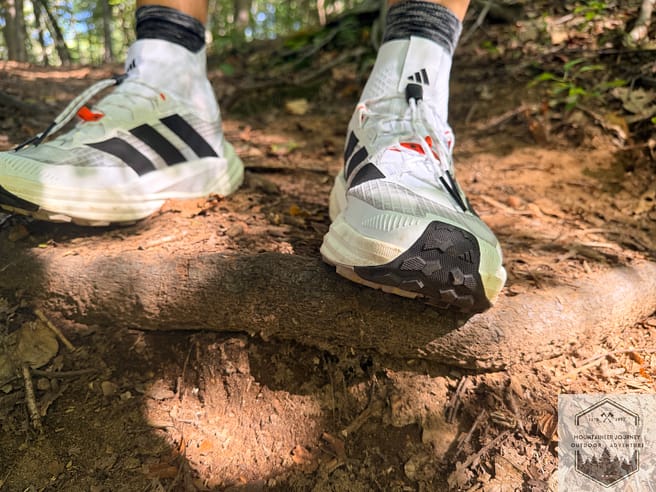
Slipping into the Free Hiker 3 Ultra for the first time, I immediately noticed the Dreamstrike+ midsole offers excellent cushioning and comfort.
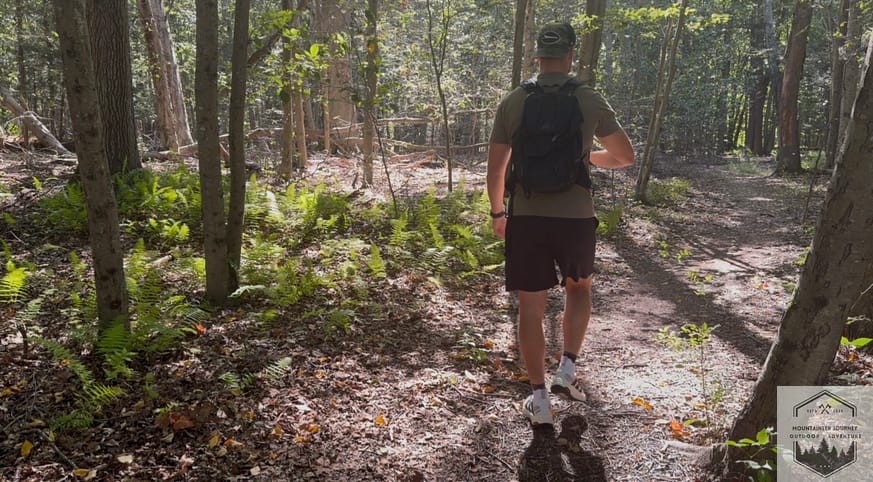
This shoe doesn’t need weeks of breaking in. I took them straight out of the box on a 10-mile day hike and experienced zero hot spots, zero pressure points, and zero complaints from my feet.
The midsole is a dual-foam system that warrants a detailed explanation. Hyperboost Pro features a softer foam positioned closer to the foot, with added material in the forefoot for propulsion.
Dreamstrike+ sits firmer underneath, especially in the rearfoot, providing stability and structure. Together, they provide more comfort than almost any hiking shoe I have tested while maintaining the responsiveness that keeps you feeling connected to the trail.
There is a fair amount of foam underfoot, but unlike some Hoka models, where the cushioning feels mushy and disconnected from the ground (like the Anacapa 2), this shoe maintains a controlled ride. The Free Hiker 3 is softer than the Free Hiker 2.0, but it never crosses into that territory where you lose confidence on technical ground.
The mesh ankle collar wraps around the ankle like a sock, providing a secure feeling without rigid padding. It eliminates the break-in period you deal with on a traditional hiking shoe or hiking boot. After 40+ miles, the comfort has only gotten better as the materials have settled around my foot.
The shoe delivers high shock absorption during impact and energy return that keeps your legs fresher on long days. During my testing, I found that my legs were a lot fresher and able to keep up with repeated pounding on the trail compared to other hiking shoes with even a higher stack height, like the Anacapa 2 Low.
The Free Hiker 3 Ultra is suited for those who want a comfortable experience on the trail without ruining trail feel. This hiking shoe is not suited for those seeking the most connected-to-the-ground feel and/or a minimal stack height.
Weight
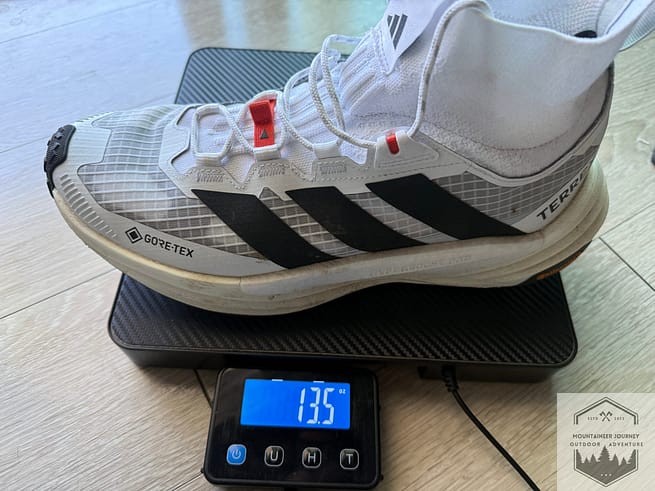
The Free Hiker 3 Ultra weighted at 13.5 oz per shoe, which is on the heavier side.The upper is made of robust synthetic ripstop mesh that keeps things lighter than leather alternatives while still providing protection. The mesh ankle collar contributes to the weight savings as well, giving you hiking boot stability without the actual weight of a boot.
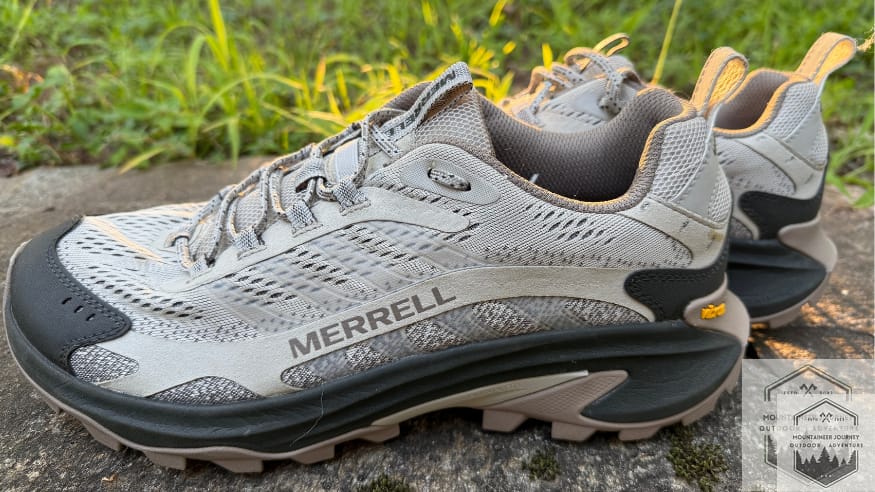
There are trade-offs here, as there always are. You gain cushioning, impact absorption, and protection from the elevated foam stack, but you lose that nibleness and lightweightability. Check out the Merrell Moab Speed 2 for a lighterweight hiking shoe, which is 3.5 oz lighter per shoe.
Traction: 9/10
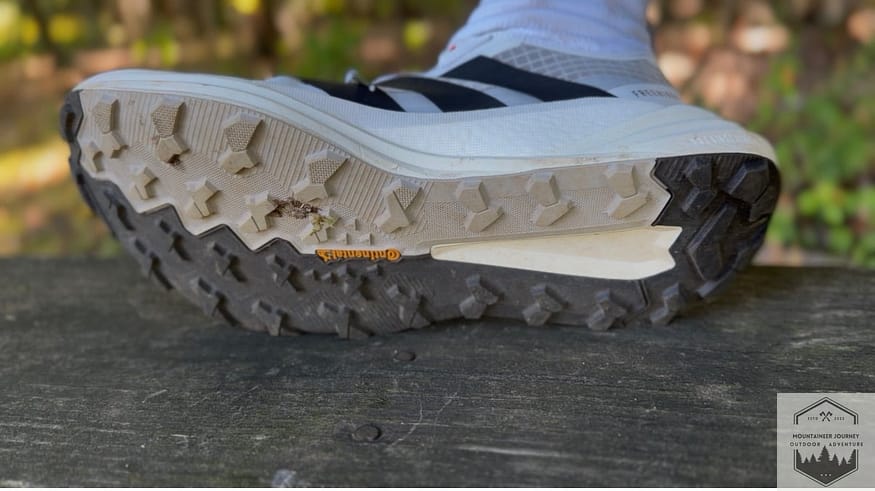
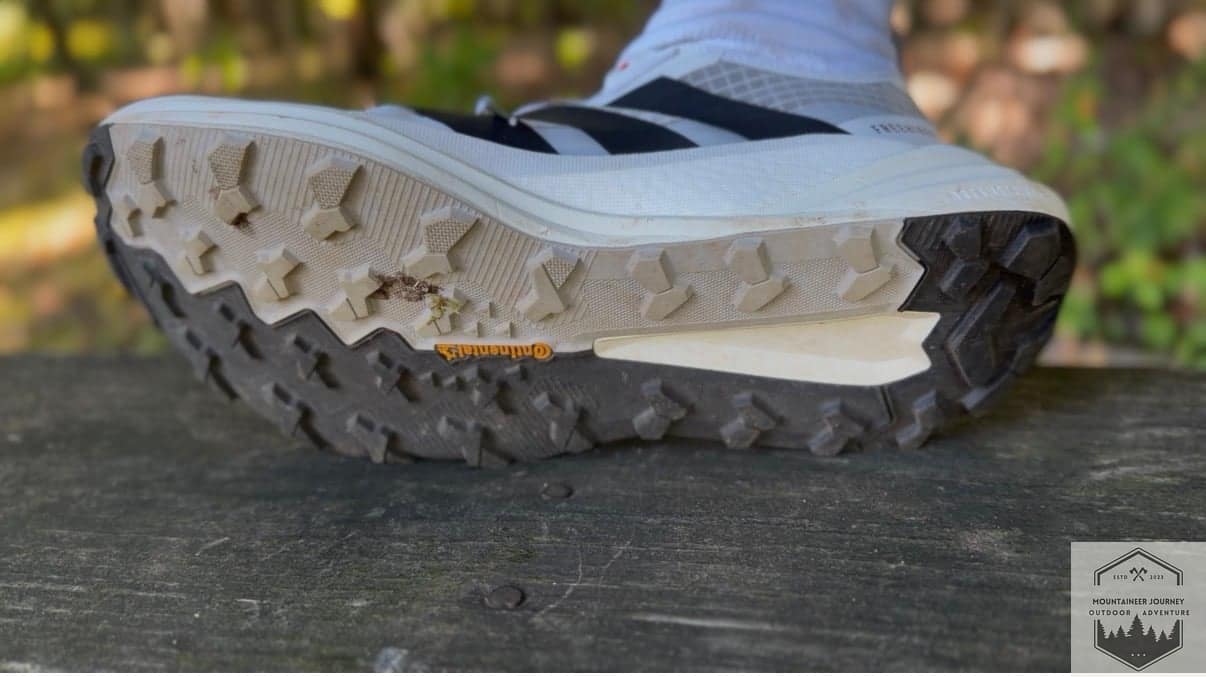
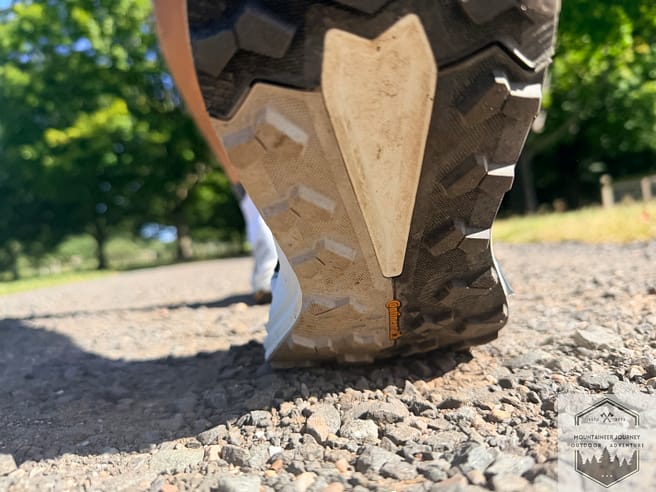
The Continental outsole on the Adidas Terrex Free Hiker 3 Ultra is, put simply, outstanding. The Free Hiker 3 Ultra uses a Continental rubber outsole (like the Free Hiker 3 Mid we tested), and it shows on every surface I tested.
During my testing on basalt, wet limestone, sandstone, and gravel, the Continental rubber delivered great grip, allowing me to maintain secure footing without second-guessing. On wet limestone in particular, where many hiking shoes start to slip and slide, this outsole held firm. I found myself not having to take quite so small and choppy steps.
The lugs feature a double chevron pattern for better edge hold, and the outsole lugs measure 5mm in depth. That is deep enough to bite into loose terrain without being so aggressive that they catch on pavement or smooth rock.
On a steep sandstone approach, I found my Merrell Moab Speed 2’s slipping in the past, whereas the Free Hiker 3 Ultra held very strong.
The tread pattern has been redesigned compared to the previous version, with asymmetrical chevron lugs and more horizontal lugs at the front and rear for better grip during ascents and descents. Walking downhill on loose gravel, I felt the lugs engage confidently rather than skating across the surface.
Compared to other premium hiking shoe outsoles I have tested, the Continental compound on the Free Hiker 3 is among the best.
How Does The Adidas Terrex Free Hiker 3 Ultra Fit?
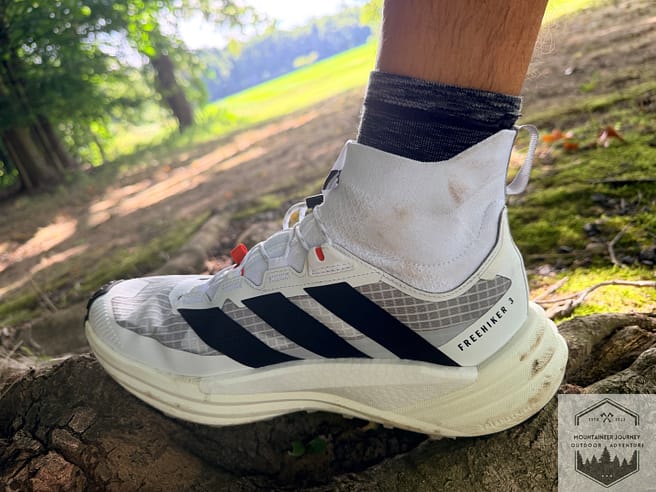
I tested mine in a men’s size 10.5, regular width, and they did fit true to size. Typically, Adidas shoes fit narrow, but I found them a normal width this time.
The toe box is spacious, allowing toes to splay comfortably without excess room that could cause them to slide. I had plenty of space around my big toe and the adjacent toes on descents, without my foot feeling like it was swimming in the shoe. The width accommodates an average-to-slightly wide foot well, with enough room for toe splay on long hikes.
However, if you have wide feet, I would steer clear of this hiking shoe. Unfortunately, they do not have a wide size currently available.
It has a quick-toggle speed-lacing system for adjustments that works quickly and efficiently. This system is much better than the Salomon Speedcross 6 or even the Hoka Transport 2. The laces are much more robust and provide a more secure lockdown.
One pull locks everything down, and the system provides excellent heel lockdown without any slipping during my testing. The drawback is that speed lacing does not allow the same micro-adjustments as traditional laces.
Fit Score: 4.5/5
Stability & Support: 9/10
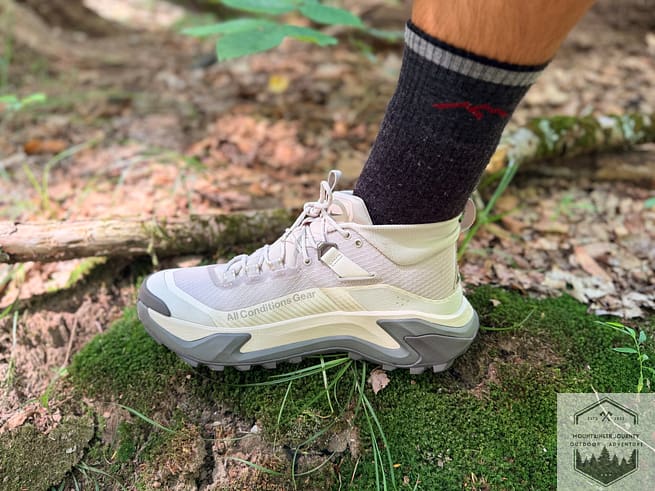
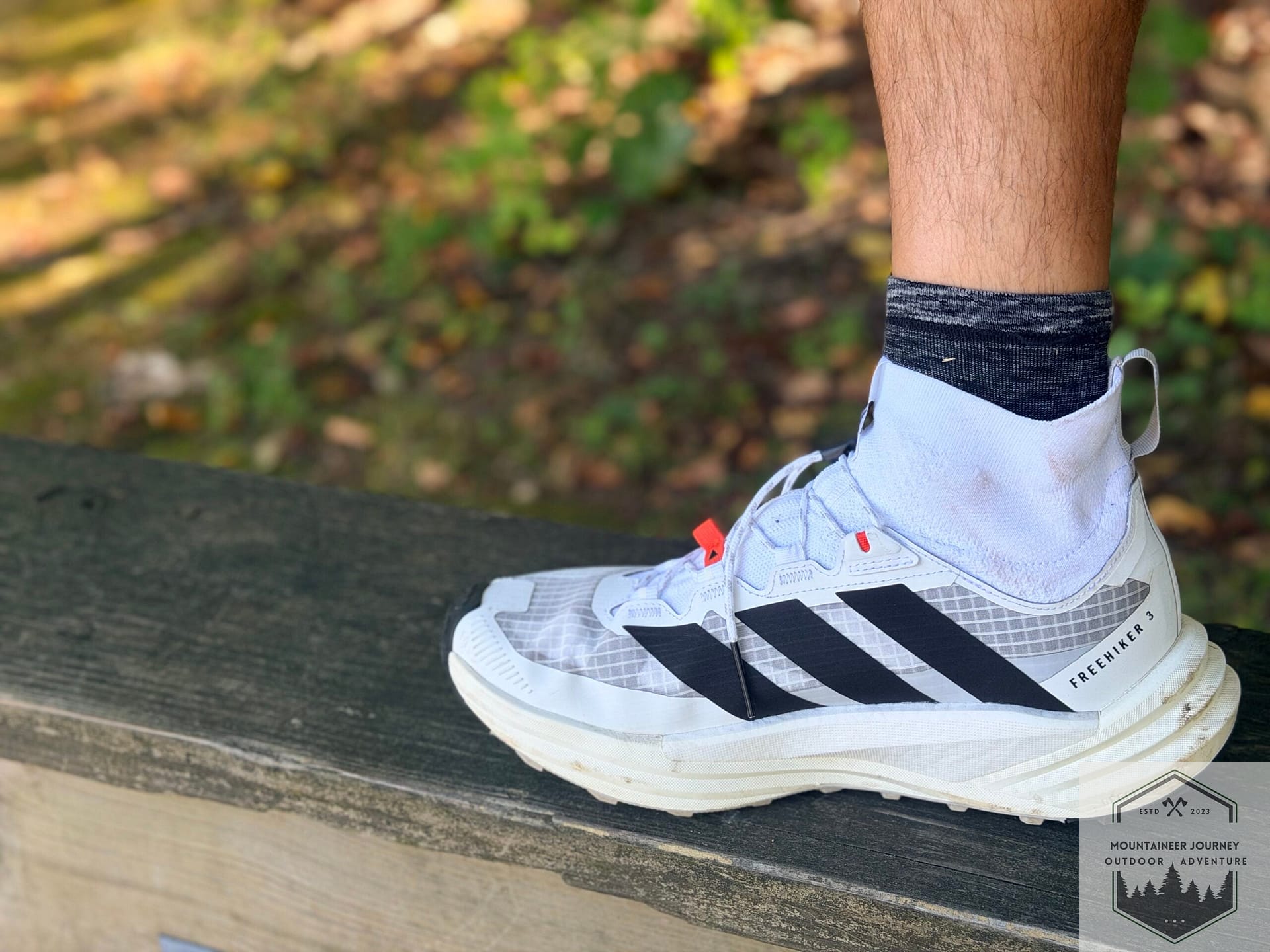
The mesh ankle collar on the Free Hiker 3 Ultra is one of its standout features and delivers hiking boot-level stability that surprised me.
The collar sits higher than most low-cut hiking shoes, almost mid-cut, and catches the ankle in a way that keeps the grit out while providing real lateral support.
The upper conforms snugly to prevent foot movement, and the wide sole distributes forces well on uneven terrain. The forefoot platform is about 120mm wide, so you have a big, stable landing zone on rough ground. The rearfoot narrows to about 90mm, so it’s not too bulky.
The EVA stability frame helps with lateral control on rocky trails, and the flared heel design increases surface contact for stability on descents. I tested this on technical sections with loose rock and off-camber surfaces, and the shoe held up remarkably well.
One thing to note: the heel counter is slightly less stiff than the previous version. Adidas removed the TPU heel clip from the Free Hiker 2 so you get a bit less heel lockdown. For light to moderate loads this is fine.
The Free Hiker 3 features a dual-foam midsole for improved stability and cushioning. But if you’re carrying a heavy pack for multiple days you might notice the difference.
In my testing on steep basalt scrambles and loose gravel descents, the support system performed exactly as I needed it to. The shoe flexes enough to let your foot work naturally on technical trails while still providing structure where it matters.
Durability 9.5/10
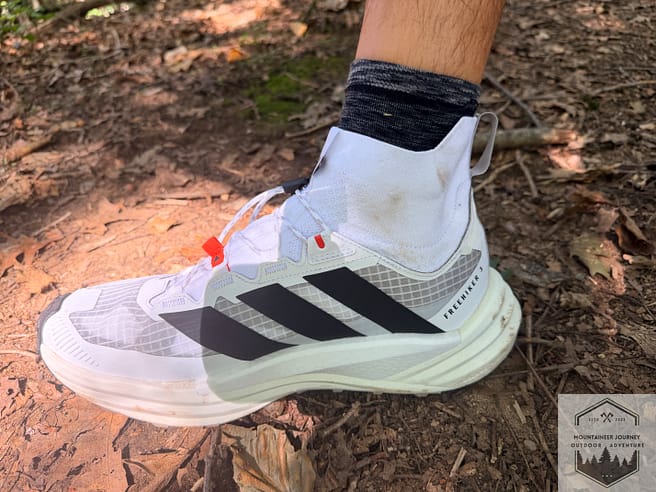
The synthetic ripstop mesh is what worried me about the Free Hiker Ultra 3.Typically, these materials break down much quicker than traditional leather.
However, putting these shoes through the ringer over 40 miles, the upper as well as the outsole showed an impressive durability. There are fewer seams to catch on the shoe, meaning fewer stress points, which overall should improve the lifetime of the shoe.
I also do like the leather overlays through the lacing system. That traditionally stitched leather portion will help provide greater lockdown than synthetic mesh that it could easily pull through on the laces.
The Continental outsole, traditionally on the Adidas hiking boots and shoes, has held up relatively well, and I expect the same for the Free Hiker 3 Ultra.
Is the Adidas Terrex Free Hiker 3 Ultra Worth It?
At $220, the Adidas Terrex Free Hiker 3 Ultra is a premium investment. But after testing across every surface type I could find, my answer is a clear yes for the right buyer.
The value equation works because of what you get for that price: dual PEBA-based foams that outperform cheaper EVA setups, a full Gore-Tex membrane, a Continental outsole that grips like few others, a very durable build quality.
The synthetic upper has shown good abrasion resistance during testing, and the simplified design reduces stress points for long-term durability. Synthetic lace hardware may wear out with high mileage, but it is a minor, replaceable component.
If your budget sits under $200, check out the Merrell Moab Speed 2 or even the Brooks Cascadia 20.
This is why the Adidas Terrex Free Hiker 3 Ultra earned our best hiking shoe of 2026 designation. It does not just do one thing well. It does everything well, and that is rare at any price point.
Value: 4.5/5
Scoring Breakdown
Comfort: 9 / 10
Traction: 9 / 10
Stability & Support: 9 / 10
Fit: 4.5 / 5
Durability: 9.5 / 10
Value: 4.5 / 5
Total: 45.5/50
Our Rating: 9.1 / 10
Disclosure: These links may provide a discount and in return, give us a commission in order to run the website 🙂
Frequently Asked Questions
How does the Free Hiker 3 Ultra compare to previous versions?
The Free Hiker 3 Ultra is a significant upgrade over the Free Hiker 2.0. It is lighter (, features upgraded PEBA based foams, a redesigned outsole tread pattern, and improved waterproofing coverage. The heel clip has been removed, which means slightly less rigid heel support but a cleaner, lighter overall design.
How We Tested and Our Methodology
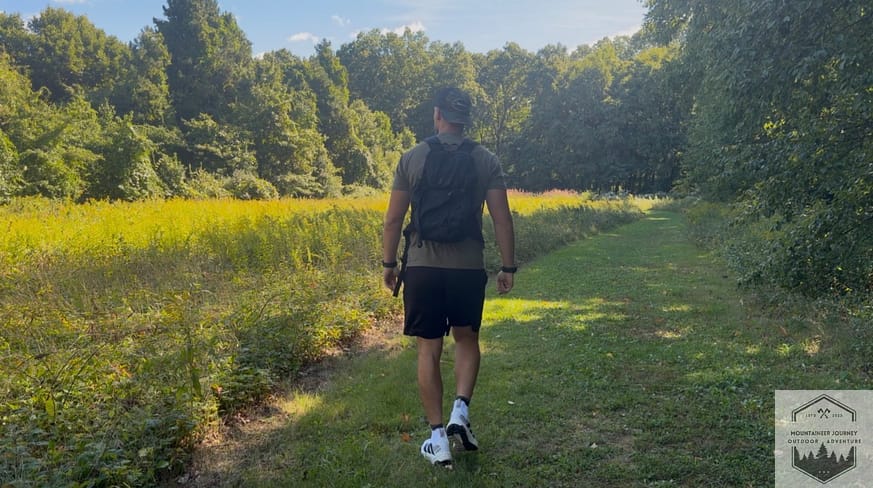
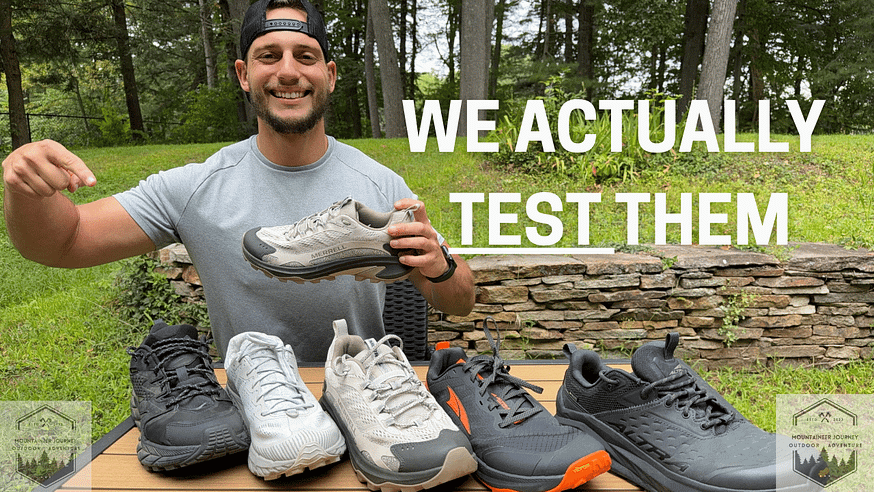
I personally tested the Adidas Terrex Free Hiker 3 Ultra over 40+ miles across diverse terrain types. Testing surfaces included basalt ridges, wet limestone slabs, sandstone switchbacks, and loose gravel descents to evaluate grip performance across the conditions hikers actually encounter.
All shoes are purchased independently without manufacturer sponsorship or free product. This ensures our evaluations remain objective and free from brand influence. I have never accepted compensation from Adidas or any footwear brand in exchange for favorable coverage.
My 16+ years of hiking shoe evaluation experience includes thousands of miles across three models of the Free Hiker line, dozens of competing hiking shoes, and everything from lightweight trail runners to heavy mountaineering boots. This background provides the context needed to accurately assess where the Terrex Free Hiker 3 Ultra stands relative to the competition.
Our testing standards prioritize real world performance over marketing claims. Every score in this review is backed by miles on trail and hands on evaluation, not press releases.

Tyler
Tyler is the founder Mountaineer Journey and a professional Mountain Guide with 15+ years of technical experience in trekking, mountaineering, and trail sports. Having logged thousands of miles from rugged alpine summits to urban paths, Tyler provides rigorous, field-tested insights on hiking, walking, and trail running gear. All reviews are 100% unsponsored and unbiased, ensuring you get honest scoring based on real-world performance. His mission is to help outdoor enthusiasts of all levels find reliable equipment that ensures comfort, safety, and performance on any terrain.