Arc’teryx Sylan 2 Review | Unsponsored
Our Verdict
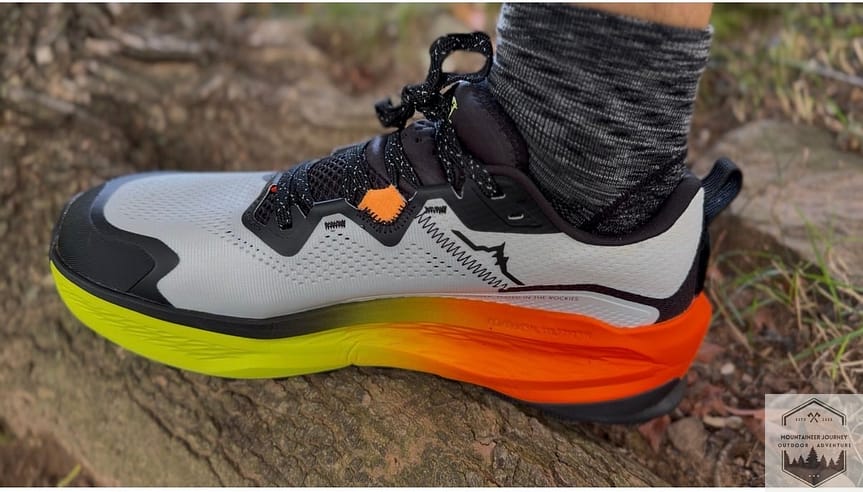
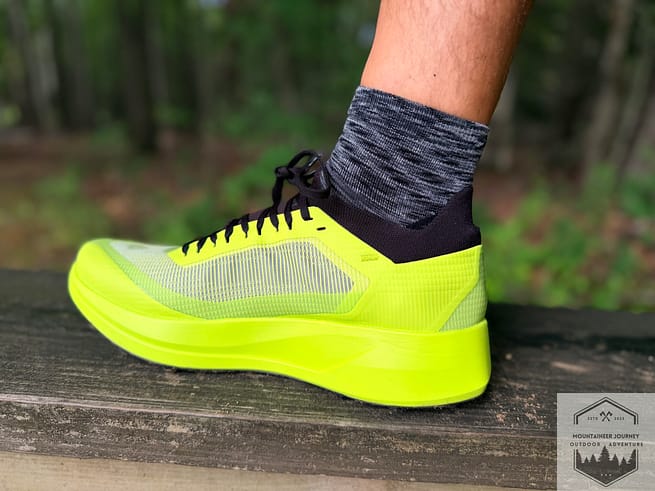
The Arc’teryx Sylan 2 is a lightweight trail running shoe built for speed on technical mountain terrain. It pairs a supercritical foam midsole with a forked carbon plate to deliver an energetic ride that rewards aggressive, precise footwork on rocky singletrack, loose scree, and fast descents. At 10 oz for a US Men’s 10.5, it shaves roughly 20 g per shoe off the original Sylan while shifting to a forefoot rocker geometry that improves stability on steep descents.
This is not a shoe for everyone. It fits narrow, rides firm, and costs $220. For runners chasing PRs on technical trails or lining up for trail races up to 50K, the Sylan 2 delivers where it matters: traction, energy return, and confident footwork over broken ground.
This review is completely unsponsored. I purchased this shoe with my own money and tested it with zero bias.
Arc’teryx Sylan 2 Pros & Cons
- Quick, agile shoe
- Pronation control
- Great lockdown
- Carbon Plate
- Fits very narrow
- Lugs not aggresive
- Price
Who should buy the Arc’teryx Sylan 2
- Fast trail runners seeking precision and responsiveness on technical terrain
- Runners who prioritize stability and control over plush cushioning and want a confidence-inspiring platform underfoot
- Athletes looking for a race-oriented carbon-plated shoe with advanced materials for trail races
Who Shouldn’t Buy The Arc’teryx Sylan 2
- Runners with wider feet; the precision fit design runs narrow through the midfoot and heel, and no wide option exists
- Those seeking maximum cushioning for easy recovery runs; the ride is firm and not overly soft
- Budget-conscious runners: at $220, it sits in the premium trail-racing category, which is difficult to justify for casual trail use.
Arc’teryx Sylan 2 Price
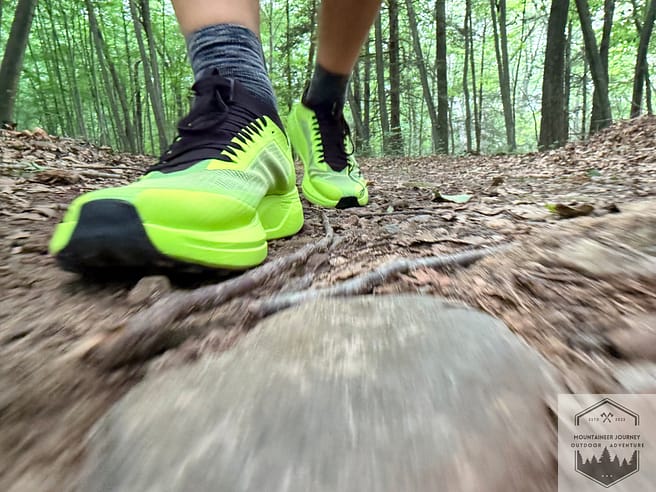
The current retail price for the Arc’teryx Sylan 2 is $220.
Comfort & Fit
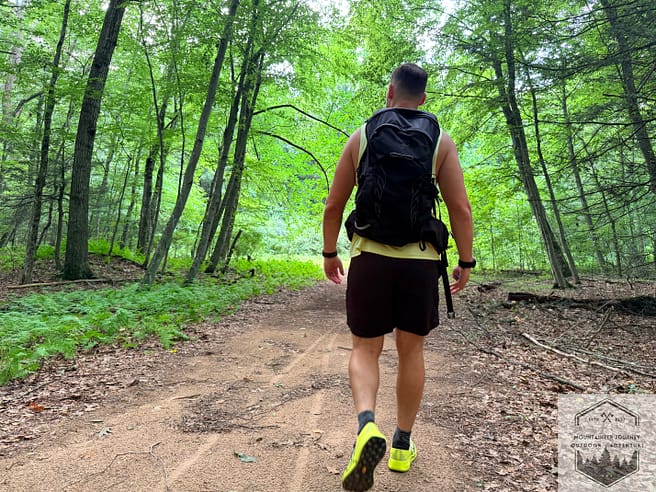
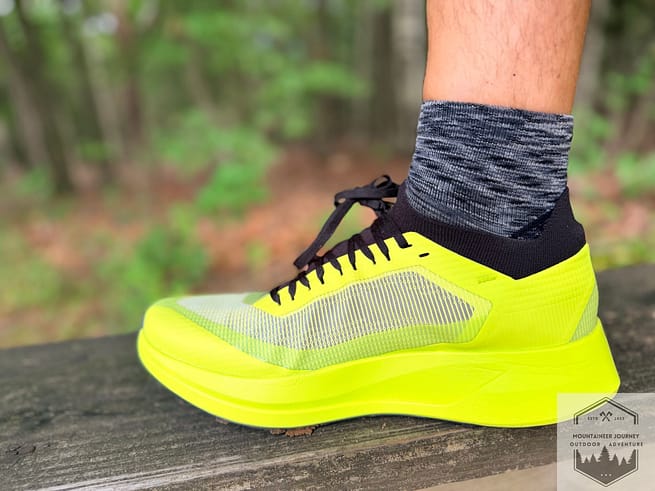
The first thing I noticed pulling the Sylan 2 on was the integrated bootie collar. It wraps around the ankle like a built-in gaiter, sealing out trail debris.
That said, the integrated bootie collar makes entry a bit fiddly; you need to work your foot in rather than simply step down. Once seated, the midfoot lockdown is immediate and secure.
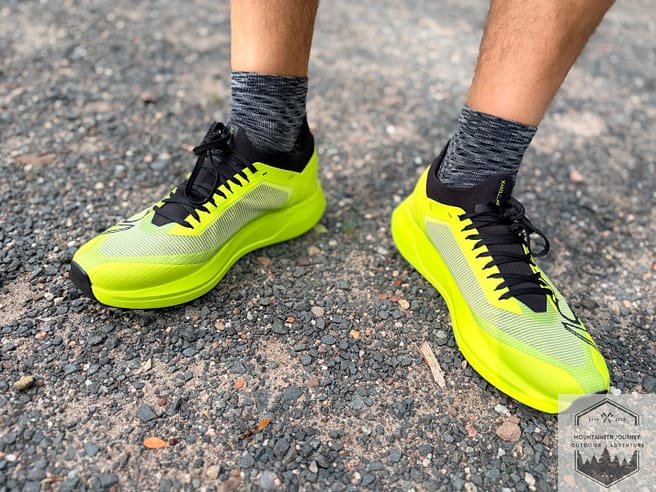
The upper hugged my foot like a glove. The heel counter cups snugly with internal cushioning that eliminates slip. Through the midfoot, the flat knit tongue sits close without creating pressure points, and the lace garage keeps excess lace tucked away so nothing snags on brush or roots.
The toe box is performance snug. My toes were a little cramped, not splayed enough to fully splay out on flat sections; runners with wider feet may struggle to fit into the shoe.
Impact absorption is decent. Don’t expect this one to save your joints, as it’s built for trail feel and responsiveness.
The Sylan 2 runs true to size. I didn’t have any sizing issues. I did notice that the reinforced heel counter can rub up against the side of your foot because this is a snug-fitting shoe.
Comfort over distance improved after breaking in. My first runs on the supercritical foam and carbon plate felt firm and direct. By mile 20 of cumulative trail time, the foam had loosened up, and the energetic ride became more apparent on rolling terrain and flats.
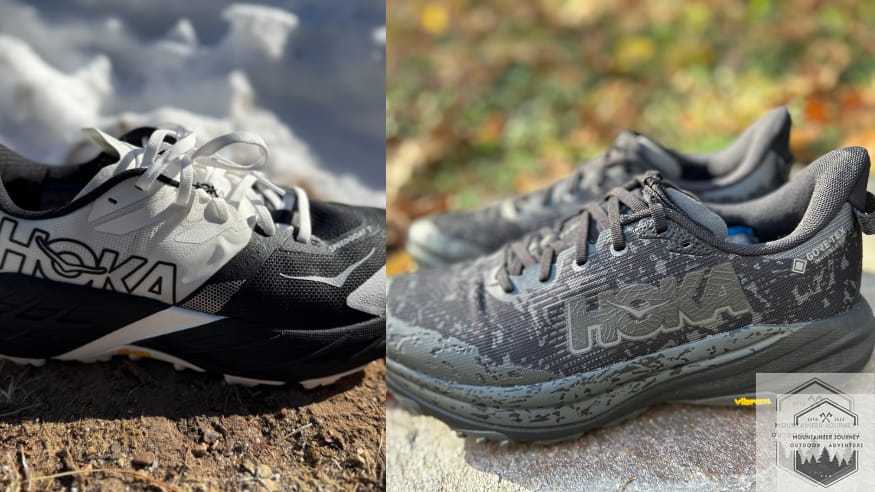
The cushioning is protective but not overly soft, and the shoe’s design prioritizes stability over plush comfort- like on the Hoka Challenger 8 or even Speedgoat 7. This is not a shoe built for slow recovery jogs; it wants to move.
Comfort & Fit Score: 7.5/10 (20%)
Traction
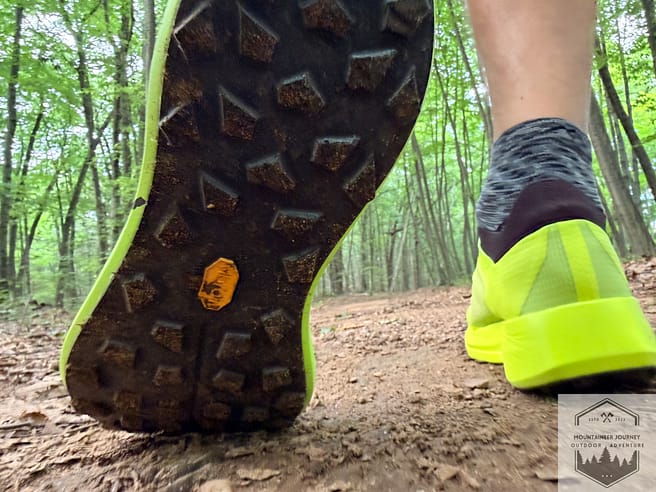
The Sylan 2 features a Vibram Megagrip Litebase outsole, and it is one of the strongest grip setups I have tested on a carbon-plated shoe. The
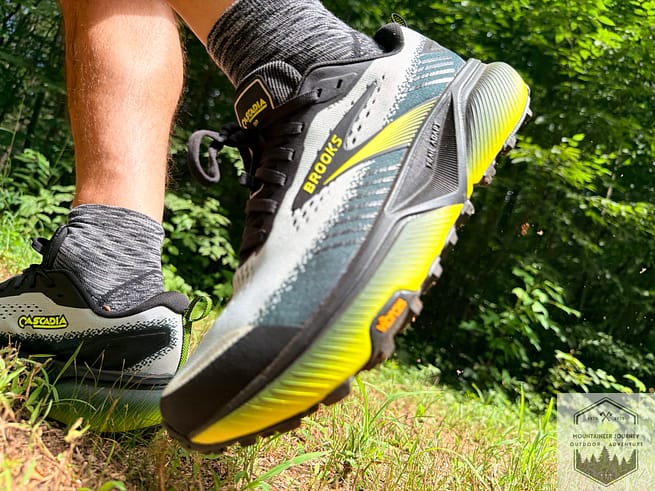
The outsole uses a stepped lug pattern, with a lug height of 4.5 mm around the perimeter and 3.5 mm in the center. That dual height design serves two purposes: the taller perimeter lugs bite into loose terrain and wet rock, while the shorter center lugs provide a stable platform on firmer ground without feeling overly aggressive.
This is becoming more popular among trail-running shoes, with two different-length lugs throughout the shoe, as on the Brooks Cascadia 20. While these are not the most aggressive lugs in the world, the more responsive ride allowed me to adjust my footing as needed across even basalt or limestone.
On wet rock, I planted confidently during quick directional changes on a rain-soaked section of granite slab. On loose scree, the perimeter lugs engaged well, and I never lost footing during fast traverses across decomposed granite.
The outsole design sheds mud effectively during runs. It’s not a mud-eater like the Speedcross 6, but it sheds effectively, especially at the center of the shoe.
While the Sylan 2 does not have the most aggressive lug pattern. The Vibram LightBase’s responsiveness really comes together to make an effectively grippy trail shoe. This is made for true technical trails.
Traction Score: 9/10 (20%)
Stability & Support
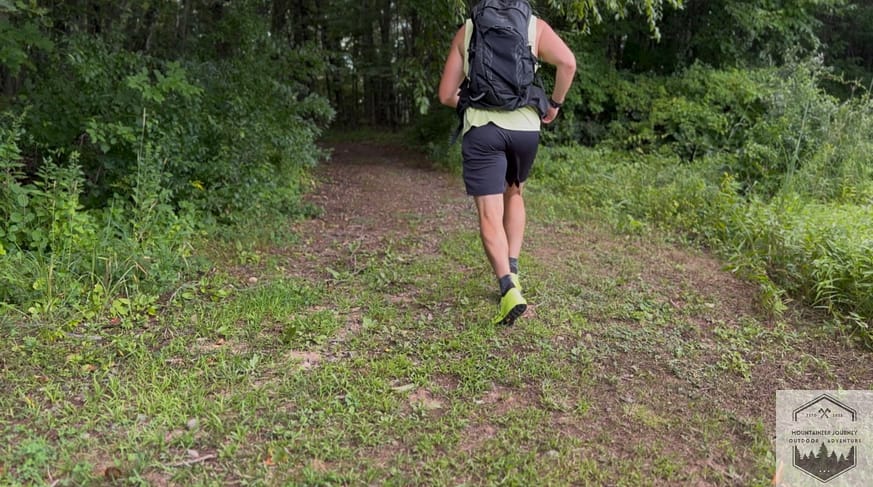
The forked carbon plate is the centerpiece of the Sylan 2’s stability system. It spans three quarters of the shoe in a forked design that allows some natural flex at the forefoot while providing torsional rigidity through the midfoot.
The plate works alongside a dual-density midsole; a Pebax core handles energy return and cushioning, while a TPEE rim along the edges widens the effective platform and adds lateral support.
On uneven terrain, this combination delivered. Running a rooted, rocky descent at pace, I could feel the forked plate bridging small gaps between rocks and distributing pressure across the midsole rather than letting individual stones load specific points on my foot.
The Sylan 2 has the rocker forward toward the forefoot, creating a smoother toe-off without tipping the runner forward prematurely. The rocker is quite subtle. On descents, the heel sits deeper in the stack, making heel strikes more controlled and deliberate.
Compared to running shoes that use a full-length rigid plate, the Sylan 2’s forked-plate design avoids making the shoe feel like a stiff board (as with the Mafate X).
There is enough compliance in the forefoot to adapt to technical terrain without sacrificing the snap you want when accelerating out of a switchback. The midsole includes a carbon plate for added stability, and you feel that stability most when the trail gets rough and speed stays high.
Stability & Support Score: 9/10 (20%)
Weight
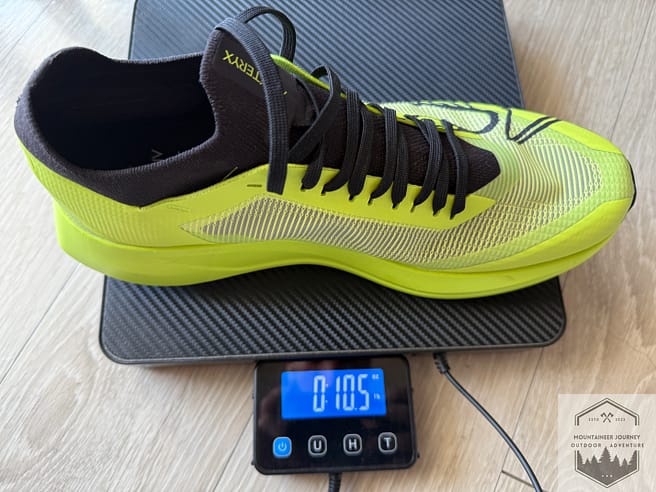
I weighed the Sylan 2 at 10.5 oz per shoe on our calibrated scale.
On foot, the shoe feels lighter than 10.5 oz. The weight distribution contributes to this: the Vibram Megagrip Litebase outsole reduces rubber thickness without sacrificing coverage, and the engineered jacquard-knit upper is thinner and lighter than the materials used in the first Sylan.
During sustained climbs on technical trails, I did not notice the shoe dragging my cadence down the way heavier trail shoes tend to after mile 8 or 10.
For context, the NNormal Kjerag 02 comes in lighter but without a carbon plate, while the Hoka Speedgoat 7 is heavier and built for a different purpose.
Weight Score: 8.5/10 (15%)
How’s The Overall Protection Of The Sylan 2?
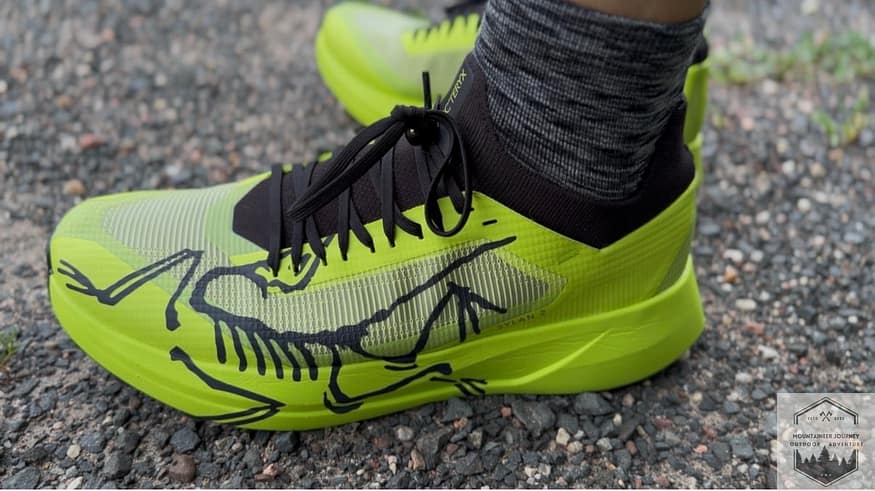
The upper feels durable without being bulky. Arc’teryx used an engineered woven material with minimal overlays, plus TPU protective film at the toe and 3D-printed reinforcements where the shoe meets trail debris. The toe bumper absorbed direct rock strikes on two separate occasions during my testing without transmitting sharp impact to my toes.
The integrated collar doubles as a debris gaiter, keeping fine gravel and pine needles from working their way inside. Combined with the flat knit tongue and lace garage, the shoe seals well against trail debris. I never had to stop and dump rocks out, which is more than I can say for most shoes I have tested this year.
Underfoot, the 31.5 mm stack height provides a meaningful buffer between your foot and the trail; don’t forget the carbon plate, either.
On extremely sharp, jagged terrain, I could occasionally feel larger rocks through the midsole. For the type of technical terrain the Sylan 2 is designed for, the protection is well matched to the speed-oriented intent.
Overall Protection Score: 8/10 (10%)
Is The Arc’teryx Sylan 2 Worth It?
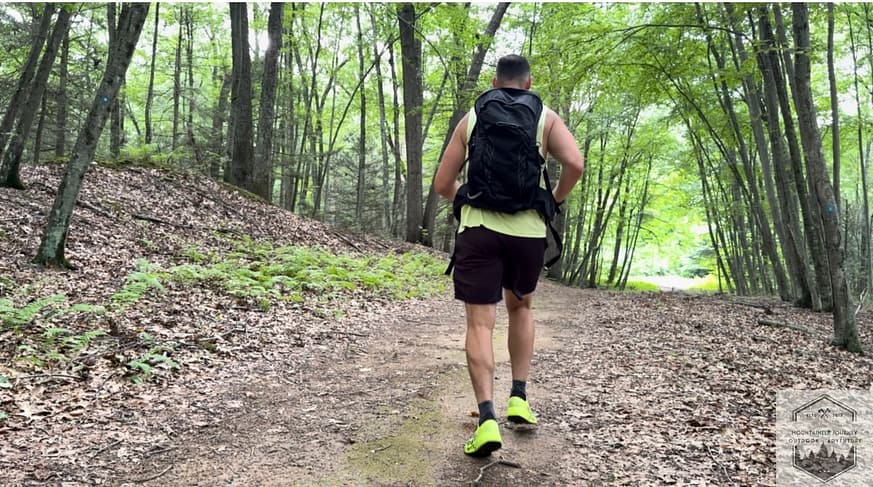
The Arc’teryx Sylan 2 shoe is built for speed on technical mountain terrain, and it delivers on that promise.
At $220, this shoe earns its price for runners who will use it as intended: race days, speed sessions on technical trails, and efforts where every gram and every little bit of energy return matters. It is tailored for technical speed rather than casual everyday use.
For runners logging slow base miles or looking for a do-everything trail shoe, this is absolutely not it.
The Sylan 2 is a specialist. It does its job at a high level and does not pretend to be something it is not.
What Other Trail Running Shoes Should You Consider?
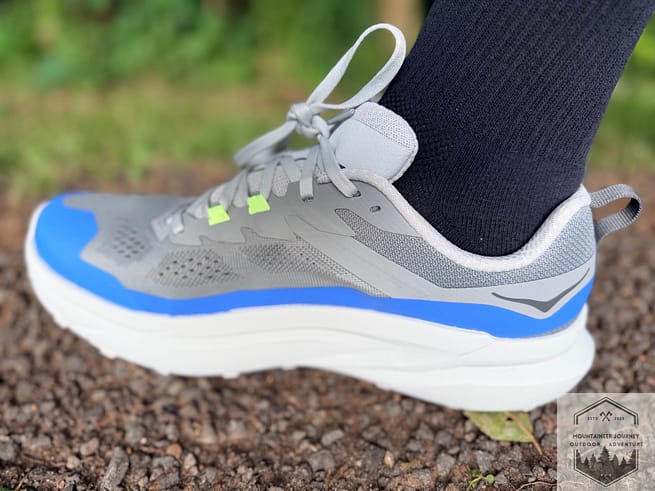
If you want more cushioning and a roomier fit, the Hoka Speedgoat 7 offers higher volume and a softer ride at a lower price point. For a stable, protective all-rounder without a carbon plate, the Brooks Cascadia 20 costs $160 and handles a wider range of runners and terrains. Runners who prefer a more ground-feel and a minimal build might look at the NNormal Kjerag 02. For a full breakdown of how the Sylan 2 stacks up, check our overall trail running shoe rankings.
Value Score: 8.5/10 (15%)
Scoring Breakdown
Comfort & Fit (20%): 7.5/10
Traction (20%): 9/10
Stability & Support (20%): 9/10
Weight (15%): 8.5/10
Overall Protection (10%): 8/10
Value (15%): 8.5/10
Total Weighted Score: 1.60 + 1.80 + 1.80 + 1.275 + 0.80 + 1.275 = 8.55/10
Our Score: 8.6/10
Frequently Asked Questions
When was the Arc’teryx Sylan 2 Released?
The Arc’teryx Sylan 2 launched globally in late March 2026.
How Does The Sylan 2 Fit?
The Sylan 2 runs true to size for most users. Arc’teryx shoes fit long and narrow; order based on EU size, not US size, for the most accurate fit.
Is the Sylan 2 waterproof?
No. The Arc’teryx Sylan 2 is not waterproof and does not come in a GTX version.
How We Tested and Our Methodology
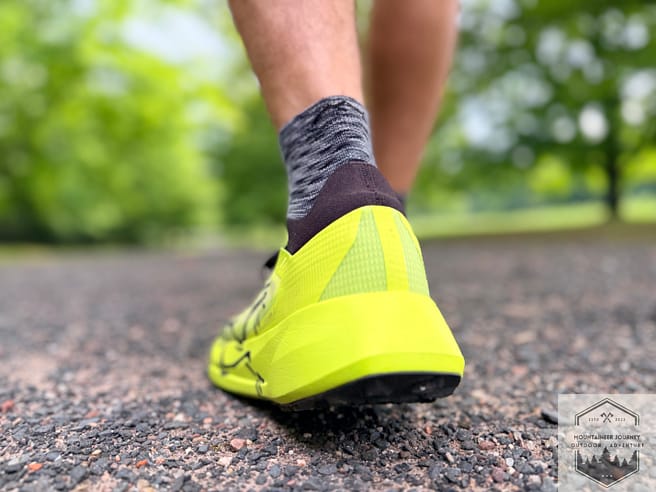
I tested the Arc’teryx Sylan 2 across multiple weeks on varied terrain: rocky singletrack in the mountains, loose scree on exposed ridgelines, rooted forest trails, and sections of spring mud. Runs ranged from 4-mile speed sessions to 15-mile long efforts to evaluate comfort, traction, and durability across distances.
I compared the Sylan 2 directly with the original Sylan and several other trail-running shoes in our testing rotation to evaluate their relative strengths and trade-offs.
Mountaineer Journey is a 100% independent publisher. We independently review every product we cover. We purchase our own gear; no company or manufacturer pays us to influence our opinions or scores.

Tyler is the founder Mountaineer Journey and a professional Mountain Guide with 15+ years of technical experience in trekking, mountaineering, and trail sports. Having logged thousands of miles from rugged alpine summits to urban paths, Tyler provides rigorous, field-tested insights on hiking, walking, and trail running gear. All reviews are 100% unsponsored and unbiased, ensuring you get honest scoring based on real-world performance. His mission is to help outdoor enthusiasts of all levels find reliable equipment that ensures comfort, safety, and performance on any terrain.