On Cloudrock Low Review | Unsponsored

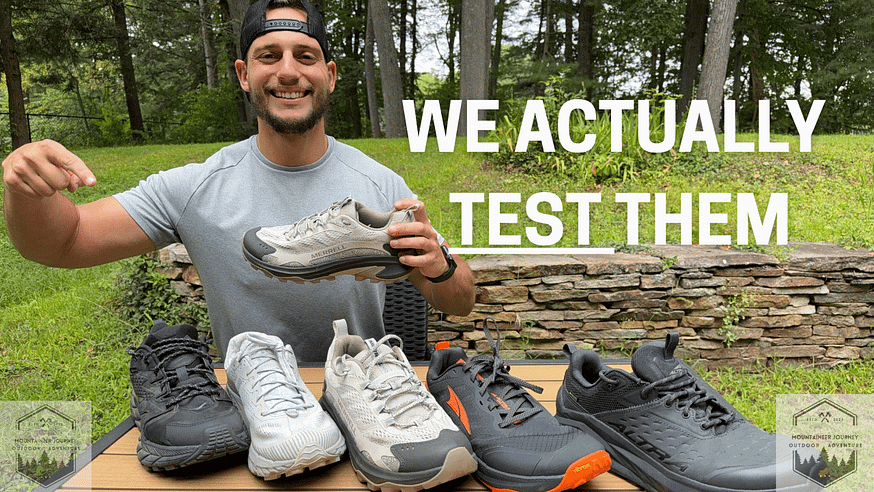
In this article, I’m going to share my HONEST On Cloudrock Low review for anyone wondering whether they are WORTH IT in 2026. I’ll also compare the Cloudrock Low vs. the Adidas Terrex Free Hiker 3 Ultra, Merrell Moab Speed 2, Nike Zegama Hike, and more!
I’m going to do my best to share whether these hiking shoes are worth it, and ideally who these shoes are for. I bought these with my own money, and was NOT sponsored, paid, or given a free pair for review. All thoughts are my own.
I’ll share my critical opinion, backed by 16 years of experience as a Trail guide and Expert Outdoor Gear Reviewer. I also run the MountaineerJourney YouTube Channel with 8,000+ subscribers and 3.8 million+ views.
Our Verdict
The On Cloudrock Low Waterproof surprised me. I personally tested this pair across multiple days in Acadia National Park in October 2026, covering basalt slabs along the coast, granite steps on popular summit routes, limestone ledges, gravel carriage roads, and dirt singletrack. The Cloudrock Low handled wet rock and uneven ground like a shoe that costs what it does should, but it asked me to accept some trade-offs in return.
This is a structured, protective shoe that feels more like a low boot with a firm base rather than a trail runner. The waterproof membrane kept my feet dry through stream crossings and soaked grass, the Missiongrip outsole gripped wet granite with real authority, and the rigid platform gave me zero ankle wobble on off-camber stone.
However, the midsole is firm underfoot with limited squish, energy return felt underwhelming over long days, and the tight toe box created a dull ache in my forefoot after several miles of sustained hiking. Impact absorption landed a little below average.
If you want a stable, waterproof hiking shoe for shorter hikes, this one delivers. This one delivers. If you want soft cushioning, a roomy toe box, or a lightweight trail runner feel, check out our Best Trail Running Shoes For Hiking.
On Cloudrock Low Pros and Cons
- Good stability
- Reliable waterproofing
- Secure grip
- Firm midsole, mediocre energy return
- Tight tapered toe box
- Price
Who Should Buy the On Cloudrock Low Waterproof
- Hikers who prioritize stability and underfoot protection over softness and want a shoe that feels planted on uneven ground
- Those who want a low-cut shoe that still delivers boot-like structure on technical trails
- Hikers with medium to slightly narrow feet who do not need a wide toe box and who carry moderate loads on day hikes or light overnights
Who Shouldn’t Buy the On Cloudrock Low Waterproof
- Hikers in warm or humid climates where breathability matters more than weather protection
- Ultralight and speed-focused hikers who want a lighter, more agile shoe for fast and light days
- Anyone who values a plush, high rebound midsole and wants that springy, cushy feel over long distances
Price and Key Specs
The On Cloudrock Low Waterproof currently retails for $200 USD.
Comfort: 7.5/10

Slipping into the Cloudrock Low for the first time, the shoe felt firm and structured rather than soft or inviting. There is no break-in period to speak of, which is a plus.
I took mine straight onto Acadia’s granite and basalt without any hot spots on day one. But “comfortable out of the box” and “comfortable over ten miles” turned out to be different conversations.
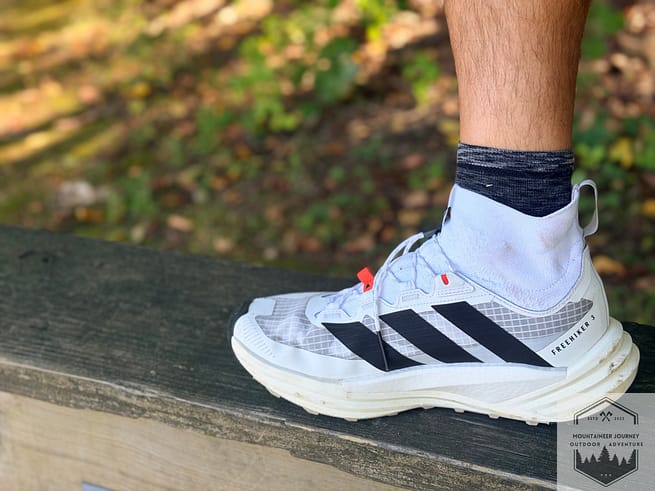
The Helion superfoam is firm and dense, definitely not plush or soft like on the Adidas Terrex Free Hiker 3 Ultra. On longer days in Acadia, especially descending granite steps on the Beehive Trail and navigating basalt near Otter Cliff, I noticed the midsole transmitted more impact than I prefer. My joints felt the impact a bit more than with most other hiking shoes I’d taken on the same trail.
Energy return was not great, and by the end of a 12-mile day, my legs felt more fatigued than they typically do in some of my best-rated hiking shoes.
When it comes to milder hikes of less than 5 miles, the On Cloudrock is good for daily comfort, but longer hikes tend to fatigue your feet and take a toll on your joints.
Weight

The Cloud Rock Low weighed in at 16 oz per shoe on our calibrated scale. That is on the heavier side, especially for a low-cut hiking shoe. Compared to the Adidas Terrex Free Hiker 3 Ultra, which weighs 13.5 ounces with the same textile mesh, it’s easy to see why the Cloudrock can feel a little heavier on foot.
Traction: 8/10

The Missiongrip outsole performed reliably on wet rock, roots, and dirt singletrack during my testing. However, the uniform square-shaped lugs are a bit antiquated. Most trail runners and hiking shoes are divvying up their outsoles, making them more accommodating for heel braking and changing up the shape of the lugs in the forefoot as well.
On granite, the lugs could have used a bit more aggressive tread for boulder fields and technical passes.
The shoe showed its limits on loose, steep terrain. On descending leaf-covered fall trails and loose gravel sections, the shallow lugs do not dig aggressively enough into softer substrate to provide the same bite you get from deeper, more aggressive tread patterns.
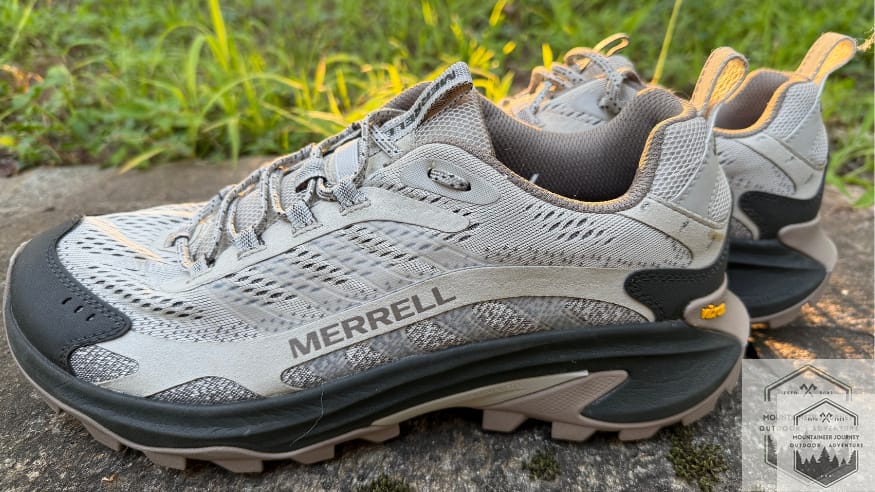
In mud, the flat lugs packed up and lost grip faster compared to the Merrell Moab Speed 2. Overall, the traction and grip have their limitations; this should not be your first choice for hard, tough, technical trails.
Stability & Support: 9/10

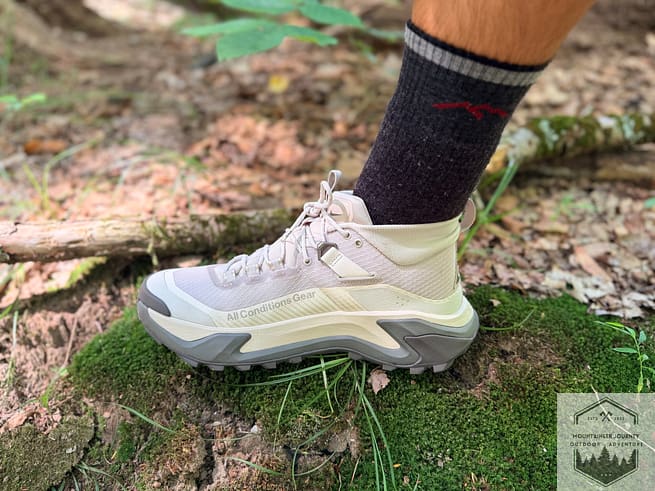
This is where the Cloudrock Low really earns its keep. The On Cloudrock offers boot-like stability in a low-cut design; I really felt that difference on exposed granite ridges and steeper basalt sections.
It features a firm midsole for enhanced stability on uneven terrain, and the rigid platform underneath kept my foot planted and controlled in situations where lighter, more flexible shoes would have left me feeling uncertain, like on the Hoka Mafate X.
The platform feels wide and secure at the heel, giving a planted base when edging on uneven rock. There is very little side-to-side wobble, even on off-camber trails. The Speedboard running through the midsole limits flex and torsion, which helps keep ankles upright on technical terrain.
However, on flat hardpack dirt trails, the firmness may feel like overkill for some people. That’s what causes the dull ache in your feet and joints after longer hikes, which is why we recommend using this one for shorter day hikes.
How Does On Cloudrock Low Fit?

I tested the On Cloudrock Low Waterproof in a men’s size 10.5 US. Through the midfoot and heel, the fit is snug and locked in. The stiff heel counter wraps the rearfoot firmly, and the gusseted tongue sits flush without bunching. No complaints there.
The toe box is where things got complicated for me. The Cloudrock features a narrower toe box that may not suit all foot types, and I felt that limitation clearly during testing. I measured the toe box at 98.7 mm with our caliper.
After several miles of ascending and descending granite steps and basalt slabs, my toes started pressing against the sides and top of the forefoot. The lower volume created a dull ache that built steadily through the day.
If you tend to have wider feet, or feet that swell on longer hiking days, this will become a problem if you choose these shoes. If you have a wide internal foot volume or just a wide size in general, I would stay away from the Cloudrock.
Fit Score: 3.5/5
Durability: 8.5/10

The upper is made from 100% recycled polyester with robust stitching throughout, and the design includes a protective toe cap and a 360-degree mudguard for durability.
The shoe features a full TPU rand for added protection, wrapping the entire lower perimeter in a thick, abrasion-resistant layer that shields against rock strikes and root kicks.
For a 100% polyester hiking shoe, I’ve been generally impressed with its durability so far. I noticed only cosmetic scuffs on the TPU rand with no structural damage.
The outsole rubber shows only light wear after mixed trail use, and the Missiongrip compound appears to be holding its integrity well. No delamination around the toe, no separation at the rand seams, and no visible breakdown of the midsole foam.
The lace eyelets and thin cord laces are the weak point in the construction. I didn’t experience any failures during my testing, but the thinner materials could become a concern after many months of heavy use on abrasive terrain.
Is the On Cloudrock Low Worth It?

At $200, the On Cloudrock Low Waterproof asks for a premium investment. After testing it across Acadia’s diverse terrain and further hikes, I think the value equation depends entirely on what you prioritize.
You are paying for a very protective, stable low hiker with a firmer midsole and no real energy return. You are not paying for maximum plush comfort, aggressive traction, or a lightweight, agile ride.
One downside of the Clourock Low is its $200 price tag. This puts it in the premium category, and it’s really designed for a smaller niche of hikers. For a cheaper alternative that you can also use for trail running, check out the Brooks Cascadia 20. It offers more aggressive traction along with a softer, more plush midsole. The Merrell Moab Speed 2 is also an excellent option with a more breathable upper and a lower price tag.
Value: 3.5/5
Scoring Breakdown
Comfort: 7.5 / 10
Traction: 8 / 10
Stability & Support: 9 / 10
Fit: 3.5 / 5
Durability: 8.5 / 10
Value: 3.5 / 5
Total: 40/50
Our Rating: 8.0 / 10
Disclosure: These links may provide a discount and in return, give us a commission in order to run the website 🙂
How We Tested and Our Methodology
I personally tested the Oncloud Rock Low over 100 hours of hiking and constant evaluation on different terrain. My objective testing comes from 16 years of hiking experience, and I know how to score each shoe relatively based on real testing and objective data points.
All shoes are purchased independently without manufacturer sponsorship or free product. This ensures our evaluations remain objective and free from brand influence.
Our testing standards prioritize real-world performance over marketing claims. Every score in this review is backed by miles on the trail and hands-on evaluation, not press releases.


Tyler is the founder Mountaineer Journey and a professional Mountain Guide with 16+ years of technical experience in trekking, mountaineering, and running. Having logged thousands of miles from rugged alpine summits to training for half marathons, Tyler provides rigorous, field-tested insights on hiking, walking, and trail running gear. All reviews are 100% unsponsored and unbiased, ensuring you get honest scoring based on real-world performance. His mission is to help outdoor enthusiasts of all levels find reliable equipment that ensures comfort, safety, and performance on any terrain.