

Our Score
Nike Pegasus Trail 5 Review | Worth It In 2026?
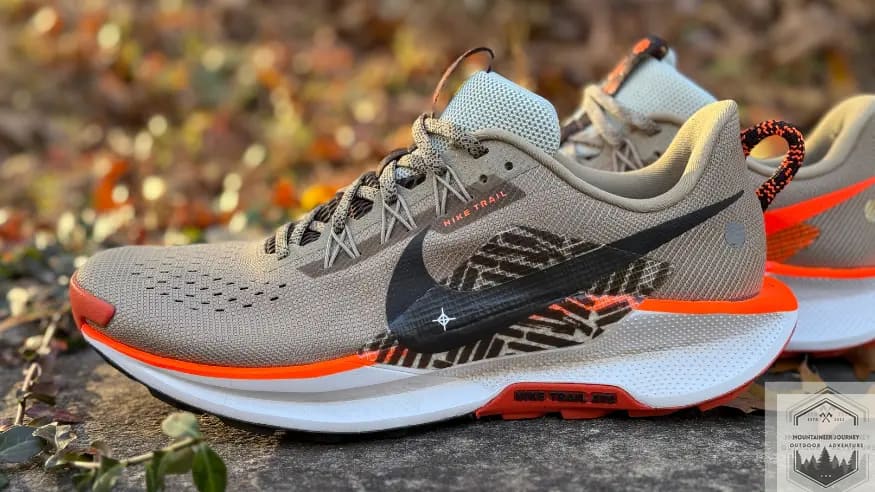
In this article, I’m going to share my HONEST Nike Pegasus Trail 5 review after running over 95 trail miles on everything from smooth singletrack to rocky terrain for anyone wondering whether it’s truly WORTH IT in 2026.
Unlike the “sponsored” reviews out there, I bought the Pegasus Trail 5 with my own money, paid full retail at $150, and tested them in both wet weather conditions and 85°F summer afternoons so you’ll get the good, the bad, and the sweaty reality.
I’ll be sharing my critical scoring with 16 years of experience as a trail runner and gear tester. The same testing approach I’ve used for over 40 trail running shoes in the past three years alone.
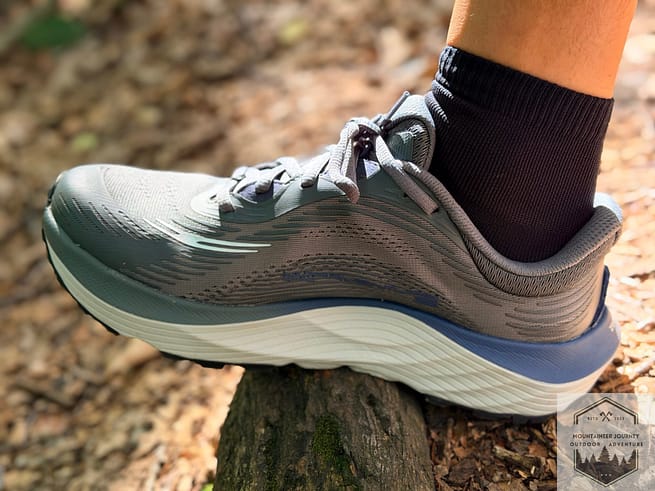
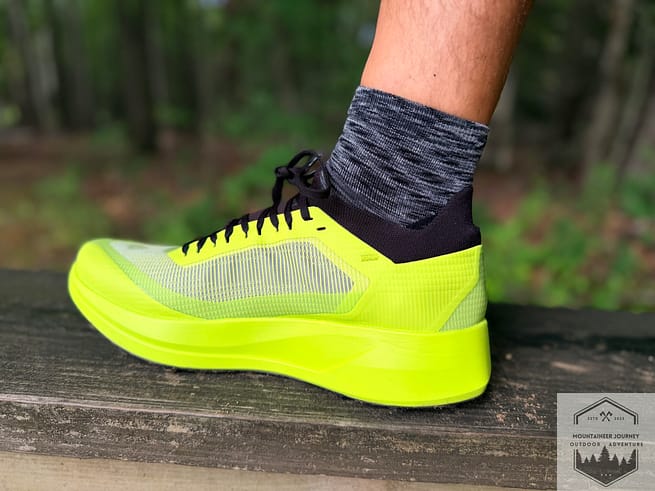
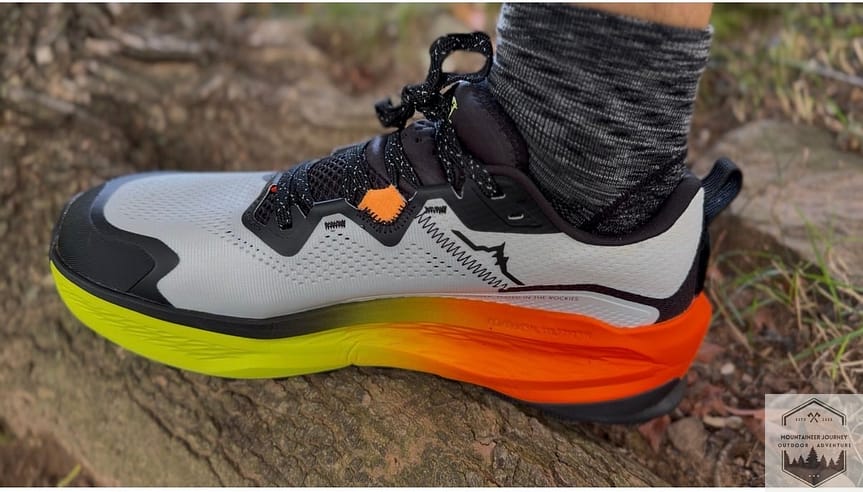
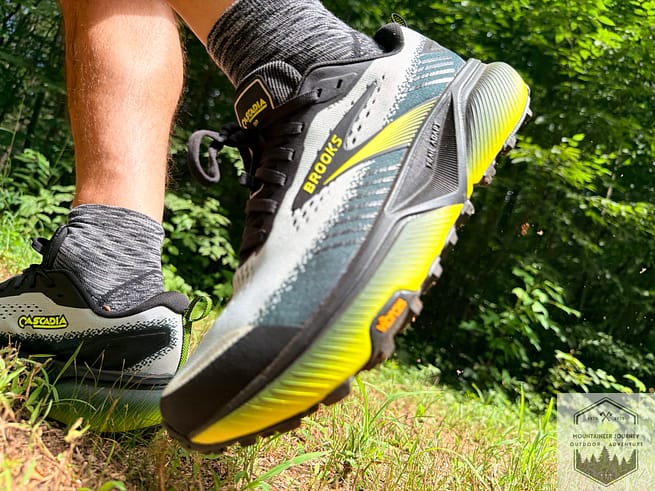
I’ll also be directly comparing the Trail 5 to the Nike Zegama 2, Brooks Cascadia 18, Salomon Speedcross 6, and Hoka Challenger 8. All of which I have tested at a minimum of 60+ miles each across varied terrain.
Related: Best Men’s Trail Running Shoes Of 2026
Editor’s Note: We updated this review on 7/20/26 after additional trail miles and durability findings, as well as new insights.
Compare Similar Products

Lightweight and breathable trail runner, limitations with durability and traction.

One of the lightest trail runners on the market, super breathable. Budget price for those looking for a deal.
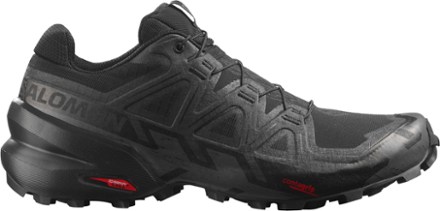
Trail shoe made for tough weather conditions, waterproof, very good traction.
Nike Pegasus Trail 5 Review In Short

9.5 mm heel-to-toe drop (the highest drop we’ve tested), maintaining consistency with previous iterations while introducing the new ReactX midsole technology.
It’s easily among the most versatile road-to-trail shoes I’ve tested this year. The ReactX foam delivers exceptional energy return on dirt roads, but I noticed the softer midsole compromises stability on technical trails due to the plush 37mm heel stack height.
Speaking of plush, I felt the midsole was very “airy”, kind of like the On Cloud brand shoes.
This shoe excels in road-to-trail transitions. However, that versatility comes at the cost of specialized performance. On colder mornings (40-50°F) the ReactX midsole maintained its responsiveness better than the previous react foam.
The gusseted tongue design is a major improvement over past versions. I found the All Terrain Compound rubber outsole grippy on smooth surfaces, but traction was a little bit of a letdown , as the lugs are not as aggressive as I expected for genuine trail conditions.
The absence of a rock plate is noticeable immediately on sharp rocks. Nike’s approach prioritizes flexibility and road-like comfort over maximum protection. However, I found it extremely comfortable and reliable for everyday use on moderate trails and mixed-surface runs.
Overall, we rated the Pegasus Trail 5 a 7.4/10.
Nike Pegasus Trail 5 Pros & Cons
Pros
- Good energy return with ReactX foam
- Seamless road-to-trail transition
- Improved upper
Cons
- Traction disappointing on technical trails
- No rock plate
- Limited breathability
Should you buy the Nike Pegasus Trail 5?
Buy if
You want a versatile road-to-trail running shoe
You prefer ReactX foam cushioning and energy return
You run primarily on smooth singletrack and gravel paths
DON’T Buy if
You need maximum protection for technical rocky terrain
You require Vibram-level grip on wet rocks and roots
You prefer ultra-lightweight trail shoes under 9 oz
Watch Our Hands-On Youtube Review Of The Trail 5
Nike Pegasus Trail 5 Price and Where to Buy
The current retail price for the Trail 5 sits at $150 on Nike.com.
Order Here for the LOWEST PRICE AVAILABLE (Do NOT pay retail):
Comfort & Fit
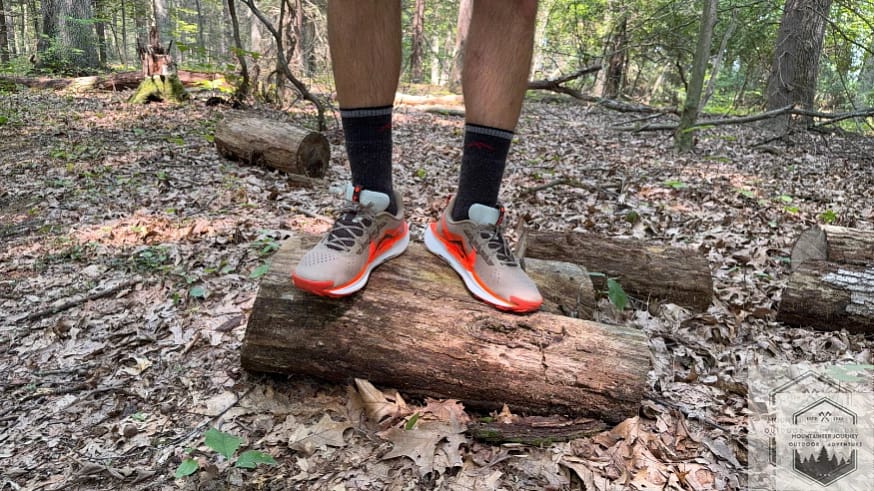
I tested out a men’s size 10.5 regular, and they fit true to size; to be honest, I felt a large pressure point in my midfoot. This was due to the high heel-to-toe drop at 9.5 mm, I felt a little numbness due to this pressure point during my initial testing.
These shoes do fit slightly narrow; therefore, I would recommend sizing up approximately a half size.
While the midsole felt light and airy underfoot, it didn’t deliver the plush cushioning I anticipated from a shoe with this much stack. It gave off more of a hollow bounce than a deep, protective feel. It was comfortable for shorter efforts, but not the kind of cushioning that invites you to go long and deep.
To be transparent, my feet run slightly wide, so very narrow-footed runners may find the Nike Pegasus Trail shoes more spacious than needed.
These shoes did not require a break-in; the issues I had with the midsole did not have to do with breaking the shoes in themselves. These were apparent during my entire testing period.

Impact absorption while on smooth trails was outstanding; I really felt like the shoe could handle both my daily road runs and weekend trail adventures. While the midsole itself was a little disheartening, I felt this was made up for with excellent impact absorption.
The ReactX foam consistently delivered that smooth ride whether I was heel striking on pavement or midfoot striking on dirt.
The gusseted tongue is a major upgrade from past versions. The generous padding and added thickness prevent lace bite, while the gusseted design keeps debris out much better than previous iterations.
The breathability of the shoe I felt was excellent due to the engineered mesh pockets. These really help cool down my feet during the hot summer months, especially on hot loose gravel.
However, I did test out the non-Gore-Tex version which tends to cooler than the GTX counterpart.
The Pegasus 5 does come with a rockered sole, giving it a sufficient heel-to-toe offset. It’s not as aggressive as the Hoka trail shoes, such as the Mafate 5, however it is still noticeable.
ReactX Midsole Performance
The Pegasus Trail 5 introduces Nike’s latest ReactX foam, which claims 13% better energy return compared to the previous React foam. During my testing, I felt this improvement most noticeably during longer runs where the foam maintained its responsiveness.
Comfort & Fit Score: 7/10 (20%)
Traction
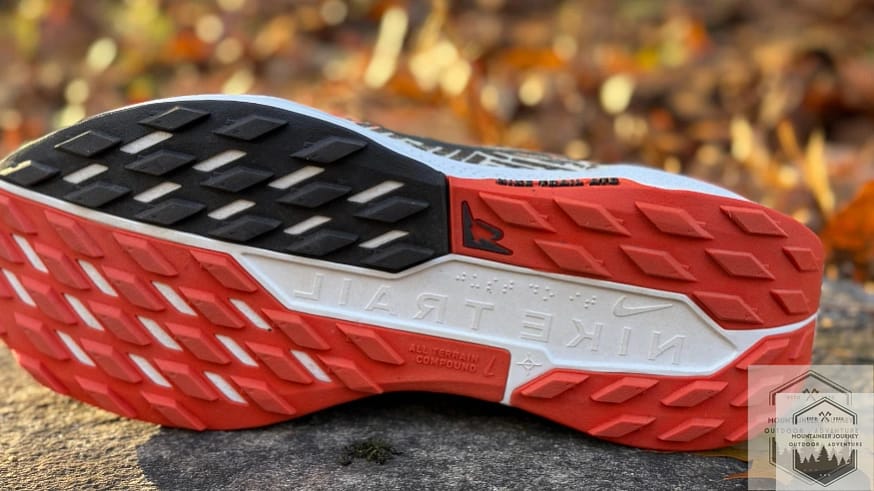
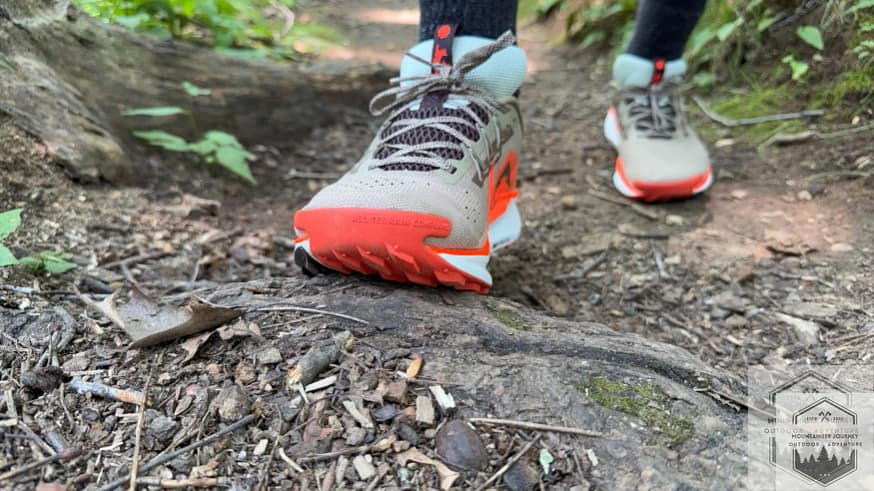
The Trail 5 incorporates Nike’s new All Terrain Compound (ATC) rubber outsole, however the 3.2mm diamond-shaped lugs fall short of expectations.
When I took the Pegasus Trail 5 into a boulder field and up a loose scree slope, I immediately noticed its limits. The shallow lugs that feel fine on hard packed trails but they just couldn’t bite into the unstable ground beneath me.
Each step felt like I was skating over small rocks, never quite locking in the way I wanted. On steeper sections, I caught myself hesitating planting carefully instead of running naturally.
The shoe’s lightweight build and airy midsole made it comfortable on smoother trails, but on uneven rock and shifting gravel, I never felt fully connected to the terrain. It’s one of those moments where you realize traction isn’t about aggressiveness it’s about trust, and during that run it just wasn’t what I needed.

Traction was disappointing, as the lugs are not as aggressive as I expected. While adequate on packed dirt and gravel paths, the shallow lug pattern struggles on muddy trails and wet surfaces where deeper, more aggressive outsole lugs would provide better grip.
The midfoot cutout design improves flexibility but creates gaps where debris accumulates. On smooth singletrack, the ATC rubber provides decent grip, but it can’t match Vibram compounds on technical terrain.
Testing the Pegasus Trail on wet rocks and roots revealed the limitations of Nike’s terrain compound. The rubber composition feels harder than premium Vibram alternatives, resulting in less grip.
On moderate trails with mixed surfaces, the traction performs adequately but never exceeds expectations. It’s clearly designed for the road-to-trail runner rather than dedicated trail enthusiasts.
Traction Score: 6.5/10 (20%)
Stability & Support
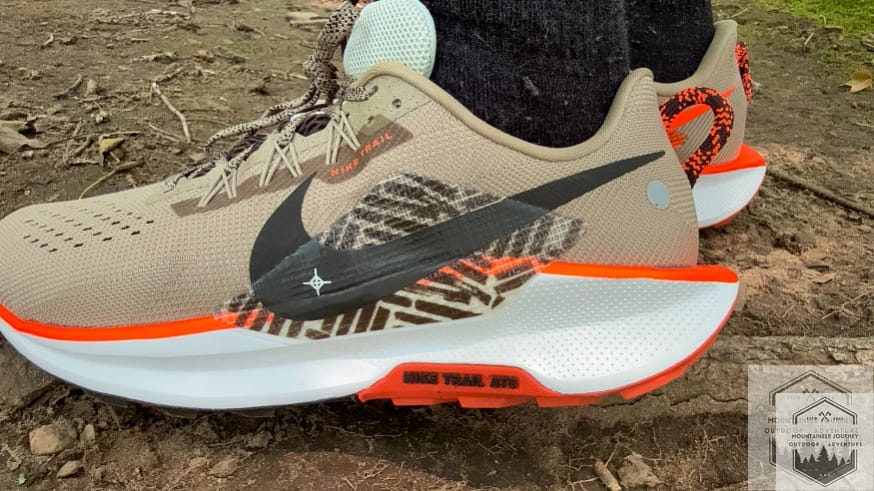
This is where the Nike Pegasus trail 5’s road-running DNA becomes apparent. While the ReactX foam provides excellent comfort, the softer midsole compromises lateral stability on uneven terrain.
The 9.5mm drop works well for heel strikers transitioning from road running, but the plush 37mm heel stack creates some instability on technical trails.
The lateral stability was slightly wobbly during my testing, I didn’t feel I could make tight turns on switchback trails with confidence. This trail shoe works best on moderate trails where the terrain doesn’t challenge the stability platform.
Overpronation was observed due to lateral stability issues. While this may not seem significant, it can lead to increased foot fatigue over time, particularly when there is a conscious effort to control footing.
The heel counter improvements over the previous version are noticeable, providing solid lockdown without causing discomfort. The Flywire technology integrates well with the lacing system for a snug fit that prevents heel slippage during climbs.
The shoe does feature a flared heel design that allows more ground contact, enhancing further heel stability while on the trail. I noticed this while decelerating downhill during my testing.
The absence of aggressive arch support means those with flat feet or overpronation may find the shoe less supportive than dedicated trail runners. The trade-off for road-to-trail versatility is reduced technical terrain capability.
For everyday use on mixed surfaces, the stability is perfectly adequate. But push into more challenging rocky terrain, and you’ll wish for a stiffer, more protective platform.
Stability & Support Score: 7.5/10 (20%)
Weight
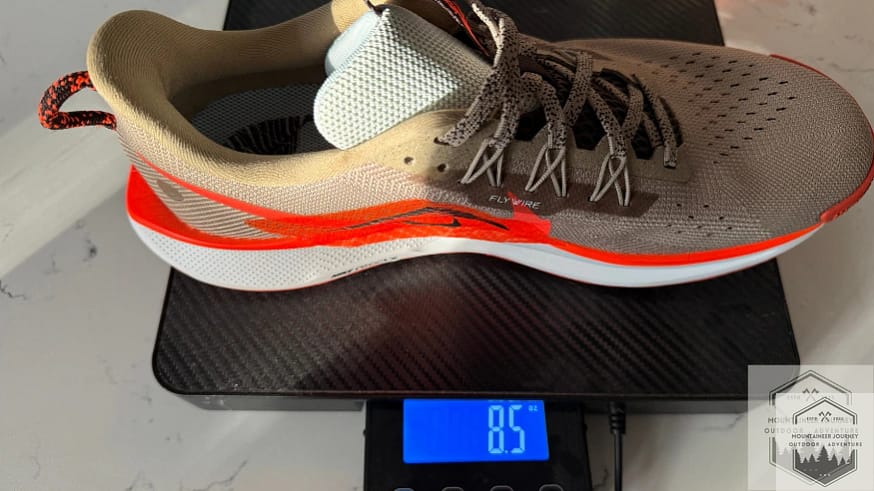
I measured the Trail 5 at 8.5 oz for a men’s size 10.5, which aligns closely with Nike’s claimed specifications(they state a size men’s 10 weighs approximately 10 ounces).
For trail runners prioritizing comfort over speed, the weight trade-off makes sense. But competitive trail runners or those covering long distances may prefer lighter alternatives.
Weight Score: 9/10 (15%)
How’s The Overall Protection Of The Trail 5?
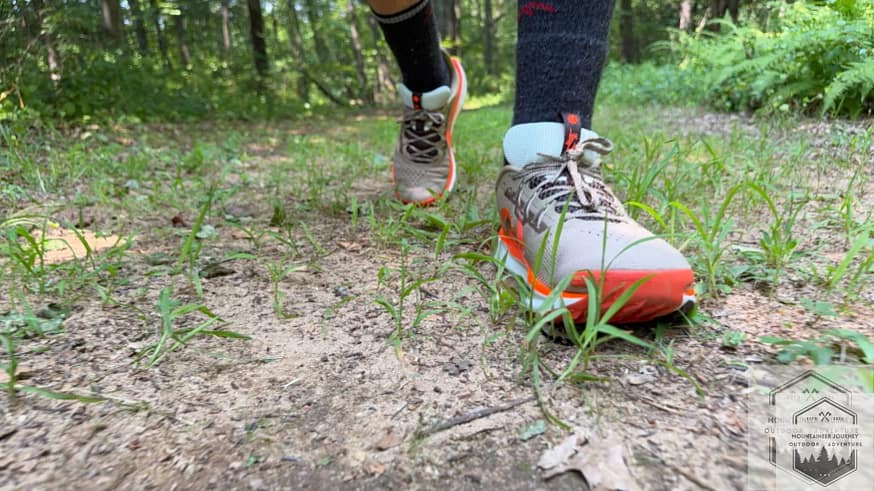
The rubber toe bumper provides basic protection against rocks and roots, though it’s less robust than what you’d find on dedicated technical trail shoes, such as the Speedcross 6.
The engineered mesh upper includes strategic reinforcements but can’t match the durability of synthetic overlays.
With the 37mm heel stack height, there’s substantial cushioning between your foot and the ground, but the absence of a rock plate means sharp rocks can transmit directly through the midsole.
The upper protection is adequate for moderate trails but shows its limitations on rocky terrain where abrasion resistance becomes critical. Those seeking more protection should consider the GTX version or look at alternatives like the Hoka Speedgoat 7.
For smooth singletrack and mixed surface running, the protection level is appropriate for the shoe’s intended use case.
Overall Protection Score: 6.5/10 (10%)
Durability
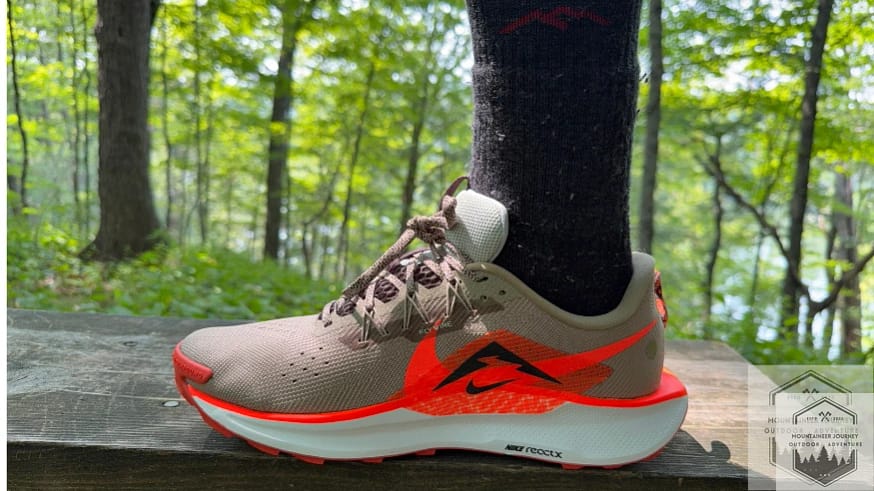
Nike’s material quality in the Pegasus Trail 5 represents a clear improvement over previous versions. The engineered mesh upper has withstood 95 miles of testing without significant wear or tearing, though time will tell how it handles extended abrasion from technical terrain.
I did notice a little bit of looseness in the structural integrity near the laces after further testing. The only difference was I had to tie them slightly tighter to get the same lockdown I had when I first purchased these shoes. Not a deal breaker, but something to keep in mind.
The ATC rubber outsole shows minimal wear after our extensive testing. Based on the rubber compound and my testing experience, I’d expect 250-300 miles before significant performance degradation.
The ReactX midsole maintains its structure well, resisting compression better than some competing trail shoes, such as the Mafate 5. The Flywire system shows no signs of fraying or failure after substantial use.
However, the shallow lug depth means traction will degrade faster than shoes with deeper, more aggressive outsole patterns. For a durable shoe targeting everyday use, the trail 5 delivers solid longevity.
Durability Score: 8/10 (10%)
Is The Trail 5 Worth It?
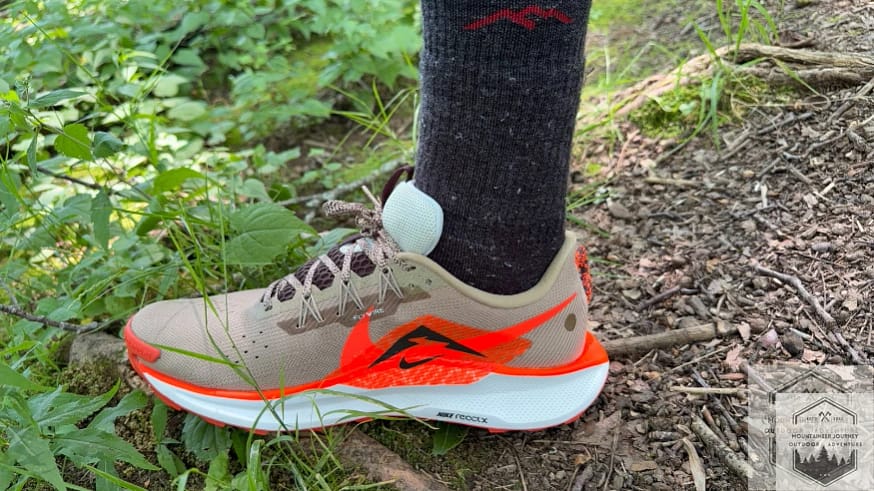
At $150, the Nike Pegasus Trail 5 offers compelling value for runners seeking a single shoe for both road and moderate trail running. Price is fair at $150, but it becomes a great value when it’s on sale.
One of the biggest downsides of the Trail 5 is the fact that it has a substantial stack height of 37mm yet I did not feel the cushioning a 37mm stack height would provide, like other shoes the Hoka Mafate X.
The ReactX foam technology, improved upper durability, and road-to-trail versatility justify the price point for recreational to intermediate trail runners,especially at a lower price point. As a daily trainer that can handle mixed surface adventures, the trail 5 succeeds in its primary mission.
What Other Trail Running Shoes Should You Consider?
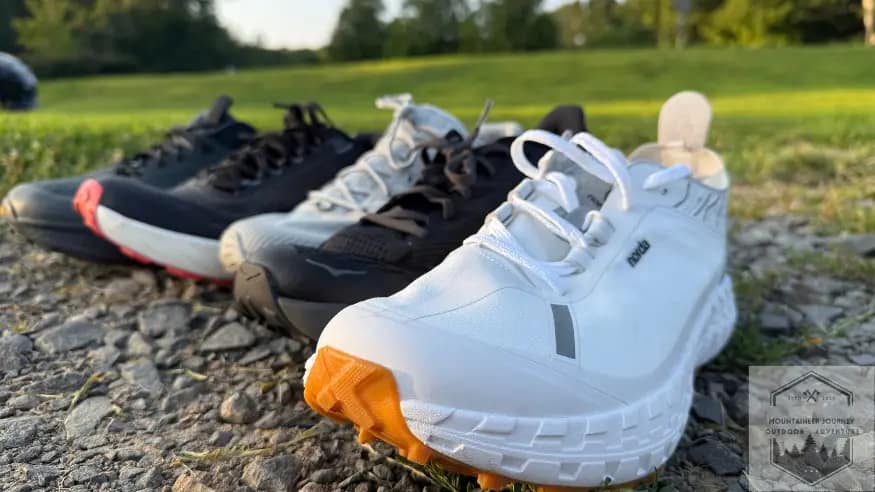
If you need better technical terrain performance, check out the Norda 001 if you are willing to pay a premium price. For similar comfort with more protection, consider the Hoka Stinson 7. The Salomon Sense Ride 5 offers superior technical terrain capability at a similar price point.
Value Score: 4/5 (5%)
Scoring Breakdown
Comfort & Fit (20%): 7/10
Traction (20%): 6.5/10
Stability & Support (20%): 7.5/10
Weight (15%): 9/10
Overall Protection (10%): 6.5/10
Durability (10%): 8/10
Value (5%): 4/5
Total Weighted Score:
1.40 + 1.30 + 1.50 + 1.35 + 0.65 + 0.80 + 0.40 = 7.40 / 10
Overall Score: 7.4/10
Get The BEST deal on the Nike Pegasus Trail 5 at the LOWEST Price Available! (Do NOT pay retail):
Frequently Asked Questions
Is the Nike Pegasus Trail 5 good for road running?
Absolutely. The ReactX midsole and smooth ride make it excellent for road running, while the trail-specific features don’t compromise pavement performance.
How does the Trail 5 compare to the Pegasus Trail 4?
The trail 5 features upgraded ReactX foam (vs React), improved traction with ATC rubber, and a more durable upper. Weight increased slightly but comfort and versatility improved significantly.
Does the Pegasus Trail 5 have a rock plate?
No, the pegasus trail 5 does not include a rock plate. This prioritizes flexibility and road-like feel over maximum protection on sharp rocks.
What’s the difference between ReactX and React foam?
ReactX foam provides 13% better energy return, improved temperature stability, and uses recycled materials for better sustainability compared to the previous react foam.
Is the Trail 5 waterproof?
The standard version is not waterproof, but Nike offers a GTX (Gore-Tex) version for wet conditions and muddy trails.
Who should choose the Pegasus Trail 5 over other Nike trail shoes?
Choose the trail 5 if you want road-to-trail versatility over specialized performance. For technical trails, consider the Nike Zegama 2 instead.
How We Tested and Our Methodology

This comprehensive Nike Pegasus Trail 5 review reflects 85 miles of expert testing across varied terrain including smooth single track, rocky sections, dirt roads, muddy conditions, and mixed road-to-trail surfaces. Testing occurred across multiple weather conditions from wet weather to hot summer days.
We purchase all products with our own money and maintain complete independence from manufacturers. No sponsorships or paid promotions influence our objective scoring methodology.
All testing includes direct comparison with competing trail shoes to provide the most accurate assessment possible for your buying decision.

Tyler
Tyler is the founder Mountaineer Journey and a professional Mountain Guide with 15+ years of technical experience in trekking, mountaineering, and trail sports. Having logged thousands of miles from rugged alpine summits to urban paths, Tyler provides rigorous, field-tested insights on hiking, walking, and trail running gear. All reviews are 100% unsponsored and unbiased, ensuring you get honest scoring based on real-world performance. His mission is to help outdoor enthusiasts of all levels find reliable equipment that ensures comfort, safety, and performance on any terrain.