Our Score
Hoka Speedgoat 7 Review | Worth It In 2026?
In this article, I’m going to share my HONEST Hoka Speedgoat 7 review after testing it through our objective scoring system for anyone wondering whether it’s truly WORTH IT in 2026.
The Hoka Speedgoat 6 was a disappointment, and Hoka’s hoping to capitalize on the Speedgoat 5’s previous success with the Speedgoat 7’s return this year.
I’ll be sharing my critical scoring with 16 years of experience as a trail runner and gear tester. The same testing approach I’ve used for over 50 trail running shoes in the past four years alone.
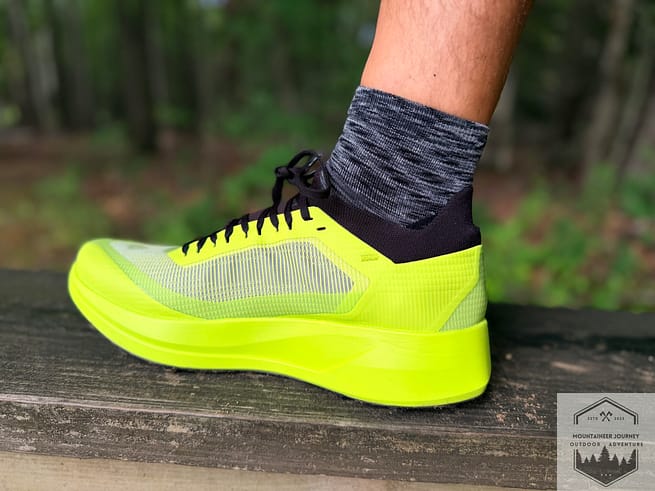
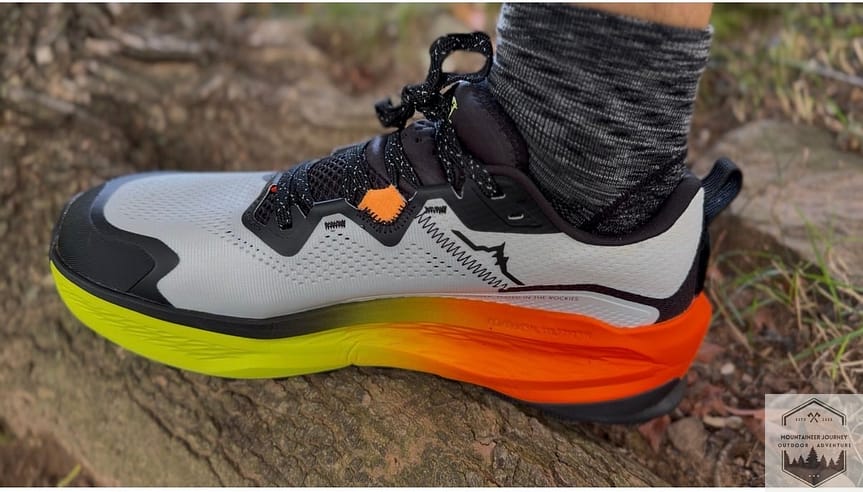
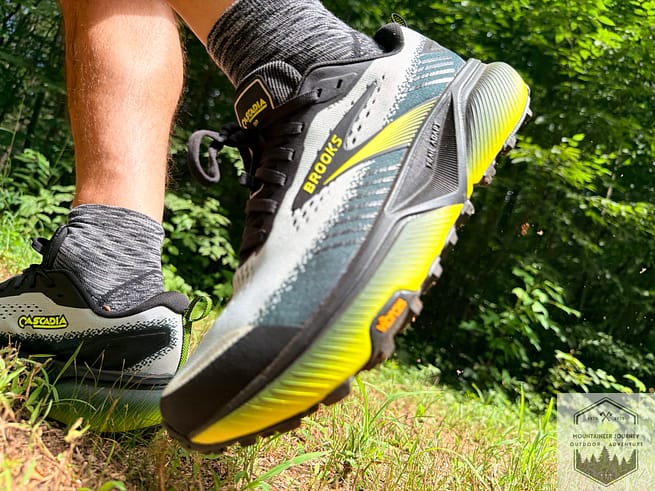
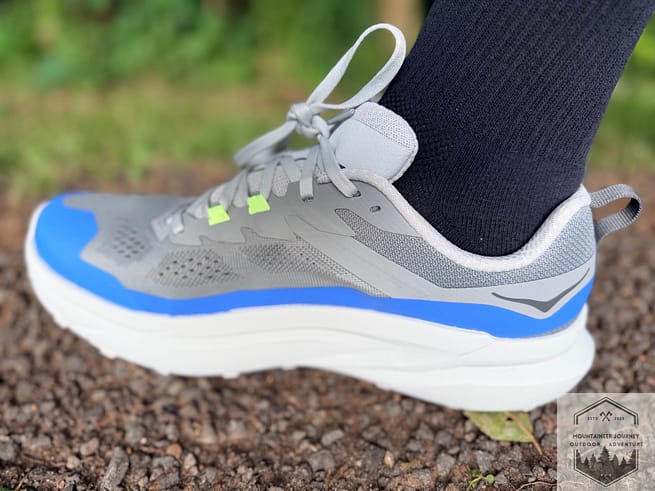
I’ll also be directly comparing the Speedgoat 7 to top trail shoes such as the Brooks Cascadia 20, Nike Pegasus 5, Norda 001, and Hoka Mafate X.
Editor’s Note: We updated this post on 8/6/2026 with new scores in durability and weight after further testing of the Speedgoat 7. We also added new pictures and video to feature our continued testing.
Hoka Speedgoat 7 Pros & Cons
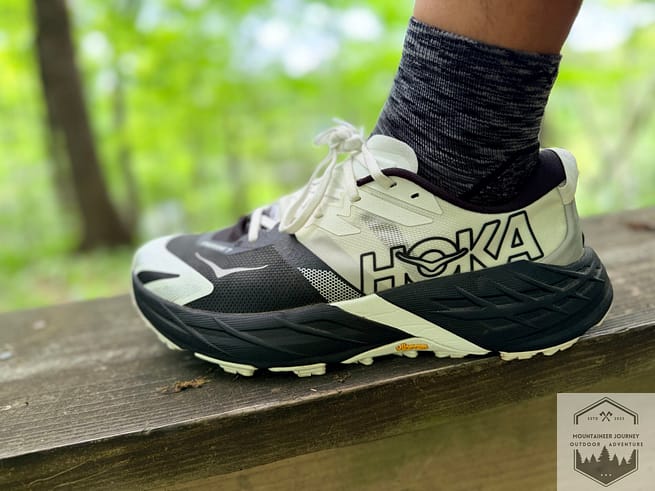
Pros
- Great Impact Absorption
- Improved Traction
- Breathable Upper
- Better Agility
Cons
- Long Break-In Period
- No Rock Plate
- Tight Fit
Should you buy the Hoka Speedgoat 7?
Buy if
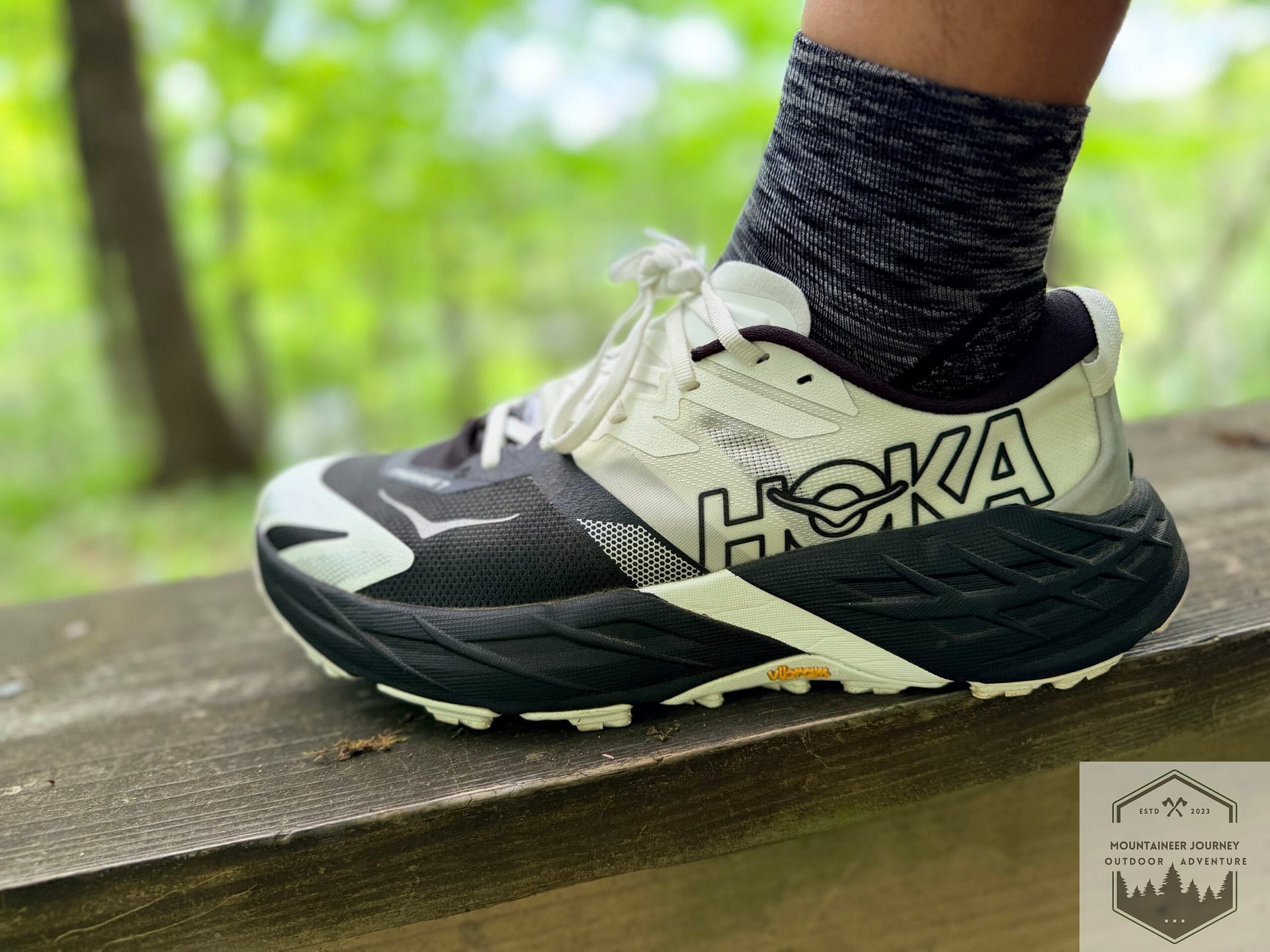
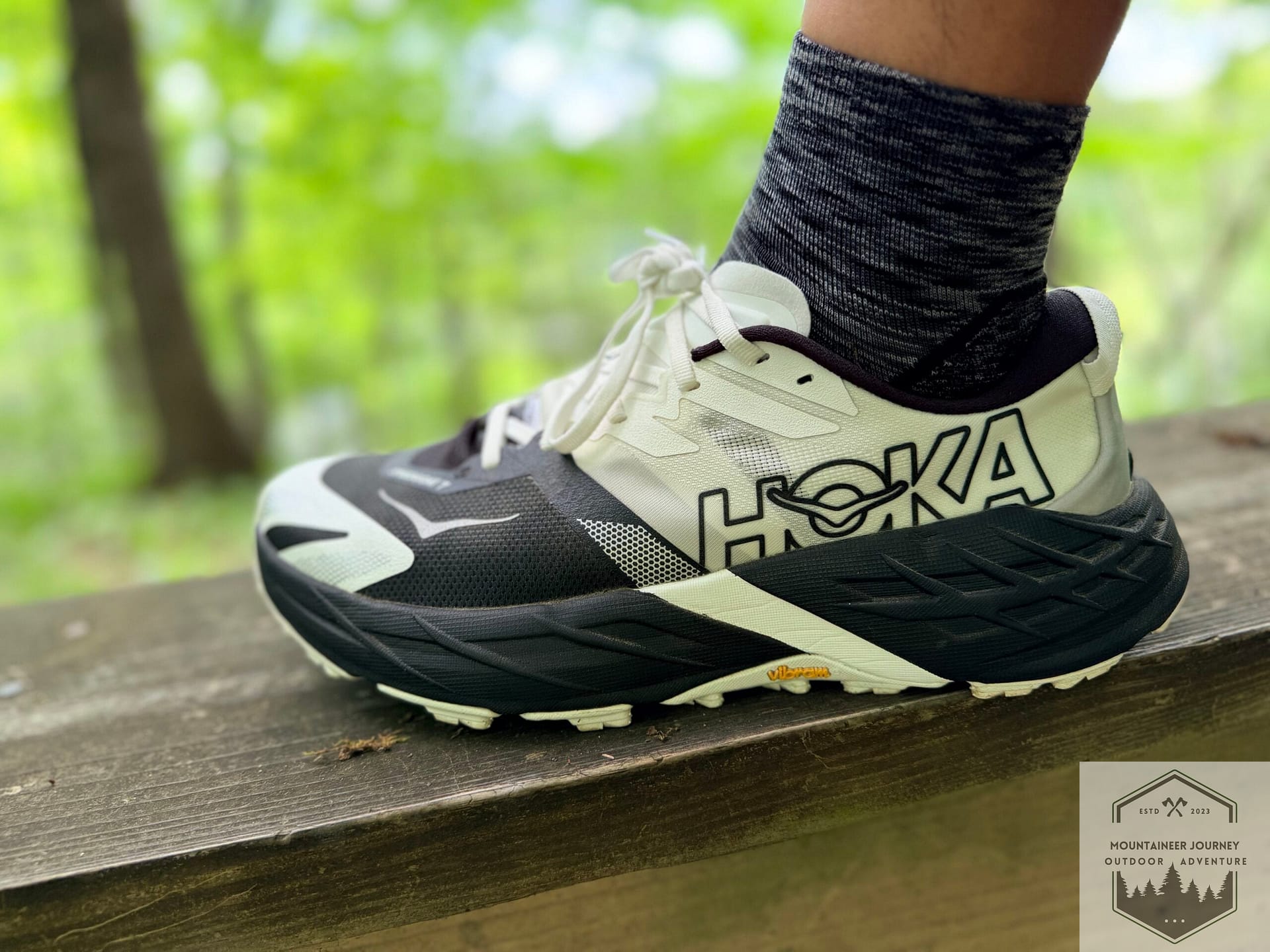
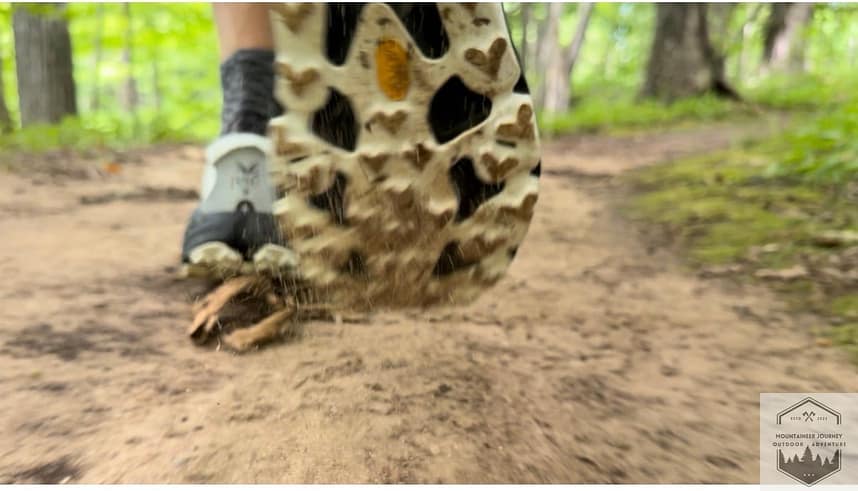
- You Prioritize Elite Traction: With the upgraded Vibram Megagrip and unique lateral forefoot lugs, this is a top-tier choice for loose scree, mud, and even icy winter trails.
- You Want “Hybrid” Versatility: If you want one shoe that can handle high-cadence trail running and aggressive weekend hiking, the structural support and stability here make it an excellent value-add.
- You Are a Heel Striker: The aggressive new MetaRocker provides one of the smoothest heel-to-toe transitions on the market for those who land heavy on the back of the shoe.
- You Need Non-Traditional Stability: If you overpronate but hate the “clunky” feel of plastic posts, the Speedgoat 7’s “bucket seat” design and lateral flare provide stability through geometry rather than hardware.
DON’T Buy if
You Have High Arches or High Volume Feet: The overall volume is low. Even in the “Wide” sizing, the midfoot and toe box remain quite tight and compressive.
- You Want a Traditional Rock Plate: If you specifically like the rigid, “ping” feel of a rock plate, the 37mm stack of Supercritical EVA might feel a bit too “muted” for your taste.
Watch Our Full Review on YouTube!
Comfort & Fit
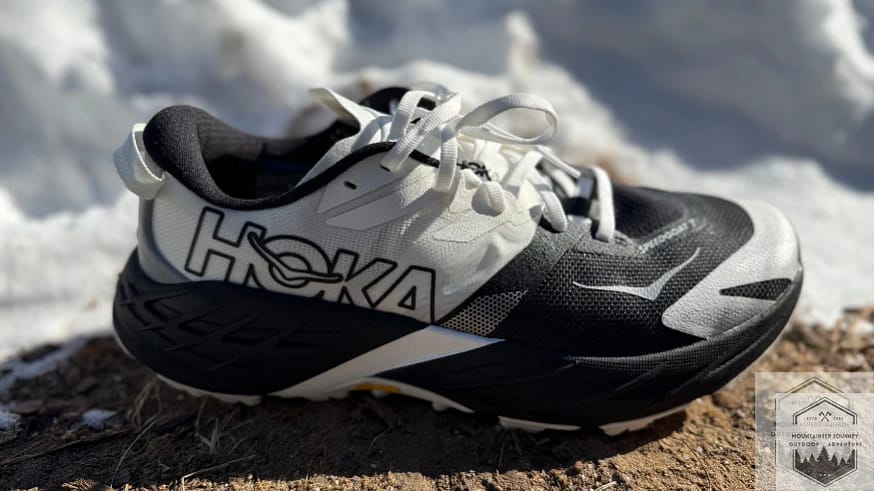
When I first tried on the Speedgoat 7, I was a little disappointed because they fit quite tight, even though I ordered a men’s size 10.5 wide.
However, after a few miles, they finally began to break in and conform to my foot rather than being compressive. So I do not recommend sizing up or down. Stick to your normal size and let them break in with time.
The insole is quite comfortable, and the footbed conforms to your foot but is not overly compressive; it’s similar to the Norda 001 but with more cushion. The heel cushioning is definitely a nice value-add.
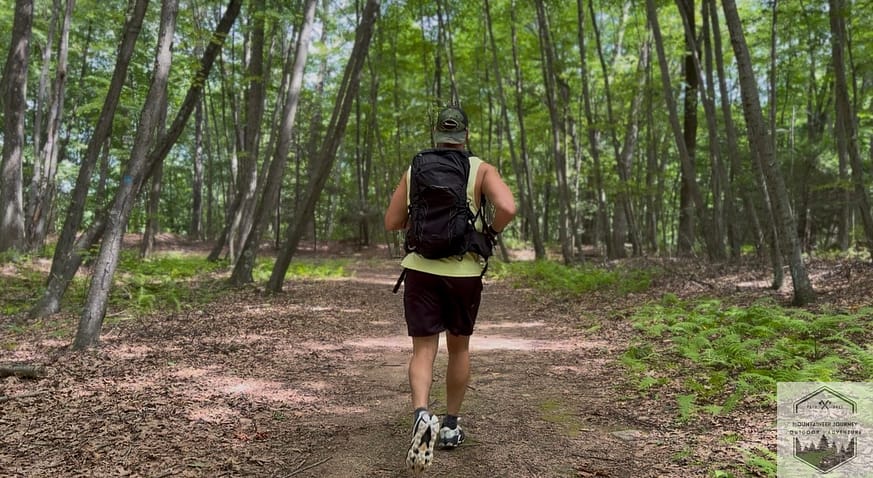
Impact absorption was excellent. While on gravel, roads, and singletrack, the higher stack height definitely saved my joints, and I was able to hammer on longer than with lower-stack shoes.
While going down 20% grades, I definitely felt my pinky toe was a little compressed because the shoe overall is not very voluminous. Something to consider if you are a wide fit.
For those with high arches, I would skip this shoe because the volume required with a high arch is not amenable to this type of shoe. Take a look at the Brooks Cascadia 20, where you can add arch support as needed to the high volume in the shoe.
Hoka Metarocker
The MetaRocker on the Speedgoat 7 is much more aggressive than previous types. I definitely felt a great heel-to-toe transition, especially on flat terrain. This type of aggressive rocker is great for heel strikers who really want maximum efficiency in their stride.
Those looking for no curve or rockered outsole, check out the Altra Lone Peak 9+ or even the Saucony Peregrine 16.
Comfort & Fit Score: 8/10 (20%)
Traction
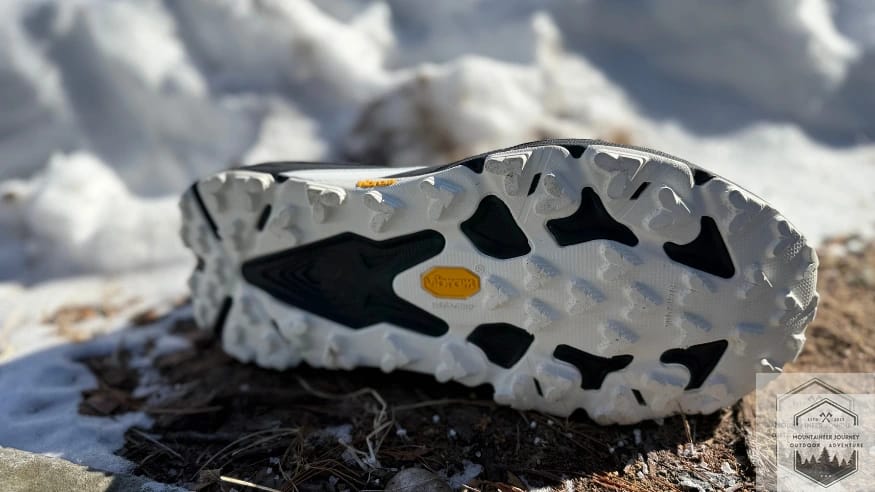
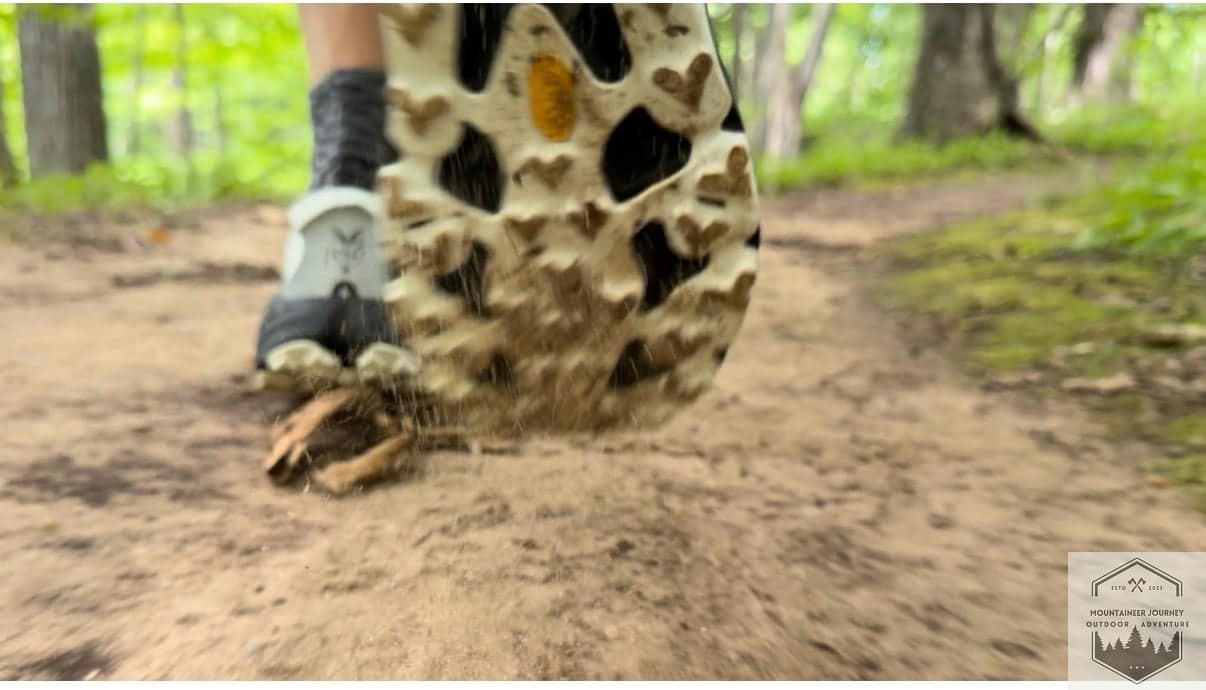
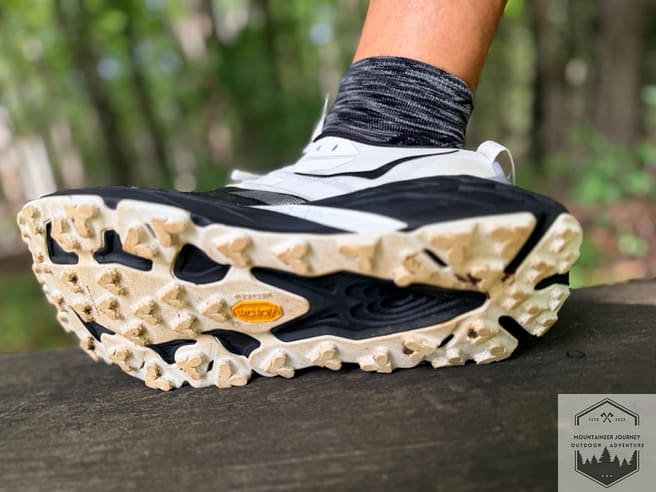
Hoka upgraded the outsole pattern to be much more aggressive, especially in the heel, the added micro-spikes within the Vibram Megagrip outsole really aids in the grip on the Speedgoat 7.
The chevron-shaped lugs were excellent when climbing up loose gravel and scree. One very unique feature of the Speedgoat 7 is the two traction lugs in the forefoot; they point approximately 20 degrees laterally, which helps with quick, agile turns or when you lose your footing.
The flared heel design definitely helped add that extra bite you need while climbing very aggressive inclines, as well as while sidehill running.
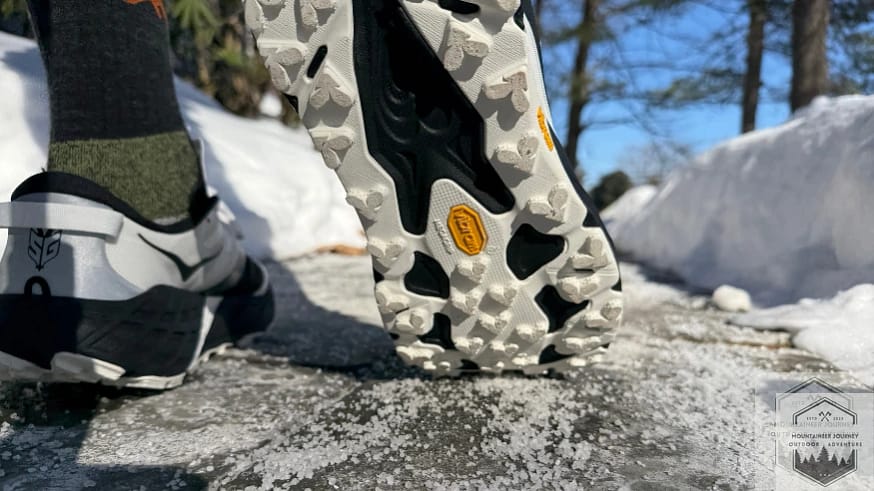
Due to the recent snowstorms, I was able to test the Speedgoat 7 on wet and icy snow trails, and it performed much better than the competition. I tested the Nike Pegasus 5 on the same snowy trail-the Speedgoat 7 gripped much better.
On narrow, flat terrain, the lugs bite aggressively into both mud and dry terrain. The lugs are spaced well enough to part to shed mud much better than the previous iterations.
The Speedgoat model has always been known for excellent traction; however, Hoka stepped up this game just a little bit more at this time.
Traction Score: 9/10 (20%)
Stability & Support
The RPET textile upper is what makes the Speedgoat 7. I rated the torsional rigidity a 4.5 out of 5, which is what really stabilizes your heel in this model.
The textile upper hugs against your foot and resists any internal movement of your foot. This is really the game changer for the Speedgoat 7 because it doesn’t have any prescriptive technologies to control the stability of your foot. This allows the Speedgoat to be flexible without killing the stability of the shoe.
The lateral flare design enhances further ground contact. I really felt this was helpful during side-hill running while keeping the base of my foot nice and stable.
While the stack height is higher on the Speedgoat 7 (37mm at the heel), I still had a good amount of trail feel.
As someone who struggles with overpronation in my left foot, I felt much more supported here than in other high-stack models like the Mafate X. It allowed me to react to the trail rather than fighting the shoe’s height.
On technical trails, my ankle felt very supported. The heel design of the outsole comes up and over your foot and cups it rather than you sitting on the entire stack of the shoe.
Overall, Hoka has engineered an extremely stable trail runner without relying on heavy plastic posts or intrusive shanks. The base isn’t SUPER wide, like some of the zero-drop Altra shoes you will see. Therefore, it doesn’t ruin the nimbleness or agility of the Speedgoat.
The stability results from smart geometry: a moderately wide footprint, a secure heel cup, and bucket-style midsole.
Stability & Support Score: 8.5/10 (20%)
Weight
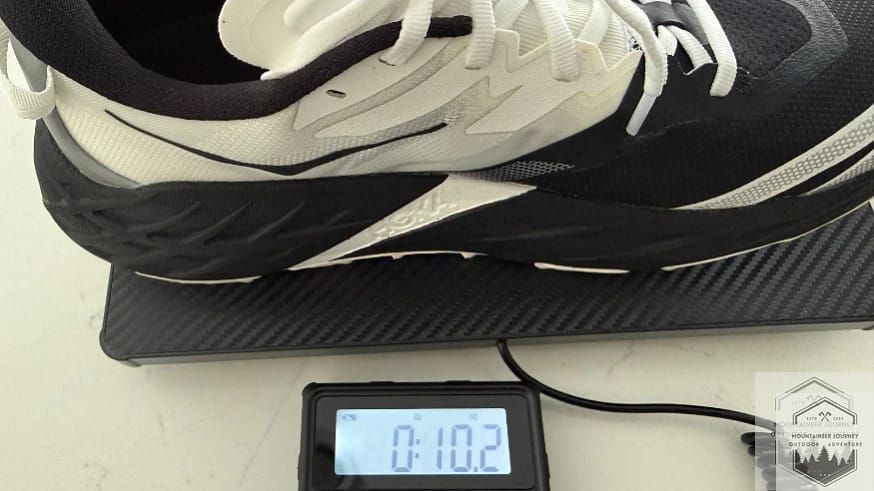
We weighed the Hoka Speedgoat 7 in at 10.2 ounces per shoe on our scale. It feels quite light on foot compared due to the aggressive Metarocker.
The 7 is approximently .5 oz lighter than the previous iteration.
For direct comparison, it is less weight than the Hoka Torrent 5; however, it feels much lighter on your foot due to the more aggressive rocker.
Weight isn’t always about the scale. It’s about how it feels on your foot.
Weight Score: 8.5/10 (15%)
How’s The Overall Protection Of The Speedgoat 7?
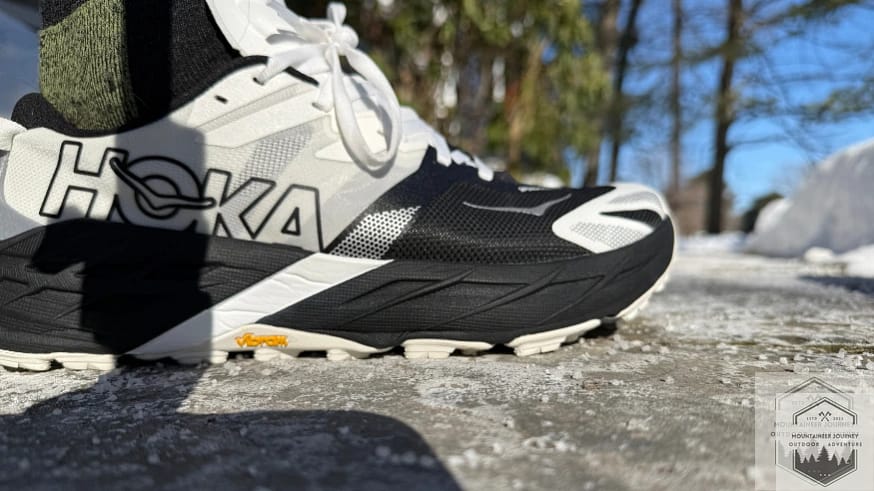
The toe bumper on the Speedgoat 7 was a little disappointing because it does not cover the entire toe box. It’s quite thin but still quite solid. It really only covered my third and fourth toes.
However, Hoka does include a harder synthetic overlay that covers the rest of the toe box. While not a rigid bumper, it provided enough of a “shield” to protect against the occasional rude kick or sharp branch on the trail.
The Speedgoat 7 does not have a traditional rock plate, but the 37mm heel stack provides good cushioning and protection for your foot. There was just enough foam for me to feel the trail, but not enough for it to be in the impact absorption. This is really the sweet spot of enough cushioning protection without wrecking the responsiveness.
The dual-gusseted tongue kept out debris on the trail, especially snow, during our winter testing. The gaiter attachments were a nice value-add that the previous versions didn’t have.
I was pleasantly surprised by the upper mesh. During several “brush-by” moments with low-lying branches and thorns, the material resisted snagging and scratches much better than expected. It feels like a significant step up in durability from the Speedgoat 5 or 6.
Overall Protection Score: 7/10 (10%)
Durability
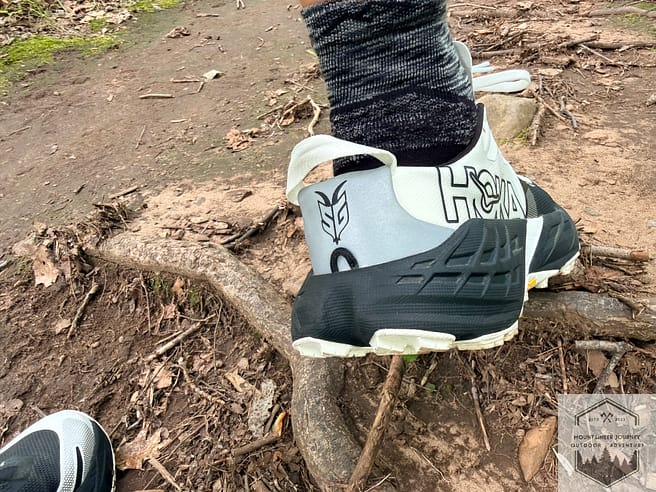
The SuperCritical EVA insole performs exceptionally well in terms of rebound and compression. After six months of testing, I haven’t noticed any lag in the bounce of the Speedgoat 7.
So far in my testing, I haven’t noticed any over-compression or early wear on the outsole.
The upper and outsole are traditionally stitched from the inside of the shoe, which is an improvement over previous iterations. This is where shoes tends to break down first.
The shoe also has much fewer welded zones. By reducing the number of welded zones and “stress risers” (points where the material is likely to snap or peel), Hoka has potentially added 100+ miles to the effective life of the upper.
Hoka also added many more lugs than previous iterations. With continued testing, it will be interesting to see if the lugs wear evenly or if uneven wear will start to affect the performance of the shoe. After 6 months of testing, the durability of the Speedgoat 7 has been shown to be much better than previous iterations.
Durability Score: 8.5/10 (10%)
Is The Hoka Speedgoat 7 Worth It?
At $165, the Hoka Speedgoat 7 offers an upgraded version of the much-beloved Speedgoat 5 trail shoe.
It retained its well-known excellent traction and lightweight profile.
One of the highest value-adds for the Speedgoat 7 is its hybrid versatility. While it’s designed for high-cadence trail running, the structural support makes it an excellent crossover for hiking. It’s ranked in the top five for best trail runners for hiking.
For users looking to “kill two birds with one stone,” this shoe eliminates the need for a separate $150+ pair of dedicated hiking shoes, effectively doubling its value.
One downside is the tight fit. Even with a wide size, I still felt my foot was mildly compressed, especially during downhill testing. However, this does go away with further breaking in of the shoe.
Compared to the broader market, $165 for a supercritical-foam shoe with Vibram Megagrip is actually above market value. Many competitors are pushing the $180+ mark for similar technical specs.
For those looking for more cushioning, check out the Hoka Mofate X or Hoka Challenger 8. For those on more of a budget, check out the Merrell Morphlite.
Value Score: 4.5/5 (5%)
Scoring Breakdown
Comfort & Fit (20%): 8/10
Traction (20%): 9/10
Stability & Support (20%): 8.5/10
Weight (15%): 8.5/10
Overall Protection (10%): 7/10
Durability (10%): 8.5/10
Value (5%): 4.5/5
Total Weighted Score:
1.60 + 1.80 + 1.70 + 1.275 + 0.70 + 0.85 + 0.45 = 8.375
Overall Score: 8.4/10
Frequently Asked Questions
When was the Hoka Speedgoat 7 released?
The Speedgoat 7 was released on February 1st 2026.
How does the Speedgoat 7 compare to the Speedgoat 6?
The Hoka Speedgoat 7 has a much improved stability profile compared to the Hoka Speedgoat 6. The new outsole tread design is also much superior compared to the Speedgoat 6 when it comes to traction.
Does the Speedgoat 7 have a rock plate?
No, the Speedgoat 7 does not incorporate a traditional rock plate. It emphasizes better flexibility for improved agility on the trail.
Is the Speedgoat 7 waterproof?
No, currently the Speedgoat 7 does not offer a waterproof version.
How We Tested and Our Methodology
I have personally tested the Hoka Speedgoat 7 since its release in early 2026 in winter conditions and now in summer conditions over the past six months. We don’t just put our trail runners through a couple of miles and then call it quits. We continue to update our posts every few months to give you an unbiased real-time view of testing.
Unlike other reviews you see, we have videos of us testing our products instead of pictures that leave you unsure if they were tested.
We purchase all products with our own money and maintain complete independence from manufacturers. No sponsorships or paid promotions influence our objective scoring methodology.

Tyler
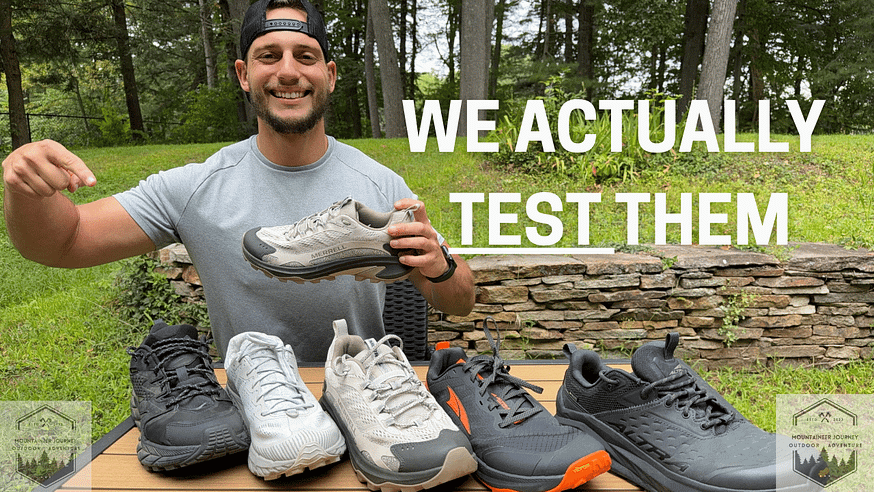
Tyler is the founder Mountaineer Journey and a professional Mountain Guide with 15+ years of technical experience in trekking, mountaineering, and trail sports. Having logged thousands of miles from rugged alpine summits to urban paths, Tyler provides rigorous, field-tested insights on hiking, walking, and trail running gear. All reviews are 100% unsponsored and unbiased, ensuring you get honest scoring based on real-world performance. His mission is to help outdoor enthusiasts of all levels find reliable equipment that ensures comfort, safety, and performance on any terrain.