Our Score
Best Garmin GPS Watches Of 2026 | Unsponsored
Garmin Forerunner 970 (Best Overall Garmin)
best for high-mileage runners and trail runners who still need topo maps and strong GPS accuracy. Our number one recommendation given the value and price tag.
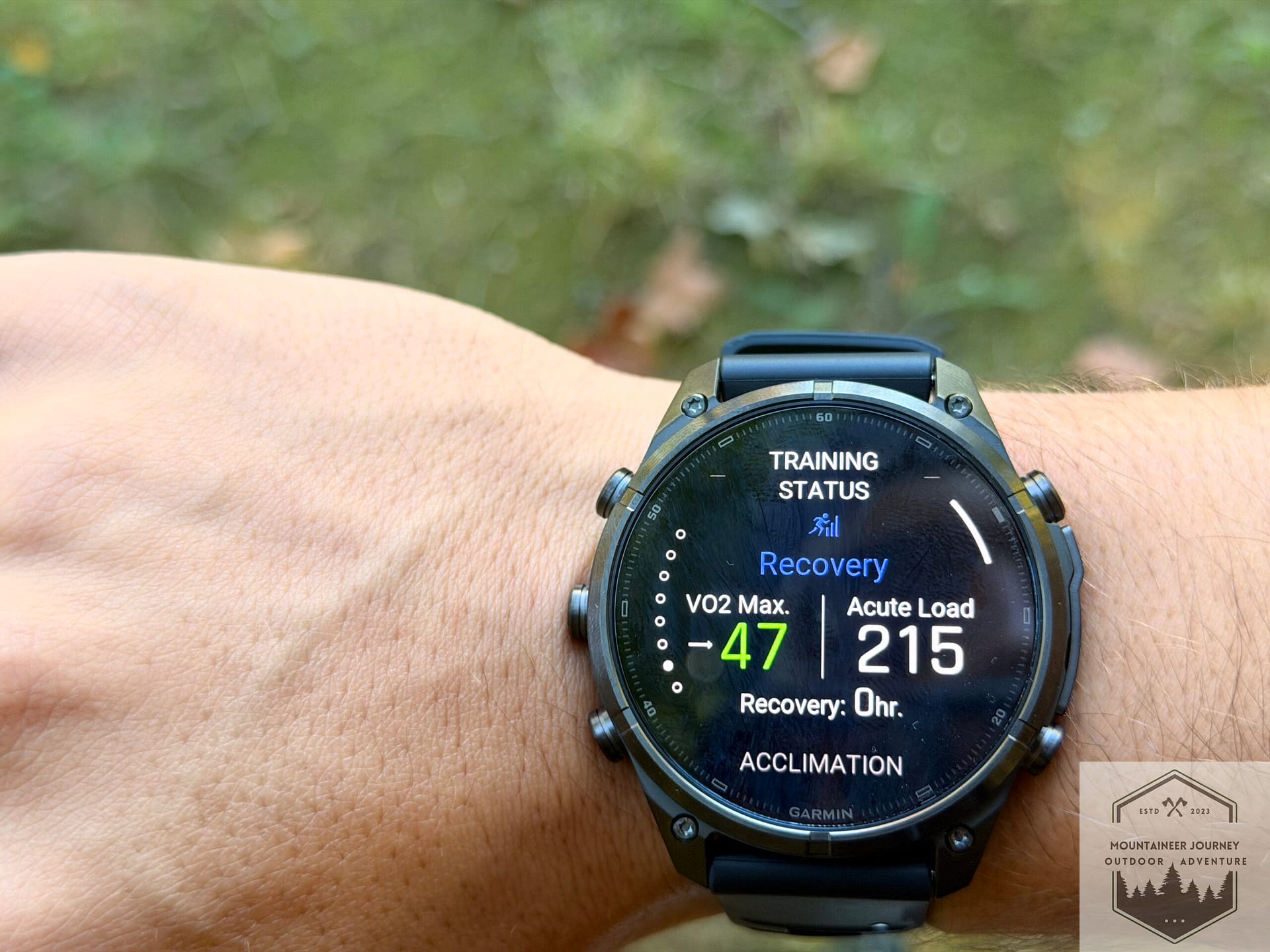
Garmin Fenix 9 (Best Hiking Garmin)
Best for backcountry hikers, backpackers, and mountaineers who want maps plus InReach. Higher price point and bulkier watch face, but best-in-class performance.
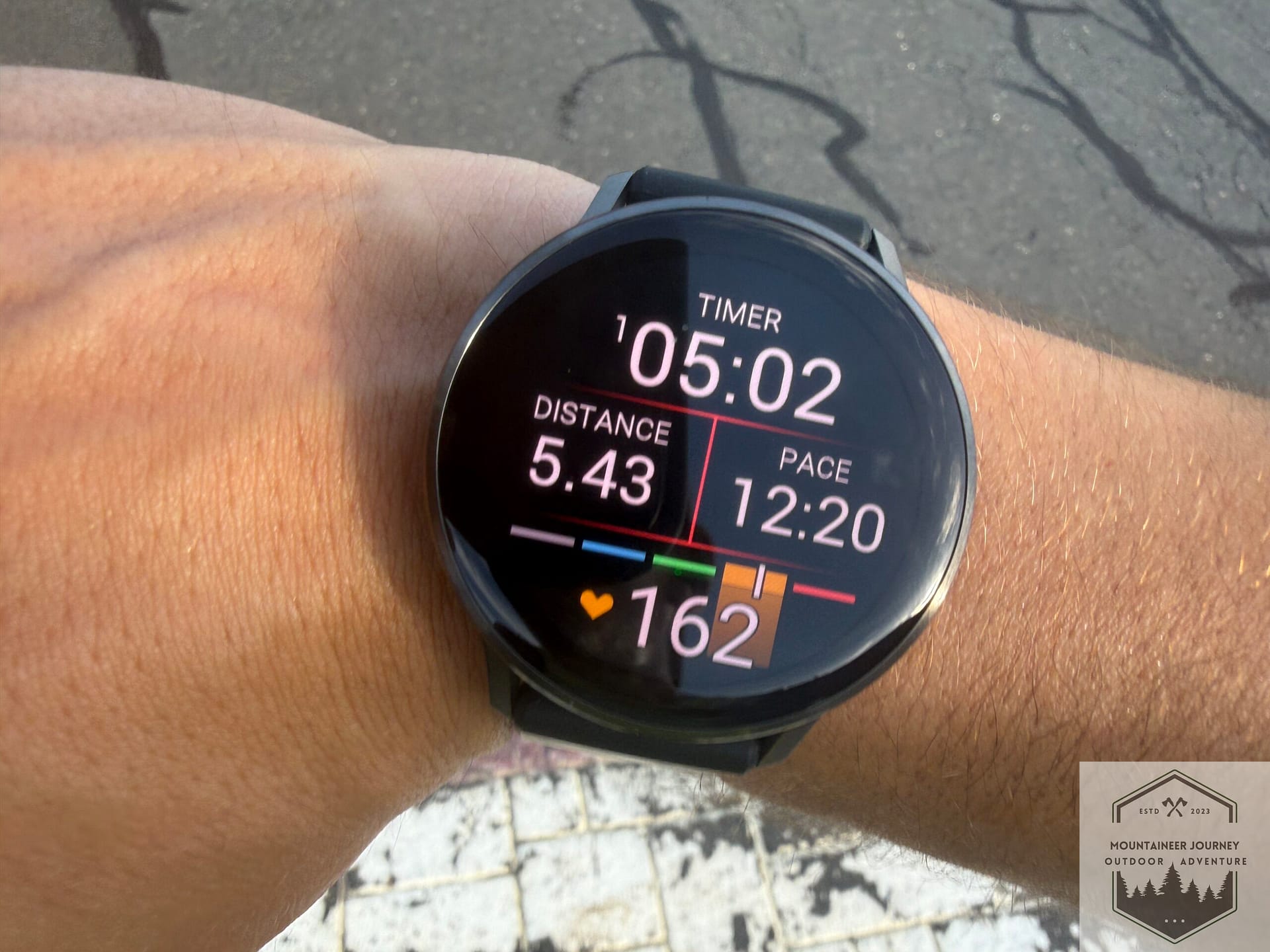
Garmin Venu 4 (Best Everyday Garmin)
Best everyday Garmin Watch with real health tracking, capable of handling serious multisport activities, plus easier two-button navigation.
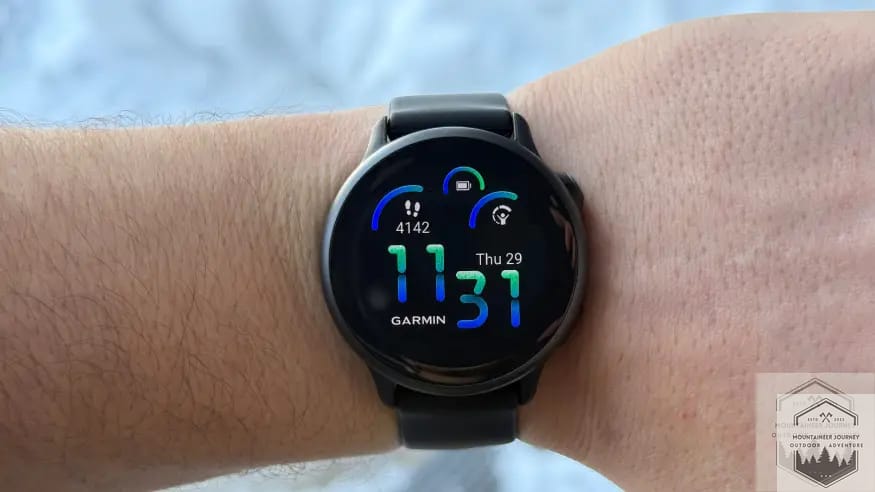
Garmin Vivoactive 6 (Best Garmin For Running)
Best for cost-conscious runners and gym athletes who want most training tools and can live without full maps. The lightest watch in this roundup.

Garmin Forerunner 170 (Best Budget Garmin)
Best for new Garmin users who want an affordable entry point into the ecosystem.
As an independent reviewer, I purchase all products myself. Some links may be affiliate links that support the site at no cost to you
If you are looking for the best Garmin watches of 2026, we have you covered. We’ll cover our top 5 picks, why each one earned its spot, and how we tested every watch on trails and road runs before making our final recommendations.
We purchase every watch we test with our own money. No brand sends us free product, and no company pays us to influence rankings. I’ve worn Garmin watches for 16 years on trails, from training for my first half marathon to multi-day hikes requiring in-depth GPS. For this guide, I tested over 8 Garmin models this year alone. That includes the Fenix 9, Enduro 3, Forerunner 970, Forerunner 55, Venu 4, Fenix 8, Forerunner 170, and Garmin Cirqa.
I also help build software to test our GPS watches against real data, including purified GPX maps and heart rate accuracy data from a Polar H10 chest strap. For more information on our new coding software, Tracklab, see how we test our GPS watches below.
Related: How We Test GPS Watches
Best Overall Garmin Watch
Garmin Forerunner 970
Pros
- Excellent topographic mapping accuracy
- Gen 5 heart rate sensor with improved accuracy
- Training readiness and new running features
- Built-in flashlight with red light mode
- Battery life
Cons
- Requires chest strap for best running metrics
- No LTE connectivity
- $749 premium price point
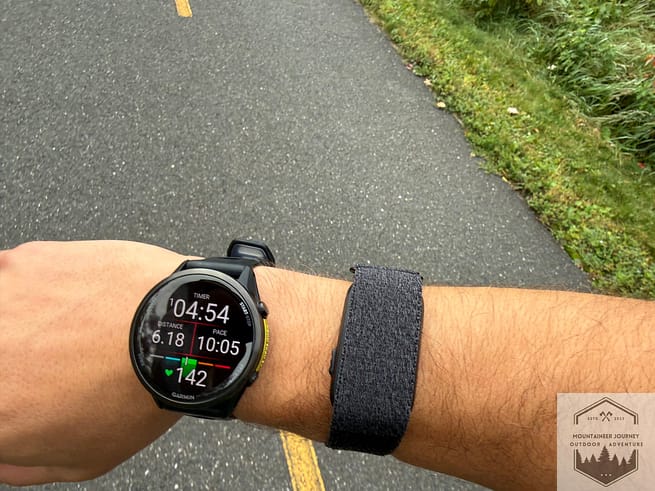
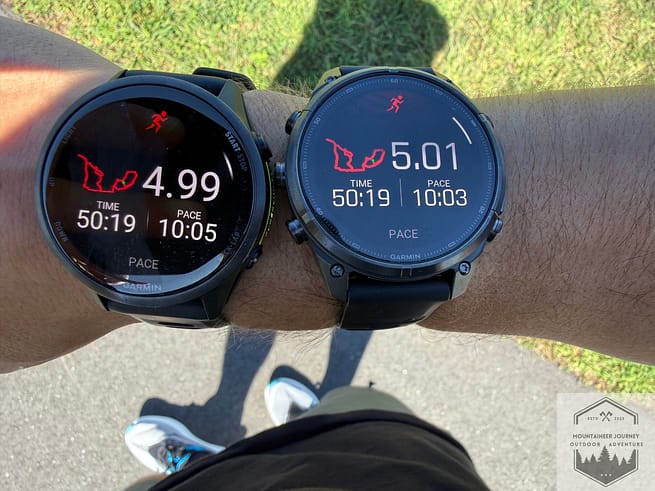
The Garmin Forerunner 970 is easily our best-rated Garmin GPS watch: base, oddly, value you get for the full price. Its heart rate and GPS accuracy match the Fenix 9; however, it doesn’t come with the $1,000+ price tag. The AMOLED screen is extremely bright. I personally prefer its screen over all the Garmin watches we have tested in the past. This is my go-to for daily use, road running, and hiking.
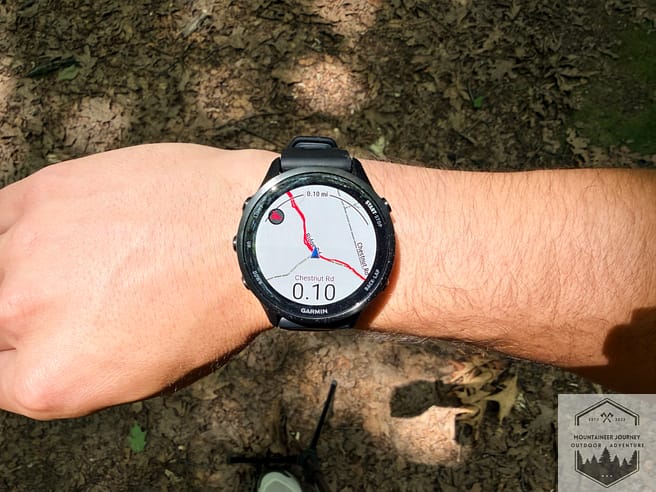
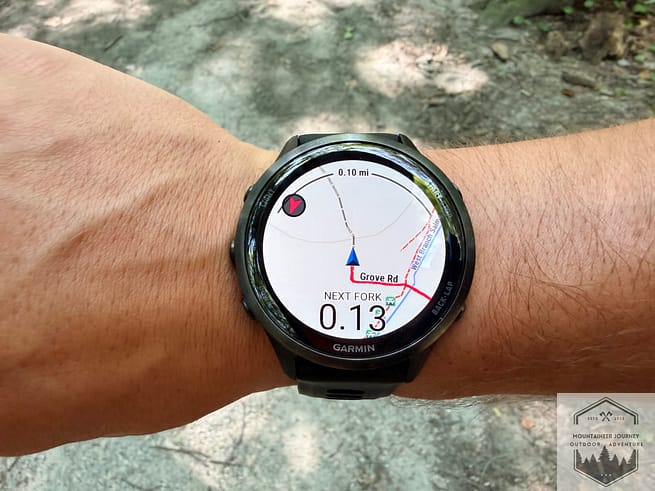
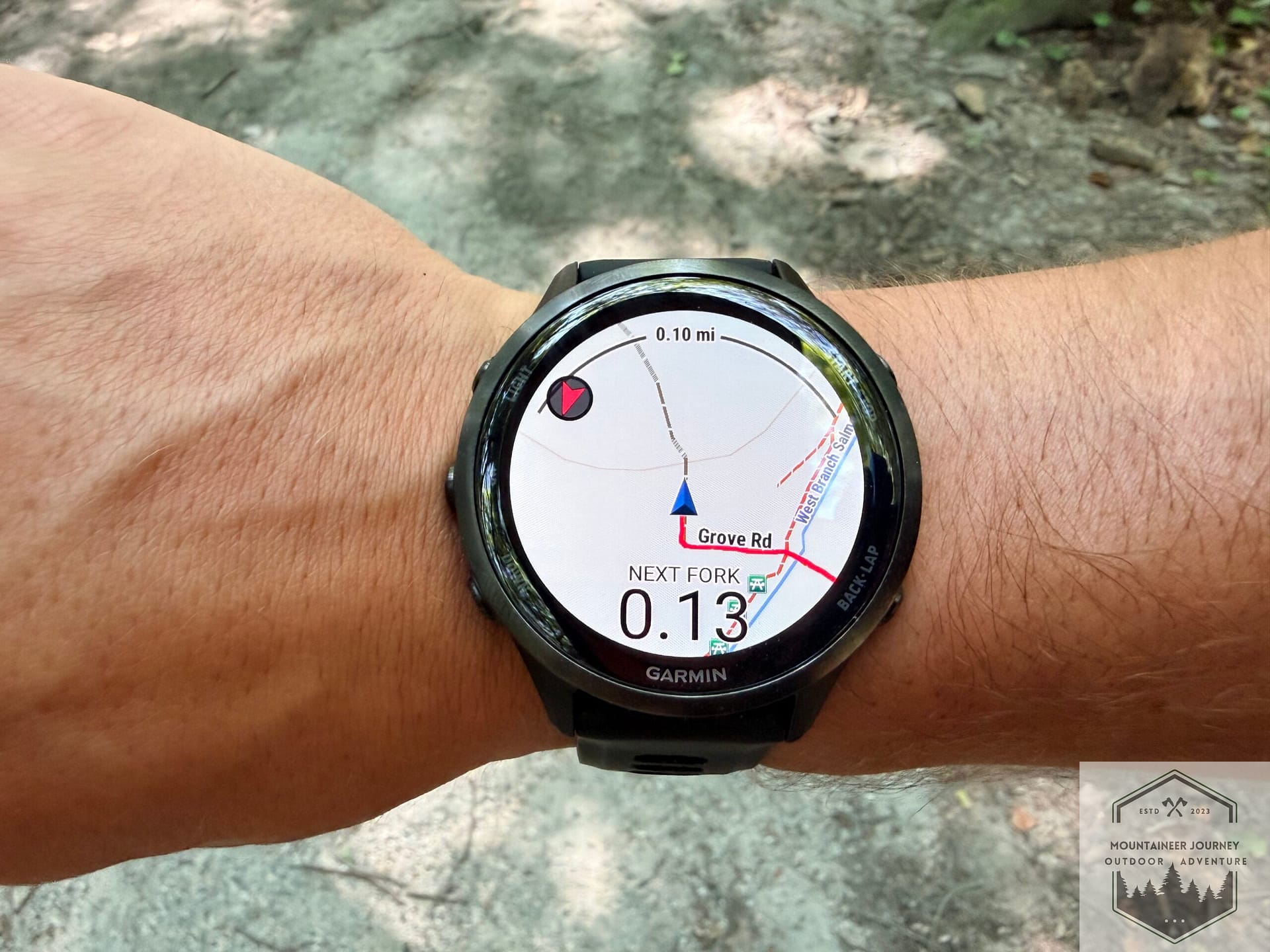
Topo maps are nearly on par with the Fenix 9 and Enduro 3, with reliable turn-by-turn navigation and full-color offline maps on long trail days. Our mapping and navigation score came in at 8.5 out of 10. ClimbPro and auto-reroute support work smoothly for trail running and hiking. We compared GPX tracks with a handheld GPS unit and saw deviations of about 1 to 2%, even under dense forest canopy, which is outstanding for a wrist-based sports watch.
Forerunner 970 Tracklab Data
| Metric | Garmin Forerunner 970 |
| Cadence Lock Duration | LOCKED – 268s |
| Fréchet Drift | 21.0 ft |
| Cross-Track Error | N/A |
| Distance Over-Report | -1.1% |
| Multi-Watch Drift | 19.2 ft |
| Mean Absolute Error | 2.3 bpm |
| Root Mean Square Error | 4.4 bpm |
| Maximum Delta | +33.9 bpm |
| Bland-Altman Bias | +1.2 bpm |
| Lin’s Concordance | 0.968 |
| Interval Latency | 16.0 s |
Actual battery from our testing: multi-band GPS runtime around 20 hours, with auto-select mode pushing to roughly 22 hours. In smartwatch mode, we saw about 15 days, which dropped to around 10 days with regular GPS activities and closer to 5 days with an always-on AMOLED display. The flashlight, red light mode, and showlight for running in the dark are great add-on features for multisport athletes training all 65 days a year.

The downside to the Forerunner 970 is that you have to buy an additional chest strap for advanced running metrics such as step speed loss and running economy. In addition, the $749 price tag is hefty; however, based on our testing, the Forerunner 970 earns every dollar.
How to decide between Forerunner 970 and the Fenix 9:
- Choose the Forerunner 970 if you race, run long road and trail miles, and need navigation for daily hikes/trail runs. This is the more capable running watch of the two.
- Choose the Fenix 9 if you prioritize durability, InReach satellite connectivity, and spend more days off grid than on pavement.
- For more, see: Garmin Forerunner 970 vs Fenix 9
Read Our Review: Garmin Forerunner 970 Review
Best Garmin Watch For Hiking
Garmin Fenix 9
Pros
- Excellent topographic mapping accuracy
- Gen 5 heart rate sensor
- Brighter screen than Fenix 8
- Battery life
Cons
- Requires chest strap for best running metrics
- Very high price point
- Bulkier Watch Face
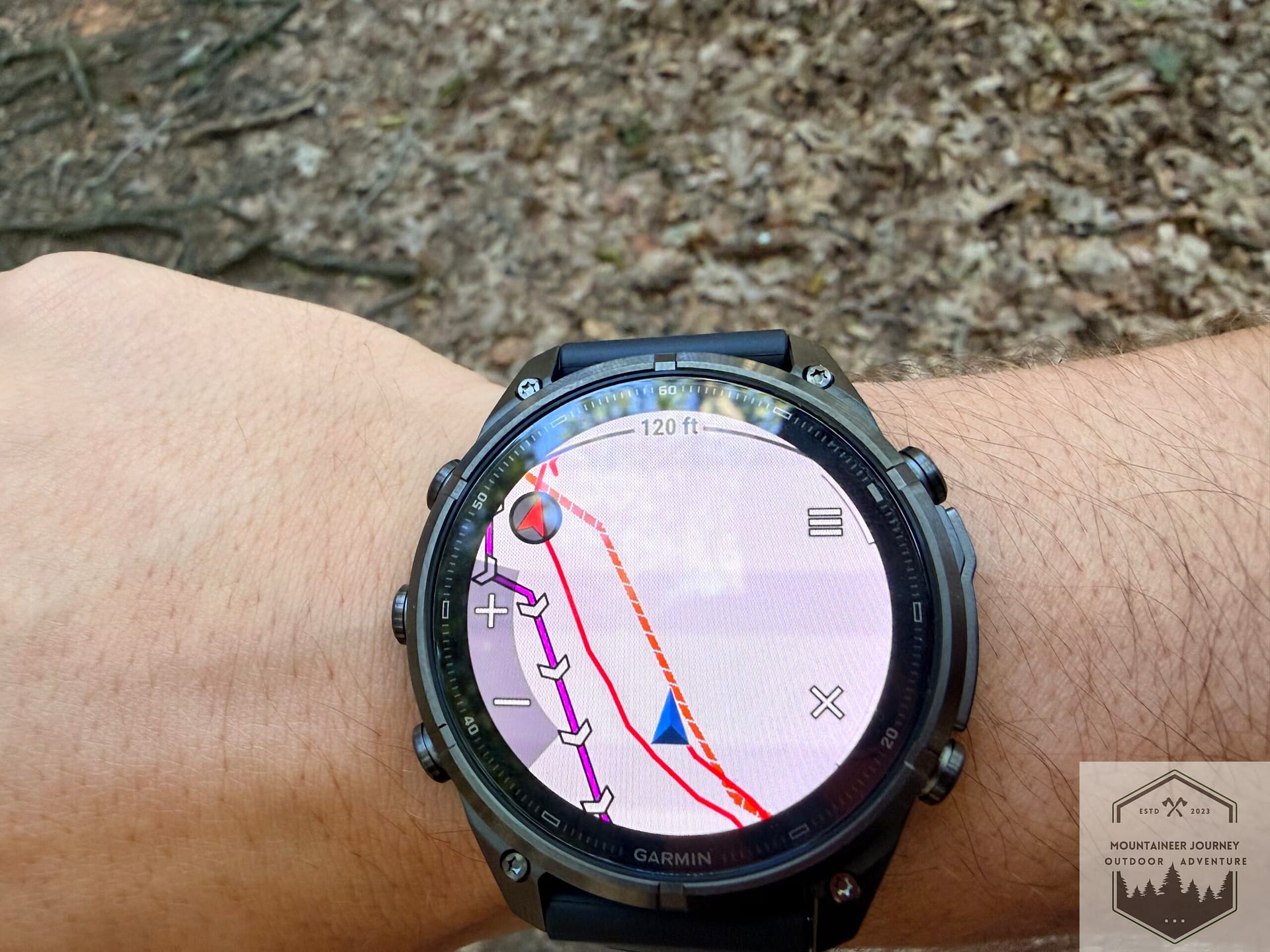
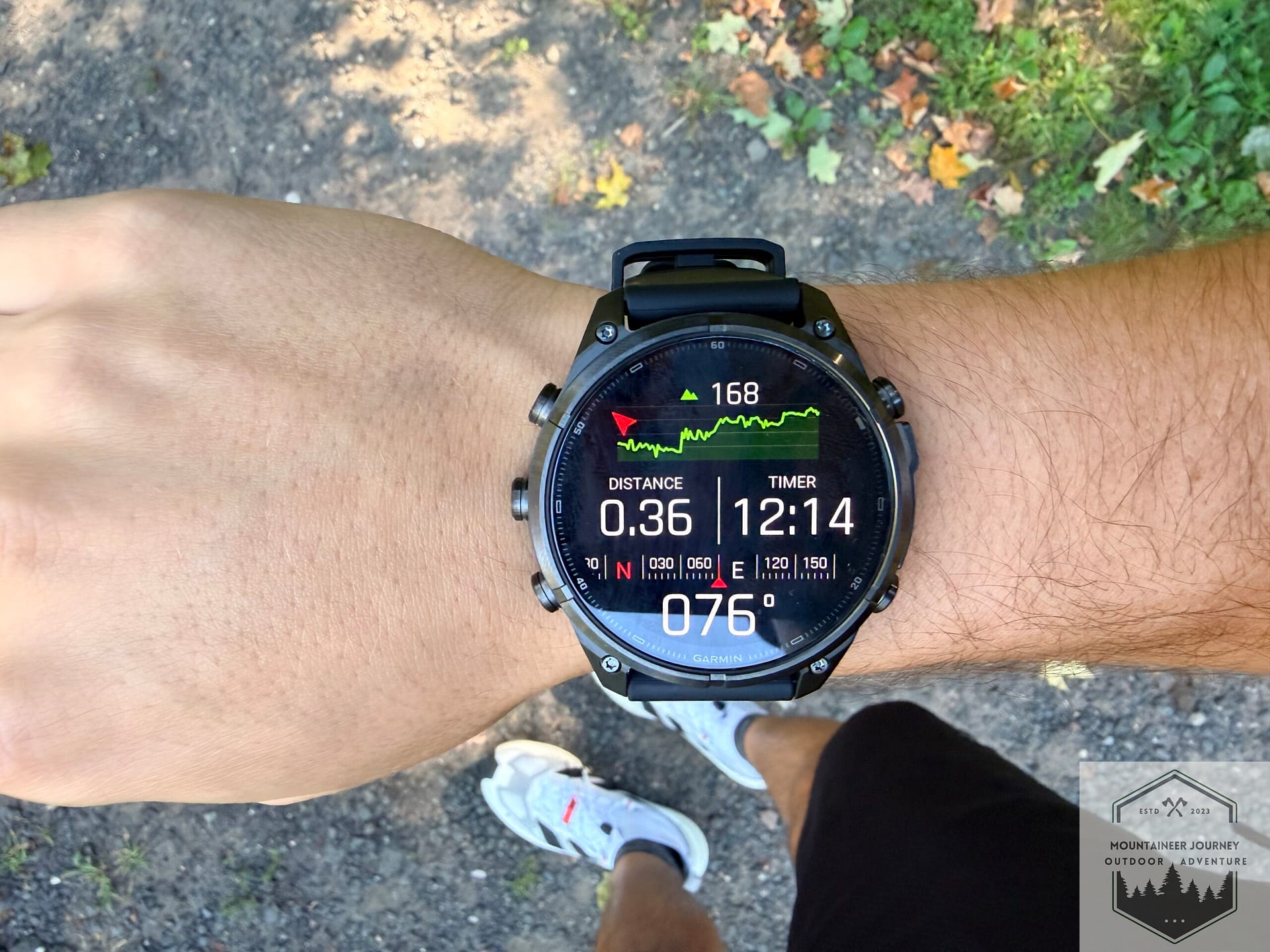
The Garmin Fenix 9 is our top pick for serious hikers and backcountry travelers in 2026. After months of wearing the 47mm Fenix 9 Pro with InReach on scrambles, multi-day hikes, and regular training runs, nothing else in the Garmin lineup matches what this watch delivers for mountain use. The Fenix series is suited for premium multisport and outdoor activities, and this generation raises the bar significantly over the Fenix 8.
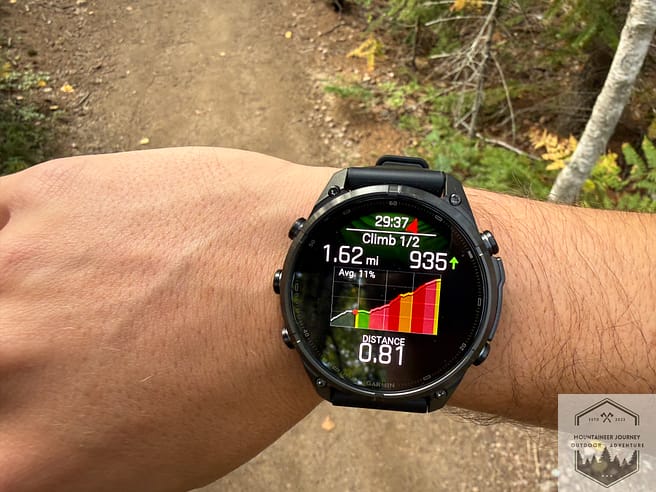
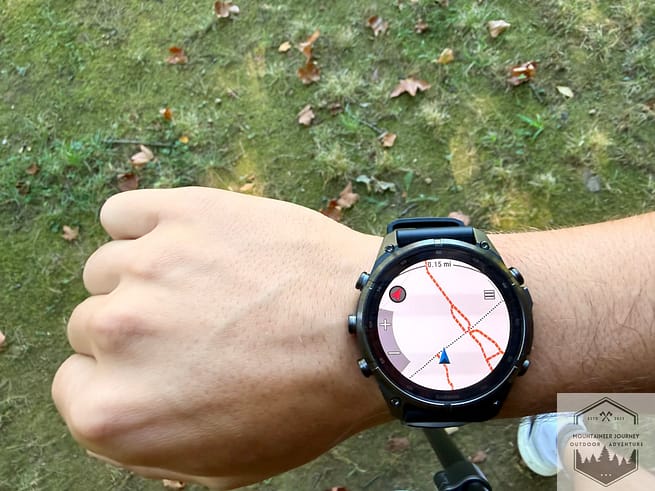
The new topographic maps with perspective view are what make the Fenix 9 stand out from other watches. Panning and zooming can still feel a little clunky; the 50% RAM increase also speeds up processing. I tested the track-back feature on several trail runs and hikes, and it was extremely accurate, getting me back to the starting point efficiently without any issues.

The biggest add-on feature for the Fenix 9 is the Garmin InReach. This essentially replaces the InReach Mini, a satellite communicator, and can cost upwards of $500. A $100 add-on to this watch completely replaces the satellite communicator, though it still costs an additional monthly fee (as it would with the inReach Mini). The Garmin inReach offers LTE connectivity, 2-way messaging, and SOS signaling. Currently, this is the only Garmin watch with this add-on capability.
Fenix 9 Tracklab Data
| Metric | Garmin Fenix 9 vs Polar H10 |
| Cadence Lock Duration | LOCKED – 93s |
| Fréchet Drift | 5.5 m |
| Cross-Track Error | N/A |
| Distance Over-Report | -0.7% |
| Multi-Watch Drift | 6.4 m |
| Mean Absolute Error | 0.9 bpm |
| Root Mean Square Error | 2.2 bpm |
| Maximum Delta | -27.1 bpm |
| Bland-Altman Bias | -0.2 bpm |
| Lin’s Concordance | 0.992 |
| Interval Latency | 13.0 s |
As you can see from our Tracklab data above, the Fenix is just as accurate as the 4970, which makes sense, as they use the same Gen 5 heart rate sensor. However, the total GPS drift was about 30 ft less than the Forerunner 970. Overall, the Fenix 9 is an excellent GPS watch with satellite communication add-ons, the biggest selling point for hikers and backcountry users.
The Fenix 9 has notable drawbacks, including its considerable bulk on the wrist, which significantly reduces comfort during sleep compared to smaller watches. Despite its 43 mm watch face, the side buttons are disproportionately large compared with those on other watches reviewed, adding to its cumbersome profile.
Read Review: Garmin Fenix 9 Review
Best Garmin Watch For Everyday Use
Garmin Venu 4
Pros
- Good GPS mapping
- Easy 2-button design
- 2,000 nits display
- Reliable heart rate tracking
- Battery life
Cons
- No full-color maps
- $549.99 price tag
- Always-on display drain
- Inconsistent step count
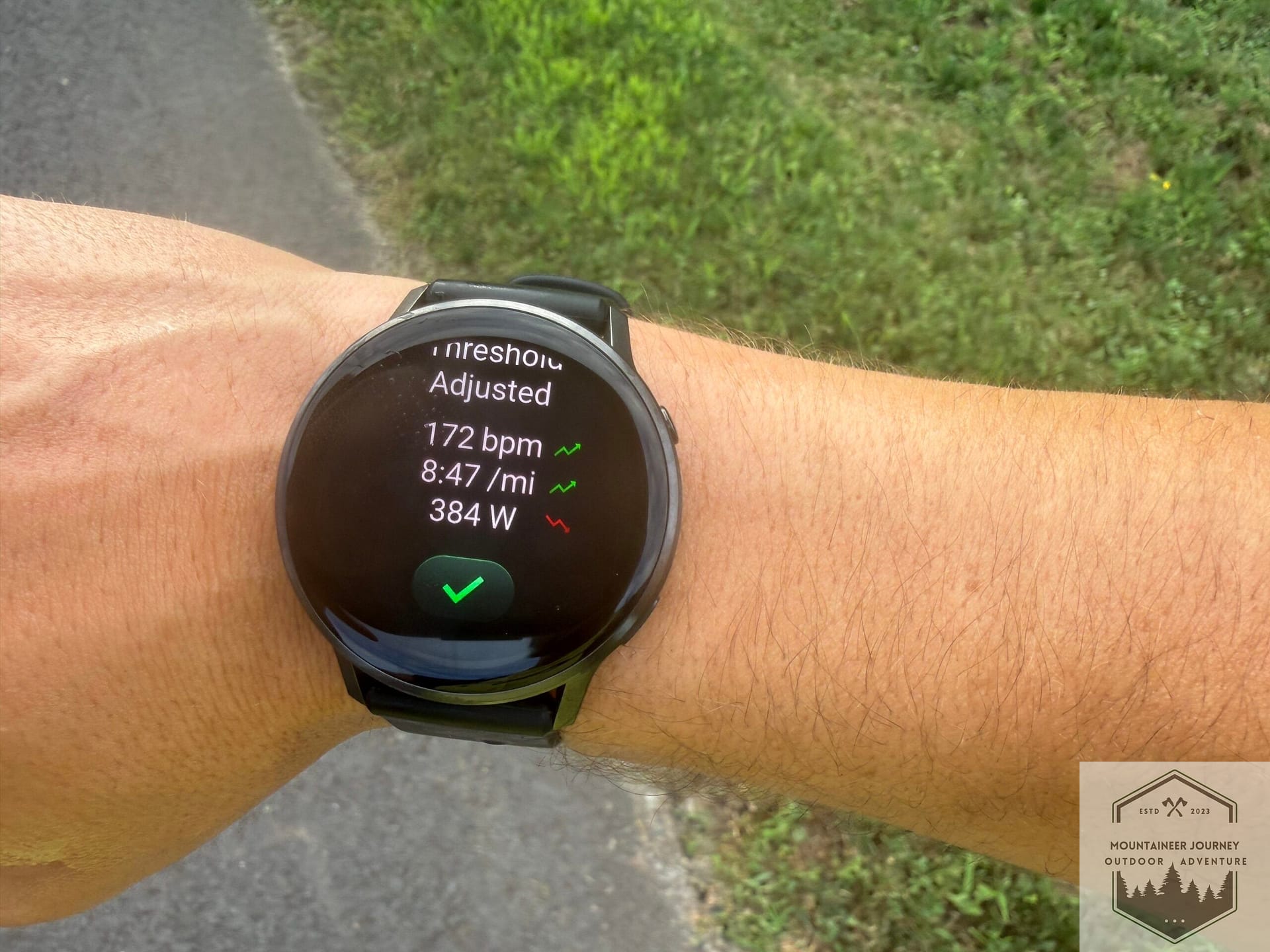
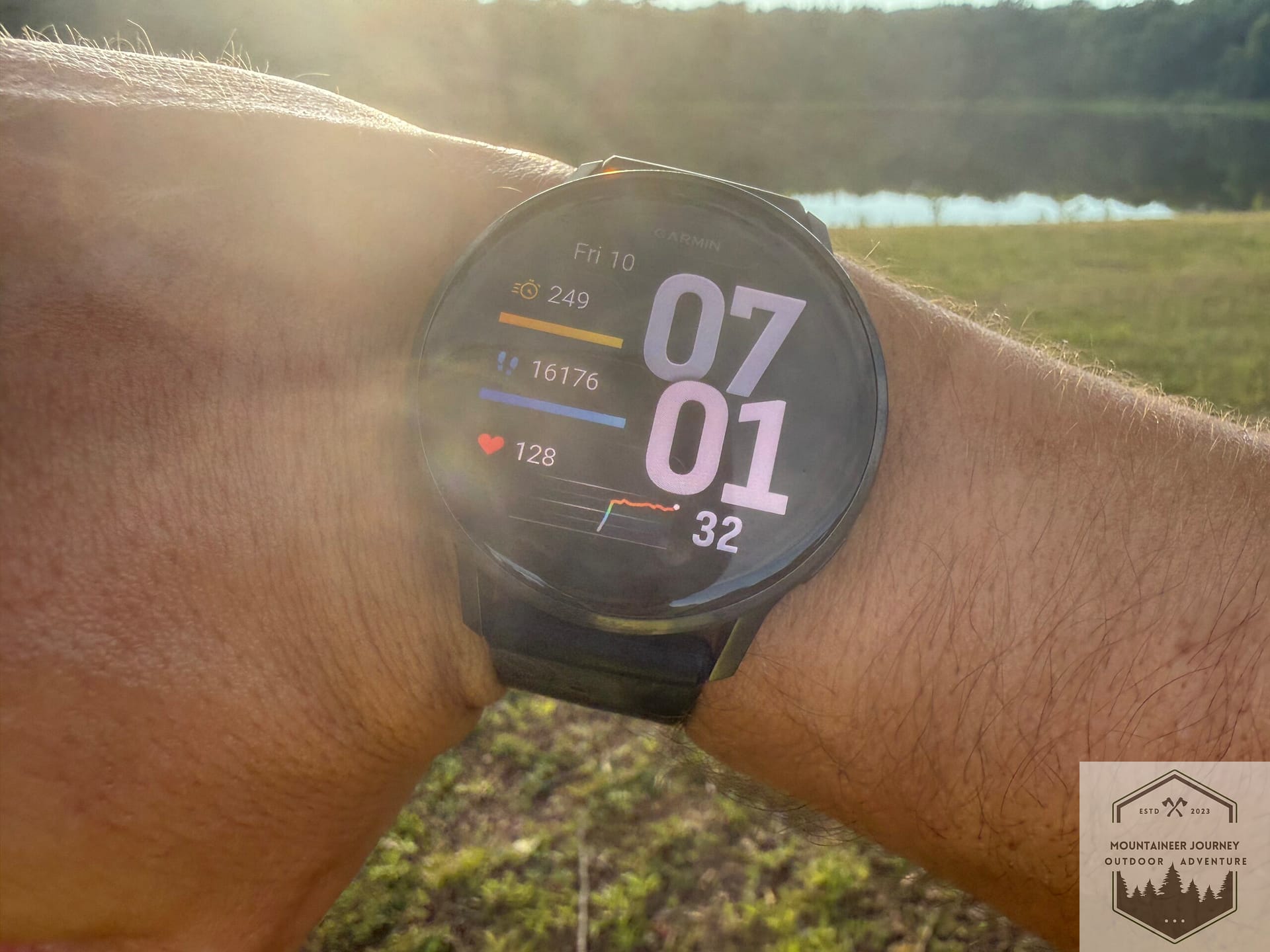
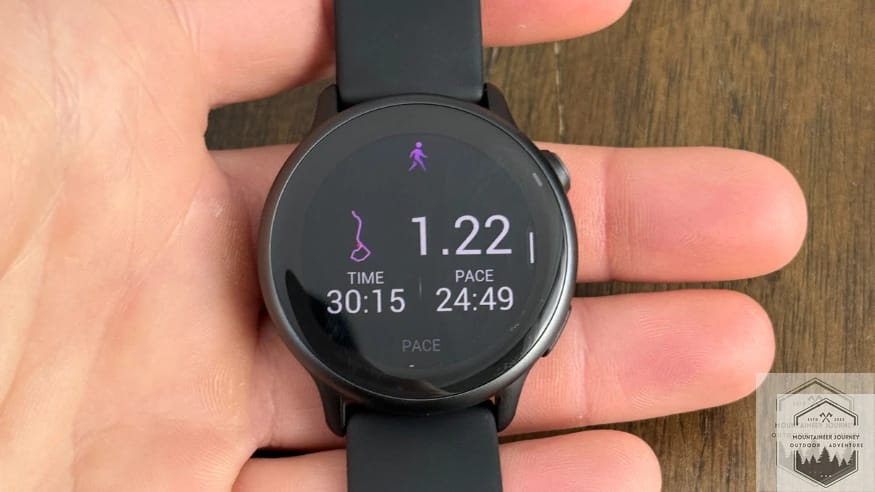
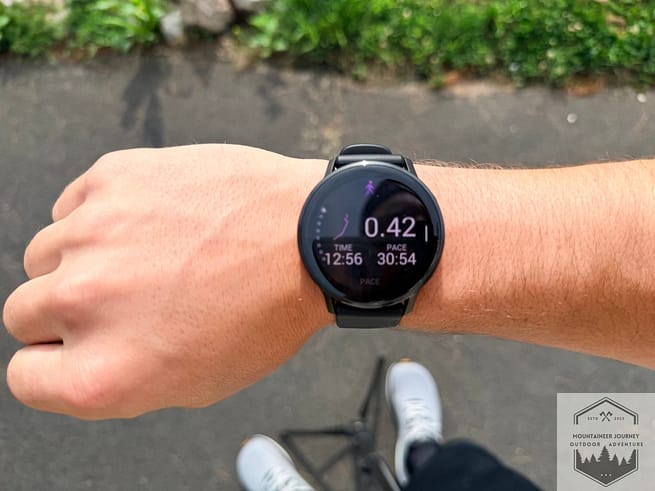
We scored the Garmin Venu 4 a 7.7 out of 10 overall after testing it across 45 plus runs and hikes over several months. The Garmin Venu 4 features a classic round design with a sleek metal body for everyday use and workouts. The two-button design makes it easy to use and less bulky than the other options on the list.
The bright AMOLED display is among the best in the Garmin lineup, offering a clear watch face without the bulk. It offers an always-on option, but keep in mind that it reduces real battery life from about twelve days to roughly four days in our tests. We measured battery life at about nine to ten days with moderate use, including some GPS workouts, sleep tracking, and notifications, with the always-on display off.
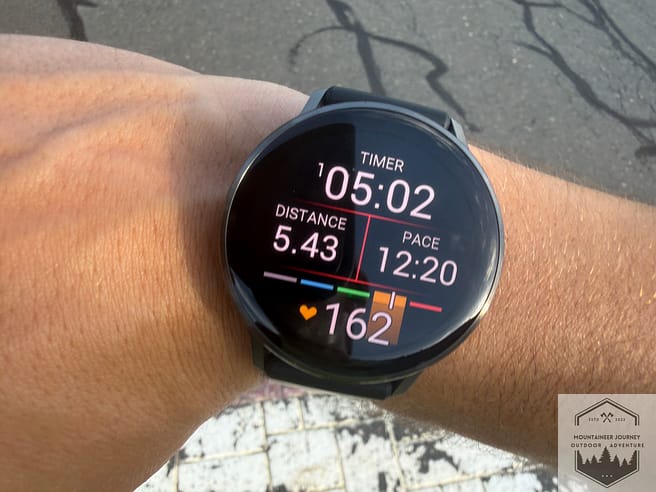
Advanced health metrics include ECG, SpO2, skin temperature, and sleep tracking that closely matched our Oura Ring 4 data. The watch tracks heart rate, sleep, and stress levels, and the morning report feature pulls it all together into a helpful daily snapshot. The Venu 4 tracks your body battery levels and monitors daily habits. These advanced metrics are typically reserved for higher-end Garmin models; however, this watch is the most affordable Garmin option that offers them.
For outdoor and hiking use, the dual-band GPS performs strongly. We tested it against a Garmin GPSMAP 67 and an Apple Watch Ultra 3 in deep forest and open settings and found the Venu 4 held its own impressively, with wrist heart rate readings within about three to five beats per minute of the Polar H10 chest strap. GPS hours in multi-band mode ran about 16 hours, enough for longer day hikes.
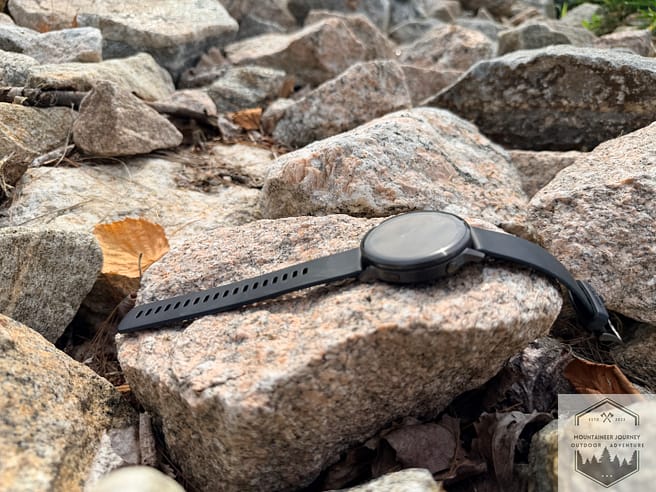
Navigation is more limited, though, with no full topographic maps or rich turn-by-turn guidance. You get workable breadcrumb navigation and directional cues that work fine for casual trails, but if you need dynamic rerouting in unfamiliar backcountry, this watch isn’t for you.
On a weekend of mixed runs and day hikes, expect roughly two to three days of battery life with the AMOLED screen always on, or five to six days with it off between charges. The ideal buyer wants Garmin-level activity tracking and health insights in a watch that looks at home in an office, gym, and on mellow to moderate trails.
If you care as much about sleep tracking and ECG data as your weekend hikes, this hits the sweet spot. The Venu 3 offered up to fourteen days of battery life in smartwatch mode, and the Venu 4 maintains competitive battery life while adding dual-band GPS and expanded health metrics. At $549, it sits between Garmin’s flagship sports watches and its more affordable fitness trackers.
Read Our Review: Garmin Venu 4 Review
Best Garmin Watch For Running
Garmin Vivoactive 6
POSITIVES
- Great For Smaller Wrists
- Bright AMOLED Screen
- Versatility
- Lightweight Profile
NEGATIVES
- No Full-On Mapping
- No Microphone
- Inconsistent Sleep Tracking
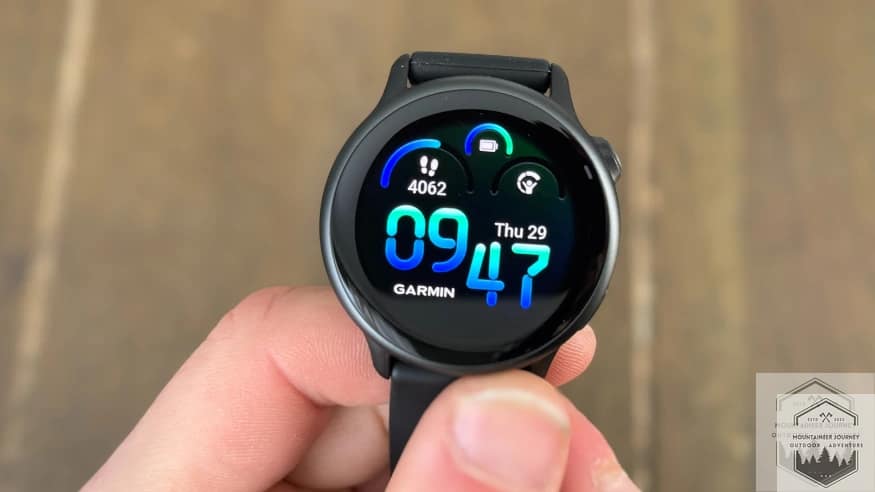
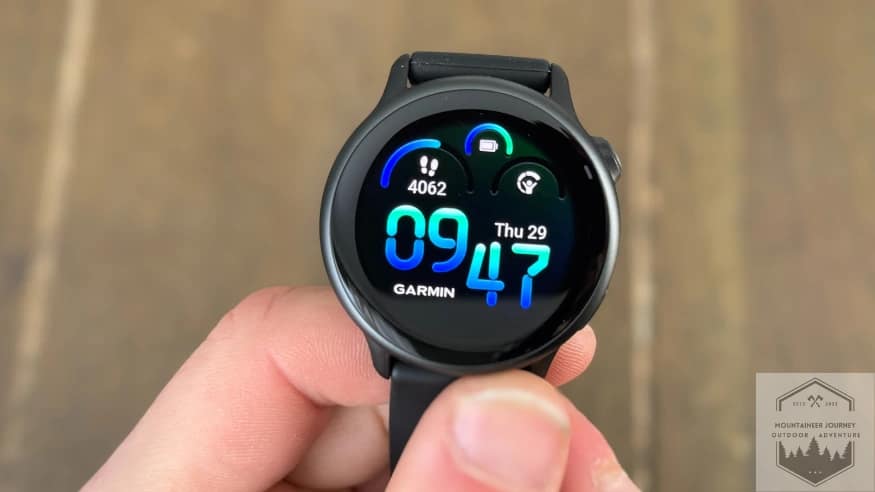
The Garmin Vivoactive 6 is our favorite sub-flagship Garmin for runners, gym-goers, and casual hikers. After more than fifty hikes and trail runs since its April 2025 release, mostly across the Northeast US, we can confidently say it delivers far more than its price suggests. While the Instinct series focuses on rugged and value-oriented outdoor use, the Vivoactive 6 carves out a different niche: serious training features in a lightweight watch that also handles trail days well.
One reason the Vivoactive 6 offers such good value is its strong GPS accuracy and track fidelity. Our extensive testing across more than fifty trail runs and hikes showed solid distance accuracy; however, the single-band GPS still isn’t quite as accurate as premium dual-band models.
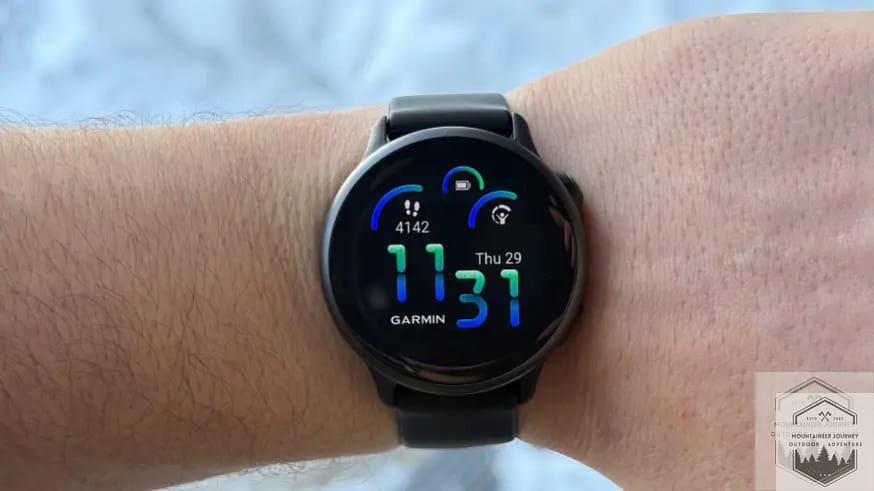
Our testing found battery life of roughly ten to eleven days with the always-on AMOLED display enabled and moderate use. Garmin claims about twelve days in smartwatch mode and up to twenty-one days in battery saver mode. In GPS mode, the watch delivers 17 to 21 hours depending on settings, dropping to about 8 hours when streaming music to wireless headphones. This battery life holds up well against the Venu 4 while costing less.
The Vivoactive 6 is genuinely lightweight at around twenty-three grams. It practically disappears on the wrist during runs and overnight sleep tracking. If you’ve worn a Garmin Fenix or a large Garmin Forerunner and found them too bulky, the difference is dramatic.
For training, the Vivoactive 6 supports over eighty sport profiles, including hiking, trail running, strength training, and yoga. Garmin watches feature advanced training metrics, recovery insights, and mapping capabilities at every tier, and the Vivoactive 6 is no exception for its price class. It also offers PacePro, running power, and Garmin Coach training plans. Training load focus helps balance workouts, and performance tracking integrates directly with the Garmin Connect app.
Core wellness features include Body Battery, stress tracking, and safety features such as incident detection. Garmin Pay and music storage round out the smartwatch features.
Some compromises to be aware of. The Vivoactive 6 lacks full-color topographic maps. Navigation is breadcrumb style only, with no dynamic rerouting, making it less ideal for complex off-trail use or exploring unfamiliar backcountry. If maps matter to you, consider the Fenix 9 or Forerunner 970.
The watch uses the older Elevate V4 sensor, which is fine for steady runs and hikes but lags behind our chest strap tests on sprint intervals. It also lacks ECG, which the Venu 4 includes.
For many runners and weekend hikers, the Vivoactive 6 offers the best balance of cost, fitness features, and battery life in Garmin’s current lineup. It is not trying to be an expedition watch, and that is exactly what makes it great at what it does.
Read Review: Garmin Vivoactive 6 Review
Best Budget Garmin Watch
Garmin Forerunner 170
Pros
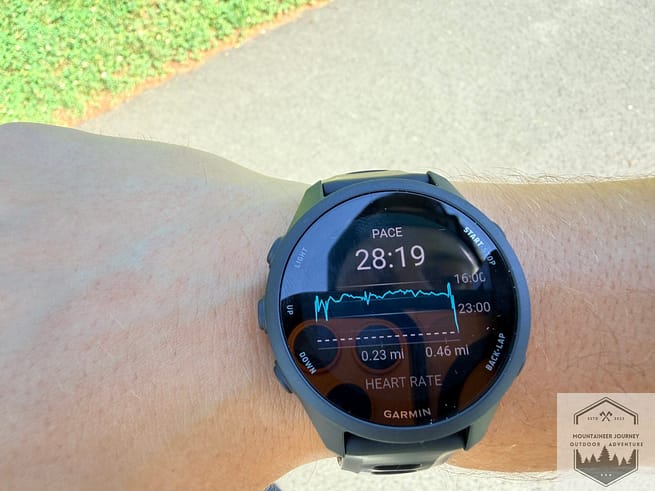
- Bright AMOLED display
- Advanced training metrics
- Great for beginner runners
- User-friendly interface
Cons
- Heart rate variance
- Single-band GPS
- Short battery life
- No topo maps
- No offline maps
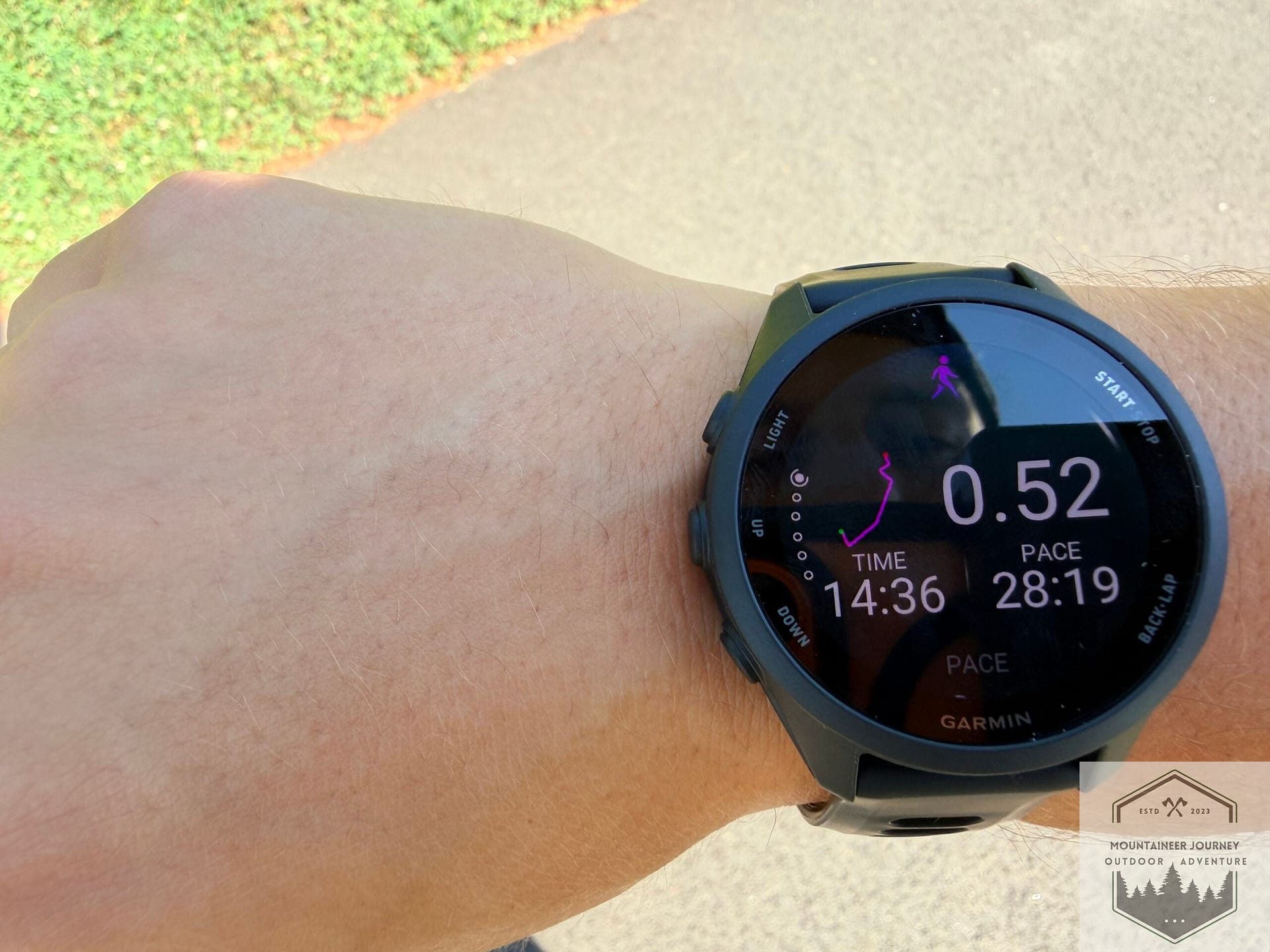
This category is for first-time Garmin buyers who aren’t ready to drop premium money but still want a watch with serious tracking capabilities. The Forerunner 55 is ideal for new runners who want fast, accurate GPS lock and a two-week battery life, but if you want a step up with a modern display and expanded smart features, this is where to look.

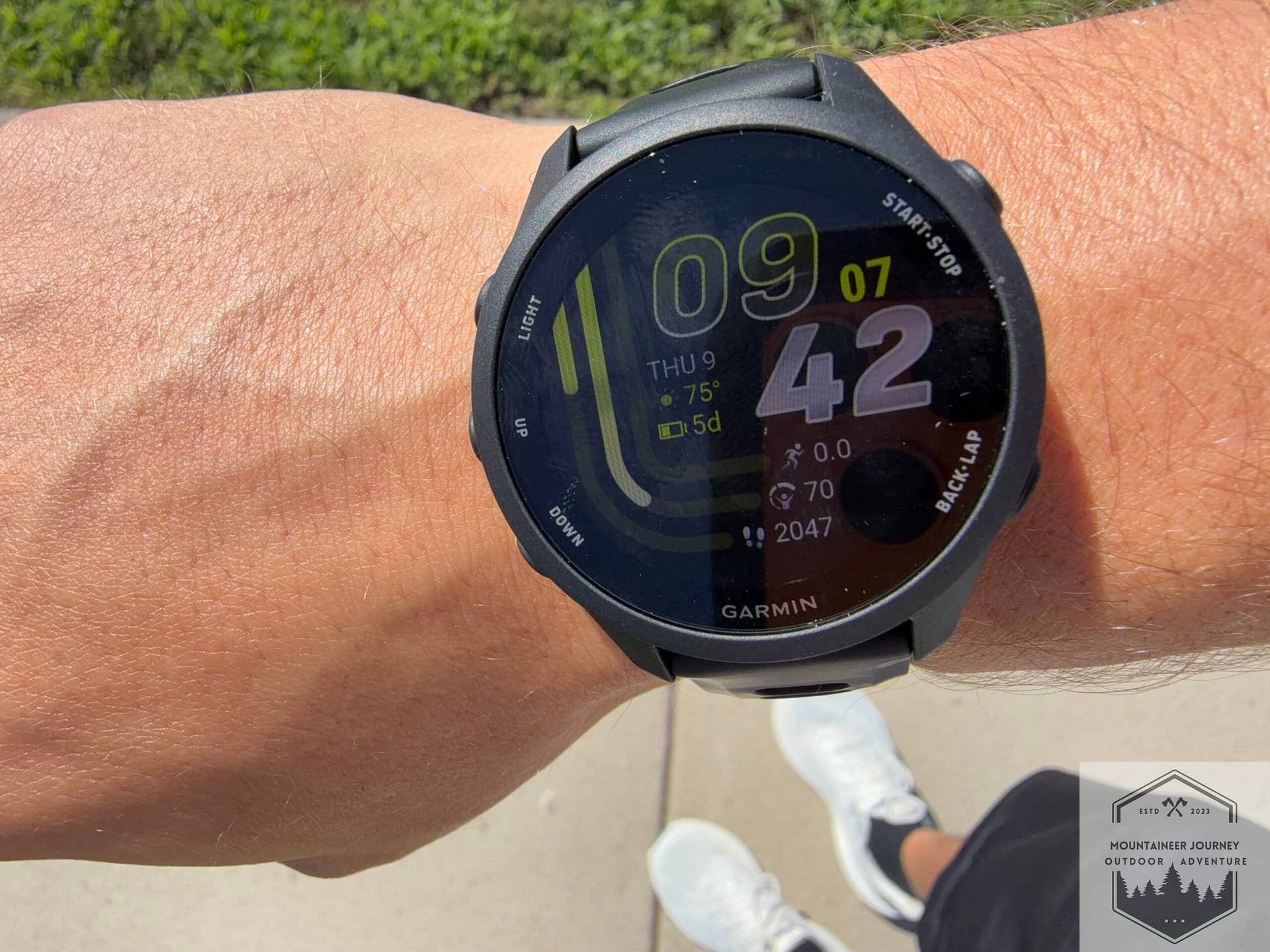
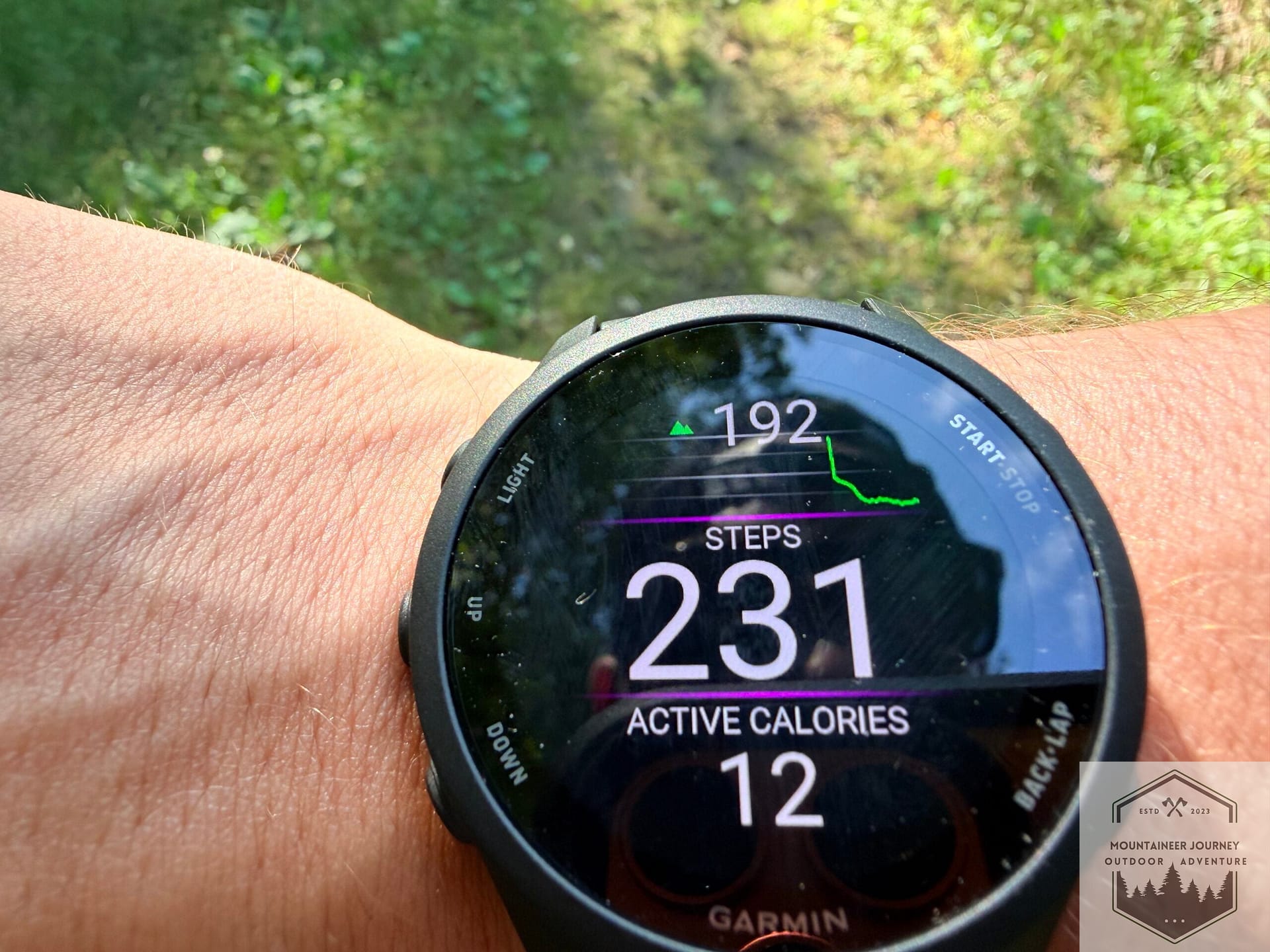
The Forerunner 170 includes built-in GPS and training plans, and at its affordable price tag, it opens the door to the Garmin ecosystem for new runners without requiring a huge investment.
The bright 1.2-inch AMOLED display stays readable in midday sun on the trail and during road runs. Our tests showed good overall GPS accuracy in open areas, with quick satellite lock. Under dense tree canopy, single-band GNSS does cause noticeable drift. We compared tracks against a handheld unit and found accuracy excellent in open and suburban conditions, but deviations increased in heavy forest. Multi-band GPS on watches like the Forerunner 970 or 570 tracks location more accurately under canopy, and if you regularly hike in dense woods, you will notice the difference.
The Elevate Gen 4 optical heart rate is acceptable for steady efforts but lags during hard surges. We measured deviations of five to eight beats per minute during high-intensity intervals compared to our Polar H10 benchmarks. For steady runs and hikes, the readings are reliable.

Battery life in real-world use matched Garmin’s claims fairly well under moderate use: about ten days in smartwatch mode and up to twenty hours in GPS mode with always-on display. Heavy GPS and display usage shortens this significantly.
The Forerunner 170 falls short relative to the other four in navigation. There are no onboard topo or offline maps, which limits serious navigation compared to the Fenix 9 and Forerunner 970. You get breadcrumb navigation only. It isn’t ideal for technical mountain routes where GPS drift under canopy or between rock walls matters. This is a running watch first.
We recommend this watch for new runners and walkers who might take occasional day hikes on well-marked trails. If you have never owned a Garmin and want to experience training readiness, Garmin Coach, and the Garmin Connect ecosystem without spending flagship money, the Forerunner 170 is the right entry point. Garmin makes watches for everyday wellness and elite endurance tracking, and this model proves you don’t need to spend $ 750+ to get meaningful data.
Read Our Review: Garmin Forerunner 170 Review
How We Test Garmin Watches At Mountaineer Journey
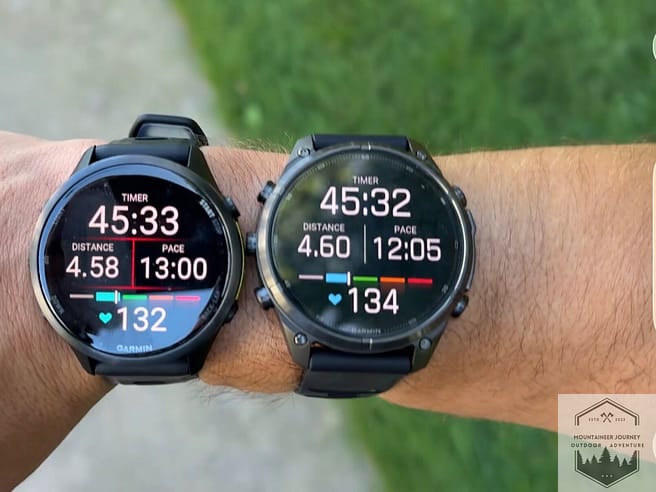
MountaineerJourney.com is a 100% independent publisher with over 16 years of experience testing and reviewing outdoor products and gear. We are funded through affiliate links, not brand sponsorships. Read more about our full process in our testing methodology guide. Our process and objective are straightforward: to present the best GPS watch options in this guide, so you don’t overspend or choose a watch that doesn’t meet your expectations.
Here is how we test every Garmin watch that appears in our overall GPS watch rankings:
- We buy Garmin watches with our own money and wear them for months on real hikes, trail runs, and day-to-day life, primarily in the Northeast US but also on trips out West when applicable.
- GPS validation: we compare GPX tracks against a handheld unit such as the Garmin GPSMAP 67 and measured trail distances. We then map this in Tracklab to validate and process the data for interpretation.
- Heart rate validation: we compare optical sensors with a Polar H10 chest strap across intensities, from easy hikes to hard interval sessions.
- Battery testing: we log real charge intervals, hours in different GPS modes, days in smartwatch mode, and how always-on displays affect runtimes. We verify every Garmin claim against our own usage patterns.
- Navigation testing: we follow preloaded routes on complex trail networks, assessing off-route alerts, map panning, zooming, and track visibility in bright sun and low-light conditions.
Our scoring breaks down into these weighted categories:
- Accuracy score: GPS plus heart rate performance, weighted heavily for mountain and trail use.
- Battery score: based on real-world results versus manufacturer claims.
- Mapping and navigation score: depth of mapping features plus reliability in the field.
- Features and versatility score: sport profiles, health metrics, fitness apps integration, and daily usability.
- Value score: performance and durability relative to current street price, not just launch MSRP.
FAQs About The Best Garmin Watches
Which Garmin watch is best for serious hiking and backpacking?
The Fenix 9 is our top choice for most backpackers because of full-color topo maps, long battery life, and the InReach satellite messaging option.
Which Garmin watch is best for trail runners?
The Forerunner 970 is our top pick for trail runners who race, thanks to its topo maps, multi-band GPS accuracy, Elevate Gen 5 heart rate, and serious training features like training readiness and stamina tracking.

Previous
Overall GPS Watch Rankings

Tyler
Tyler is the founder Mountaineer Journey and a professional Mountain Guide with 15+ years of technical experience in trekking, mountaineering, and trail sports. Having logged thousands of miles from rugged alpine summits to urban paths, Tyler provides rigorous, field-tested insights on hiking, walking, and trail running gear. All reviews are 100% unsponsored and unbiased, ensuring you get honest scoring based on real-world performance. His mission is to help outdoor enthusiasts of all levels find reliable equipment that ensures comfort, safety, and performance on any terrain.